Reviewed · SUSHI MAKING CLASSES
Wagyu and Sushi : Tokyo Gastronomic Journey
Tokyo’s best food experiences often happen behind an unmarked door, in a tiny restaurant where the menu may be hard to read and the ordering customs are not obvious. This three-hour Shinjuku food walk pairs sushi with wagyu yakiniku, then threads through Kabukicho, Omoide Yokocho, Hanazono Shrine, and Golden Gai.
In This Article
- Key points
- Why this Shinjuku food tour works
- Starting near Shinjuku Station at 6:30 pm
- Omoide Yokocho and the older side of Shinjuku
- Sushi with etiquette and local context
- Wagyu yakiniku and the fun of cooking at the table
- Kabukicho after dark
- Godzilla Head and Hanazono Shrine
- Golden Gai and the end of the night
- What the $156.77 price really covers
- Who should book this evening
- Booking advice and cancellation
- Should you book it?
- FAQ
- How long does the Wagyu and Sushi Tokyo Gastronomic Journey last?
- What time does the tour start?
- Where does the tour begin?
- Where does the tour end?
- What food is included?
- Are alcoholic drinks included?
- How many people can join the tour?
- Is transportation included?
- Can I cancel for a full refund?
I like the small group of no more than 10 people, which gives you room to ask questions. I also like the balance of food and neighborhood sightseeing, especially the chance to see Godzilla Head and the narrow lanes of Golden Gai after dark. The main consideration is value: if you only want dinner, you could visit sushi and wagyu restaurants on your own for less.
Key points
- Two major Japanese food stops: The evening includes sushi and wagyu beef, with dinner and alcoholic drinks included for adults age 20 and older.
- A compact Shinjuku route: You walk through Omoide Yokocho, Kabukicho, Hanazono Shrine, and Golden Gai during a three-hour evening.
- A small group capped at 10: The size makes it easier to ask about sushi etiquette, beef grades, local drinking customs, and Tokyo food culture.
- Several possible guides: Past tours have been led by Yuki, Natsuki, Emma, Miharu, and Ando Minoru.
- Photo-friendly landmarks: Godzilla Head gives you a fun Shinjuku photo stop, while Golden Gai supplies the atmospheric alleys.
- Useful but not essential guiding: The food and walk are the draw, but you should decide if local context and restaurant access justify the $156.77 price.
Why this Shinjuku food tour works
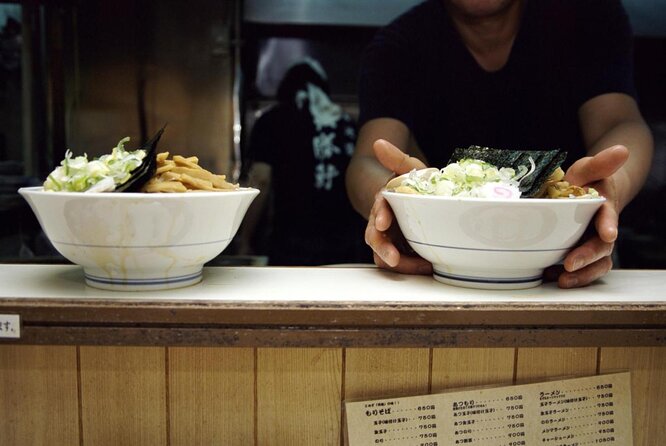
The appeal is simple: you get two foods many people hope to try in Japan, sushi and wagyu beef, in one evening. The tour also gives the meal a setting. Instead of moving directly from a hotel to a restaurant, you walk through old alleys, entertainment streets, shrine grounds, and a famous bar district.
That setting matters in Shinjuku. Around the West Exit of Shinjuku Station, clean towers, neon signs, and huge pedestrian flows can make the district feel hard to read. Omoide Yokocho offers a sharp change of mood, with narrow lanes and tiny eateries packed into a small space. Kabukicho brings the bright nightlife. Golden Gai feels more intimate, with very small bars and architecture that recalls 1960s Tokyo.
Your guide helps connect these places to the food. Guides such as Yuki, Natsuki, Emma, Miharu, and Ando Minoru have led this experience. The exact guide depends on the date, but the format gives you someone to explain what you are seeing and answer questions that a standard guidebook may skip.
I would treat this as an introduction to Shinjuku at night, not only as a meal. You are paying for food, drinks, a walking route, local explanations, and the ease of getting through restaurants that might otherwise feel unfamiliar.
A few more Tokyo tours and experiences worth a look
Starting near Shinjuku Station at 6:30 pm
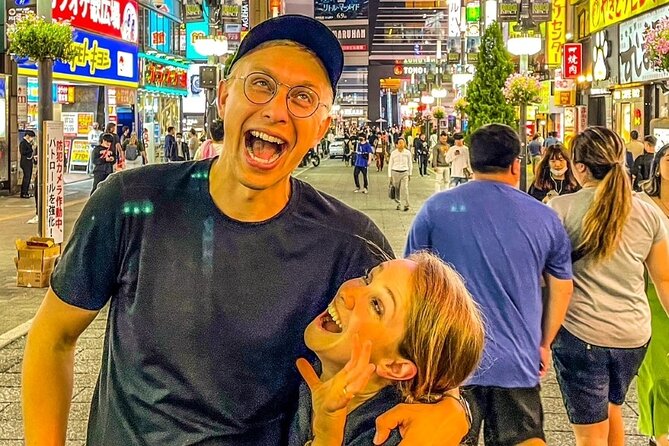
The tour starts at 7-chōme-10-5 Nishishinjuku at 6:30 pm. Check the meeting point carefully before setting out, since Shinjuku Station has many exits and the station complex can be confusing.
The route ends at the Hashimoto Building, 1-chōme-1-5 Kabukichō, near Golden Gai. That makes the experience convenient if you plan to continue your night in central Shinjuku. It does not include hotel pickup or drop-off, so you need to reach the starting point and make your own way home afterward.
The tour lasts about three hours. That is long enough for a proper evening without taking over your entire night. Since the tour begins after normal sightseeing hours, it can fit well after a day spent visiting museums, temples, or shopping areas elsewhere in Tokyo.
The group limit is 10 people. This is small enough for direct conversation, though the experience may feel different with a full group than with only two or three people. Group discounts are available, and the booking uses a mobile ticket.
Omoide Yokocho and the older side of Shinjuku
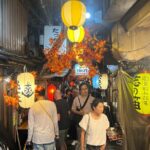
One early stop is Omoide Yokocho, a maze of narrow lanes near the West Exit of Shinjuku Station. The name is often translated as Memory Lane, and the compact streets contrast with the polished scale of modern Shinjuku.
Tiny restaurants and open barbecue stalls crowd the passageways. You may find the space visually striking even before the meal begins. It gives you a sense of how food in Tokyo can be tied to a particular neighborhood and a particular kind of room, rather than presented in a large, formal dining hall.
This part of the walk is especially useful if you are curious about small Japanese drinking and dining districts but unsure how to enter them on your own. The lanes can look private or confusing, and a guide can explain what the different places are used for.
Do not expect a long historical lecture here. The strength of the stop is atmosphere and orientation. You see how close-packed restaurants work, how narrow Tokyo side streets can be, and how quickly Shinjuku shifts from major transport hub to intimate food alley.
Sushi with etiquette and local context
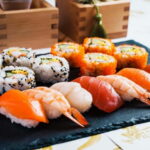
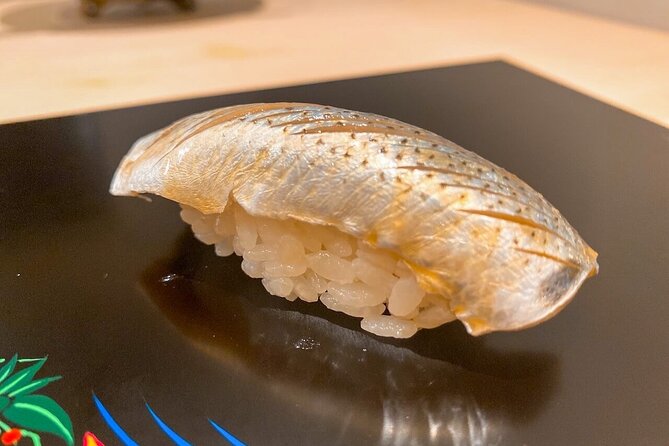
The sushi stop is one of the two main food experiences. The meal includes dinner at two food stops, with sushi and sake forming one of the evening’s pairings.
The strongest reason to choose the guided version is not simply receiving sushi. You can find sushi restaurants throughout Tokyo. The useful part is having someone explain how to approach the meal, what you are eating, and how Japanese sushi customs differ from what you may know at home.
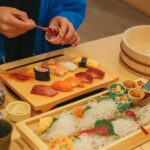
Past guides have taken groups to a small, authentic sushi restaurant that was easy to miss without local help. The exact restaurant can vary, so you should not book this expecting one fixed menu or one specific chef. Still, the format points toward a more intimate setting rather than a large international chain.
Your guide can also help with the pace and sequence of the meal. Sushi etiquette can seem full of rules, but most of it becomes easier when explained in plain language. Questions about soy sauce, ginger, chopsticks, ordering, and sake are natural here, and a small group makes those questions less awkward.
Sake is included for adults age 20 and older. If you are under 20, or simply do not drink, check how the operator handles the beverage portion before booking. The supplied details only specify the inclusion of alcoholic drinks and the age requirement, not a substitute drink policy.
Wagyu yakiniku and the fun of cooking at the table
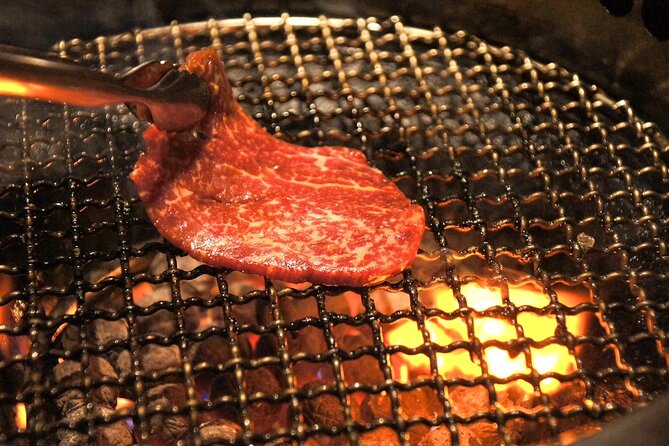
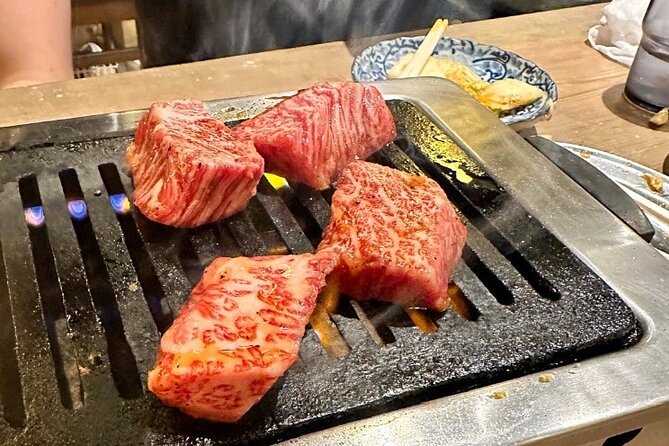
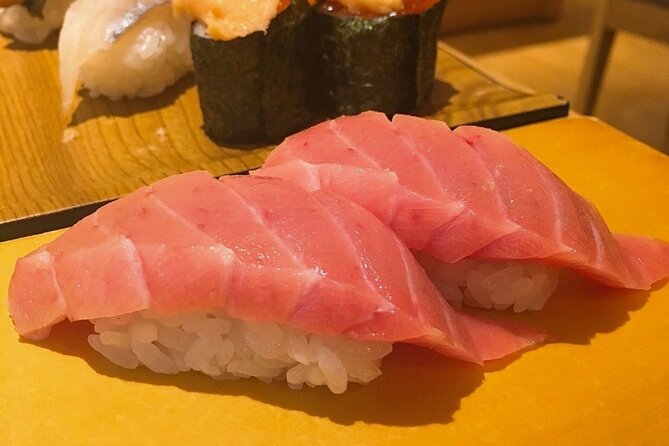
The second major stop focuses on wagyu beef, often served as yakiniku. The appeal is partly the meat and partly the activity. You grill the beef at your table, turning dinner into something more engaging than a plate arriving fully prepared.
Wagyu is prized for its marbling and tenderness, and the tour gives your guide a chance to explain what makes the beef different. That context helps you understand why Japanese beef can cost more than an ordinary grilled meal.
Several people have especially enjoyed this part of the evening. The combination of cooking wagyu yourself, pairing it with a drink such as a whiskey soda, and eating in a small local restaurant makes the stop feel distinct from a routine steak dinner.
The restaurant setting is important. The experience is not presented as a luxury hotel tasting menu. It is closer to a local yakiniku night in a compact place, with the table grill providing the focus. If you like interactive meals, this may be the strongest part of the tour.
At the same time, wagyu portions and menu details are not specified in advance. The $156.77 price should not be judged only by the volume of beef on the table. You are also paying for two food stops, alcoholic beverages, guiding, and the neighborhood walk. If your priority is simply eating the largest possible amount of wagyu, compare the cost with a direct restaurant reservation.
Kabukicho after dark
Kabukicho is the main nightlife district on the route. It is known for restaurants, bars, nightclubs, and adult entertainment, and it has a very different mood from the nearby station area.
The tour gives you a structured way to pass through the district. That can be useful if you want to see Shinjuku nightlife but would rather not wander without context. Your guide can point out landmarks and explain how the area fits into Tokyo’s evening culture.
Kabukicho is not a quiet, traditional neighborhood. Expect bright signs, crowds, and a strong entertainment focus. Families or anyone seeking a calm cultural walk may find parts of the route less comfortable. For many people, though, this contrast is exactly why the tour works: sushi and wagyu are set against the modern nighttime energy of Shinjuku.
The walk also gives you a chance to ask about places that catch your eye. Since the group is small, the guide can respond to individual interests instead of delivering only a fixed speech.
Godzilla Head and Hanazono Shrine
Godzilla Head is a quick but memorable photo stop. The giant creature’s head rises above the Shinjuku streets, giving you one of the area’s most recognizable modern landmarks.
This is not a long attraction with an interior visit. Think of it as a convenient photo opportunity along the route. It breaks up the food stops and helps mark your position in Kabukicho.
Hanazono Shrine provides a different mood. The shrine sits within the same broad Shinjuku area but offers a more traditional setting than the surrounding nightlife streets. Including it in the walk shows how Tokyo can place a quiet religious site close to restaurants, neon, and late-night entertainment.
The stop is valuable because you do not need to choose between modern Tokyo and older customs during the evening. You get both in a short distance. The amount of time spent at the shrine is not specified, so you should expect a brief visit rather than a full shrine tour.
Golden Gai and the end of the night
The route ends around Golden Gai, a warren of very small bars just east of Kabukicho. Its narrow lanes and compact buildings preserve a look associated with 1960s Tokyo.
Golden Gai is one of the most atmospheric parts of the route, but it is also worth understanding what it is not. It is not a large bar street designed for big groups. Many establishments are tiny, and some may have their own entry rules or cover charges. The tour ends at the Golden Street area, but the included experience does not promise a separate bar visit beyond the planned food and drink stops.
I like ending here because it leaves you with a strong sense of place. After sushi and grilled wagyu, you finish among lanes that feel far removed from the broad avenues around Shinjuku Station. You can continue exploring afterward, but any extra food, drinks, or entrance fees would be your own expense.
What the $156.77 price really covers
At $156.77 per person, this is not a budget dinner. The price makes the most sense if you want several elements in one booking:
- A local guide for about three hours
- A small group capped at 10 people
- Sushi and wagyu food stops
- Alcoholic beverages for participants age 20 and older
- A guided walk through several Shinjuku districts
- Photos
- Help with local food customs and restaurant navigation
The cost is less compelling if you are comfortable finding restaurants yourself. One fair criticism is that the two restaurants may be possible to locate and visit independently. If you already know Tokyo well, can read menus confidently, and enjoy arranging your own dinner, the guide may feel like an added expense.
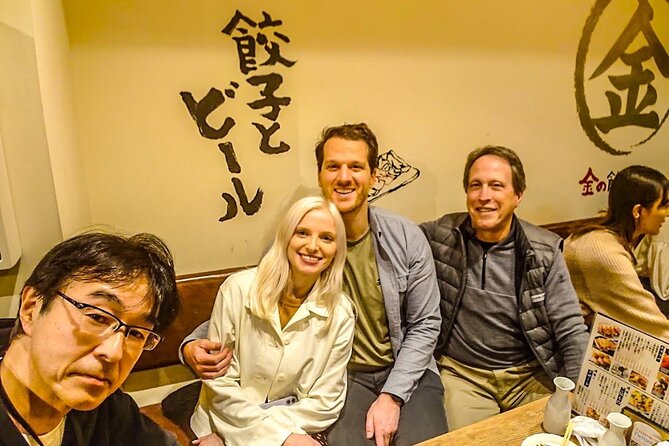
For a first evening in Shinjuku, I see more value. You avoid spending time choosing between dozens of restaurants, gain an explanation of the food, and get a ready-made route through several parts of the district. The small group also creates a social element, which can be welcome if you are dining alone or want to meet other food-focused people.
Transportation is not included. The supplied cost estimate is about 200 to 800 yen, depending on what you need. Hotel pickup and drop-off are also not included, so add those details when planning your evening budget.
Who should book this evening
I would recommend it most strongly to first-time visitors to Tokyo who want an organized introduction to Japanese food and Shinjuku nightlife. It also suits solo people and couples who like meeting others over a meal, since the group format encourages conversation.
Food enthusiasts will get the clearest benefit. You can ask about sushi etiquette, wagyu, sake, local restaurants, and the meaning of the neighborhoods you pass through. The route also works for anyone who wants photographs of Godzilla Head and Golden Gai without spending the evening planning a path.
You may want to skip it if you dislike group dining, do not eat sushi or beef, or prefer choosing every restaurant yourself. It may also be a poor fit if you want a long, formal tour of Tokyo’s religious or historical sites. The focus is food, nightlife, and local orientation.
The tour is near public transportation, and most people can participate. The start time is fixed at 6:30 pm, so arrive with enough time to find the meeting point near Shinjuku.
Booking advice and cancellation
Confirmation is normally sent at booking. If you book within one day of the tour, confirmation comes as soon as possible and depends on availability.
Free cancellation is available if you cancel at least 24 hours before the 6:30 pm start time. Cancellations or changes made less than 24 hours before the start are not accepted for a refund, and the cut-off follows Tokyo local time.
Should you book it?
Book this tour if you want sushi, wagyu, and a guided Shinjuku night in one compact package. The food is the central reason to go, while Omoide Yokocho, Kabukicho, Godzilla Head, Hanazono Shrine, and Golden Gai give the evening a sense of place.
Skip it if your only goal is the cheapest possible dinner. You can likely arrange sushi and wagyu on your own, and one past assessment of the experience made exactly that point. But if you value clear explanations, small local restaurants, an easy route, and company at the table, the $156.77 cost can be reasonable for a first Tokyo visit.
FAQ
How long does the Wagyu and Sushi Tokyo Gastronomic Journey last?
The experience lasts approximately three hours.
What time does the tour start?
The tour starts at 6:30 pm.
Where does the tour begin?
The meeting point is 7-chōme-10-5 Nishishinjuku, Shinjuku City, Tokyo 160-0023, Japan.
Where does the tour end?
The tour ends at the Hashimoto Building, 1-chōme-1-5 Kabukichō, Shinjuku City, Tokyo 160-0021, Japan, near Golden Gai.
What food is included?
Dinner is included at two food stops, featuring sushi and wagyu beef.
Are alcoholic drinks included?
Yes. Alcoholic beverages are included for participants age 20 and older.
How many people can join the tour?
The tour has a maximum group size of 10 people.
Is transportation included?
No. Transportation costs are not included. The listed estimate is about 200 to 800 yen. Hotel pickup and drop-off are also not included.
Can I cancel for a full refund?
Yes, if you cancel at least 24 hours before the experience start time. Cancellations or changes made less than 24 hours before the start are not accepted for a refund.
More Sushi Making Classes in Tokyo
More tours in Tokyo we've reviewed



Sushi Making Classes, compared.
 ★ 5.0Sushi Making Tokyo Roll and Authentic Japanese Sushi ClassFrom $59
 ★ 4.9Tokyo: Roll and Authentic Sushi Making Class in AsakusaFrom $581h 40m
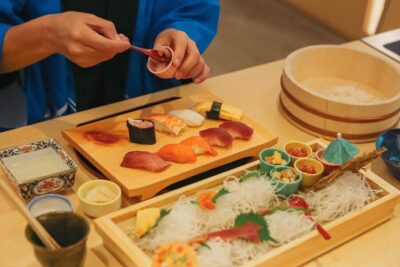 ★ 4.9Tokyo: Sushi Making Class in a Happi Coat near a Famous SpotFrom $421h 30m
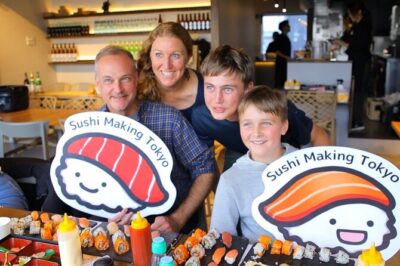 ★ 5.0Sushi Making Tokyo! Popular Maki Sushi & Japanese Sushi(+Recipe!)From $63
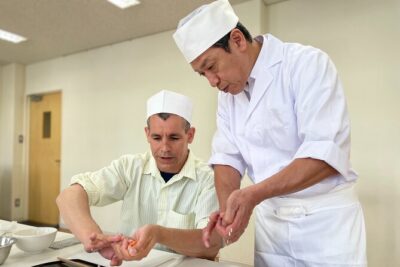 ★ 5.0Tokyo Sushi Making Class in Tsukiji with Professional ChefFrom $49
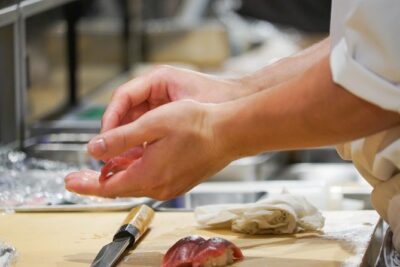 ★ 5.0Tokyo Night Foodie Tour in Shinjuku – Seasonal Sushi, Wagyu BeefFrom $111