Reviewed · ASAKUSA TOURS
Tokyo: Calligraphy Workshop Craft Your Own Art in Asakusa
Japanese calligraphy looks simple until you hold the brush. This Asakusa workshop gives you time to learn the basic strokes, try different tools, and turn a few characters into a personal piece of art. Instructor Mei teaches in English and explains both the technique and the cultural meaning behind shodo.
In This Article
- Key points
- Why this Asakusa workshop works for first-time calligraphers
- Meeting Mei and getting settled on the fifth floor
- The first exercises: brush control and stroke order
- Traditional brush or fude pen?
- Choosing a character and making your final piece
- A calm break from Tokyo sightseeing
- What the $38 price gives you
- Who should book this activity?
- Practical details before you reserve
- Should you book this Asakusa calligraphy class?
- FAQ
- How long does the calligraphy workshop last?
- How much does the workshop cost?
- Where does the workshop meet?
- Is the instructor able to teach in English?
- Do I need previous calligraphy experience?
- What tools will I use?
- Do I get to take my artwork home?
- Is the workshop wheelchair accessible?
- Can I cancel the booking?
I like the small group of up to 10 people, which gives you room to ask questions and get help with your brush. I also like that you practice before making your final piece, with choices such as a scroll, fan, or hard-backed square. The main consideration is time: 90 minutes can feel short if you want to master the craft rather than make a first attempt.
Key points
- Practice comes before the final artwork, so beginners can work on brush control without pressure.
- Mei teaches in English and explains stroke order, calligraphy customs, and the role of patience in shodo.
- You use both traditional brushes and a modern fude pen, giving you two very different ways to form characters.
- Your finished piece goes home with you, with options that may include a scroll, fan, or square board.
- The workshop is held in Asakusa, one of Tokyo’s best-known historic districts, at the Tokyo Tourist Lounge on the fifth floor.
- The $38 price includes materials and instruction, but you arrange your own transportation to and from the venue.
Why this Asakusa workshop works for first-time calligraphers

Japanese calligraphy, or shodo, is not simply a matter of copying symbols with black ink. The direction, order, pressure, and speed of each stroke matter. A brush can create a thick line, a thin line, or an uneven mark depending on how you hold and move it.
That makes this a good cultural activity for you if you want more than a quick photo stop. You are not just watching somebody write a beautiful character. You are learning why the character takes shape in a certain way, then trying it yourself.
The class is designed for beginners. You do not need to read Japanese, know the characters, or have any art training. You work through basic exercises first, which makes the experience approachable even if your early strokes look more like small ink accidents than finished art.
I particularly like the balance between instruction and freedom. Mei explains the basic rules, then lets you choose characters and decide how to present your final work. That gives the session a personal touch without leaving you to guess what to do next.
A few more Tokyo tours and experiences worth a look


Meeting Mei and getting settled on the fifth floor

The workshop takes place at Tokyo Tourist Lounge Asakusa, located on the fifth floor of its building. You will need to find the lounge rather than expect a street-level studio entrance, so allow enough time to locate the building and reach the meeting point.
The setting is useful for a short cultural class because it puts you in Asakusa, an area associated with old Tokyo, temples, traditional entertainment, and craft. You can pair the workshop with time in the district before or after class. Transportation is not included, so you will make your own way there.
Mei is the instructor identified for the class. She teaches in English and has a calm, friendly way of guiding beginners through the exercises. Her teaching covers more than hand movements. You also learn about the background of Japanese calligraphy and why the act of writing can require patience, concentration, and control.
That cultural explanation matters. Without it, a calligraphy workshop could become a simple souvenir-making session. With it, your finished character has some context, even if your brushwork remains proudly beginner-level.
The first exercises: brush control and stroke order
The class begins with the fundamentals. You practice how to hold and guide the brush, how much pressure to apply, and how to make controlled strokes. You also learn stroke order, the sequence used to build Japanese characters.
Stroke order is not a minor technical detail. It affects the shape and balance of the character. Writing in the correct sequence also helps you understand how the parts fit together, rather than treating each symbol as a picture to copy.
You will likely spend more time practicing than you expect. That is a strength of the class. Several participants have appreciated having plenty of chances to repeat strokes before working on a final piece. If you are not a fast learner, you are not pushed to rush through the exercise.
Mei’s patient approach is important here. Calligraphy rewards a steady hand and a quiet mind, but most people arrive from a full day of Tokyo sightseeing with neither. A slower pace gives you time to settle down and pay attention to what your hand is doing.
The workshop can also work well for older children, based on the experience offered to both adults and children. Keep in mind that the class still requires attention and careful movement, so very young children may find the practice portion demanding.
Traditional brush or fude pen?

One unusual feature is the chance to work with both traditional brushes and a modern fude pen. The brush gives you the classic feel of shodo. Its flexible tip responds to pressure, and you can change the width of a line as you move.
The fude pen is easier to control. It has a brush-like tip but offers added precision, making it a useful bridge for anyone who finds the traditional brush difficult. You can focus on the shape of the character without worrying quite as much about managing ink and pressure.
I like this two-tool approach because it shows you two sides of the craft. The traditional brush gives you the full tactile experience. The pen lets you see how the same principles can work in a more convenient modern form.
Do not expect the pen to replace the brush. The marks look and feel different, and the brush has more expressive range. Still, having a second tool is valuable for beginners. You can compare the results and find out which one suits your hand.
Choosing a character and making your final piece
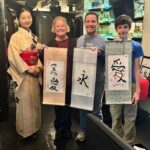
After the basic practice, you move toward your personal artwork. You can write characters of your choice, with templates available to help guide your work. This is a useful point in the session because choosing a character gives the final piece meaning.
You might select a character connected to an idea you want to remember from Japan. The supplied details do not set a fixed list of characters, so your choices may depend on what the instructor provides and what you would like to write.
The templates are especially helpful if you are more interested in creating something attractive than testing your memory. You can use them to check proportions and follow the correct strokes. Mei then helps you adjust the piece to match your skill level.
The final artwork may be made on a scroll, a fan, or a hard-backed square. The exact format can depend on the class, but the important point is that you leave with something more substantial than a practice sheet.
That souvenir is one of the strongest reasons to book this activity. A shop-bought charm can remind you of Tokyo, but a piece you made yourself also recalls the quiet concentration of the class. It may not be museum quality, and it does not need to be. Its value is personal.
A few more Tokyo tours and experiences worth a look

A calm break from Tokyo sightseeing
Asakusa can be a busy place, especially when you are moving between major sights. Calligraphy offers a different pace. For part of the class, your job is simply to watch the brush, follow the stroke, and try again.
I would place this workshop in the middle of a busy Tokyo day, especially if you want an indoor activity. It can also suit a rainy day when outdoor plans are less appealing. The class itself is listed as 90 minutes, although some sessions may run closer to one and a half hours. One participant described spending about two hours and wishing for more time, so do not schedule an immediate appointment afterward.
The quiet atmosphere is not accidental. Calligraphy requires attention, and the instructor brings in ideas of patience and meditation alongside the mechanics of writing. You do not need to approach it as a spiritual practice, but the slower rhythm can be a welcome change from trains, crowds, and packed sightseeing schedules.
This is not a high-energy workshop. If you want a fast activity with lots of movement, it may feel too slow. If you want a thoughtful hour with a clear result at the end, the pace works well.
What the $38 price gives you
At $38 per person, the workshop is priced as a short, hands-on cultural activity rather than a full-day class. The fee includes the Japanese calligraphy lesson, an English-speaking instructor, use of traditional brushes, use of a fude pen, and your finished artwork.
The value depends on how much you want from the experience. If you only want to write one character and take a photograph, you may find other inexpensive cultural activities that do the job. If you want instruction, practice time, cultural background, and materials included, the price is reasonable.
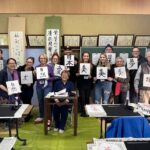
The small group improves that value. With no more than 10 participants, the session is not designed as a large demonstration where you watch from the back. You have a better chance of receiving help with your grip, stroke direction, or final composition.
You still pay for your own transportation to Asakusa. That is easy to factor into a Tokyo day, since the workshop can be combined with other activities in the district. The booking also offers free cancellation up to 24 hours before the start time and a reserve-now, pay-later option, which helps if your schedule is still changing.
Who should book this activity?

I would recommend this workshop to:
- First-time visitors who want a hands-on introduction to Japanese culture
- Couples, friends, and families looking for a quiet shared activity
- People who want a useful souvenir rather than another shop purchase
- Art students and experienced artists who want to study brush movement
- Anyone looking for an indoor plan in Asakusa
- Visitors who enjoy patient, instructor-led learning
You do not need artistic ability. In fact, the class may be more enjoyable if you stop expecting your final work to look like a professional calligrapher’s piece.
It is also suitable for returning visitors. You may have already seen temples, markets, and major Tokyo sights, but a workshop lets you take part in a smaller tradition. That makes it different from simply visiting a cultural site.
I would be less likely to choose it if my schedule were extremely tight. The listed duration is 90 minutes, but the broader range is one to one and a half hours, and some sessions can take longer. Give yourself extra time for the class, reaching the fifth-floor meeting point, and carrying your artwork afterward.
Practical details before you reserve
The workshop is wheelchair accessible, which is useful if access affects your activity choices. The instructor’s language is English, so you can follow the explanations without needing Japanese.
The group is limited to 10 people. That is small enough for personal help but large enough that the feel may vary depending on who joins your session. You should expect a shared class rather than a private lesson.
Check the available start times before booking. The class is offered at set times, and the duration can run from one to one and a half hours. Since transportation is not included, plan your route to Tokyo Tourist Lounge Asakusa in advance.
Wear something you do not mind wearing around ink, or take care during the practice. The provided information does not specify clothing requirements, but brush writing naturally involves ink and repeated practice. Your final work may need care while you continue sightseeing.
Should you book this Asakusa calligraphy class?

Book it if you want to slow down, learn a real technique, and leave with a souvenir you made yourself. The strongest parts are Mei’s patient English instruction, the chance to practice before the final piece, and the blend of traditional brushwork with the more precise fude pen.
The main limitation is the short format. You will get an enjoyable introduction, not mastery of shodo. At $38, though, the class offers a fair mix of instruction, materials, cultural context, and personal artwork.
I would make room for it during an Asakusa visit, especially on a rainy day or after several hours of sightseeing. Come ready to practice, accept a few imperfect strokes, and enjoy the process. Your final character does not have to be flawless to be a meaningful reminder of Tokyo.
FAQ
How long does the calligraphy workshop last?
The listed duration is 90 minutes. The activity information also describes the workshop as lasting one to one and a half hours.
How much does the workshop cost?
The price is $38 per person.
Where does the workshop meet?
The meeting point is Tokyo Tourist Lounge Asakusa, located on the fifth floor of the building.
Is the instructor able to teach in English?
Yes. The instructor language is English, and Mei leads the class.
Do I need previous calligraphy experience?
No. The workshop is suitable for beginners, and no prior experience is required.
What tools will I use?
You will use traditional calligraphy brushes and a modern fude pen.
Do I get to take my artwork home?
Yes. A personal calligraphy artwork is included for you to take home. Available formats may include a scroll, fan, or hard-backed square.
Is the workshop wheelchair accessible?
Yes. The activity is listed as wheelchair accessible.
Can I cancel the booking?
You can cancel up to 24 hours in advance for a full refund. A reserve-now, pay-later option is also available.
More Workshops & Classes in Tokyo


More Craft Workshops in Tokyo
More Asakusa Tours in Tokyo

More tours in Tokyo we've reviewed












Asakusa Tours, compared.
 ★ 4.8Tokyo: Japanese Dance Cabaret Theater Asakusa-Kaguwa TicketFrom $492 hours
 ★ 4.7Tokyo: Meiji Shrine, Asakusa, Skytree Bus Tour and CruiseFrom $12210 hours
 ★ 4.9Tokyo: Roll and Authentic Sushi Making Class in AsakusaFrom $581h 40m
 ★ 4.8Tokyo: Asakusa Walking Tour with Sensoji Temple VisitFrom $222 hours
 ★ 5.0Tokyo Asakusa Rickshaw TourFrom $42
 ★ 4.5Tokyo Panoramic 1 Day: Meiji Shrine, Asakusa, Odaiba and SKYTREE®From $85