Reviewed · TOKYO FOOD TOURS
Kimono and Tea Ceremony in Asakusa Private Food Tour With Guide
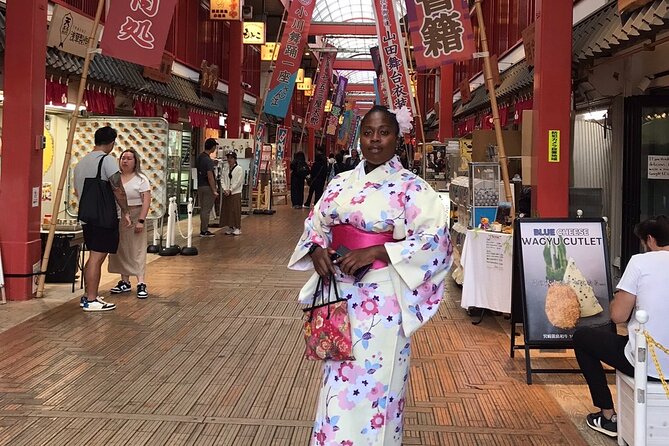
Asakusa is at its most memorable when you see it dressed in a kimono. This four-hour experience helps you choose a traditional or modern kimono, adds an obi sash and wooden sandals, then takes you through Senso-ji, Nakamise Shopping Street, and the Kaminarimon gate before tea, sweets, and Japanese food.
In This Article
- Key points before you book
- Getting dressed for Asakusa
- Senso-ji and the Kaminarimon gate
- Nakamise Shopping Street and the old approach
- Tea ceremony in traditional clothing
- A5 Wagyu, sweets, and drinks
- What guide Adam adds
- Is $290 a fair price?
- Timing, comfort, and practical details
- Who will enjoy this experience most?
- Should you book the Asakusa kimono and tea tour?
- FAQ
- How long does the kimono and tea ceremony tour last?
- What time does the tour start?
- Where does the tour meet?
- Where does the tour finish?
- How many people can join the tour?
- Is the kimono included?
- Is hairstyling included?
- Is overnight kimono rental included?
- What food and drinks are included?
- Is hotel pickup included?
I like the small maximum of eight people, which gives the guide room to help with clothing and answer questions. I also like the food built into the price: tea, two soft drinks, water, ice cream, local desserts, and an A5 Wagyu tasting. The main consideration is cost. At $290 per person, this is not a cheap sightseeing walk, and hairstyling or overnight kimono rental costs extra.
Key points before you book
- Kimono dressing is part of the experience: Choose a traditional or modern style, then wear it with an obi sash and wooden sandals.
- Senso-ji provides the setting: You visit Tokyo’s oldest temple and walk through its famous approach in traditional clothing.
- Food is more than a token snack: A5 Wagyu, tea, soft drinks, ice cream, and local desserts are included.
- The group is limited to eight: That matters when you need help with the kimono or want time with the guide.
- Guide Adam has earned strong praise: His local background and small cultural details have been a key part of the experience.
- The four-hour schedule leaves room later: Your afternoon remains open for another Tokyo neighborhood or activity.
Getting dressed for Asakusa
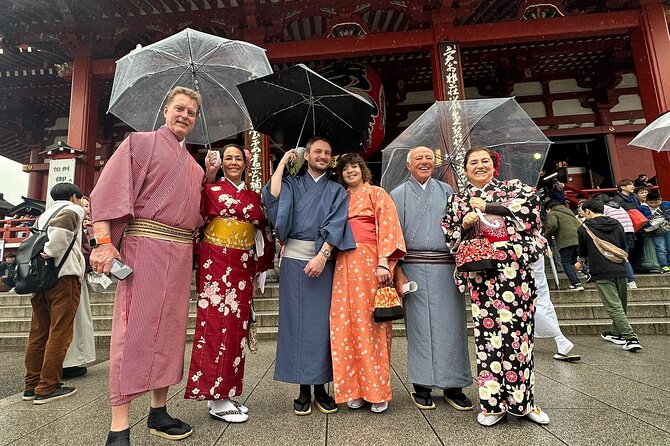
The tour begins at 11:00 am at the Asakusa Culture Tourist Information Center, near the Kaminarimon gate. That is a useful meeting point because it places you right beside one of the district’s main landmarks and near public transportation.
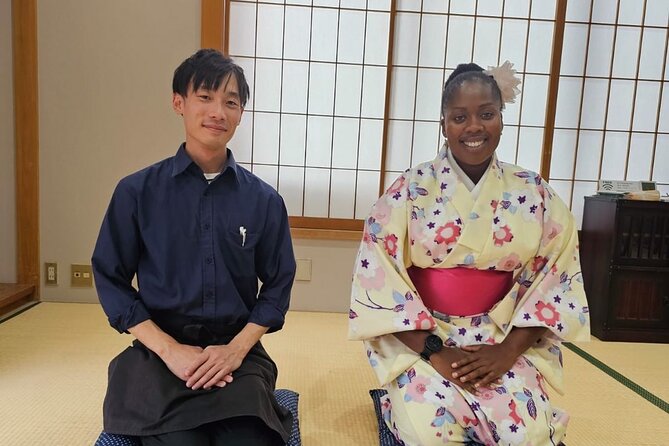
The central idea is simple: instead of looking at a kimono in a shop window, you wear one while exploring Asakusa. You receive help selecting and putting on either a traditional or modern kimono, along with the obi belt and wooden sandals. The dressing process gives the outing a sense of occasion, though you should allow that traditional clothing can feel more formal and restrictive than everyday sightseeing clothes.
This is also the point where the small group matters. With no more than eight people, the dressing portion should feel less like a rushed costume line and more like a guided cultural activity. The supplied information does not specify the exact kimono selection or dressing time, so expect the pace to depend on your group.
Hairstyling is available for an additional fee. An overnight rental is also offered at extra cost, which could suit you if you want to continue wearing the kimono after the tour. Neither add-on is included in the $290 price, so check the current cost before booking if either matters to you.
A few more Tokyo tours and experiences worth a look

Senso-ji and the Kaminarimon gate
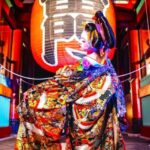
After dressing, you spend time around Senso-ji, Tokyo’s oldest temple and one of its most important Buddhist sites. The temple is in Asakusa, an area where major sightseeing, shopping, food, and old Tokyo atmosphere come together in a compact district.
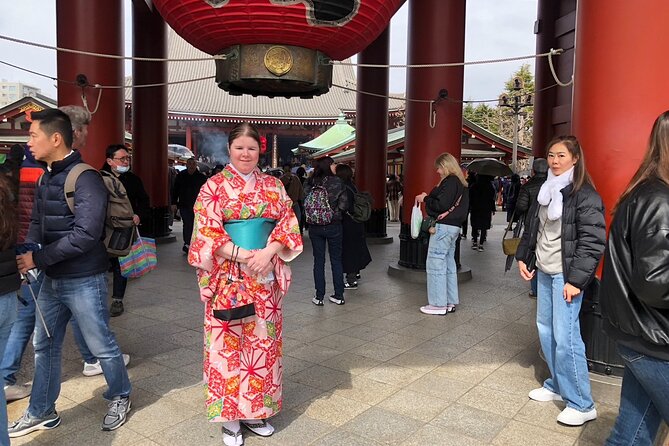
The Kaminarimon gate is the outer entrance to the approach leading to Senso-ji. Its large lantern and statues make it one of Asakusa’s best-known photo locations. The gate is 11.7 meters tall and 11.4 meters wide, so it is hard to miss, especially when you are walking toward it in traditional clothing.
I like this part because the kimono is not separated from the setting. You are not simply posing inside a studio. You are walking through a public part of Tokyo where the temple gates, streets, and shopfronts supply the backdrop. The tour includes time at Senso-ji and Kaminarimon, but the supplied schedule lists one hour for each, so the overall visit is structured rather than open-ended.
Keep your expectations sensible. This is a food and culture tour, not a full temple study session. You will get an introduction to the area and a guided walk, but the tour has several other major components to fit into four hours.
Nakamise Shopping Street and the old approach
Nakamise runs about 250 meters along the approach to Senso-ji. Shops line both sides, selling traditional souvenirs, snacks, and sweets. The street is one of Asakusa’s most recognizable places, and it gives you a chance to see how the route to a major temple also functions as a shopping district.
The schedule allows two hours around Nakamise, making this the longest portion of the outing. That extra time is useful because the area is not just something to glance at while walking through. You can examine the small shops, learn about local treats, take photographs, and connect the food stops with the broader culture walk.
The experience includes local desserts and ice cream, so Nakamise is a natural place to think about how the tour handles food. You are not left to find every snack yourself, and the guide can help put what you are eating into the setting of Asakusa.
You should still leave room for personal browsing. The included food is part of the package, but you may see souvenirs or sweets you want to buy separately. The tour price does not mean every shop item is covered.
Tea ceremony in traditional clothing
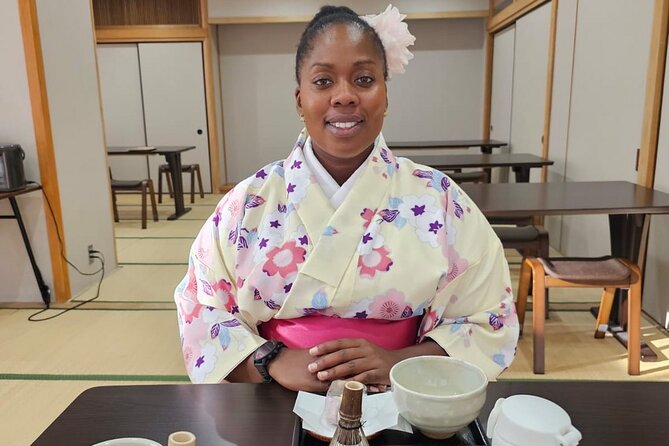
The tea ceremony is the cultural center of the experience. Wearing a kimono gives the ceremony more meaning than simply attending in casual sightseeing clothes, and the clothing also creates a clear connection between the ceremony and the streets of Asakusa.
The activity includes the tea ceremony itself, a culture walking tour, and time for photographs. You can expect the guide to explain the basic setting and customs, though the supplied details do not state the exact tea style, venue, or length of the ceremony.
That missing detail is worth noting if tea is your main reason for booking. This is a combined experience, not a specialist tea-school lesson. The tour pairs tea with food, temple sights, clothing, and neighborhood history, so it suits you best if you want an approachable introduction rather than advanced instruction in tea procedure.
The pace should also appeal to first-time visitors. Several reviews praise the explanations and small facts shared by Adam, including background about living in Japan. That kind of personal context can make the ceremony easier to understand, especially if formal Japanese customs are new to you.
A5 Wagyu, sweets, and drinks
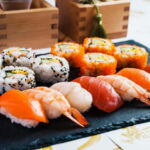
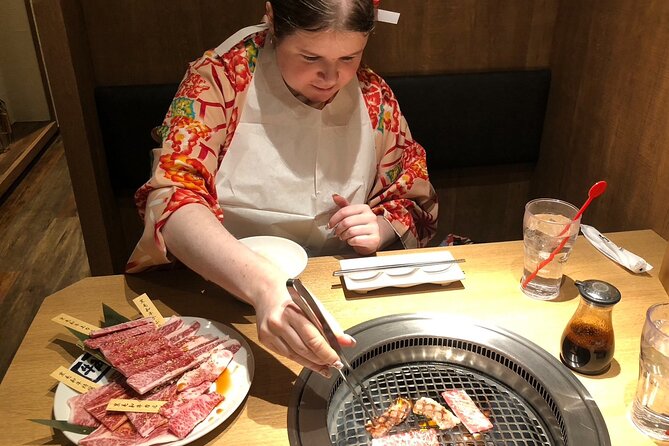
The food side gives the tour more substance than a simple costume rental. Included items are the tea ceremony, two soft drinks, water, an A5 Wagyu beef experience, ice cream, and local desserts.
A5 Wagyu is a notable inclusion because it is associated with highly graded Japanese beef. The available information does not state the cut, serving size, preparation, or restaurant location, so do not book this expecting a full steak meal unless the operator confirms that detail. Think of it as a featured tasting within a broader food tour.
The drinks are practical. Two soft drinks and water help keep the four-hour outing comfortable, particularly if you are walking in wooden sandals or wearing layers. Alcohol is not included, though it can be purchased by people aged 18 and older.
The sweets and ice cream add a lighter finish to the food stops. I like that the menu moves from tea and savory beef to desserts, since it gives the afternoon variety. At the same time, the package may not replace lunch for everyone. Ask about serving sizes if you need a substantial meal or have dietary concerns, since no dietary information is provided.
A few more Tokyo tours and experiences worth a look



What guide Adam adds
Adam is the guide named most often in the supplied guest comments. He is praised for being flexible, sharing stories about living in Japan, and explaining small details along the route. One group also appreciated how he helped people who had never met before enjoy the outing together.
That points to the likely strength of this tour: conversation. The value is not only in putting on a kimono or eating Wagyu. It is in having a person connect the clothing, food, temple, shopping street, and daily life in Japan.
One past group changed its plans and skipped an onsen, using the extra time for other activities. That suggests some flexibility may be possible, but you should not assume every itinerary change is guaranteed. The published route centers on Senso-ji, Nakamise, Kaminarimon, tea, and food, so discuss major changes with the guide at the start.
Guide assignments can vary. Adam is associated with the experience, but the booking details do not promise that he will lead every departure. If meeting him is important to you, confirm the guide before booking.
Is $290 a fair price?
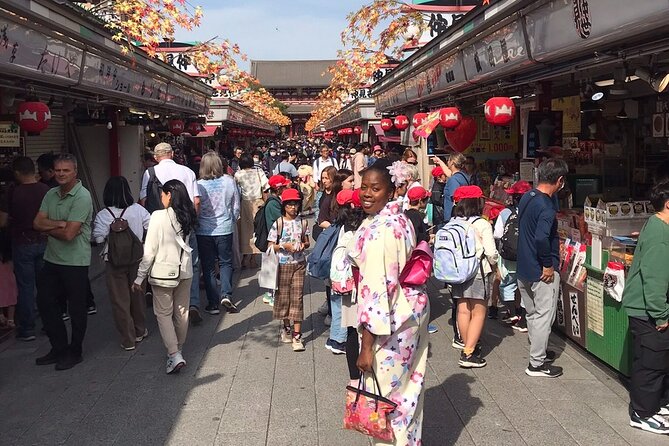
At $290 per person, the tour sits firmly in the premium half-day category. You are paying for more than a neighborhood walk: kimono use, dressing assistance, a tea ceremony, a private or small-group format capped at eight, food tastings, drinks, desserts, and a guide.
The price makes more sense if you value convenience and a planned cultural experience. You do not need to arrange a kimono rental, find a tea ceremony, choose food stops, or work out a route through Asakusa. For a first visit to Tokyo, that bundle can save time and reduce uncertainty.
The value is weaker if your main goal is simply to see Senso-ji. The temple, Kaminarimon, and Nakamise are free to visit, and you can explore them independently. You are paying the premium for the clothing, interpretation, food, and organized access to the experience.
The group size helps support the price. Eight people is small enough for personal help, but it is not a private tour for one family or couple. If you want complete control over the pace, food choices, and photography, a private arrangement may suit you better, though the supplied price is specifically listed per person for this experience.
Timing, comfort, and practical details
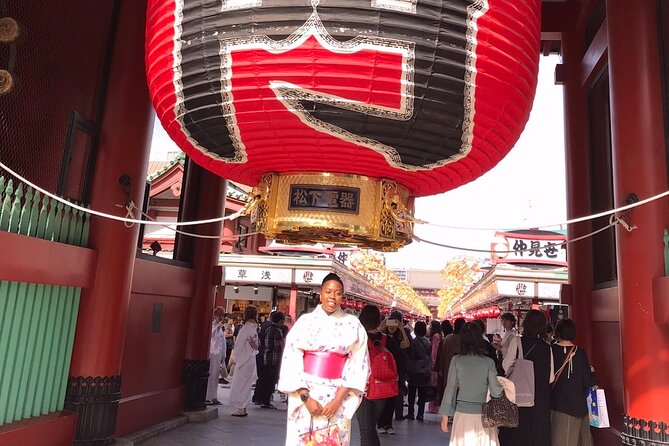
The tour begins at 11:00 am and lasts about four hours. It ends back at the meeting point, which makes planning easier. You can schedule an afternoon activity afterward, though leave some breathing room rather than booking something that starts immediately.
You receive a mobile ticket and confirmation at booking. The meeting point is the Asakusa Culture Tourist Information Center at 2-chōme-18-9 Kaminarimon, Taito City, Tokyo 111-0034. Hotel pickup and drop-off are not included.
Most people can participate, and the meeting point is near public transportation. The information does not list wheelchair details, clothing sizes, dietary accommodations, or specific footwear guidance. If any of those issues affect your plans, ask before paying.
You should arrive ready for a clothing change and a walking tour. Jeans and sneakers are not a problem at the meeting point, but the point of the experience is to dress in the kimono provided. Wooden sandals may feel unfamiliar, so comfortable pacing matters.
The cancellation rule is friendly but strict near departure: cancel at least 24 hours before the 11:00 am start for a full refund. Changes or cancellations within 24 hours are not accepted for a refund.
Who will enjoy this experience most?
I would recommend this tour to first-time visitors who want several classic Tokyo experiences joined together. It suits couples, small groups of friends, and families who enjoy photographs, food sampling, and cultural explanation more than a fast list of landmarks.
It is also a good fit if you want a special half-day during a longer Tokyo stay. The four-hour format leaves the afternoon available for more Asakusa, the rest of Taito City, or another neighborhood.
You may want another option if you are looking for a serious tea ceremony lesson, a full meal, or a low-cost sightseeing tour. The tour gives you an introduction to each element, but it does not promise extended study of any one part.
The experience can work well for a mixed group, too. The positive comments describe couples and people who had not met before enjoying the same outing. A guide who explains the small cultural details can help keep the group connected even when everyone has different interests.
Should you book the Asakusa kimono and tea tour?
Book it if you want to look the part, walk through Asakusa with a guide, and sample several Japanese foods without arranging each piece yourself. The kimono, tea ceremony, Senso-ji, Nakamise, A5 Wagyu, and desserts form a clear half-day package, and the eight-person limit keeps it from feeling like a large bus excursion.
Before booking, decide what you expect from the food and tea portions. The included A5 Wagyu is appealing, but serving details are not provided, and the experience is not described as a full lunch. Likewise, the tea ceremony is a cultural introduction rather than a specialist course.
For many people, the strongest reason to choose it is the combination of dressing assistance and local guidance. If Adam leads your departure, his personal stories and flexible approach may add extra warmth. If you need hairstyling, overnight use of the kimono, special dietary arrangements, or a specific guide, confirm those details first.
FAQ
How long does the kimono and tea ceremony tour last?
The experience lasts approximately four hours.
What time does the tour start?
The scheduled start time is 11:00 am.
Where does the tour meet?
The meeting point is Asakusa Culture Tourist Information Center, 2-chōme-18-9 Kaminarimon, Taito City, Tokyo 111-0034, Japan.
Where does the tour finish?
The activity ends back at the meeting point.
How many people can join the tour?
The tour has a maximum of eight participants.
Is the kimono included?
The experience includes the kimono experience, with help choosing and wearing a traditional or modern kimono, an obi sash, and wooden sandals.
Is hairstyling included?
No. Hairstyling is available at an additional cost.
Is overnight kimono rental included?
No. Overnight kimono rental is available for an extra charge.
What food and drinks are included?
The package includes tea, two soft drinks, water, an A5 Wagyu beef experience, ice cream, and local desserts.
Is hotel pickup included?
No. Hotel pickup and drop-off are not included, but the meeting point is near public transportation.
More Tea Ceremony & Matcha in Tokyo




More Tokyo Food Tours in Tokyo
More Asakusa Tours in Tokyo
More tours in Tokyo we've reviewed












Tokyo Food Tours, compared.
 ★ 5.0Tokyo: Shinjuku Food Tour (13 Dishes at 4 Local Eateries)From $86
 ★ 4.9Tokyo: Shinjuku Food Tour (13 Dishes and 4 Eateries)From $97
 ★ 5.0Tokyo Night Foodie Tour in Shinjuku – Seasonal Sushi, Wagyu BeefFrom $111
 ★ 5.0Eat and Drink Like a Local: Tokyo Ueno Food Tour-Taverns&RamenFrom $95
 ★ 5.0Tokyo: Shibuya Food Tour (13 dishes and 4 Eateries)From $77
Tokyo: Shinjuku Food Tour – 15 Dishes, 3 Drinks, 4 EateriesFrom $723 hours