Reviewed · COOKING CLASSES
Japanese Cooking Class for Vegans
The best part of this class is its personal touch. Miwa adapts the menu to your diet, from vegan sushi plates and tofu dishes to a children’s menu or a requested recipe such as nabe gohan. You cook, ask questions, and then eat the lunch you made.
In This Article
- Key points to know before booking
- Cooking Japanese food in a real neighborhood
- What happens during the 2 to 3-hour class
- Why the vegan focus is useful in Tokyo
- Miwa’s teaching style and the private setting
- The dishes you can request
- The Musashikoyama setting adds value
- Is the $705.86 price good value?
- Who should book this class
- Booking, timing, and cancellation details
- My verdict: a personal class at a very high price
- FAQ
- Where does the Japanese cooking class take place?
- What time does the class start?
- How long does the experience last?
- Is the class private?
- Is lunch included?
- Is the food fully vegan?
- What types of dishes can I make?
- Are children allowed?
- Is transportation included?
- Can I cancel for a full refund?
I like the private format, which gives your group room to work at its own pace. I also like the setting near Musashikoyama, where Japan’s longest shopping arcade offers a look at ordinary neighborhood life. The main caution is the price: at $705.86 per person, this is a costly cooking class, so confirm the booking details and venue before paying.
Key points to know before booking
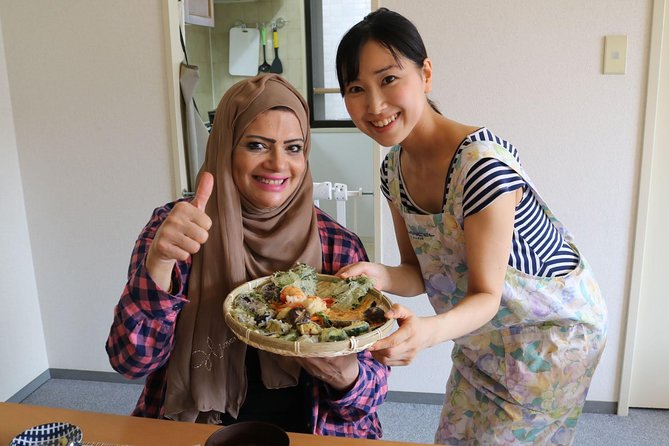
- Miwa customizes the menu: Vegan, vegetarian, pescatarian, and other preferences can be discussed in advance.
- You make a full meal: The experience includes a three-course lunch and food tasting, not just a short demonstration.
- Musashikoyama feels local: The meeting point is at Musashikoyama Station on the Tokyu Meguro Line, close to a long neighborhood shopping arcade.
- Private means personal: Only your group participates, making this a good choice for families and travelers who want plenty of conversation.
- Several menu paths are available: Options include vegan sushi, Japanese home cooking, tofu dishes, and a vegan children’s plate.
- The class lasts about 2 to 3 hours: It begins at 10:30 am and finishes back at the meeting point.
Cooking Japanese food in a real neighborhood
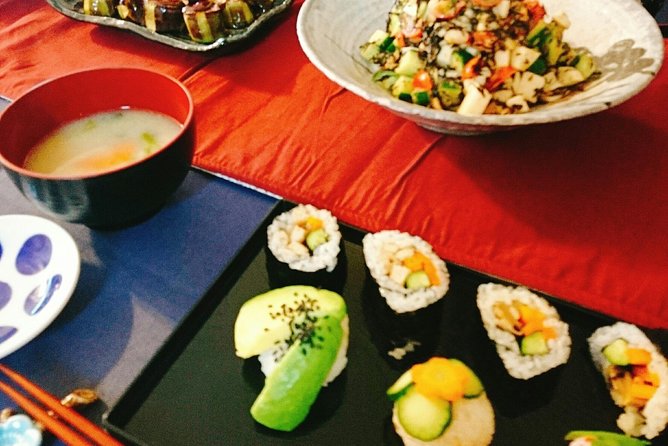
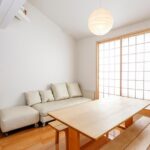
This is not a classroom set up for a large tour group. You meet Miwa near Musashikoyama Station and go to a local home setting in Shinagawa City, where the cooking takes place in a more personal environment.
That matters because Japanese food is often best understood through ordinary home cooking. You are not simply watching a chef prepare a polished restaurant dish. You are learning how ingredients fit into a Japanese meal, how dishes are assembled, and how recipes can change when fish, meat, eggs, or other ingredients are removed.
The location also gives the experience a useful local frame. Musashikoyama is known for its long shopping arcade, and the area is described as a place where you can see everyday Japanese life rather than a sightseeing district built mainly for visitors. The meeting point is 3-chōme-4-9 Koyama, Shinagawa City, Tokyo 142-0062, Japan.
You should allow enough time to find Musashikoyama Station and meet at the agreed point. The class starts at 10:30 am. Transportation to and from other Tokyo attractions is not included, so you handle the train journey yourself.
Other cooking classes in Tokyo
What happens during the 2 to 3-hour class
The class begins with an introduction to the dishes and ingredients. Miwa explains what you are making and discusses how the recipes fit your dietary needs. This early conversation is important if you are strictly vegan, vegetarian, pescatarian, or avoiding particular ingredients.
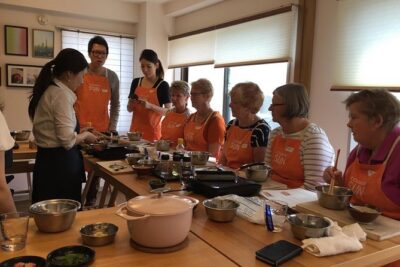
You then take part in the preparation. This is an interactive class, so you are not left sitting at the side while someone else does the work. Each person in the group can have a role during the cooking process, which makes the lesson more useful for children and for adults who want practical skills to take home.
The exact menu depends on your request and Miwa’s customization. Possible choices include:
- Vegan sushi plates
- Vegan Japanese home-style dishes
- A vegan kids’ plate
- A vegan tofu course
- A requested recipe adapted to your diet
One useful example is nabe gohan, a Japanese dish cooked in a pot with rice and other ingredients. A pescatarian group requested this dish, and Miwa adjusted the class to suit them. That tells you something important about the experience: you are not limited to one fixed menu if you communicate your interests ahead of time.
After preparing the food, you sit down for the meal. The package includes a three-course lunch and food tasting, so the class ends with a proper meal rather than a few samples. Since you have helped prepare it, the lunch also works as the final lesson. You can see how the separate ingredients come together on the table.
The activity ends back at the meeting point. The total duration is listed as approximately three hours, with the class description also giving a two to three-hour range. Plan on the longer end if your group includes children or has several recipe requests.
Why the vegan focus is useful in Tokyo
Japan can be a challenging place for strict vegans. Dashi, a stock often made with fish, appears in many Japanese dishes, and ingredients are not always obvious from a menu description. A private class gives you the chance to explain your needs clearly before cooking begins.
Miwa can customize recipes for vegan and vegetarian diets, as well as other preferences involving meat and fish. The value here is not only the final meal. You also learn which ingredients are being used and how the recipe changes when animal products are left out.
The class may be especially helpful if you want to continue cooking Japanese food at home. You can ask about the ingredients, preparation, and where to find them. Miwa takes time to explain the food step by step, including the role of individual ingredients and the process for preparing each dish.
Still, you should state your dietary requirements when you book and again when you receive confirmation. The experience offers customization, but the supplied details do not provide a full allergen policy or a fixed ingredient list. If you have a serious allergy, ask for specific confirmation before committing.
Miwa’s teaching style and the private setting
Miwa is the central reason this experience feels different from a standard group lesson. The class is private, so you are cooking only with your own party. That makes it easier to ask basic questions, request a recipe, or spend more time on a step that is new to you.
Her teaching approach is conversational and hands-on. She explains the ingredients and cooking process, then guides you through the preparation. The class is designed so each participant has something to do, rather than watching one person handle everything.
The private format also helps families. Children must be accompanied by an adult, but families are welcome, and a vegan children’s plate is one of the available options. A parent should still consider the child’s age, attention span, and comfort with participating in a home cooking setting. The listed information does not specify a minimum age or details about child-sized equipment.
Solo visitors can also make good use of the format. One published experience involved a one-to-one vegan class, with Miwa bringing ingredients to the customer’s home in central Tokyo. Other accounts describe cooking in Miwa’s studio or local home setting. Because the supplied meeting information points to Musashikoyama, you should confirm the exact venue and whether the class is held at Miwa’s place or another agreed location.
The dishes you can request
The menu choices cover several sides of Japanese food. Vegan sushi is a clear introduction to familiar Japanese presentation without fish. It can also be a good option for children, since assembling plates gives them a direct role in the meal.
The tofu course focuses on one of Japan’s most useful plant-based ingredients. Tofu can be mild and simple, but its texture and preparation make a large difference. A dedicated course gives you more time to understand how it is handled than you would get from a quick restaurant order.
Vegan Japanese home dishes offer a broader lesson. Instead of focusing on one iconic food, you learn how a home meal can be built around several smaller preparations. The three-course format supports this approach, giving you a meal with more variety than a single recipe.
If you have a particular dish in mind, ask before the class. One group requested nabe gohan, and Miwa prepared a class around that interest. The important practical point is timing: customization works best when you make your request before arrival, not halfway through the lesson.
Other cooking classes in Tokyo
The Musashikoyama setting adds value
Many Tokyo food classes take place in central districts that you may already have planned to visit. This class sends you to Musashikoyama, a neighborhood in Shinagawa that offers a different pace and feel.
The nearby shopping arcade is described as the longest in Japan. You can combine the cooking class with a walk through the arcade before or after the activity, although the class itself does not include a guided shopping visit or transportation to other attractions.
For me, this neighborhood setting is one of the strongest reasons to choose the experience. You get a cooking lesson and a small look at local routines in one outing. It is less about collecting famous sights and more about seeing how food fits into daily life.
The tradeoff is that Musashikoyama may not be as convenient as a class in a central tourist area. You need to make your own way there, and the activity does not include transport. The station meeting point helps, but you should check your Tokyo route and allow time for the morning journey.
Is the $705.86 price good value?
At $705.86 per person, this is expensive for a three-hour cooking class. The price is easier to understand if you are booking a small private group and placing a high value on personal instruction, menu customization, and the meal itself. It is much harder to justify if you simply want a basic sushi lesson at the lowest possible cost.
You are paying for more than food tasting. The class includes a full three-course lunch, private instruction, ingredient explanations, and a menu adapted to your dietary needs. You also get direct conversation with Miwa and the chance to request dishes that match your interests.
Even so, the available information does not explain whether the quoted price changes with group size, whether ingredients are brought to your accommodation, or why the per-person cost is so high. Ask for a clear breakdown before booking. Confirm the number of participants covered, the exact meeting location, the final menu, and what is included in the price.
For a family or group that wants one private activity, the cost may feel more reasonable if the same rate structure covers several people. For a solo visitor, the price is a serious consideration. Compare it with other Tokyo cooking classes before making a decision, especially if private instruction is not essential to you.
Who should book this class
I would point this class toward a few specific types of visitor:
- Vegans who want more than a generic vegetarian restaurant meal
- Vegetarians or pescatarians with a particular Japanese recipe in mind
- Families looking for a food activity that includes children
- Visitors who prefer private lessons to large group demonstrations
- People interested in Japanese home cooking and local neighborhoods
- Cooks who want to ask detailed questions about ingredients and preparation
It is less suitable if you want a fixed, fast itinerary with no menu discussion. It may also disappoint if your main goal is a famous tourist landmark, since the setting is a residential part of Shinagawa and the focus is food.
You should also be comfortable with a home or studio environment rather than a formal culinary school. The available information describes the class as taking place at a local home, while some class experiences have used Miwa’s studio or a customer’s home. Confirm the arrangement in advance.
Booking, timing, and cancellation details
The scheduled start time is 10:30 am. The class lasts approximately three hours, though the description gives a two to three-hour range. Children need to be accompanied by an adult, and only your group participates.
A mobile ticket is provided. Confirmation is sent within 48 hours of booking, subject to availability. Since the class is private and menu customization may require planning, do not leave dietary requests until the last minute.
Free cancellation is available if you cancel at least 24 hours before the local start time. Cancellations made less than 24 hours before the experience are not refunded, and changes within that period are not accepted.
My verdict: a personal class at a very high price
This is a thoughtful option for a vegan or vegetarian visitor who wants a real cooking lesson, a full meal, and time with a local host. Miwa’s adaptable menu, step-by-step instruction, and private format are the strongest features. The Musashikoyama location adds a useful neighborhood experience without turning the class into a standard sightseeing stop.
The price is the deciding issue. At $705.86 per person, you should book only after confirming the venue, group pricing, menu, and dietary arrangements. If those details work for you, this can be a rewarding food-centered morning. If you mainly want to learn one inexpensive recipe, choose a cheaper class.
FAQ
Where does the Japanese cooking class take place?
The meeting point is 3-chōme-4-9 Koyama, Shinagawa City, Tokyo 142-0062, Japan, near Musashikoyama Station on the Tokyu Meguro Line.
What time does the class start?
The class starts at 10:30 am.
How long does the experience last?
The class lasts approximately three hours. The description also gives a general duration of two to three hours per class.
Is the class private?
Yes. Only your group participates in the activity.
Is lunch included?
Yes. The experience includes a three-course lunch and food tasting.
Is the food fully vegan?
A vegan menu can be arranged. Miwa also offers vegetarian and other menu adaptations, so you should state your exact preference when booking.
What types of dishes can I make?
Possible classes include vegan sushi plates, vegan Japanese home dishes, a vegan kids’ plate, and a vegan tofu course. Recipes can also be customized upon request.
Are children allowed?
Yes. Families with children are welcome, but children must be accompanied by an adult.
Is transportation included?
No. Transportation to and from attractions is not included. You are responsible for reaching the meeting point.
Can I cancel for a full refund?
Yes, if you cancel at least 24 hours before the experience start time. Cancellations made less than 24 hours in advance are not refunded.
More Workshops & Classes in Tokyo
More Cooking Classes in Tokyo
More Cooking Classes in Tokyo
More tours in Tokyo we've reviewed












Cooking Classes, compared.
 ★ 5.0Ramen & Gyoza Cooking Class in Tokyo with Local Supermarket VisitFrom $122
 ★ 5.0Ramen and Sushi Cooking Class with Sake Pairing Set in TokyoFrom $79
 ★ 4.9Tokyo: Wagyu and 7 Japanese Dishes Cooking ClassFrom $673 hours
 ★ 5.0Tokyo Washoku 4-hour Cooking Class: From Market to TableFrom $79
 ★ 5.0Professional Ramen & Gyoza with Ramen Chef in a restaurant!From $159
 ★ 5.0Small-Group Wagyu Beef and 7 Japanese Dishes Tokyo Cooking ClassFrom $72