Reviewed · 3-HOUR EXPERIENCES
3-Hour Manga Drawing Workshop in Tokyo
The best part of this Tokyo workshop is that you do not merely watch someone draw manga. You make one complete page yourself, from the first sketch to the final screen tones, with a professional artist guiding your hand. The class takes place in a small apartment studio in Kichijoji, a calmer Tokyo neighborhood near the Ghibli Museum.
In This Article
- Key points to know before booking
- Why making one page matters more than a quick drawing
- Arriving at the Kichijoji apartment studio
- The first stage: sketching your manga page
- Practicing with a dip pen before inking
- Inking, black areas, and manga effect lines
- Finishing with screen tones
- Working with a professional manga artist
- What the $129 price includes
- Group size, timing, and comfort
- Who will enjoy this most
- Booking and cancellation details
- Should you book the Kichijoji manga workshop?
- FAQ
- Where is the manga workshop held?
- How do I reach the meeting point?
- What should I do when I arrive?
- Is the workshop taught in English?
- What is included in the price?
- Can I cancel my booking?
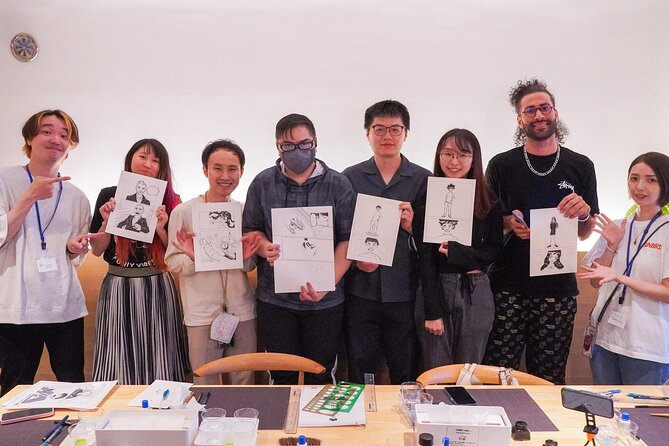
I like two things right away: all drawing materials are supplied, and the group is limited to five people. That makes this a personal lesson rather than a crowded demonstration. The main consideration is language. The workshop is conducted in Japanese, although the instructional slides are also in English, so you should be comfortable following visual examples and simple guidance without expecting a fully English-speaking class.
Key points to know before booking
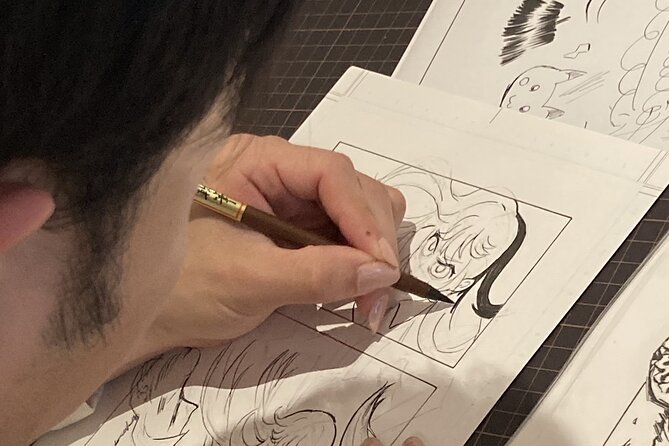
- You create one finished A4 manga page, not just a quick sketch.
- A professional manga artist leads the class, with help through each stage.
- The three-hour lesson covers real manga tools and methods, including dip-pen work, inking, effect lines, and screen tones.
- The class is limited to five participants, useful if you want individual attention.
- English slides support Japanese instruction, but the spoken class is primarily in Japanese.
- Ink can stain clothing and hands, so wear something you do not mind marking.
Why making one page matters more than a quick drawing
A manga workshop can easily become a basic cartoon class. This one has a more useful goal: you work toward a single finished page. That gives the session a clear shape and lets you see how several separate techniques fit together.
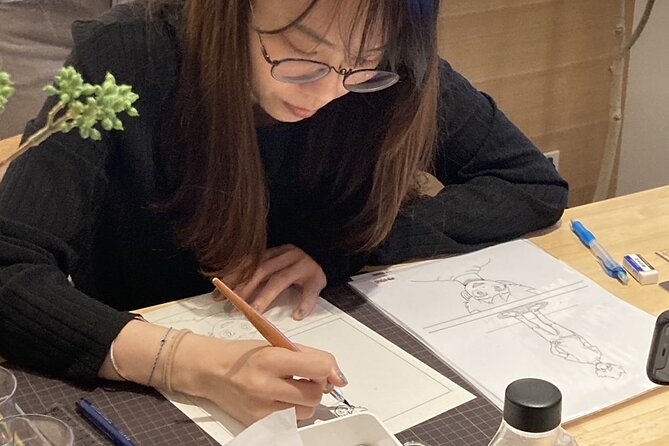
You begin with a sketch on A4 manga paper. This is the planning stage, where your page takes form before the permanent lines go down. You then practice with a dip pen, move into inking, fill selected areas with black, add effect lines, and finish with screen tones.
I like this sequence because it introduces the working habits behind manga rather than offering only a souvenir craft. You get to see how a page changes as each layer is added. The final result may not look like professional published manga, of course, but it gives you a physical example of the process.
The completed page also makes a better keepsake than a generic Tokyo purchase. It carries your own choices, mistakes, and improvements. You take it home at the end, which gives the workshop a lasting connection to your time in Japan.
A few more Tokyo tours and experiences worth a look



Arriving at the Kichijoji apartment studio
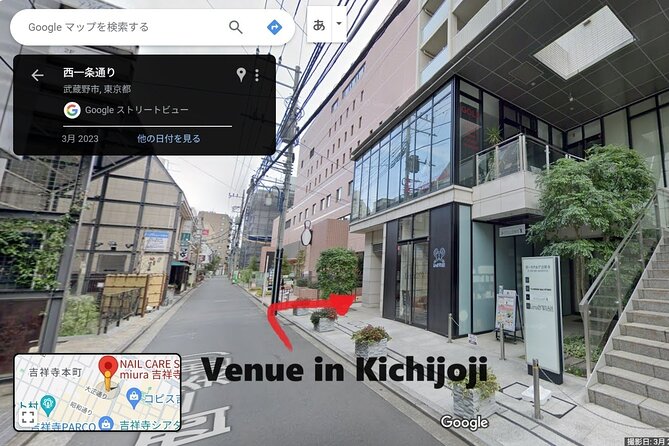
The workshop is in Kichijoji, an eight-minute walk from the north exit of Kichijoji Station. The address is 601 H-Square Kichijoji, 2-4-6 Kichijoji Honcho, Musashino-shi, Tokyo.
This meeting point needs careful attention. There is another building with a similar name, so do not rely on a quick glance at your map. The apartment is next to Kichijoji Excel Hotel Tokyu, with a New Balance store nearby. When you reach the correct building, press 601 and the call button. The instructions say the door will be unlocked.
I recommend allowing extra time for the walk and for finding the right building. The location is not a large public studio with a prominent workshop sign. It is an apartment room, and the room number matters.
Kichijoji is also useful if you want to combine the class with other plans. The Ghibli Museum in Mitaka is nearby, although you should treat museum admission and transportation as separate arrangements. The workshop itself does not include travel to or from the studio.
The first stage: sketching your manga page
The session begins on A4 manga paper. You work out the page as a sketch before committing to darker, permanent lines.
For a beginner, this stage can be more important than it sounds. A finished manga page depends on placement, movement, and the way the eye travels across the paper. Even with a simple subject, planning first gives you a chance to adjust the drawing before inking.
The instructor guides you through the process, and the small group size should make it easier to ask for help. With no more than five participants, you are not lost in a room full of people working at different speeds.
You should not expect to produce a long comic in three hours. The aim is one page, and that is a sensible target. It leaves enough time to learn several methods without turning the class into a rushed race to the finish.
Practicing with a dip pen before inking
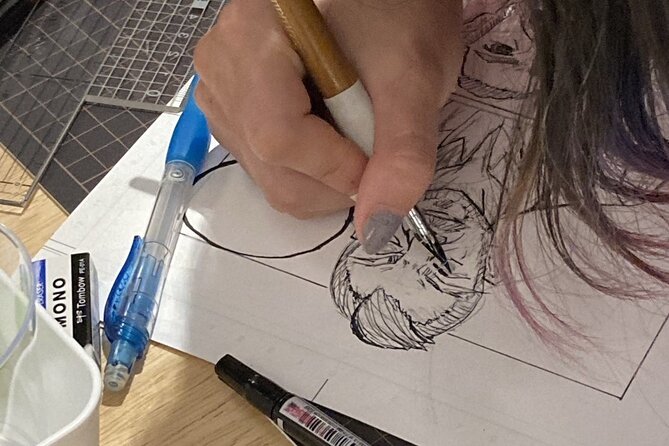
The workshop includes practice with a dip pen, one of the tools associated with traditional manga line work. You are not simply handed the pen and told to get on with it. Practice comes before the main inking stage, giving you a chance to become familiar with the tool.
This is one of the more distinctive parts of the experience. Many casual drawing activities use pencils, markers, or digital tablets. Here, you work with materials linked to hand-drawn manga production.
A dip pen can feel less predictable than an ordinary pen. Ink flow and line weight take attention, so this part may be challenging if you are new to the technique. That challenge is also the point. You get a direct sense of why line control matters in manga.
The class supplies the drawing materials, so you do not need to pack specialist pens, paper, or inks. You only need to bring yourself and wear suitable clothing.
Inking, black areas, and manga effect lines
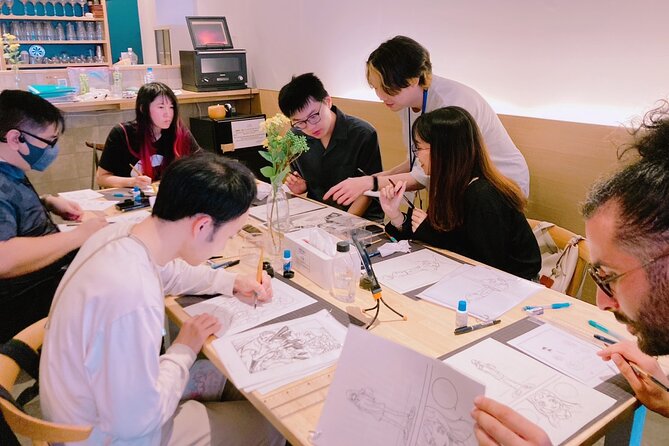
After the sketch and pen practice, you move into inking. This is where the page begins to look more finished, but it is also where errors become harder to hide. The professional artist provides instruction as you work through the lines.
The next steps include painting black and adding effect lines. These details help create emphasis and movement on the page. Even a reader who knows little about manga will recognize that these marks do more than decorate the paper. They help guide attention and add energy to a scene.
I like that the lesson does not stop after the outline. You learn about the visual language that gives manga its particular force. Effect lines are especially useful for anyone who wants to understand why a page can feel fast, dramatic, quiet, or intense without using much text.
Ink may stain your hands and clothing. That warning is practical, not fussy. Wear clothes you can afford to mark, and avoid bringing an outfit you plan to wear to a special dinner afterward.
A few more Tokyo tours and experiences worth a look





Finishing with screen tones
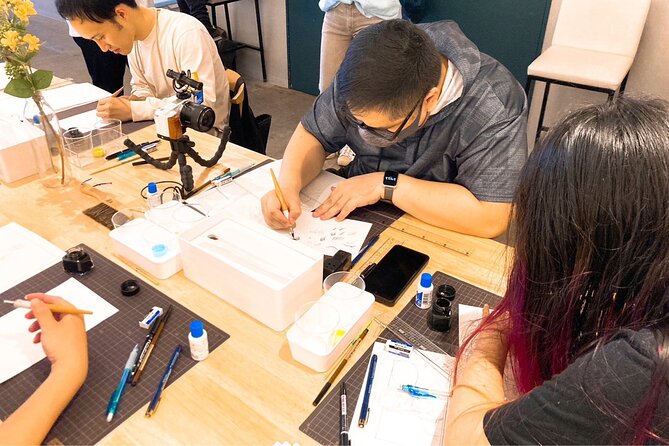
Screen tones are the final listed technique. These patterned sheets or tone effects add shading and texture to a manga page without requiring every area to be painted by hand.
For many first-time participants, screen tones may be the most unfamiliar part of the workshop. They show how manga artists create depth and contrast through a controlled graphic system. Adding them near the end also lets you see the page change once the major lines and black areas are already in place.
The class is designed to leave you with a complete one-page manga experience. It is not just a series of unrelated exercises. Each technique builds on the previous one, and the screen tones help pull the page together before you take it home.
Working with a professional manga artist
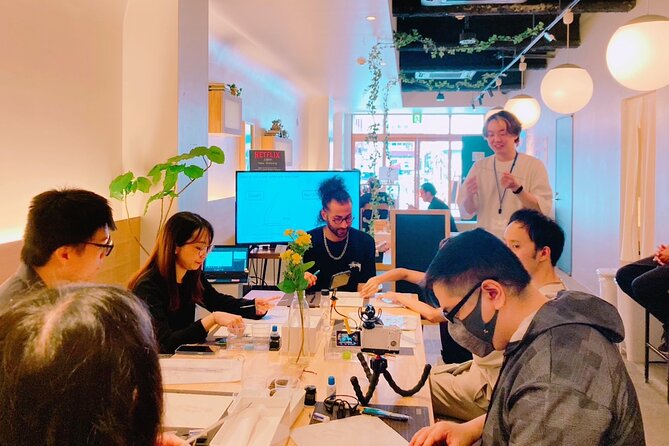
The instructor is a professional manga artist, and that is a major reason to choose this activity instead of a generic art class. You are learning from someone who works within the manga tradition, not simply following a printed worksheet.
The available information does not provide the instructor’s name, so you should not book expecting a particular artist by name. The teaching language is Japanese, with English included on the slides during instruction.
That language setup is worth understanding. You can follow the visual steps, and the instructor can still demonstrate the techniques directly. However, you should not expect every explanation or conversation to be delivered in fluent English.
This format may suit you well if you are curious about Japanese culture, studying Japanese, or comfortable learning through demonstration. One solo participant described being very introverted and unsure with Japanese, yet found enough support to continue working and even exchange a few phrases. That suggests the atmosphere can be encouraging for beginners who feel nervous about drawing or speaking.
The class also appears suitable for people attending alone. A booking does not require you to arrive with a group, and the small format gives the session a more personal feel.
What the $129 price includes
At $129 per person, this is not a cheap drop-in art activity. The value comes from the combination of professional guidance, supplied materials, a three-hour lesson, and a finished A4 page to take home.
If you only want to doodle for an hour, the price may feel high. You are paying for more than paper and ink. The fee covers access to a professional artist, instruction in several specific manga methods, and a structured session that moves from sketch to finished page.
It is also useful to compare the price with what you want from your Tokyo souvenirs. A mass-produced manga item can be less expensive, but it will not show how you made something yourself. If you care about process and want a personal memento, this workshop offers more substance than a standard souvenir purchase.
The value is strongest for people who already like manga, are curious about Japanese drawing methods, or want a hands-on cultural activity. It is less convincing for someone who dislikes drawing or wants a sightseeing tour with a lot of movement between locations.
Group size, timing, and comfort
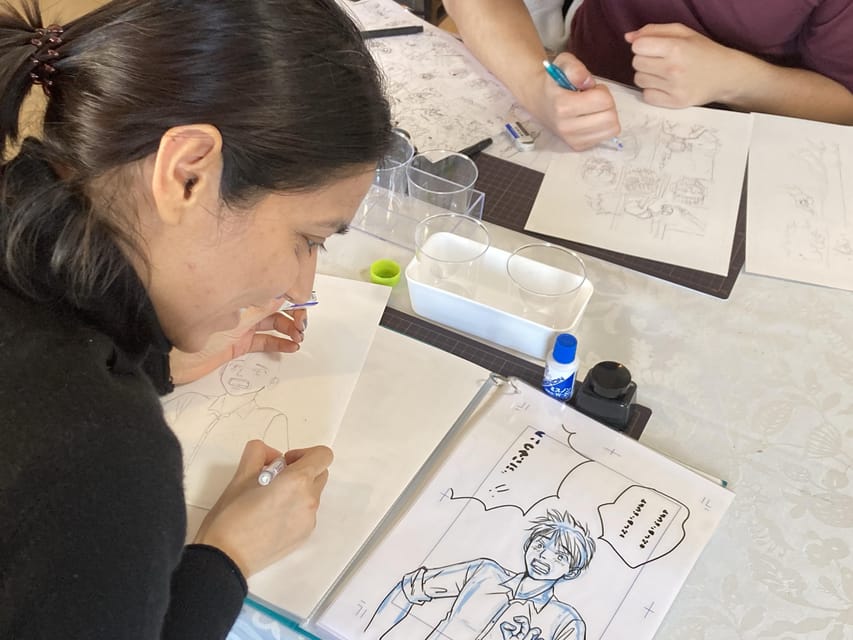
The workshop lasts three hours and is limited to five participants. That is long enough to work through the full page, but short enough to fit into a day of exploring Kichijoji or nearby Tokyo.
A five-person maximum matters here. Drawing requires attention, and beginners often need help with tools, line work, or the next step. A small group gives the instructor more room to check individual pages.
The class is wheelchair accessible, according to the activity information. Smoking is not allowed. Meals and drinks are not included, so plan those separately before or after the session.
The workshop takes place indoors in an apartment room. That means you should expect a focused studio lesson rather than a large commercial classroom. Bring a patient attitude, keep your materials organized, and be prepared to spend most of the three hours seated and drawing.
Who will enjoy this most
I would recommend this workshop to:
- Manga and anime fans who want to understand how a page is built
- Beginners who want patient, step-by-step instruction
- Solo visitors looking for a social activity with a clear purpose
- Artists interested in dip pens, ink work, effect lines, and screen tones
- Visitors who want a handmade souvenir rather than a shop purchase
- People comfortable learning through Japanese speech, English slides, and demonstrations
You do not need to be an experienced artist. The activity is built around learning techniques, not proving that you can already draw well.
I would hesitate to recommend it if you need a fully English-language lesson, dislike getting ink on your hands, or want a relaxed activity with no pressure to produce a finished page. The three-hour format is focused, and the final page is the goal.
Booking and cancellation details
You can cancel up to 24 hours in advance for a full refund. A reserve now and pay later option is available, which helps if your Tokyo schedule is still changing.
Starting times depend on availability, so check the date and time carefully before booking. Transportation, meals, and drinks are not included.
The meeting instructions deserve one final reminder: use the Kichijoji north exit, allow about eight minutes for the walk, look for H-Square Kichijoji near the Excel Hotel Tokyu and New Balance store, and press 601 at the entrance. The similar building name is the main arrival hazard.
Should you book the Kichijoji manga workshop?
Book it if you want to spend three focused hours making something by hand and taking it home. The strongest features are the professional artist, the small five-person group, the full process from sketch to screen tones, and the chance to work with traditional manga tools.
Think twice if you expect a fully English class or a polished professional result. Japanese is the main teaching language, and ink work takes care. Still, the English slides and hands-on demonstrations make the format workable for many beginners.
For manga fans, this is a more personal Tokyo experience than simply browsing merchandise. You leave with one page, but you also gain a clearer sense of how manga artists build an image layer by layer. At $129, it is a specialized activity, yet the price makes sense if that process is exactly what you came to Japan hoping to explore.
FAQ
Where is the manga workshop held?
It is held in an apartment near Kichijoji Excel Hotel Tokyu in Kichijoji. The address is 601 H-Square Kichijoji, 2-4-6 Kichijoji Honcho, Musashino-shi, Tokyo.
How do I reach the meeting point?
The apartment is about an eight-minute walk from the north exit of Kichijoji Station. A New Balance store is nearby. Be careful because another building has a similar name.
What should I do when I arrive?
Press 601 and the call button when you reach the building. The door will be unlocked.
Is the workshop taught in English?
The workshop is conducted in Japanese, but the instructional slides also include English. The listed instructor languages are Japanese and English.
What is included in the price?
The price includes guidance from a professional manga artist, all necessary manga drawing materials, and a one-page manga experience that you can take home.
Can I cancel my booking?
Yes. You can cancel up to 24 hours in advance for a full refund. A reserve now and pay later option is also available.
More 3-Hour Experiences in Tokyo
More Workshops & Classes in Tokyo


More tours in Tokyo we've reviewed












3-Hour Experiences, compared.
 ★ 5.0Tokyo Top Highlights 3h Guided E-bike TourFrom $63
 ★ 5.03h Tokyo E-Bike Tour: Hidden Gems, and Local Life with guideFrom $63
 ★ 4.8Tokyo: 3-Hour Bike or E-Bike City Highlights TourFrom $453 hours
 ★ 4.8Tokyo: 3-hour Guided E-Bike Tour of the City’s Hidden GemsFrom $65
 ★ 5.0Tokyo: 3-Hour Bike/E-Bike Tour of the City’s HighlightsFrom $63
 ★ 5.03-Hour Tokyo Pub Crawl Nightlife Welcome Guided Tour in ShibuyaFrom $46