Reviewed · SAMURAI & NINJA EXPERIENCES
Tokyo: Samurai Experience with Lunch and Guided Tour
Tokyo’s samurai story comes alive in Kagurazaka, where quiet lanes, old shrines, former geisha quarters, and traditional houses give the setting real character. You’ll walk with a local guide, learn how samurai ideals connect with Shinto and Zen Buddhism, then train with professional instructors in basic sword movements and fighting technique.
In This Article
- Key points to know before you book
- Why Kagurazaka is the right place for a samurai lesson
- Walking the side streets and old geisha quarter
- What happens during the one-hour samurai session
- Lunch in a former teahouse
- Kagurazaka snacks and a final local walk
- Is $162 a fair price?
- Who will enjoy this most?
- Practical details that can make the day easier
- Should you book the Kagurazaka samurai experience?
- FAQ
- Where does the tour meet?
- How long does the experience last?
- Is the tour conducted in English?
- How large is the group?
- What does the samurai experience include?
- Is lunch included?
- Can I request a vegetarian meal?
- Can the tour accommodate vegan or gluten-free diets?
- What happens if I arrive late?
I like the mix of hands-on practice and neighborhood history, and I like that lunch takes place in a Japanese house more than 70 years old, once used as a teahouse. The main drawback is that the meal cannot accommodate vegan, gluten-free, shellfish allergy, or fully allergy-free requests, so check the food arrangements before booking.
Key points to know before you book
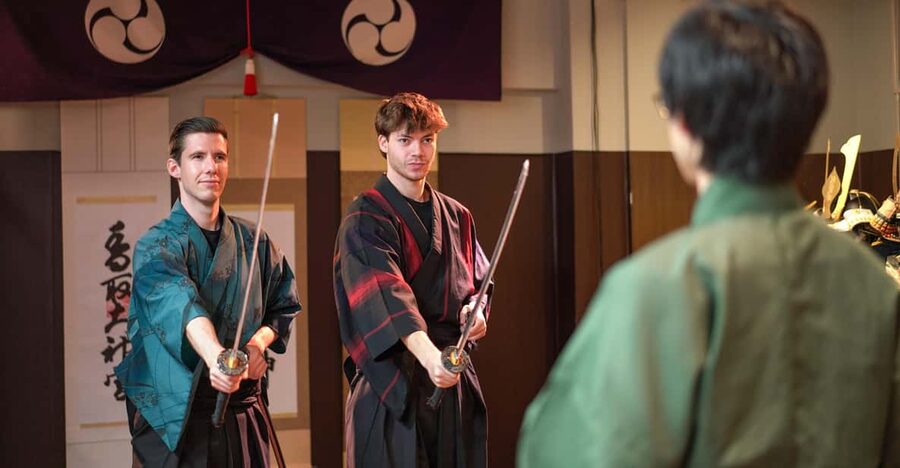
- Samurai practice lasts one hour: You receive a kimono rental, watch a professional performance, and learn basic movements in a beginner-friendly session.
- Kagurazaka gives the tour its setting: The district is linked with Edo-era samurai homes and includes atmospheric lanes, shrines, and a former geisha area.
- Lunch comes in an old Japanese house: The meal is served in a traditional building more than 70 years old, with a vegetarian option available if requested by the day before.
- The group is capped at nine: This makes it easier to follow instructions, ask questions, and get help with photos.
- You pay $162 for four hours: That covers the guide, lunch, kimono rental, samurai class, and one local snack or sweet.
- Arrive early at Iidabashi: The meeting point is in front of Aoyama Flower Market at the west exit of JR Iidabashi Station, and late arrivals cannot join after the stated cutoff.
Why Kagurazaka is the right place for a samurai lesson
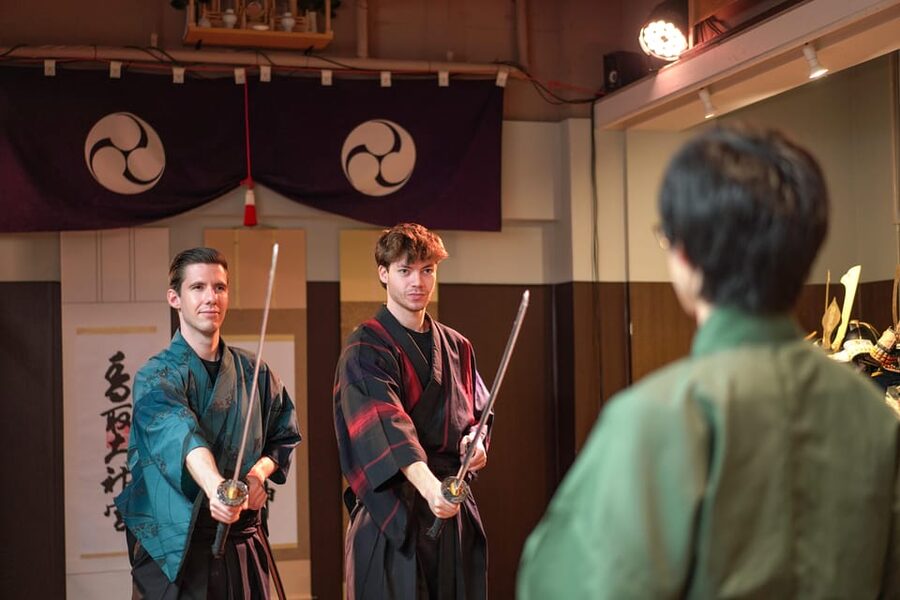
Many samurai-themed activities in Tokyo are built around a stage or studio. This one adds a neighborhood walk first, which gives the training some context. Kagurazaka was once associated with samurai residences during the Edo period, and its sloping streets and side lanes still feel different from the broad avenues around Tokyo Station or Shibuya.
You begin in front of Aoyama Flower Market at the Ecute Edition Iidabashi shop. It is on the right after you leave the west exit of JR Iidabashi Station. This is a useful meeting point because it is tied to a clear station exit, but I would still arrive early. The tour starts on time, and arriving more than 15 minutes late means you cannot join, reschedule, or receive a refund.
From the station, your guide leads you toward Zenkokuji. The walk takes about 15 minutes and introduces the tone of Kagurazaka: a busy Tokyo district close to the station, but with narrower streets and older cultural links once you turn away from the main road.
At Zenkokuji, expect a guided sightseeing stop rather than a long temple visit. The guide explains local religious customs and helps connect the area to Shinto, Buddhism, and Zen. That background matters because the tour is not presenting samurai as movie characters alone. You get a basic look at the beliefs and discipline that shaped the traditional image of the warrior class.
A few more Tokyo tours and experiences worth a look

Walking the side streets and old geisha quarter
The longest part of the outing takes place around Kagurazaka. You’ll walk through the district, stop at points of interest, and hear about its past as the guide points out details you could easily miss on your own.
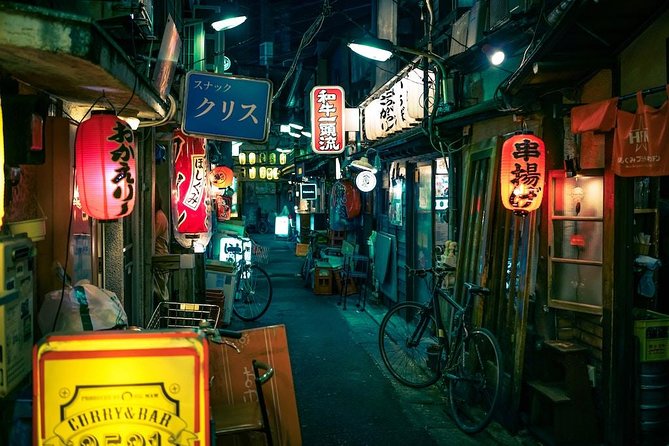
One particularly interesting feature is the old geisha alley. The narrow lane adds a different layer to the neighborhood. Kagurazaka was not only a samurai setting. It also developed a connection with geisha culture, restaurants, teahouses, and traditional entertainment. This helps the area feel like a living neighborhood rather than a museum display.
The guide team may include Mark, Taka, or Naoki, depending on the departure. Mark has been praised for making the history easy to follow while keeping the mood light, and Taka and Naoki have led walks that combine cultural and food stops. The important point is the guide’s role: you are not simply moved from one attraction to another. The walk is designed to explain how the district’s samurai, religious, culinary, and geisha connections fit together.
The streets are not a strenuous hike, but you should be comfortable walking for several hours. The tour includes repeated walks between stops, and wheelchair users cannot be accommodated. Families with children age four and older can join, though younger children may need help staying focused during the history portions.
What happens during the one-hour samurai session
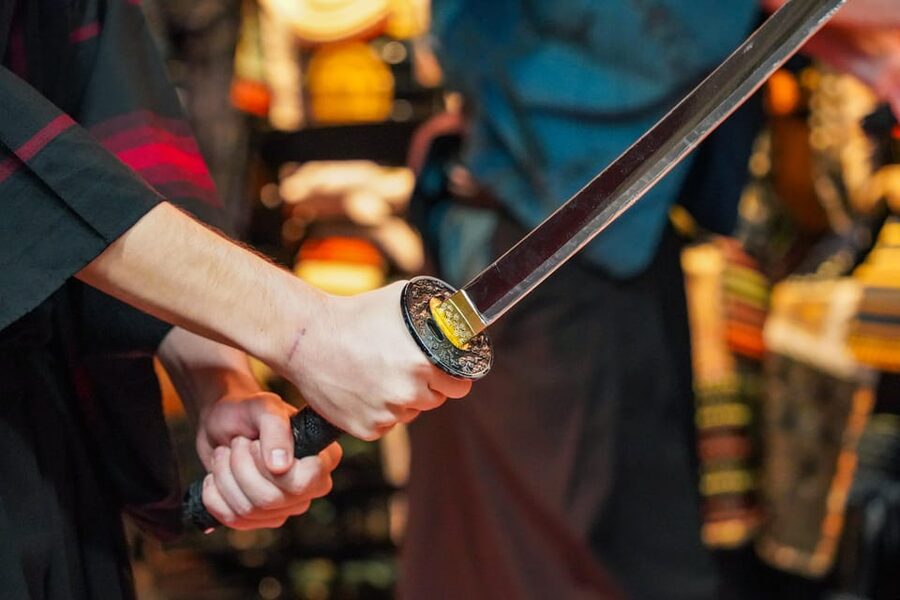
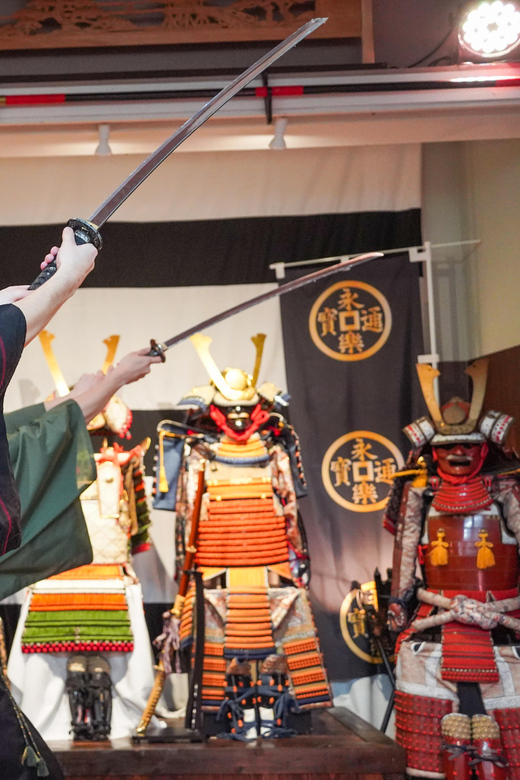
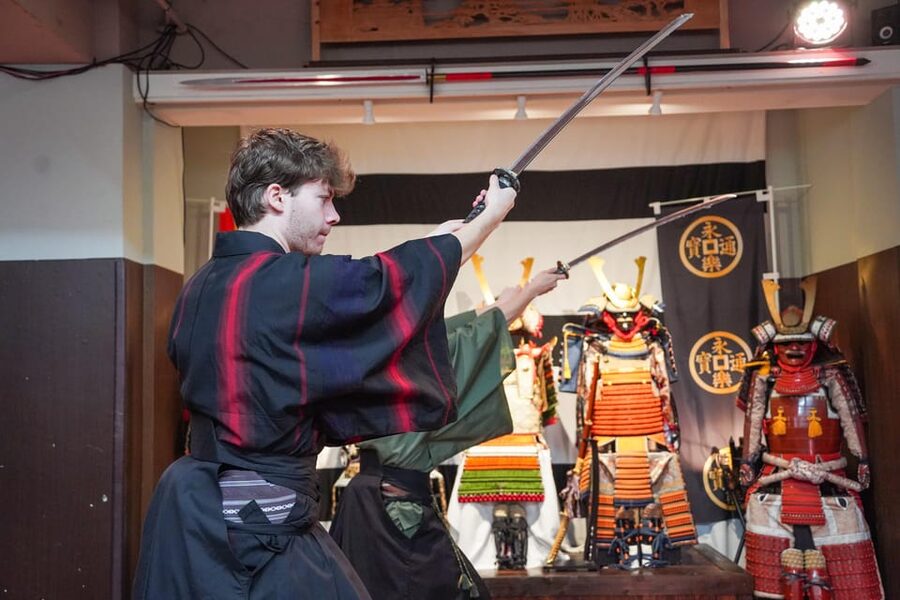
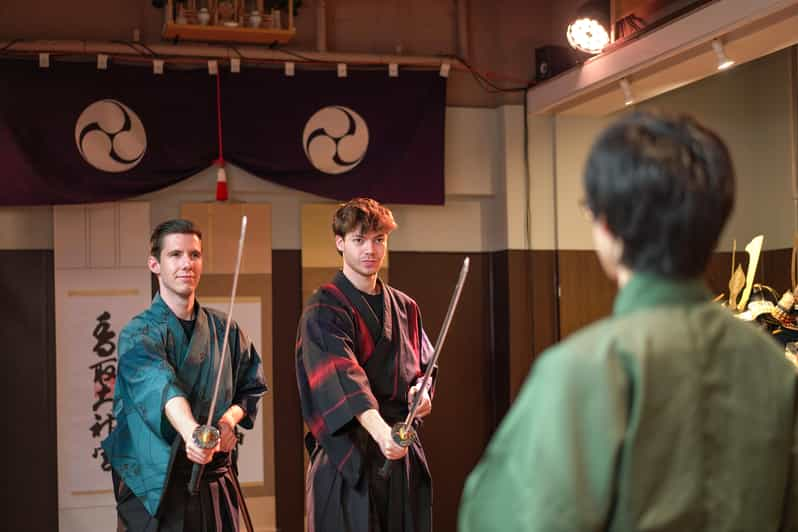
The central activity is a one-hour samurai experience with kimono rental. The instructors begin with a demonstration by professional samurai actors. This performance gives you a clear idea of the posture, timing, and controlled movement involved before you try the techniques yourself.
The performance is likely to be the most theatrical part of the morning. It is suited to visitors who enjoy stage combat, action shows, or Japanese martial arts. The instructors then break the movements into simple steps. You do not need previous training, and the lesson is intended for beginners.
You’ll learn basic samurai movements and authentic fighting techniques in a controlled, guided format. The emphasis is on following instructions and performing the sequence correctly, not on proving athletic ability. That makes the activity workable for a wide age range, including children, as long as they are at least four.
The kimono rental adds to the fun and gives the photographs a stronger sense of place. The guide and instructors also help with photos, which is useful when you are wearing unfamiliar clothing and handling a new activity. You should expect a structured lesson, not free-form swordplay. Smoking, alcohol, and drugs are not allowed.
This section is also where the small group matters most. With no more than nine participants, the instructors can keep an eye on the movements and offer individual help. A larger group could make the lesson feel like a quick demonstration, while this format gives you a better chance to practice.
Lunch in a former teahouse
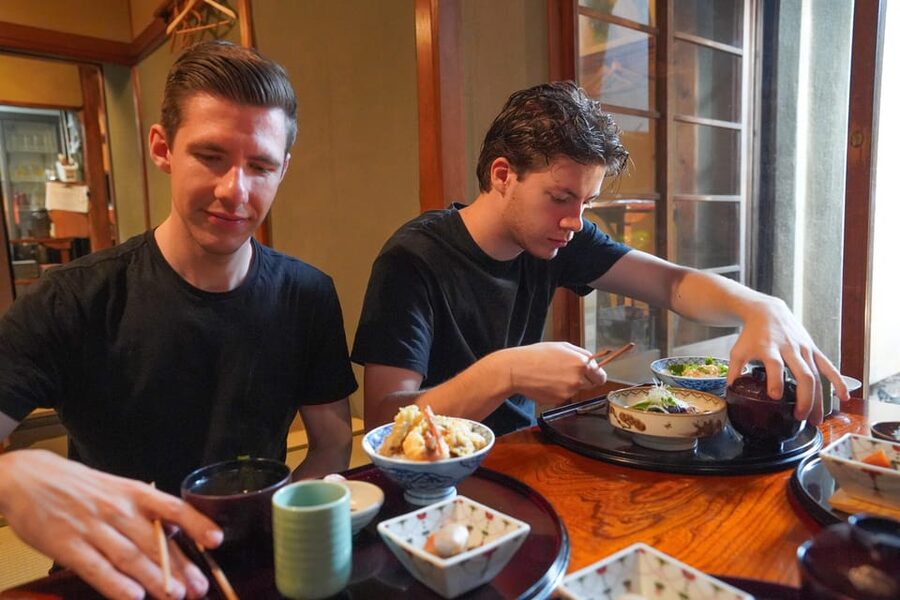
After the training, you’ll continue through Kagurazaka and sit down for a Japanese lunch in a house more than 70 years old. The building was once a teahouse associated with geishas, so the setting carries as much interest as the meal itself.
I like this part because it slows the pace after the energetic class. You have time to sit, eat, and think about the morning while remaining in a traditional environment. The meal is included in the $162 price, and a vegetarian course can be arranged if you request it by the day before.
The food policy needs careful attention. Vegan and gluten-free meals are not available, and shellfish allergy requests cannot be accommodated. The operator also cannot guarantee that meals are free from allergens because the food is prepared in kitchens outside the tour company. Substitutions may not always be possible.
If you have a serious allergy or strict dietary needs, this is a reason to skip the tour or contact the provider before paying. Do not wait until the day of the tour to ask for a vegetarian meal. A vegetarian request made that late cannot be accepted.
Kagurazaka snacks and a final local walk
The tour also includes one traditional food or sweet. Depending on the stop, you may choose something such as chimaki, a steamed bun, or a modern Japanese sweet. This is a small part of the price, but it adds a useful taste of the neighborhood and gives you a chance to try something beyond the included lunch.
The final shopping and snack walk lasts about 30 minutes. It is a good chance to see how Kagurazaka mixes old and new. The district’s narrow lanes, food shops, sweets, and traditional associations make it a pleasant place to browse without turning the tour into a formal shopping trip.
You then return to the Aoyama Flower Market meeting point near JR Iidabashi Station. The listed timings add up to about four hours, though the exact start time depends on availability. Since hotel pickup and drop-off are not included, plan your route to Iidabashi in advance.
Other guided tours in Tokyo





Is $162 a fair price?
At $162 per person, this is not a cheap walking tour. The better question is what you would have to arrange separately. The fee covers about four hours of guiding, the one-hour samurai class, kimono rental, a professional performance, lunch, a local snack, and transport between the walking stops.
That works out to roughly $40.50 per hour before assigning any value to the meal or costume. The small group, with a limit of nine people, also matters. You are paying for a more personal format rather than a large group demonstration.
I see the strongest value in the combination. A basic Tokyo neighborhood walk costs less, and a standalone cultural show may also be cheaper. Here you get both, plus food and active participation. If you already plan to visit Kagurazaka on your own and do not care about samurai training, the price may feel high. If you want a single half-day activity that handles the cultural background, class, lunch, and local tasting, the package is easier to justify.
The four-hour length is another advantage. It is long enough to give the district and training proper attention, but short enough to leave your afternoon open for another Tokyo plan. You will not need to cover the guide’s food or drinks.
Who will enjoy this most?
I would recommend this experience to you if you like Japanese history but want more than a lecture. The training gives you something to do, while the walk explains the ideas and places connected with the samurai.
It also suits families. Children age four and older can take part, and the kimono, performance, and photo opportunities give younger participants something memorable to focus on. Parents should remember that the group includes other people, so the lesson is shared rather than designed only for one family.
Fans of action theater and martial arts should also find plenty to enjoy. The professional performance supplies the visual drama, while the practice session lets you try the basic movements in a safe, guided way.
You may want to choose another activity if you need wheelchair access, cannot walk for several hours, or require vegan, gluten-free, shellfish-free, or strictly allergy-free food. The tour also may not suit anyone looking for a quiet temple visit, since the samurai performance and training are the main event.
Practical details that can make the day easier
The tour is conducted in English with a live guide. The group is limited to nine, which helps with instructions and conversation. Other participants may join your booking, so do not expect a private tour unless the booking terms specifically say otherwise.
Wear something that allows comfortable walking. You will be moving through streets and taking part in a physical lesson, even though the activity is suitable for beginners. The kimono rental is included, so you do not need to arrange traditional clothing yourself.
Book the vegetarian meal no later than the day before. This request cannot be added on the tour day. If you have food allergies, ask detailed questions before booking, because the provider does not promise an allergy-free meal.
The cancellation policy allows a full refund when you cancel at least 24 hours in advance. You can also reserve now and pay later, which is useful if your Tokyo schedule is still changing. The strictest rule is lateness: arrive before the meeting time at the west exit of JR Iidabashi Station.
Should you book the Kagurazaka samurai experience?
Book it if you want an active cultural morning with a strong sense of place. The best feature is the way the parts support one another: Kagurazaka explains the setting, the instructor-led class makes samurai culture physical, and lunch in the former teahouse gives the experience a calm finish.
I would be especially comfortable recommending it to first-time visitors who want a guided introduction to Japanese traditions without spending a full day at a museum. The small group, helpful instructors, and photo support make the lesson approachable. Guides such as Mark, Taka, and Naoki have also brought a friendly, clear style to the walk.
Skip it if the food restrictions affect you, if you need step-free access, or if $162 is more than you want to spend for a four-hour activity. For everyone else, this is one of Tokyo’s more unusual ways to connect a historic neighborhood with samurai performance, beginner martial arts, and a traditional meal.
FAQ
Where does the tour meet?
Meet in front of Aoyama Flower Market at the Ecute Edition Iidabashi store, near the west exit of JR Iidabashi Station. After leaving the station through the west exit, the shop is on your right.
How long does the experience last?
The experience lasts four hours. Starting times vary, so check availability when booking.
Is the tour conducted in English?
Yes. The tour includes a live English-speaking guide.
How large is the group?
The group is limited to nine participants. Other people may join your booking.
What does the samurai experience include?
It includes one hour of samurai training, a kimono rental, a professional samurai performance, and guided practice of basic samurai movements and fighting techniques.
Is lunch included?
Yes. A Japanese lunch is included, and it is served in a traditional Japanese house more than 70 years old.
Can I request a vegetarian meal?
Yes, but you must request the vegetarian course by the day before the tour. Vegetarian requests cannot be accepted on the day of the tour.
Can the tour accommodate vegan or gluten-free diets?
No. Vegan and gluten-free options are not available. Shellfish allergy requests and guaranteed allergy-free meals also cannot be accommodated.
What happens if I arrive late?
The tour starts on time. If you are more than 15 minutes late, you cannot join the activity, reschedule, or receive a refund.
More Lunch Experiences in Tokyo






More Guided Tours in Tokyo
More Samurai & Ninja Experiences in Tokyo



More tours in Tokyo we've reviewed









Samurai & Ninja Experiences, compared.
 ★ 4.5Tokyo: Samurai Restaurant Show Ticket with 2 DrinksFrom $551h 30m
 ★ 4.6Tokyo: Samurai Ninja Museum Guided tour and ExperienceFrom $27
 ★ 5.0Skip the lines Basic Ticket at SAMURAI NINJA MUSEUM TOKYOFrom $28
 ★ 5.0Tokyo: Authentic Samurai Training at a DojoFrom $211
 ★ 5.0Best Samurai Experience in TokyoFrom $65
 ★ 4.6Tokyo: Legend Samurai Entertainment Night in Kanda ShrineFrom $44