Reviewed · SUSHI MAKING CLASSES
Tokyo: Kappodo sushi Live Workshop
The best part of this Tokyo class is that you do not just watch a chef prepare sushi. You handle the fish, shape the rice, and make a full meal under close instruction. The chef also explains why different fish are treated in different ways, along with basic facts about their lives in the ocean.
In This Article
- Key points before you book
- What you actually learn in 1 hour and 45 minutes
- Seven nigiri, one gunkan, and a thin roll
- Fish, rice, and the reasons behind the method
- Eating what you made at the studio
- Why the four-person limit matters
- Is $160 a fair price in Tokyo?
- Finding Kappodo in Nishiazabu
- Who will get the most from this class?
- What the strongest praise tells you
- Practical details to know before booking
- Should you book Kappodo’s sushi workshop?
- FAQ
- How long does the Kappodo sushi workshop last?
- What sushi will I make?
- Is the workshop taught in English?
- What is included in the price?
- Where does the experience start and finish?
- What is the cancellation policy?
I like the small maximum of four people, which gives the chef room to stand beside you and correct your technique. I also like the clear progression from demonstration to hands-on work: you make seven nigiri, one gunkan-style sushi, and a thin roll, then sit down to eat what you made. The main consideration is the price, $160 for about one hour and 45 minutes, so this makes the most sense if you want practical instruction rather than a quick cultural activity.
Key points before you book
- You make a full sushi meal: The session includes seven nigiri, one gunkan-style piece, and a thin roll cut into six pieces.
- The chef teaches the reasons behind the technique: Expect explanations about fish types, fish characteristics, rice, handling, cutting, and decoration.
- The group is capped at four people: This is a close teaching format, though it is not advertised as a private class.
- The experience includes extras: Lunch, a welcome drink, original sake tasting, a participation certificate, and a 10% discount at the first-floor shop are included.
- The class begins and ends in Nishiazabu: You meet at Kappodo H.Q. and Tokyo D Kitchen Studio in Minato City.
- Cancellation is flexible until 24 hours before: A full refund is available if you cancel at least one day ahead.
What you actually learn in 1 hour and 45 minutes
Kappodo’s workshop is built around a useful idea: sushi becomes easier to appreciate once you understand the work behind each piece. You are not being asked to master a professional chef’s career in one morning or afternoon. Instead, you get a guided introduction to the key actions that make nigiri look and taste right.
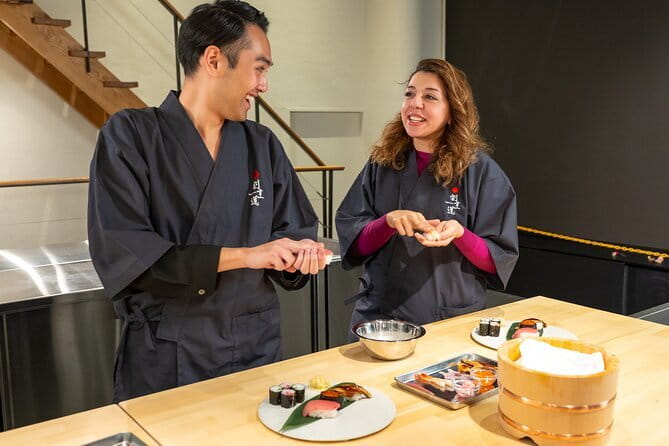
The English-speaking chef begins with a welcome drink, either water or green tea. This gives you a moment to settle in before the knives and fish appear. Since the class is held in a kitchen studio, the focus is on the food and the teaching, not on a long walk through Tokyo or a formal restaurant meal.
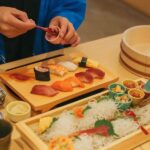
The demonstration starts with fish cutting and decoration right in front of you. That matters because sushi preparation can look simple from across a counter. Once the chef slows down the motions, you can see how the cut, the angle, and the presentation affect the final piece.
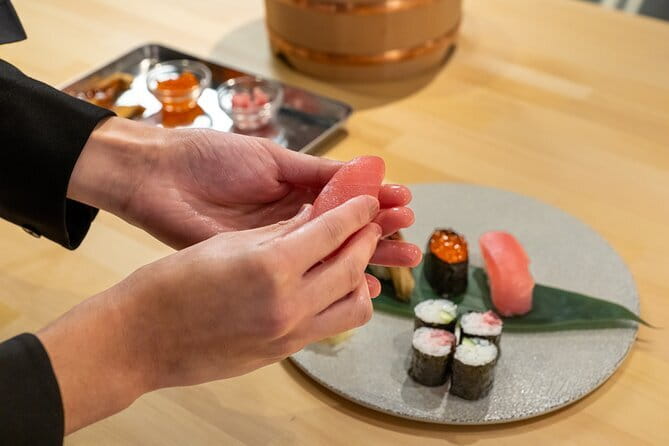
The chef then makes nigiri step by step while explaining both how to do it and why. That second part is useful. You learn not only where to put the fish, but also why the rice must be handled carefully and why different fish may need different treatment.
After the demonstration, you make sushi with the chef standing directly in front of you or beside you. With a maximum of four participants, the format should allow for direct help instead of a one-size-fits-all speech. If you are nervous about using your hands or getting the rice shape wrong, this close instruction is one of the strongest reasons to choose the class.
A few more Tokyo tours and experiences worth a look
Seven nigiri, one gunkan, and a thin roll
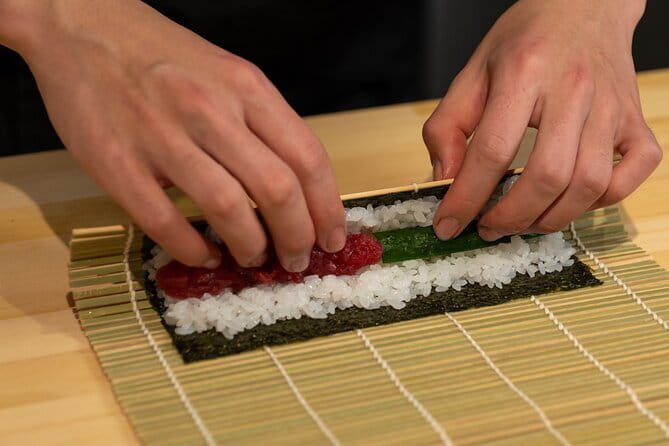
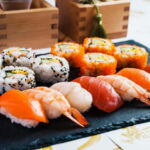
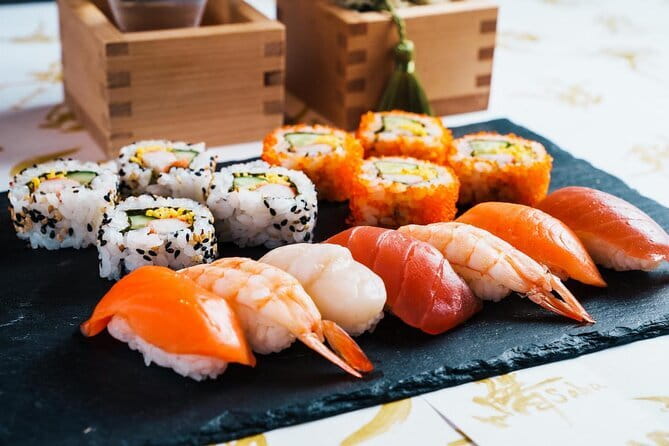
The main cooking section gives you a generous amount of food to prepare. You make seven nigiri-zushi, followed by one gunkan-style piece and a thin roll.
Nigiri is the classic hand-shaped sushi many people picture first: a small portion of rice topped with fish or another ingredient. The skill is in finding a balance. The rice must hold together, but it should not become a hard block. The topping needs to sit neatly without being buried under too much rice.
The gunkan style is shaped differently, with rice wrapped so that a softer topping can sit on top. It gives you a chance to practice a second form rather than repeating the same motion for the whole class.
You also make a thin roll, then cut it into six pieces. Cutting is a small but important moment. A roll can look tidy until the knife presses down and pushes the filling out of place. The chef’s instructions here help you see how careful handling affects presentation.
The complete list of pieces gives the class a good rhythm. You begin with the most recognizable technique, add a different style, then finish with rolling and slicing. You will not leave with only one carefully prepared sample. You will have made enough sushi for the meal that follows.
Fish, rice, and the reasons behind the method
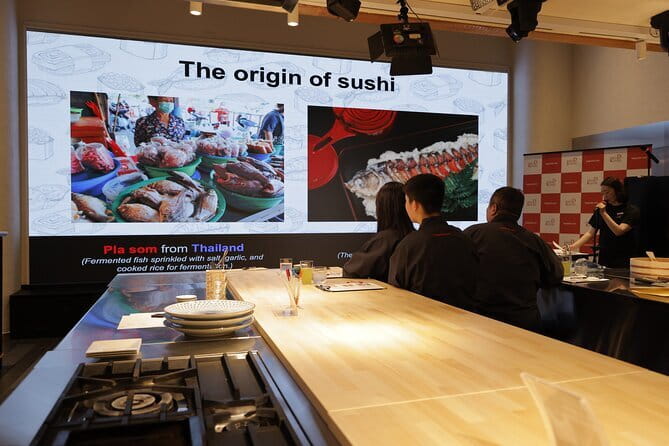
A strong feature of this class is the attention given to fish itself. The chef explains the types of fish being used, some characteristics of each fish, and a little about each one’s life in the ocean.
That information adds useful context without turning the workshop into a science lecture. Fish is not simply a topping selected for color. Its texture, shape, and characteristics affect how it is cut and served. Even a short explanation can change the way you look at the sushi counter later in your trip.
The class also covers handling the fish and the rice. One review of Kappodo’s teaching describes instruction on how to handle both, with detailed reasons for each step. That is the sort of practical information you can use at home, even if your first homemade nigiri looks more cheerful than precise.
Knife work is part of the lesson, but the information provided does not say that this particular sushi class is a knife-skills course. Kappodo also offers a sashimi cutting class, where Naoya, a culinary-school graduate who worked at several top sushi restaurants in Japan, teaches with interpreter Kaego. Those names relate to another class, so do not assume they will lead the sushi workshop. The chef for this session is described only as an English-speaking sushi chef.
Eating what you made at the studio
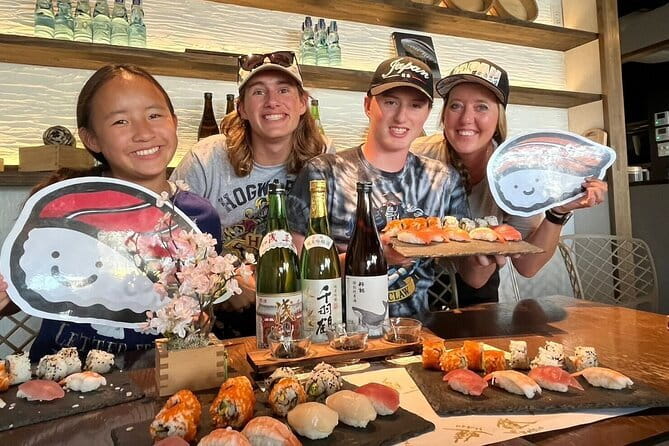
Once the sushi is prepared, you place the pieces together for a commemorative photo. This is a nice touch because it gives you a record of the meal before the plate starts disappearing.
Then you eat the sushi you made, with a cool drink and an optional little extra if you would like it. Lunch is included in the price, as is an original sake tasting. The supplied details do not specify the sake amount or list every drink choice, so you should treat the tasting as a small included part of the class rather than a separate sake tour.
The meal is the payoff, but it also helps you judge your own work. You can see how the rice, fish, and roll came together. If one piece is loose or uneven, that is part of the lesson, not a failure. You get to taste the result while the process is still fresh.
You can also ask the chef questions about sushi. This is a good chance to ask about the pieces you just made, fish types, rice, cutting, or other sushi topics. With only a few people in the room, questions should fit naturally into the session instead of being saved for a rushed final minute.
Why the four-person limit matters
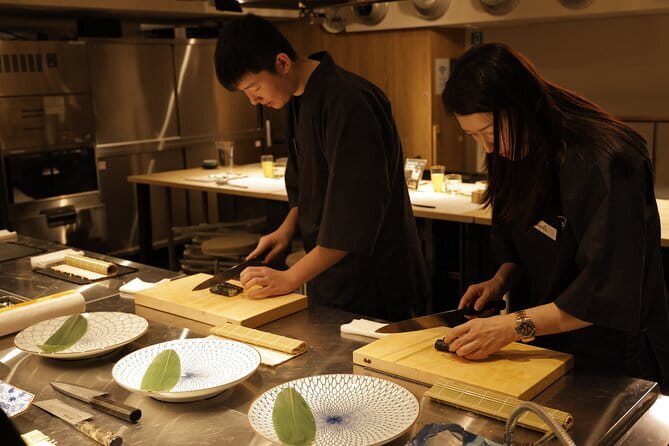
The maximum of four people is one of the most meaningful details here. A small group makes it easier for the chef to watch your hands, answer follow-up questions, and give help at the point where you need it.
This is especially useful for families. A family review praised the staff and chef for being considerate, helpful, and attentive, and noted that the whole family enjoyed the food and the activity. Another account describes a tween staying engaged through nearly two hours of instruction, which suggests the class can work for older children who enjoy food and hands-on tasks.
Still, the experience is not described as a private booking. If you need the room entirely to yourself, check the reservation terms before paying. A four-person maximum gives you a small class, but it does not automatically mean exclusive use.
The English instruction is another practical advantage. You do not need to know Japanese to follow the chef’s explanations. The class is designed for English-speaking participants, and the teaching focuses on showing each movement as well as describing it.
A few more Tokyo tours and experiences worth a look

Is $160 a fair price in Tokyo?
At $160, this is not a cheap way to eat sushi. You can find less expensive meals in Tokyo, and you can also find shorter food activities that cost less.
The value comes from what is bundled into the session. You receive about one hour and 45 minutes of instruction, a meal, sake tasting, a certificate of participation, and a 10% discount on all items at the first-floor shop on the same day. The discount has real value only if you planned to buy something there, so I would not count it as a major saving unless you already want a Kappodo product.
The real question is what you want from the food budget. If you want a memorable meal with no cooking effort, this is poor value compared with simply eating sushi at a good restaurant. If you want to learn the basic structure of nigiri, gunkan, and thin rolls while working with a professional, the price is easier to justify.
The certificate is a pleasant souvenir, but it is not the main reason to book. The useful parts are the live demonstration, direct coaching, and the chance to eat your own work. I would choose this for a special Tokyo day, a family activity, or a food-focused trip rather than for a routine lunch.
Finding Kappodo in Nishiazabu
The meeting point is Kappodo H.Q. and Tokyo D Kitchen Studio, at DK Building, 2-chome 21-12, Nishiazabu, Minato City, Tokyo 106-0031. The experience starts and ends at this same meeting point.
The activity is near public transportation, but the supplied information does not name a specific station or give walking directions. I would allow extra time to find the building, particularly if you are coming from another part of Tokyo or carrying luggage. Use the exact address in your map app and arrive ready to begin at the scheduled time.
There is no private transportation included. That is normal for a city kitchen workshop, but it matters if you are trying to connect this activity with a hotel pickup or another booked tour. Plan your own route to Nishiazabu and your own onward transport after the class.
Because the session lasts less than two hours and returns to the starting point, it fits neatly into a Tokyo itinerary. You could pair it with other Minato City plans, but leave enough time for the class to run its full length and for the trip to your next stop.
Who will get the most from this class?
I would recommend the workshop to you if you want to do more than photograph sushi or eat it at a counter. It suits first-time sushi makers, families with an older child, couples, and small groups who enjoy learning a food tradition through their own hands.
It is also a good match if English instruction is important. The chef explains the work in English, and the lesson includes time for questions. You do not need to arrive with sushi-making skills.
The class may be less suitable if you dislike raw fish, want a long restaurant meal, or prefer a private activity. The menu details do not say how much flexibility there is for dietary restrictions, so you should ask before booking if you cannot eat particular fish or ingredients.
It is also not the best pick if your main goal is advanced knife training. Kappodo offers a separate sashimi cutting class, and the information about that class points to more focused knife work. This sushi workshop is broader: fish preparation, rice handling, nigiri, gunkan, rolling, eating, and questions all share the time.
What the strongest praise tells you
The most consistent positive theme is the teaching. The chef is described as patient and attentive, with clear explanations of the steps and the reasons behind them. That is important because sushi classes can easily become a quick demonstration followed by a photo opportunity.
Kappodo also receives praise for friendly staff and helpful instruction. In the related sashimi class, participants appreciated interpreter Kaego and instructor Naoya, while another class received praise for guiding a first-time knife user through the process from knife preparation to assembling the finished dish. Again, those instructors are not confirmed for this sushi workshop, but the comments point to a teaching style that values questions and careful support.
The perfect listed rating of 5 from four reviews is encouraging, though the sample is small. I would treat it as a strong signal about the personal teaching style, not as proof that every person will love the format. Your enjoyment will depend on your interest in fish, your comfort with hands-on food preparation, and how much you value the included extras.
Practical details to know before booking
Confirmation is sent when you book, and the experience requires a minimum number of participants. If the minimum is not reached and Kappodo cancels the activity, you are offered another date or experience, or a full refund.
You can cancel for a full refund up to 24 hours before the start time. Cancellations or changes made within 24 hours are not accepted for a refund, and the cut-off uses Tokyo local time.
The mobile ticket makes the entry process simple. Keep the ticket available on your phone, and use the booking confirmation for the meeting address and start time.
Should you book Kappodo’s sushi workshop?
Book it if you want a small, hands-on lesson with a professional sushi chef, and if making seven nigiri, a gunkan piece, and a roll sounds more appealing than simply ordering them. The included meal, sake tasting, certificate, and direct English instruction make the $160 easier to defend for a special occasion.
I would skip it if you are seeking the least expensive sushi meal, a private class, or a dedicated knife course. For families, food lovers, and anyone curious about why sushi is prepared the way it is, Kappodo offers a focused Tokyo activity with enough cooking to make the price feel purposeful.
FAQ
How long does the Kappodo sushi workshop last?
The experience lasts approximately 1 hour and 45 minutes.
What sushi will I make?
You will make seven nigiri-zushi, one gunkan-style sushi, and one thin roll. You will cut the thin roll into six pieces.
Is the workshop taught in English?
Yes. An English-speaking sushi chef leads the demonstration and gives instructions while you prepare the sushi.
What is included in the price?
Lunch, alcoholic beverages including original sake tasting, a certificate of participation, and a mobile ticket are included. You also receive 10% off items at the first-floor shop on the same day as your workshop.
Where does the experience start and finish?
It starts and ends at Kappodo H.Q. and Tokyo D Kitchen Studio in DK Building, Nishiazabu, Minato City, Tokyo 106-0031. Private transportation is not included.
What is the cancellation policy?
You can cancel at least 24 hours before the start time for a full refund. Cancellations or changes made less than 24 hours before the start time are not accepted and are not refunded.
More Workshops & Classes in Tokyo
More Sushi Making Classes in Tokyo
More tours in Tokyo we've reviewed








Sushi Making Classes, compared.
 ★ 5.0Sushi Making Tokyo Roll and Authentic Japanese Sushi ClassFrom $59
 ★ 4.9Tokyo: Roll and Authentic Sushi Making Class in AsakusaFrom $581h 40m
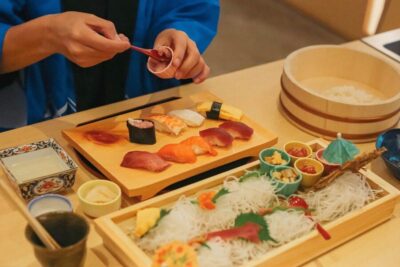 ★ 4.9Tokyo: Sushi Making Class in a Happi Coat near a Famous SpotFrom $421h 30m
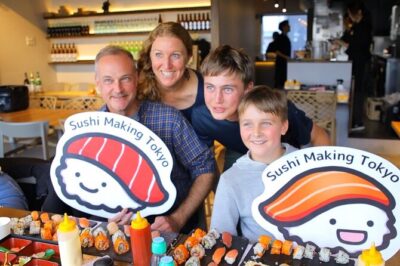 ★ 5.0Sushi Making Tokyo! Popular Maki Sushi & Japanese Sushi(+Recipe!)From $63
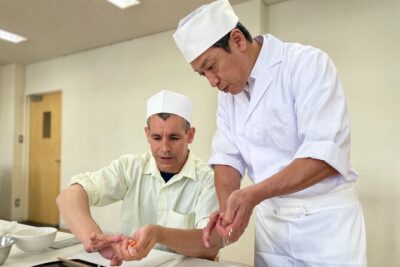 ★ 5.0Tokyo Sushi Making Class in Tsukiji with Professional ChefFrom $49
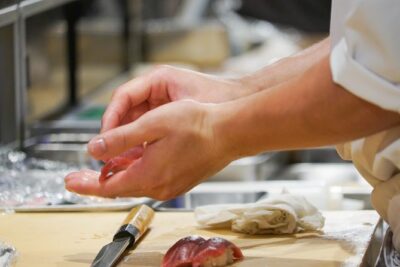 ★ 5.0Tokyo Night Foodie Tour in Shinjuku – Seasonal Sushi, Wagyu BeefFrom $111