Reviewed · SAMURAI & NINJA EXPERIENCES
Real Samurai & Ninja Experience in Tokyo, 90‑Min Hands‑On Session
At Musashi Clan Honjin Dojo, you do more than pose with a plastic sword. You put on samurai hakama trousers, practice stealth steps, handle clan-made tools, throw shuriken, and learn the controlled movement used in drawing a sword. The 19th-generation Musashi Clan representative leads the session, with an interpreter helping explain the rituals, ideas, and techniques.
In This Article
- Why this Tokyo dojo session feels different
- Meeting the Musashi Clan in Asakusa
- Hakama, meditation, and the right frame of mind
- Learning the Namba walk and stealth steps
- Shuriken throwing and shinobi tools
- Samurai sword practice without theatrical fighting
- Meditation, Kujikiri, and a final photo session
- How much value do you get for $167.15?
- Who will enjoy this most?
- What the praise gets right, and what to watch for
- Booking advice for your Tokyo schedule
- Should you book this samurai and ninja session?
- FAQ
- How long does the samurai and ninja experience last?
- Where does the activity take place?
- How many people can join the regular session?
- Can children participate?
- Is an interpreter provided?
- What happens if I need to cancel?
I like two things right away: the small maximum group of six, which gives the lesson a personal feel, and the balance between physical practice and quiet concentration. You are not simply watching a demonstration. You work on breathing, awareness, stances, and mental focus. The main consideration is the price, about $167.15 per person, which is high for 90 minutes, though the setting and hands-on instruction make it more substantial than a costume photo stop.
Why this Tokyo dojo session feels different
Many samurai-themed activities in Tokyo are built around theatrical sword fights or quick photo opportunities. This one takes a slower, more traditional path. The instructor introduces the clan, its tools, and the purpose behind each movement before asking you to try it yourself.
The session takes place in a real dojo in Asakusa, above a knife shop near Kappabashi Street. That location matters. Kappabashi is Tokyo’s famous kitchenware district, full of knife stores and shops selling restaurant equipment, so you can pair this lesson with an area walk before or after class.
The tone is educational, but not stiff. Children can take part, adults can join in, and martial arts fans have enough technique and symbolism to keep the lesson interesting. Parents who prefer not to participate can pay a spectator fee of 2,750 yen and watch from the dojo.
Meeting the Musashi Clan in Asakusa
Your meeting point is MUSASHI JAPAN at 3-chome Matsugaya in Taito City, Tokyo 111-0036. The dojo is on the third floor above a knife store, and finding the entrance may take a few extra minutes. One useful tip is to look up for the dojo location rather than assuming the shopfront is the activity entrance.
The session begins and ends at this same location. Hotel pickup and drop-off are not included, so you will need to make your own way there by public transportation or on foot from nearby parts of Asakusa.
I would arrive early. Kappabashi has plenty to inspect, but the activity itself takes place upstairs, and the building can be easy to miss if you are walking quickly. The area is close to public transportation, but the exact route depends on where you start in Tokyo.
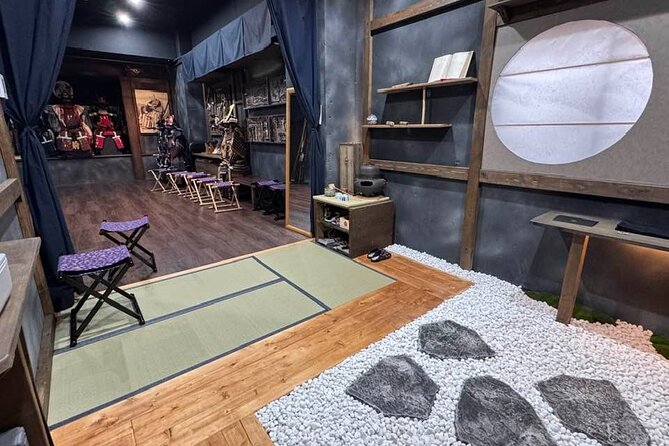
Once inside, expect a traditional dojo setting rather than a large tourist studio. The format is limited to six people, which helps the instructor correct movements and answer questions. Groups larger than six can ask the operator to arrange a suitable start time, but the standard session is capped at six participants.
A few more Tokyo tours and experiences worth a look

Hakama, meditation, and the right frame of mind
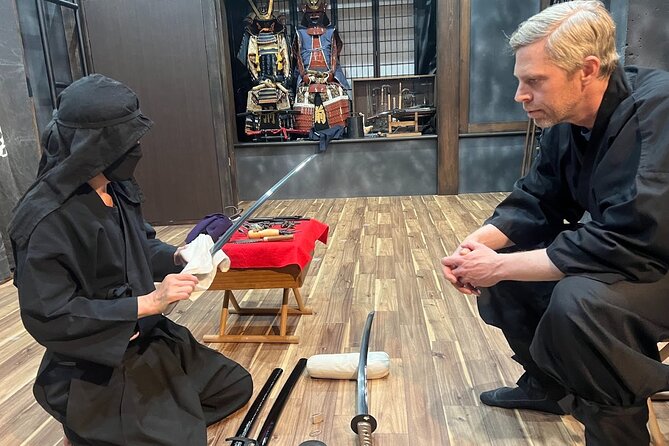
The first part of the class sets the mood. You wear samurai hakama trousers, then take part in an opening meditation. This is not filler. The lesson presents ninja training as a mix of body control, calm breathing, awareness, and discipline.
That opening pause also helps you switch gears. Tokyo is noisy and fast outside, while the dojo asks you to slow down and pay attention. If you arrive expecting constant action, the meditation may feel brief but unexpected. I see it as one of the useful parts of the session because it gives meaning to the later exercises.
The instructor then demonstrates the movements and introduces handmade shinobi tools and weapons. The tools used in the dojo were made by the clan’s own weaponsmiths, adding a direct connection between the demonstration and the clan’s tradition.
You should still keep expectations sensible. This is a 90-minute introduction, not a full martial arts course. You learn basic positions, handling, and ideas rather than advanced combat skills.
Learning the Namba walk and stealth steps
One of the more unusual activities is Namba, described as a shinobi samurai walk. The lesson uses this movement to introduce classic martial arts basics, including balance, coordination, and controlled footwork.
The stealth section can include walking with reduced visibility or blindfolded movement. That exercise is less about pretending to be a movie ninja and more about awareness. You must listen, feel your position, and control each step instead of rushing.
For children, this is often one of the most playful parts of the class. Adults may find it harder than expected because ordinary walking habits get in the way. I like that the activity turns a simple action into a lesson in concentration without demanding athletic ability.
You do not need martial arts experience. The session is designed for complete beginners, and the instructor demonstrates each exercise before you attempt it.
Shuriken throwing and shinobi tools
Shuriken throwing is the activity most people picture when they hear ninja training. Here, the instructor presents it as a concentration exercise as well as a weapon skill. The stated aim is to quiet the mind and focus attention.
You get a chance to handle and use a range of tools, with explanations of their purpose and place in ninja life. The lesson can also include blow darts, an activity that several families found especially memorable. The mix gives the class variety without turning it into a chaotic weapons demonstration.
Safety is taken seriously through instruction and controlled handling. You should listen closely, follow the instructor’s directions, and remember that these are real tools, not toys. The class is suitable for most participants, but anyone who dislikes handling weapons may prefer to watch.
The hands-on format is the real value here. A museum display can show you a shuriken. This class asks you to think about aim, posture, breathing, and restraint.
Samurai sword practice without theatrical fighting
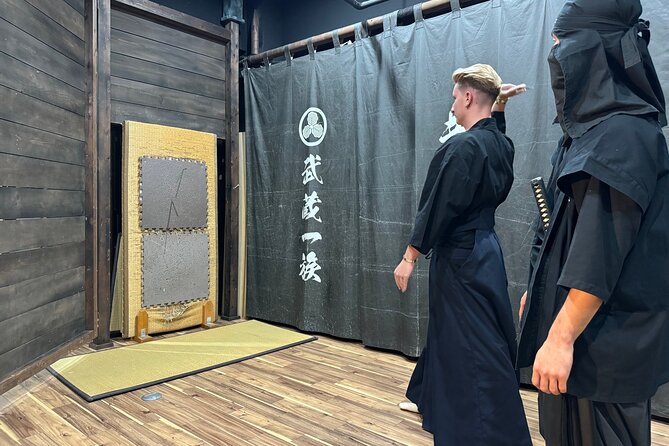
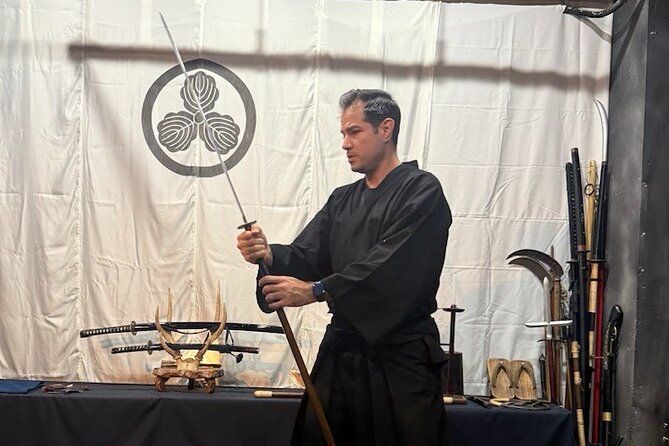
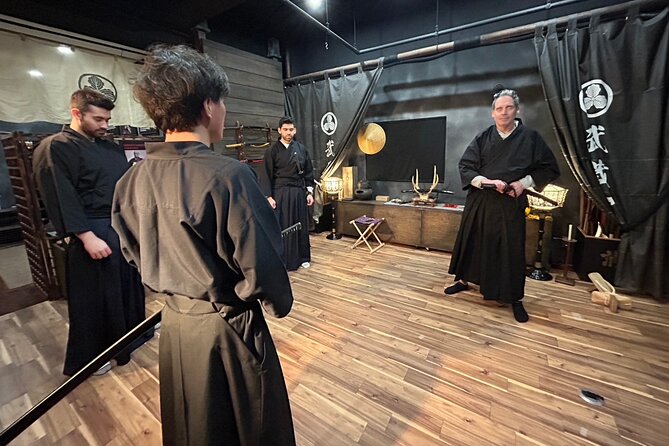
The sword lesson focuses on fundamentals. You learn how to hold a sword, how to position your body, and how to draw it. The underlying idea is especially interesting: the highest goal of swordsmanship is to win without drawing the sword.
That principle gives the lesson more depth than a simple mock battle. You are introduced to control and readiness rather than encouraged to swing wildly. The instructor’s demonstration helps make the movements clear, while the interpreter explains the cultural meaning behind them.
This is not a play-fighting session with choreographed clashes. There is no promise of advanced sword combat, and that is a good thing for a mixed-age group. You get a safe introduction to movement and ritual that beginners can follow.
Adults who have studied martial arts may appreciate the discipline and symbolism. Children may care more about putting on the clothing and holding the sword. Both approaches work, as long as you understand the class is an introduction rather than formal training.






Meditation, Kujikiri, and a final photo session
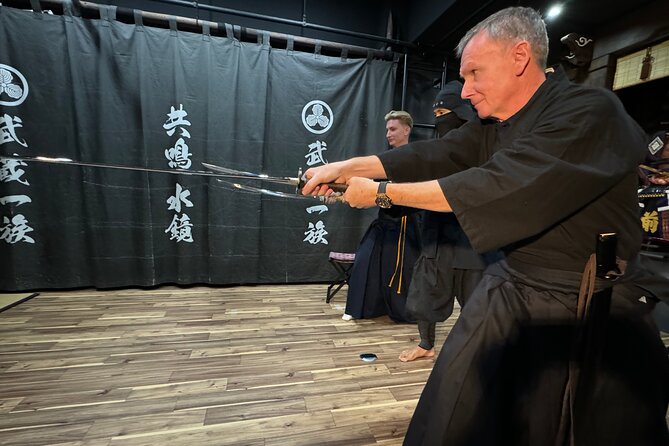
The class returns to meditation near the end, along with Kujikiri. This provides a quiet closing ritual after the more active parts of the session.
Kujikiri is presented as part of the ninja tradition and mental practice. The activity does not simply rush from one weapon to the next. It moves between action and stillness, which helps connect the techniques to ideas of focus and awareness.
The last ten minutes are set aside for photographs and questions. This is your chance to take pictures in the dojo atmosphere, often wearing the traditional clothing and holding the appropriate equipment. The photo session is especially useful for families and for anyone marking a birthday or another special occasion.
Do not expect a long professional photo shoot. The time is limited, and the group shares the final portion of the class. Still, it gives you a record of the experience without needing to arrange a separate photographer.
How much value do you get for $167.15?
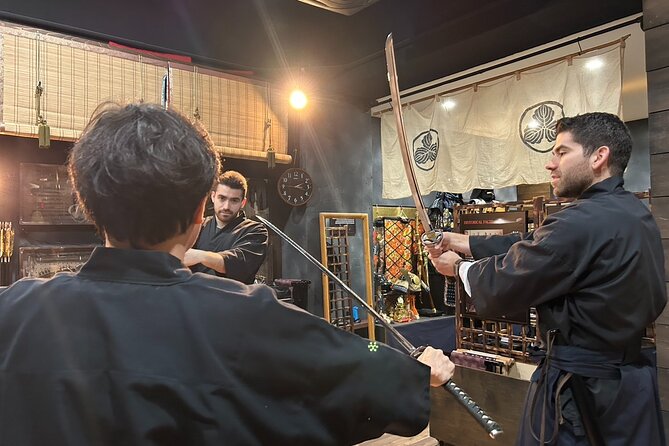
At about $167.15 per person, this is not a budget activity. For 90 minutes, the price is higher than a basic cultural demonstration or a standard museum visit.
The value comes from several details working together:
- You are in a real Tokyo dojo rather than a generic event room.
- The session is limited to six participants.
- A black-belt Shinobi Samurai instructor leads the class.
- An online interpreter supports the instruction.
- You wear hakama trousers and take part in the exercises.
- You handle clan-made tools and try several techniques.
- You receive time for photos and questions.
I would book it if you want a focused cultural activity and are willing to pay for personal instruction. I would skip it if you mainly want a low-cost costume photo or a longer martial arts course.
A private option is available for ¥16,500 for the entire group, up to 12 people. That can be good value for a family group or a set of friends, since the fee covers the group rather than each person. You need to request the private format in advance.
Who will enjoy this most?
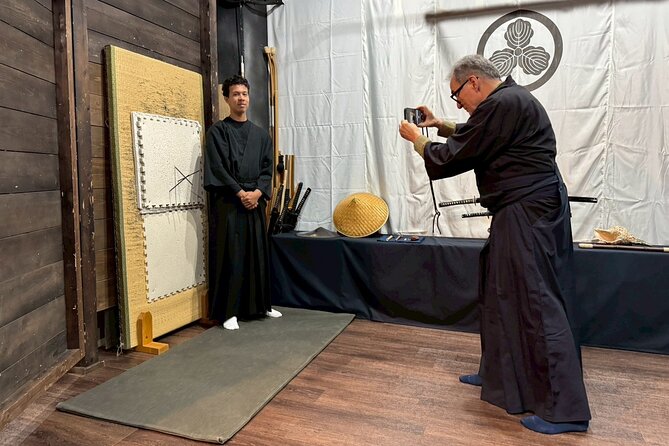
This is a strong pick for families with children and teenagers. Children under 12 may participate when accompanied by a participating guardian, and the activities offer enough variety to hold attention: clothing, walking exercises, shuriken, blow darts, sword practice, and photos.
It also suits adults who want more than a themed photo. The meditation, Kujikiri, explanations of tools, and sword philosophy give the session a cultural backbone.
You do not need to be fit or experienced. Most people can participate, and the class is built around basic movement. Still, you should be comfortable standing, walking, and handling training weapons under instruction.
The group format works well for mixed ages. Younger participants can enjoy the role-play side, while adults can focus on the history, rituals, and technique. A parent can also attend as a spectator for 2,750 yen, though only participating guardians can accompany children under 12.
What the praise gets right, and what to watch for
The strongest part of this activity is the staff’s personal approach. The instructor and interpreter work as a team, explaining the purpose of the weapons and movements instead of simply handing them out. The interpreter can make a major difference for English-speaking participants because the class includes historical and philosophical ideas, not just physical instructions.
The family appeal is also clear. Children and teenagers tend to remember the active parts, while parents often value the background stories and the chance to watch in a traditional setting. The 90-minute length is well judged for a family activity, long enough to feel worthwhile without becoming tiring.
The main weak spots are practical. The dojo can be difficult to identify, especially because it is above a knife shop. The price is also a serious consideration. And because the session is capped at six, your preferred date may not be available. Confirmation is sent within 48 hours, subject to availability, and you are asked to provide second and third date choices if needed.
The tour has free cancellation up to 24 hours before the start time. Cancel later than that and you do not receive a refund, and late changes are not accepted.
Booking advice for your Tokyo schedule
Because the activity is often booked about 47 days ahead, I would reserve it early if your Tokyo dates are fixed. This matters even more for families, since the six-person limit can fill a session quickly.
Plan to spend time around Kappabashi Street before or after class. The area is known for kitchen shops and knives, and the dojo’s location above a knife store fits the neighborhood. It gives the outing a stronger sense of place than an activity hidden inside a hotel or shopping center.
Keep your schedule flexible around the 90-minute class. The lesson itself is short, but arriving early, finding the building, and exploring Kappabashi can easily turn it into a half-day neighborhood visit.
Should you book this samurai and ninja session?
I would book this experience if you want hands-on cultural learning, especially with children, teenagers, or friends who enjoy trying something unusual. The small group, traditional dojo, clan-made tools, meditation, and guided practice make it more thoughtful than a simple dress-up stop.
I would not book it if your main goal is serious martial arts instruction, a long historical lecture, or the lowest possible price. This is a lively introduction with real cultural elements, not a professional training course.
For most first-time visitors who want one memorable activity away from the usual Tokyo sights, it makes a strong case. Wear the hakama, quiet your mind, take careful steps, and enjoy the strange pleasure of learning that the best sword fight is the one you never have to start.
FAQ
How long does the samurai and ninja experience last?
The session lasts approximately 90 minutes, including instruction, practice, meditation, photos, and a 10-minute question-and-answer period.
Where does the activity take place?
It takes place at Musashi Clan Honjin Dojo in Asakusa, at MUSASHI JAPAN in Taito City. The dojo is on the third floor above a knife shop near Kappabashi Street.
How many people can join the regular session?
The regular activity has a maximum of six participants. For groups larger than six, the operator can coordinate a start time by request.
Can children participate?
Yes. Children under 12 may participate when accompanied by a participating guardian. Most people can take part, and the session is intended for both children and adults.
Is an interpreter provided?
Yes. The activity includes an online interpreter, and the session is led by a Shinobi Samurai black-belt instructor.
What happens if I need to cancel?
You can receive a full refund if you cancel at least 24 hours before the local start time. Cancellations or changes made less than 24 hours in advance are not accepted for a refund.
More Samurai & Ninja Experiences in Tokyo


More tours in Tokyo we've reviewed












Samurai & Ninja Experiences, compared.
 ★ 4.5Tokyo: Samurai Restaurant Show Ticket with 2 DrinksFrom $551h 30m
 ★ 4.6Tokyo: Samurai Ninja Museum Guided tour and ExperienceFrom $27
 ★ 5.0Skip the lines Basic Ticket at SAMURAI NINJA MUSEUM TOKYOFrom $28
 ★ 5.0Tokyo: Authentic Samurai Training at a DojoFrom $211
 ★ 5.0Best Samurai Experience in TokyoFrom $65
 ★ 4.6Tokyo: Legend Samurai Entertainment Night in Kanda ShrineFrom $44