Reviewed · SUMO EXPERIENCES
Tokyo Grand Sumo Tournament 2026 with a Sumo Expert Guide
Tokyo’s Grand Sumo Tournament is far more than two huge athletes pushing each other out of a ring. Every bow, stomp, belt, and ceremonial pause has meaning. With Elly, also known as Elisabeth Llopis, beside you, the action at Ryogoku Kokugikan becomes much easier to follow.
In This Article
- Key points to know before you book
- Why a sumo guide changes the afternoon
- Meeting at Ryogoku Station at 2:00 pm
- Entering Ryogoku Kokugikan
- Watching the matches with Elly
- The Sumo Museum inside the Kokugikan
- What the $198 price covers
- Timing, seating, and practical limits
- Who will enjoy this sumo experience most
- Is this the right Tokyo tournament booking?
- FAQ
- Where does the Tokyo sumo experience begin?
- What time does the tour start?
- How long does the experience last?
- What type of seating is included?
- Is the Sumo Museum included?
- Are food and drinks included?
- Can I cancel or change the booking?
I like two things right away: you get a reserved second-floor chair seat, and you have a guide who stays with you for the full experience. The Sumo Museum is another smart touch, especially if you want the sport’s old customs explained before or during the tournament.
The main consideration is access. The Kokugikan is an old venue, and the steps to the seats can be steep. If you have mobility concerns, arrange this in advance. The tour also requires at least two people per booking and costs $198, so it suits you best if you value explanation and company, not just entry.
Key points to know before you book

- Elly guides the full four hours: You can ask questions about rules, ceremonies, wrestlers, and sumo customs as the day unfolds.
- A reserved second-floor chair is included: You are not left to sort out seating inside the Kokugikan on your own.
- The Sumo Museum adds useful context: Historic prints, ceremonial belts, and other artifacts help explain how the sport developed.
- The meeting point is simple to reach: Start at Ryogoku Station at 2:00 pm, near the stadium.
- The group is small: The maximum is 10 people, which gives you a better chance to ask questions.
- The $198 price includes the guide and admission: Food and drinks are extra, and box seats require advance discussion.
Why a sumo guide changes the afternoon

If you know little about sumo, the first match can seem brief and puzzling. Two wrestlers enter, perform a series of rituals, and sometimes finish in seconds. That is part of the charm, but without context you can miss the strategy and ceremony.
Elly’s role is to give you that context in plain language. She explains the sport’s history, its changing traditions, the rules of the bout, and the current wrestlers’ standing. That lets you watch with a better eye. You begin to notice the setup before the clash, the effort to control balance, and the importance of forcing an opponent outside the ring.
I like this approach because it does not treat sumo as a strange show placed in front of you for a few hours. You learn why the ceremony matters and how the sport has changed over time. The guide’s enthusiasm is also a practical benefit. Sumo can feel formal and unfamiliar at first, so a warm interpreter helps you relax and ask basic questions without feeling out of place.
The group limit of 10 matters here. This is not a huge guided crowd moving through a stadium. You have a reasonable chance to hear the explanations and speak directly with Elly. That small-group format helps justify the price for anyone who wants more than a ticket.
A few more Tokyo tours and experiences worth a look
Meeting at Ryogoku Station at 2:00 pm
The tour begins at Ryogoku Station, at 1-chōme-3-20 Yokoami in Sumida City. The station is near the Kokugikan, so the starting point is convenient for public transport and keeps the first part of the afternoon straightforward.
Allow enough time to find the meeting point and use the station facilities before 2:00 pm. The tour ends back at the meeting point, which makes the arrangement easy to understand. You do not need to work out a separate return transfer as part of the activity.
The schedule is listed as approximately four hours. The exact flow inside the venue can depend on the tournament program, but you should expect the afternoon to center on the Kokugikan, the matches, the ceremony, and the museum. This is not a quick photo stop. It is a substantial half-day commitment.
The minimum booking is two people. Solo visitors cannot book this particular experience on their own, so keep that rule in mind before planning your day.
Entering Ryogoku Kokugikan
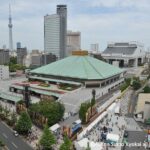
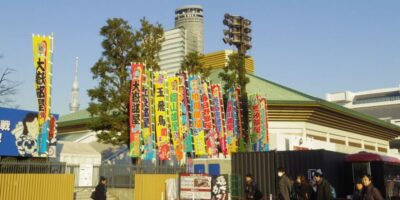
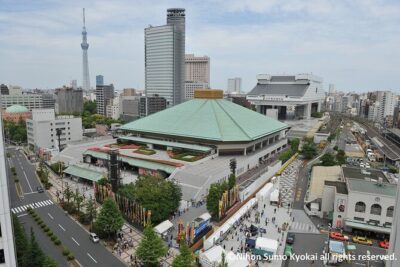
Ryogoku Kokugikan is Tokyo’s main sumo venue and the home of the sport in the city. Arriving here gives the experience a stronger sense of place than watching a match on television or seeing a demonstration arranged for tourists.
Your admission includes a reserved second-floor chair seat. That is an important detail. You do not have to arrive and wonder where you will sit, and you can focus on the action instead of sorting out the venue on your own.
The second-floor chair is not the same as a traditional box seat. Box seats can be discussed in advance, but they are not part of the standard package. If a closer or more special seating arrangement matters to you, ask before booking rather than assuming it will be available.
The Kokugikan is an older venue, and the route to the seating area includes steep steps. This can be difficult if you have reduced mobility. The activity information says most people can participate and lists no general restrictions, but that should not be read as a promise of easy access for everyone. Contact the provider ahead of time if stairs are a concern.
Watching the matches with Elly

The best part of the experience is the live setting. Sumo has a slower rhythm than many sports. Wrestlers enter, prepare, and follow formal movements before the bout begins. Then the match itself may be over almost instantly.
That contrast is easier to appreciate when someone explains what you are seeing. Elly can point out the ceremonial details, discuss the wrestlers’ positions, and answer questions about the rules as the tournament continues. You are not expected to arrive as a sumo expert.
Past participants have especially valued her ability to explain without becoming too technical. That balance is useful. You get enough information to understand the sport, but the afternoon does not become a lecture.
I also like the chance to ask about current wrestlers and tournament form. Sumo has its own ranking system and a strong connection between tradition and present-day competition. A live tournament gives the explanations a clear purpose because you can apply them to the matches in front of you.
There is a social side, too. One past outing included meeting wrestlers and getting autographs. That is not listed as a guaranteed part of the 2026 experience, so you should treat it as a possible bonus rather than a promise. The safe reason to book is the guided tournament viewing itself.
The Sumo Museum inside the Kokugikan

The Sumo Museum provides a quieter look at the sport. You can see historic sumo artifacts up close, including old woodblock prints, ceremonial belts worn by famous wrestlers, and memorabilia from earlier eras.
This stop helps you understand that sumo is not only about the match. The clothing, ranking, artwork, ceremony, and objects connected with famous rikishi all form part of its identity. The displays explain the customs in an accessible way, so you do not need prior knowledge to get something from them.
The exhibitions change regularly. That means the exact items and themes can vary, but it also keeps the museum from feeling like a fixed display that never changes. It can be visited even when no tournament is taking place, though this tour gives you the advantage of pairing it with live competition inside the same building.
For me, the museum is most valuable as a bridge between the past and the present. You see the old objects, then watch the modern tournament and notice which traditions remain visible. It adds substance to what could otherwise be a short sports outing.
Other guided tours in Tokyo



What the $198 price covers

At $198, this is not the cheapest way to enter a sumo tournament. The price includes your reserved second-floor chair, admission to the Sumo Museum, and a local professional sumo guide for roughly four hours. Food and drinks are not included.
The value depends on how you like to travel. If you are comfortable learning the rules alone, finding your seat, and following the ceremony without help, you may prefer to buy a ticket independently if one is available. This tour is aimed at you if you want someone to explain the sport in real time and keep the afternoon simple.
I see the guide as the main part of the cost. The ticket gets you into the building, but Elly’s explanations help you understand why the event looks and feels the way it does. For first-time sumo spectators, that can make the difference between watching a series of short bouts and understanding a major Japanese sporting tradition.
The small group also adds value. With no more than 10 people, the experience should feel more personal than a large bus-style tour. The package does not include refreshments, so plan to buy food and drinks separately or eat before the meeting time.
Timing, seating, and practical limits

The listed start time is 2:00 pm, and the activity lasts about four hours. You should plan the rest of your day around it rather than trying to fit in a distant attraction afterward.
Your ticket is delivered as a mobile ticket. Keep your phone charged and make sure you can access the ticket before meeting Elly. Confirmation is sent within 48 hours of booking, subject to availability, so do not treat the reservation as final until confirmation arrives.
The experience is near public transportation, and the station meeting point is easy to identify in principle. Still, Tokyo stations can be busy and sprawling. Give yourself extra time, especially if you are unfamiliar with the area.
The cancellation rule is strict: the experience is non-refundable and cannot be changed for any reason. I would book only after your Tokyo schedule is firm and your companions are committed. If you are considering box seats, consult the provider in advance because they are not included in the standard arrangement.
Who will enjoy this sumo experience most

This is a strong choice for a first visit to a Grand Sumo Tournament. You do not need to know the difference between a yokozuna and a lower-ranked wrestler before arriving. Elly’s explanations are designed to bring you up to speed while you watch.
It also suits couples, families with older children, and small groups who want an activity with both sport and culture. The group limit keeps it manageable, and the four-hour length gives you time to settle into the atmosphere rather than rush through the building.
You should also consider it if you enjoy asking questions. The experience works best when you use the guide. Ask about the rituals, rankings, wrestlers, and rules. The more curious you are, the more useful the afternoon becomes.
This may not suit you if you want luxury seating, a meal included, or a completely flexible schedule. The standard ticket is a second-floor chair, and the food budget is your responsibility. People with mobility issues should also make arrangements before committing because of the steep steps.
Is this the right Tokyo tournament booking?
I would book this experience if you want to understand sumo rather than simply photograph it. The guide is the real advantage, and the Sumo Museum gives the afternoon a cultural layer that a basic ticket does not provide.
At $198, it is a considered purchase, especially with food excluded and the non-refundable policy. But for a first-time visitor who wants a reserved seat, a small group, and clear explanations from someone genuinely devoted to sumo, it offers solid value.
Book it if your date is fixed, you can manage the stairs, and you want the sport explained as you watch. Skip it if you prefer to explore independently or need fully accessible seating. For everyone in between, this is a practical way to turn a confusing afternoon of short bouts into a memorable and meaningful part of Tokyo.
FAQ
Where does the Tokyo sumo experience begin?
It begins at Ryogoku Station, at 1-chōme-3-20 Yokoami, Sumida City, Tokyo 130-0015, Japan.
What time does the tour start?
The listed start time is 2:00 pm.
How long does the experience last?
The activity lasts approximately four hours.
What type of seating is included?
A reserved second-floor chair seat is included. Box seats are not part of the standard package, but you can consult the provider about them in advance.
Is the Sumo Museum included?
Yes. Entry to the Sumo Museum is included, along with access to its changing displays of sumo artifacts and memorabilia.
Are food and drinks included?
No. Food and drinks are not included in the price.
Can I cancel or change the booking?
No. The experience is non-refundable and cannot be changed for any reason. Confirmation is sent within 48 hours of booking, subject to availability.
More Guided Tours in Tokyo
More Sumo Experiences in Tokyo

More tours in Tokyo we've reviewed












Sumo Experiences, compared.
 ★ 4.8Tokyo: Sumo Show Experience with Chicken Hot Pot and a PhotoFrom $1032 hours
 ★ 4.8Tokyo: Sumo Show and Dining ExperienceFrom $7990 minutes - 2 hours
 ★ 5.0the SUMO showFrom $89
 ★ 5.0Tokyo Sumo Entertainment Show with Chicken Hot Pot and PhotoFrom $106
 ★ 4.6Tokyo: Sumo Tournament Tour with Chair Seat TicketsFrom $141
 ★ 5.0Tokyo Grand Sumo Tournament Viewing Tour with TicketsFrom $124