Reviewed · TEA CEREMONY & MATCHA
Tokyo 6 hr Private Guided Tour & Tea Ceremony Experience
The best part of this six-hour experience is the chance to shape your own Tokyo day around a traditional tea ceremony. Instead of racing through a fixed route, you choose two or three places from a wide menu, such as Asakusa, Meiji Shrine, Shibuya, Akihabara, or Tsukiji.
In This Article
- Key points to know before booking
- A six-hour Tokyo plan built around tea
- Jidaiya tea ceremony: the cultural heart of the day
- Asakusa and Senso-ji: old Tokyo in two short stops
- Imperial Palace: an outside view only
- Hamarikyu Gardens and Tokyo Bay
- Shibuya Crossing and Takeshita Street
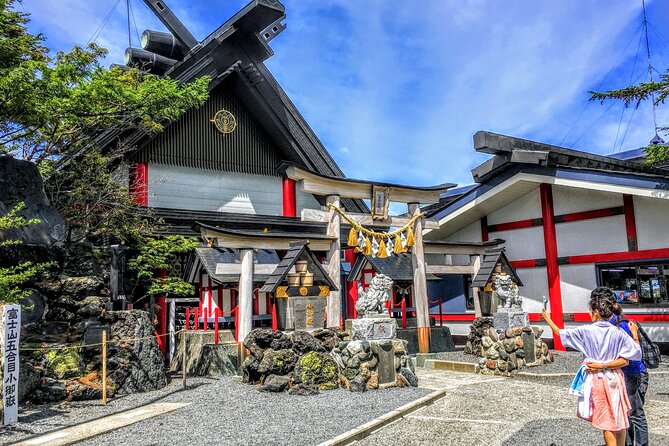
- Meiji Jingu: a wooded shrine beside Harajuku
- Akihabara and Tokyo’s electric side
- Tsukiji Outer Market: food culture without the old wholesale floor
- Rikugien and Koishikawa Korakuen gardens
- Golden Gai and Shinjuku Gyoen
- What the $161.25 price really buys
- Guide quality and the pace of the day
- Who should book this Tokyo experience?
- Should you book the tea ceremony and guided tour?
- FAQ
- How long does the Tokyo guided tour last?
- What is included in the experience?
- Is hotel pickup available?
- Can I choose the Tokyo sights I visit?
- Are transportation fees included?
- Are entrance fees included?
- How many people can join?
- What is the cancellation policy?
I like the personal format, since a private guide can explain customs and neighborhoods at your pace. I also like the mix of major sights and cultural context, with tea at Jidaiya giving the day a clear Japanese focus.
The main catch is cost control. At $161.25 per person, you still pay for transportation, lunch, and some admission fees, and the six-hour schedule is not long enough to see every place listed. Guide quality may also vary. Taka received especially strong praise, while Kris was described as pleasant but slow with subway exits and difficult to understand at times.
Key points to know before booking
- Choose only two or three sights: The long list of possible stops is a menu, not a promise that you will visit them all.
- Tea ceremony at Jidaiya: The cultural experience takes about one hour and is included in the booking.
- No private car: You meet your guide on foot in the designated Tokyo area, and transportation costs are extra.
- Tokyo’s biggest contrasts: You can pair old Asakusa and Senso-ji with modern Shibuya, Harajuku, or Akihabara.
- Several gardens cost extra: Hamarikyu, Rikugien, Koishikawa Korakuen, and Shinjuku Gyoen list admission fees as not included.
- Small private format: The activity allows up to 10 people, though the included description presents it as a private tour.
A six-hour Tokyo plan built around tea
This is not a standard one-route sightseeing bus trip. You get a licensed local English-speaking guide, a tea ceremony, and a choice of two or three Tokyo locations.
That flexibility matters in Tokyo. The city spreads across very different districts, and your best route depends on your interests. First-time visitors may want Asakusa and Meiji Shrine. A returning visitor may prefer Tsukiji, Shibuya, and Golden Gai. Families may choose Harajuku or Akihabara, while garden lovers can focus on Hamarikyu or Rikugien.
The six-hour limit requires honest planning. If you pick places on opposite sides of the city, transport will eat into your sightseeing time. Ask the guide to build a route that makes sense geographically, rather than selecting three famous names that look close together on a map.
Pickup information needs a little care. Hotel pickup is offered from hotels in Tokyo’s 23 Special Wards, but the included details also say you meet the guide on foot in a designated area. There is no private vehicle, and transportation fees are not included. Confirm the exact meeting arrangement before the day begins.
A few more Tokyo tours and experiences worth a look

Jidaiya tea ceremony: the cultural heart of the day
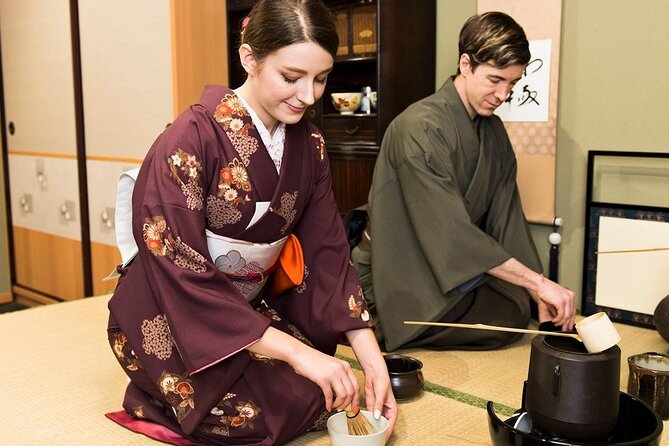
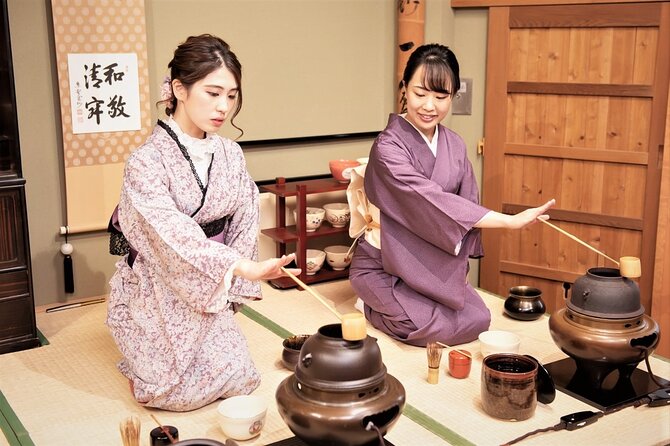
Jidaiya takes about one hour and is the central cultural activity. You take part in a traditional Japanese tea ceremony rather than simply watching a demonstration.
That distinction gives the experience more value. Tokyo sightseeing can easily become a parade of photos, station platforms, and crowded streets. A tea ceremony slows the pace and gives you a direct introduction to a formal Japanese custom.
The available information does not promise kimono rental, and kimono is specifically excluded. If dressing up matters to you, do not assume it comes with the booking.
Jidaiya also presents itself as an alternative to ordinary Asakusa sightseeing. That makes it useful if you want more than a quick temple visit. The ceremony is included in the price, so it helps offset the extra cost of a private guide, though you should still add transport and any paid attractions to your budget.
Asakusa and Senso-ji: old Tokyo in two short stops
Asakusa is the clearest choice for a first look at Tokyo’s older side. This district is known for its Shitamachi character, a low-city atmosphere linked with the Tokyo of earlier decades.
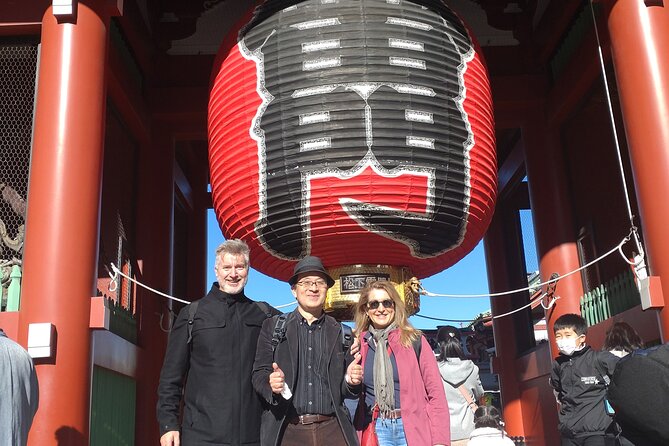
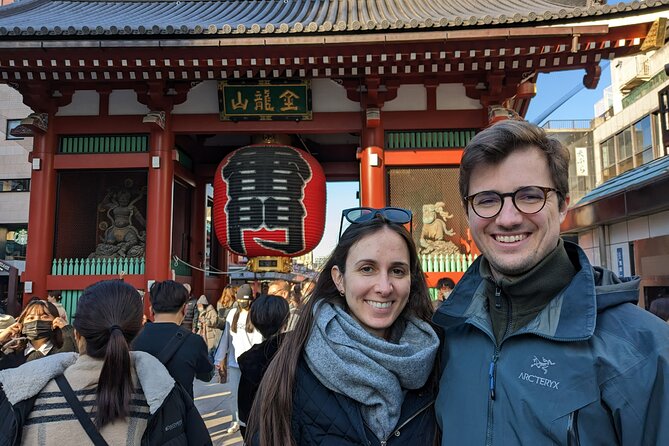
Senso-ji is the main draw. The Buddhist temple is one of the city’s most colorful and popular religious sites, and its story reaches back to a legend from the year 628. Your guide can give the visit more meaning by explaining the temple’s place in Asakusa and Japanese religious life.
The suggested timing gives Asakusa 30 minutes and Senso-ji 15 minutes. That is enough for an introduction and photos, but not enough for a leisurely exploration of every lane and shop. If you want snacks, shopping, or a longer look at the temple grounds, ask to make Asakusa one of your main choices rather than treating it as a quick add-on.
Jidaiya also appears as a separate one-hour stop, so combining the tea ceremony with Asakusa creates a logical half-day theme. You get the neighborhood, the temple, and a structured cultural activity without trying to force too many districts into one route.
Imperial Palace: an outside view only
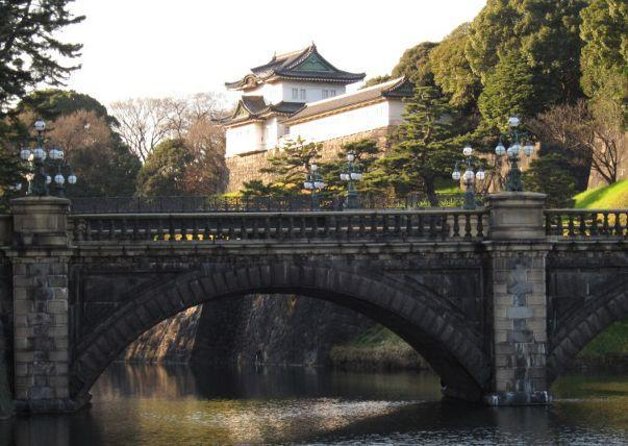
The Imperial Palace offers a look at the grounds of the former Edo Castle, with parkland, moats, and stone defenses in central Tokyo.
Be clear about the limitation: this tour does not include access inside the Imperial Palace. The suggested stop lasts 30 minutes, and admission is listed as free.
That makes the palace a reasonable choice if you want a central landmark and a short history lesson. It is less suitable if your main goal is to enter palace buildings or spend a long time exploring. Because the visit is outside only, some people may prefer to use their limited time at a temple, market, or neighborhood with more street life.
Hamarikyu Gardens and Tokyo Bay

Hamarikyu Gardens gives you a quieter break from the city. This large garden sits beside Tokyo Bay and includes seawater ponds that change with the tides, along with a teahouse.
The setting offers a different kind of Tokyo sight. Instead of neon, department stores, or shrine gates, you get designed gardens and water views surrounded by the modern city.
The planned visit is only 15 minutes, which is brief for a garden. Admission is not included, so add the entry fee before deciding. I would choose Hamarikyu if you want a calm pause and enjoy gardens, but not if you prefer fast-moving city districts.
Other guided tours in Tokyo



Shibuya Crossing and Takeshita Street
Shibuya Crossing is one of Tokyo’s best-known urban scenes. It is the large scramble crossing in front of Shibuya Station, where several streams of people cross at once.
The supplied route information does not give a set duration for Shibuya Crossing, so you should ask how much time will be assigned to it. The stop works well for a quick orientation and photos, but the crossing itself is not a full neighborhood tour.
Takeshita Street brings you into Harajuku’s youth fashion scene. Harajuku sits between Shinjuku and Shibuya on the Yamanote Line and is known for extreme teenage styles, though the area also has broader shopping and cultural appeal.
The planned time is 30 minutes. That is enough to walk through and get a feel for the street, but you may need more time if you want to shop. As a pair, Shibuya and Harajuku show modern Tokyo at its most energetic. They are a strong choice for first-time visitors who want the city’s current style rather than older temples and gardens.
Meiji Jingu: a wooded shrine beside Harajuku
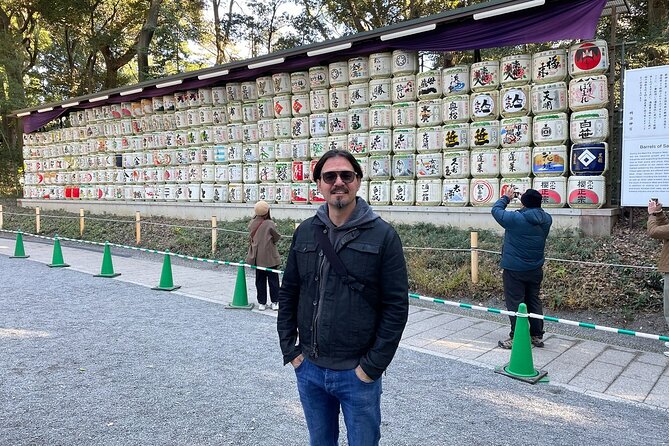
Meiji Jingu is dedicated to the deified spirits of Emperor Meiji and Empress Shoken. Its location beside busy Harajuku Station creates a sharp change of mood, taking you from youth fashion to a major Shinto shrine.
The suggested visit lasts 30 minutes. That is enough to enter, see the main area, and hear about the shrine’s purpose. You will not have time for a slow walk through every path, so treat this as an introduction.
Meiji Jingu pairs naturally with Takeshita Street. The two sites sit in the same broad area, which can save transport time. The combination also gives you a useful lesson in Tokyo’s contrasts: fashion and tradition, loud streets and formal worship, all within one part of the city.
Akihabara and Tokyo’s electric side
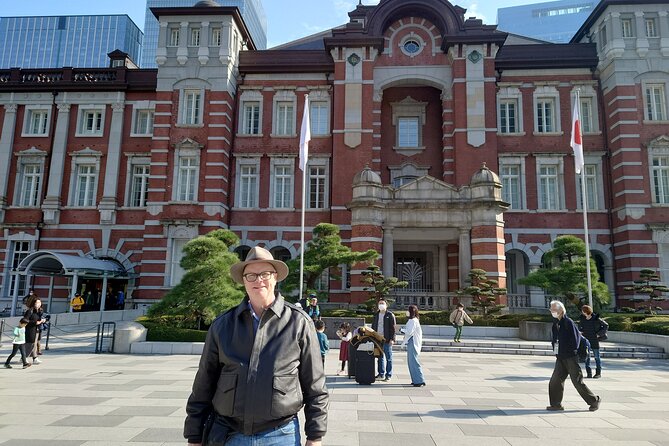
Akihabara is famous for electronics shops and has become a center of anime, manga, and game culture. The suggested stop lasts 30 minutes and admission is free.
This is a good pick if you have a clear interest in electronics or Japanese pop culture. It is less useful if you want a traditional view of Japan, since the district’s appeal comes from its shops and modern identity.
Thirty minutes will give you an introduction, but it will not allow much shopping. If you are looking for a particular product, ask the guide to help you use the time well. Pairing Akihabara with Asakusa would create a strong old-and-new Tokyo day, though the two areas offer very different experiences.
Tsukiji Outer Market: food culture without the old wholesale floor
Tsukiji Fish Market now refers to the Tsukiji Outer Market area beside the former wholesale market site. The district includes several blocks of wholesale and retail shops.
The suggested visit lasts 30 minutes, and admission is free. This is a practical stop for anyone interested in Japanese food culture, market streets, and the everyday side of Tokyo.
Do not confuse the name with access to the former wholesale market itself. The experience centers on the outer market district. Lunch is not included, so you pay for anything you eat or buy.
Tsukiji can work well with Hamarikyu Gardens because both are in central Tokyo, but the exact route should be confirmed with your guide. If eating is a priority, tell the guide before the tour so the schedule does not leave you with only a rushed look.
Rikugien and Koishikawa Korakuen gardens
Rikugien is one of Tokyo’s best-known Japanese gardens. Built around 1700 for the fifth Tokugawa shogun, it takes its name from the six principles of poetry.
The planned visit lasts 30 minutes, and admission is not included. That short time allows a taste of the garden’s design, not a full walk around it.
Koishikawa Korakuen is another of Tokyo’s older Japanese gardens. It was built in the early Edo period for the Mito branch of the ruling Tokugawa family. The suggested visit is only 15 minutes, and admission is extra.
I would not choose both gardens during a six-hour tour unless gardens are your main interest. They are valuable for a slower, more refined view of Tokyo, but their locations and admission fees make them less efficient than pairing one garden with nearby sights. Ask your guide to explain the route and expected walking time before committing.
Golden Gai and Shinjuku Gyoen
Golden Gai began around 1950 after a black market near Shinjuku Station moved to the area. Small eating and drinking establishments then gathered there, creating the tightly packed district known today.
The suggested visit lasts 30 minutes and admission is free. Golden Gai is most useful as a quick atmospheric walk. It is not presented as a meal or nightlife package, and lunch and personal expenses remain your responsibility.
Shinjuku Gyoen offers the opposite mood. It is one of Tokyo’s largest and most popular parks, with lawns, walking paths, and quieter scenery near Shinjuku Station.
The planned stop lasts 15 minutes, and admission is not included. That is a very short visit for a large park, so select it only if you want a brief look rather than a proper park outing.
Golden Gai and Shinjuku Gyoen can make an interesting Shinjuku pairing, but they suit different moods. Golden Gai is compact and atmospheric. Shinjuku Gyoen needs more time to appreciate.
What the $161.25 price really buys
At $161.25 per person, this is not a budget walking tour. The value comes from combining a private guide with a one-hour tea ceremony and a custom route.
The price is easier to justify if you want help making decisions in a complicated city. A guide can connect temple customs, shrine etiquette, neighborhood history, and modern Tokyo culture in a way a map cannot. The option to choose two or three sights also prevents you from paying for a full route filled with places you do not care about.
The cost is harder to justify if you are comfortable using Tokyo’s trains and planning your own day. Transportation, entrance fees, lunch, and personal purchases are extra. Hamarikyu, Rikugien, Koishikawa Korakuen, and Shinjuku Gyoen all list admission as not included.
Group discounts may improve the price for larger bookings. The maximum group size is 10, but the included details describe the experience as private, so confirm how your party will be handled if you are booking with others.
Guide quality and the pace of the day
A private tour depends heavily on the person assigned to you. Taka put together a strong itinerary and was described as fun, informed, and effective at helping a group get around Tokyo. A 3D art cafe was also included in that itinerary, showing that the guide may adapt the day beyond the main sightseeing list.
Kris was pleasant, but the pace was a problem. He had trouble with subway exits, took longer to move between places, had difficulty taking photos, and was sometimes hard to understand. That feedback matters because six hours passes quickly in Tokyo, especially when you are paying separately for transport.
You should state your walking pace, interests, and preferred level of detail at the start. If you need frequent breaks, want help with photos, or have firm mobility needs, say so before the route is set. Most people can participate, and service animals are allowed, but the activity details do not promise a fully accessible route.
Who should book this Tokyo experience?
This suits you best if you are visiting Tokyo for the first time, want a local guide, and prefer to make a few choices rather than plan every train and neighborhood yourself. It also works well for couples, families, or small groups with different interests.
Choose the tea ceremony and Asakusa for a traditional introduction. Choose Meiji Jingu and Takeshita Street for a convenient old-and-new pairing. Choose Tsukiji and Hamarikyu for food culture and a garden. Choose Shibuya, Akihabara, or Golden Gai if modern Tokyo matters most.
I would skip it if you want a slow, detailed visit to one district, a private car, or a tour with every admission fee included. Six hours is enough for a smart introduction, not an all-day Tokyo survey.
You can cancel for a full refund up to 24 hours before the start time. Last-minute cancellations and changes are not accepted for a refund.
Should you book the tea ceremony and guided tour?
Book this if the tea ceremony matters to you and you want help choosing a manageable Tokyo route. The strongest value comes from the combination of cultural participation, personal guidance, and the ability to focus on two or three places.
Before paying, confirm the meeting point, pickup arrangement, guide language, transport plan, and any entrance fees for your chosen sights. If you receive Taka, the experience may be especially strong. If your priorities include speed and efficient subway transfers, make those expectations clear from the start.
FAQ
How long does the Tokyo guided tour last?
The experience lasts approximately six hours.
What is included in the experience?
A licensed local English-speaking guide, the guided tour of your chosen two or three sites, and the tea ceremony experience at Jidaiya are included.
Is hotel pickup available?
Pickup is offered from hotels in Tokyo’s 23 Special Wards. The included details also state that you meet the guide on foot within a designated area, so confirm the exact arrangement before the tour.
Can I choose the Tokyo sights I visit?
Yes. You can customize the tour by choosing two or three sites from the available options.
Are transportation fees included?
No. Transportation fees are not included, and the tour does not provide a private vehicle.
Are entrance fees included?
Some sights are free, but admission to Hamarikyu Gardens, Rikugien Garden, Koishikawa Korakuen Garden, and Shinjuku Gyoen National Garden is not included. Guide entry fees are covered only for sights listed under the tour details.
How many people can join?
The activity allows a maximum of 10 participants.
What is the cancellation policy?
You can cancel at least 24 hours before the local start time for a full refund. Cancellations or changes made less than 24 hours in advance are not refunded or accepted.
More Private Tours in Tokyo


More Guided Tours in Tokyo
More Tea Ceremony & Matcha in Tokyo


More tours in Tokyo we've reviewed












Tea Ceremony & Matcha, compared.
 ★ 5.0Matcha Making Class in Tokyo with Authentic Japanese Sweets SetFrom $21
 ★ 5.0Kimono Tea Ceremony at Tokyo, Asakusa MaikoyaFrom $55
 ★ 5.0Tokyo: Traditional Tea Ceremony with a Tea MasterFrom $381 hour
 ★ 4.5Dynamic Tokyo: Tokyo Tower, Tea Experience, Bay Cruise Day TourFrom $99
 ★ 4.9Tokyo: Matcha Making Experience with Mochi Sweets in AsakusaFrom $221 hour
 ★ 4.7Tokyo: Matcha and Kimono ExperienceFrom $57