Reviewed · SUMO EXPERIENCES
Sumo Wrestlers Morning Practice Tour – Tokyo Sumida District
Watching a sumo wrestler train from only a few feet away gives you a far better sense of the sport than a seat in a tournament stadium. You see the repeated footwork, stretching, balance drills, and bursts of force without the noise and ceremony of a public match.
In This Article
- Key points at a glance
- Why morning practice beats a standard sumo photo stop
- Meeting near Tokyo Skytree at 7:10am
- Inside the stable, quiet rules come first
- About 90 minutes of training, not a staged match
- The stable master and wrestler photo opportunity
- What the experience teaches you about sumo
- The $83.23 price and what you receive
- Who should book this Sumida morning tour
- Practical ways to make the morning go smoothly
- Should you book it?
- FAQ
- Where does the tour meet?
- What time should I arrive?
- How long does the tour last?
- How far is the stable from the meeting point?
- Are chairs provided?
- Can I take photos or videos?
- What happens if I am late?
I like the close-up view of genuine training and the chance to learn from a guide who can explain Japanese customs and sumo rules. I also like that the early start leaves most of your day free for Tokyo sightseeing. The main drawback is simple: you sit cross-legged on the floor for about 90 minutes, and the practice may finish sooner than expected.
Key points at a glance
- Watch real morning practice at a working sumo stable, not a staged demonstration.
- Meet at 7:30am near Tokyo Skytree and walk about 15 minutes to the stable.
- Guides translate and explain the action, with guides such as Yuriko receiving particular praise for clear, patient help.
- A question-and-answer session may follow practice, sometimes with the stable master.
- Photos with wrestlers may be possible, but they are not the main purpose of the visit.
- Floor seating and strict etiquette matter, including no flash, no hats, no food, and no talking during practice.
Why morning practice beats a standard sumo photo stop

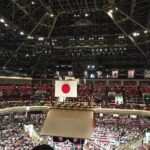
A tournament shows you sumo at its most polished. This visit shows you the work behind it.
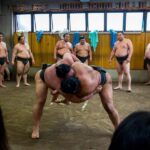
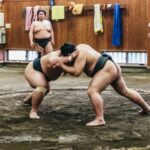
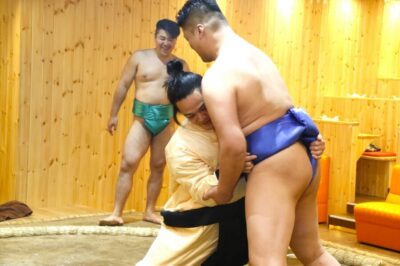
At the stable, wrestlers repeat basic movements until they look almost automatic. You may see them stretch, practice balance, brace against one another, and work through bouts of physical training. The contrast can be striking. Sumo wrestlers are large athletes, yet their flexibility, speed, and control are easy to miss when you only see a match from a distant arena seat.
The atmosphere is quiet and serious. The wrestlers are not putting on a show for your group. They are following their normal training routine, so the day’s practice can vary. You might see hard contact, or you might spend more time watching warmups, drills, and technique work.
That uncertainty is part of the value, but it is also the tour’s main limitation. If you expect two hours of dramatic wrestling, this may disappoint you. If you want to understand the discipline behind the sport, it can be far more revealing than a short match.
A few more Tokyo tours and experiences worth a look
Meeting near Tokyo Skytree at 7:10am
The meeting point is at 1-chōme-8-21 Oshiage in Sumida City, near the foot of Tokyo Skytree. The stated start time is 7:30am, but you should arrive by 7:10am. The group leaves at 7:30 sharp.
That early arrival gives you time to find the guide and avoid a rushed start. Oshiage is served by public transportation, and the Skytree area is an easy landmark for orientation. Still, give yourself extra time in the morning. A missed meeting can be a real problem because you cannot simply walk into the stable on your own without contacting the tour provider.
From the meeting point, you walk about 15 minutes to the stable. The route is not a sightseeing walk, so wear comfortable shoes and plan for the weather. If rain is possible, bring a small towel. You will remove your shoes when you enter the stable, and wet or dirty feet are not welcome on the raised wooden floor.
The walking route also explains why the exact stable location is not used as the public meeting point. The group enters together, with the guide handling the arrival and etiquette.
Inside the stable, quiet rules come first

The stable is a working place, not a theater. You remove your shoes as soon as you enter and sit on the floor facing the training area.
There are no chairs. You should expect to sit cross-legged for around an hour and a half. Stretching your legs toward the ring is considered rude because the soles of your feet point toward the wrestlers and sacred training space. If sitting on the floor for that long is difficult, this is not the right activity for you.
The rules may feel strict, but they protect the practice and help keep the visit respectful. You must remain quiet, avoid standing or moving around, and follow the guide’s directions. Hats and sunglasses are not allowed inside. Modest clothing is expected.
Your phone should be silent. Photos are allowed without flash or shutter sound, and video may be permitted, but you cannot upload photos or videos from the visit to social media. Food, gum, candy, and smoking are prohibited. You may bring water, which is sensible for a long morning sit.
Use the restroom before you arrive if possible. The stable is not arranged like a public attraction, and leaving during practice can disturb both the wrestlers and the group.
About 90 minutes of training, not a staged match
The main portion of the visit lasts about 90 minutes, though the length can change. Practice may end early, and the entire tour may then be shorter than the advertised two hours. It can also run a little longer depending on what is happening in the stable.
This is worth understanding before you book. The tour does not control the training schedule, and the wrestlers are not required to repeat a particular exercise for visitors. You may see only a small amount of direct wrestling. One session could feature intense contact, while another may focus on preparation and technique.
That does not make the experience thin. In fact, the repeated drills can help you notice details that disappear during a match. The wrestlers’ foot placement, posture, hand position, and ability to absorb force become easier to follow when you are close and the room is quiet.
A guide helps bridge the language gap. The tour is designed to explain the history, rules, and regulations of sumo while you watch. Guides translate information from the stable and help you understand what you are seeing, which is especially useful if you know the sport mainly from brief television clips.
The quality of explanation can vary by guide and group. Yuriko is specifically praised for being patient and for translating Japanese into English clearly. Other feedback suggests that some groups wanted more background on the sport and training. If you already know a lot about sumo, the live practice will likely be the main attraction. If you are new to it, listen closely and save questions for the discussion afterward.
The stable master and wrestler photo opportunity

After practice, the group may have time for questions. A conversation with the stable master can add a personal side to the morning, especially when the discussion touches on the wrestlers’ diet, daily life, and training.
The question-and-answer portion is one of the tour’s most useful features because it connects the physical exercises with the wider structure of sumo culture. It can also fill in the details that are hard to understand while everyone is sitting silently during practice.
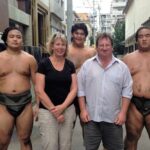
A photo with the wrestlers may follow. This is a welcome finishing touch, but you should treat it as a possibility rather than the central promise of the tour. The number of wrestlers available for photos may vary, and a group photo with everyone is not guaranteed.
Keep your camera ready but discreet. Flash and artificial shutter sounds are not allowed. The athletes are returning to their routine, so the best approach is quick, polite, and guided by the staff.
A few more Tokyo tours and experiences worth a look



What the experience teaches you about sumo

Sumo is often reduced to size and force. This visit gives you a better picture of the sport’s precision.
You can see how much discipline is needed to perform the same movements again and again. The wrestlers’ agility may be the biggest surprise. Their size is obvious, but so are their flexibility, balance, and ability to move quickly.
The setting also adds cultural context. Sumo developed from Shinto tradition, and the ring is treated as a sacred place. You must never step into the ring or onto the sandy ground. Watching from the edge, with your legs tucked in and your phone silent, makes the customs feel practical rather than decorative.
I find this kind of setting more revealing than a simple explanation in a museum. You are not just hearing that sumo has ritual rules. You are asked to observe them in a real place where they matter.
Still, the guide’s explanation makes a difference. The most helpful version of this tour combines quiet observation with clear commentary before or after practice. If you want a long lesson on sumo history, rules, and ranking systems, ask questions when the practice ends. The live portion itself must remain quiet.
The $83.23 price and what you receive

At $83.23 per person, this is not a budget activity. You are paying for access to a working stable, a guide who handles the language and etiquette, and a close view that is difficult to arrange independently.
The value is strongest if you want more than a standard sightseeing stop. Watching a tournament can be thrilling, but tournament tickets, schedules, and seats vary. This morning visit gives you a structured way to see the athletes at close range, then leaves the rest of the day open.
The price is harder to justify if your main goal is a full series of dramatic bouts or a long photo session. Practice may end early, contact may be limited, and the group can include up to 25 people. Most of the group should be close to the action, but some people may sit behind another row rather than directly at the front.
I would treat the fee as payment for access and interpretation, not for a guaranteed performance. The experience works best when you accept that the wrestlers are training for themselves, not entertaining your group.
Who should book this Sumida morning tour

This tour suits first-time visitors who want a direct look at an important part of Japanese culture. It is also a good fit if you have already seen a tournament and want to understand how wrestlers prepare outside the arena.
You should book it if you:
- Can arrive early and reliably reach Oshiage by 7:10am
- Can sit quietly and cross-legged on the floor for about 90 minutes
- Care more about authentic practice than guaranteed action
- Want help with translation and stable etiquette
- Are happy to keep photos discreet and avoid social media posting
- Have children aged six or older who can remain quiet and still
Families need to be honest about the last point. Children who are noisy, move around, or cannot watch quietly may be asked to leave the stable. This is not a casual drop-in attraction.
The tour may be less suitable if you have mobility concerns that make floor seating difficult, dislike early starts, or need a predictable schedule. The practice length can change, and tournament-season times may differ, so check the provider’s direct message for the correct schedule during that period.
Practical ways to make the morning go smoothly

Set two alarms. The meeting time is early, and the group leaves at 7:30am sharp.
Wear modest clothes that are comfortable for floor sitting. Choose shoes that are easy to remove, since you will take them off upon entering the stable. Bring water, but do not bring snacks for the stable.
Keep your phone on silent before you enter. Turn off flash and shutter sounds in advance so you do not have to adjust settings while practice is underway.
If you expect rain, carry a small towel for your feet. The walk from the meeting point takes about 15 minutes, and you will be sitting on a clean wooden floor after removing your shoes.
Contact the provider if you are running late. Do not go to the stable without first making contact, because independent entry is not allowed.
The activity is offered with mobile tickets, and free cancellation is available when you cancel at least 24 hours before the local start time. Changes or cancellations inside that window are not refundable.
Should you book it?
Book this experience if you want to see sumo as a daily discipline rather than a polished sporting event. The close view, translation help, possible conversation with the stable master, and chance of a photo create a memorable morning near Tokyo Skytree.
Skip it if you need guaranteed full-contact bouts, chairs, flexible arrival, or a relaxed photo stop. The strongest reason to go is not spectacle. It is the chance to sit quietly in a real stable and watch elite athletes repeat demanding work with remarkable control.
FAQ
Where does the tour meet?
The meeting point is at 1-chōme-8-21 Oshiage, Sumida City, Tokyo 131-0045, near the foot of Tokyo Skytree.
What time should I arrive?
You should be at the meeting point by 7:10am. The group leaves at 7:30am sharp.
How long does the tour last?
The planned duration is about two hours. Practice can end earlier or run longer, so the actual length may vary.
How far is the stable from the meeting point?
The walk from the meeting point to the stable takes about 15 minutes. The group returns to the meeting point after the tour.
Are chairs provided?
No. There are no chairs in the stable, and you are expected to sit cross-legged on the floor for approximately 1.5 hours.
Can I take photos or videos?
Photos are allowed without flash or shutter sounds. Videos may be taken, but photos and videos cannot be uploaded to social media platforms.
What happens if I am late?
Contact the tour provider if you will miss the meeting time. You may then be directed to go to the stable by yourself, but you cannot enter without contacting the provider first.
More Morning in Tokyo
More Sumo Experiences in Tokyo

More tours in Tokyo we've reviewed












Sumo Experiences, compared.
 ★ 4.8Tokyo: Sumo Show Experience with Chicken Hot Pot and a PhotoFrom $1032 hours
 ★ 4.8Tokyo: Sumo Show and Dining ExperienceFrom $7990 minutes - 2 hours
 ★ 5.0the SUMO showFrom $89
 ★ 5.0Tokyo Sumo Entertainment Show with Chicken Hot Pot and PhotoFrom $106
 ★ 4.6Tokyo: Sumo Tournament Tour with Chair Seat TicketsFrom $141
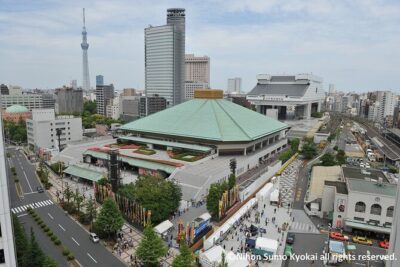 ★ 5.0Tokyo Grand Sumo Tournament Viewing Tour with TicketsFrom $124

![[NEW]JPN CULTURE - Buy@Toyosu Market SUSHI Making +TEA +Maid Cafe - Starting at Toyosu Market](https://tokyoezine.com/wp-content/uploads/2026/08/new-jpn-culture-buy-toyosu-market-sushi-making-tea-maid-cafe.jpg)