Reviewed · TOKYO FOOD TOURS
Shimbashi Tastes & Stories A Culinary Foodie Tour By Local Guide
Shimbashi is where Tokyo feels less polished and more lived-in. This four-hour walk takes you through old railway landmarks, office-worker drinking lanes, a local shrine, and several eateries for sushi, seafood, Japanese beef wagyu, soft drinks, and dessert. It is a good way to see the city beyond Shibuya, Shinjuku, and Ginza.
In This Article
- Key points to know before booking
- Why Shimbashi makes a strong food-tour base
- Starting at SL Square and the old railway district
- Karasumori-jinja, a quieter stop near the station
- The New Shimbashi Building and Tanuki Alley
- Shiodome City Center and the modern side of Shimbashi
- What you actually eat during the four hours
- Guides Akira, Kaori, and the human side of the tour
- Is $171 a fair price in Tokyo?
- Timing, meeting details, and who should book
- Should you book the Shimbashi food walk?
- FAQ
- Where does the Shimbashi food tour begin?
- Where does the tour end?
- How long does the experience last?
- What food is included?
- Are drinks included?
- How large can the group be?
- Can I cancel for a full refund?
I like the mix of small local food stops and street history, especially the look at salaryman culture around Shimbashi Station. I also like that guides such as Akira and Kaori have helped make the experience personal, including taking photos and leading visitors to places they would be unlikely to find alone.
The main consideration is the meeting point. The tour begins at SL Square, but one departure had confusion over the exact meeting details, so check your mobile ticket carefully and arrive with extra time. At $171 per person, this is not a cheap meal, but it combines several tastings with a guided neighborhood walk.
Key points to know before booking
- Shimbashi instead of the usual Tokyo circuit: You explore a working district south of Tokyo Station, not the standard Shibuya and Shinjuku route.
- Food is spread across several stops: Sushi, seafood, wagyu, soft drinks, water, and dessert are included, while alcohol costs extra.
- Railway history gives the walk shape: Old Shimbashi Station and SL Square explain why this area became such an important transport and business center.
- A quiet shrine adds a change of pace: Karasumori-jinja offers a local religious site that many visitors pass without noticing.
- Small-group format: The maximum is 15 people, with a Japanese-speaking, English-speaking guide leading the route.
- Four hours on foot: The timing gives you room for food and conversation, but comfortable shoes are still a good idea.
Why Shimbashi makes a strong food-tour base
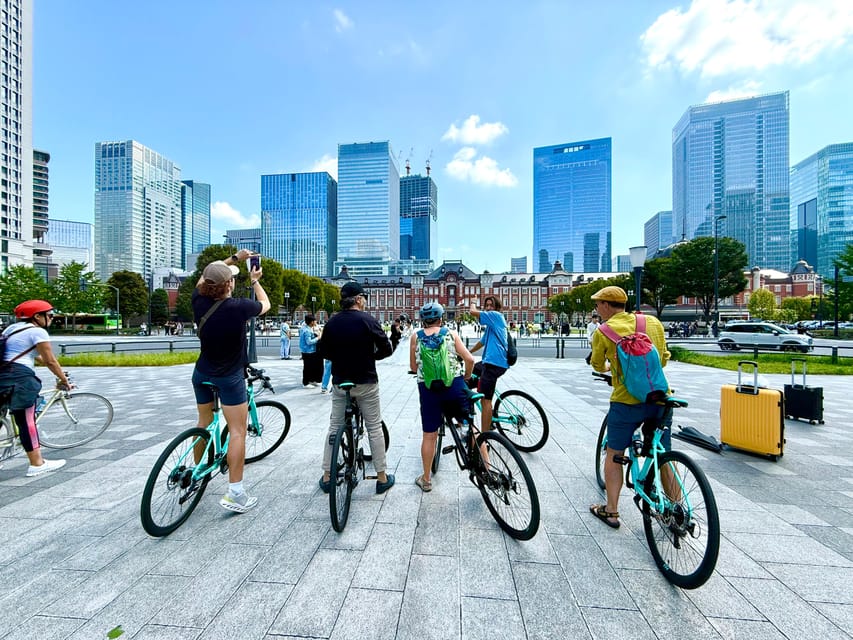
Shimbashi sits in Minato Ward, about a 10-minute walk from Ginza and directly south of Tokyo Station. That location makes it easy to add before or after a day in central Tokyo, yet the district has a more everyday feel than Ginza’s department stores or the neon-heavy entertainment zones.
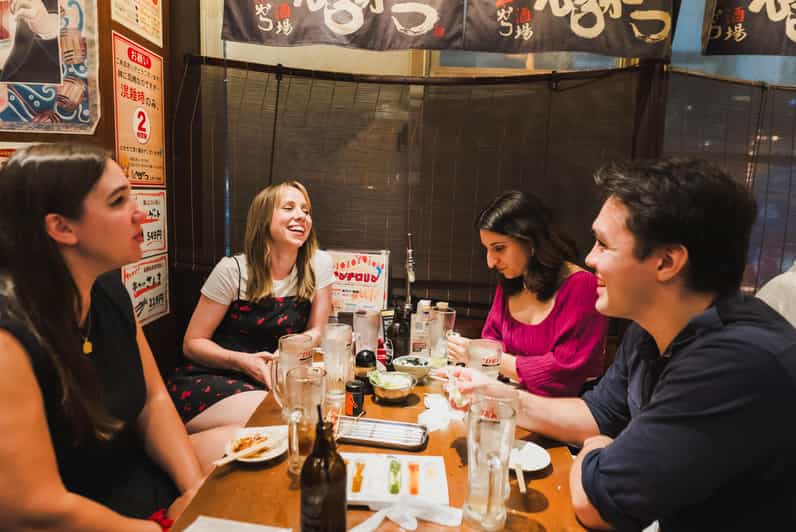
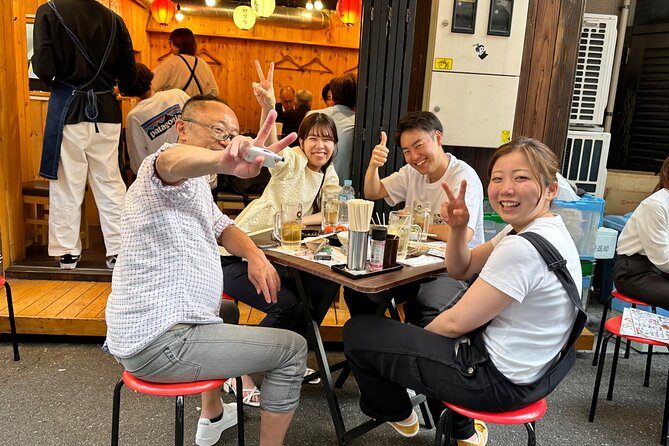
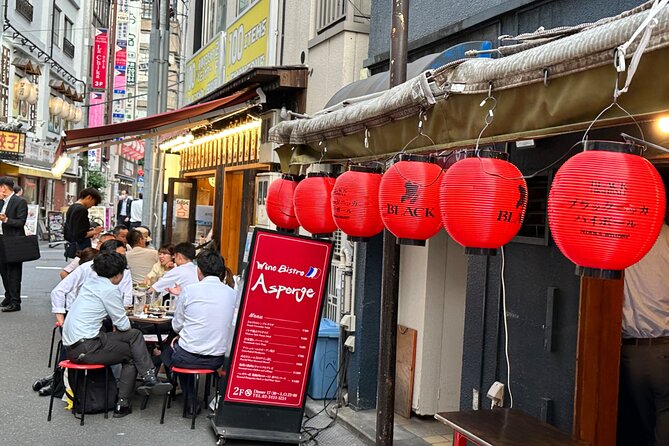
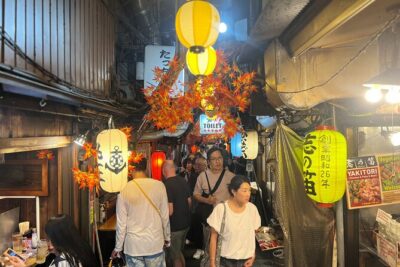
The area is closely linked to office workers, often called salarymen, who gather around the station after work. You see that culture in the narrow lanes, compact eateries, and buildings shaped by decades of city change. This is not a tour built around grand landmarks. It is about seeing how Tokyo eats, commutes, works, and relaxes.
I find that approach useful because food tells you things a formal museum may not. A guide can explain why a station district matters, point out places you would walk past, and help you understand how a small shrine fits into a modern business neighborhood.
The route also gives you a useful contrast. One moment you are beside a major station and railway monument. Soon after, you are looking at a neighborhood shrine or entering an older commercial building. That variety is the heart of the experience.
A few more Tokyo tours and experiences worth a look

Starting at SL Square and the old railway district
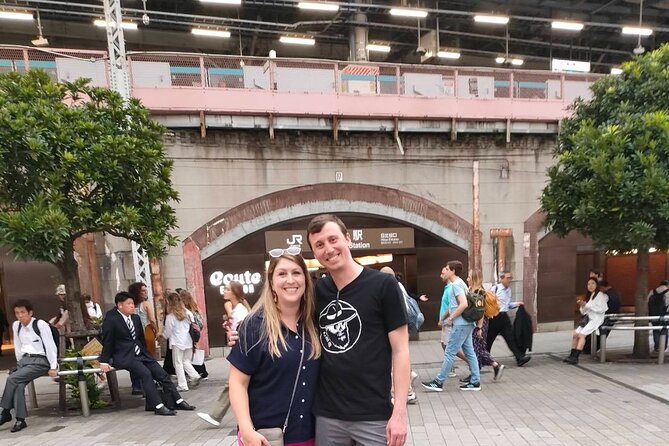
The meeting point is SL Square, at 2-chōme-7-先 Shimbashi, Minato City. You should use the exact location shown with your mobile ticket, since the area has several station exits and landmarks that can sound similar.
SL Square was created in 1972 to mark 100 years of railway transport in Japan. The district is tied to the first railway route between Tokyo and Yokohama, making this more than a convenient place to gather. It is a visual reminder that Shimbashi helped launch modern rail travel in Japan.
The tour also includes old Shimbashi Station, a stop that helps set the scene before the meal stops begin. The station is part of the area’s identity, and its location near Ginza and Tokyo Station explains why Shimbashi became such a natural meeting point for commuters, businesses, and restaurants.
Allow about 30 minutes for the old station section and 45 minutes around SL Square. These are not museum visits with long indoor exhibits. Instead, you get context from the guide while moving through a busy central district.
That makes the guide especially important. A casual walk past the station may reveal very little. With someone explaining the railway connection and the local role of Shimbashi, ordinary streets become easier to read.
Karasumori-jinja, a quieter stop near the station
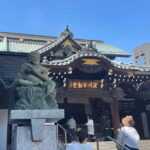
Karasumori-jinja provides a clear change of mood. The shrine is described as one of the oldest in the area and is mainly visited by local people. After the station and railway discussion, this stop gives you a chance to pause and see a religious site that is easy to miss in the middle of the city.
You should not expect a large temple complex or a long sightseeing visit. The appeal is its setting and local character. Tokyo often places small shrines in tight spaces between office buildings, restaurants, and roads. That contrast helps you understand how old customs remain part of daily city life.
The planned time here is about 45 minutes. That should allow the guide to explain the shrine and its place in the neighborhood without rushing straight to the next restaurant.
For me, this is one of the more useful parts of the route. Food tours can sometimes feel like a series of meals with a little walking in between. Karasumori-jinja gives this experience a cultural pause and keeps the afternoon from becoming only a restaurant crawl.
The New Shimbashi Building and Tanuki Alley
The New Shimbashi Building shows another side of the district. It was created through an urban restructuring project after the 1964 Tokyo Olympics, on the site of a former bar area known as Tanuki Alley.
That detail gives the building more interest than its plain modern appearance might suggest. Tokyo is full of structures that look ordinary until you know what stood there before. The guide can connect the building to postwar development, changing city plans, and the drinking culture that grew around Shimbashi Station.
You spend about 30 minutes here. That is enough to understand the setting and look at the commercial environment without turning the visit into an architectural lecture.
This stop also helps explain why Shimbashi is a good match for a food walk. The district has long supported compact businesses serving people who work nearby. You are not simply eating in a restaurant selected for sightseeing appeal. You are seeing the kind of commercial neighborhood where food and work have been linked for generations.
The experience is best for people who enjoy context. If you only want a long sit-down meal, part of the $171 price may feel less useful. If you like knowing why a neighborhood has its particular food culture, the stop adds value.
Shiodome City Center and the modern side of Shimbashi
The route continues to Shiodome City Center and the NTV Plaza, located in front of the NTV Tower. NTV is one of Japan’s major television broadcasters, and the tower contains its main studios and offices.
The area offers a modern contrast to the older station streets and shrine. You see a newer business and media center, then return to the broader Shimbashi area for more local background and food.
About 30 minutes is planned here. The plaza is not presented as a major sightseeing attraction in itself. Its role is to show another layer of the district, one shaped by large offices, broadcasting, and redevelopment.
That balance is welcome. You get old rail history, a local shrine, a postwar commercial building, and a modern city center in one short route. The stops are close enough in theme to make sense together, but different enough to keep the walk varied.
The final Shimbashi section provides an overall explanation of the station and its surroundings. Expect roughly another 30 minutes of orientation and local stories before the activity ends back at the meeting point.
A few more Tokyo tours and experiences worth a look


What you actually eat during the four hours
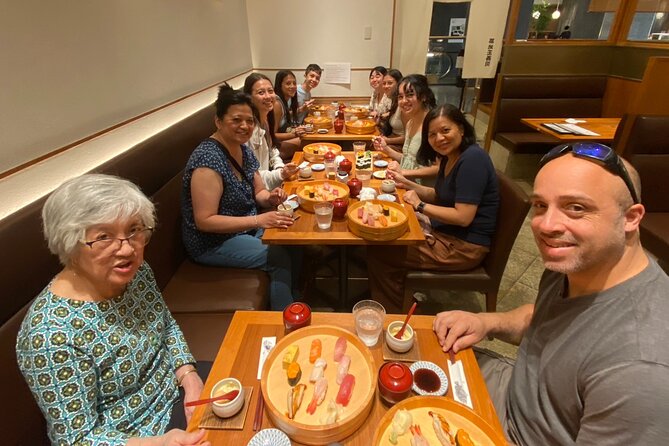
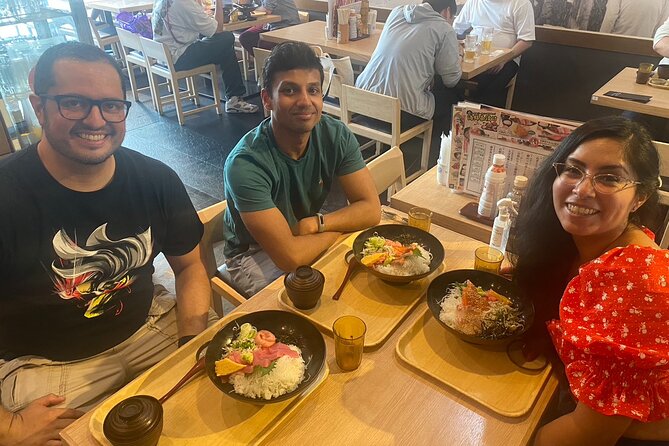
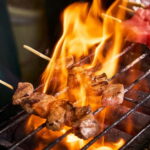
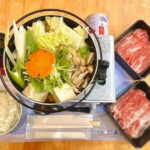
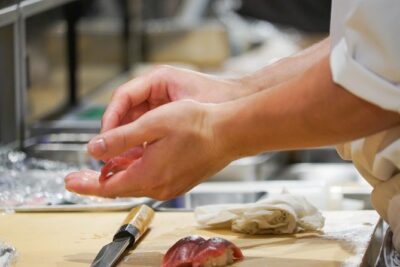
The food is the main reason to book, and the included selection covers several prized parts of Japanese cuisine. You receive sushi, seafood, Japanese beef wagyu, two soft drinks and water, plus desserts. Alcohol is not included, though you can purchase it separately.
The wording does not specify exact restaurants, dishes, portion sizes, or the number of individual tastings. That is worth keeping in mind. You should expect a food-focused route with several eateries, but not a fixed menu you can study in advance.
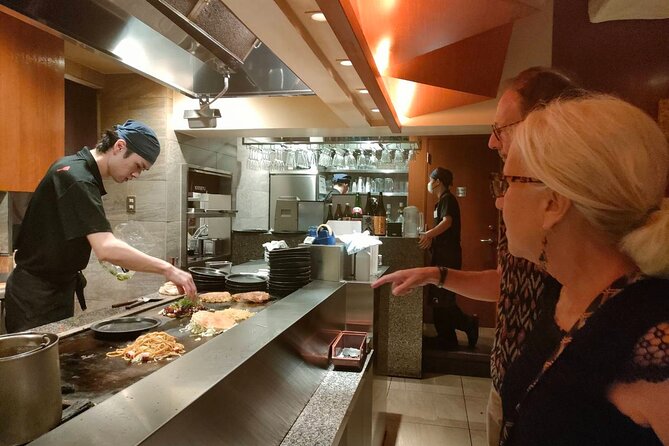
That flexibility can work in your favor. The guide can take you to different types of places rather than giving you one formal meal. It also makes the experience feel more connected to the neighborhood, where food may be found in compact, specialized businesses.
The food selection gives you a broad introduction:
- Sushi introduces one of Japan’s best-known foods in its home setting.
- Seafood adds another taste of the country’s cooking tradition.
- Wagyu provides a richer and more substantial stop.
- Dessert finishes the route on a sweet note.
- Soft drinks and water are included, which is useful during a four-hour walk.
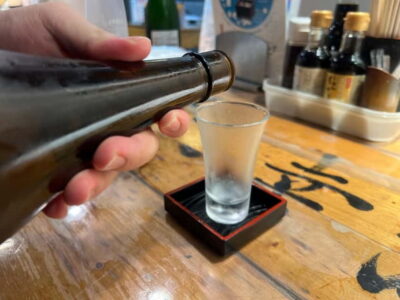
Alcohol is available to buy, but you should budget extra if you want beer, sake, or another drink. Since the tour centers on salaryman food culture, an alcoholic drink might fit the setting, but it is optional rather than part of the advertised price.
Past departures have been described as including two substantial meal stops, though the exact arrangement can vary. I would treat that as a helpful indication, not a guaranteed menu promise.
Guides Akira, Kaori, and the human side of the tour
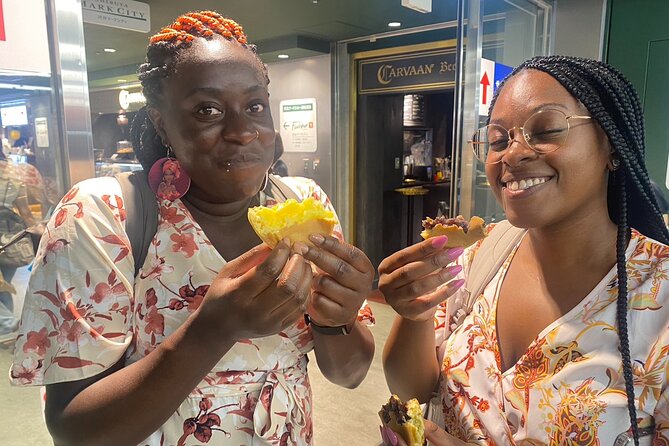
The guide can shape the entire experience. Names associated with this tour include Akira and Kaori, and the feedback points to guides who do more than lead people from one address to another.
Akira has been praised for finding good food places and taking photos for a parent and child during the walk. Kaori has been singled out for making the route comfortable and taking people to spots they would not have found on their own.
Those details matter. A food tour works best when the guide can bridge small cultural gaps, explain what you are eating, and keep the group moving without making the outing feel hurried.
The tour is led by a Japanese-speaking English tour guide. That description suggests English is available for the experience, while the guide’s Japanese background can add useful local context.
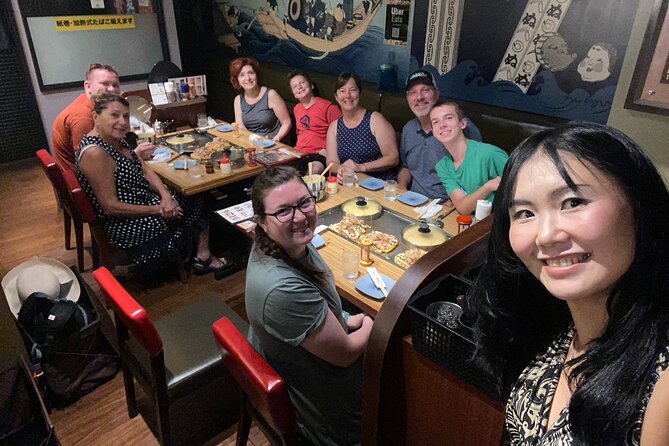
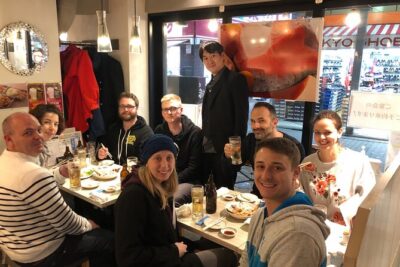
The group can include up to 15 people. That is small enough for a personal feel in many cases, though it is not the same as a private tour. One booking resulted in a private experience because only one person attended, but you should not assume that will happen on your date.
Is $171 a fair price in Tokyo?
At $171 per person, this sits in the expensive half of Tokyo food walks. The value depends on how much you want from the experience beyond the food itself.
You are paying for about four hours, a professional guide, several eating stops, neighborhood interpretation, sushi, seafood, wagyu, dessert, and nonalcoholic drinks. You also avoid the work of finding unfamiliar eateries and trying to order in a setting that may not be easy to navigate.
If you already feel comfortable choosing restaurants in Tokyo, you might spend less by eating independently. You would also have more control over dishes, timing, and drinks. But you would lose the local stories, the route through the station district, and the help of a guide who knows where to take you.
I see the price as easier to justify for a first visit, a special meal-focused afternoon, or anyone who values local explanation as much as the menu. It is harder to justify if your main goal is simply to eat the largest possible amount for the lowest price.
The current score is 4.7 out of 5 from 13 ratings, with 92 percent recommending the experience. That is a positive signal, though the sample is small. I would focus more on the tour’s clear strengths and limitations than on the number alone.
Timing, meeting details, and who should book
The activity lasts about four hours and ends back at the meeting point. The listed stops account for most of that time, with the remaining minutes used for walking, food, ordering, and conversation.
You should arrive at SL Square with the mobile ticket ready. A past departure had trouble because the meeting point information was unclear, and a local person helped the participant contact the guide. That problem was resolved, but it is still sensible to confirm the exact location before leaving your hotel.
The tour is near public transportation, and most people can participate. Since the route combines walking, standing, and several food stops, it suits people who want an active afternoon rather than a single seated meal.
It is a strong choice for:
- First-time Tokyo visitors who want a neighborhood beyond the famous districts.
- Food-focused visitors who want sushi, seafood, wagyu, and dessert in one outing.
- People interested in salaryman culture and the connection between work, railways, and restaurants.
- Families or small groups who value help with photos, ordering, and local context.
- Repeat visitors who have already seen the major central Tokyo sights.
You may want another type of activity if you need a fully private tour, a set menu, a low-cost meal, or a detailed guarantee of every dish before booking.
Free cancellation is available if you cancel at least 24 hours before the start time. Changes or cancellations inside that window are not accepted for a refund. Keep that deadline in mind, since the tour is often booked about 16 days ahead.
Should you book the Shimbashi food walk?
Book it if you want food and neighborhood stories in equal measure. The best parts are the local scale, the link between railway history and working Tokyo, the stop at Karasumori-jinja, and the chance to eat sushi, seafood, wagyu, and dessert without planning several restaurants yourself.
The price is high, and the menu is not fully specified. You also need to check the meeting point closely. Still, the combination is unusual: a station district, a local shrine, an old bar quarter, a television center, and a guided meal route in four hours.
I would choose this tour for a first or second Tokyo visit when you want a more ordinary side of the city. If you prefer famous landmarks or a fixed fine-dining menu, spend your money elsewhere. If you want to understand why Shimbashi matters while eating well, this is a sound pick.
FAQ
Where does the Shimbashi food tour begin?
The tour begins at SL Square, at 2-chōme-7-先 Shimbashi, Minato City, Tokyo 105-0004, Japan.
Where does the tour end?
The activity ends back at the meeting point at SL Square.
How long does the experience last?
The tour lasts approximately four hours.
What food is included?
Sushi, seafood, Japanese beef wagyu, and desserts are included.
Are drinks included?
Two soft drinks and water are included. Alcoholic drinks are available to purchase separately and are not included.
How large can the group be?
The maximum group size is 15 people.
Can I cancel for a full refund?
Yes. You can receive a full refund if you cancel at least 24 hours before the experience start time. Cancellations within 24 hours are not refunded.
More Guided Tours in Tokyo


More Food Experiences in Tokyo
More Tokyo Food Tours in Tokyo
More tours in Tokyo we've reviewed




Tokyo Food Tours, compared.
 ★ 5.0Tokyo: Shinjuku Food Tour (13 Dishes at 4 Local Eateries)From $86
 ★ 4.9Tokyo: Shinjuku Food Tour (13 Dishes and 4 Eateries)From $97
 ★ 5.0Tokyo Night Foodie Tour in Shinjuku – Seasonal Sushi, Wagyu BeefFrom $111
 ★ 5.0Eat and Drink Like a Local: Tokyo Ueno Food Tour-Taverns&RamenFrom $95
 ★ 5.0Tokyo: Shibuya Food Tour (13 dishes and 4 Eateries)From $77
Tokyo: Shinjuku Food Tour – 15 Dishes, 3 Drinks, 4 EateriesFrom $723 hours
★ 5.0Tokyo: Shibuya Food Tour (13 dishes and 4 Eateries)From $77
Tokyo: Shinjuku Food Tour – 15 Dishes, 3 Drinks, 4 EateriesFrom $723 hours