Reviewed · TEMPLES & MEDITATION
Kimono Photo Session Experience Japanese Culture Inside a Shrine
The special part of this experience is access to a professional photo session inside a working shrine, where photography normally requires permission. You dress in kimono, pose indoors and outside, then slow down over tea, Japanese sweets, and a live Gagaku performance.
In This Article
- Key points to know
- A shrine session rather than a quick costume rental
- What happens at 1 p.m. at Shasha Shrine
- Kimono dressing and hair styling
- Photography inside a place with real meaning
- Tea, sweets, and the sound of Gagaku
- Learning shrine manners before receiving a blessing
- Is $858.41 a fair price?
- Who will enjoy this experience most
- Booking, timing, and cancellation details
- Should you book this kimono shrine experience?
- FAQ
- Where does the kimono shrine experience begin?
- What time does the activity start?
- How long does the experience last?
- Is transportation included?
- How many people can join?
- Is kimono rental included?
- Are photographs included?
- Does the activity operate in bad weather?
- What is included besides the kimono and photos?
- Can I cancel for a full refund?
I like the small maximum of six people and the full cultural package: kimono rental, digital photos, shrine admission, tea, music, and a blessing are all included. The main drawback is the price, $858.41 per person, so this makes the most sense if high-quality photographs and a carefully guided cultural experience matter more to you than a low-cost sightseeing stop.
Key points to know
- Private-style shrine photography: Professional photography is usually restricted at shrines, making the permitted session a major part of the experience.
- A quiet Tokyo setting: Shasha Shrine in Nishigahara offers a calmer alternative to Tokyo’s busiest sightseeing areas while remaining accessible from Shinjuku.
- Traditional dress included: Your kimono rental is part of the experience, along with professional dressing and hair styling.
- Culture beyond the costume: Tea, Japanese sweets, Gagaku music, shrine etiquette, and a blessing give the session more depth than a simple photo shoot.
- Small group format: The activity accepts a maximum of six people, which should allow more personal attention.
- Weather does not cancel the plan: The session runs as scheduled in all weather conditions, so bring suitable clothing for the day.
A shrine session rather than a quick costume rental
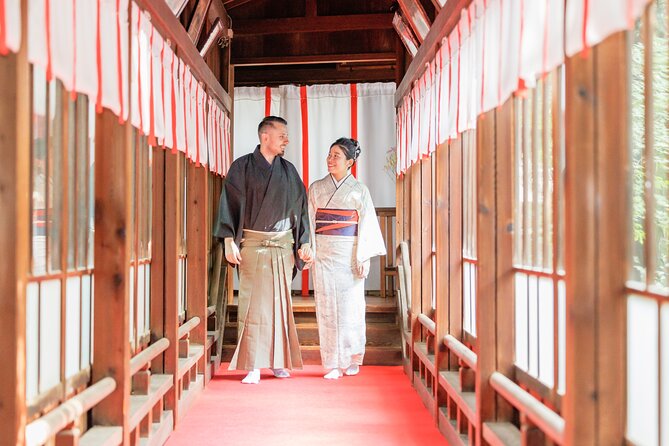
Many kimono experiences in Tokyo are built around dressing up and taking a few casual pictures. This one is more structured. You meet at Shasha Shrine in Kita City, change into formal Japanese clothing, and work with a professional photographer at several points around the shrine property.
That distinction matters. A shrine is not simply a scenic backdrop. It is a religious place with rules about behavior and photography. This experience gives you an organized way to take photographs without treating the shrine like a public studio.
You also get time to learn how to visit a shrine properly. The session includes an explanation of shrine history and manners, followed by a blessing for safe travel. The result is part portrait session and part cultural introduction.
The location is in Nishigahara, not in the middle of Tokyo’s most crowded tourist zones. That gives the afternoon a slower feel. You still have access from Shinjuku, but you are not spending the whole experience surrounded by major attractions and crowds.
A few more Tokyo tours and experiences worth a look


What happens at 1 p.m. at Shasha Shrine
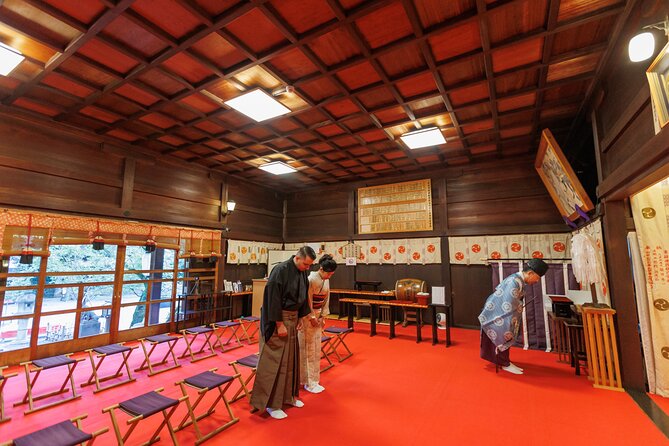
The meeting point is Shasha Shrine, 2-chome Nishigahara, Kita City, Tokyo. The experience begins at 1 p.m. and ends back at the shrine after about three and a half hours.
You should plan your route carefully and arrive with enough time to find the entrance. Private transportation is not included, so you are responsible for reaching the shrine. The location is near public transportation, but the booking information does not specify a pickup service or hotel transfer.
The session proceeds in all weather. That is useful if your Tokyo schedule is tight, but it also means you need to prepare for rain, heat, or cold. Some of the photography takes place outdoors, so check the forecast and dress sensibly before you arrive. Your kimono will be supplied during the activity, but that does not remove the need for comfortable clothing underneath and weather protection between locations.
The group limit is six people. That is small enough to feel personal without necessarily being a one-to-one session. If you are booking as a couple, family, or small group of friends, the format should be easier to manage than a large commercial photo tour.
Kimono dressing and hair styling
The dressing stage is not an afterthought. Professional staff help you put on the kimono, and hair styling is part of the preparation described for the session.
A kimono is more than a jacket that you slip on for a picture. The layers, belt, and formal presentation create the look, and proper dressing helps the clothing sit correctly during photographs. You should allow yourself to be guided rather than trying to arrange everything on your own.
This part of the experience is especially useful if you want photographs that look formal and considered. The clothing gives the pictures a stronger connection to Japanese tradition than ordinary street photography in rented costume.
There is a practical trade-off. Formal clothing can feel less relaxed than everyday clothes, and the full session takes time because dressing comes before photography. That is exactly what makes the activity different from a quick rental shop visit, but it may feel slow if your only goal is to get one or two pictures for social media.
The information provided does not specify the range of kimono styles, available sizes, or whether guests can choose particular colors. If those details matter to you, ask the operator before booking. The listing does confirm that the kimono rental is included.
Photography inside a place with real meaning
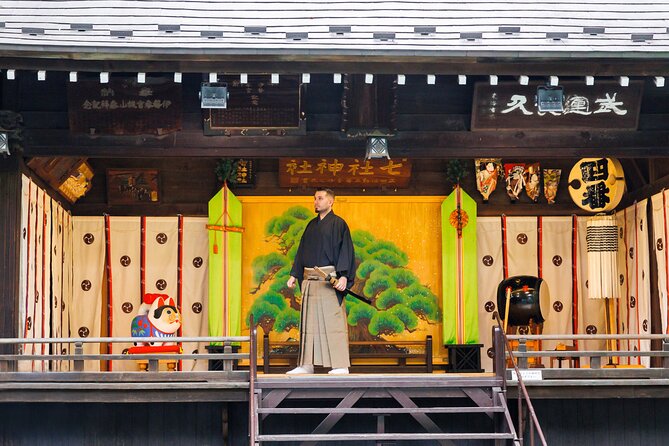
Photography is the centerpiece. A professional photographer works with you at several locations within the shrine grounds, both indoors and outdoors. One photographer is described as speaking English, which should help with posing and basic direction for international visitors.
The setting is important because photography at shrines is often restricted without permission. Even Japanese-style weddings can have limits on where and when pictures may be taken. Here, the photography is arranged as part of the cultural program, so you are not left guessing about what is acceptable.
You should expect guidance rather than a do-it-yourself session. A professional photographer can help with posture, positioning, and how to use the shrine setting without disrupting worship or other activity. The available information does not list the exact number of photographs or delivery time, but digital photo data is included.
That inclusion helps explain some of the cost. You are not paying only for access to a kimono and a scenic place. You are also paying for a professional session and digital files you can keep after returning home.
Still, $858.41 per person is a serious price. If you want inexpensive souvenir photographs, this is not the right choice. If you are marking a birthday, anniversary, honeymoon, family occasion, or major trip, the price may feel more reasonable because the photographs are one of the main products rather than a small extra.
The photography takes place in several parts of the property, so you get more variety than a single background. Indoor and outdoor images also give the final set a different mood. The exact photo locations depend on shrine rules and conditions on the day.
Tea, sweets, and the sound of Gagaku
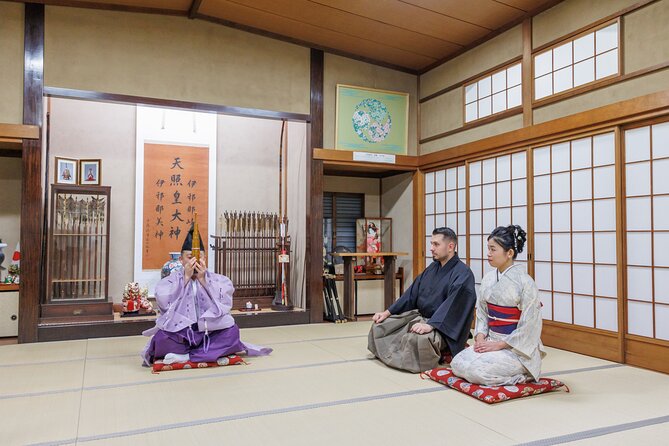
After the photo session, you sit down for Japanese green tea and sweets. This pause changes the rhythm of the afternoon. Instead of moving from one pose to the next, you have time to sit, taste something traditional, and listen.
A live Gagaku performance is included. Gagaku is an old form of Japanese court music, and the program identifies the instrument tradition as one of Japan’s oldest. For someone with little background in Japanese music, this can be a useful introduction because it connects the sound to the wider ceremonial setting of the shrine.
The tea and sweets are modest in scale, but they add context. You are not just wearing the visual symbols of Japanese culture for photographs. You are also being introduced to a small part of its food, music, and formal customs.
Do not expect a full meal. Tea and sweets are included, but no lunch or dinner is listed. Since the activity starts at 1 p.m. and lasts roughly three and a half hours, eating beforehand is sensible.
The exact type of tea, sweets, and musical instruments is not specified. That uncertainty is worth noting if you are choosing the experience mainly for the musical portion. The Gagaku performance is included, but the schedule does not say how long it lasts.
Other photography tours in Tokyo




Learning shrine manners before receiving a blessing
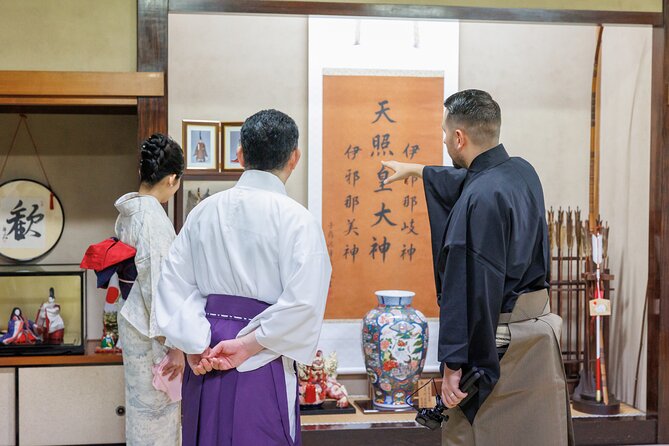
The final cultural element is instruction in shrine history and proper manners. This is one of the most useful parts for a first visit because shrine etiquette can seem unclear when you are on your own.
You learn how to behave respectfully on the grounds and what to expect during a visit. The session then includes a shrine blessing for safe travel. Shrine admission and the fee connected with receiving the blessing are included, which removes an extra charge that often catches visitors off guard at religious sites.
The blessing gives the experience a clear closing point. You are not simply leaving with pictures and a rented outfit. You have taken part in a formal visit, learned the basic customs, and received a traditional prayer for the journey ahead.
The activity is designed for overseas visitors, and the presence of an English-speaking photographer is helpful. The supplied information does not identify the interpreters, kimono dressers, or other staff by name, so you should not expect a specific named guide unless the operator confirms one after booking.
Is $858.41 a fair price?
This is expensive by Tokyo tour standards. At $858.41 per person, the activity costs far more than a standard kimono rental, a public shrine visit, or a short photo session.
The value depends on what you are comparing. The fee includes:
- Kimono rental
- Dressing and hair styling
- Professional photography
- Digital photo files
- Tea and Japanese sweets
- Shrine admission
- The fee for the blessing
- Live Gagaku performance
Private transportation is not included. You also need to make your own way to Nishigahara and back. The maximum of six helps keep the format small, but the information does not promise a fully private booking for one person or one couple.
I would consider the price justifiable for someone who wants a formal keepsake and a guided cultural program in one afternoon. The cost is harder to justify if you mainly want to try on a kimono or visit a shrine, since both can be done more cheaply in other ways.
The strongest value is the combination of permission, staff, photography, and cultural elements. Many low-cost kimono packages focus on clothing and pictures. This one adds the shrine setting, etiquette lesson, tea, music, and blessing.
Who will enjoy this experience most
I would recommend this for couples, families, and small groups celebrating a special trip. It also suits photographers and culture-focused visitors who want more than a quick stop at a famous shrine.
The session may appeal to you if you value:
- Professional photographs instead of casual phone pictures
- A calm setting away from Tokyo’s best-known tourist areas
- A small group rather than a large organized tour
- A formal introduction to shrine customs
- A cultural activity that works in the afternoon
- A meaningful souvenir connected to Japanese tradition
I would think twice if you are on a tight budget, dislike formal clothing, or want a flexible activity that can be shortened. The tour follows a set flow and continues in all weather. It is also not designed as simple sightseeing, so you should be comfortable giving most of an afternoon to one carefully planned experience.
Most people can participate, according to the activity information, but specific details about mobility needs, kimono sizing, and accessibility are not provided. Contact the operator before booking if those concerns affect your plans.
Booking, timing, and cancellation details
Confirmation is sent within 48 hours of booking, subject to availability. Since the group is limited to six people, booking ahead is sensible, especially if you need a particular date.
The experience starts at 1 p.m. and returns to the same meeting point. A mobile ticket is available, which makes it easy to keep the booking on your phone.
Free cancellation is available if you cancel at least 24 hours before the local start time. Cancellations made less than 24 hours before the activity are not refunded, and changes inside that same window are not accepted.
Because the session runs in all weather, cancellation and weather planning are separate issues. A rainy forecast does not automatically stop the activity, so check the conditions before you leave and bring suitable protection.
Should you book this kimono shrine experience?
Book it if you want a polished set of photographs tied to a genuine shrine visit, and if the cost fits your budget. The strongest parts are the permitted photography, small group size, professional preparation, tea and sweets, Gagaku music, and blessing.
Skip it if you are looking for a cheap way to wear a kimono or fill one hour between major Tokyo sights. At $858.41 per person, the experience needs to be the focus of your afternoon, not a casual add-on.
For the right person, this is a thoughtful souvenir: photographs, music, manners, and a blessing in a quiet Tokyo shrine. Just confirm kimono options, photo delivery details, and any accessibility needs before paying the high price.
FAQ
Where does the kimono shrine experience begin?
It begins at Shasha Shrine, located at 2-chome Nishigahara, Kita City, Tokyo, postal code 114-0024.
What time does the activity start?
The scheduled start time is 1 p.m.
How long does the experience last?
The experience lasts approximately three hours and 30 minutes.
Is transportation included?
No. Private transportation is not included. The meeting point is near public transportation, and the activity ends back at the shrine.
How many people can join?
The activity has a maximum of six participants.
Is kimono rental included?
Yes. Kimono rental is included, along with professional dressing and hair styling.
Are photographs included?
Yes. The professional photo session and digital photo files are included.
Does the activity operate in bad weather?
Yes. The session proceeds as scheduled regardless of weather conditions.
What is included besides the kimono and photos?
Tea, Japanese sweets, shrine admission, a shrine blessing, and a live Gagaku performance are included.
Can I cancel for a full refund?
Yes, if you cancel at least 24 hours before the experience start time. Cancellations made less than 24 hours before the start time are not refunded.
More Photography Tours in Tokyo
More Temples & Meditation in Tokyo

More tours in Tokyo we've reviewed




Temples & Meditation, compared.
 ★ 4.7Tokyo: Meiji Shrine, Asakusa, Skytree Bus Tour and CruiseFrom $12210 hours
 ★ 4.8Tokyo: Asakusa Walking Tour with Sensoji Temple VisitFrom $222 hours
 ★ 4.5Tokyo: Kamakura & Enoshima Day Trip including Temple TicketsFrom $589 hours - 570 minutes
 ★ 4.5Tokyo: Nikko Toshogu Shrine and Kegon Waterfall TourFrom $8410h 30m
 ★ 4.5Tokyo Panoramic 1 Day: Meiji Shrine, Asakusa, Odaiba and SKYTREE®From $85
 ★ 5.0Asakusa Senso-ji Temple and Old Tokyo Walking TourFrom $20