Reviewed · TICKETS
Tokyo: Ashikaga Flower Park with Entry Ticket
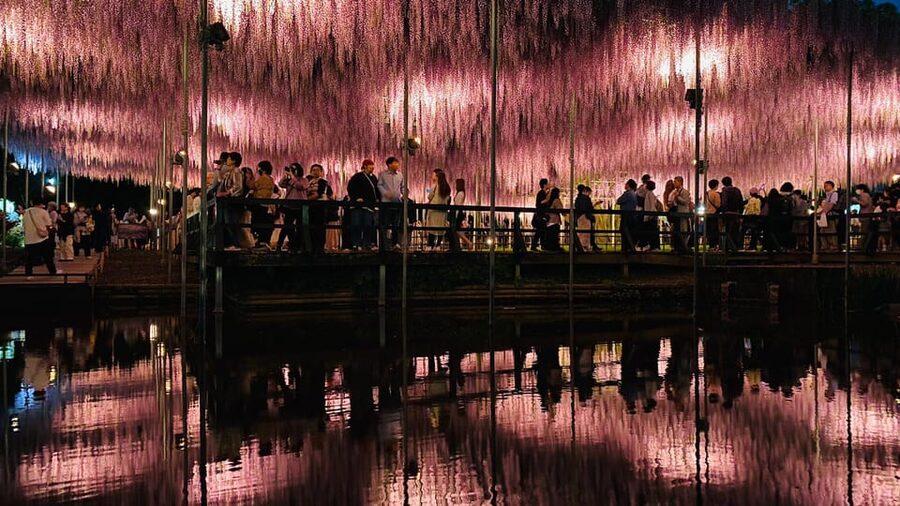
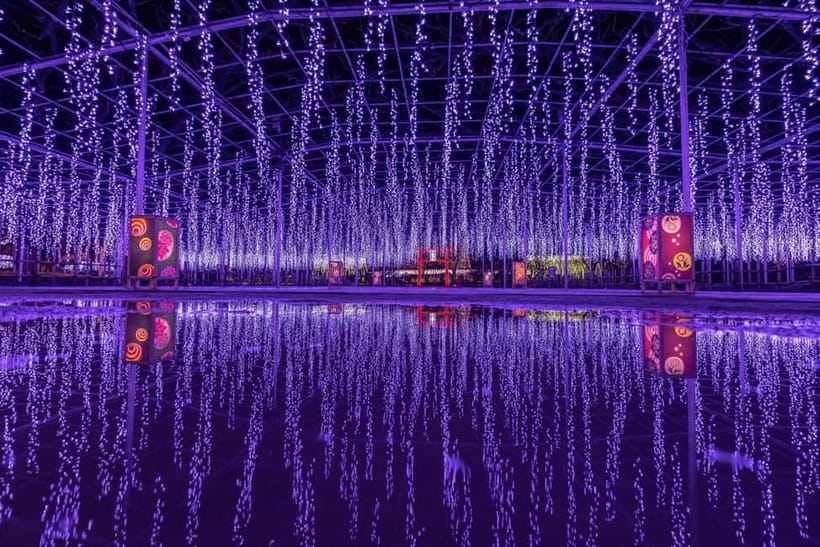
Ashikaga Flower Park changes its character with the calendar. In spring, the Great Wisteria forms a huge curtain of blossoms over its trellis. In summer, roses and other flowers take the lead. In winter, hundreds of lights turn the paths into a glowing evening display. I like that one park offers several very different reasons to visit.
In This Article
- Key points to know before booking
- Why Ashikaga Flower Park makes a good day trip
- The Great Wisteria and the park’s changing seasons
- Three hours on the winding garden paths
- A guide who can help with photographs
- Getting there and finishing at Oyama Station
- Is $206 a fair price?
- Who will enjoy this experience most?
- Useful booking details to keep in mind
- Should you book Ashikaga Flower Park from Tokyo?
- FAQ
- Where is Ashikaga Flower Park located?
- How long do I spend at the park?
- What can I see at Ashikaga Flower Park?
- Is transportation included?
- Are food and drinks included?
- Can I cancel or pay later?
I also like the quiet pace: three hours to wander winding paths, stop for photographs, and enjoy the gardens without racing between many unrelated sights. The included parking, express tolls, and return train to Shinjuku make the day simpler. The main drawback is the $206 price, which is a serious outlay for one park and about three hours on site.
Key points to know before booking
- The Great Wisteria is the park’s signature sight, with a broad trellis that becomes a flower-filled canopy during wisteria season.
- The experience changes by season, from spring wisteria and summer roses to winter illumination displays.
- You get about three hours in the park, enough for a relaxed walk and photos, but not an all-day garden visit.
- Guide Ali can add a personal photography touch, with one visitor praising the many photos and videos he made during the day.
- The return train from Oyama Station to Shinjuku is included, along with the park entry, parking, and express tolls.
- Food and drinks are your responsibility, so plan around that during a full day away from Tokyo.
Why Ashikaga Flower Park makes a good day trip
Ashikaga Flower Park is in Tochigi Prefecture, north of Tokyo, and the appeal is easy to understand: you are going for flowers, not for a long list of monuments or busy city stops. That focus can be refreshing. You get time to look closely, take pictures, and let the garden set the pace.
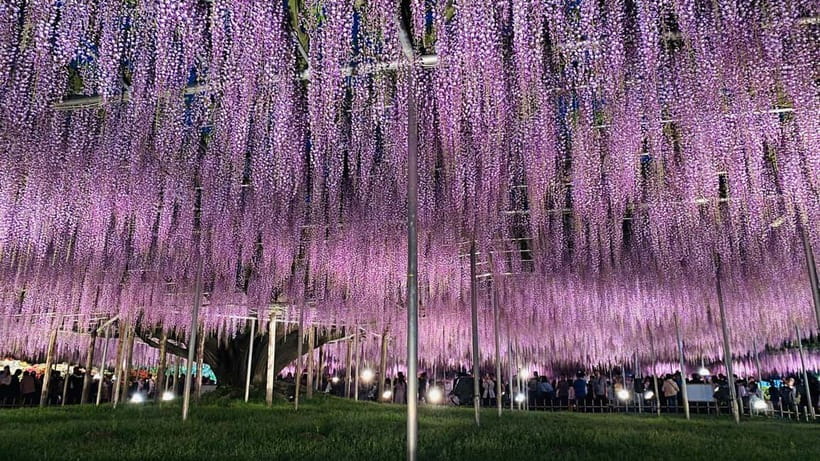
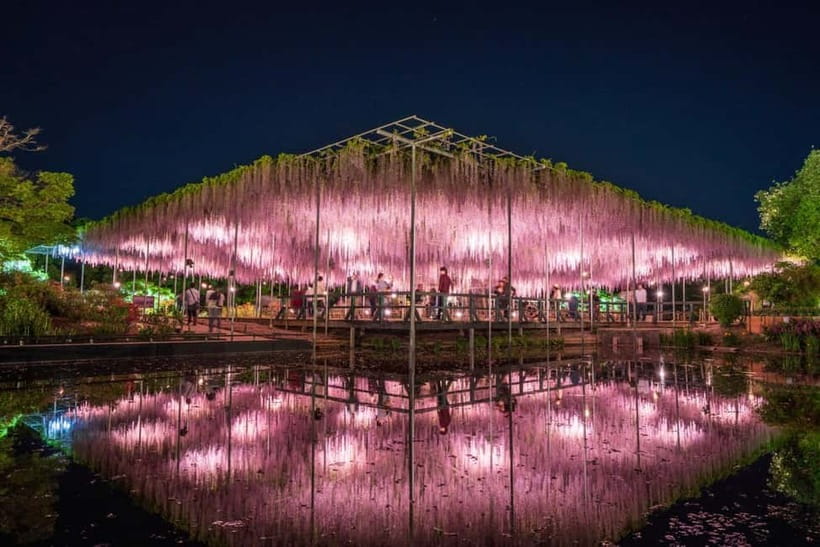
The park is known for seasonal displays, so your experience depends heavily on when you go. During the wisteria period, the Great Wisteria is the star. Its large vine-covered trellis creates a canopy of hanging blossoms, the sort of place where you will naturally slow down and look up.
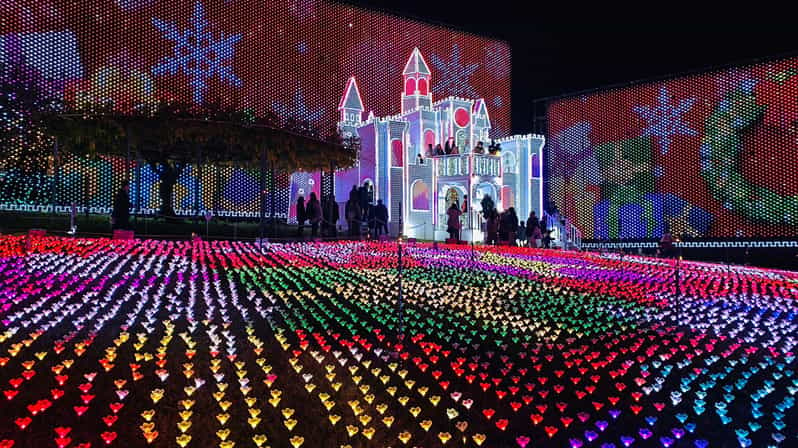
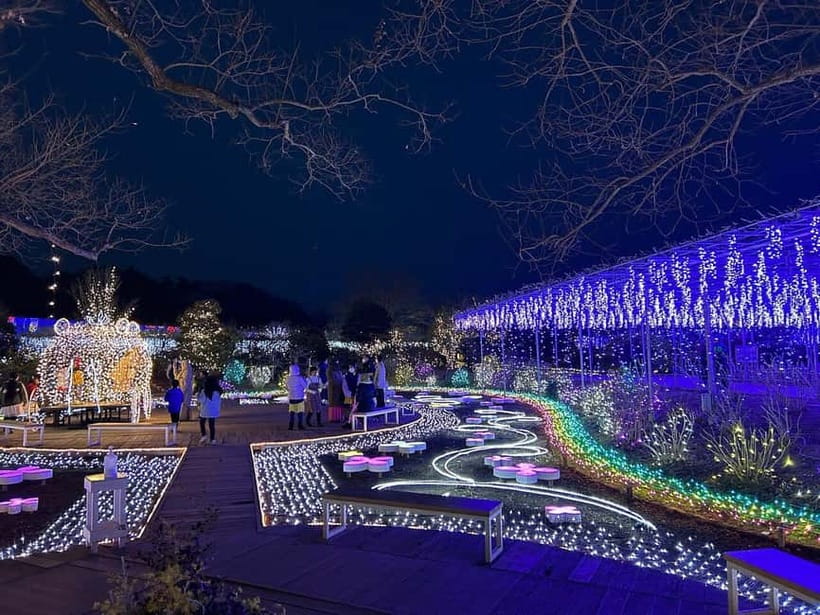
At other times, the focus shifts. Roses bring color in summer, while winter replaces flowers with bright light installations. The winter version is especially different from a normal daytime garden visit. You are not simply seeing bare paths in the off-season. You are seeing the park rebuilt with hundreds of lights.
That seasonal range is a real strength, but it also means you should not book based on one photograph without checking the expected display period. If your heart is set on wisteria, winter illumination will not provide the same sight. If you prefer glowing evening paths, a spring flower visit is a different kind of outing.
The Great Wisteria and the park’s changing seasons
The Great Wisteria gives the park its most memorable natural feature. A massive vine trellis becomes a roof of blossoms when the wisteria is in season, creating a strong backdrop for photographs and a calm place to walk beneath the flowers.
I like this kind of attraction because it rewards both quick sightseeing and patient looking. You can take the obvious picture, then spend a few minutes noticing how the flowers hang over the path and frame the people walking through it. The park’s winding routes help keep the visit from feeling like a single photo stop.
The summer rose displays offer a different mood. Roses are more upright and open to the sky, so the experience feels less like walking beneath a canopy and more like moving through a series of carefully planted garden views. Other flowers add variety, although the supplied details do not specify every seasonal planting.
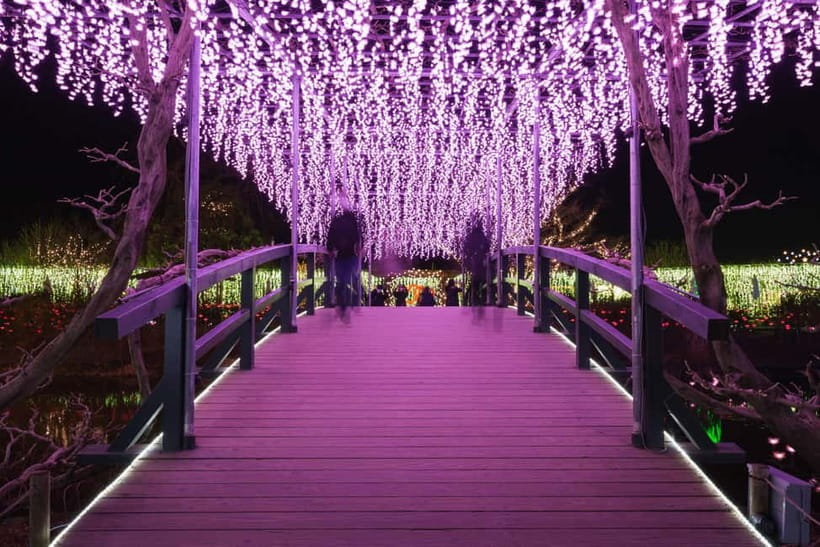
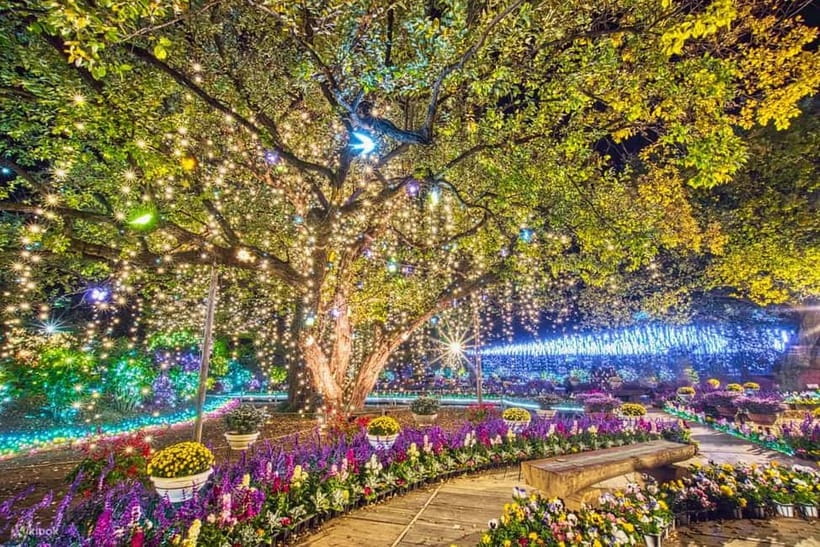
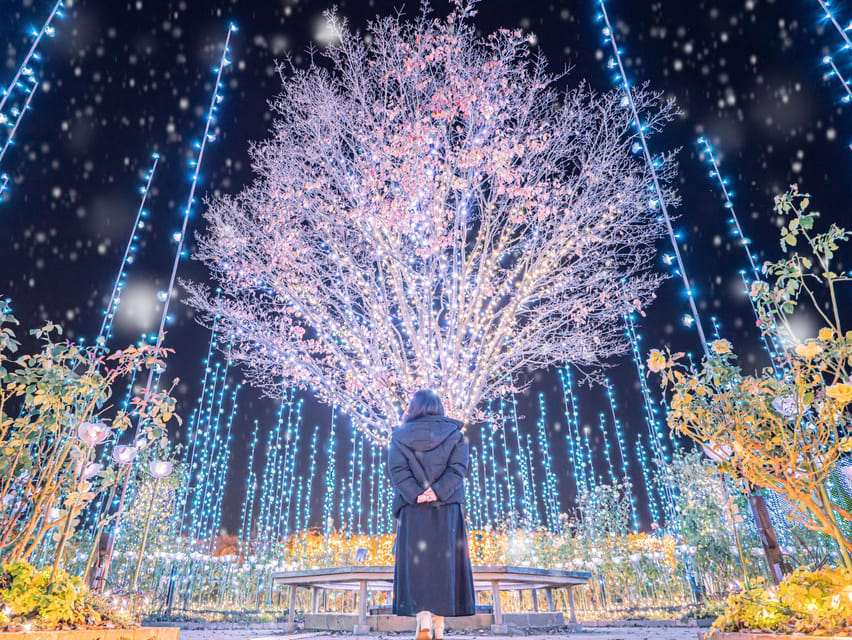
Winter illumination changes the park most dramatically. Hundreds of lights brighten the paths and flower areas, giving you something to photograph even when the main flower displays are not in bloom. This option may suit you best if you enjoy night photography, bright installations, and a more theatrical garden setting.
The key point is simple: choose the season first, then choose the tour. Ashikaga Flower Park is not one fixed attraction. It is a different visit in spring, summer, and winter.
Three hours on the winding garden paths
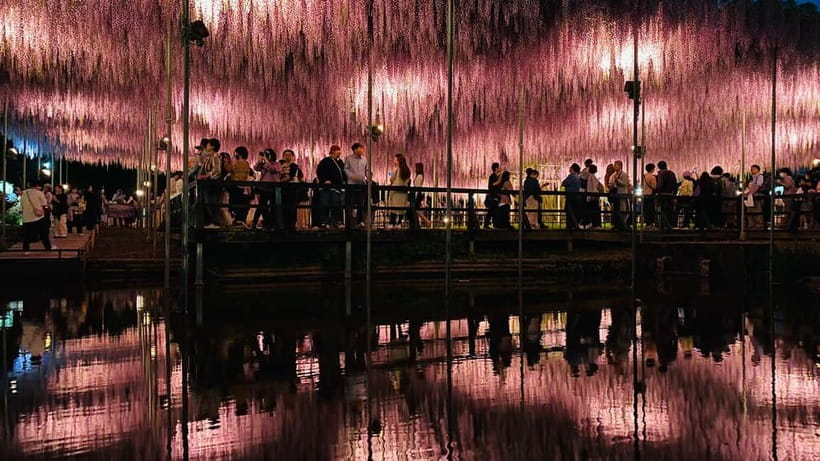
The planned sightseeing time at Ashikaga Flower Park is about three hours. That gives you enough time for a gentle circuit, repeated photo stops, and a closer look at the main displays without turning the visit into a marathon.
I would use the first part of your time to get a broad sense of the park. Walk the paths, note the main flower areas, and find the display that deserves your best photographs. After that, return to the spots you liked rather than trying to record every corner.
The winding paths are part of the attraction. They make the park feel more peaceful than a straight route from entrance to exit, and they give you changing angles on the flowers and lights. A path that looks ordinary from one direction may offer a much better frame when you turn around.
Still, three hours is a limit. If you like to photograph every flower bed or stop often for video, you may feel pressed near the end. The day is best for a focused park visit, not for treating Ashikaga as a huge open-ended garden where you can wander until closing.
Because food and drinks are not included, keep that in mind before your park time begins. The supplied details do not specify meal arrangements, so you should not assume that lunch or refreshments are part of the price.
A guide who can help with photographs
Guide Ali is one of the most useful personal details attached to this experience. A Singapore visitor specifically praised the large number of photographs and videos Ali made during the day. That suggests you can ask for help creating memories instead of relying only on self-timer shots or hurried phone pictures.
For solo visitors, couples, and families, that can matter more than it first appears. A flower park is highly photogenic, but taking a good picture of yourself in front of the flowers is not always easy. Having a guide who is willing to handle photography can let you enjoy the setting together.
You should treat this as a useful feature, not a guaranteed professional photography package, since the supplied information does not define the number, format, or editing of the photographs and videos. Still, Ali’s role appears to go beyond simply pointing out the route.
The other direct feedback emphasizes practical care. Ali was described as resourceful, helpful, polite, and attentive to participant safety. A Japanese visitor also found the day reassuring and enjoyable, including the conversation during the ride. Those details matter on a long day trip, especially when transport and timing are part of the plan.
The host or greeter speaks English and Japanese. That makes the experience suitable for people who want guidance in either language, though the exact amount of commentary is not specified.
Getting there and finishing at Oyama Station
There are three listed pickup areas: Tochigi, Ibaraki, and Tokyo. This gives the tour a wider reach than a standard central Tokyo departure, but you should confirm the exact pickup point and start time when you check availability. The starting location is important here because the price and day length may feel different depending on how far you are from the pickup area.
Parking and express tolls are included. That is helpful because a private road transfer can otherwise collect small costs quickly. It also means you do not have to work out the driving route or manage parking at the park yourself.
The day finishes at Oyama Station. From there, the return train ticket to Shinjuku Station is included. I like this split arrangement: the driving portion takes you to the park, while the return by train gives the driver and guide a clear finish point and gets you back toward Tokyo without requiring a private vehicle for the entire round trip.
There is one practical wrinkle. The experience does not finish at your hotel or at a central Tokyo meeting point. It finishes at Oyama Station, with the included rail journey continuing to Shinjuku. If your accommodation is elsewhere, you will need to handle the final connection after reaching Shinjuku.
The precise train departure and the time you leave the park are not supplied, so check the day’s schedule before booking. A full-day outing with a fixed return arrangement rewards punctuality.
Is $206 a fair price?
At $206 per person, this is not a bargain-priced garden admission. The value depends on what you want the day to solve.
You are paying for more than entry. The package includes access to Ashikaga Flower Park, parking, express tolls, and the return train from Oyama Station to Shinjuku. You also receive a host or greeter in English or Japanese, transport coordination, and a planned visit rather than having to build the day from separate train tickets, local connections, and park admission.
That can be worthwhile if you dislike transport puzzles or want a guide to handle the road portion. It may also make sense for a solo visitor who values help with photographs. Ali’s reported work with photos and videos adds potential value that a basic admission ticket cannot provide.
On the other hand, the park visit itself is about three hours. If you are comfortable arranging your own trains and prefer to spend less, the $206 cost may feel high for one attraction. The tour is buying convenience, support, and a managed day, not just time among flowers.
I would compare the price with your alternatives in practical terms. Ask yourself how much you value avoiding the drive and parking arrangements, how much the included train matters, and whether a guide taking photos would improve your day. If the answer is yes to all three, the price is easier to defend. If you mainly want admission and a short walk, it is harder to justify.
Who will enjoy this experience most?
This tour suits you if flowers, garden photography, and an easy day outside Tokyo are high on your list. It is especially attractive during a season that matches your interests: wisteria in spring, roses in summer, or lights in winter.
It also works well for solo visitors and couples who want someone to take photographs. Families may appreciate the gentle paths and clear sightseeing focus, though the available information does not describe child pricing, stroller access, or family facilities, so ask before booking if those points matter.
The experience is less suitable if you want a packed day with several attractions. The park is the main event, and the planned visit is about three hours. It may also disappoint you if you expect guaranteed peak bloom, since the displays depend on the season and the details do not promise a particular flowering date.
Photography fans should pay close attention to the season. Wisteria creates a natural canopy, roses provide close-up flower subjects, and winter lights offer brighter scenes after dark. Each one calls for a different style of picture.
Useful booking details to keep in mind
Free cancellation is available up to 24 hours before the experience for a full refund. You can also reserve now and pay later, which helps if your Tokyo plans are still taking shape.
The duration is listed as one day, but the actual park sightseeing time is about three hours. Check the available starting times before you commit, since the full length includes transport and the return to Oyama Station and then Shinjuku.
Food and drinks are not included. The park entry ticket is included, but you should budget separately for anything you eat or drink during the day.
The experience is operated by AD Travels. English and Japanese support is available, and the listed guide or greeter arrangement gives you a point of contact during the outing.
Should you book Ashikaga Flower Park from Tokyo?
Book it if you want a focused flower day with transport handled, seasonal displays chosen for you, and the chance to get better personal photographs. The included road costs and return train make the logistics less tiring, while Ali’s helpful, safety-minded approach may add a welcome human touch.
Think twice if $206 feels high for three hours in one park or if you prefer to arrange your own train trip. Also check the season carefully. The Great Wisteria, summer roses, and winter lights are not interchangeable sights.
For the right visitor, this is a convenient way to reach one of Japan’s most flower-focused day trips without turning the journey into a transport project. Choose your season well, confirm the pickup details, and plan for your own food and drinks.
FAQ
Where is Ashikaga Flower Park located?
Ashikaga Flower Park is in Tochigi Prefecture on Honshu, Japan.
How long do I spend at the park?
The planned sightseeing and walking time at Ashikaga Flower Park is about three hours. The complete experience lasts one day because it includes transport.
What can I see at Ashikaga Flower Park?
The park features seasonal displays, including wisteria in spring, roses in summer, and winter illumination displays with hundreds of lights. The Great Wisteria is the main feature during wisteria season.
Is transportation included?
Parking, express tolls, and a return train ticket from Oyama Station to Shinjuku Station are included. The day finishes at Oyama Station before the included return train journey.
Are food and drinks included?
No. Food and drinks are not included in the experience price.
Can I cancel or pay later?
You can cancel up to 24 hours in advance for a full refund. Reserve now and pay later is also available.
Tickets, compared.
 ★ 4.5Tokyo: TOKYO SKYTREE® Admission ticketFrom $131 day
 ★ 4.6Tokyo: teamLab Planets TOKYO Digital Art Museum Entry TicketFrom $251 day
 ★ 3.9Tokyo: Hop-On Hop-Off Sightseeing Bus TicketFrom $301 - 2 days
 ★ 4.6Tokyo Tower: Admission TicketFrom $91 hour - 3 days
 ★ 4.8Tokyo: Japanese Dance Cabaret Theater Asakusa-Kaguwa TicketFrom $492 hours
 ★ 4.5Tokyo: Kamakura & Enoshima Day Trip including Temple TicketsFrom $589 hours - 570 minutes