Reviewed · TEMPLES & MEDITATION
Zen Buddhist Vegetarian(Shojin Ryori): Cooking Experience
Shojin ryori turns a Tokyo cooking class into a lesson in Zen Buddhist food culture, not just a race to prepare lunch. You learn why this ancient, cruelty-free cooking tradition developed, then make dishes such as sesame tofu, dashi broth soup, and vegetable tempura with an instructor at your side.
In This Article
- Key points to know before booking
- What shojin ryori adds to a Tokyo food trip
- Starting at Kikai Shinkō Kaikan in Shibakōen
- A small class with direct instruction
- Preparing sesame tofu, dashi soup, and vegetable tempura
- Eating the meal you prepared
- Why the recipes are useful after your trip
- The pace: two and a half hours well spent
- What the $114.67 price really covers
- Who will get the most from this class
- Booking, cancellation, and practical details
- Should you book the shojin ryori experience?
- FAQ
- Where does the cooking experience take place?
- What time does the activity start?
- How long does the experience last?
- How many people can join the class?
- What dishes will I learn to prepare?
- Is transportation included?
- Is Japanese tea included?
- Can I cancel for a refund?
I like the eight-person limit, which gives the class a personal feel, and I like that the recipes are practical enough to try at home. Instructors Masue and Hiro are described as patient and clear, even with cooks who have limited experience. The main consideration is price: at $114.67 per person, this costs more than a casual meal, and transportation to the venue is not included.
Key points to know before booking
- 700 years of Zen cooking: Learn how Buddhist monks shaped a vegetarian and vegan cooking tradition over centuries.
- A small class of eight or fewer: You get more direct help than in a large demonstration.
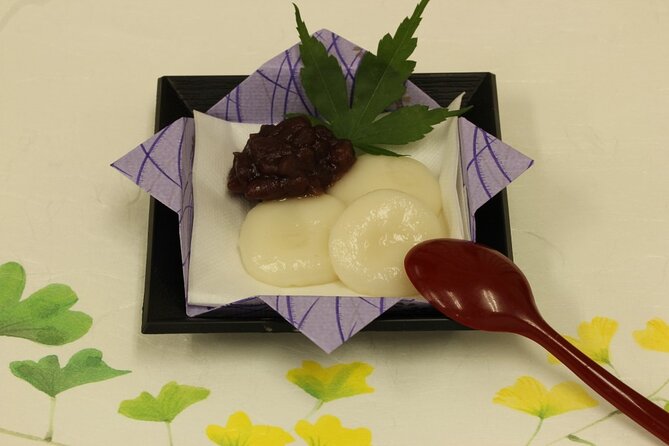
- A full hands-on menu: Prepare sesame tofu, dashi broth soup, vegetable tempura, and other shojin ryori dishes.
- A quiet change of pace: The class offers a slower cultural activity during a busy Tokyo trip.
- Tea is optional: Upgrade your meal with Japanese tea pairings if you want a more complete tasting experience.
- Central Tokyo meeting point: Meet at Kikai Shinkō Kaikan in Shibakōen at 11:00 a.m., then finish at the same location.
What shojin ryori adds to a Tokyo food trip
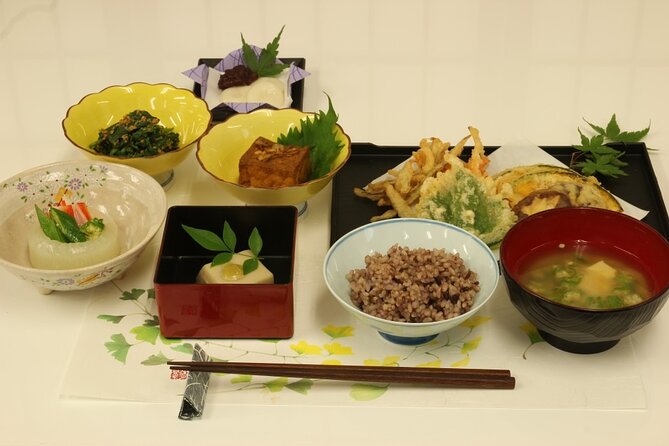
Tokyo offers no shortage of sushi, ramen, grilled meat, and seafood. That makes this class especially useful if you are vegetarian, vegan, or simply want to see a side of Japanese cooking that does not depend on fish or meat.
Shojin ryori developed through Zen Buddhist practice over a period of about 700 years. The focus is not only on avoiding animal products. It also gives attention to preparation, balance, seasonings, and respect for ingredients. You are learning a food tradition tied to religious life, rather than a modern substitute menu designed only for dietary needs.
That distinction matters. A vegetarian cooking class can sometimes feel like an ordinary cooking lesson with meat removed. Here, the subject itself is a historic Japanese approach to food. You get a meal at the end, but the cultural setting gives the meal more meaning.
I would not book this expecting a restaurant-style tasting menu or a sightseeing tour of Tokyo. You spend the two and a half hours in the cooking program, with the value coming from participation, instruction, and the chance to repeat the recipes later.
A few more Tokyo tours and experiences worth a look



Starting at Kikai Shinkō Kaikan in Shibakōen
The meeting point is Kikai Shinkō Kaikan, 3-chōme-5-8 Shibakōen, Minato City, Tokyo 105-0011. The class starts at 11:00 a.m. and ends back at the meeting point.
The venue is near public transportation, which helps, but you still need to plan your route yourself. Transportation is not included, so allow enough time to find the building and arrive before the start. A cooking class is not the place to cut your arrival close, especially when the first steps may include introductions, food notes, and an explanation of the day.
The location also works well in a Tokyo itinerary because Shibakōen is in Minato City, an area with plenty of city sights nearby. The class itself does not include transportation or additional sightseeing, so treat the neighborhood as a convenient setting, not as part of the guided experience.
The fixed morning start is another practical point. You cannot simply drop in whenever you like. If you have a late morning reservation elsewhere, a long breakfast, or a distant hotel, check the timing carefully before paying.
A small class with direct instruction
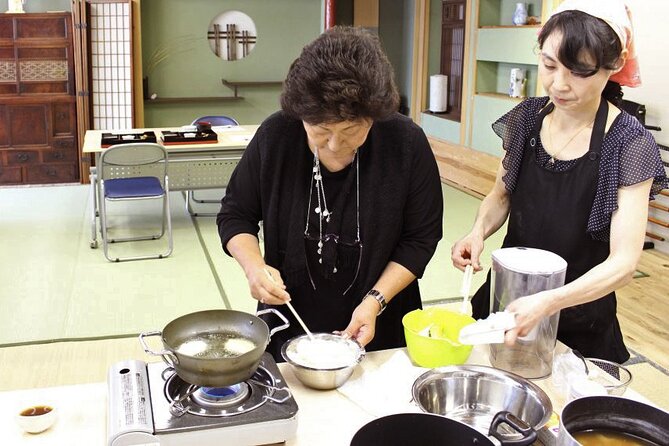
The group is limited to eight people. That is one of the strongest features of the experience because cooking is much easier when you can ask for help without waiting behind a crowd.
The class is led by a nationally accredited tour guide-interpreter, and the cooking instruction is part of the program. Masue and Hiro are named as friendly, patient instructors in the supplied information, with clear demonstrations and detailed directions. That is useful if you are not confident in the kitchen or if you have never prepared Japanese food before.
A small group also changes the mood. You are not simply watching an instructor prepare every dish while you take photographs. You are expected to take part, follow the steps, and help create the meal you later eat.
The drawback is that a small class can feel more personal, but it may also mean less anonymity. If you prefer to quietly observe rather than participate, this may not be your ideal activity. Most people can take part, but you should tell the provider about dietary requirements or special requests in advance.
Preparing sesame tofu, dashi soup, and vegetable tempura
The menu gives you a useful spread of Japanese cooking techniques. Sesame tofu introduces a smooth, delicate preparation that is quite different from the firm tofu often served in everyday dishes. It is also a good example of how shojin ryori can make a simple plant-based ingredient feel central rather than secondary.
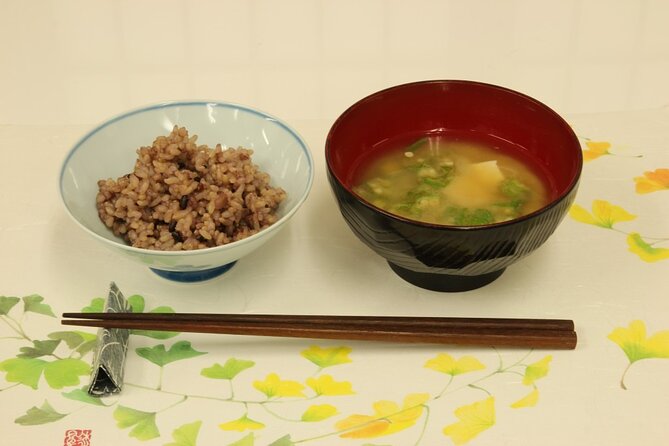
Dashi broth soup brings attention to the foundation of Japanese flavor. The information provided does not specify every ingredient used in the broth, so you should ask the instructor about the exact recipe if you need to avoid a particular ingredient. This is especially important for strict vegetarians or vegans, since many familiar Japanese broths use fish-based ingredients.
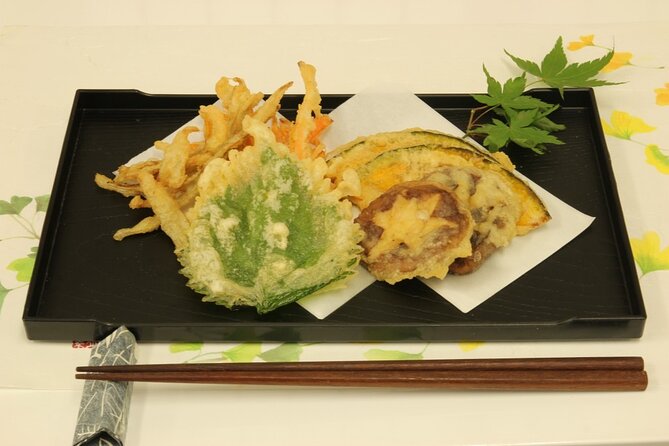
Vegetable tempura adds a more familiar hands-on cooking task. You learn how vegetables can be prepared as a satisfying dish without meat or seafood taking over the plate. The combination of soup, tofu, and tempura also gives you several recipes with different textures and methods to take home.
The class includes ingredients, so you do not need to shop for a special collection of Japanese pantry items before arriving. You also receive instruction rather than only a printed recipe. That matters because timing, texture, and handling are often easier to understand when someone demonstrates them in front of you.
The precise menu can vary or include additional dishes, since the description says sesame tofu, dashi broth soup, vegetable tempura, and more. Think of these as the core examples rather than a guaranteed full menu with every item listed in advance.
Eating the meal you prepared
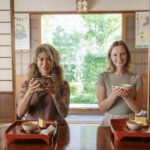
After the cooking work, you sit down to eat what you made. This is where the class earns part of its value: you are not only told how shojin ryori works, you get to judge the results yourself.
The meal also gives you a chance to notice how different plant-based dishes work together. Sesame tofu, broth soup, and vegetable tempura do not all depend on the same flavor or texture. Together, they show how a vegetarian menu can have variety without relying on a large amount of meat, fish, or dairy.
The optional Japanese tea pairing is worth considering if you are interested in the full food experience. Tea can make the meal feel more structured and gives you another small lesson in Japanese dining culture. It is an upgrade, though, so check the final price before selecting it.
If keeping costs down is your priority, the basic cooking class still includes the lesson, ingredients, and meal preparation. If you see the tea as part of the cultural experience rather than simply a drink, the upgrade may make sense.





Why the recipes are useful after your trip
Many cooking classes are fun for an afternoon but difficult to repeat at home. This one is designed around time-tested vegetarian recipes, so you have a better chance of using what you learn after returning home.
That does not mean every recipe will be equally easy. Japanese ingredients and equipment may differ from what you have in your kitchen. Still, the class gives you a working introduction to several basic ideas: how broth supports a dish, how tofu can be prepared with care, and how vegetables can be turned into a complete meal.
I would pay close attention to the explanations rather than focusing only on getting the finished plate. Ask about ingredient names, substitutions, and the order of preparation. The description specifically encourages you to share dietary requirements or requests in advance, and that is also the best time to raise questions about ingredients you may want to recreate later.
The practical value is strongest for home cooks who enjoy making food from scratch. If you only want to eat Japanese vegetarian food without cooking, a restaurant may be a simpler and less expensive choice.
The pace: two and a half hours well spent
The activity lasts about two hours and 30 minutes. That is long enough for a proper lesson and meal, but short enough to fit into a morning or afternoon of Tokyo plans.
I like this length because it gives the class room to breathe. You do not have to rush through every preparation or swallow your meal before the next appointment. The slower pace also fits the subject. Shojin ryori is connected with Zen Buddhist practice, and the cooking experience is presented as a quiet activity rather than a loud, hurried food event.
Still, you should reserve a comfortable block of time around it. The official duration is approximate, and your journey to and from Shibakōen takes extra time. Do not schedule a major attraction with a strict entry time immediately afterward.
The class may also suit families or mixed-experience groups because most people can participate and the instructions are designed to help beginners. The small size makes it easier for an instructor to respond to different cooking speeds.
What the $114.67 price really covers
At $114.67 per person, this is a premium food activity. You are paying more than the cost of a simple vegetarian lunch, so the value depends on how much you want the lesson and cultural context.
The fee includes a nationally accredited tour guide-interpreter, the vegetarian cooking lesson, and ingredients. You also receive a prepared meal at the end, though the real product is the time spent learning and cooking. For someone who wants to understand Japanese cuisine beyond sushi and ramen, that can justify the higher price.
The group limit strengthens the value. A cheaper class with a large crowd might offer less direct instruction, while a private class would likely cost more. This experience sits between those two options, with enough structure for beginners and enough personal attention to make participation worthwhile.
I would book it for a special food-focused morning, not as a budget meal replacement. The price is harder to justify if you are already planning several cooking classes, or if you have little interest in recreating the recipes at home.
Group discounts are available, which may help if you are booking for several people. The optional tea pairing adds to the cost, so decide based on your interest in Japanese tea rather than selecting it automatically.
Who will get the most from this class
This is a particularly good choice for:
- Vegetarians and vegans who want an activity built around plant-based Japanese food.
- Home cooks who want recipes and techniques they can try after returning home.
- First-time Japanese food learners who want something beyond sushi and ramen.
- Couples and small groups who prefer a shared activity with a calm pace.
- Visitors seeking cultural context rather than only a meal or photo stop.
- Cooks of modest experience who appreciate demonstrations and patient guidance.
You may want to skip it if you are searching for a fast activity, a market tour, or a large menu of regional Japanese dishes. It is also not a good fit if the 11:00 a.m. start at Shibakōen is difficult for your schedule.
If you have allergies or strict dietary rules, contact the provider before the program. The experience asks you to share dietary requirements in advance, but the supplied information does not spell out every ingredient or substitution.
Booking, cancellation, and practical details
Confirmation is sent within 48 hours of booking, subject to availability. Since the class averages booking 24 days ahead, I would not leave it until the last day of your Tokyo planning, especially if your schedule is fixed.
You can cancel for a full refund up to 24 hours before the local start time. Changes or cancellations made inside that 24-hour period are not accepted for a refund. This is a useful safety net, but it still pays to check your transport plans and dietary needs before booking.
The activity uses a mobile ticket, and it is near public transportation. Most people can participate. The tour begins and ends at Kikai Shinkō Kaikan, so you do not need to arrange a separate return transfer.
Should you book the shojin ryori experience?
Book this class if you want active cultural learning, not just another meal. The small group, patient instruction from figures such as Masue and Hiro, and practical menu make it approachable even if your cooking skills are basic.
I especially recommend it for vegetarians, vegans, and curious food lovers who want to understand how Buddhist traditions shaped Japanese cuisine. The main reasons to hesitate are the premium price, the separate transportation arrangements, and the need to commit to a fixed 11:00 a.m. start.
For the right audience, this is a thoughtful two and a half hours: you cook, eat, learn, and leave with recipes that may outlast a single restaurant visit.
FAQ
Where does the cooking experience take place?
It takes place at Kikai Shinkō Kaikan, 3-chōme-5-8 Shibakōen, Minato City, Tokyo 105-0011, Japan.
What time does the activity start?
The start time is 11:00 a.m.
How long does the experience last?
The cooking experience lasts approximately two hours and 30 minutes.
How many people can join the class?
The group has a maximum of eight participants.
What dishes will I learn to prepare?
The program includes dishes such as sesame tofu, dashi broth soup, vegetable tempura, and other shojin ryori recipes.
Is transportation included?
No. Transportation to the venue is not included. The meeting point is near public transportation.
Is Japanese tea included?
Japanese tea pairings are available as an optional upgrade while you eat.
Can I cancel for a refund?
Yes. You can cancel at least 24 hours before the local start time for a full refund. Cancellations or changes made less than 24 hours before the start time are not refunded or accepted.
More Temples & Meditation in Tokyo


More tours in Tokyo we've reviewed












Temples & Meditation, compared.
 ★ 4.7Tokyo: Meiji Shrine, Asakusa, Skytree Bus Tour and CruiseFrom $12210 hours
 ★ 4.8Tokyo: Asakusa Walking Tour with Sensoji Temple VisitFrom $222 hours
 ★ 4.5Tokyo: Kamakura & Enoshima Day Trip including Temple TicketsFrom $589 hours - 570 minutes
 ★ 4.5Tokyo: Nikko Toshogu Shrine and Kegon Waterfall TourFrom $8410h 30m
 ★ 4.5Tokyo Panoramic 1 Day: Meiji Shrine, Asakusa, Odaiba and SKYTREE®From $85
 ★ 5.0Asakusa Senso-ji Temple and Old Tokyo Walking TourFrom $20