Reviewed · TSUKIJI MARKET TOURS
Tokyo:Enjoy street food & Japanese food culture at Tsukiji Market
Tsukiji is much more than a fish stop. This three-hour walk takes you through the Outer Market, where you can taste seafood, dried fish, seasoned seaweed, roast beef sushi, oysters, sashimi, and bean snacks while learning how food, religion, and daily life meet in this corner of Tokyo. Guides associated with the experience include Yoshi, Yuki, Haruka, and Hiro.
In This Article
- Key points at a glance
- Why a Tsukiji food walk is different from a quick market stop
- Starting at Tsukiji Hongwanji Temple
- Tasting your way through the Outer Market
- Buying lunch at Tsukiji Uogashi
- Ending at Namiyoke Shrine
- What the guides add to the experience
- Is $100.34 a fair price?
- Practical details before you reserve
- Who will get the most from this Tsukiji experience?
- Should you book it?
- FAQ
- How long does the Tsukiji food tour last?
- What food is included with the tour?
- Is lunch included in the price?
- Do I pay for extra food or shopping?
- Where does the tour begin?
- Where does the tour finish?
- How many people can join the tour?
- Is the experience wheelchair accessible?
- What is the cancellation policy?
I like the small maximum group of six, which matters in narrow market lanes and crowded shops. I also like that the tour includes more than eating: Tsukiji Hongwanji Temple and Namiyoke Shrine give the market a cultural setting instead of reducing it to a snack crawl. The main consideration is cost. At $100.34 per person, lunch and any extra shopping are still on your bill, and the included tastings may not suit anyone with seafood or meat allergies.
Key points at a glance
- Small group of up to six: Easier to hear the guide and move through busy market lanes.
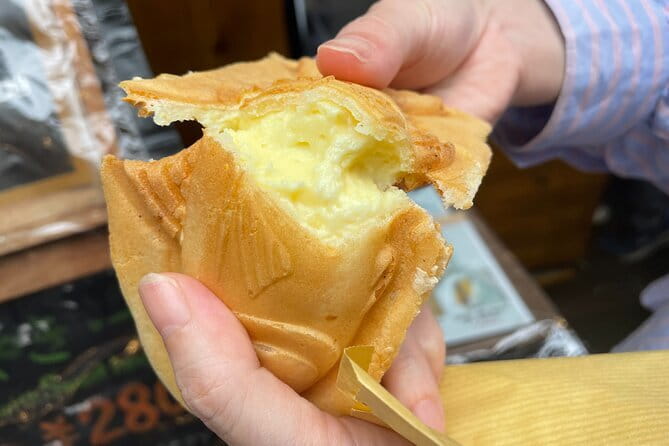
- Several included tastings: Snacks can include seasoned seaweed, dried fish, roast beef sushi, oysters, sashimi, and bean snacks.
- Temple and shrine visits: Tsukiji Hongwanji Temple and Namiyoke Shrine explain the area’s religious and working traditions.
- Lunch is your choice: You buy the meal yourself, then eat it with the snacks collected during the walk.
- English-speaking guidance: Guides such as Yoshi, Yuki, Haruka, and Hiro explain food customs, dashi, market life, and local stories.
- A three-hour walking route: Expect moderate physical activity and no wheelchair access.
Why a Tsukiji food walk is different from a quick market stop
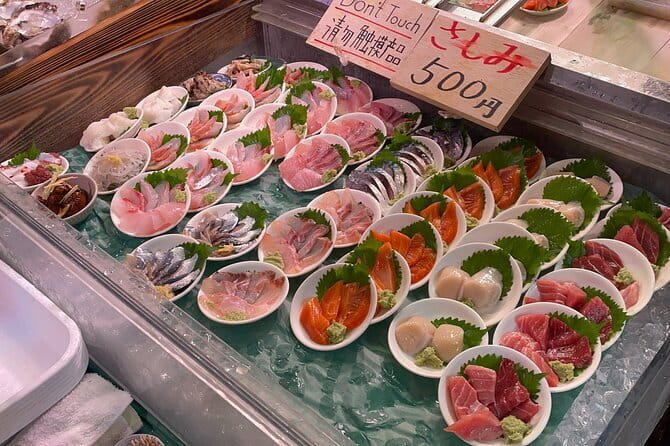
You can visit Tsukiji Outer Market on your own, but the first challenge is knowing what you are looking at. Shops sell ingredients, prepared food, dried goods, seafood, and small snacks, often with little explanation in English. A guide gives those purchases a frame.
This experience treats Tsukiji as a place where Japanese food culture is still practiced, not simply as a famous shopping area. You learn about the ingredients, how they are used, and why certain foods matter. One subject that has come up on the walk is dashi, the stock used in many Japanese dishes. That kind of detail helps you understand why a dried ingredient can be as important as a fresh one.
The group size is a real advantage. With no more than six people, you should have a better chance of hearing explanations and staying together while the guide points out foods or recommends a shop. A large group would be awkward here, especially when stopping at small counters or food stalls.
The tour is also structured around tasting, not just looking. That makes the $100.34 price easier to assess, though not automatically a bargain. You are paying for a guide, several snacks, cultural explanation, and help choosing lunch. You are not paying for lunch itself, and you should expect to spend extra if you want to buy more food or souvenirs.
A few more Tokyo tours and experiences worth a look
Starting at Tsukiji Hongwanji Temple
The walk begins at the main gate of Tsukiji Hongwanji Temple, at 3-chōme-15-1 Tsukiji. The first stop lasts about 20 minutes, and admission is included because there is no separate entrance charge.
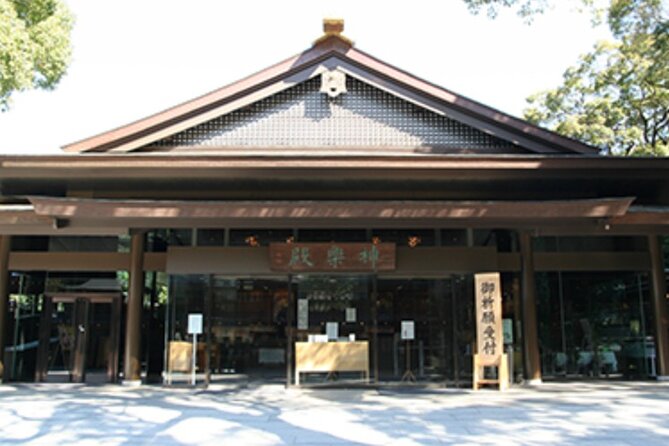
The temple is a useful opening because it immediately shows that Tsukiji is not only about fish. Its design uses architectural influences from other parts of Asia, including India, giving it an appearance unlike many traditional Japanese temples. The setting helps you shift from the familiar image of a market to a wider look at the area’s religious and cultural character.
Your guide can explain what you are seeing before you enter the market lanes. That context is valuable because the temple is easy to treat as a quick photo stop. Here, it helps establish the connection between food, community, and worship that returns later at Namiyoke Shrine.
The stop is short, so do not expect a long temple visit or an extensive religious lecture. It is best viewed as a focused introduction to Tsukiji. Wear shoes suited to walking, since the full experience includes several hours on your feet.
Tasting your way through the Outer Market
The main food portion takes about an hour at Tsukiji Jogai Market, also called the Outer Market. The former central wholesale market moved away several years ago, but the Outer Market remains a shopping and dining area with a strong food focus.
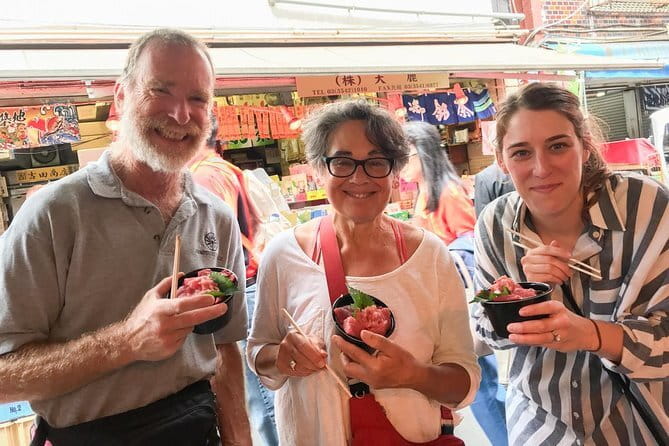
The included snacks can vary among seasoned seaweed, dried fish, roast beef sushi, oysters, sashimi, and bean snacks. The range is useful because it shows that Tsukiji is not simply a seafood counter. You may taste something fresh, something preserved, something savory, and something made from beans, all within the same market visit.
Seafood fans have plenty to look forward to. Foods sampled on the experience have included king crab, sea urchin, oysters, sashimi, and lobster-flavored crackers. Those examples suggest a broad tasting menu, but the exact items can depend on what is available and what the guide selects.
The guide’s role matters here. At a market shop, you may see an unfamiliar dried product and have no idea how Japanese cooks use it. A guide can explain the difference between an ingredient bought for home cooking and a snack meant to eat right away. You can also ask about preparation, flavor, and local eating habits rather than simply accepting the first attractive item.
Some purchases are included as part of the tasting, while anything else you want to eat or take home is your responsibility. That distinction is important. Tsukiji encourages impulse buying, and you will see plenty of items that look worth trying. Keep some budget available if you want to go beyond the planned snacks.
This is also the point where food allergies need attention. Included snacks may contain seafood and meat. Tell the guide about any other allergies before tasting, and be specific. If you avoid seafood or meat entirely, this experience may not be a good match because those foods are central to the tasting.
Buying lunch at Tsukiji Uogashi
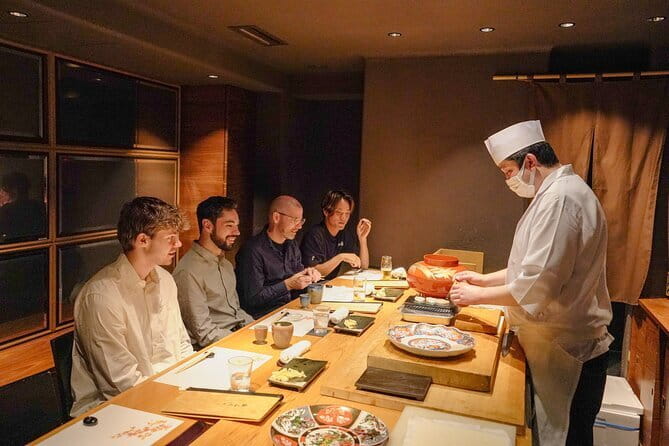
After the first market walk, the group goes to the Tsukiji Uogashi Kaiko Bridge Building, written in the tour information as 築地魚河岸 海幸橋棟. This portion lasts around one hour and 10 minutes.
The guide points out boxed lunches and other food available for purchase. You choose and pay for your own lunch, then eat it with the snacks collected earlier. I like this arrangement because it leaves the main meal in your hands. You can choose according to appetite, budget, and preference instead of being locked into a fixed restaurant menu.
The tradeoff is that the price does not cover lunch. It also does not cover additional food bought at the shops. If you are comparing this tour with a package that includes a meal, add that extra cost before deciding.
The shared meal also gives the walk a natural pause. Rather than racing from one shop to another, you have time to sit with the food and think about what you have tasted. The guide can help you make sense of the differences between market snacks and a more complete Japanese meal.
Do not expect a formal restaurant setting based on the information provided. The focus is on choosing boxed food and eating it with the snacks from the Outer Market. That makes the experience feel more like a guided market lunch than a polished dining event.
Ending at Namiyoke Shrine
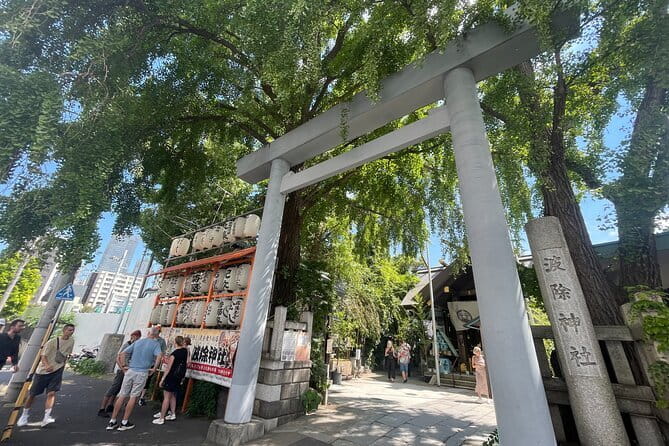
The final stop is Namiyoke Shrine, at 6-chōme-20-37 Tsukiji. The visit lasts about 30 minutes, and this is where the tour ends.
Namiyoke Shrine has been worshipped since the Tsukiji Market was established in the area. Market workers have long prayed there for safety at sea, making it a fitting final stop after a morning or midday centered on seafood and the people who handle it.
This visit adds meaning to the market. You have seen the food as a product, tasted it as a snack, and then reached a place tied to the working community behind it. The shrine is not an unrelated sightseeing stop added to fill time. It explains why the market has a spiritual center as well as a commercial one.
The tour ends at the shrine rather than returning to the temple. That is handy if you want to continue exploring the neighborhood from there, but you should plan your next move yourself. The meeting point and ending point are different, so check the route before booking other activities close to the starting location.
A few more Tokyo tours and experiences worth a look


What the guides add to the experience
An English-speaking guide is the main reason to choose this walk instead of browsing Tsukiji alone. Guides connected with the experience include Yoshi, Yuki, Haruka, and Hiro. Their reported strengths are friendly conversation, food knowledge, market recommendations, and explanations of Japanese culture.
Haruka, for example, has helped people choose among the many restaurants and shops after they became unsure where to eat. That is a practical service in Tsukiji, where the number of choices can slow you down. Hiro has been associated with explanations of dashi and the wider uses of Japanese ingredients.
Yoshi and Yuki have also guided the experience together. Their role goes beyond naming foods in front of you. They explain market history, Japanese life, religion, and the customs connected to eating. That is the difference between a guided food lesson and a simple succession of tastings.
The quality of a walking tour always depends partly on the individual guide and the chemistry of the group. Still, the format gives you chances to ask questions and request recommendations. With only six people, the guide can usually respond to personal interests more easily than on a large coach-style outing.
Is $100.34 a fair price?
At $100.34 per person, this is not the cheapest way to visit Tsukiji. You can walk through the Outer Market without paying an admission fee, and you can buy food directly from the shops.
The value comes from the parts you would have to arrange yourself: finding suitable tastings, understanding the ingredients, locating recommended shops, visiting the temple and shrine in a logical order, and choosing a lunch. You also receive several included snacks and three hours of guided time.
I would consider the price reasonable for a first visit if you care about food culture and want a small group. It is less appealing if you already know Tsukiji well, prefer to choose every bite yourself, or mainly want a cheap meal.
Remember the extra costs. Lunch is not included, and additional shopping is not included. The listed snacks are included, but the exact selection can change. Budget for the main meal and any food you want to take home.
The experience is booked on average seven days ahead, so it is not something I would leave until the final day of a Tokyo stay. A little advance planning also helps you place it sensibly among other plans, since it starts at the temple and ends at the shrine.
Practical details before you reserve
The meeting point is the main gate of Tsukiji Hongwanji Temple. The tour ends at Namiyoke Shrine, so note the separate locations when planning transportation.
Both points are near public transportation, which makes the route fairly easy to reach. You should still allow enough time to find the temple gate and meet the group without rushing.
The walk lasts about three hours. The listed timing adds up to 20 minutes at the temple, one hour in the Outer Market, one hour and 10 minutes for lunch and related food purchases, and 30 minutes at the shrine. Those periods give you a useful sense of pace: this is an active walk with tasting and conversation, not a quick one-hour introduction.
A moderate level of physical fitness is recommended. The experience is not wheelchair accessible. Since you will move through market areas and spend time standing or walking, comfortable footwear is a sensible choice.
The tour has mobile tickets and confirmation is provided when you book. Free cancellation is available if you cancel at least 24 hours before the start time. Changes or cancellations inside that window are not accepted for a refund.
Who will get the most from this Tsukiji experience?
I would recommend it most strongly to a first-time visitor to Tsukiji who wants help making sense of Japanese ingredients. It also suits anyone who enjoys seafood, small tastings, and questions about how food fits into ordinary life.
The tour works well for a small group of friends or family members who want an organized introduction without spending a full day on a food tour. The included tastings give you variety, while the self-paid lunch lets each person choose something different.
It may also suit solo visitors who would rather not negotiate the market alone. The guide can point out good options and help you avoid wandering past interesting food without understanding it.
I would think twice if you have serious seafood or meat allergies, since both are part of the included snacks. You should tell the guide about allergies, but the food focus still makes this a poor choice for anyone who cannot eat the main categories offered.
It is also not ideal for wheelchair users because the tour is not wheelchair accessible. And if your main goal is the old wholesale fish market, keep in mind that this experience visits the Outer Market and nearby cultural sites, not the former central wholesale facility.
Should you book it?
Book this walk if you want Tsukiji explained as a food community, not just a place to grab sushi. The strongest features are the small group, the range of tastings, and the guide’s help with cultural details such as dashi, market customs, and the role of Namiyoke Shrine.
The price makes the most sense when you value guidance and want to try several foods without planning every stop yourself. Add the cost of lunch and extra purchases before booking, and speak up about allergies at the start.
Skip it if you prefer a self-directed market visit, need wheelchair access, or cannot eat seafood and meat. For everyone else, this is a focused and useful three-hour introduction to one of Tokyo’s best-known food districts, with enough context to make the meal mean more than a quick bite.
FAQ
How long does the Tsukiji food tour last?
The experience lasts approximately three hours.
What food is included with the tour?
Included snacks may include seasoned seaweed, dried fish, roast beef sushi, oysters, sashimi, and bean snacks. The exact selection may vary.
Is lunch included in the price?
No. You purchase your own lunch at the Tsukiji Uogashi Kaiko Bridge Building.
Do I pay for extra food or shopping?
Yes. Any food or items you choose to buy beyond the included snacks are paid for separately.
Where does the tour begin?
It begins at the main gate of Tsukiji Hongwanji Temple, at 3-chōme-15-1 Tsukiji, Chuo City, Tokyo.
Where does the tour finish?
It finishes at Namiyoke Shrine, at 6-chōme-20-37 Tsukiji, Chuo City, Tokyo.
How many people can join the tour?
The maximum group size is six people.
Is the experience wheelchair accessible?
No. The tour is not wheelchair accessible.
What is the cancellation policy?
You can receive a full refund if you cancel at least 24 hours before the experience start time. Cancellations or changes made less than 24 hours before the start are not accepted for a refund.
More Shopping Tours in Tokyo
More Food Experiences in Tokyo
More Tsukiji Market Tours in Tokyo
More tours in Tokyo we've reviewed












Tsukiji Market Tours, compared.
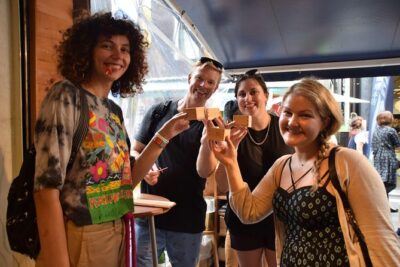 ★ 5.0Tokyo Tsukiji Fish Market Food and Culture Walking TourFrom $99
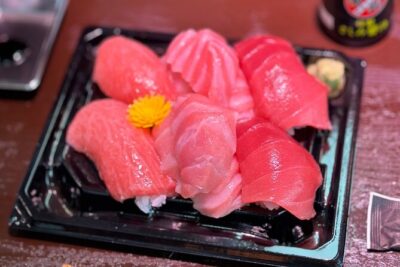 ★ 5.0Tokyo: Tsukiji Fish Market Food and Walking tourFrom $30
 ★ 4.9Tokyo: Tsukiji Fish Market Guided Walking TourFrom $222 hours
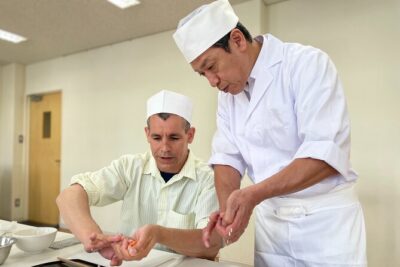 ★ 5.0Tokyo Sushi Making Class in Tsukiji with Professional ChefFrom $49
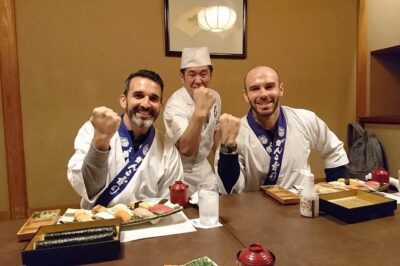 ★ 5.0Tsukiji Fish Market Guided Tour and Sushi Making with Pro ChefFrom $104
★ 4.7Tokyo: Tsukiji Fish Market Food and Culture Walking TourFrom $963 hours
★ 5.0Tsukiji Fish Market Guided Tour and Sushi Making with Pro ChefFrom $104
★ 4.7Tokyo: Tsukiji Fish Market Food and Culture Walking TourFrom $963 hours