Reviewed · KAMAKURA & ENOSHIMA DAY TRIPS
Tokyo Small Group: Enoshima & Kamakura, Hotel Pickup Option
The best part of this day trip is the range. In one long outing, you move from Enoshima’s ocean views to Kamakura’s shrines, seaside railway, shopping street, and temple gardens. On selected dates, the day finishes with Atami fireworks over the water.
In This Article
- Key points to know before booking
- Why this route works from Tokyo
- Enoshima Island: ocean, shrines, and steep paths
- The Enoden and Kamakura High School Front crossing
- Shichirigahama Beach and Sagami Bay
- Komachi Street: Kamakura’s easy food stop
- Tsurugaoka Hachimangu and the samurai story
- Hase-dera: hillside views and Kannon
- The optional Atami fireworks ending
- Comfort, group size, and the long day
- What the $150 price really buys
- Who should book this day trip?
- Should you book it?
- FAQ
- How long does the tour last?
- Where does the tour start and end?
- How many people can join the tour?
- Is the Enoden train ride included?
- Which entrance fees are not included?
- When are the Atami fireworks available?
I like the nine-person maximum, which keeps the ride more personal than a large coach tour. I also like having a driver handle the route between Tokyo, Enoshima, and Kamakura, since local transport can be crowded and slow. The main drawback is time: several stops are short, and optional admissions, food, and the Enoden ride cost extra.
Key points to know before booking
- Enoshima and Kamakura in one day: You cover coastal scenery, Shinto and Buddhist sites, shopping, and a famous railway crossing.
- Small vehicle, maximum nine people: The air-conditioned ride is a major comfort advantage on a day that can last 9 to 14 hours.
- The Enoden ride is optional: Budget 200 JPY if you want to ride the seaside train from the Kamakura High School Front area.
- Atami fireworks are date dependent: The fireworks add about three hours and are available only on specified dates and selected options.
- Several worthwhile extras cost more: Hase-dera costs 400 JPY, while the Sea Candle and shrine Treasure Hall also require separate payment.
- Return to Tokyo Station: The standard start and end point is Tokyo Station, unless you select hotel pickup.
Why this route works from Tokyo
Kamakura and Enoshima are close together on the map, but fitting them into one day takes planning. You need to coordinate trains, walking, ticket machines, busy streets, and the timing of several popular sights. This tour takes care of the driving and gives you a fixed route through the area.
That convenience matters most if you are staying in Tokyo and want to see the coast without changing hotels. You can sit in an air-conditioned vehicle between stops rather than work out each connection yourself. The tradeoff is that you follow the group schedule, so you will not have unlimited time at any one shrine, beach, or shop.
The driver is also the guide, which keeps the group compact. Do not expect a full-time guide walking beside you at every sight, though. The tour information specifically notes that driver guiding and assistance outside the vehicle are not included, so the level of commentary and escorting may be more limited than on a traditional guided walking tour.
The price is about $150. That is fair if you value a comfortable vehicle, a small group, and the ability to combine several destinations. It is less of a bargain if you are happy using trains and buses, especially since meals and a few entrance tickets are not included.
A few more Tokyo tours and experiences worth a look
Enoshima Island: ocean, shrines, and steep paths
Enoshima is a small island just off the coast, linked to the mainland and shaped by the sea. The appeal is not one single sight. It is the mix of rocky shoreline, ocean air, shrine buildings, stairways, viewpoints, cafes, and seafood shops.
The island is home to the Enoshima Shrine complex, made up of three Shinto shrines. The shrines are connected with Benzaiten, a goddess associated with good fortune, music, and art. You will get a first taste of the island’s spiritual side here, though the setting is just as important as the buildings.
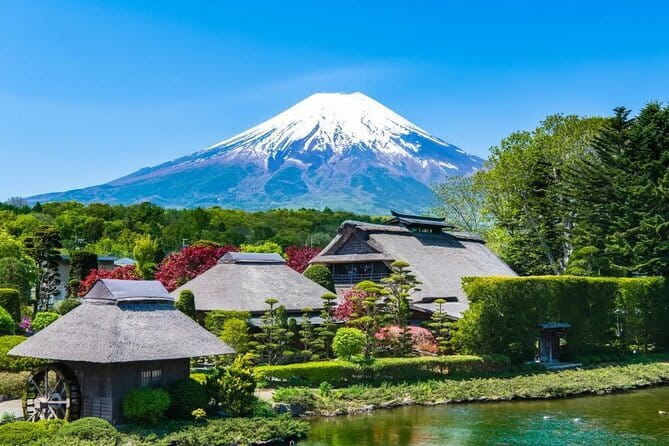
Give yourself realistic expectations for the one-hour stop. Enoshima’s paths include stairs, and you cannot cover every corner in that time. If you want a quick look, follow the main route and concentrate on the shrine area and coastal views. If you prefer photography, look for clear views toward the water and, on a good day, Mount Fuji.
The Sea Candle is the island’s observation tower, with 360-degree views over the Pacific, the coast, and Mount Fuji when the air is clear. Admission is optional, so you can decide on the day if the weather makes the view worthwhile. The Iwaya Caves are another optional-style attraction mentioned for the island, but the supplied details do not list an admission price or a separate scheduled visit, so you should not assume there will be time to see them.
Shops and cafes line the route, with local seafood including fresh shirasu, or whitebait. The tour does not include meals, so Enoshima is a useful place to buy a snack if the schedule allows. Keep an eye on the clock, since food stops can quickly take up your entire Enoshima visit.
The Enoden and Kamakura High School Front crossing
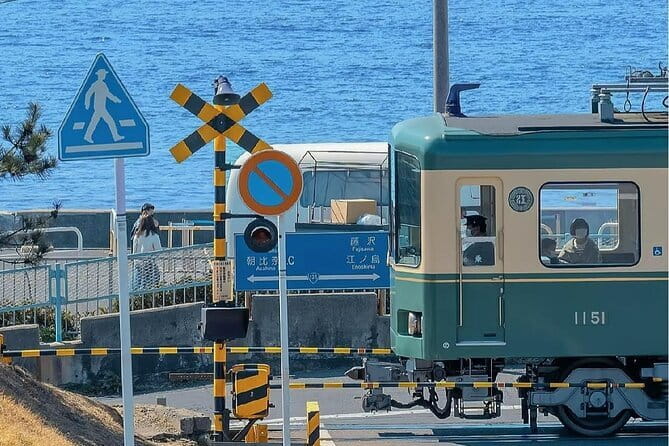
The itinerary identifies this stop as the Kamakura High School Front Station area, although the stop title refers to an old station clocktower. The important sight is the Enoden railway crossing near Kamakura Kōkōmae Station.
This is one of the most recognizable coastal railway scenes in Japan. The train passes near a crossing with the sea and Sagami Bay behind it. The setting became especially famous through Slam Dunk, making it a popular place for anime fans to take photographs.
You have about 30 minutes here. That is enough to see the crossing and, if the timing works, watch the Enoden train pass. It is not enough for an extended railway ride and a long photo session unless the group schedule lines up perfectly.
The Enoden experience ticket is not included and costs 200 JPY. This is an important detail because the route description presents the train ride as part of the experience, but the ticket is optional. If you want to ride the train, confirm with the driver how the ride fits into the day and where you will rejoin the vehicle.
The crossing can be crowded, and it is a public road and railway area rather than a private attraction. Be careful around the tracks and follow local signs. For anime fans, this may be the most memorable stop. For others, it is a brief scenic pause with a famous pop-culture connection.
Shichirigahama Beach and Sagami Bay
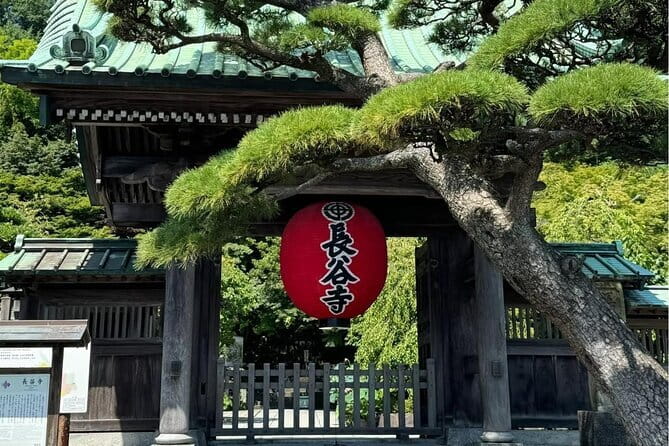
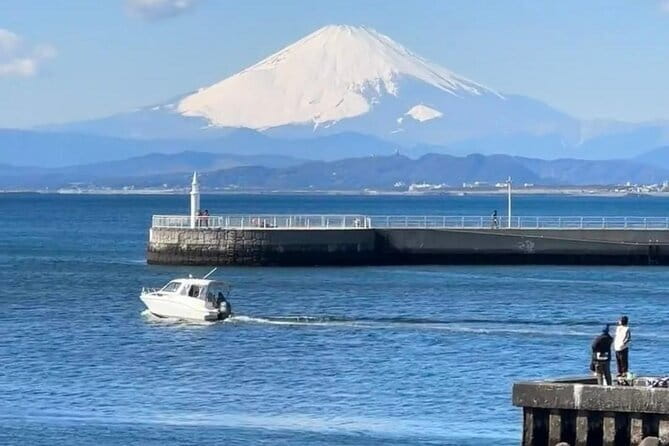
The next coastal stop gives you 30 minutes at Shichirigahama Beach. This is a welcome change of pace after the railway crossing and the island paths. You can walk along the shore, feel the sea breeze, and look across the water toward the coast.
On clear days, Mount Fuji may be visible in the distance. The word may matters here. Fuji views depend on weather and visibility, so do not book the tour solely for a guaranteed mountain photograph.
The beach is also a place to watch local life. Surfers use the waves, while families and friends spend time along the shore. You do not have time for a long beach visit or a swim-focused outing, but the stop gives you a short break and a chance to take in the coastline.
I would bring comfortable shoes and keep your camera ready. The combination of beach, train tracks, and distant mountain views can produce some of the day’s best photographs, even if the weather does not cooperate enough for Fuji.
Komachi Street: Kamakura’s easy food stop
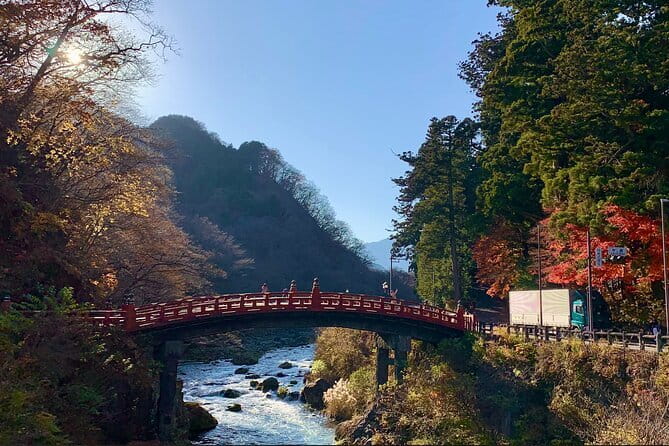
Komachi Street is the most useful stop for food and small purchases. This pedestrian shopping street leads toward Tsurugaoka Hachimangu Shrine and offers a broad mix of cafes, snack stalls, souvenir shops, crafts, traditional goods, and modern clothing.
You have about an hour here. The timing works well for a quick lunch or several small tastes rather than a long sit-down meal. Look for rice crackers, matcha sweets, croquettes, and other local snacks. Freshly prepared food is one of the pleasures of the street, but meals are not covered in the tour price.
Komachi Street is popular, so expect a lively public shopping area rather than a quiet old lane. It is also easy to spend more than planned. If you want souvenirs, set a budget before you start, then leave enough time to reach the shrine entrance.
The street’s position beside Tsurugaoka Hachimangu makes the transition from modern Kamakura to historic Kamakura especially convenient. You do not need another transfer or a separate taxi to reach the next major stop.
Tsurugaoka Hachimangu and the samurai story
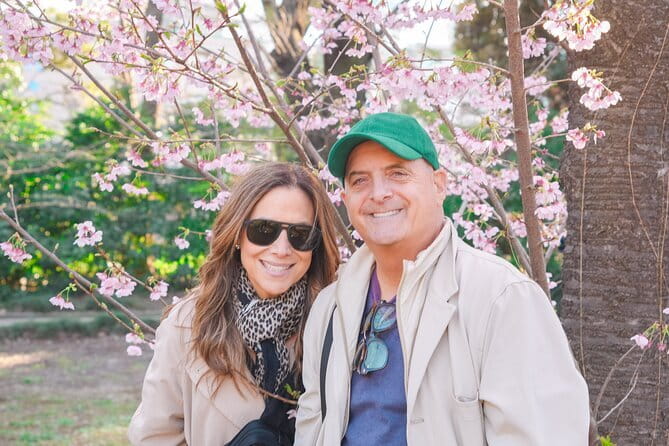
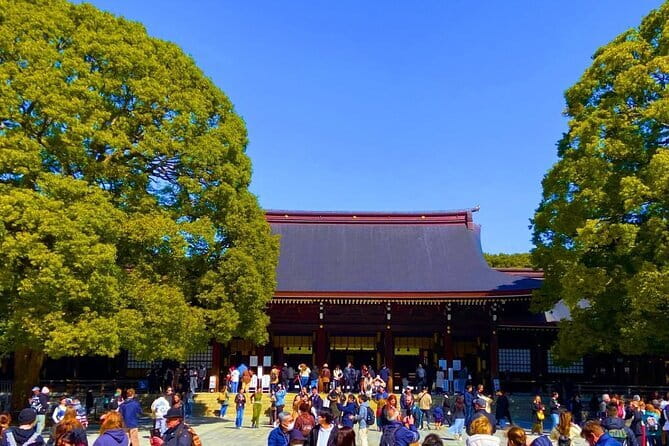
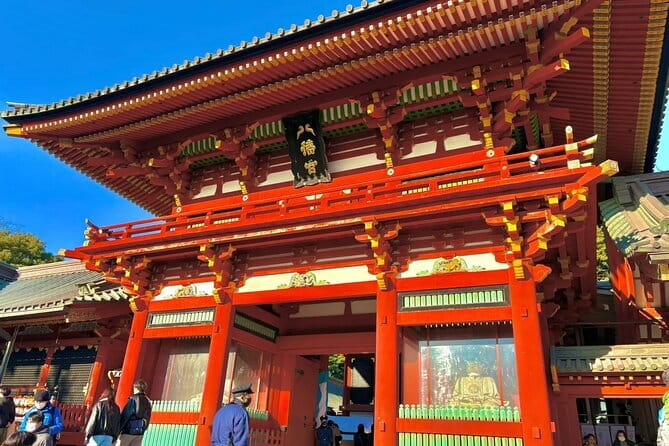
Tsurugaoka Hachimangu is Kamakura’s principal Shinto shrine and one of the day’s most important cultural stops. It was founded in 1063 and later expanded by Minamoto no Yoritomo, who established the Kamakura Shogunate. The shrine is dedicated to Hachiman, a deity linked with samurai warriors.
You approach along a broad path marked by torii gates and seasonal plantings. The main shrine sits on a raised area above the city, giving you a sense of the site’s scale and importance. The setting is formal and open, with long sightlines that make the approach part of the visit.
The main hall admission is free. A separate Treasure Hall costs 200 JPY if you want to see samurai-related objects and other artifacts. That extra visit is optional, and the schedule allows about an hour at the shrine, so you will need to choose between a slower shrine visit, the museum, and photographs.
This is a good place to pause and observe local religious customs. You may see people praying or taking part in traditional rituals, but the tour does not promise a particular ceremony. Treat the shrine as an active place of worship, not only as a photo stop.
Hase-dera: hillside views and Kannon
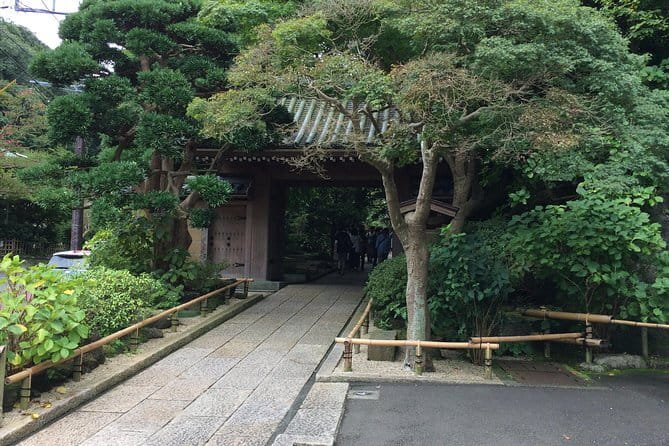
Hase-dera is a Buddhist temple on the slopes above Kamakura. Its hillside position gives you views toward the city, coast, and Sagami Bay. The gardens change with the seasons, with hydrangeas in summer, autumn foliage, and plum blossoms in winter.
The temple’s central religious object is the large wooden statue of Kannon, the Buddhist figure associated with mercy. The Kannon-dō Hall houses an 11-faced statue, giving this stop a more contemplative feel than the open approach at Tsurugaoka Hachimangu.
You have 40 minutes here, which is enough for the main temple area and a short look at the gardens. It is not generous if you want to explore every path or linger over the views. Some visitors may find the slopes and stairs tiring, especially after a full day of walking.
Admission is 400 JPY and is not included. That makes Hase-dera one of the clearest extra costs on the route, but it is also one of the more rewarding paid stops because it combines a major Buddhist image, gardens, and a hillside outlook.
If you have limited mobility, ask about the walking demands before booking. Most people can participate, but the tour does not promise a fully step-free route. Seniors over 80 are not recommended for this activity.
The optional Atami fireworks ending
On selected dates, the tour continues to Atami for an evening fireworks program. The listed dates include April 20, April 28, July 25, several dates in August, September 15, October 13, November 3, and December 7. The exact option and date matter, so check them carefully before paying.
The Atami segment adds about three hours. First, you have time around Heiwa-dori Shopping Street near Atami Station. This is a good place for local food and souvenirs before the fireworks. Then you head to Atami Beach for the show, scheduled from 20:20 to 20:40.
The fireworks reflect over the sea, giving the day a dramatic finish. The timing also explains why the full tour can last up to 14 hours. This is not a small add-on in practical terms. It turns a long sightseeing day into a very late outing.
Fireworks can be the high point for people who enjoy festivals and night views. They can also be tiring after Enoshima, the beach, shopping, and two major religious sites. If you prefer a shorter day, choose a non-fireworks date or an option that excludes this segment.
The fireworks may be canceled because of weather, government rules, or other force majeure conditions. In that case, the supplied terms say the paid fees cannot be refunded. That is an important risk to accept before selecting the fireworks option.
Comfort, group size, and the long day
The vehicle is air-conditioned, and the driver also serves as the guide. That is a practical advantage during hot or rainy weather and gives you a place to rest between walking stops. A maximum of nine passengers is small enough to avoid the slow boarding process of a large bus.
The route still involves walking. You will move through shrine grounds, shopping streets, beach areas, and temple paths. The vehicle reduces transport stress, but it does not turn the day into a low-activity tour.
The standard meeting point is Tokyo Station at 1 Chome-9 Marunouchi. The activity ends back there. Hotel pickup is available only if you select that option, so check the booking choice carefully rather than assuming it is included.
Oversize luggage is not recommended. Most people can participate, but the long duration, stairs, and walking make this a poor match for anyone seeking a very gentle sightseeing day.
What the $150 price really buys
At $150, you are paying mainly for time management and transport. You can see five major areas around Enoshima and Kamakura without planning several separate train journeys, and you travel in a small, air-conditioned vehicle.
You should also budget for:
- Hase-dera admission: 400 JPY
- Optional Enoden ride: 200 JPY
- Optional Tsurugaoka Hachimangu Treasure Hall: 200 JPY
- Enoshima Sea Candle admission
- Meals and snacks
The included shrine main hall admission is free anyway, so the real value lies in the vehicle, the route, and the small group. If you are traveling with family or a small party, group discounts may improve the price. A mobile ticket also makes arrival simpler.
Free cancellation is available if you cancel at least 24 hours before the start time. Changes or cancellations within 24 hours are not refunded. The tour also requires a minimum number of participants, and poor weather can affect operation, so keep an eye on the confirmation details.
Who should book this day trip?
I would recommend it to you if you want a full coastal day but do not want to organize the route yourself. It fits first-time visitors to Tokyo who want shrines, scenery, local food, and a taste of the Enoden without spending a night outside the city.
It also suits people who value a small group and a comfortable ride more than complete freedom. The relaxed transport between stops was a major strength of the experience, especially with a day this long.
Anime fans should pay special attention to the Kamakura High School Front crossing. Food lovers will appreciate the time around Komachi Street and Enoshima. Festival fans should consider the Atami option, but only if they are comfortable with the extra hours and the possibility of cancellation without a fireworks refund.
I would skip it if you want deep time at each temple, a slow beach day, or a carefully planned food tour. The schedule gives you a broad look at the region, not a leisurely study of one place.
Should you book it?
Book this tour if your priority is efficient sightseeing with less transport hassle. The small group, air-conditioned vehicle, and mix of coast, shrines, food streets, and railway scenery make the $150 price reasonable for many Tokyo visitors.
Before booking, decide three things: Can you manage a 9 to 14-hour day, are you comfortable paying extra for several attractions, and do you truly want the Atami fireworks extension? If the answer is yes, this is a useful way to see Kamakura and Enoshima in one ambitious day.
FAQ
How long does the tour last?
The tour lasts approximately 9 to 14 hours. The longer schedule applies when the Atami fireworks segment is included.
Where does the tour start and end?
The standard meeting point is Tokyo Station at 1 Chome-9 Marunouchi, Chiyoda City, Tokyo. The activity ends back at the meeting point. Hotel pickup is available if you select that option.
How many people can join the tour?
The group is limited to a maximum of nine travelers, including the small-group vehicle arrangement.
Is the Enoden train ride included?
The Enoden ride is optional and costs 200 JPY. The ticket is not included in the tour price.
Which entrance fees are not included?
Hase-dera Temple costs 400 JPY. The optional Tsurugaoka Hachimangu Treasure Hall costs 200 JPY, and the Enoshima Sea Candle also requires a separate ticket. Meals are not included.
When are the Atami fireworks available?
The fireworks option is available only on selected dates, including April 20, April 28, July 25, August 5, August 8, August 18, August 25, September 15, October 13, November 3, and December 7. The fireworks are scheduled from 20:20 to 20:40.
More Kamakura & Enoshima Day Trips in Tokyo


More tours in Tokyo we've reviewed

Kamakura & Enoshima Day Trips, compared.
 ★ 4.5Tokyo: Kamakura & Enoshima Day Trip including Temple TicketsFrom $589 hours - 570 minutes
 ★ 5.0Mount Fuji, Kamakura, Big Buddha, & Lake Ashi Day TripFrom $109
 ★ 4.7Tokyo: Mt Fuji, Kamakura, Lake Ashi & Big Buddha Guided TourFrom $50
 ★ 4.5From Tokyo: Kamakura & Enoshima 1-Day Bus TourFrom $66
 ★ 4.9Tokyo:Sea of Mount Fuji, Hakone Ropeway, Ōwakudani, EnoshimaFrom $5010 hours
 ★ 5.0Kamakura 8 hr Private Walking Tour with Licensed Guide from TokyoFrom $201