Reviewed · SUMO EXPERIENCES
Tokyo: Sanctuary Authentic Grand Sumo Experience & Training
A sumo tournament lets you watch Japan’s heavyweight athletes. This two-hour session lets you enter the dohyo yourself, wearing a real mawashi and learning the movements, rituals, and rules from a Japanese coach. You are not sitting in a viewing seat here. You are part of the action.
In This Article
- Key points at a glance
- Why this is more than watching sumo
- Your two hours in the dojo
- Meet at Heiwanomori Park Sumo-jo
- Begin with stretching and warm-ups
- Learn the rituals and rules
- Put on the mawashi
- Wrestle friends, family, or the coach
- What makes the dojo setting valuable
- How hard is the training?
- The practical cost at $199
- Getting ready for the ring
- Who will enjoy this most?
- Should you book the Amita Sumo Dojo experience?
- FAQ
- Where does the sumo experience take place?
- How do I reach the dojo by train?
- Can I take a taxi to the dojo?
- How long does the experience last?
- Is the instruction available in English?
- Do I need previous sumo experience?
- Is the mawashi included?
- Can children take part?
- Is a shower available?
- What should I bring?
I like the mix of ceremony and exercise. You learn why sumo begins with ritual, then put those lessons to work in the ring. I also like the friendly, adjustable approach led by Takeshi, which makes room for first-timers, families, and people with very different fitness levels.
The main drawback is simple: you will sweat heavily, and there is no food included. Bring plenty of water, two towels, and a little extra money for the nearby shower, which costs ¥100 for five minutes.
Key points at a glance
- Real dohyo and mawashi: Train on a clay sumo ring and wear the traditional belt at no extra charge.
- A hands-on lesson: Learn stretches, warm-ups, rituals, rules, and basic wrestling before taking part in bouts.
- Takeshi leads the session: Instruction is offered in both Japanese and English.
- Suitable for beginners: No previous sumo experience is required, and participation can be adjusted to your ability.
- A practical Tokyo outing: Meet at Heiwanomori Park Sumo-jo, about a 10-minute walk from Heiwajima Station.
- Plan for a workout: Bring drinks and two towels. A five-minute shower nearby costs ¥100.
Why this is more than watching sumo
Sumo can look mysterious from the stands. The wrestlers stamp, throw salt, crouch, and stare across the ring before the bout begins. At Amita Sumo Dojo, those actions are explained and practiced rather than left as theater.
You start with the physical basics. That includes stretching and warm-ups, followed by an introduction to the dohyo, the raised clay ring used for sumo. You learn the rules that govern wrestling inside it, then put on a mawashi and try the movements yourself.
That order matters. You get context before the physical activity, so the rituals do not feel like empty decoration. The lesson connects the Shinto customs with the discipline of the sport and shows you how much preparation comes before a short match.
The experience is called keiko, the Japanese term for sumo training. It is not advertised as a staged show with actors pretending to be wrestlers. You train with a real sumo coach in a real ring, which gives the session its unusual appeal.
A few more Tokyo tours and experiences worth a look
Your two hours in the dojo
Meet at Heiwanomori Park Sumo-jo
The meeting point is a small office at Heiwanomori Park Sumo-jo, located at 2-1 Heiwanomorikoen in Ota City. From Heiwajima Station on the Keikyu Main Line, allow about 10 minutes on foot.
This is one of those Tokyo activities where the final walk deserves attention. The venue is not described as a major tourist landmark, so save the supplied walking map before you leave your hotel. If you plan to take a taxi, arrange one yourself. Taxis will not come to this location unless you call or book one.
The train ride is quite manageable from many central districts. The stated travel times include about 22 minutes from Shinagawa, 28 minutes from Shimbashi, 34 minutes from Nihonbashi, 36 minutes from Shibuya, and 40 minutes from Ginza. Add the walk from Heiwajima Station and some transfer time.
I would not squeeze this into a tight schedule after a major attraction. Give yourself enough time to reach the park, find the office, change, and settle in before training starts.
Begin with stretching and warm-ups
The class opens with the fundamentals. You work through stretches and warm-ups before the wrestling begins, which is important because sumo uses more effort than its short bouts suggest.
The coach introduces the basic shape of the sport and explains how to move inside the dohyo. You do not need to arrive knowing sumo terms or techniques. The session is designed for newcomers, and instruction is given in English and Japanese.
Your level of effort is up to you. The experience can suit people with different fitness levels, but it remains physical. Even a gentle attempt at the exercises can leave you hot and tired, especially in Tokyo’s warmer months.
Bring more water than you think you need. The instructions specifically recommend several bottles and two towels, one for the workout and one for the shower.
Learn the rituals and rules
Sumo is closely tied to Shinto practice, and the rituals are a central part of the lesson. You follow demonstrations and learn the meaning behind traditional actions before taking your place in the ring.
This is one of the best reasons to choose the dojo instead of simply watching a tournament. You gain a practical explanation of what you are seeing. The pre-bout movements, the ring itself, and the formal behavior all make more sense once you have tried them.
The rules also change how you watch sumo later. You learn what matters inside the dohyo and how a wrestler wins by forcing an opponent out or making another part of the body touch the ground. The supplied details do not promise a full technical seminar, so expect an accessible introduction rather than advanced coaching.





Put on the mawashi
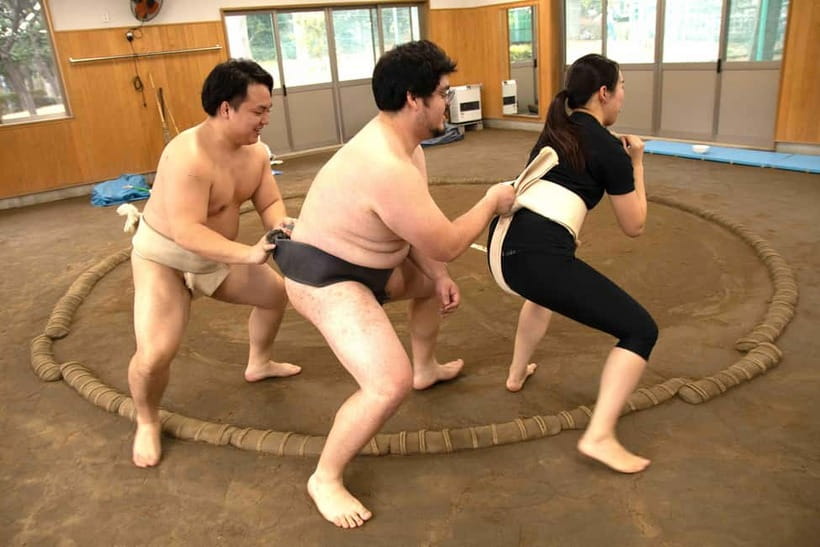
A mawashi is the traditional sumo belt. The dojo provides one at no additional cost, so you do not need to bring your own gear.
You can also choose to participate in your regular clothing if you prefer. That option may appeal to anyone who feels uncertain about wearing a mawashi, though the belt is part of what makes this experience different from a general fitness class.
The supplied instructions do not set out changing-room details, so pack light and wear comfortable clothes under or around your training gear. Most important, bring the towels and drinks requested by the operator.
Wrestle friends, family, or the coach
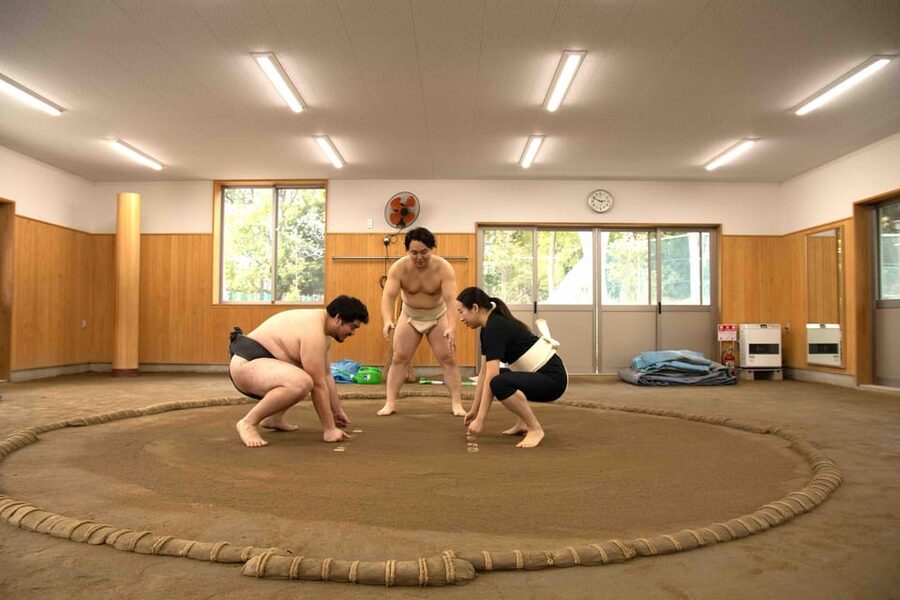
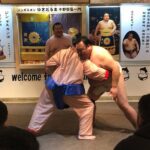
After the instruction, you can take part in matches with companions. If you are brave enough, you may also wrestle one of the coaches.
This final section gives the class its playful edge. You are not simply copying movements and posing for photos. You test what you learned in a controlled bout, with the coach adapting the activity to different abilities.
A family group can take turns. Children aged five and older may observe for free, but each child who wants to participate needs a paid booking. Children under four may accompany you but can only watch.
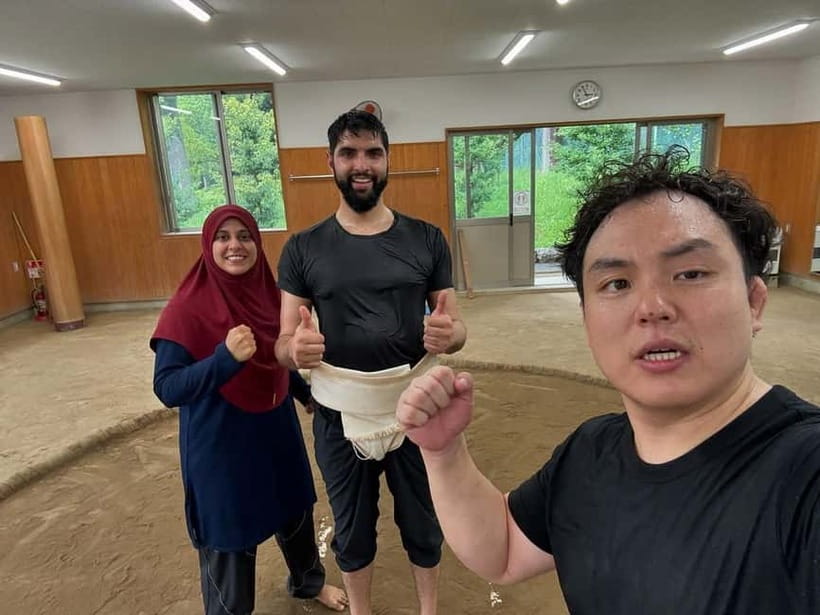
The activity has worked particularly well for families with older children. One family of four used the session to learn the warm-ups and the meanings behind the rituals before trying several matches together. A 13-year-old and an 18-year-old also took part successfully with their family group.
Do keep the tone sensible. Sumo is a contact sport, and the operator states that it is not responsible for injuries or accidents. Follow the coach’s instructions, choose an effort level you can manage, and do not treat the final bout as a test of pride.
What makes the dojo setting valuable
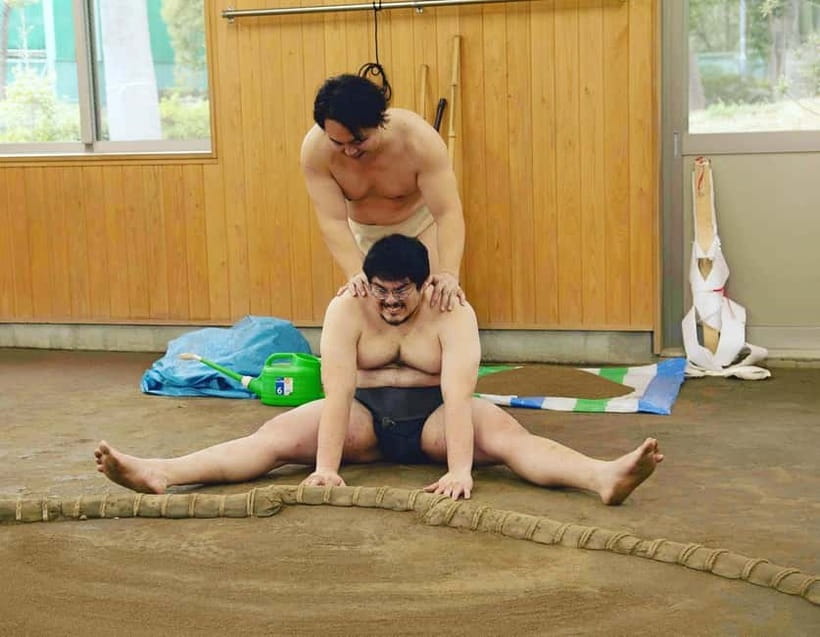
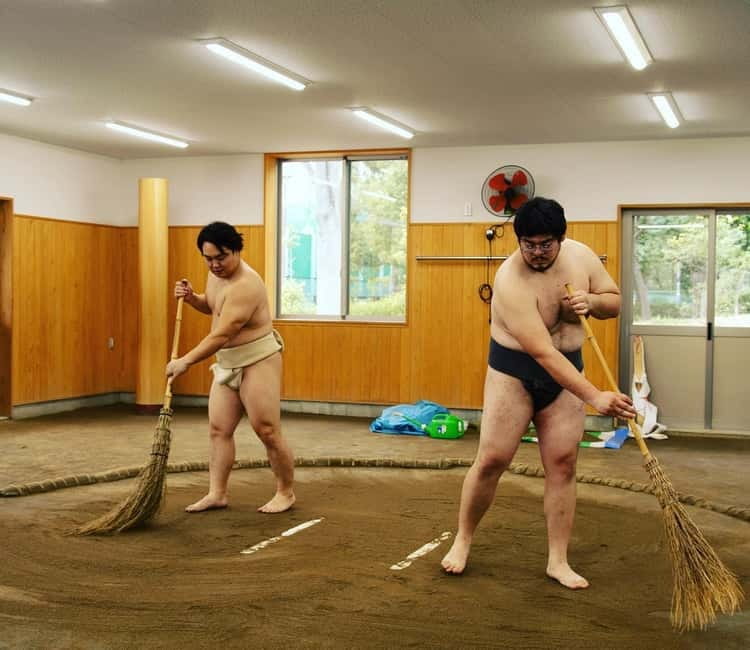
The ring is not a decorative prop. Training on a real clay dohyo gives you a feel for the space that a video or public performance cannot provide.
You notice how limited the ring is, how quickly a bout can turn, and how much balance matters. Even a short match helps explain why sumo wrestlers spend so much time on stance, footwork, flexibility, and controlled force.
The mawashi adds another layer. It is not just a costume for photographs. It is the traditional belt used in sumo, and wearing it helps you understand the sport as a form of disciplined practice rather than a novelty photo opportunity.
The Shinto rituals also receive proper attention. You follow demonstrations and hear explanations in English and Japanese. For visitors who have only seen sumo on television, this connection between religion, ceremony, and wrestling is a useful part of the session.
How hard is the training?
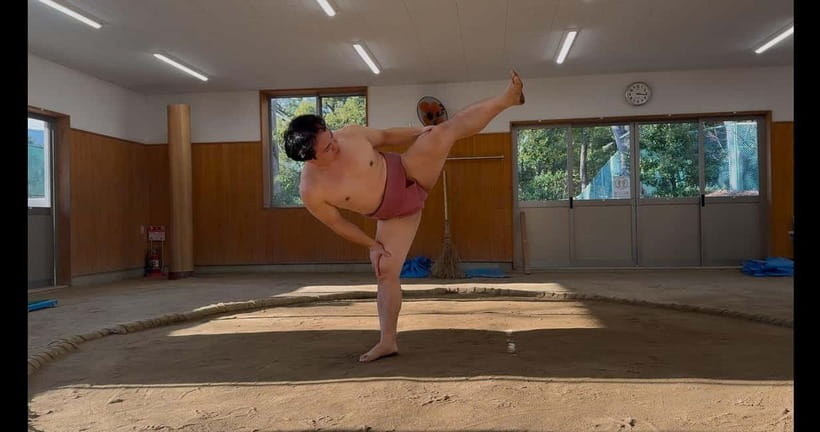
The honest answer is that it depends on how much you choose to do. The class welcomes beginners and does not require prior sumo experience, but the operator strongly warns that you will sweat.
That makes this a better choice for active sightseeing than for a quiet cultural lesson. You will stretch, warm up, move around the dohyo, and possibly wrestle several times. The coach can adapt the activity to participants’ skill levels, which helps a mixed group.
You do not need to be an athlete. You do need to be willing to get physical. If you have a condition that makes contact exercise unsafe, the injury disclaimer is worth taking seriously before booking.
The class suits all genders and a wide range of ages and fitness levels according to the activity information. Still, that does not mean the workout is effortless. Wear clothing you can move in, drink often, and use the shower afterward if you need to freshen up.
The practical cost at $199
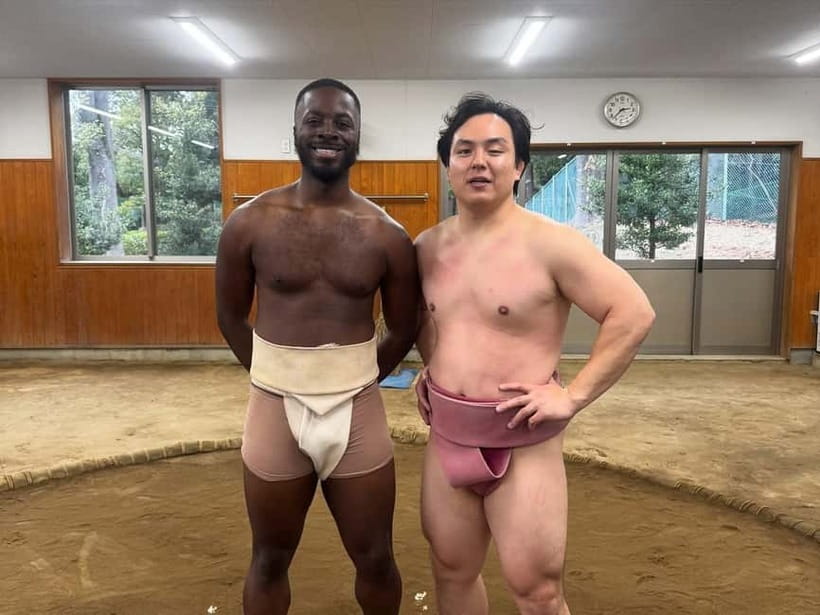
At $199 per person, this is not a cheap Tokyo activity. The value depends on what you want from your sumo experience.
If your goal is simply to see professional sumo, a tournament ticket or a viewing opportunity may make more sense. This session does something different. It combines a private-style lesson, use of a real ring, a provided mawashi, coaching, cultural explanation, and the chance to wrestle.
The price is easier to justify for someone who wants participation rather than observation. It can also work well for a family or small group that wants one shared activity, since you can wrestle each other after learning the basics.
There is no meal included, so do not expect a food component to offset the price. You should also budget ¥100 for a nearby five-minute shower if you want to clean up before returning to the city.
The provider allows free cancellation up to 24 hours before the start time and offers a reserve-now, pay-later option. You are asked to book at least two days ahead, even though the booking system may allow a reservation closer to the start.
Getting ready for the ring
I would prepare for this outing more carefully than for a standard sightseeing tour.
- Bring several bottles of water.
- Pack two towels, one for training and one for the shower.
- Wear clothes that allow free movement if you prefer not to use the mawashi.
- Save the walking directions to the dojo.
- Allow time for the 10-minute walk from Heiwajima Station.
- Book at least two days ahead when possible.
- Arrange your own taxi if you need one, since taxis do not normally come to the location without being called.
Photos and videos are welcome, including for social media, but they must not interfere with the session. Ask permission before filming other participants, and follow any direction from the staff about people who may not be recorded.
That rule is practical, not fussy. A training session works best when everyone can concentrate, and nobody should appear in your video without agreeing to it.
Who will enjoy this most?
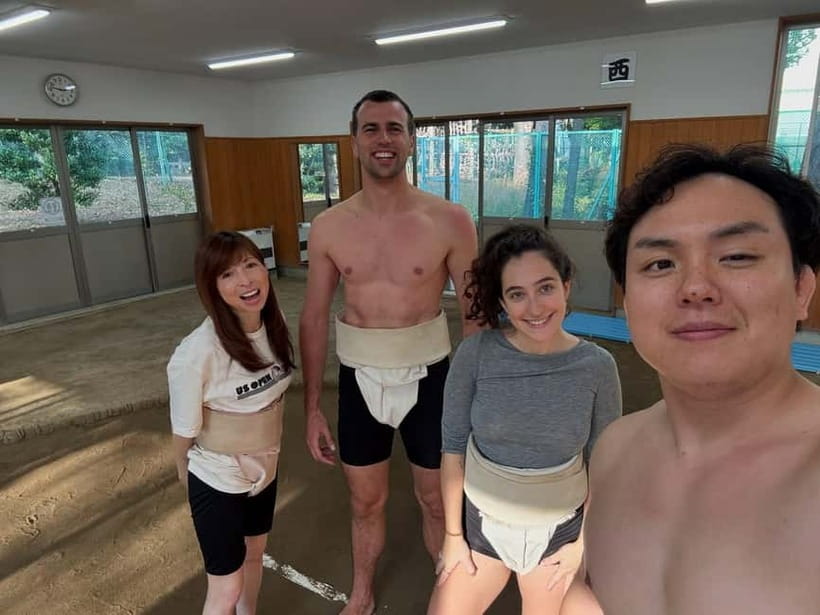
I would recommend this for anyone who has watched sumo and wondered what it feels like to stand inside the ring. It is also a strong choice for families with children aged five and older who want an activity that is cultural, physical, and shared.
It suits first-timers especially well. You do not need a wrestling background, and the instruction covers the basics before asking you to compete.
A former wrestler or martial arts enthusiast may also enjoy it, though the session is presented as an introduction rather than specialist training. One participant whose son had wrestled for five years found it matched his interest well.
This may not suit you if you want a quiet, polished performance, dislike physical contact, or are uncomfortable sweating in a traditional belt. It is also less convenient if you are staying far west of central Tokyo and do not want to spend time reaching Ota City.
Should you book the Amita Sumo Dojo experience?
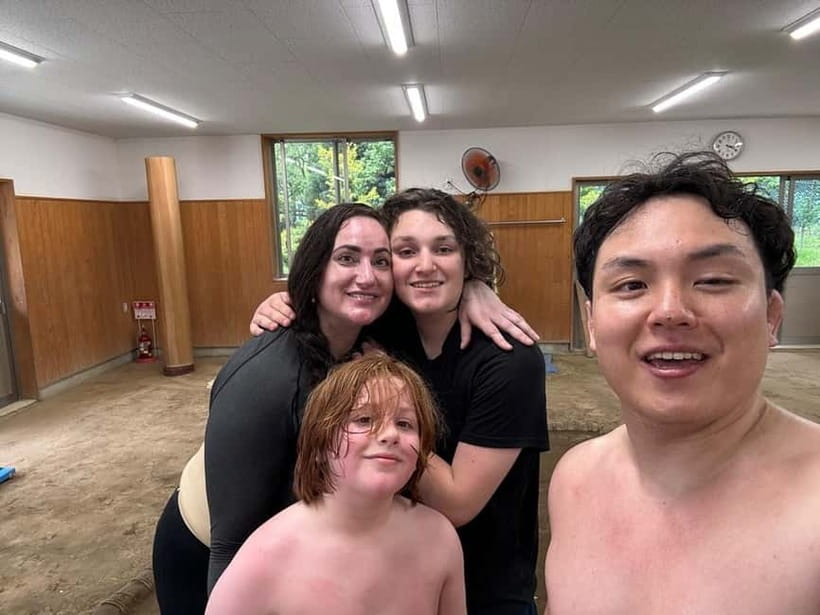
Book it if you want to do sumo, not just watch it. The real dohyo, provided mawashi, Shinto rituals, English-language instruction, and final bouts give you a far more active connection to the sport than a staged demonstration alone.
I especially like the way the session moves from explanation to participation. You learn the meaning of the rituals, practice the basics, then try a match with friends, family, or the coach. That progression makes the $199 price more reasonable for people who value a hands-on cultural experience.
Skip it if you are looking for a low-cost viewing option or a relaxed two hours. This is a workout, and you should plan for sweat, water, towels, and a shower afterward.
For the right person, it can become one of the most memorable activities in Tokyo: not because you watch a champion from a distance, but because you learn enough to feel the discipline, ceremony, and physical challenge for yourself.
FAQ
Where does the sumo experience take place?
It takes place at Heiwanomori Park Sumo-jo, 2-1 Heiwanomorikoen, Ota City, Tokyo, 143-0005. Meet at the small office at that address.
How do I reach the dojo by train?
The venue is about a 10-minute walk from Heiwajima Station on the Keikyu Main Line.
Can I take a taxi to the dojo?
Yes, but you must arrange the taxi yourself. Taxis will not come to the location unless you call one.
How long does the experience last?
The sumo training experience lasts two hours.
Is the instruction available in English?
Yes. The instructor provides instruction in both English and Japanese.
Do I need previous sumo experience?
No. The activity is designed for people with no prior experience.
Is the mawashi included?
Yes. A real mawashi is provided at no extra cost.
Can children take part?
Children under four may accompany you but can only observe. Children aged five and older may observe for free, but each child who participates needs an individual booking.
Is a shower available?
A shower room is located near the venue. It costs ¥100 for five minutes.
What should I bring?
Bring drinks and a towel. The instructions strongly recommend several bottles of water and two towels, one for sumo and one for showering.
More Sumo Experiences in Tokyo

More tours in Tokyo we've reviewed












Sumo Experiences, compared.
 ★ 4.8Tokyo: Sumo Show Experience with Chicken Hot Pot and a PhotoFrom $1032 hours
 ★ 4.8Tokyo: Sumo Show and Dining ExperienceFrom $7990 minutes - 2 hours
 ★ 5.0the SUMO showFrom $89
 ★ 5.0Tokyo Sumo Entertainment Show with Chicken Hot Pot and PhotoFrom $106
 ★ 4.6Tokyo: Sumo Tournament Tour with Chair Seat TicketsFrom $141
 ★ 5.0Tokyo Grand Sumo Tournament Viewing Tour with TicketsFrom $124