Reviewed · CRAFT WORKSHOPS
Tokyo: Calligraphy Workshop & Original T-Shirt Creation
The best part of this two-hour Tokyo workshop is that you do not just watch Japanese calligraphy. You make something personal. A professional instructor helps turn your name into kanji, then guides you through brush practice before you create artwork to take home or place on a T-shirt.
In This Article
- Key points
- Turning Your Name Into Japanese Kanji
- Grinding Ink Before You Touch the Final Paper
- Learning Brush Control Before the Artwork
- Creating Artwork You Can Actually Take Home
- Adding the Kanji to a T-Shirt for ¥4,000
- A Small Studio Setting Near Shinjuku
- How Much Value Do You Get for US$33.03?
- Who Will Enjoy This Workshop Most?
- Language, Teaching, and What You Need to Bring
- Booking Ahead and Cancellation Details
- Should You Book the Tokyo Calligraphy Workshop?
- FAQ
- How long does the calligraphy workshop last?
- Where does the workshop begin?
- Where does the activity end?
- What is included in the price?
- Is the T-shirt included?
- Do I need to bring calligraphy materials?
- Will I learn to write my name in kanji?
- Is the class taught in English?
- How many people can join the workshop?
- Can I cancel for a full refund?
I like the quiet, hands-on pace and the chance to grind a solid inkstick into real ink. I also like the small-group format, listed as capped at six people, though the additional booking information gives a maximum of 12. The main consideration is the extra ¥4,000 for the T-shirt, which is not included in the US$33.03 activity price.
Key points
- Your name becomes kanji: The instructor helps transform your name into Japanese characters with a personal meaning.
- You make authentic ink: Grinding an inkstick is part of the lesson, not just a decorative demonstration.
- You practice before the final work: Basic brush techniques help beginners settle into the tools.
- A T-shirt is optional: You can write your kanji directly on a shirt for an additional ¥4,000.
- The class uses professional tools: Supplies are provided, and your finished artwork goes home with you.
- English support is available: The experience includes an expert host and guided instruction in English.
Turning Your Name Into Japanese Kanji
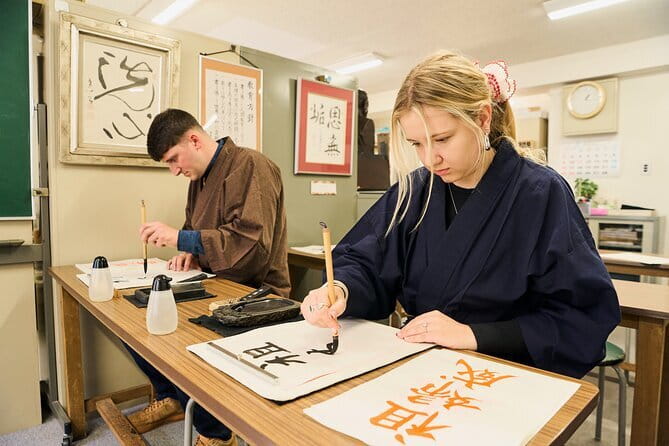
This workshop gives you a useful starting point: your own name. Rather than copying a random character from a wall or choosing a symbol with a vague meaning, you work with the instructor to turn your name into kanji.
That personal step matters. Kanji characters carry meaning as well as sound, so the result is more than a simple spelling exercise. Your instructor helps you understand the characters and then use them as the subject of your artwork.
You do not need to arrive with Japanese language skills. The activity is guided in English, and the teaching team can help with translation. Names mentioned in the feedback include Hiromi and Ai, with Ai described as patient, encouraging, and happy to answer questions. The exact instructor may vary, but the format is built around close help rather than a hands-off demonstration.
This is also a good way to avoid one common souvenir problem: buying a character you do not understand. Here, the meaning of your chosen kanji is part of the activity.
A few more Tokyo tours and experiences worth a look

Grinding Ink Before You Touch the Final Paper
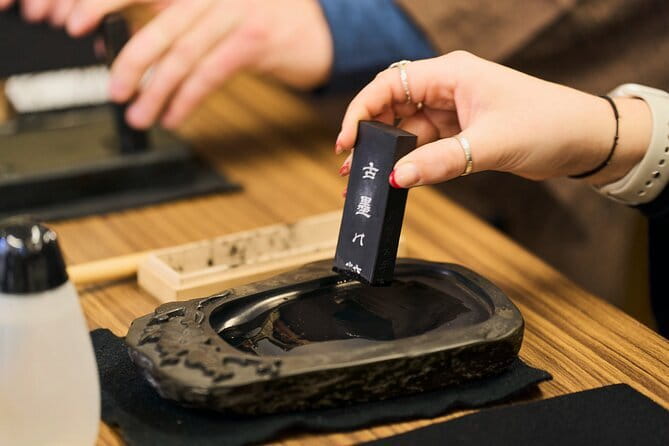
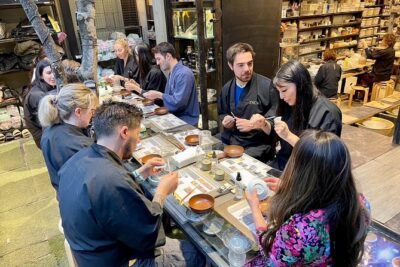
The workshop begins with a traditional task that modern visitors rarely get to try: grinding a solid inkstick. You add water and work the inkstick against the inkstone until you produce usable ink.
It is a slow process. That is precisely the point. You are not rushing through a craft station with a souvenir in your hand five minutes later. The physical preparation gives you time to settle down, watch the ink change, and understand that calligraphy is built around control and patience.
The ink-grinding stage is also described as a moment of mindfulness. You may find it calming, especially after a busy day in Tokyo. It gives the class a gentle rhythm before the more demanding brushwork begins.
You will also change into traditional Japanese workwear. That adds a visual and practical touch to the session, though it is worth remembering that this remains a short workshop rather than a full study of calligraphy. The strongest value is in trying the process yourself and learning why each step exists.
Learning Brush Control Before the Artwork
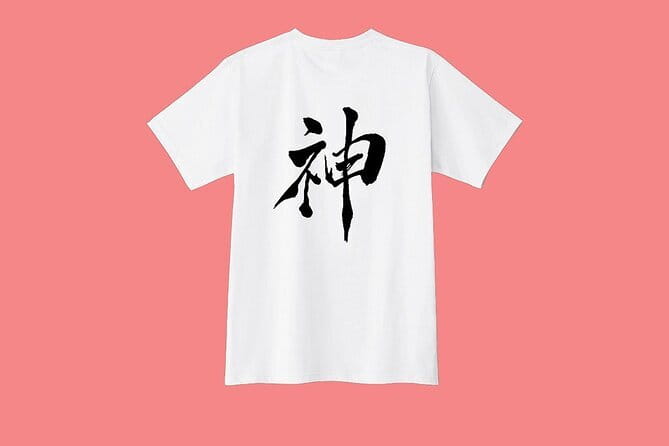
Calligraphy looks simple until you hold the brush. A single stroke can change with the pressure of your hand, the amount of ink, the angle of the bristles, and the speed of movement.
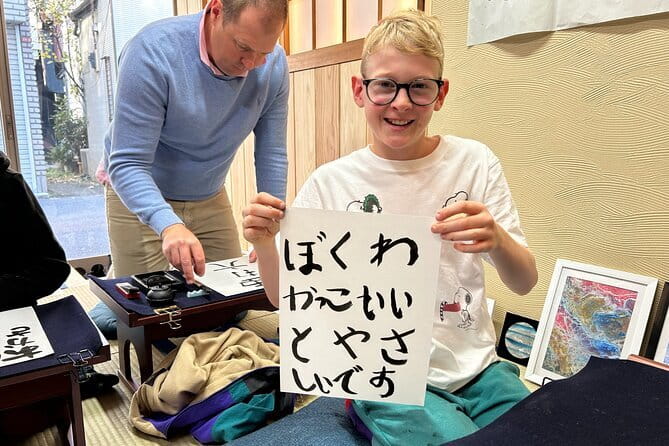
The instructor first introduces basic brush techniques. This practice stage is important for beginners because it lowers the pressure around the final piece. You get a chance to make uneven lines, adjust your grip, and see how the brush responds before your name becomes the center of attention.
You should expect some trial and error. One family described the class as harder than it looks, but also said that coaching helped them improve. That is a useful expectation to bring with you. Your first strokes may not look polished, and that does not mean the lesson has gone badly.
The teaching style seems to be one of the activity’s strongest features. Several comments describe the instructor as patient, friendly, and encouraging. One person compared the feeling to being back in school with a very good teacher. That is a fair description of the format: you receive an explanation, try the technique, and get help as you work.
Creating Artwork You Can Actually Take Home
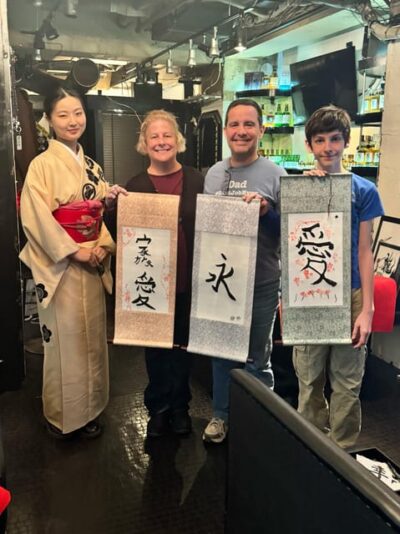
Once you have practiced, you use your chosen kanji to create an original piece of artwork. Your calligraphy supplies are provided, and the finished work is included for you to take home.
This is where the class shifts from lesson to souvenir. The result will not be a factory-made Tokyo keepsake. It will show your own brushwork, with all the small variations that come from making it by hand.
That can be a strength or a drawback, depending on what you want. If you expect a perfectly polished professional piece, calligraphy practice may feel humbling. If you want a personal reminder of your time in Japan, the irregularities make the artwork more meaningful.
The activity gives you room to care about the result without requiring perfection. The instructor helps you prepare, but you still make the final marks yourself. I like that balance. You receive expert guidance, yet the souvenir remains yours.
Adding the Kanji to a T-Shirt for ¥4,000
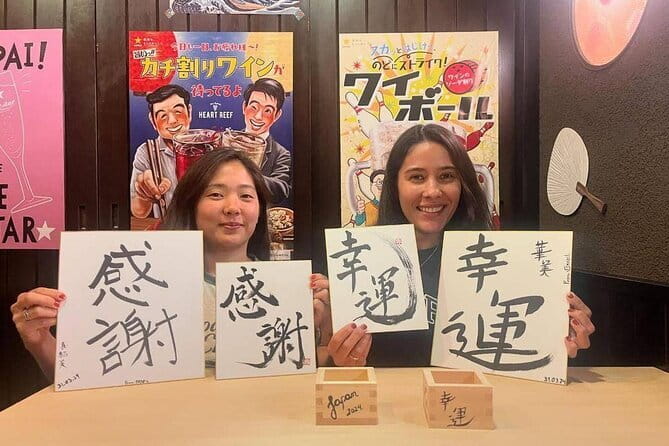
The optional T-shirt is the most distinctive part of the experience, and also the main added expense. You can write your kanji directly on a shirt and create an original piece of clothing to wear or take home.
The shirt costs ¥4,000 per person and is not part of the listed US$33.03 price. Check the total cost before booking if the clothing is central to your plan. The basic activity still includes the calligraphy supplies, instruction, and take-home artwork, so you can skip the shirt and keep the lesson within the advertised price.
A T-shirt also adds a little more pressure than paper. Clothing is less forgiving than practice sheets, and you may care more about the final placement and appearance. Still, the option makes sense if you want a souvenir with a clear connection to the activity rather than another small object in your luggage.
The T-shirt is optional, not a required part of the class. That flexibility improves the value for couples, families, or friends with different budgets.
A few more Tokyo tours and experiences worth a look




A Small Studio Setting Near Shinjuku
The meeting point is outside FamilyMart at 1-chōme-23-21 Hyakuninchō, Shinjuku City, Tokyo 169-0073. The activity ends back at the same meeting point.
The location is near public transportation, which helps when fitting the class into a Tokyo sightseeing day. You should allow enough time to find the FamilyMart and arrive ready for the start. The meeting point is specific, but it is still wise to use the address rather than relying only on a general Shinjuku destination.
The booking information presents this as a small-group experience capped at six people. A separate participation note lists a maximum of 12, so the practical group size may depend on the session or booking system. Either way, the experience is designed around instruction, not a large performance.
A smaller class usually gives you more chances to ask about your name, brush technique, and final design. That matters here because calligraphy is not easy to learn by simply watching from the back of a room.
How Much Value Do You Get for US$33.03?
At US$33.03 per person, the base price is reasonable for a two-hour guided craft activity in Tokyo. You are paying for an instructor, supplies, use of professional tools, the ink-making process, practice time, and your own finished artwork.
The value is strongest if you want an activity rather than a quick attraction. You spend time learning and making, and you leave with something connected to your own name. The price is less compelling if you are only interested in a ready-made souvenir, since Japanese character goods can be bought elsewhere without taking a class.
The optional T-shirt changes the calculation. Add ¥4,000 per person if you want the wearable souvenir. That can be worthwhile for a special occasion or a family activity, but it is not necessary to enjoy the workshop.
The class also has value for people who want a quieter break from Tokyo’s crowded streets. The slow ink preparation and repeated brush practice create a calm contrast to sightseeing. Several comments describe the session as relaxing, warm, and even soul-calming. That response fits the structure of the activity, though the experience is still hands-on work, not a passive meditation session.
Who Will Enjoy This Workshop Most?

I would recommend this experience to first-time visitors who want a cultural activity with a clear result. You do not need previous calligraphy experience, and you do not need to bring materials.
Families can enjoy it because each person can make a separate piece. The patient teaching style is especially useful when children or complete beginners need encouragement. Friends can also compare their kanji designs and brushwork, with the T-shirt option creating a fun shared souvenir.
Solo visitors should not feel out of place. One class was described as having a single participant, who received personal attention from the teacher and translation help from the team. A solo booking may offer more direct time with the instructor if the group is small.
This is less suitable if you want a fast, polished activity with no chance of mistakes. Calligraphy takes practice, and the process is part of the point. It also may not suit you if your schedule is packed tightly, since the workshop lasts about two hours and begins at a fixed meeting point.
Language, Teaching, and What You Need to Bring
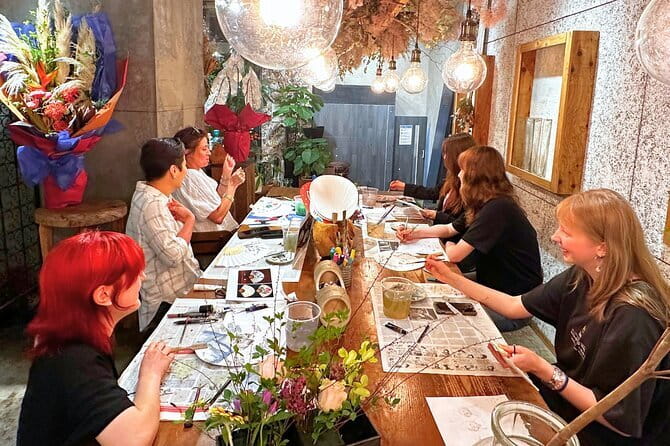
The experience is guided in English with an expert host. Translation support is also available, based on the descriptions of classes where both a translator and instructor helped participants.
All calligraphy supplies are provided. You do not need to pack brushes, ink, paper, or an inkstick. The activity also provides the workwear used during the class.
The strongest practical advice is to arrive ready to listen and practice. Your instructor will explain the tools, but the final result depends on your hand control. Ask questions as you go. The teaching approach is intended to be patient and encouraging, and the comments about Ai and Hiromi suggest that participants can expect personal help rather than a rushed presentation.
The workshop is suitable for most people, according to the participation information. No special skill level is required.
Booking Ahead and Cancellation Details
This experience is commonly booked about 29 days in advance, so reserve early if you want a particular date during a busy Tokyo visit. Confirmation arrives at booking, and the mobile ticket makes it easy to keep the reservation on your phone.
You can cancel for a full refund up to 24 hours before the local start time. Cancellations or changes made within 24 hours are not refunded or accepted. That rule is worth noting if your Tokyo schedule may change.
The booking information gives the activity a perfect rating from 80 reviews, with 100 percent recommending it. That points to a very consistent experience, especially in the areas that matter most here: patient instruction, friendly support, and the satisfaction of making a personal souvenir.
Should You Book the Tokyo Calligraphy Workshop?
Book it if you want to learn by doing, enjoy calm creative activities, and like the idea of carrying home artwork made with your own hands. The inkstick, traditional workwear, kanji lesson, and professional tools give the two hours real substance.
The base price is fair, especially since supplies and artwork are included. Decide in advance if you want the extra T-shirt, then add ¥4,000 to your budget. If you are short on time or want a perfect finished product with no practice, choose a simpler souvenir stop instead.
For most visitors, this is a thoughtful Tokyo activity with a personal payoff. Your brushwork may not be flawless, but your kanji will have a story, and that is exactly what makes the souvenir worth keeping.
FAQ
How long does the calligraphy workshop last?
The activity lasts approximately two hours.
Where does the workshop begin?
It begins at FamilyMart, 1-chōme-23-21 Hyakuninchō, Shinjuku City, Tokyo 169-0073, Japan.
Where does the activity end?
The workshop ends back at the meeting point.
What is included in the price?
The price includes calligraphy supplies for use during the class, your finished artwork to take home, and an expert calligraphy artist.
Is the T-shirt included?
No. An original T-shirt costs ¥4,000 per person and is optional.
Do I need to bring calligraphy materials?
No. All necessary calligraphy supplies are provided.
Will I learn to write my name in kanji?
Yes. The workshop includes transforming your name into kanji and using it to create original artwork.
Is the class taught in English?
Yes. The experience includes guided instruction in English with an expert host. Translation support is also available.
How many people can join the workshop?
The activity is described as a small-group experience capped at six people, while the additional participation information gives a maximum of 12 travelers.
Can I cancel for a full refund?
Yes. You can receive a full refund if you cancel at least 24 hours before the experience start time. Cancellations within 24 hours are not refunded.
More Workshops & Classes in Tokyo
More Craft Workshops in Tokyo

More tours in Tokyo we've reviewed












Craft Workshops, compared.
 ★ 4.8Chopstick Making Workshop in GinzaFrom $251 hour
 ★ 5.0Kintsugi Experience: Art of Golden Joinery in TokyoFrom $59
Tokyo: Shinjuku Chopstick Making ClassFrom $121 hour
★ 5.0Kintsugi Experience: Art of Golden Joinery in TokyoFrom $59
Tokyo: Shinjuku Chopstick Making ClassFrom $121 hour
 ★ 5.0Private Craft Your Own Ring Handmade Experience in Asakusa, TokyoFrom $21
 ★ 5.0Authentic Pure Gold Kintsugi Workshop with Master Taku in TokyoFrom $142
 ★ 5.0Tokyo: Calligraphy on Kanji Fan & Scroll with DrinkFrom $531h 20m