Reviewed · ASAKUSA TOURS
Tokyo: Asakusa Walking Tour -Sumida River to Senso-ji Temple
Asakusa is at its best when you approach it on foot. This 90-minute walk follows the Sumida River toward Senso-ji Temple, then threads through Kaminarimon Gate and Nakamise Street. I like the route’s mix of open river views and old Tokyo streets, and I like that a small group of no more than 10 people can keep the pace personal. The main thing to consider is time: 90 minutes gives you a useful introduction, not a full Asakusa visit.
In This Article
- Key points at a glance
- Why the Sumida River is the right place to begin
- From Umaya Bridge into old Asakusa
- Kaminarimon Gate and the approach to Senso-ji
- Nakamise Street, snacks, and the taste of Asakusa
- Senso-ji Temple and the sacred grounds
- The guides and the small-group advantage
- Is $42 a fair price?
- Who should book this Asakusa walk?
- Booking details that matter
- Should you book it?
- FAQ
- Where does the tour meet?
- What are the meeting point coordinates?
- How much does the tour cost?
- How long does the tour last?
- What language is the tour conducted in?
- How large is the group?
- What places does the tour visit?
- Is a fortune prediction included?
- Are food and drinks included in the price?
- Can I cancel the booking for a full refund?
- Can I reserve now and pay later?
I also like the practical finish near the temple and market, where you can keep exploring on your own. Guides including Miho, Haruka, Mikio, and others have led tours in English, with Spanish and French support available on some outings. Food is part of the atmosphere, but the listed inclusion is a fortune prediction, so plan to pay separately for snacks or meals.
Key points at a glance
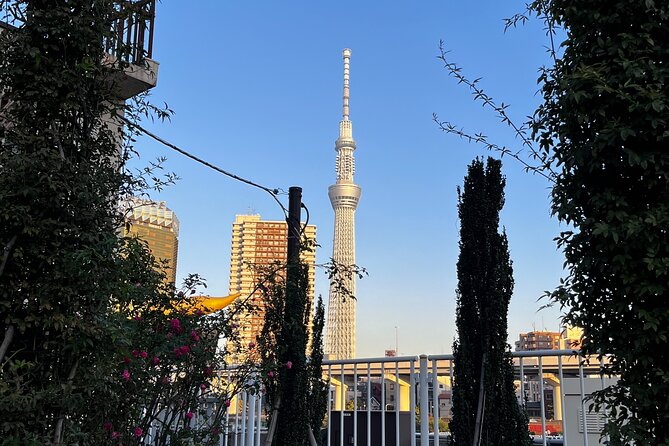
- Sumida River approach: Begin near Umaya Bridge and walk beside one of eastern Tokyo’s most recognizable waterways.
- Kaminarimon Gate: See the giant gate and its guardian figures, Fujin and Raijin, before entering the temple approach.
- Nakamise Street: Browse traditional shops and try Asakusa treats such as melon pan with ice cream, tempura, or yakitori.
- Small English-language group: The group is limited to 10 people, with a live guide leading the walk.
- Fortune prediction included: The tour adds a small traditional cultural activity beyond sightseeing.
- Useful 90-minute format: The route works well early in an Asakusa visit, leaving time for Senso-ji, Tokyo Skytree, or nearby districts afterward.
Why the Sumida River is the right place to begin
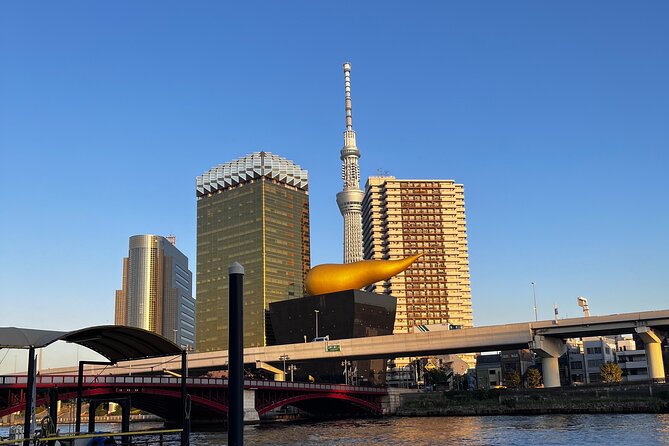
Many people first see Asakusa through Kaminarimon Gate. This tour takes a quieter approach, starting at the Sumida River near the Kuramae 2-Chome Police Box and Umaya Bridge. That change of angle matters. Instead of stepping straight into the crowds around the temple, you get a gradual introduction to the district.
The river gives you room to look around and get your bearings. You can watch Tokyo shift from waterway and bridge views into low-rise streets, small lanes, and the historic Asakusa area. The walk is not only about reaching Senso-ji. It shows how the temple district connects with the neighborhoods around it.
Your guide uses the walk to explain Asakusa’s past, including its samurai associations and merchant life. Those broad themes help make sense of the area. Asakusa is not a preserved museum quarter. It is a working part of Tokyo where old religious sites, shops, restaurants, and modern city life sit close together.
The starting point can require careful attention. The guide waits in front of the Kuramae 2-Chome Police Box, next to Umaya Bridge, holding a sign marked gotcha. The coordinates are 35.7046293, 139.7941848. Save the meeting point before leaving your hotel, since the route begins away from the main Senso-ji entrance.
A few more Tokyo tours and experiences worth a look


From Umaya Bridge into old Asakusa
The first section is a riverside walk, followed by smaller roads and alleys leading toward the temple. The route is appealing because it does not rush you directly into the busiest part of Asakusa. You have time to hear the guide explain what you are seeing before the visual noise of the temple approach takes over.
I would pay close attention to the transition between the river and the neighborhood. It gives you a better sense of Asakusa as a district rather than a single attraction. The guide may point out details that are easy to miss when you follow a map alone, including the links between local streets, commercial activity, and the religious center ahead.
The walk is only 90 minutes, so do not expect a long stop at every location. That is both its strength and its limit. You cover a useful amount of ground without giving up half a day, but you will want to return later if you care about temple architecture, shopping, food, or photography.
Comfortable shoes are a sensible choice. The experience is a walking tour through riverfront and city streets, not a seated sightseeing outing. The route may feel easy for many people, but the fixed duration means the group keeps moving.
Kaminarimon Gate and the approach to Senso-ji
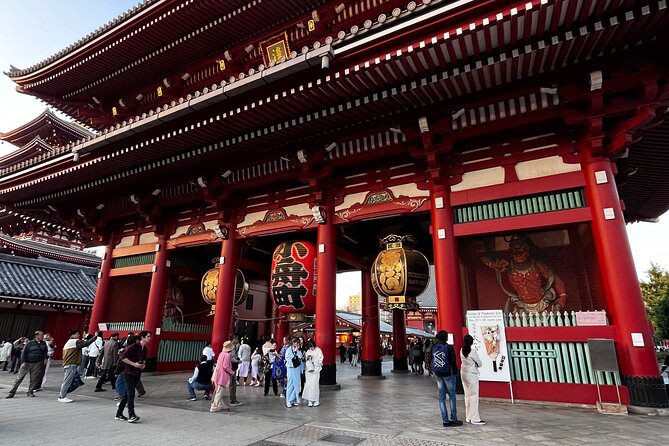
The grand arrival comes at Kaminarimon Gate, the famous entrance to Senso-ji. Its large lantern and guardian figures make it one of the most recognizable sights in Tokyo. Fujin, the wind god, and Raijin, the thunder god, guard the entrance, giving the gate a theatrical first impression.
Your guide can help you look beyond the obvious photograph. The gate is not merely a backdrop. It marks the shift from ordinary city streets into a sacred temple precinct, even though the approach is filled with shops and visitors.
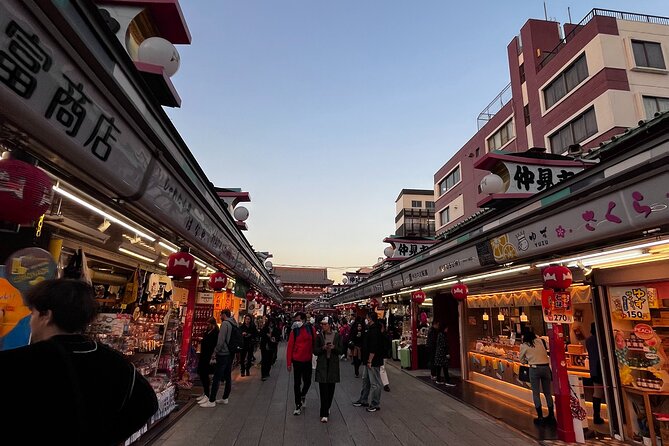
From here, you continue along Nakamise Street. This long shopping approach leads toward Senso-ji’s main grounds and is one of the most useful parts of the tour for first-time visitors. You see traditional sweets, souvenirs, small crafts, and local snacks in a compact stretch.
Nakamise can be crowded, especially during popular visiting periods. That is part of its character, but it can make browsing slow. A guide helps you understand what you are passing, yet you should not expect a relaxed shopping session during the group walk. Treat the tour as an introduction, then come back later when you can stop at your own pace.
Nakamise Street, snacks, and the taste of Asakusa

Food gives this walk some welcome energy. Asakusa is known for simple, satisfying street food and long-running local shops. The experience may introduce you to items such as crispy tempura, yakitori skewers, and traditional sweets.
One especially memorable snack mentioned in the tour experience is melon pan with ice cream. Melon pan is a sweet bun with a crisp, patterned top, and the cold filling makes it an easy treat to enjoy while walking around the shopping street. It is exactly the sort of small local detail that can turn a standard temple visit into a more personal memory.
Keep your food budget separate from the tour price. The listed included feature is the fortune prediction, while snacks and meals are not specified as included. You may have chances to buy food from shops or street vendors, but you should not assume that tastings are covered by the $42 fee.
That distinction matters when you compare this tour with a dedicated food walk. This experience uses food to add flavor to the Asakusa visit. It is not presented as a full meal tour with a set menu. If you want to sample several things, carry some yen and leave room for extra purchases.
Senso-ji Temple and the sacred grounds
Senso-ji is the main prize of the route. It is one of Tokyo’s best-known temples, and the tour brings you there after you have learned something about the surrounding district. That order makes the temple feel less like an isolated stop.
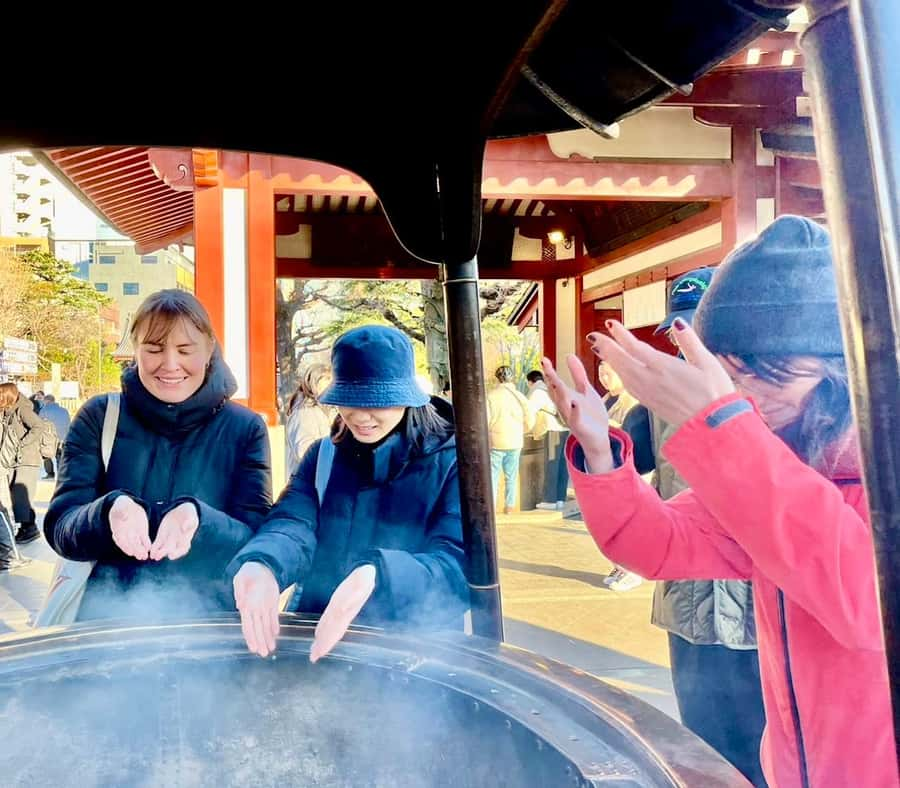
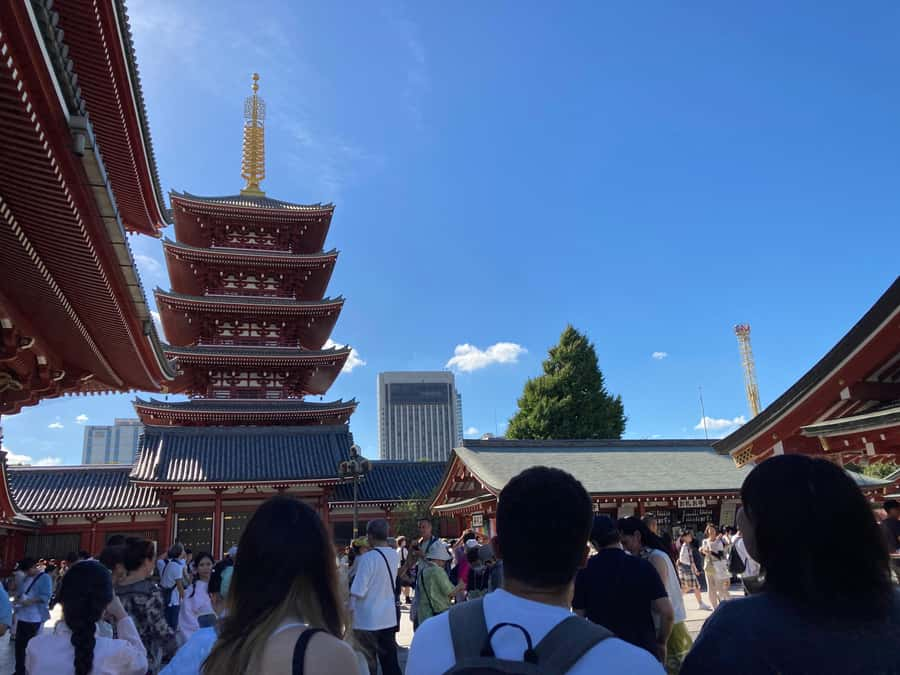
On the temple grounds, you can see the Main Hall, the pagoda, and garden areas. The setting changes quickly from the commercial approach to a more ceremonial space. Your guide explains how to behave respectfully and gives context for prayers and blessings.
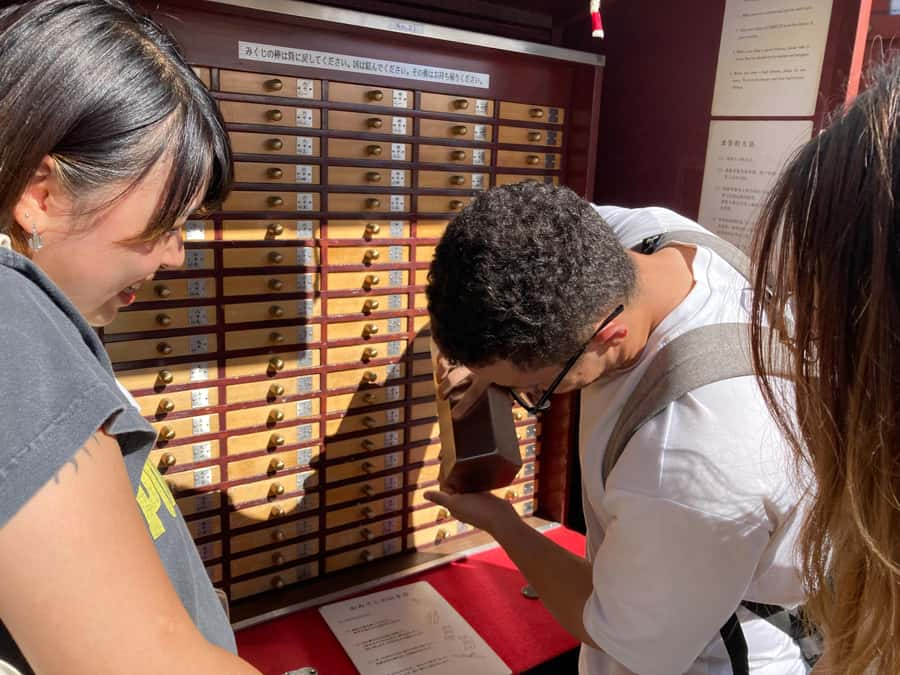
The tour includes a fortune prediction, which adds a hands-on element to the visit. This is a modest activity, but it gives you a direct way to take part rather than simply photograph the buildings. If you have never tried one in Japan, the guide can help explain what it means and how to approach it.
The temple deserves more time than the guided portion allows. A 90-minute route can show you the key areas, but it cannot replace a later visit at a quieter hour. If Senso-ji is high on your list, use this tour to learn the layout and return afterward for a slower look at the Main Hall, pagoda, and surrounding grounds.
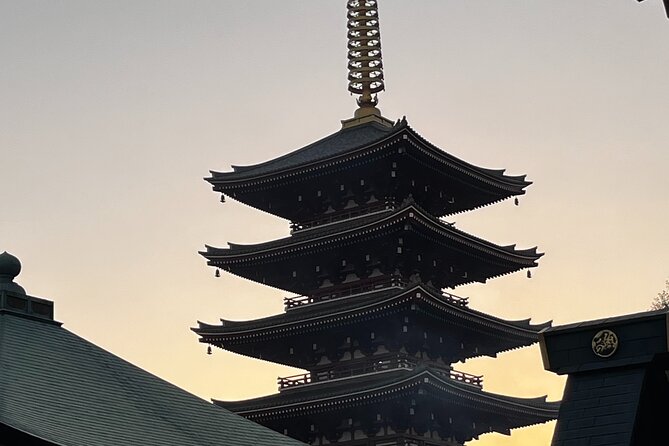
The evening view can be especially appealing, with the pagoda silhouetted against the sky. The stated route description also points back toward the Sumida River, while the practical tour finish is described near Senso-ji and the market. For planning purposes, assume you will be in the Senso-ji and Nakamise area at the end, and confirm the exact finish with your guide.
A few more Tokyo tours and experiences worth a look


The guides and the small-group advantage
The tour is conducted in English, and the small group is limited to 10 participants. That is a good size for a walking route through crowded streets. You can usually hear the guide more easily than in a large group, and the pace is less likely to feel like a parade.
Specific guides praised in the tour feedback include Miho, Haruka, and Mikio. Miho was noted for clear English and strong explanations of the Sumida River, Senso-ji, the shrine, and the market. Haruka also speaks Spanish, and another outing was easy to follow in English and Japanese. These details suggest a guide team comfortable with international visitors, though you should not assume a particular guide will lead your departure.
The language information is worth reading carefully. English is the advertised tour language, and French and Spanish ability has been available with individual guides. If you need one of those languages, request confirmation before booking rather than counting on it automatically.
The guide is most valuable here for context and orientation. You can walk along the river and visit Senso-ji without help, but it is easy to miss the meaning behind the guardian figures, temple customs, and older streets. The guide also helps you make good use of a short schedule.
Is $42 a fair price?
At $42 per person, this is not the cheapest way to see Senso-ji. You can visit the temple and Nakamise Street independently for the cost of getting there and whatever food you buy. The price is paying for structure, local explanation, a guided approach from the Sumida River, and a small group.
I think the value is strongest for a first visit to Tokyo. You get a clear introduction to Asakusa without spending several hours on a large formal tour. The 90-minute length also leaves room for your own plans afterward.
The value is weaker if you already know Asakusa well or prefer wandering alone. The route covers famous sights rather than obscure places, and the temple grounds are free to explore independently. In that case, you may prefer to spend the $42 on a meal, museum visit, or another guided experience.
A useful way to judge the fee is to ask how much you value interpretation. If you want someone to explain the river, neighborhood, gate, market, temple, and local customs in one compact outing, the price is reasonable. If you only want photographs at Kaminarimon and Senso-ji, you can do that without booking.
Who should book this Asakusa walk?
I would recommend it for first-time Tokyo visitors who want a gentle introduction to eastern Tokyo. It also suits solo visitors who would enjoy company, couples who want a set route, and anyone who likes learning the meaning behind familiar sights.
The tour can work well near the start of a Tokyo stay. Afterward, you can use the guide’s suggestions to plan more time in the district. One guide recommended Tokyo Skytree, and that became a useful follow-on stop for a longer afternoon.
Families may appreciate the short duration, food stops, and fortune prediction, though the pace is still a walking pace through public streets. Anyone who dislikes crowds should know that Nakamise and Senso-ji are popular. The tour helps you navigate them, but it does not make them quiet.
This is also a good choice for people who want a taste of traditional Tokyo without committing to a full-day cultural program. You see a major temple, a historic shopping street, a riverfront, and local food culture in one compact outing.
Booking details that matter
The tour costs $42 per person and lasts 90 minutes. It is offered with a live English-speaking guide, and the group is limited to 10 people.
Meet in front of the Kuramae 2-Chome Police Box next to Umaya Bridge. Look for the guide holding the gotcha sign. The exact coordinates are 35.7046293, 139.7941848, which is useful if you are using a map app.
You can reserve now and pay later, which helps if your Tokyo schedule is still changing. Free cancellation is available up to 24 hours before the start time for a full refund. Check the available start times for your date, since the duration alone does not tell you when the walk departs.
Should you book it?
Book this tour if you want an efficient, guided introduction to Asakusa that starts with the Sumida River rather than dropping you straight at the temple gate. The best reasons are the small group, the clear 90-minute format, the food and market stops, and the chance to learn how Senso-ji fits into the wider district.
Skip it if you already know Asakusa or prefer to explore independently. Also skip it if you expect a full food tour or a long temple visit, since the price does not list meals as included and the schedule is short.
For most first-time visitors, I would book it early in a Tokyo stay, then keep the rest of the day open for Nakamise, Senso-ji, and possibly Tokyo Skytree. That gives you both the guide’s orientation and enough time to enjoy Asakusa at your own speed.
FAQ
Where does the tour meet?
The guide waits in front of the Kuramae 2-Chome Police Box next to Umaya Bridge. Look for a signboard marked gotcha.
What are the meeting point coordinates?
The coordinates are 35.7046293, 139.7941848.
How much does the tour cost?
The listed price is $42 per person.
How long does the tour last?
The walking tour lasts 90 minutes.
What language is the tour conducted in?
The advertised tour language is English.
How large is the group?
The tour is a small-group experience limited to 10 participants.
What places does the tour visit?
The route includes a walk beside the Sumida River, Senso-ji Temple, Kaminarimon Gate, and Asakusa Nakamise Shopping Street.
Is a fortune prediction included?
Yes. A fortune prediction is included in the activity.
Are food and drinks included in the price?
Food and drinks are not listed as included. The experience features Asakusa snacks and local food, so plan to pay separately for purchases.
Can I cancel the booking for a full refund?
Yes. You can cancel up to 24 hours in advance for a full refund.
Can I reserve now and pay later?
Yes. The activity allows you to reserve your place and pay later.
More Temples & Meditation in Tokyo

More Bay & River Cruises in Tokyo
More Asakusa Tours in Tokyo

More tours in Tokyo we've reviewed












Asakusa Tours, compared.
 ★ 4.8Tokyo: Japanese Dance Cabaret Theater Asakusa-Kaguwa TicketFrom $492 hours
 ★ 4.7Tokyo: Meiji Shrine, Asakusa, Skytree Bus Tour and CruiseFrom $12210 hours
 ★ 4.9Tokyo: Roll and Authentic Sushi Making Class in AsakusaFrom $581h 40m
 ★ 4.8Tokyo: Asakusa Walking Tour with Sensoji Temple VisitFrom $222 hours
 ★ 5.0Tokyo Asakusa Rickshaw TourFrom $42
 ★ 4.5Tokyo Panoramic 1 Day: Meiji Shrine, Asakusa, Odaiba and SKYTREE®From $85