Reviewed · COOKING CLASSES
Okonomiyaki & Gyoza Cooking Class with Local Supermarket Visit
Tokyo food culture makes more sense when you cook it yourself. At YUCa’s Japanese Cooking, you’ll make okonomiyaki and gyoza in Yuca’s home, then see everyday Japanese ingredients in a neighborhood supermarket. It is a personal experience, not a restaurant demonstration.
In This Article
- Key points to know before booking
- A home kitchen in residential Nishiogu
- The opening lesson: Japanese ingredients and food culture
- Making okonomiyaki from batter to lunch
- Folding gyoza in a small class
- The optional supermarket visit from 12:30 to 1 p.m.
- Why the small group matters
- Timing, transport, and the included taxi ride
- Is $121.89 a fair price?
- Who should book this Tokyo cooking class?
- Booking and cancellation details
- Should you book YUCa’s Japanese Cooking?
- FAQ
- Where does the cooking class take place?
- What time does the activity start?
- How long does the experience last?
- What dishes will I make?
- Is lunch included?
- Is the supermarket visit required?
- How many people can join the class?
- Is transportation included?
- What is the cancellation policy?
I like the small group of no more than seven and the clear, hands-on format. I also like that lunch is included, so you eat what you prepare rather than leaving with only a recipe card. The main consideration is location: Nishiogu is outside the usual sightseeing core, and the supermarket visit is optional.
Key points to know before booking

- Cook two classic dishes: Prepare savory okonomiyaki with vegetables, pork, and egg noodles, plus pork and vegetable gyoza.
- Learn in a private home setting: Yuca hosts the class in a residential Tokyo neighborhood, giving the experience a more personal feel than a large cooking studio.
- Expect a small class: The maximum group size is seven, which allows more direct instruction and easier participation.
- Eat a full lunch: The cooking session ends with tasting and a meal made during class.
- Add the supermarket stop: From 12:30 to 1 p.m., you can join an optional tour focused on Japanese ingredients.
- Allow about two and a half hours: The formal schedule begins at 10 a.m. and finishes around 1 p.m. if you take the supermarket option.
A home kitchen in residential Nishiogu
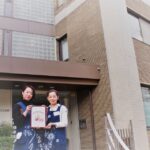
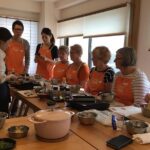
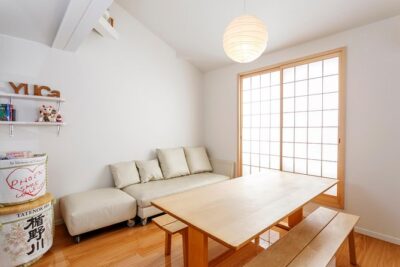
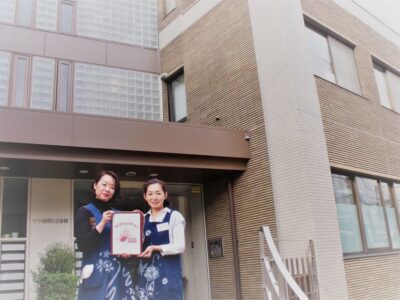
The meeting point is YUCa’s Japanese Cooking at 2-chōme-34-8 Nishiogu, Arakawa City. This is a residential part of Tokyo, rather than a famous visitor district. That matters because the setting gives you a look at ordinary neighborhood life, but it also means you should allow time to reach the address by public transportation.
You meet between 9:50 and 10 a.m. The class itself starts at 10. A home setting can feel more relaxed than a commercial cooking school, especially if you are traveling with children or prefer a personal lesson over a formal demonstration.
Yuca is the host and instructor. English-language instruction is available, and the class is designed to be approachable for people who may not have much Japanese cooking experience. Past class feedback also points to her warm manner with children, which makes this a sensible pick for a family activity.
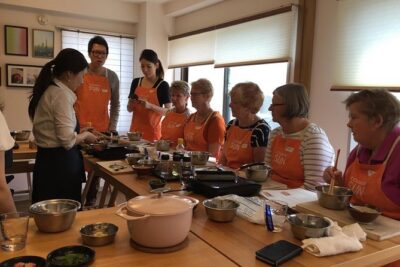
The home setting is not just decoration. Japanese cooking often depends on small choices: how ingredients are cut, how a dumpling is folded, when a batter is turned, and how sauces are used at the table. A small group lets you watch those steps closely and ask questions as you work.
Other cooking classes in Tokyo
The opening lesson: Japanese ingredients and food culture

The first formal portion runs from about 10:15 to 10:30. This is a short lecture on Japanese food culture and ingredients. It gives you useful context before the cooking begins.
You will likely encounter ingredients that look familiar but behave differently from their Western equivalents. Okonomiyaki, for example, is more than a cabbage pancake. The dish combines vegetables, pork, egg noodles, and other components into a hearty meal, with texture and seasoning playing a major role.
Gyoza offers a different lesson. These dumplings use minced pork and vegetables, with the folding and cooking technique making as much difference as the filling. If you want to repeat the meal at home, this kind of explanation is more useful than simply eating a finished plate.
The lecture is brief, so you should not expect a long history lesson or a formal culinary seminar. That is probably a good balance for a two-and-a-half-hour activity. Most of your time goes toward preparing, cooking, and eating.
Making okonomiyaki from batter to lunch
Cooking and tasting take place from 10:30 until 12:30. The first dish, okonomiyaki, is a good introduction to casual Japanese home cooking because it is filling, flexible, and prepared in front of you.
The advertised version includes vegetables, pork, and egg noodles. That combination gives the dish several textures: soft batter, crisp or tender vegetables, savory pork, and noodles that make it feel like a complete meal rather than a small snack.
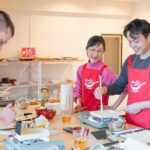
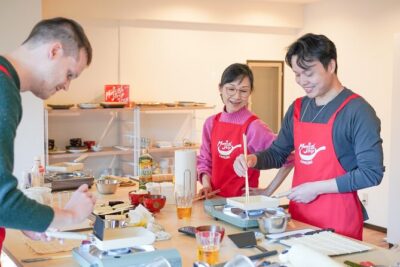
The value here is participation. You are not simply watching Yuca cook while standing at the edge of a counter. The class is designed for you to handle the ingredients and follow the steps yourself. That makes it easier to remember the process later, even if your first pancake is not perfectly shaped.
I also like that the cooking leads directly to lunch. Tokyo can be an expensive city for sit-down meals, and a planned class that includes food helps justify the price. You are paying for instruction, ingredients, a meal, and cultural context in one compact session.
The menu is specifically described as okonomiyaki and gyoza, so those are the dishes to focus on when deciding if this class suits you. Some class feedback refers to other Japanese dishes, including ramen, but the experience described here centers on okonomiyaki and gyoza.
Folding gyoza in a small class
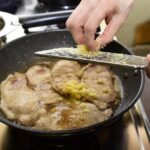
Gyoza is the more hands-on of the two dishes. You prepare a filling of minced pork and vegetables, place it in wrappers, and shape the dumplings before cooking them.
Folding can be fiddly at first. That is where the maximum group size of seven helps. In a huge class, you might struggle to get the instructor’s attention at the exact moment your wrapper tears or your filling spills out. Here, the format should make it easier to see the technique and receive help.
The activity suits both serious home cooks and complete beginners. You do not need to arrive with advanced knife skills or Japanese food experience. The instructions are presented as easy to follow, and the point is to learn by doing.
Families should consider this section carefully. Children can take part, but the class still involves food preparation and cooking. The supplied feedback specifically describes a 10-year-old participating happily, so the format can work well for older children who enjoy practical activities. The exact level of adult help required will depend on the child.
Once the dumplings are cooked, you eat them as part of the lunch. That creates a satisfying rhythm: prepare the food, see the finished result, then sit down and taste it while the lesson is still fresh.
The optional supermarket visit from 12:30 to 1 p.m.
After cooking and tasting, you can join an optional supermarket tour from 12:30 to 1 p.m. This is one of the most useful additions for anyone curious about Japanese food beyond sushi and ramen.
A supermarket shows you what people actually buy for home meals. You may find ingredients you have seen in restaurants but never recognized in their packaged form. The purpose is to expand your understanding of Japanese products and help you identify items you could use in your own kitchen.
The visit is optional, so you can finish after lunch if you are tired or have another appointment. If you are interested in cooking at home, I would keep the extra 30 minutes available. It is a modest addition to the class, but it may help you make sense of Japanese grocery shelves later in your trip.
Do not treat this as a major market tour. The schedule only allows about half an hour, and the description does not promise tastings, shopping time, or a guided visit to a famous food market. Think of it as a practical neighborhood stop that extends the cooking lesson.
Other cooking classes in Tokyo

Why the small group matters
The class accepts no more than seven people. That is a useful limit for a practical lesson, especially when the food involves shaping dumplings and coordinating several ingredients.
Small groups also make it easier to ask personal questions. You can clarify substitutions, cooking steps, or the names of ingredients without waiting through a long queue of other participants.
The tradeoff is that availability may be limited. This experience is booked, on average, 47 days ahead, which suggests that you should reserve early if your Tokyo dates are fixed. It is not the best activity to leave until the final day of your trip.
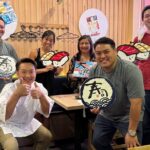
The home format can also feel more intimate than some people expect. If you want a polished cooking school with a large professional kitchen, this may not be your ideal choice. If you prefer meeting a local host in a residential setting, it is a strong match.
Timing, transport, and the included taxi ride
The activity lasts about two hours and 30 minutes. The schedule is:
- 9:50 to 10 a.m.: Arrival and meeting
- 10:15 to 10:30 a.m.: Food culture and ingredient lesson
- 10:30 a.m. to 12:30 p.m.: Cooking and tasting
- 12:30 to 1 p.m.: Optional supermarket tour
The address is near public transportation, but Nishiogu is not the most central Tokyo base for sightseeing. Plan your route before the morning of the class, and aim to arrive during the 9:50 to 10 a.m. meeting window rather than cutting it close.
A one-way taxi ride is included as an added benefit. The supplied details do not specify the exact direction, so confirm how the taxi arrangement works when booking. The activity itself ends back at the meeting point, which is important if you are planning your next stop.
If you have a flight, train connection, or timed attraction soon after lunch, leave a generous buffer. The scheduled end is around 1 p.m. with the supermarket tour, but cooking activities can feel less rigid than a museum entry time.
Is $121.89 a fair price?
At $121.89 per person, this is not a cheap lunch. You are paying more than the cost of buying okonomiyaki and gyoza at a casual restaurant.
The comparison is not quite fair, though. The price includes instruction, ingredients, a meal, the home-hosted setting, and the chance to visit a supermarket with guidance. You also receive a one-way taxi ride, which may reduce some transport cost, depending on how it is arranged.
I see the best value for people who want a skill they can take home. After a restaurant meal, you remember the taste. After this class, you can try making the dishes again, share the experience with family, and use your new ingredient knowledge in future cooking.
The value is weaker if you only want a quick meal or if you have already taken several Japanese cooking classes. The experience is also less useful if your schedule is so tight that you cannot enjoy the relaxed pace of a home lesson.
Who should book this Tokyo cooking class?
I would recommend it to:
- Families with older children who want an activity everyone can do together.
- First-time visitors to Japan who want food context along with a meal.
- Home cooks interested in learning gyoza folding and okonomiyaki preparation.
- Small groups and couples who prefer a personal host over a large class.
- Food-focused visitors who want to understand Japanese supermarket ingredients.
I would think twice if you dislike hands-on cooking, need a central Tokyo location, or want a class built around a different menu. The supermarket stop is optional, but the cooking portion is the heart of the activity.
Booking and cancellation details
You receive confirmation when you book, and the experience accepts a mobile ticket. Free cancellation is available if you cancel at least 24 hours before the local start time. Cancellations or changes made within 24 hours are not refunded or accepted.
The class requires a minimum number of participants. If that minimum is not met and the activity is canceled, you will be offered another date or experience, or a full refund.
Because the class is often booked well ahead, I would reserve early, especially for weekends or fixed travel dates. Keep your arrival time in mind: the meeting window is 9:50 to 10 a.m., with the formal start at 10.
Should you book YUCa’s Japanese Cooking?
Book this class if you want more than a meal. You will learn two popular Japanese dishes, eat lunch in a home setting, and gain a better sense of the ingredients behind everyday cooking.
The strongest reasons to choose it are Yuca’s personal instruction, the seven-person limit, the family-friendly format, and the optional supermarket visit. The main drawbacks are the price and the residential location outside central Tokyo.
For a hands-on food experience with a practical takeaway, I think the cost is reasonable. If you want the cheapest way to eat okonomiyaki, visit a restaurant. If you want to know how to make it, and how gyoza goes from filling to folded dumpling, book the class.
FAQ
Where does the cooking class take place?
The class takes place at YUCa’s Japanese Cooking, 2-chōme-34-8 Nishiogu, Arakawa City, Tokyo 116-0011, Japan.
What time does the activity start?
The start time is 10 a.m. The meeting window is from 9:50 to 10 a.m.
How long does the experience last?
The activity lasts about two hours and 30 minutes. With the optional supermarket tour, the schedule runs until around 1 p.m.
What dishes will I make?
You will make okonomiyaki and gyoza. The okonomiyaki includes vegetables, pork, and egg noodles, while the gyoza includes minced pork and vegetables.
Is lunch included?
Yes. Cooking and tasting take place from 10:30 a.m. to 12:30 p.m., and the meal is included in the experience.
Is the supermarket visit required?
No. The supermarket tour is optional and is scheduled from 12:30 to 1 p.m.
How many people can join the class?
The class has a maximum of seven participants.
Is transportation included?
A one-way taxi ride is included. The activity itself ends back at the meeting point, and the supplied details do not specify the exact taxi direction.
What is the cancellation policy?
You can cancel for a full refund up to 24 hours before the local start time. Cancellations or changes made less than 24 hours before the start are not accepted, and the amount paid will not be refunded.
More Workshops & Classes in Tokyo
More Cooking Classes in Tokyo
More Cooking Classes in Tokyo
More tours in Tokyo we've reviewed












Cooking Classes, compared.
 ★ 5.0Ramen & Gyoza Cooking Class in Tokyo with Local Supermarket VisitFrom $122
 ★ 5.0Ramen and Sushi Cooking Class with Sake Pairing Set in TokyoFrom $79
 ★ 4.9Tokyo: Wagyu and 7 Japanese Dishes Cooking ClassFrom $673 hours
 ★ 5.0Tokyo Washoku 4-hour Cooking Class: From Market to TableFrom $79
 ★ 5.0Professional Ramen & Gyoza with Ramen Chef in a restaurant!From $159
 ★ 5.0Small-Group Wagyu Beef and 7 Japanese Dishes Tokyo Cooking ClassFrom $72