Reviewed · E-BIKES
Off the beaten path E-bike tour tokyo with Local guide, 3hrs
Tokyo’s best moments are often found between the famous sights. This three-hour e-bike tour from Kanda links pop-culture Akihabara, historic Asakusa, sumo country, local Ningyocho, and Nihonbashi without making you spend the whole afternoon underground on trains.
In This Article
- Key points to know before you ride
- Why this short bike ride works so well in Tokyo
- Kanda departure: a practical start for a busy city
- Akihabara: Tokyo’s pop-culture side
- Asakusa: Tokyo’s most recognizable traditional stop
- Ryogoku: the sumo district
- Ningyocho: a local-feeling stretch of the route
- Nihonbashi: an old commercial heart
- Why the small group matters on city streets
- Electric assistance without turning the tour into exercise
- What the $64 price really buys you
- Who should book this ride
- Should you book the Kanda e-bike tour?
- FAQ
- How long is the Tokyo e-bike tour?
- Where does the tour start?
- Where does the tour end?
- What neighborhoods does the route visit?
- Is the tour offered in English?
- How many people are in each group?
- Is an electric bicycle included?
- Is a helmet provided?
- Are food and drinks included?
- Can I cancel the booking for a refund?
I like the simple electric-assist bicycles and the small group of six or fewer. I also like the way the tour stops for photos and guide commentary, rather than asking you to pedal past everything at speed. The main consideration is that you need to be comfortable riding in Tokyo traffic and able to wear a helmet.
Key points to know before you ride
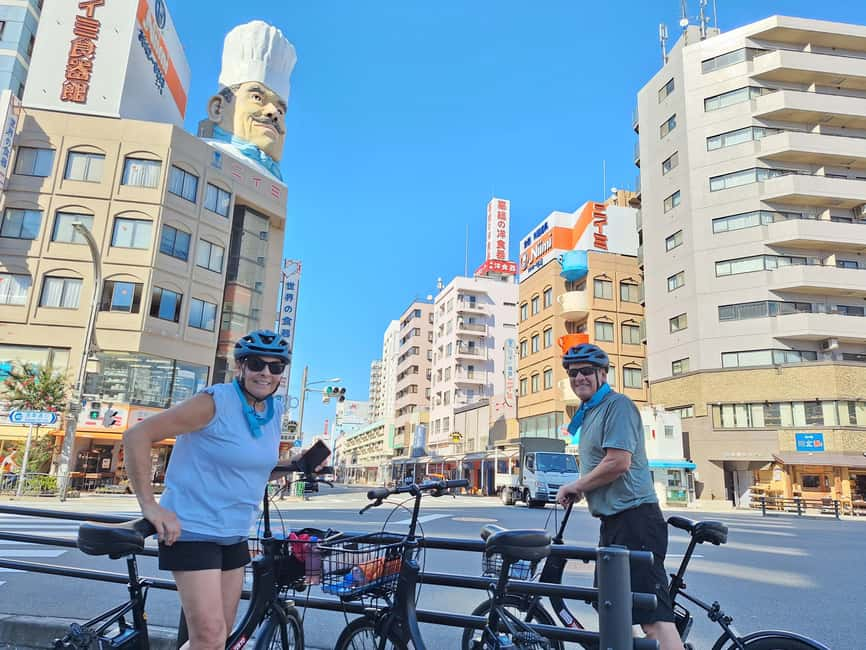
- Six people or fewer: The small group keeps instructions clear and makes city riding feel more manageable.
- Kanda is a practical base: You start and finish at the bicycle shop, with convenient transport connections nearby.
- Five distinct Tokyo areas: The route moves from Akihabara’s anime culture to Asakusa, Ryogoku, Ningyocho, and Nihonbashi.
- Easy electric assistance: The bikes are designed to reduce effort, useful when you want to cover ground without arriving worn out.
- English-speaking guides: Guides including Ted and Ninja lead the ride, with attention to traffic and the group.
- Three useful afternoon hours: The 1:30 p.m. to 4:30 p.m. schedule fits neatly into a first day in Tokyo.
Why this short bike ride works so well in Tokyo
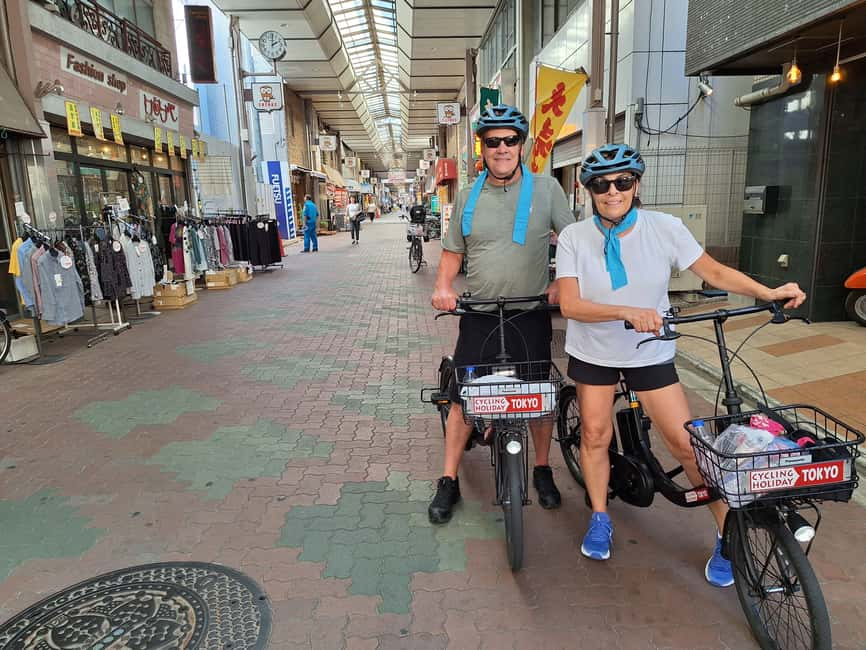
A three-hour city tour can easily become a parade of photo stops. This one has a better idea: use the bicycle to connect parts of central Tokyo that feel quite different from one another.
You begin in Kanda, a convenient central neighborhood, then ride through local streets toward Akihabara. From there, the route reaches Asakusa, Ryogoku, Ningyocho, and Nihonbashi. The appeal is not just seeing five names on a map. It is noticing how Tokyo changes block by block.
On foot, these districts can feel scattered. By train, you may see the stations but miss the quieter streets between them. A bicycle gives you that middle ground. You cover enough distance to gain a sense of the city, but you still have time to stop, listen, and take photos.
I also like the afternoon timing. Starting at 1:30 p.m. leaves your morning free for a market, museum, or slow breakfast. You finish at 4:30 p.m., which gives you time to continue sightseeing or find dinner. If you have only one free afternoon in Tokyo, the route gives you a useful first look without demanding a full day.
Other cycling tours in Tokyo
Kanda departure: a practical start for a busy city
The bicycles are lined up in front of the shop, and staff wait there to meet you. That is reassuring in a city where a vague meeting point can turn the first 20 minutes into a hunt.
Kanda is also a sensible place to begin and end. The tour does not leave you stranded in a distant suburb. You return to the same meeting point after the ride, making it easier to continue your evening plans.
Expect a short introduction to the bicycle and helmet before setting off. The electric-assist bikes are described as simple and easy to ride. That matters because the goal is not a sporty cycling challenge. You are using the bike as a practical sightseeing tool.
The electric motor helps with effort, but you still need to ride and pay attention. Wear clothes that allow free movement, and arrive with a hairstyle that lets the helmet sit properly. This is not the time for a complicated arrangement that makes headgear awkward.
Akihabara: Tokyo’s pop-culture side
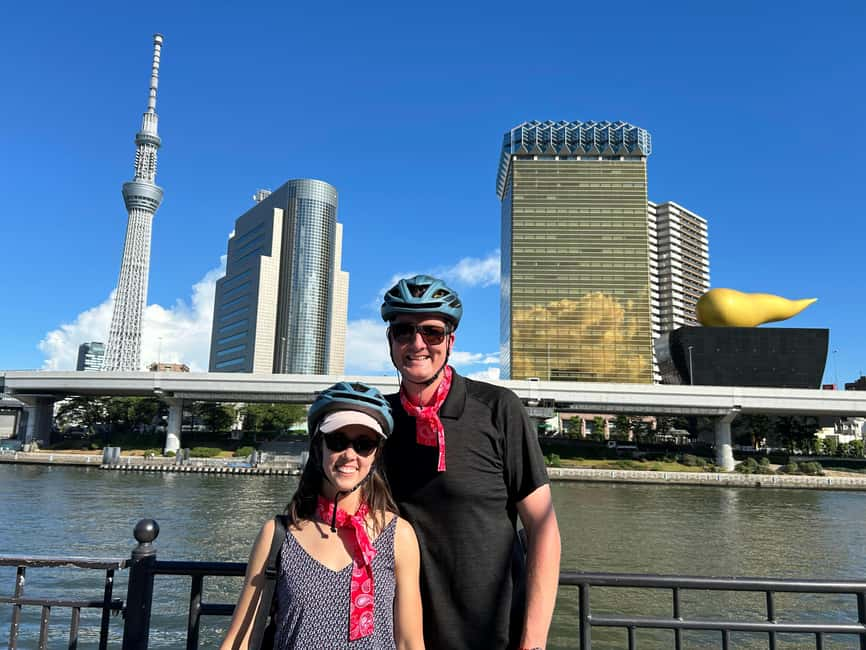
Akihabara provides the tour’s loudest change of mood. It is known here as an electric otaku town, a district tied to electronics, anime, manga, games, and other parts of modern Japanese pop culture.
The bicycle is particularly useful in this area because you can experience the streets at a slower pace than from a train window. You may find the main roads crowded and visually intense, while side streets offer a different rhythm. The guide’s comments help put the district into context instead of leaving you to decode every sign yourself.
Do not expect a long shopping stop built into the three-hour schedule. This is a sightseeing ride, not a dedicated anime and electronics shopping tour. If Akihabara is your main reason for visiting Tokyo, you may want to return later with more time and a shopping list.
As part of a wider route, though, Akihabara works well. It gives you an early look at contemporary Tokyo before the ride turns toward older neighborhoods and traditional downtown.
Asakusa: Tokyo’s most recognizable traditional stop
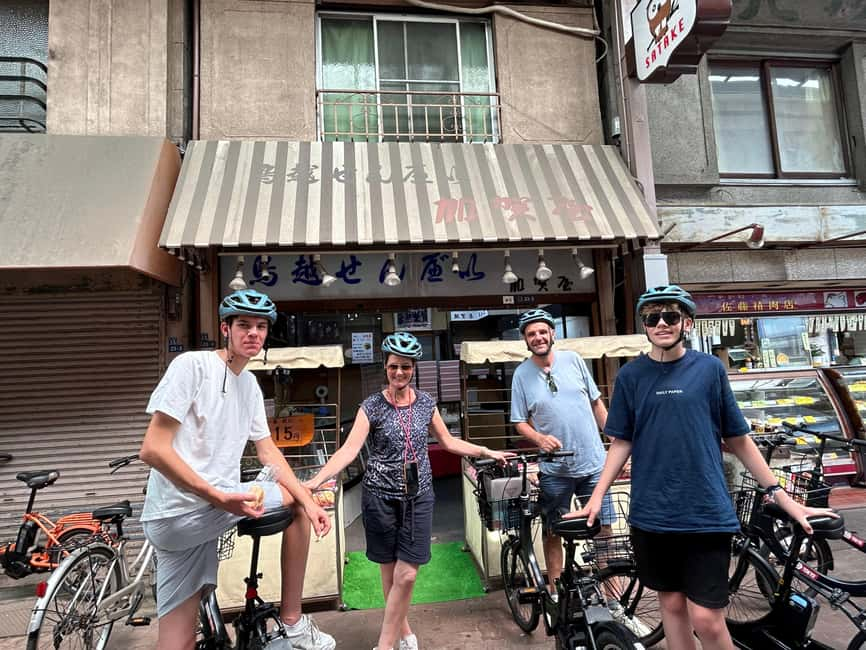
Asakusa is one of the city’s essential sights, and it brings a strong contrast to Akihabara. The area is closely associated with old Tokyo, Buddhist temples, traditional streets, and the city’s long-running sightseeing culture.
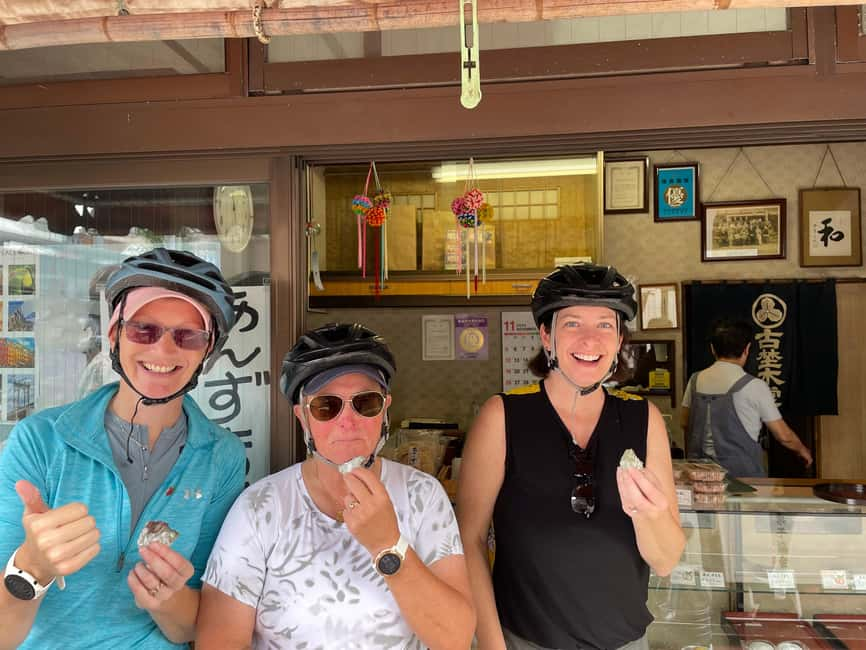
The tour allows you to stop at points for photos and listen to the guide. That pause is important. Asakusa can be visually busy, and a quick ride through it would miss the reason it matters. Your guide can help explain what you are seeing and point out details you might otherwise pass without noticing.
At the same time, Asakusa is a major sightseeing district. It may feel less quiet and local than Ningyocho or some of the connecting streets. That is not a flaw, but it helps set realistic expectations. You are seeing a famous part of Tokyo, not discovering an empty neighborhood.
The bike keeps the visit moving. You can take in the atmosphere without spending the entire afternoon walking between sights. If you want extended temple time, shopping, or a slow meal, plan to come back separately.
Ryogoku: the sumo district
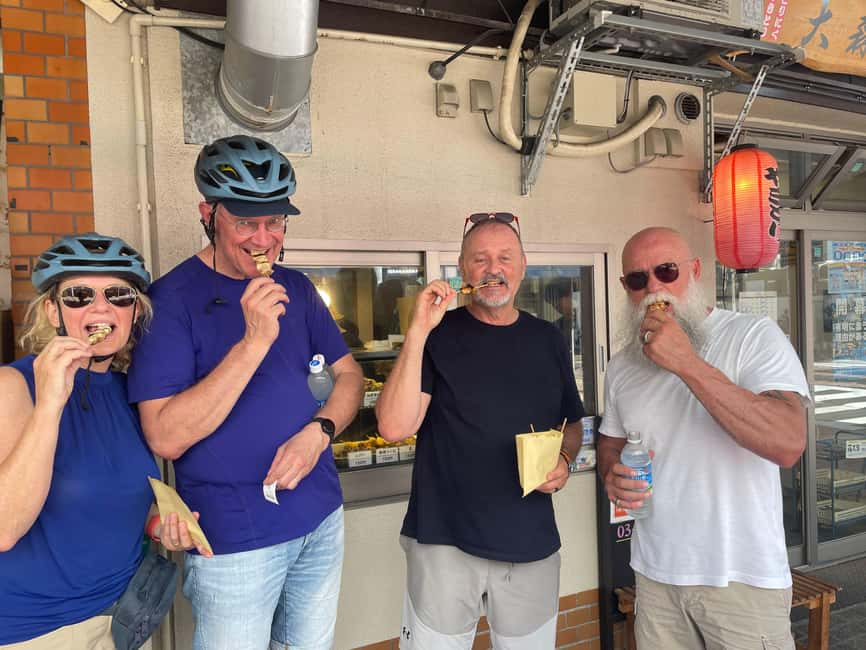
Ryogoku gives the ride another clear identity. It is Tokyo’s sumo area, and the neighborhood offers a useful look at one of Japan’s most distinctive sporting traditions.
The tour does not promise a sumo match or a long indoor visit. Instead, Ryogoku forms part of the street route, giving you a chance to see the district and hear the guide’s explanation. That makes it a good fit for someone who wants cultural context but does not want to build an entire day around sumo.
This stop also shows why the route is more interesting than a simple list of famous landmarks. Akihabara, Asakusa, and Ryogoku represent very different sides of Tokyo. Moving among them by bicycle helps you understand the city as a collection of neighborhoods rather than one giant mass of buildings.
Your time here will be limited by the three-hour schedule. Think of Ryogoku as a concise introduction. If you are a serious sumo fan, you will need a separate plan for deeper exploration.
Other guided tours in Tokyo

Ningyocho: a local-feeling stretch of the route
Ningyocho is described as local and energetic, and it may be one of the most rewarding parts of the ride for anyone who wants a break from Tokyo’s headline attractions.
The neighborhood is associated with old downtown Tokyo, everyday shopping streets, and a more residential sense of place. A bicycle is a good match here because the route can show you smaller streets and ordinary city scenes that do not always make it into a standard sightseeing plan.
This is where the guide’s role becomes especially useful. A quick glance at a neighborhood rarely tells you why it matters. Stopping for comments gives you a clearer picture of local life and helps turn a pleasant ride into a more informed one.
Ningyocho may not provide the instantly recognizable image of Asakusa. That is exactly its value. You get a look at Tokyo beyond the city’s biggest attractions, without giving up the comfort of a planned route and an English-speaking guide.
Nihonbashi: an old commercial heart
The final major area is Nihonbashi, built in the Edo period about 400 years ago. It is one of the route’s strongest historical anchors and helps explain how Tokyo grew as a center of trade and urban life.
The name refers to an important bridge and surrounding district, but the larger point is the connection between old and new Tokyo. In one afternoon, you move from electronic pop culture to a neighborhood shaped during the Edo period. That range gives the tour its character.
Nihonbashi is also a fitting place to end the sightseeing portion because it sits close to central Tokyo’s modern business and shopping areas. You return to Kanda afterward, but the route leaves you with a better sense of how the city’s past remains part of its present.
Again, this is an introduction rather than an exhaustive historical tour. You will hear guide commentary at selected stops, not receive a full academic lecture. For most first-time visitors, that balance is useful. You get enough context to make later exploring more rewarding.
Why the small group matters on city streets
The maximum group size is six people. That is a major advantage for a bicycle tour, especially in a dense city.
A small group makes it easier to hear the guide and receive clear instructions. It also reduces the chance of being separated from the group at a crossing or stop. The guide can keep a closer eye on the riders, which is particularly helpful if you are not used to cycling in Tokyo.
One guide named Ninja is noted for paying close attention to traffic and the people in the group. That practical care matters more than a polished speech. You want someone watching the road, keeping the group together, and explaining what you see.
Ted is also named as a guide associated with the experience. Guide assignments can change, so you should not assume a particular person will lead your departure. Still, the available guide details suggest an English-speaking operation with a personal feel rather than a large coach-style setup.
The small group does not remove every challenge. You still need to follow traffic instructions and stay alert. If you rarely ride a bicycle, a quiet practice ride before your Tokyo visit could make the experience more comfortable.
Electric assistance without turning the tour into exercise
The electric-assist bicycles are one of the clearest reasons to choose this tour over a walking route. You still pedal, but the motor reduces the physical load.
That makes it easier to cover several districts in three hours. You can focus on streets, buildings, and the guide’s explanations instead of worrying about tiring out before the final stop.
The bikes are described as simple to ride, which is good news for casual cyclists. Still, electric assistance does not mean automatic riding. You need basic bicycle control, awareness of traffic, and clothing suitable for movement.
Helmets are required, and the tour provides them. Simple gloves are available in winter, while cooling products are provided in summer. Simple rain gear is also included, but you should still check the forecast and dress sensibly. The weather products are practical support, not a promise that poor weather will feel pleasant.
What the $64 price really buys you
At $64 per person, the tour is reasonably priced for a three-hour guided activity that includes the e-assist bicycle, helmet, English-speaking guide, insurance, and seasonal comfort items.
The value comes from combining transport and sightseeing. You are not only renting a bicycle. You are paying for a planned route through several districts, traffic supervision, local explanations, and the convenience of returning to the starting point.
The price is less attractive if you only want to cycle independently. In that case, a self-guided rental may offer more freedom, although it would not include the same route planning or commentary.
Food and drinks are not included. You pay for anything you buy at a shop, so bring a little spending money if you want a snack or drink along the way. Since the schedule is only three hours, there is no need to treat this as a food tour.
The booking terms add useful flexibility. You can reserve now and pay later, and cancellation up to 24 hours before the tour receives a full refund. Always check the final booking conditions for your date, but these terms make the activity easier to fit into a changing Tokyo schedule.
Who should book this ride
I would recommend it most strongly to first-time Tokyo visitors with a free afternoon. The route gives you a broad introduction to several central districts without forcing you to plan every train connection.
It also suits you if you like seeing ordinary streets between major sights. The strongest part may not be one landmark. It is the transition from one neighborhood to another, with a guide helping you understand what changes along the way.
The tour is a good match for people who can ride a bicycle and prefer a moderate outdoor activity to a long indoor sightseeing session. The electric assistance should make the pace more approachable, but you still need to be comfortable on two wheels.
I would be more cautious if you want extended time at one attraction, a serious shopping session in Akihabara, a detailed sumo experience, or a long temple visit in Asakusa. The route offers introductions, not deep visits.
You should also think about helmet comfort, traffic, and weather. A helmet is required, and suitable riding clothes are part of the preparation. If that sounds like a nuisance rather than a small tradeoff, choose a walking or bus tour instead.
Should you book the Kanda e-bike tour?
Book it if you want to connect modern and traditional Tokyo in one manageable afternoon. The combination of easy electric bicycles, a six-person limit, English commentary, and a route through Akihabara, Asakusa, Ryogoku, Ningyocho, and Nihonbashi offers strong value for a first visit.
The main reason to skip it is not the price. It is the format. You will not have unlimited time at each stop, and the bicycle requires attention to traffic and helmet fit.
For most active first-time visitors, I think the tradeoff is worthwhile. You get a practical overview of central Tokyo, some quieter street riding, and a guide who can help the city make sense. Just treat the tour as a well-planned introduction, then return on foot to the places that catch your interest.
FAQ
How long is the Tokyo e-bike tour?
The tour lasts three hours. The afternoon departure runs from 1:30 p.m. to 4:30 p.m.
Where does the tour start?
The tour starts in Kanda. The bicycles are lined up in front of the store, where staff are waiting.
Where does the tour end?
The tour ends back at the Kanda meeting point.
What neighborhoods does the route visit?
The route includes Akihabara, Asakusa, Ryogoku, Ningyocho, and Nihonbashi.
Is the tour offered in English?
Yes. An English-speaking guide leads the tour.
How many people are in each group?
The tour operates in small groups of six people or fewer.
Is an electric bicycle included?
Yes. Rental of an electric-assist bicycle is included in the tour price.
Is a helmet provided?
Yes. A rental helmet is included, and you must wear it during the ride.
Are food and drinks included?
No. Food and drinks are self-pay at shops along the route.
Can I cancel the booking for a refund?
You can cancel up to 24 hours in advance for a full refund. The booking option also allows you to reserve and pay later.
More E-Bikes in Tokyo


More Guided Tours in Tokyo
More Cycling Tours in Tokyo
More tours in Tokyo we've reviewed












E-Bikes, compared.
 ★ 5.0Tokyo Top Highlights 3h Guided E-bike TourFrom $63
 ★ 5.03h Tokyo E-Bike Tour: Hidden Gems, and Local Life with guideFrom $63
 ★ 4.8Tokyo: 3-Hour Bike or E-Bike City Highlights TourFrom $453 hours
 ★ 4.8Tokyo: 3-hour Guided E-Bike Tour of the City’s Hidden GemsFrom $65
 ★ 5.0Tokyo: 3-Hour Bike/E-Bike Tour of the City’s HighlightsFrom $63
 ★ 5.03-Hour Tokyo Private E-Bike Tour Starting from Your HotelFrom $145