Reviewed · UENO & YANAKA WALKS
Mini Origami Lamp and Mizuhiki knot Belt Workshop in Ueno
The most memorable part of this Ueno workshop is watching flat sheets of handmade washi paper become a soft, folding lamp. Open it, and the small light inside gives the paper a warm glow. Close it, and the lamp looks like a slim book you could tuck on a shelf.
In This Article
- Key points at a glance
- Turning washi sheets into a glowing lamp
- Why the washi lesson adds value
- Learning mizuhiki knots for a belt ornament
- A quiet finish with sweets and Japanese paper tea
- What the 150-minute schedule feels like
- The private format and teaching style
- Is $106 a fair price?
- Who should book this Ueno workshop?
- Practical details before you reserve
- Should you book it?
- FAQ
- How long does the Mini Origami Lamp and Mizuhiki Knot Belt Workshop last?
- Where does the workshop take place?
- How much does the workshop cost?
- What will I make during the workshop?
- What is included in the price?
- Is the workshop offered in English?
- Can children join the activity?
- Can I cancel for a full refund?
I like the useful mix of craft and tradition, especially learning why different mizuhiki knots suit different gifts. I also like the calm finish: Japanese sweets and Japanese paper tea arrive after the hands-on work. The main caution is that this is careful, detailed crafting, so it is not suitable for children under 10 or anyone hoping for a quick, casual souvenir.
Key points at a glance
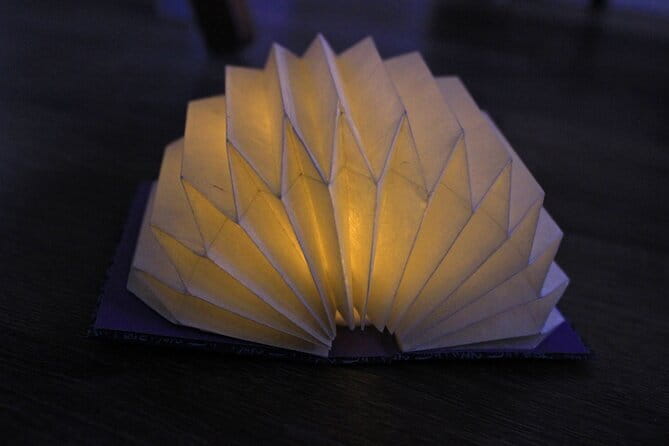
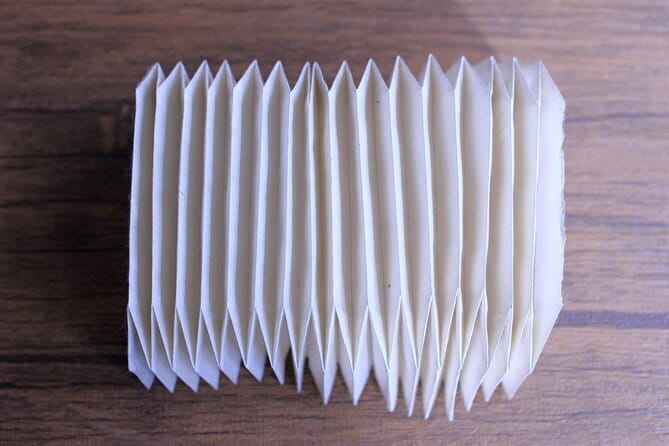
- A lamp that folds like a book: Several sheets of handmade washi are folded and glued into a bellows shape, with a small lamp placed inside.
- Mizuhiki has meaning: You make a decorative paper-cord knot for a belt ornament and learn how knot styles relate to gifts and occasions.
- A private 150-minute session: The private-group format gives you time to work at your own pace with a Japanese and English-speaking instructor.
- Washi is both delicate and durable: The workshop explains how this traditional paper works in art and interior decoration.
- A distinctive tea break: Japanese sweets and Japanese paper tea are included at the end.
- Good for older children and adults: Detailed folding, gluing, and knot work make this a better fit for ages 10 and up.
Turning washi sheets into a glowing lamp
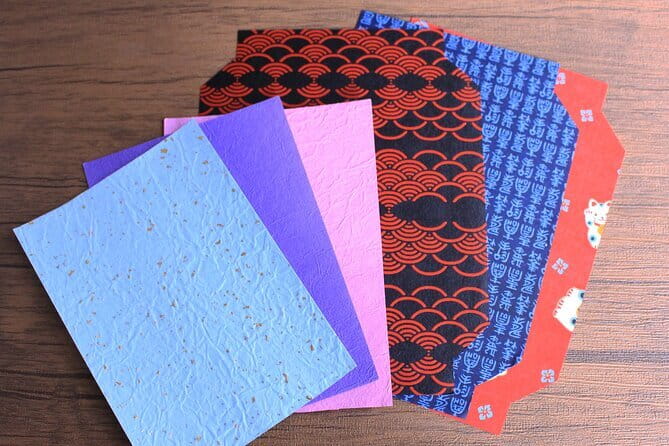
You begin with an introduction to washi, supported by a guide document covering the paper’s basics. That background matters because washi is more than attractive craft paper. It is light, durable, and suited to objects that need to be handled, folded, or displayed.
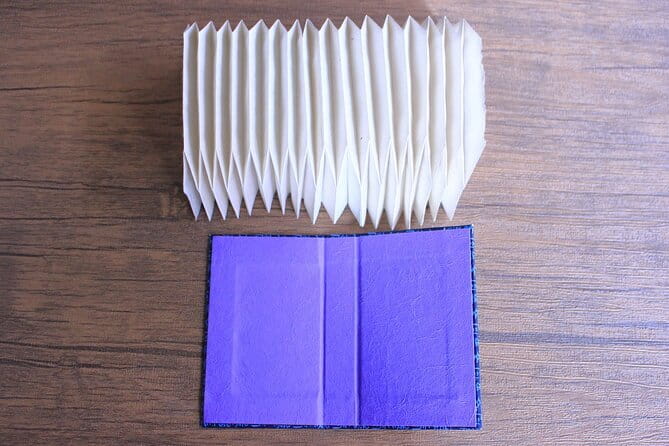
The main project uses several sheets of handmade washi. You fold and glue them in a bellows-like pattern, building the expandable body of the lamp one section at a time. The shape is simple in outline, but the work calls for care. A crooked fold or too much glue can affect how neatly the lamp opens and closes.
The instructor demonstrates the steps, then helps you fix the parts together. You do not simply decorate a ready-made object. You create the structure yourself, which gives the finished piece more character and also makes the process more demanding than a basic souvenir painting session.
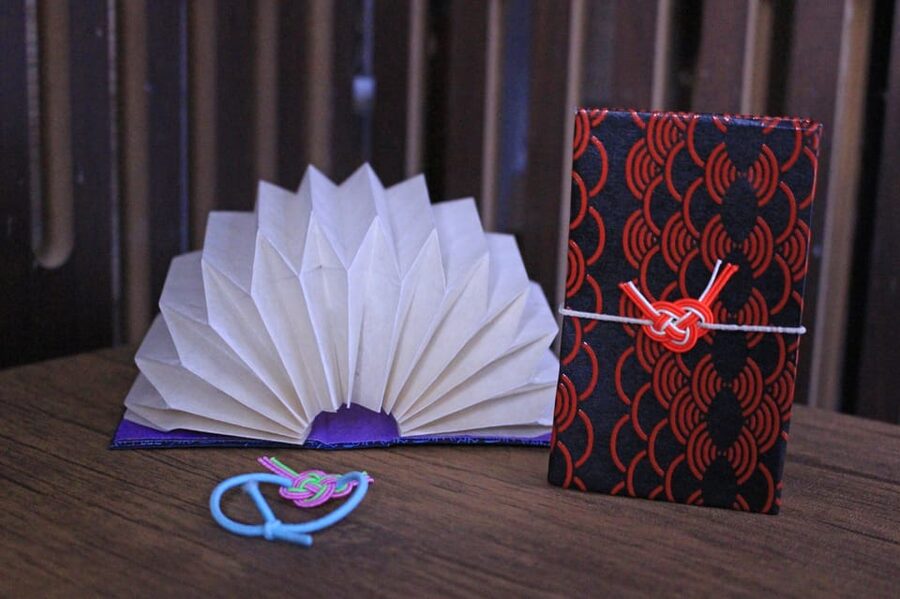
Once the bellows form is complete, a small lamp goes inside. Open the folds and the light spreads through the paper with a gentle, warm effect. Close the folds and the object resembles a shut book. That two-part design is the clever feature here: you get a functional light and a compact paper artwork in one.
I would not book this expecting a large floor lamp or a fully furnished home accessory. The information describes a small lamp, and its appeal is in the handmade form, soft glow, and easy display. It should suit a shelf, side table, or desk more than a large room.
A few more Tokyo tours and experiences worth a look


Why the washi lesson adds value
The workshop takes time to explain the paper rather than treating it as a blank material. You receive a guide document on washi basics, so you have something to refer to during and after the session.
Washi is valued for being both light and strong. Those qualities explain why it works so well in a folded lamp. The paper can hold a structured shape without making the object heavy, and the folds give it movement when you open and close it.
This is also a useful choice if you want to understand a Japanese material through making rather than just looking at finished goods. The lesson connects washi to art and interior decoration, giving you a clearer sense of why the paper remains important in Japanese craft.
The workshop does not promise a broad survey of every paper-making region or technique. Its focus is narrower and more practical: learn the basics, use the material, and leave with something you built. For a 150-minute activity, that focus is sensible.
Learning mizuhiki knots for a belt ornament
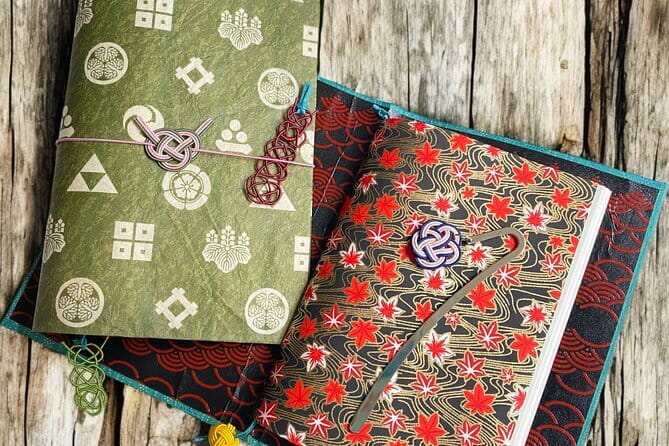
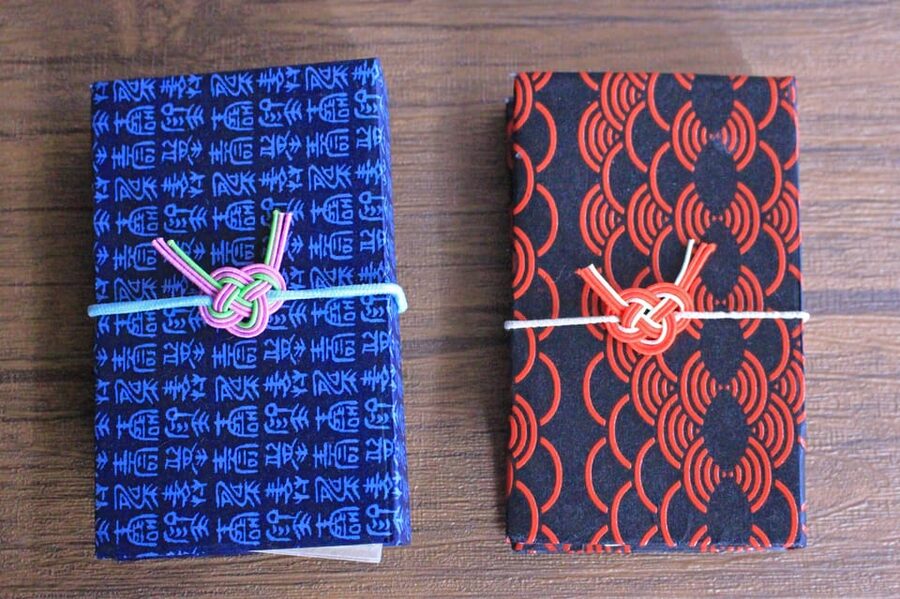
The second project introduces mizuhiki, a decorative cord made with a twisted washi-paper core and an outer layer of nylon or film. You use paper strings to create a knot ornament for a belt.
At first glance, mizuhiki can look like a small finishing detail. The meaning behind the knots makes it more interesting. Different knots have different uses, and knowing that symbolism helps you choose a suitable design when making a gift.
That cultural context is one of the strongest reasons to do this workshop instead of simply buying a paper ornament. You learn that the knot is not only about shape or color. It can carry a message about celebration, connection, or the kind of occasion involved. The information provided does not name the exact knot you will make, so you should think of this as an introduction to mizuhiki meanings rather than a full course in every knot style.
The belt ornament also gives you a second finished item. Your lamp is the larger project, while the mizuhiki piece is smaller and more portable. If you enjoy collecting handmade accessories or giving meaningful gifts, this part may prove especially useful.
The knot work requires patience. Fine cords are less forgiving than broad paper folds, and the instructor needs to show you how to hold, cross, and tighten the cord. That detail is why the age guidance matters. Children under 10 are not accepted, and younger participants may find the repeated adjustments frustrating.
A quiet finish with sweets and Japanese paper tea
After the craft work, you receive a Japanese sweet and a cup of Japanese paper tea. The tea is presented as a rare offering, not a standard drink found at every workshop, which gives the ending a distinctive local touch.
The tea break is more than a snack stop. It gives you time to look at the lamp, check the mizuhiki ornament, and let the session settle before you leave. One participant particularly enjoyed the snacks and tea, and also noticed a mascot cat at the workshop. The cat is not described as a guaranteed part of every visit, so treat that as a possible bonus rather than a promised feature.
Because the activity lasts 150 minutes, the food and drink help break up the concentration required by folding and knotting. You will spend much of the session using your hands, not simply listening to an instructor. A short, pleasant pause at the end makes the pace feel more complete.
The sweets and tea are included in the $106 price. They are not the main reason to book, but they add to the sense that this is a cultural craft session rather than a production line for souvenirs.
What the 150-minute schedule feels like
The exact minute-by-minute schedule is not provided, but the activity has a clear sequence.
You start with the washi introduction and guide document. The instructor then presents the materials and shows how to fold, glue, and assemble the lamp. One person described the preparation as well organized, with the needed materials set out in advance. That matters when a project has several small parts. You can focus on learning instead of waiting for supplies.
The lamp takes up the central portion of the session. You form the folds, join the sheets, and create the bellows-like body. The instructor helps you correct the construction as you go.
Next comes the mizuhiki knot ornament. The work shifts from broad paper folds to narrow cords and more precise hand movements. You also learn the meanings and uses of mizuhiki knots, which gives the ornament a cultural purpose.
The session ends with the lamp completed, the belt ornament ready to take home, and Japanese sweets with paper tea. The private-group setting should make it easier to ask for help than in a large class. The instructor speaks Japanese and English, so you can receive guidance in either language.
A few more Tokyo tours and experiences worth a look





The private format and teaching style
This is a private group experience, not a public class with a fixed crowd. That is useful for couples, friends, or a small family group of eligible ages who want to work together without strangers at the table.
A private class can also be more forgiving when the project takes longer than expected. Folding and gluing rarely go at the same pace for everyone. You may need an extra demonstration or help tightening a knot, and a private setting should give the instructor room to respond.
The available comments consistently point to a friendly, helpful teaching style. One participant simply highlighted the teacher’s kindness and assistance. Another described the instructor demonstrating how to fold, glue, and fix the parts together. Those details suggest a hands-on lesson rather than a craft kit placed in front of you with only written instructions.
No instructor name is provided, so I cannot tell you to request a particular teacher. The language support is clear: Japanese and English are available.
Is $106 a fair price?
At $106 per person, this is not a cheap craft activity. I would judge the price against what is included and what you want from the afternoon.
You receive 150 minutes of private instruction, all materials for two handmade pieces, a washi guide document, Japanese sweets, and Japanese paper tea. You also leave with a working origami lamp and a mizuhiki belt ornament rather than a single small decoration.
The value is strongest if you care about the process. You are paying for instruction, materials, cultural explanation, and the chance to make an object that would be difficult to reproduce without guidance. The private format adds value for people who want personal help.
The value is weaker if your main goal is the lowest-cost souvenir. You could likely buy a small paper decoration for less, but that would not include the time, teaching, or understanding of mizuhiki meanings. This workshop makes most sense as a planned cultural activity, not an impulse purchase between sightseeing stops.
I also would not count the sweets and tea as the main financial justification. They are pleasant extras. The real value is learning to handle washi and leaving with a lamp that shows the folds and decisions you made yourself.
Who should book this Ueno workshop?
I would recommend it to adults and older children who enjoy making things with their hands. It also suits anyone interested in Japanese paper, gift customs, home decoration, or small functional art.
It is a good choice for:
- Couples looking for a shared activity
- Friends who want a private creative session
- Craft enthusiasts interested in washi and mizuhiki
- Visitors who prefer a finished souvenir with a practical use
- People who enjoy slow, careful work more than fast entertainment
You may want to choose another activity if you need something suitable for children under 10. The detailed skills are an explicit limitation, not a minor note.
This also may not suit you if you dislike folding, gluing, or repeated fine adjustments. The instructor helps, but you still make the work yourself. The reward comes from patience.
Practical details before you reserve
The workshop takes place in Ueno, on Honshu, and lasts 150 minutes. Starting times depend on availability, so check the available slot before you build the rest of your day around it.
The activity is offered in Japanese and English. The private-group format is useful if language confidence is uneven within your party, since you can ask the instructor to repeat or demonstrate a step.
All materials for the origami lamp and mizuhiki ornament are included. You do not need to purchase paper, cords, glue, or a separate guide document.
Cancellation is flexible up to 24 hours before the activity for a full refund. You can also reserve now and pay later, which helps if your Ueno plans are still shifting.
I would allow a little breathing room before and after the class. The stated duration is 150 minutes, and the work has several stages. You will enjoy it more if you are not watching the clock for an immediate appointment.
Should you book it?
Book this workshop if you want a personal, hands-on look at Japanese craft and like the idea of taking home a lamp you assembled yourself. The warm glow, book-like folding shape, meaningful mizuhiki ornament, and final tea service give the session a clear identity.
Skip it if you need a family activity for very young children or want a quick, inexpensive souvenir stop. For the right participant, the $106 price is defensible because it covers private instruction, two artworks, materials, cultural context, and refreshments. The strongest reason to go is simple: you will leave with something useful, personal, and tied to the traditions you learned.
FAQ
How long does the Mini Origami Lamp and Mizuhiki Knot Belt Workshop last?
The workshop lasts 150 minutes.
Where does the workshop take place?
It takes place in Ueno, on Honshu, Japan.
How much does the workshop cost?
The listed price is $106 per person.
What will I make during the workshop?
You will make an origami lamp from handmade washi paper and a mizuhiki knot ornament for a belt.
What is included in the price?
The price includes all materials for both projects, a guide document on washi basics, Japanese sweets, and Japanese paper tea.
Is the workshop offered in English?
Yes. Instruction is available in Japanese and English.
Can children join the activity?
Children under 10 are not suitable for this workshop and cannot join according to the stated age guidance.
Can I cancel for a full refund?
Yes. You can cancel up to 24 hours in advance for a full refund. Reserve now and pay later is also available.
More Workshops & Classes in Tokyo
More Ueno & Yanaka Walks in Tokyo


More tours in Tokyo we've reviewed












Ueno & Yanaka Walks, compared.
 ★ 5.0Eat and Drink Like a Local: Tokyo Ueno Food Tour-Taverns&RamenFrom $95
 ★ 4.5The Old Quarter of Tokyo – Yanaka Walking TourFrom $40
 ★ 5.0Yanaka Walking Tour: Historic and Traditional District of TokyoFrom $72
 ★ 4.8Tokyo: Old Quarter Yanaka Walking TourFrom $323 hours
 ★ 5.0Tokyo: Food Tour in Ueno with 10+ Tastings of Japanese ClassicsFrom $142
 ★ 4.9Tokyo:Stroll in Old traditional culture towns~Yanaka & NezuFrom $293h 30m