Reviewed · CRAFT WORKSHOPS
Japanese Calligraphy Experience
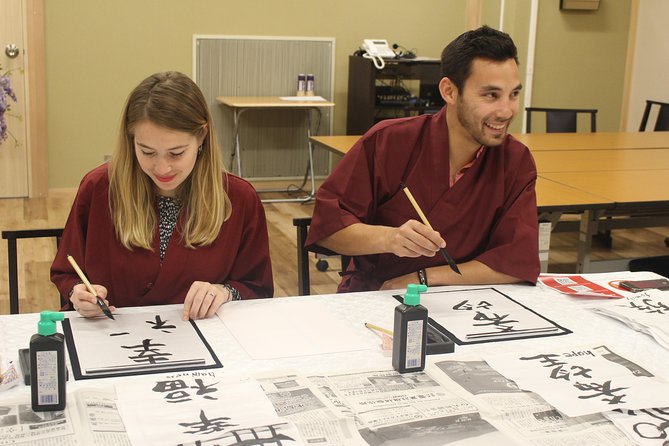
Japanese calligraphy is not just handwriting with prettier tools. In this Tokyo workshop, you learn how an inkstone, brush, water, and pressure turn simple strokes into Japanese characters, then use those skills to make a finished piece for your wall. The class is limited to 10 people, so the instructor can watch your technique closely.
In This Article
- Key points to know before booking
- Starting at Kikai Shinkō Kaikan in Shibakōen
- The first 45 minutes: understanding Japanese calligraphy
- The brush, inkstone, and basic movements
- The final 45 minutes: creating your souvenir board
- What the $77.26 price covers
- Why the small group changes the experience
- A cultural activity that does not take all day
- Who will enjoy this class most
- Booking, cancellation, and practical planning
- Should you book the Japanese Calligraphy Experience?
- FAQ
- Where does the Japanese calligraphy experience take place?
- How long does the activity last?
- Where does the experience end?
- What is included in the price?
- Is transportation included?
- Is food or drink included?
- How many people can join the activity?
- Can I cancel for a full refund?
- Is the activity suitable for most people?
I like the way the session combines hands-on practice with a clear introduction to Japan’s writing systems. I also like that the souvenir is something you create yourself, rather than a ready-made keepsake bought on the way out. The main consideration is the price, $77.26 per person for about 90 minutes, which is fair for a small, guided class but more than a quick cultural demonstration.
Key points to know before booking
- You practice with an inkstone and brush, not just a pen on a worksheet.
- The session lasts about 90 minutes, with instruction first and your own finished board afterward.
- An accredited guide-interpreter leads the class, including the history and mechanics of calligraphy.
- You can write your name in Japanese characters and work on basic brush movements.
- The group is capped at 10 people, allowing more individual help.
- Your calligraphy board is included, while transport, food, and drinks are not.
Starting at Kikai Shinkō Kaikan in Shibakōen
The class begins at Kikai Shinkō Kaikan, 3-chōme-5-8 Shibakōen, in Minato City. The venue is near public transportation, but transportation to and from the activity is not included, so you need to arrange your own route and allow time to find the building.
The meeting point matters because this is a workshop rather than a sightseeing tour. You will not be moving from one Tokyo landmark to another. Instead, the value comes from settling into one place, listening, practicing, and receiving corrections from the instructor.
The activity ends back at the same meeting point. That makes it easy to pair with other plans in Tokyo, provided you leave enough time for the class and your journey to the venue. Confirmation is sent within 48 hours of booking, subject to availability, so I would avoid booking it at the last minute if your schedule is tight.
A few more Tokyo tours and experiences worth a look

The first 45 minutes: understanding Japanese calligraphy
The first half of the class introduces the history of Japanese calligraphy and the basic tools used to produce it. You learn how to handle the brush and inkstone, then begin working through the fundamental motions that shape Japanese characters.
This introduction gives the activity useful context. Japanese writing uses more than one system, and the class helps you get a basic sense of that variety rather than treating calligraphy as a simple drawing exercise. You also learn how small changes in brush movement affect the final mark.
Do not expect to produce perfect characters immediately. The point of this section is to give you a working foundation. You will likely repeat strokes, adjust your grip, and learn how much pressure to use. That practice is important because a brush behaves differently from a ballpoint pen or pencil.
The instructor also helps you write your name in Japanese characters. This is one of the most personal parts of the session. Instead of practicing only abstract examples, you work with something connected directly to you, which gives the lesson a clear purpose.
The English instruction is designed to support an international audience. The guide-interpreter is nationally accredited, and the class includes explanations of both the cultural background and the practical technique. Feedback from the session points to patient instruction, clear English, and a willingness to demonstrate different brush movements for people who feel unsure about their handwriting.
The brush, inkstone, and basic movements
The equipment is provided, so you do not need to bring calligraphy supplies. You use the traditional tools during the workshop and learn what each one does as you practice.
The inkstone is not just a container for ink. It forms part of the working process, and handling it helps you understand the slower, deliberate nature of calligraphy. The brush also demands control. Your wrist, hand pressure, and direction all affect the line.
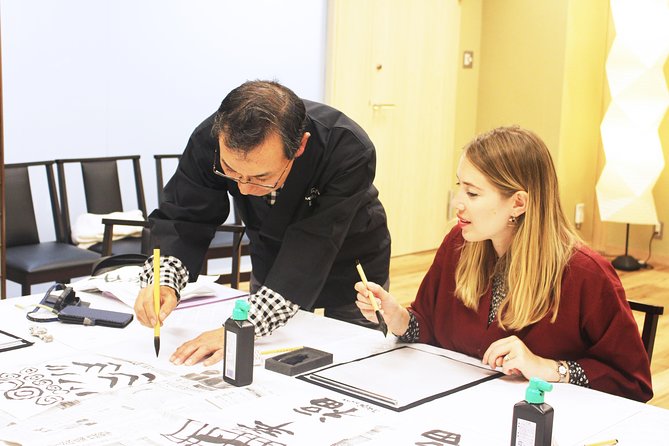
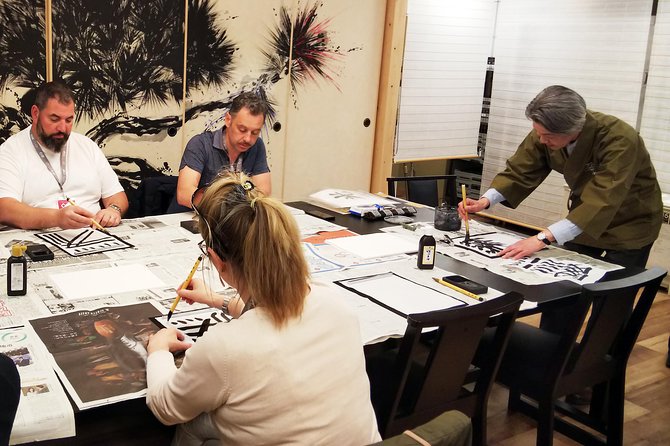
This is where the small group helps. With a maximum of 10 people, the instructor has a reasonable chance to look at your work and show you how to adjust a stroke. That personal attention is especially useful if you have never used a calligraphy brush before.
You do not need naturally neat handwriting to enjoy the class. In fact, the instruction is built around technique rather than talent. A patient teacher can show you the motions step by step, and you get time to practice before making the final piece.
The pace also seems well judged. The historical background adds meaning, but the activity does not stop at a lecture. You spend the first half learning, then move quickly into making something of your own.
The final 45 minutes: creating your souvenir board
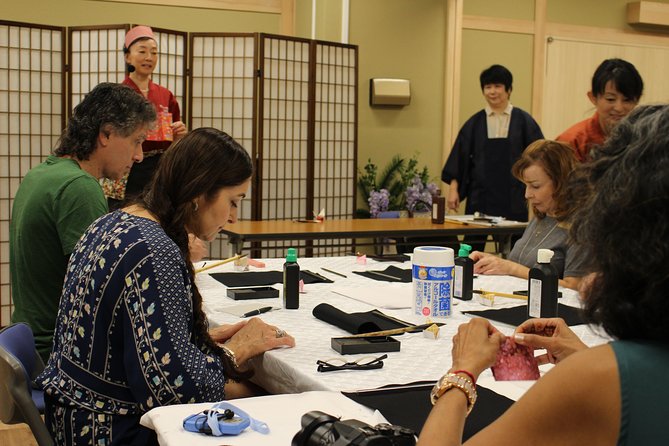
During the second half, you put the new skills to work on a calligraphy piece for a souvenir board. This is the part that turns the class from a demonstration into a personal activity.
You have already practiced the tools, basic strokes, and Japanese characters. Now you need to decide what to write and apply the technique with more care. The result does not need to look like the work of a professional calligrapher. Its value comes from the fact that you made it during the lesson and understand more about the process behind it.
Instructors can take time to help shape the finished piece, including working with what you request. That is useful if you want to focus on your name, a particular character, or another permitted choice. The supplied information does not specify a fixed list of words or designs, so you should ask the instructor what options are available when you arrive.
The souvenir board is included in the price. That improves the value compared with a short practice-only lesson because you leave with something physical to remember the experience. It also gives the class a clear ending: practice, create, and take home the result.
What the $77.26 price covers
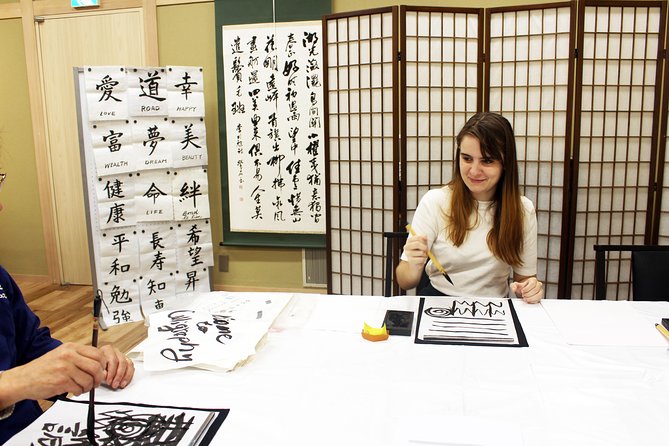
At $77.26 per person, this is not the cheapest cultural activity in Tokyo. The price makes more sense if you value instruction, a small group, equipment rental, and a finished souvenir rather than simply watching a short performance.
Your fee includes:
- A nationally accredited tour guide-interpreter
- Calligraphy equipment rental
- A souvenir calligraphy board
Food and drinks are not included, though the activity lasts only about 90 minutes. Transport to and from Kikai Shinkō Kaikan is also your responsibility.
The strongest value comes from the guided practice. You are not paying only for materials. You are paying for an instructor who explains the writing system, demonstrates the tools, corrects your movements, and helps you complete a board. If you want a personal, structured introduction to calligraphy, that package is reasonably solid.
The value is less convincing if you only want a quick photo opportunity or a basic souvenir. In that case, the fixed 90-minute format and per-person cost may feel high. I would book it for the process, not just the final board.
Group discounts are available, which may make the activity more appealing for families or friends traveling together. The maximum group size is 10, so larger parties may need to check how the booking handles the group.





Why the small group changes the experience
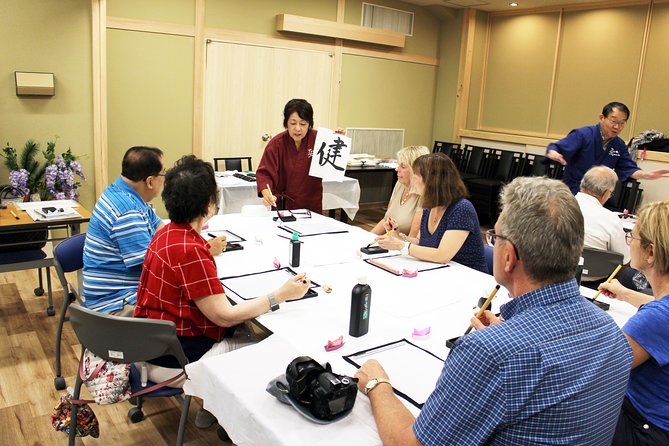
A calligraphy class works best when you can see the instructor’s hand and receive help with your own work. A large room full of people copying strokes from a distance would make it harder to understand the details.
Here, the group limit of 10 supports a more personal lesson. You can practice repeatedly and ask for help when a character does not look right. The instructor can also adjust the explanation for different skill levels, from complete beginners to people who have tried calligraphy before.
The class has earned high marks for patient teaching and friendly instruction. One participant found the teacher willing to show several types of brush motion and help with poor handwriting. Another appreciated having enough time to practice and request a particular finished design.
That does not mean every person will produce a flawless board. Calligraphy remains a skill, and 90 minutes is only an introduction. But the format gives you a fair chance to understand the basics and leave with a respectable personal piece.
A cultural activity that does not take all day
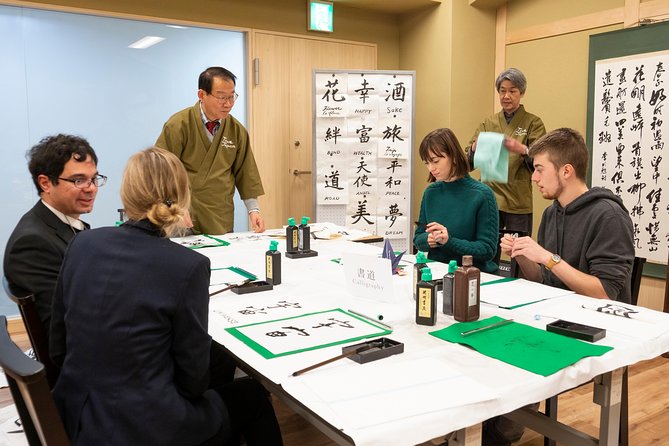
Tokyo offers many full-day cultural outings, but this workshop fits neatly into a shorter itinerary. At roughly an hour and a half, it gives you a focused break from train rides, shopping, and crowded attractions.
The pace is also part of the appeal. The session includes history, tool instruction, name writing, repeated practice, and a finished board. Participants have found the time passes quickly because the lesson keeps them working instead of leaving them to sit through a long explanation.
You should still allow extra time for getting to the building. The stated duration is approximate, and the experience begins and ends at the meeting point. Since the activity does not include transport, your schedule needs to account for the journey on both sides.
This is a good choice on a day when you want one planned activity but do not want to give up half a day. It also works well for visitors who want something more active than a museum visit.
Who will enjoy this class most
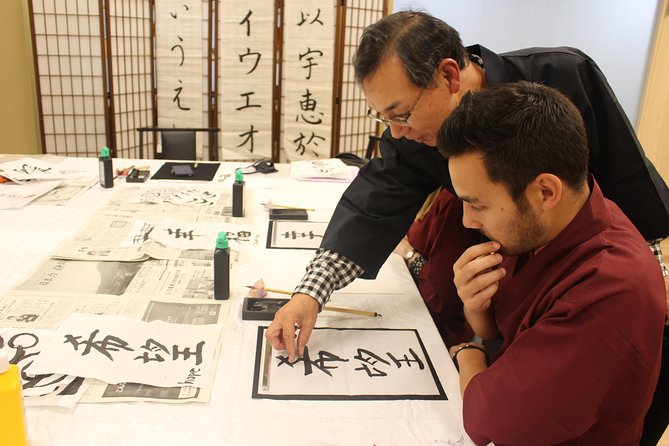
I would recommend this workshop to you if you want a cultural activity with a clear beginning and end, enjoy making things with your hands, or want a souvenir that carries your own effort.
It suits:
- First-time visitors curious about Japanese writing
- Families and friends who want to practice together
- People who prefer small-group instruction
- Anyone looking for a weather-independent Tokyo activity
- Visitors who want a personal souvenir rather than a shop purchase
- Beginners who may need patient help with brush control
The class can also work for people who already know something about Japanese characters, though the material is aimed at basic skills. If you are seeking advanced calligraphy training, specialist historical study, or a long masterclass, this short introduction may not go far enough.
The activity is described as suitable for most people, and no special physical ability is listed. You should be comfortable taking part in a hands-on class and following the instructor’s directions.
Booking, cancellation, and practical planning
The experience is commonly booked about 53 days in advance. That does not guarantee that you must reserve it two months ahead, but it suggests that planning early is sensible, especially if you need a particular date or want to use a group discount.
You can cancel free of charge up to 24 hours before the start time for a full refund. Changes or cancellations made less than 24 hours before the activity are not accepted for a refund, and the cut-off follows Tokyo local time.
The ticket is mobile, so you can use an electronic confirmation rather than printing a paper ticket. Confirmation arrives within 48 hours, subject to availability.
Wear something you can work comfortably in and pay attention to the meeting instructions. The class includes ink and brush work, so it is sensible not to arrive in clothing you would be upset to stain, although no clothing rule is specified.
Should you book the Japanese Calligraphy Experience?
Book this class if you want a personal, hands-on introduction to Japanese calligraphy and like the idea of taking home a board you made yourself. The accredited instructor, small group, included tools, and time for practice make it more useful than a quick brushstroke demonstration.
I would hesitate only if $77.26 feels high for a 90-minute activity or if you want advanced instruction. For most first-time visitors, the combination of cultural explanation, patient guidance, name writing, and a finished souvenir gives the session a clear purpose and fair value.
FAQ
Where does the Japanese calligraphy experience take place?
It begins at Kikai Shinkō Kaikan, 3-chōme-5-8 Shibakōen, Minato City, Tokyo 105-0011, Japan.
How long does the activity last?
The activity lasts approximately 1 hour and 30 minutes.
Where does the experience end?
It ends back at the same meeting point at Kikai Shinkō Kaikan.
What is included in the price?
The price includes a nationally accredited tour guide-interpreter, calligraphy equipment rental, and a souvenir calligraphy board.
Is transportation included?
No. Transportation to and from the venue is not included.
Is food or drink included?
No. Food and beverages are not included.
How many people can join the activity?
The maximum group size is 10 people.
Can I cancel for a full refund?
Yes. You can cancel at least 24 hours before the start time for a full refund. Cancellations made less than 24 hours in advance are not refunded.
Is the activity suitable for most people?
Yes. The additional information states that most people can participate, and the experience is near public transportation.
More Craft Workshops in Tokyo

More tours in Tokyo we've reviewed












Craft Workshops, compared.
 ★ 4.8Chopstick Making Workshop in GinzaFrom $251 hour
 ★ 5.0Kintsugi Experience: Art of Golden Joinery in TokyoFrom $59
Tokyo: Shinjuku Chopstick Making ClassFrom $121 hour
 ★ 5.0Private Craft Your Own Ring Handmade Experience in Asakusa, TokyoFrom $21
 ★ 5.0Authentic Pure Gold Kintsugi Workshop with Master Taku in TokyoFrom $142
 ★ 5.0Tokyo: Calligraphy on Kanji Fan & Scroll with DrinkFrom $531h 20m