Reviewed · ASAKUSA TOURS
From Asakusa: Old Tokyo, Temples, Gardens and Pop Culture
Tokyo’s old and new faces come together on this four-hour walk. You begin at Senso-ji in Asakusa, move through Ueno and Okachimachi, pass into anime and electronics territory in Akihabara, and finish among the ponds and stone paths of Koishikawa Korakuen Garden. That range is the main appeal: you see several very different parts of East Tokyo in one outing.
In This Article
- Key points to know before booking
- A smart introduction to Tokyo’s many sides
- Starting at Asakusa and Senso-ji
- Ueno and Okachimachi, Tokyo’s street-level side
- Akihabara and the pop-culture question
- Koishikawa Korakuen, a quiet finish
- Guides, language, and flexibility
- Walking, trains, and the pace
- Who gets the most from this tour
- Cancellation and booking details
- Should you book it?
- FAQ
- How long does the tour last?
- What is the maximum group size?
- Where does the tour start?
- Where does the tour end?
- Which places are visited?
- Is admission to Koishikawa Korakuen included?
- Are train rides included?
- Is food included?
- Do I need to be fit for the tour?
- What happens if the weather is poor?
- What is the cancellation policy?
I like the small maximum of eight people, which gives your guide room to answer questions and adjust the pace. I also like the practical cultural instruction, from temple manners to help with Tokyo’s train system. The main caution is that this is a packed route. If the group starts late or the guide is hard to hear in crowded Asakusa, the schedule can feel rushed.
Key points to know before booking

- Senso-ji sets the tone: Learn how to approach and behave at Tokyo’s best-known Buddhist temple, rather than simply taking a few photographs at the gate.
- Five very different stops: Asakusa, Ueno, Akihabara, and Koishikawa Korakuen show old Tokyo, market life, modern pop culture, and Edo-period garden design.
- Small-group format: The stated maximum is eight people, and some departures may feel almost private if others do not attend.
- Guides shape the experience: Taka, Ken, Hiro, Yapi, Yeman, Michelle, and others are praised for clear explanations, flexibility, and friendly conversation.
- Four hours on foot: You need a moderate level of fitness and comfortable shoes, with walking plus local train travel between districts.
- Good first-day choice: The tour can help you understand temple etiquette, neighborhood layout, and Tokyo’s famously efficient train system early in your visit.
A smart introduction to Tokyo’s many sides

I see this as an orientation walk with real cultural content, not a quick checklist of famous sights. In four hours, you move from a Buddhist temple founded in the seventh century to old market streets, Japanese pop culture, and a formal garden linked to the Edo period.
That variety is useful because Tokyo can feel like several cities stitched together. Asakusa has a traditional atmosphere, Ueno has long been a place for food and trade, Akihabara runs on electronics and anime, and Koishikawa Korakuen offers quiet paths and carefully framed views. The guide’s job is to explain how these places fit into Japanese life.
The price is $70.49 per person. For that amount, the tour includes admissions, local train rides according to the tour details, and a guide for roughly four hours. I consider that fair value if you want help with cultural customs and city navigation, especially during a first visit. You are paying for interpretation and efficient movement between districts, not just entry to one attraction.
Food and drinks are not included. That is not a serious flaw, since Ueno and Okachimachi are useful places to buy something, but you should plan to eat before or after the walk rather than expect a meal stop to be built in.
A few more Asakusa tours and experiences worth a look

Starting at Asakusa and Senso-ji
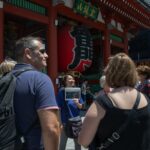
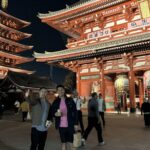
The tour begins in Asakusa at the listed meeting point near 1-chome, and the first major stop is Senso-ji. This is one of the best places in Tokyo to learn the basics of Japanese temple etiquette because the approach is easy to read, busy, and full of visual clues.
You will see the Kaminarimon, or Thunder Gate, with its large lantern, then move along Nakamise shopping street toward the temple grounds. The route can be crowded, especially around the gate and shopping street. That makes a guide helpful, but it also creates the first practical challenge: stay close and make sure you can hear the explanations.
The guide explains the temple’s background and the meaning of the statues, ropes, gates, and ritual spaces. One especially memorable detail mentioned in the tour material is the giant rope shoes, which are associated with warding off evil spirits. These small details turn the temple from a picture stop into a place you can read with more understanding.
The itinerary separates Asakusa and Senso-ji into two timed portions, about 45 minutes and 15 minutes. In real terms, expect the opening section to focus on the Asakusa district and the shorter temple portion to concentrate on Senso-ji itself. The schedule is not designed for a long independent shopping session, although the guide may allow time in the markets when the pace permits.
If you want extensive time for souvenirs, fortune slips, or quiet temple photography, this tour may move too quickly. If you want a clear introduction and a chance to ask why people perform certain actions, the stop earns its place.
Ueno and Okachimachi, Tokyo’s street-level side
From Asakusa, the group heads toward Ueno. The area has traditionally been known for street sellers, shops, and food, and the tour uses it to show a less polished but very practical side of Tokyo.
This is where the walk feels more like a look at everyday commerce than a formal sightseeing visit. You may find food stalls, market-style shops, and stores selling a wide range of goods. The supplied tour details do not promise a particular shop or food tasting, so think of this as a neighborhood walk with time to look around, not a dedicated food tour.
I like this stop because it breaks up the temples and monuments. It gives you a sense of how people shop, eat, and move through a busy Tokyo district. One guide, Taka, was specifically praised for knowing the area well and allowing time to browse the markets. That is worth noting if shopping matters to you.
The tradeoff is time. Forty-five minutes is enough to get a feel for Ueno and Okachimachi, but not enough to explore every arcade or market lane. Tell your guide early if you care more about food, shopping, local history, or simply keeping the group moving.
Akihabara and the pop-culture question

Akihabara brings the sharpest change in mood. Once known mainly as Electric Town, the district has long been associated with electronics and has developed into a center for anime, manga, gaming, and other Japanese pop culture.
The tour gives you about 45 minutes here. That is enough for an introduction and perhaps a few shop visits, but it is not a full Akihabara shopping expedition. The exact balance can depend on your guide and your interests.
Several positive accounts describe guides taking people to places they would not have found alone, while another account found the pop-culture portion too thin, describing it as being dropped off at anime stores. Both possibilities are useful to keep in mind. If you expect a detailed explanation of maid cafés, anime history, and the district’s electronics roots, state that before the tour begins. If you simply want an efficient first look, the stop should work well.
One particularly useful detail from the experience is that pop culture is not treated as separate from Japanese culture. A guide such as Hiroshi has been praised for explaining subjects including maid cafés alongside broader cultural topics. That can make Akihabara more interesting than a series of bright storefronts.
Still, this part is less structured than the temple visit. You may spend more time walking between stores or looking at shopfronts than receiving a formal presentation. I would book it for a first taste of Akihabara, not as your only time in the district.
Koishikawa Korakuen, a quiet finish

The final scheduled attraction is Koishikawa Korakuen Garden, a striking contrast to Akihabara. The garden dates from the Edo period and draws on ideas from Confucian poetry. Its design uses ponds, paths, bridges, and framed views to create a slow, ordered experience.
The tour allows about 45 minutes here, with admission included. That time gives you a proper pause after the louder streets. You can walk, take photographs, and ask about the garden’s design rather than rushing through a single viewpoint.
The garden has been praised as one of the most enjoyable parts of the route. That makes sense: after the visual overload of Asakusa and Akihabara, the quieter setting lets the cultural ideas settle. You are not only seeing a pretty park. You are seeing how an Edo-period garden turns poetry, water, borrowed scenery, and movement into a planned experience.
There is a logistical point to clarify before booking. The published end point is Akihabara Station, while Koishikawa Korakuen is listed as the final sightseeing stop. Since the route includes local train travel, ask the provider exactly where the group finishes on your date. This is especially important if you have a dinner reservation, luggage, or a train to catch.





Guides, language, and flexibility

The strongest part of this experience is the guide. Names praised in the supplied material include Taka, Ken, Hiro, Hiroshi, Yapi, Yeman, Michelle, Katsu, Shizuko, Toru, Andrew, and Matt. The repeated strengths are clear explanations, friendly conversation, patience, and the ability to change the emphasis when a group has a particular interest.
Ken, in particular, is described as helpful with Tokyo’s train system and good at answering questions about Japanese culture. Taka is praised for humor, strong English, local familiarity, and adapting the walk to individual preferences. Yapi is noted for patience and detailed explanations, while Shizuko is praised for keeping a good pace and stopping for photographs.
Guide quality can vary from person to person, as it does on any walking tour. One account described a late start caused by waiting for absent participants, difficulty following the guide in crowded Asakusa, and explanations that were too quiet. That is a fair warning. At the meeting point, arrive on time, stay alert when the group enters crowds, and speak up at once if you cannot hear.
The small group helps. With a maximum of eight people, a guide can usually answer questions without turning the walk into a lecture. Some departures may even operate with only one or two participants, creating a private-tour feel without a private-tour price.
Walking, trains, and the pace

You should have moderate physical fitness for this experience. The route lasts about four hours and combines city walking, time on your feet at temples and gardens, crowded streets, and local train rides.
The walking is not presented as extreme, but the itinerary covers several districts. Comfortable shoes matter more than fashionable ones. You will also want to keep your belongings close in Asakusa and Ueno, not because a problem is promised, but because crowded streets make it easy to lose sight of the group.
Local train rides are listed as included, along with all standard tour costs and garden admission. One published account said the participant had to pay for trains, so I would confirm this point when you receive your booking information. It may have been an unusual situation, but the wording should be clear before you set out.
The tour’s pace is best for someone who wants a broad sample. You will not master each neighborhood in four hours. You will, however, leave with a better map of Tokyo in your head and several ideas for places to revisit independently.
Who gets the most from this tour

I would recommend this walk to first-time Tokyo visitors who want context before exploring alone. It is also a good fit for families, provided children can manage several hours of walking. One family account described the guide as energetic and patient, though even the children were tired by the end.
The route suits you if you want:
- A mix of temples, markets, pop culture, and gardens
- Help understanding Japanese customs
- A small group rather than a large bus tour
- Advice on Tokyo neighborhoods and train travel
- A guide who can adjust the focus to your interests
I would be more cautious if you dislike a full schedule or want to spend a long time at each site. Dedicated anime fans may want a separate Akihabara tour. Serious shoppers may prefer to return to Ueno or Nakamise later with more time. And if you want a food-focused experience, remember that meals are not included.
Cancellation and booking details
You receive confirmation at booking, and the tour operates near public transportation. Free cancellation is available when you cancel at least 24 hours before the start time. Changes or cancellations inside that window are not refunded, and poor weather may lead to a new date or a full refund.
The advertised price is $70.49 per person, with group discounts listed as a feature. Because admissions and standard local train costs are included in the tour description, the price can be reasonable for a visitor who values guidance and city orientation. The value drops if you already know Tokyo well and would rather spend four hours exploring one district at your own pace.
Should you book it?
Book this tour if you want a fast but thoughtful introduction to East Tokyo. The temple etiquette at Senso-ji, market atmosphere around Ueno, pop culture in Akihabara, and calm of Koishikawa Korakuen create a useful four-hour sampler.
I would book it early in a Tokyo visit, then return on your own to whichever neighborhood catches your interest. Before paying, confirm the exact meeting and finishing points, how train fares are handled, and whether the guide can give extra attention to shopping, anime, temples, or food.
Skip it if you want a slow garden visit, a serious shopping day, or a highly specialized Akihabara experience. For most first-time visitors, though, the small group and flexible guides make this a practical way to get your bearings while seeing corners of Tokyo you might otherwise pass by.
FAQ
How long does the tour last?
The tour lasts approximately four hours.
What is the maximum group size?
The tour has a maximum of eight participants.
Where does the tour start?
It starts in Asakusa at Japan, 111-0032 Tokyo, Taito City, Asakusa, 1-chome 11, Kamiya Building.
Where does the tour end?
The listed end point is Akihabara Station at 1 Chome Sotokanda, Chiyoda City, Tokyo 101-0028, Japan.
Which places are visited?
The route includes Asakusa, Senso-ji Temple, Ueno, Akihabara, and Koishikawa Korakuen Garden.
Is admission to Koishikawa Korakuen included?
Yes. Admission to Koishikawa Korakuen Garden is included.
Are train rides included?
The tour information states that local train rides and standard tour costs are included. Because one account reported paying for trains, confirm the arrangement with the provider before departure.
Is food included?
No. Food and drinks are not included.
Do I need to be fit for the tour?
You should have a moderate level of physical fitness because the experience includes several hours of walking and local transportation.
What happens if the weather is poor?
If poor weather causes cancellation, you will be offered another date or a full refund.
What is the cancellation policy?
You can cancel for a full refund at least 24 hours before the experience begins. Cancellations or changes made less than 24 hours before the start time are not refunded.
More Asakusa Tours in Asakusa
More tours in Asakusa we've reviewed






Asakusa Tours, compared.
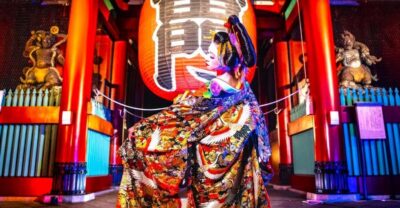 ★ 4.8Tokyo: Japanese Dance Cabaret Theater Asakusa-Kaguwa TicketFrom $492 hours
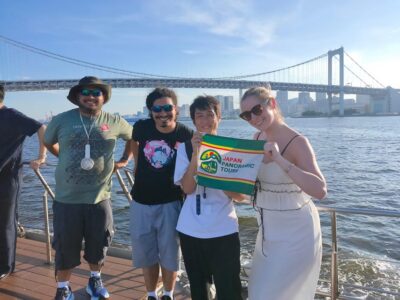 ★ 4.7Tokyo: Meiji Shrine, Asakusa, Skytree Bus Tour and CruiseFrom $12210 hours
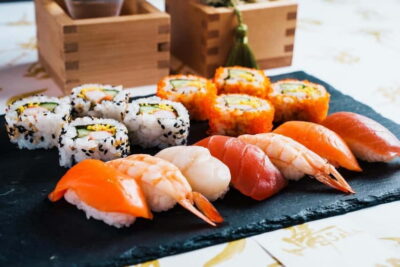 ★ 4.9Tokyo: Roll and Authentic Sushi Making Class in AsakusaFrom $581h 40m
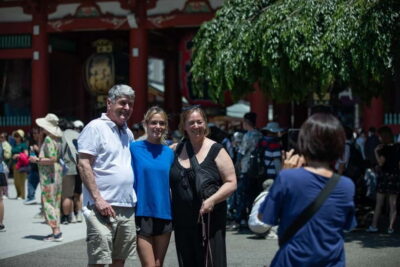 ★ 4.8Tokyo: Asakusa Walking Tour with Sensoji Temple VisitFrom $222 hours
 ★ 5.0Tokyo Asakusa Rickshaw TourFrom $42
 ★ 4.5Tokyo Panoramic 1 Day: Meiji Shrine, Asakusa, Odaiba and SKYTREE®From $85