Reviewed · TOKYO FOOD TOURS
Tsukiji Fish Market Food Tour: Seafood, Street Food & Hidden Gems
Tsukiji is best understood as Tokyo’s old fish-market district, not a wholesale auction hall. This morning food tour takes you through its maze of more than 250 stalls, where a guide helps you find seafood, sushi, sashimi, mochi, soup, and other market foods without wasting time at the wrong counter.
In This Article
- What You Actually See at Tsukiji
- Five or More Stops Make This a Real Lunch
- Why a Small Group Helps in Tsukiji
- The Morning Route, From 9:00 a.m. to the Station
- Sushi, Sashimi, Mochi, and the Small Surprises
- Is $91.17 a Fair Price?
- Who Will Get the Most From This Tour?
- What This Tour Does Not Include
- Booking Details That Matter
- Should You Book the Tsukiji Food Tour?
- FAQ
- Where does the Tsukiji Fish Market Food Tour start?
- Where does the tour end?
- How long does the experience last?
- How many people can join the tour?
- What food is included?
- Does the tour include the tuna auction?
- Does the tour visit Toyosu Market?
- Can the tour accommodate dietary restrictions?
I like the five or more full-size tastings, which can add up to a proper lunch, and I like the small group capped at six. Guides such as Chambliss, Rie, Chihiro, Shiro, and Kaz have been singled out for clear explanations and friendly help. The main catch is simple: this is not a tuna-auction or Toyosu Market tour, and much of the experience centers on the surrounding Tsukiji vendor streets.
- More than five food stops: Expect seafood, sushi, sashimi, mochi, and other market bites.
- A six-person limit: Small groups make it easier to hear the guide and ask questions.
- A 9:00 a.m. start: You get to the market during the prime morning food window.
- A full lunch, not just samples: The food can be substantial, so arrive hungry.
- A guide through the market maze: Helpful if you cannot read or speak Japanese.
- No tuna auction or Toyosu visit: Book this for Tsukiji food and local stalls, not wholesale-market access.
What You Actually See at Tsukiji
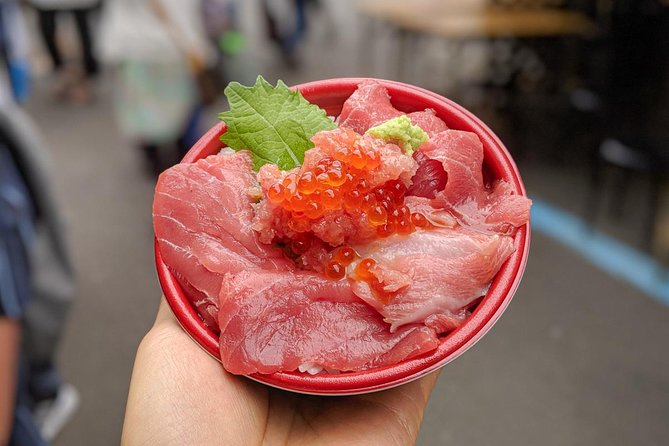
The name Tsukiji still carries the image of Tokyo’s famous wholesale fish market, but the main wholesale operation moved to Toyosu. The Tsukiji area remains a major food destination, packed with fish sellers, prepared-food counters, kitchen shops, sushi restaurants, and small street stalls.
That distinction matters. You are not signing up for the tuna auction, and Toyosu Market is not part of this outing. You are visiting the old Tsukiji district and its food vendors, with the guide choosing stops that are popular with market workers and useful for first-time visitors.
The market can be confusing even when you know Tokyo well. Signs may be limited, stalls can be tightly packed, and the best food is not always at the most obvious storefront. A guide gives the morning a clear shape: walk, taste, learn, and move on before you lose time in a queue.
One point needs careful explanation. The tour information describes more than 250 fish stalls, while one account of the route describes the experience as mainly the surrounding streets rather than the inner market action. I would set expectations somewhere in the middle: you will explore the Tsukiji market district and its food scene, but you should not expect a behind-the-scenes tour of a working wholesale floor.
Five or More Stops Make This a Real Lunch
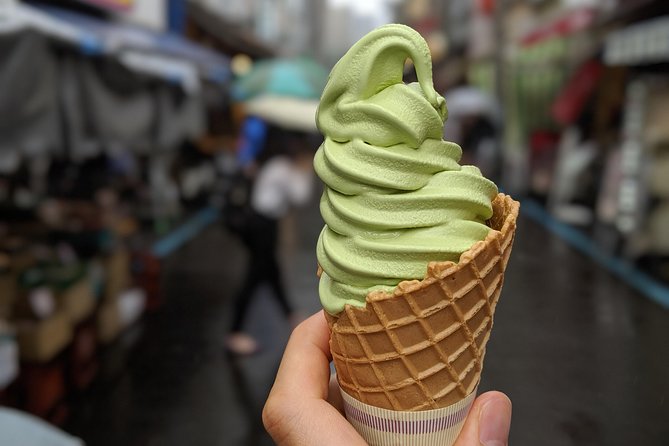
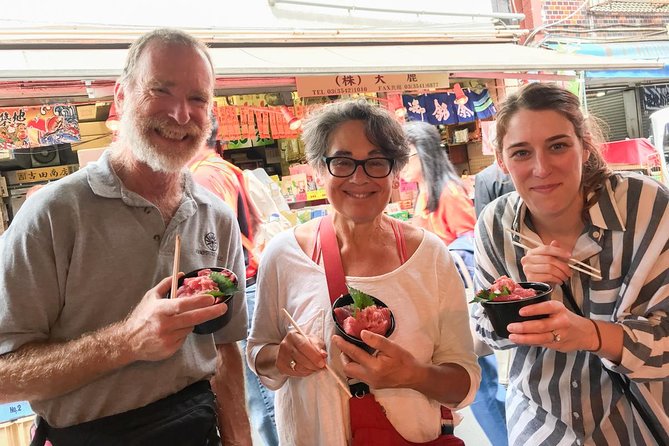
The strongest practical feature is the amount of food. Your booking includes full lunch-size tastings at five or more vendors, rather than one token sample followed by a recommendation to buy lunch on your own.
Exact dishes can change, but the food described includes sushi, sashimi, mochi, soup, seafood, and other street-food items. That gives the outing a useful range. You are not simply comparing pieces of raw fish. You may also try something sweet, warm, cooked, or unfamiliar.
Past routes have included stops where there was no long wait for food. That is a real advantage at Tsukiji, where narrow lanes and popular vendors can make a simple snack take longer than expected. The guide handles the route and ordering process, leaving you free to pay attention to what is on the plate.
Come hungry. Several people found the portions generous enough to count as lunch, and one gluten-free participant was warned in advance that not every item would be suitable. If you eat a large breakfast before the tour, you may struggle to enjoy the later tastings.
This is also a food tour where preferences matter. Food restrictions must be sent at least a week before the date. Vegan, vegetarian, and gluten-free choices are limited, and last-minute requests cannot be accommodated. That is not a small footnote. If your diet is strict, contact the operator before booking and ask what can realistically be served.
A few more Tokyo tours and experiences worth a look

Why a Small Group Helps in Tsukiji
The maximum group size is six. For this kind of market, that is a strong design choice.
A large group would be awkward in tight lanes and at small counters. With six or fewer people, you have a better chance of hearing the guide, staying together, and asking about ingredients or customs. You also avoid the feeling of being marched from one stop to another without time to look around.
The guide’s role is more than translation. You get help understanding what a vendor sells, how the district developed, and why certain foods matter in the market setting. Chambliss has been praised for combining food information with the history of Tsukiji. Rie has been noted for a friendly, relaxed route that included sushi, sashimi, and mochi over roughly three hours.
Other guides named in the feedback include Chihiro, Shiro, Chi, and Kaz. Chihiro was especially helpful with food preferences and took a family to less obvious places. Shiro was described as easygoing and ready to answer questions. Kaz had a personal connection with a California-based couple, which shows how much the tone can vary with the guide assigned to your date.
You should not book on the assumption that one particular guide will lead your tour unless the operator confirms it. Still, the repeated praise for several guides suggests that the human part of the experience is one of its main strengths.
The Morning Route, From 9:00 a.m. to the Station
The meeting point is at 4-chōme-8-1 Tsukiji, Chuo City, at 9:00 a.m. The tour ends near Tsukiji Station at 3 Chome-9 Tsukiji. Both locations are close to public transportation, which makes this a fairly easy first or second activity for a Tokyo day.
The total duration is about two hours and 30 minutes. The listed Tsukiji market portion is one hour and 30 minutes, so the full food experience may include walking and time around the tasting stops beyond that central market segment. Allow the full morning rather than planning a tight appointment immediately afterward.
At the first part of the route, your guide helps you get your bearings among the fish stalls. This is where the tour earns its keep for first-time visitors. Instead of wandering until you find an English-friendly counter, you follow a route designed around local food stops.
The walk is not a formal museum visit. Its value comes from seeing the district in use, noticing the kinds of seafood being sold, and learning how the food trade fits into Tokyo life. If you want grand displays, long historical lectures, or access to wholesale operations, this will feel modest. If you want to eat your way through a confusing market area, it makes more sense.
Sushi, Sashimi, Mochi, and the Small Surprises
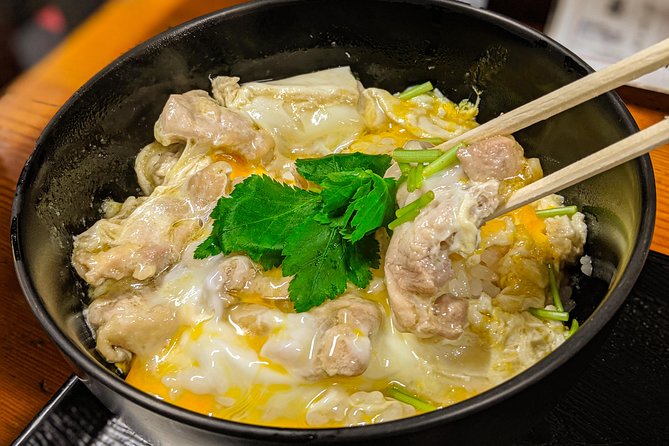
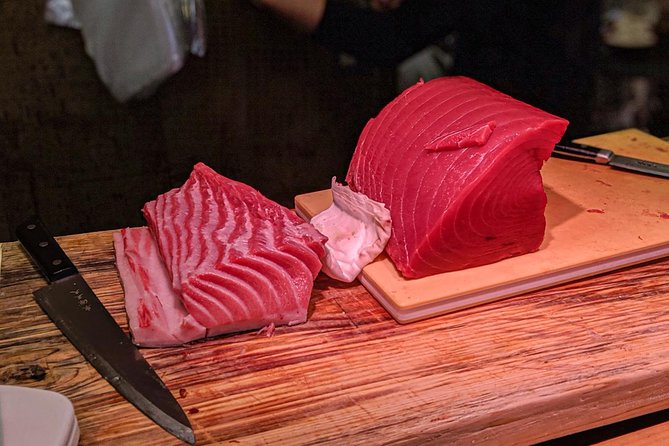
Sushi and sashimi are the obvious draws, and the fresh seafood is central to the experience. The tastings are a chance to compare market food in its original setting rather than relying on a restaurant near your hotel.
The less expected items help keep the route interesting. Mochi adds a soft, sweet change of pace. A spontaneous soup tasting led one participant to return and buy a packet afterward, a good example of what can happen when a guide points out something you would otherwise pass by.
That kind of discovery is more useful than simply checking famous foods off a list. The guide can show you how to browse, explain what you are tasting, and point out vendors that may not be aimed at first-time foreign visitors. You may leave with a short list of places to revisit on your own.
The food also seems to be the part most likely to exceed expectations. One family was told to come hungry because the route was so filling. Another participant with a gluten allergy appreciated that the guide checked suitable foods before the meeting time. These details suggest a tour that pays attention to the practical side of eating, though you still need to provide advance notice and accept that choices may be limited.
Is $91.17 a Fair Price?
At $91.17 per person, this is not a cheap way to grab breakfast in Tokyo. You could spend far less by choosing one sushi counter, a grilled seafood snack, and a sweet from the market on your own.
The comparison changes when you count what is included. You receive food at five or more vendors, enough for a full lunch, plus a guide for about two and a half hours. You also pay for route planning, language help, cultural context, and the chance to avoid poor choices or long waits.
I see the price as reasonable for a first visit if you value convenience and want a planned tasting route. It is less appealing if you already know Tsukiji well, speak Japanese, and enjoy choosing your own stalls. One person felt the cost was high for a tour focused mainly on the surrounding vendor streets, and that is a fair concern.
The small group improves the value. You are not paying for a large coach-style operation. Six people or fewer gives the guide room to adjust the pace and respond to food preferences, although the price still depends on how much you would have spent on lunch and how much guidance you want.
A few more Tokyo tours and experiences worth a look



Who Will Get the Most From This Tour?
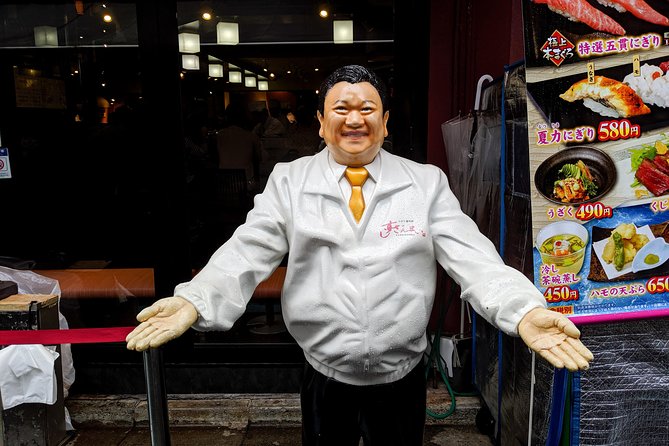
I would recommend it most strongly to first-time Tokyo visitors who want a friendly introduction to Japanese market food. It also suits people who worry about ordering in an unfamiliar setting or who want more context than they would get by walking around with a phone map.
Food-focused couples and small families should find the format comfortable. The route has enough variety to please people who want sushi but also includes other snacks and dishes. If you are traveling with children, the food restrictions and willingness to try unfamiliar textures matter more than age alone.
This is a good pick for anyone who likes learning through food. You hear about the market, watch the district operate, and taste along the way. It is not a quiet sit-down meal, so you should be ready to walk between vendors and eat in a public market setting.
I would hesitate to recommend it to strict vegans or travelers with severe dietary limits unless the operator confirms suitable options in advance. Vegan, vegetarian, and gluten-free choices are limited, and the tour is built around seafood.
What This Tour Does Not Include
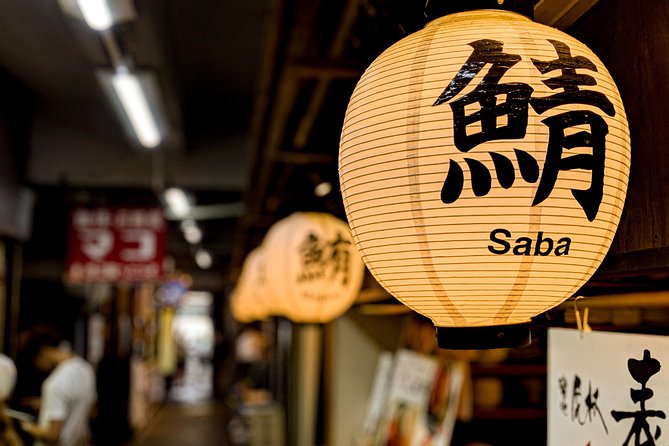
The biggest possible misunderstanding concerns the tuna auction. It is not included.
You also do not visit Toyosu Market. If your goal is to see the newer wholesale facility or plan a morning around the auction, choose a different experience. This tour is about Tsukiji’s old market district, its vendors, and its prepared foods.
You should also avoid picturing a closed food hall with neat rows of stalls. Tsukiji is a working commercial area with narrow streets and independent vendors. The setting is part of the appeal, but it can feel less polished and less dramatic than the famous market image in your head.
That is why the guide matters. The tour gives you a way to interpret the district rather than simply photograph it. Still, the route cannot change the basic character of Tsukiji, so book it for food and orientation, not for a grand market spectacle.
Booking Details That Matter
The activity uses a mobile ticket and confirmation is provided at booking. It begins at 9:00 a.m., lasts about two hours and 30 minutes, and ends near Tsukiji Station.
Most people can participate, and the meeting area is near public transportation. Send food restrictions at least one week ahead. The tour requires good weather and a minimum number of participants, so a cancellation caused by weather or insufficient bookings may result in another date, another experience, or a full refund.
You can cancel for a full refund up to 24 hours before the start time. Changes or cancellations inside that 24-hour window are not accepted for a refund.
Should You Book the Tsukiji Food Tour?
Book it if you want a guided food route through Tsukiji, a substantial lunch, and help making sense of a market district that can be hard to navigate alone. The six-person limit, generous tastings, and strong guide performances make the $91.17 price easier to justify.
Skip it if you mainly want the tuna auction, Toyosu Market, or a do-it-yourself morning at a few handpicked stalls. Also think twice if your diet leaves little room for seafood and limited alternatives.
For most first-time visitors who want to eat well without losing the morning to guesswork, this is a practical introduction to Tsukiji. Arrive hungry, send dietary details early, and treat the experience as a guided tour of the old market neighborhood rather than a wholesale-market visit.
FAQ
Where does the Tsukiji Fish Market Food Tour start?
It starts at 4-chōme-8-1 Tsukiji, Chuo City, Tokyo 104-0045, Japan, at 9:00 a.m.
Where does the tour end?
The tour ends near Tsukiji Station at 3 Chome-9 Tsukiji, Chuo City, Tokyo 104-0045, Japan.
How long does the experience last?
The full experience lasts approximately two hours and 30 minutes. The listed Tsukiji market stop is one hour and 30 minutes.
How many people can join the tour?
The group has a maximum of six participants.
What food is included?
The tour includes full lunch-size food tastings at five or more vendors. Foods described include seafood, sushi, sashimi, mochi, soup, and other market foods.
Does the tour include the tuna auction?
No. The tuna auction is not included.
Does the tour visit Toyosu Market?
No. The experience takes place around Tsukiji and does not include a visit to Toyosu Market.
Can the tour accommodate dietary restrictions?
You must send food restrictions at least one week before the tour. Vegan, vegetarian, and gluten-free options are limited, and last-minute food requests cannot be accommodated.
More Food Experiences in Tokyo
More Tokyo Food Tours in Tokyo
More Tsukiji Market Tours in Tokyo

More tours in Tokyo we've reviewed












Tokyo Food Tours, compared.
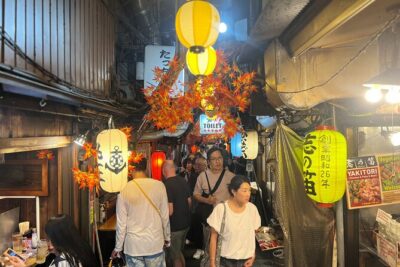 ★ 5.0Tokyo: Shinjuku Food Tour (13 Dishes at 4 Local Eateries)From $86
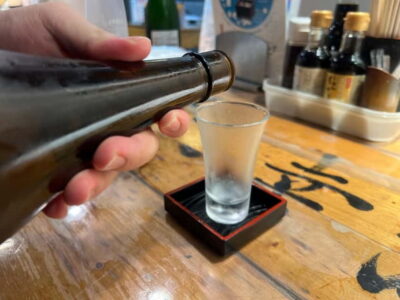 ★ 4.9Tokyo: Shinjuku Food Tour (13 Dishes and 4 Eateries)From $97
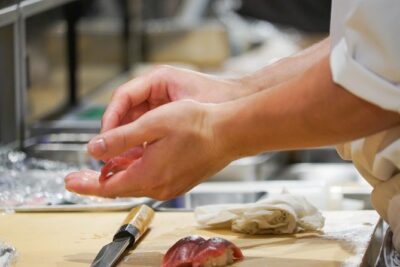 ★ 5.0Tokyo Night Foodie Tour in Shinjuku – Seasonal Sushi, Wagyu BeefFrom $111
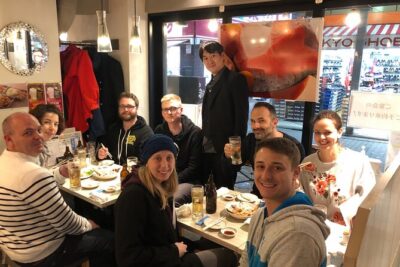 ★ 5.0Eat and Drink Like a Local: Tokyo Ueno Food Tour-Taverns&RamenFrom $95
 ★ 5.0Tokyo: Shibuya Food Tour (13 dishes and 4 Eateries)From $77
Tokyo: Shinjuku Food Tour – 15 Dishes, 3 Drinks, 4 EateriesFrom $723 hours
★ 5.0Tokyo: Shibuya Food Tour (13 dishes and 4 Eateries)From $77
Tokyo: Shinjuku Food Tour – 15 Dishes, 3 Drinks, 4 EateriesFrom $723 hours