Reviewed · SUSHI MAKING CLASSES
Tokyo Toyosu Tuna Auction + Breakfast (Sushi Dai or Bentomi)
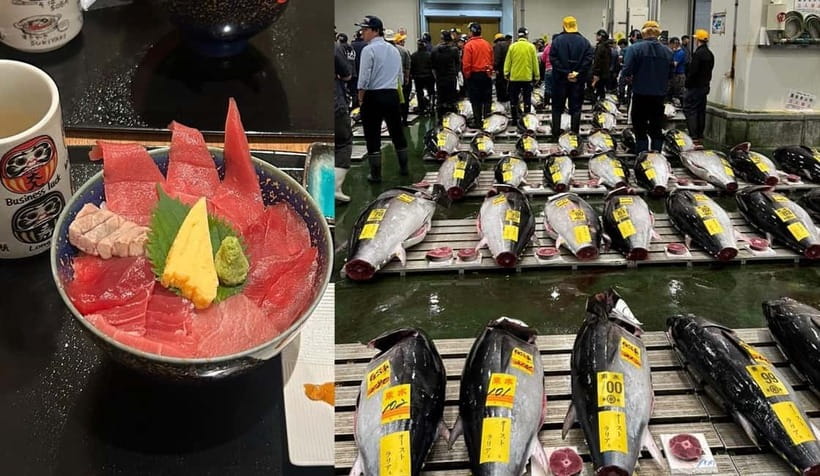
Toyosu’s bluefin tuna auction is Tokyo before sunrise: buyers inspect huge fish, auctioneers call out bids, and hand signals move million-yen business in seconds. I like the close look at wholesale work and the chance to see tuna cut and sampled, not just viewed from a gallery. The tour also turns breakfast into part of the experience, with a reservation at Sushi Dai or Bentomi.
In This Article
- Key points at a glance
- Why Toyosu before sunrise is worth the effort
- Choosing between the third-floor gallery and VIP deck
- From auction signals to tuna on the cutting floor
- The katsuobushi lesson adds a useful taste of Japan
- Breakfast at Bentomi or Sushi Dai
- What the $141 price really buys
- Timing, meeting point, and what to bring
- What the 150-minute schedule feels like
- Who will get the most from this morning
- Should you book the Toyosu tuna auction tour?
- FAQ
- What time does the Toyosu tuna auction tour start?
- Is breakfast included in the $141 price?
- Can I choose between Sushi Dai and Bentomi?
- What are the tuna auction viewing options?
- How far in advance should I arrange VIP ground-level access?
- Is the tour available in English?
I especially like the katsuobushi shaving lesson and the personal market access arranged by guides Rabia and Ami. The main catch is important: the $141 price does not include breakfast, and the most intimate ground-level viewing is limited to four people and requires early advance contact.
Key points at a glance
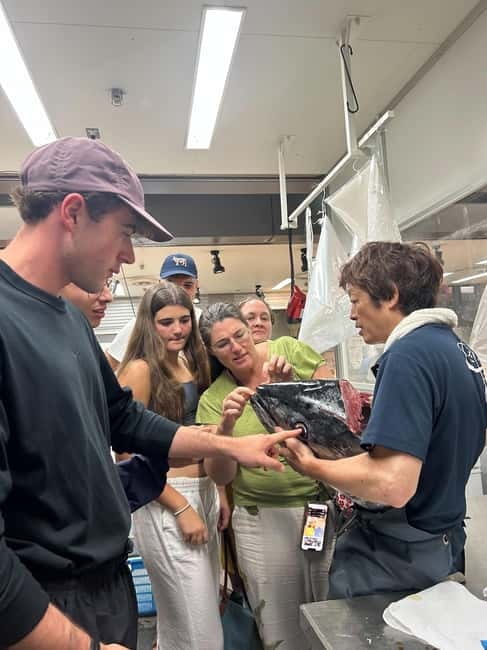
- 5:25 AM start: You reach Toyosu while the auction is in full working mode, so punctuality matters.
- Two viewing levels: Choose the public third-floor gallery or request the ground-level deck, just meters from the bidding.
- Real tuna trade: See buyers grade fish, follow auction gestures, and possibly watch fresh tuna sold.
- Katsuobushi comparison: Shave bonito flakes, then taste them beside the rarer maguro-bushi.
- Breakfast reservations: The guide arranges a place at Sushi Dai or Bentomi, but you pay the restaurant directly.
- Market connections: The tour may include access to a tuna wholesaler, tuna preparation, sashimi tasting, and practical explanations of the trade.
Why Toyosu before sunrise is worth the effort
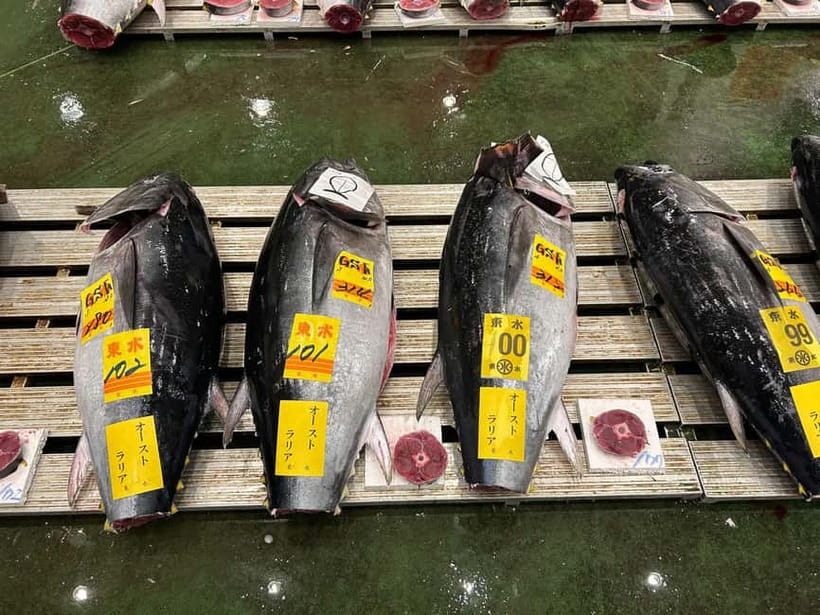
Toyosu is not a staged show put on for sightseers. It is a working seafood market, and the auction runs on its own schedule. Your guide helps you understand what you are seeing, but the buyers and auctioneers are there to do business.
The action centers on bluefin tuna. Fish are inspected, graded, and priced through a quick ritual of calls and hand signals. To an unprepared observer, the auction can look like a blur of gestures and movement. A short lesson in te-jirushi, the tuna hand signals, gives you a way to read the scene.
I like this part because the value is not just visual. You begin to see the auction as a system. Buyers are judging quality, sellers are moving a perishable product, and the winning bid affects what later appears at sushi counters across Tokyo.
The early start is also practical. You meet at 5:25 AM, and the tour lasts about 150 minutes. Once you finish breakfast, you still have most of the day ahead. The difficult part is getting there on time. Public transport may not yet be running for the VIP option, so plan on walking or taking a taxi if you choose the ground-level experience.
A few more Tokyo tours and experiences worth a look
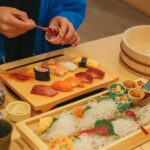
Choosing between the third-floor gallery and VIP deck
The standard option uses Toyosu’s third-floor gallery. From above, you get a broad view of the auction hall and can watch the work unfold without standing in the middle of the activity. It is the easier choice for most people, especially if you want a clear overall picture of the room.
Your guide explains the auction calls and gestures as you watch. The higher viewpoint helps you follow the scale of the operation, including the lines of tuna and the movement of buyers through the space. For a first visit, this may be enough.
The VIP ground-level deck offers a much closer view. It is located just meters from the bidding, and the small-group limit is four people. That proximity changes the feel of the visit. You are closer to the inspection and preparation work, and some tour arrangements may let you speak with a wholesaler or see a tuna being cut.
The VIP option is not a casual upgrade you decide on at the last minute. You are advised to contact Yummy Guide through Instagram at @yummyguidejapan about two months ahead. Availability is limited, and VIP participants need to arrive before public transport is available. The meeting point can also vary by option, so read your confirmation carefully.
Fresh tuna auctions are not guaranteed. The morning may feature fresh or frozen tuna, and the tour cannot control which fish are available on a particular day. That uncertainty is part of visiting a real market, but it is worth knowing if you are booking for one specific spectacle.
From auction signals to tuna on the cutting floor
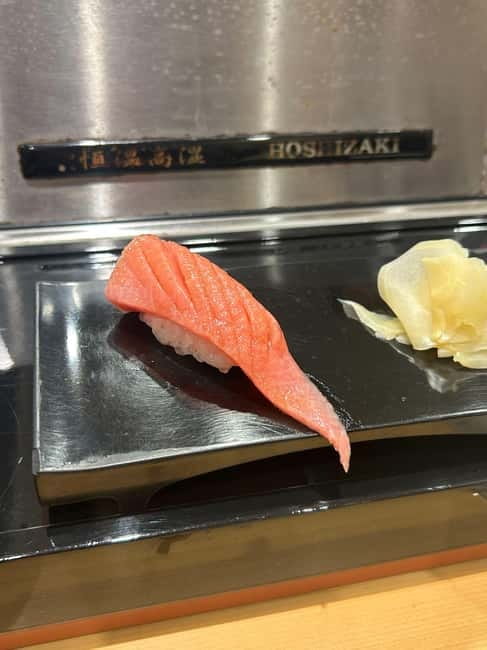
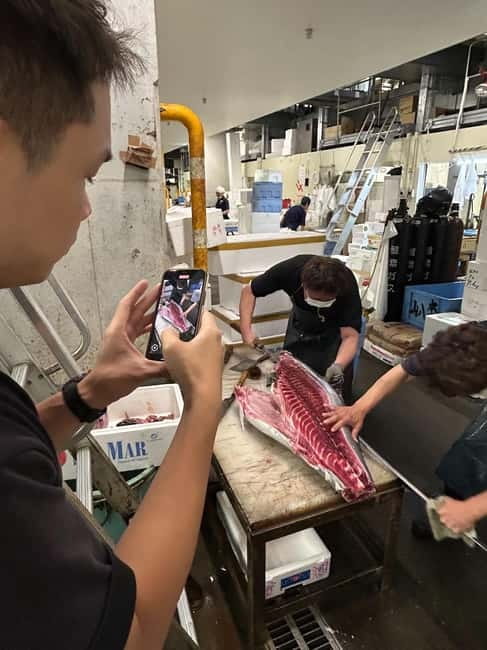
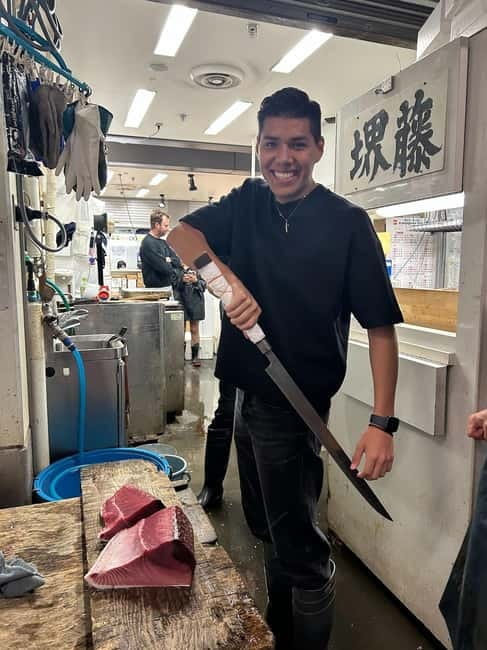
One of the strongest parts of the experience is the connection between the auction and the people who handle the fish afterward. The guide may take you to a wholesaler and introduce you to the work behind the sale.
This is where Rabia’s relationships with market sellers add real value. The tour can include watching a dealer prepare tuna, learning about the fish trade, and tasting high-quality sashimi. It gives you a closer look at the skilled work that happens after the auction, when a large tuna becomes portions for restaurants and counters.
Several details make this more than a quick photo stop. You may see the preparation process, ask about tuna fishing and market practices, and speak directly with someone involved in the trade. The exact access depends on the morning and the option booked, but the wholesaler visit is a key reason to consider this tour over simply visiting the public gallery alone.
The guide also handles the market setting well. Rabia is described as cheerful, funny, and eager to answer questions, with useful Tokyo advice beyond the auction itself. Ami has also led the tour and is praised for explaining the auction clearly. If you want a guide who helps turn a confusing working environment into a readable story, this is a strong fit.
The katsuobushi lesson adds a useful taste of Japan
After the auction, you get a hands-on introduction to katsuobushi. This is dried, fermented bonito, shaved into thin flakes and used as a foundation for Japanese cooking. You try shaving it yourself, then taste it.
The unusual part is the comparison with maguro-bushi, a rarer product made from tuna. Tasting the two side by side gives you a better sense of how Japanese cooks build flavor with dried seafood, rather than treating miso soup or dashi as background details.
This is a small activity, but it fits the morning well. You have just watched tuna being graded and sold. Now you are handling another seafood product that plays a central role in Japanese food. It also breaks up the viewing portions and gives you something practical to remember.
A special miso soup cup is included as a souvenir. The tasting itself is included, along with the shaving experience. You can also have your photo taken with Okami-san using your own phone or camera.
Breakfast at Bentomi or Sushi Dai
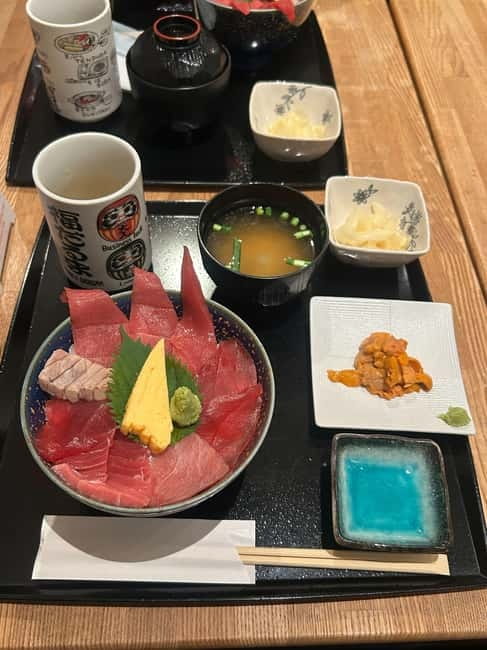
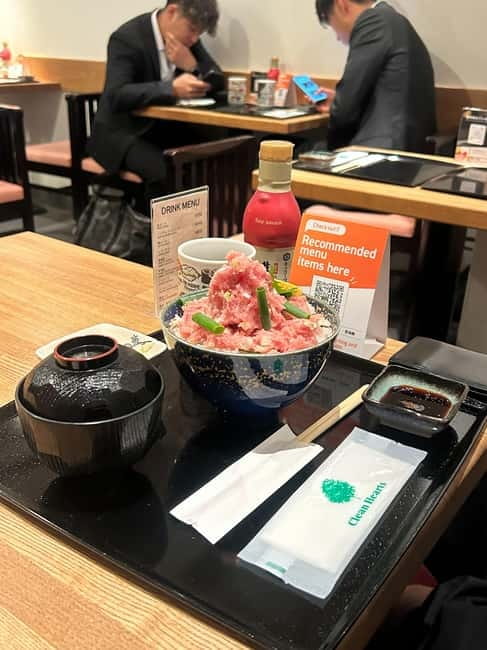
The final food stop is one of the tour’s main attractions, but you need to understand the payment arrangement. Your guide reserves a place at either Bentomi or Sushi Dai, but the meal fee is not included in the $141 tour price.
Bentomi is a long-standing favorite among seafood professionals. The menu features tuna bowls, known as kaisendon, and other dishes made with ingredients from the morning market. This is the practical choice if you want a hearty seafood breakfast and a direct connection to the market’s daily supply.
Sushi Dai is the more formal option. It is a celebrated sushi counter with Michelin Guide recognition, and the meal is an omakase breakfast built around seasonal fish. Seating is extremely limited and is available only with select tour plans.
The reservation is a serious convenience. Sushi Dai is known for long queues, and the tour arrangement can save you from arriving at an unpleasant hour and waiting without a clear end. The guide takes care of the reservation, leaving you to focus on the auction and market.
Still, do not confuse a reserved seat with an included meal. The title may suggest a tuna auction and breakfast package, but the restaurant bill is separate. The tour itself includes the reservation, plus the katsuobushi activity and other guiding services. Check the available plan and expected restaurant cost before booking so the total price does not surprise you.


What the $141 price really buys
At $141 per person, this is not the cheapest way to see Toyosu. You can visit the market’s public areas independently, and the third-floor gallery does not require a private guide in the same way as this experience.
The price begins to make sense if you value structure and access. You are getting a guide at an extremely early hour, auction explanations, a hand-signal lesson, the katsuobushi activity, a souvenir cup, a photo opportunity, and help arranging breakfast. Depending on the plan, you may also receive closer access to a wholesaler and tuna preparation.
The reservation at Sushi Dai may be the biggest practical benefit. Avoiding the famous pre-dawn queue has real value, particularly on a short Tokyo visit. You are paying for organization as well as information.
The value is weaker if you only want a quick view from above and do not plan to eat at either restaurant. In that case, the meal reservation may not matter enough to justify the full cost. Also remember to budget for transportation and breakfast, since neither is included.
Timing, meeting point, and what to bring
The stated meeting point is PR Square inside Toyosu Market, though it may change based on the option you book. Directions can be a little hard to follow, so give yourself extra time and confirm the exact meeting instructions.
Arriving late is a real problem at 5:25 AM. The auction follows a working schedule, and the group cannot simply pause while someone finds the entrance. If you are using public transport, check the first available service carefully. VIP participants should expect to walk or take a taxi.
Wear comfortable shoes and clothes. Toyosu is a working market, not a polished museum, and you will get more from the visit if you are ready to stand and move around. Bring a camera and cash. Your guide can take photos with your phone or camera, but the tour does not supply a separate photography service.
The activity is not suitable for wheelchair users or vegetarians. Seafood is central from beginning to end, including the auction, tasting, and breakfast choices.
What the 150-minute schedule feels like
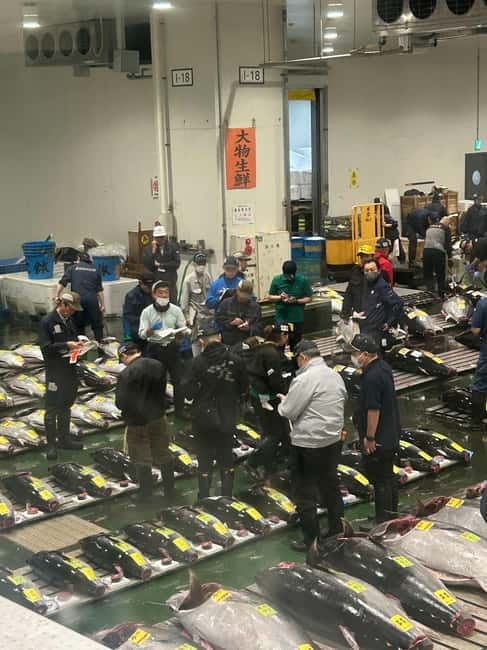
The tour packs a lot into two and a half hours. You begin with the auction viewing, where the guide provides context and helps you follow the bids. The standard gallery gives you the widest view, while the VIP option puts you closer to the buyers and fish.
Next comes the katsuobushi shaving and tasting comparison. This is a more relaxed, hands-on section after the quick auction. You may also visit a wholesaler, speak with a dealer, watch tuna preparation, and sample sashimi, depending on your selected arrangement and the morning’s access.
Breakfast finishes the experience at Bentomi or Sushi Dai. The restaurant stop gives the morning a clear ending, but the meal time and food bill are separate from the tour’s 150-minute guiding service. If you choose Sushi Dai, ask exactly which plan includes the reservation because seating is limited.
The schedule can feel full, particularly after waking so early. The benefit is that you get a focused morning and a free day afterward. The drawback is that there may not be enough time for a slow, detailed market walk. One plan allows free time around the market before the restaurant, but it may not include a full guided explanation of every shop or item.
Who will get the most from this morning
I would recommend this experience to first-time Toyosu visitors who want help interpreting the auction and prefer a planned route. It also suits food-focused visitors who care about the supply chain behind sushi, not just the finished plate.
The VIP plan is best for people who want close access and can plan well ahead. The third-floor option makes more sense if you want a comfortable overview, a guide’s explanation, and a reserved breakfast without relying on a tiny group opening.
Sushi fans will likely get the most from the combination of auction, wholesaler activity, sashimi tasting, and breakfast. If you are especially interested in Japanese pantry staples, the katsuobushi comparison is an unexpected bonus.
I would not choose it if you dislike early mornings, need wheelchair access, avoid seafood, or want a low-cost market visit. I would also skip the VIP option if arriving by taxi before dawn is difficult or if you cannot commit months ahead.
Should you book the Toyosu tuna auction tour?
Book it if you want more than a distant look at auction activity. The best reason to go is the combination of working-market access, clear explanations, and a hard-to-get breakfast reservation. Rabia and Ami bring useful context, and the wholesaler contact can make the experience feel personal rather than purely observational.
Choose the standard gallery if the auction itself is your main goal. Request the VIP deck only if you want the closest possible view and are prepared to arrange it well ahead of time.
Before paying, confirm your meeting point, viewing level, breakfast restaurant, and the separate meal cost. With those details clear, this is a strong, early-start Tokyo experience for anyone who wants to understand how the city’s sushi culture begins.
FAQ
What time does the Toyosu tuna auction tour start?
The tour starts early at 5:25 AM. You should arrive on time, especially if you are using public transportation or joining the VIP option.
Is breakfast included in the $141 price?
No. The tour includes a reservation at Sushi Dai or Bentomi, but you pay the meal fee separately.
Can I choose between Sushi Dai and Bentomi?
The experience offers breakfast options at both restaurants, but Sushi Dai seating is extremely limited and available only with select tour plans. Check the plan details before booking.
What are the tuna auction viewing options?
You can choose the third-floor gallery for an open-group panoramic view, or request the ground-level deck for a closer experience. The ground-level option is limited to four people.
How far in advance should I arrange VIP ground-level access?
The operator recommends contacting Yummy Guide through Instagram at @yummyguidejapan about two months in advance. VIP availability is limited.
Is the tour available in English?
Yes. The tour has a live guide in English or Japanese.
More Sushi Making Classes in Tokyo
More tours in Tokyo we've reviewed












Sushi Making Classes, compared.
 ★ 5.0Sushi Making Tokyo Roll and Authentic Japanese Sushi ClassFrom $59
 ★ 4.9Tokyo: Roll and Authentic Sushi Making Class in AsakusaFrom $581h 40m
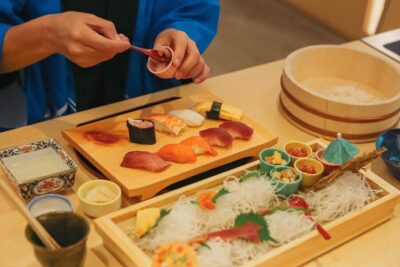 ★ 4.9Tokyo: Sushi Making Class in a Happi Coat near a Famous SpotFrom $421h 30m
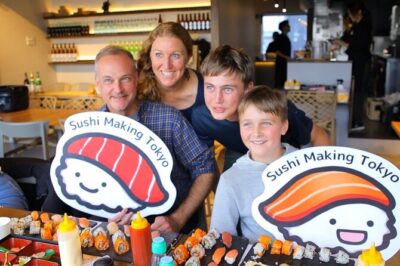 ★ 5.0Sushi Making Tokyo! Popular Maki Sushi & Japanese Sushi(+Recipe!)From $63
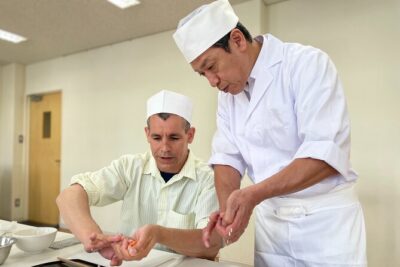 ★ 5.0Tokyo Sushi Making Class in Tsukiji with Professional ChefFrom $49
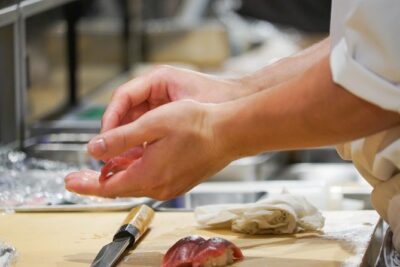 ★ 5.0Tokyo Night Foodie Tour in Shinjuku – Seasonal Sushi, Wagyu BeefFrom $111