Reviewed · SHINJUKU TOURS
Tokyo: Shinjuku Night Walking Tour with Secret Alley
Shinjuku’s best stories are often found in the narrow lanes between the big signs. This 90-minute walk moves from Kabukicho’s neon nightlife to Omoide Yokocho’s old-style food alleys, then pauses at Hanazono Shrine, a quiet Shinto site that many first-time visitors miss.
In This Article
- Key points to know before booking
- Why this short walk works in Shinjuku
- Starting near Shinjuku Station
- Kabukicho: Tokyo’s famous nightlife district
- Kabukicho Tower and the new face of Shinjuku
- Omoide Yokocho and the feel of old Tokyo
- Hanazono Shrine, a pause between the signs
- Golden Gai and its tiny themed bars
- The guides and the value of local explanation
- Is $32 good value for 90 minutes?
- Who should book this Shinjuku walk?
- Practical planning for the evening
- Should you book it?
- FAQ
- Where does the Shinjuku night walking tour meet?
- How long does the tour last?
- What language is the tour conducted in?
- Which parts of Shinjuku does the tour visit?
- Is food included in the tour price?
- Are drinks included?
- How much does the tour cost?
- Can I cancel the booking?
- Can I reserve now and pay later?
I like the way the route joins three different sides of Shinjuku in one outing: the modern spectacle around Kabukicho Tower, the small-scale charm of Omoide Yokocho, and the tiny bars of Golden Gai. I also like the guide-led context. Guides including Haydn, Karen, Yota, Ryota, and Nao have been praised for answering questions and pointing out details you might pass without noticing. The main drawback is simple: 90 minutes goes quickly, and this is a walking tour, not a meal or bar-hopping package.
Key points to know before booking
- Four very different Shinjuku stops: Kabukicho, Kabukicho Tower, Omoide Yokocho, Hanazono Shrine, and Golden Gai fit into one compact route.
- The quietest moment is Hanazono Shrine: It gives you a brief break from neon signs and crowded streets.
- Golden Gai is for atmosphere first: You see its tiny themed bars, but the tour does not promise a drink or bar entry.
- The guide makes the difference: Past guides such as Haydn, Karen, Yota, Ryota, and Nao have been singled out for friendly, detailed explanations.
- The price is $32 per person: That is fair for a short guided orientation in one of Tokyo’s most confusing nightlife districts.
- The meeting point is easy to locate: Meet in front of Happy Lemon near Shinjuku Station.
Why this short walk works in Shinjuku
Shinjuku can feel like several cities packed into one district. You have enormous station buildings, office towers, shopping streets, entertainment venues, old alleys, and small religious sites all within a short walk.
That contrast is the real subject of this tour. You are not simply looking at neon signs. You are seeing how Tokyo’s entertainment center developed and how older corners still survive beside new construction.
I think the 90-minute length suits a first evening in Shinjuku. You get an introduction without giving up an entire night. Afterward, you can return to the area you liked best, find dinner, or continue exploring on your own.
The trade-off is that the route cannot linger everywhere. Omoide Yokocho and Golden Gai reward slow wandering, and you will have limited time to study every lane. Think of this as a guided orientation, not a complete night out.
A few more Tokyo tours and experiences worth a look
Starting near Shinjuku Station
The meeting point is in front of Happy Lemon, close to Shinjuku Station. That location matters because Shinjuku Station is large and can be confusing, especially after dark. Give yourself time to find the correct exit and reach the meeting point without rushing.
The tour is conducted in English with a live guide. The guide is included, as is the walking tour itself. Food, drinks, and bar purchases are not listed as included, so plan your budget accordingly.
The route takes place at night, when Kabukicho and Golden Gai have their strongest character. Wear shoes you can walk in comfortably. The tour is only 90 minutes, but the streets are narrow and you will be moving through busy entertainment areas.
Kabukicho: Tokyo’s famous nightlife district
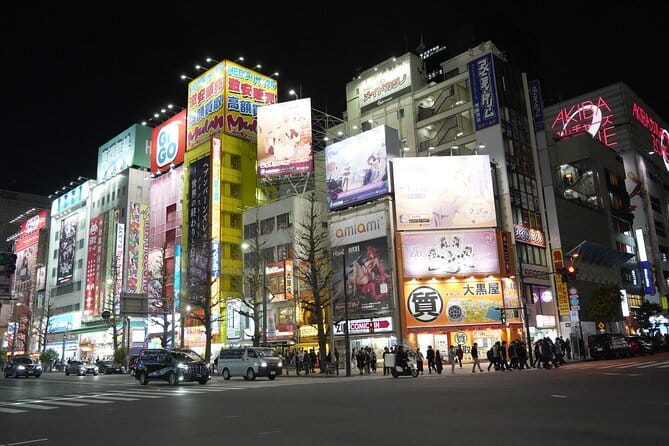
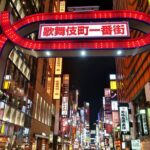
The tour begins in Kabukicho, the part of Shinjuku best known for nightlife, themed restaurants, entertainment venues, and bright signs. It can feel loud and theatrical, but the guide gives the area a useful frame.
Kabukicho grew from postwar black-market activity into one of Tokyo’s main entertainment centers. That change is important. The district is not just a collection of flashy buildings. It reflects Tokyo’s ability to rebuild, reinvent itself, and turn limited urban space into a dense center for leisure.
A guide is especially useful here because the streets can look like a wall of advertisements. Without context, you may notice only the biggest signs. With explanations, you can start to understand how the district is arranged and why certain streets feel more polished while others retain an older, rougher character.
Kabukicho is also a place where you should use common sense. The tour provides an organized route and local explanation, but it does not turn every bar or nightlife venue into a stop. Do not assume that an attractive sign means a place is part of the tour or that a drink is included.
Kabukicho Tower and the new face of Shinjuku
The route passes Kabukicho Tower, a newer landmark that represents the district’s current direction. Its mix of cinema, live music, gaming, and nightlife shows how entertainment in Shinjuku is being gathered into large, modern complexes.
This is a useful contrast with the older lanes later in the walk. Kabukicho Tower is broad, bright, and purpose-built. Omoide Yokocho and Golden Gai feel much smaller and more improvised.
I like having this stop in the route because it keeps the tour from becoming a simple old-Tokyo story. Shinjuku is changing in real time. You see new construction and large commercial projects alongside tiny bars and long-standing religious spaces.
You should not expect a long interior visit here. The listed experience says the route passes Kabukicho Tower, so treat it as a landmark and talking point rather than a full attraction visit.
Omoide Yokocho and the feel of old Tokyo
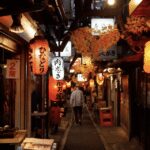
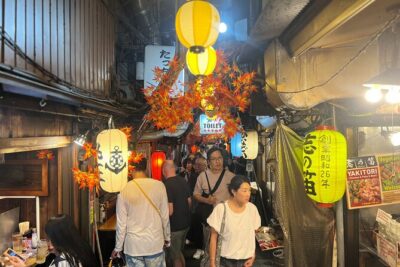
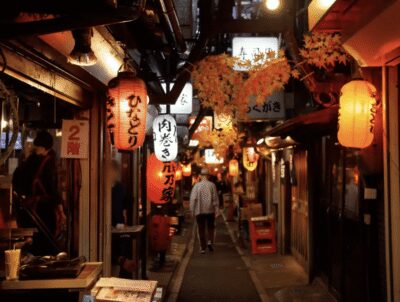
From the large-scale energy of Kabukicho, the route turns toward Omoide Yokocho, also called Memory Lane. The change is immediate. Narrow lanes, lanterns, tiny yakitori shops, and compact bars replace the wide visual impact of the tower and major nightlife streets.
Omoide Yokocho offers a glimpse of a smaller, more intimate Tokyo. The area is associated with Showa-era atmosphere, and the grilled-food smells help make the setting feel lived-in rather than staged.
This is one of the strongest parts of the walk for anyone who wants more than landmark photographs. You can see how much character comes from scale. A little doorway, a row of stools, or a small grill can tell you more about everyday dining than a large entertainment complex.
Keep in mind that the tour does not list food as an inclusion. You may pass places serving yakitori, but your $32 covers the guide and walking route, not a meal. If you want to eat here, save that for after the tour unless your guide gives different instructions on the night.
Omoide Yokocho can also feel tight when busy. You will have less room to stop, and small shops may have limited seating. That is part of the setting, but it means this is better for looking and learning than for settling in during the tour.
A few more Tokyo tours and experiences worth a look




Hanazono Shrine, a pause between the signs
Hanazono Shrine is the route’s sharpest change of mood. After the noise and commercial glare of Kabukicho, you enter a sacred Shinto site that has been part of Shinjuku for centuries.
The shrine’s value is not only visual. It helps you understand that Tokyo’s entertainment districts are not separate from older traditions. A place of worship can sit close to skyscrapers, bars, restaurants, and major roads without losing its purpose.
I especially like this stop because it gives the walk a needed pause. Ninety minutes of signs, crowds, and nightlife could become a blur. Hanazono Shrine lets you slow down and notice a different side of the district.
The stop is also practical for first-time visitors. Many people pass through Shinjuku focused on shopping, food, or nightlife and never realize that a historic shrine is nearby. A guide can point out why it matters and help you notice the contrast instead of walking past it.
Do not expect an extended temple or shrine lesson. The tour is short and covers several districts. Still, even a brief visit can make the whole route feel more balanced.
Golden Gai and its tiny themed bars
The walk finishes in Golden Gai, one of Shinjuku’s most recognizable nightlife areas. Golden Gai is known for very small, themed bars, some scarcely larger than a single room. The district attracts local regulars, artists, and curious visitors, giving it a more personal feel than the large entertainment buildings nearby.
This is a good final stop because it brings together the tour’s main ideas. You have seen postwar change, modern redevelopment, old food lanes, a long-standing shrine, and now a compact nightlife quarter where individual bars have their own character.
Golden Gai is best understood as a place to observe carefully. Look at the entrances, signs, layouts, and small details. You might find a bar that interests you, but the tour does not promise entry, a drink, or a reserved seat.
That distinction matters. If your goal is to spend the evening drinking in several bars, you need a different kind of plan. This experience shows you the area and gives you background. It does not replace an evening of independent exploration.
The tiny scale also creates practical limits. Some bars may have very little space, and not every venue will suit every visitor. A guide can help you understand the setting, but you should respect each establishment’s rules and atmosphere.
The guides and the value of local explanation
The guide is the part of this experience that cannot be measured by the route map. The streets themselves are free to visit, but the explanations help you make sense of what you are seeing.
Haydn has been praised for offering an insider look at the nightlife and taking people through side streets with small bars. Karen has been described as able to answer questions and provide many small details about Shinjuku. Yota has been associated with pointing out good places for a drink, while Ryota and Nao have been praised for being friendly and informative.
Guide assignments can change, so you should not book expecting one particular person. Still, these names give you a useful idea of the approach: personal stories, questions, local recommendations, and details about places that are easy to miss.
I would ask questions as you walk. If you want to know how Kabukicho changed, which streets are best for photographs, or how Golden Gai differs from Omoide Yokocho, this is the time to ask. A guided walk is most valuable when you use the guide’s local knowledge rather than simply following behind the group.
Is $32 good value for 90 minutes?
At $32 per person, this is not the cheapest way to see Shinjuku. You can walk through Kabukicho, Omoide Yokocho, and Golden Gai without paying an entrance fee.
The value comes from the route and the interpretation. In 90 minutes, you cover several areas with very different histories and moods, including a shrine that many people would miss. You also avoid spending your first evening guessing which alleys are worth your time.
I consider the price fair for a first visit, especially if you want structure and English explanations. It is less appealing if you already know Shinjuku well or prefer to wander alone.
The tour has received a top rating across 35 reviews, and the strongest praise focuses on the guides, useful local details, good nightlife suggestions, and overall value. That matches the main reason to book: you are paying for a smart introduction, not admission to a major attraction.
Food is not included in the stated package. Some comments connected with the experience praise food and variety, but you should not treat that as part of the standard inclusion. Budget separately for anything you eat or drink.
Who should book this Shinjuku walk?
I would recommend it to first-time Tokyo visitors who want to understand Shinjuku before going out on their own. It is also useful for repeat visitors who have seen the main station and department stores but have not explored the smaller lanes.
The tour suits you if you enjoy:
- Local history explained in plain English
- Night photography and neon streets
- Small food alleys and compact bars
- A mix of modern Tokyo and older traditions
- A short activity that leaves the rest of the evening free
It may not suit you if you want a long meal, extensive shrine time, or guaranteed bar visits. It is also not the right choice if you dislike walking through crowded nightlife areas.
Families should consider the atmosphere carefully. Kabukicho is an adult entertainment district, and Golden Gai is a nightlife area. The tour description does not give an age restriction, but the setting may not match every family’s preferences.
Practical planning for the evening
Meet in front of Happy Lemon near Shinjuku Station. Since the station is large, arriving early is sensible, even though the activity itself lasts only 90 minutes.
The tour is conducted in English. You will be walking through busy streets and narrow alleys, so comfortable footwear is a better choice than shoes selected only for appearance.
Plan your evening around the tour rather than assuming it includes dinner. Omoide Yokocho has food shops and Golden Gai has bars, but purchases are separate. You can use the guide’s suggestions to decide where to return after the walk.
The booking terms are flexible. You can cancel up to 24 hours before the activity for a full refund, and you can reserve now and pay later. Starting times vary, so check availability for your date.
Should you book it?
Book this tour if you want a compact, guided introduction to Shinjuku’s contrasts. The route covers Kabukicho, Kabukicho Tower, Omoide Yokocho, Hanazono Shrine, and Golden Gai, giving you both major sights and smaller corners in one evening.
The best reason to go is the guide. Haydn, Karen, Yota, Ryota, and Nao have each been praised for friendly explanations, detailed answers, and useful suggestions. The main limitation is the short duration, plus the fact that food and drinks are not included.
For $32, I think it is a good choice for a first night in Tokyo, especially if you want to explore Shinjuku later with more confidence. If you already know the district well or want a full food tour, spend your money elsewhere. If you want the stories behind the signs, this walk earns its place in your itinerary.
FAQ
Where does the Shinjuku night walking tour meet?
The meeting point is in front of Happy Lemon, located close to Shinjuku Station.
How long does the tour last?
The walking tour lasts 90 minutes.
What language is the tour conducted in?
The tour is conducted in English with a live English-speaking guide.
Which parts of Shinjuku does the tour visit?
The route includes Kabukicho, Kabukicho Tower, Omoide Yokocho, Hanazono Shrine, and Golden Gai.
Is food included in the tour price?
Food is not listed as an inclusion. The stated inclusions are the guide and the walking tour of Shinjuku.
Are drinks included?
Drinks are not listed as included in the activity.
How much does the tour cost?
The listed price is $32 per person.
Can I cancel the booking?
You can cancel up to 24 hours in advance for a full refund.
Can I reserve now and pay later?
Yes. The activity allows you to reserve your place and pay later.
More Walking Tours in Tokyo


More Night Tours in Tokyo
More Shinjuku Tours in Tokyo
More tours in Tokyo we've reviewed












Shinjuku Tours, compared.
 ★ 5.0Tokyo: Shinjuku Food Tour (13 Dishes at 4 Local Eateries)From $86
 ★ 5.0Tokyo Bar Hopping Tour in Shinjuku (All-You-Can-Drink + Dinner)From $106
 ★ 4.9Tokyo: Shinjuku Local Bar and Izakaya Guided Walking TourFrom $343 hours
 ★ 4.9Tokyo: Shinjuku Food Tour (13 Dishes and 4 Eateries)From $97
 ★ 5.0Tokyo Night Foodie Tour in Shinjuku – Seasonal Sushi, Wagyu BeefFrom $111
 ★ 5.0Tokyo: Shinjuku Local Bar & Izakaya Crawl TourFrom $39