Reviewed · IMPERIAL PALACE & SHOGUN TOURS
Tokyo: Imperial Palace, Edo Castle and Historical Tour
Edo Castle is gone, but its massive stone foundations, moats, gates, and garden grounds still give you a strong sense of the power once held here. This 90-minute Imperial Palace tour takes you into the East Gardens, where Tokyo’s modern skyline gives way to samurai-era walls and quiet ponds.
In This Article
- Key points to know before booking
- Why Edo Castle matters in the middle of Tokyo
- Meeting at Wadakura Fountain Park
- The Imperial Palace photo stop and first history lesson
- East Gardens: stone walls, gates, and the castle keep foundation
- Ninomaru Garden and the softer side of the Edo period
- Sakurada-mon Gate and the final stretch
- How the guides shape the experience
- Timing, access, and practical value
- Who should book this Imperial Palace walk
- Should you book it?
- FAQ
- How long does the Imperial Palace historical tour last?
- What language is the tour offered in?
- Where does the tour meet?
- What places are included on the route?
- Is admission to the Imperial Palace East Garden included?
- Is the tour wheelchair accessible?
- Can I cancel for a full refund?
I like the mix of solid historical remains and graceful gardens, and I like that the guide connects the Tokugawa shogunate with Japan’s later imperial era. Guides such as Tony, Jim, and Bell have also made a point of speaking clearly, answering questions, and including everyone in the group.
The main consideration is time. The advertised duration is 90 minutes, while the full experience may take about 1.5 to 2 hours. The route is wheelchair accessible, but you should still allow extra time for meeting the guide and moving between the palace grounds and Sakurada-mon Gate.
Key points to know before booking
- Edo Castle’s stone foundations let you picture the scale of the former shogun stronghold.
- Ninomaru Garden adds ponds, seasonal flowers, and a calmer side of Tokyo.
- Sakurada-mon Gate and old moats provide some of the tour’s best samurai-era photo spots.
- English-speaking guides include Tony, Jim, and Bell, with clear explanations and an easygoing style.
- The $22 price is reasonable for a guided introduction to central Tokyo’s political and cultural past.
- Free cancellation up to 24 hours ahead and reserve-now, pay-later booking make planning less rigid.
Why Edo Castle matters in the middle of Tokyo
Tokyo can feel like a city built for speed: trains arrive by the minute, towers rise above busy roads, and whole neighborhoods seem to run on schedules. Then you enter the Imperial Palace East Gardens and encounter huge stone blocks, broad moats, old gates, and stretches of quiet greenery.
This was once Edo Castle, the headquarters of the Tokugawa shoguns. For more than two centuries, the shogunate governed Japan from here, while the emperor remained in Kyoto. That distinction is important. The palace grounds are not simply a royal park. They mark the place where military government, aristocratic tradition, and modern imperial rule met.
I find this setting more useful than a history lecture in a museum. The stones show you the practical side of power. A wall several feet thick, a guarded gate, or a moat tells you more about the old political order than a long list of dates. Your guide fills in the missing pieces, explaining how the castle worked and how Japan moved from shogunal rule to imperial government.
The tour costs $22 per person, which is a modest price for a guided walk in one of central Tokyo’s most important historic areas. You can enter a public garden on your own, but a guide helps you understand why the gates were placed where they were, what the stone foundations once supported, and how the imperial family fits into the story.
A few more Tokyo tours and experiences worth a look


Meeting at Wadakura Fountain Park
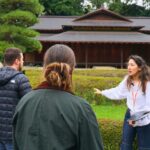
The meeting point is in front of the Starbucks at Kokyo Gaien Wadakura Fountain Park, close to the Imperial Palace East Gardens. This gives you an easy landmark in a large central area, but pay attention to the exact meeting details supplied after booking.
The opening approach matters because the palace grounds are spread across a broad area. You do not want to begin the day by guessing which gate or plaza is meant. Arriving early gives you time to find the Starbucks, use nearby facilities, and get ready for a walk rather than starting in a rush.
Your guide leads the group toward the palace area and begins setting the scene. This is also where you can ask practical questions before the main explanations begin. If you have hearing concerns, Tony has been especially careful to speak clearly and loudly, a useful detail for anyone who depends on good volume and steady delivery.
The tour is offered in English with a live guide. The available information does not give a fixed group size, so the feel of the walk may vary by departure. Expect a guided sightseeing visit rather than a private palace-room tour. The focus is on outdoor grounds, ruins, gates, gardens, and historical explanation.
The Imperial Palace photo stop and first history lesson
The first formal stop is at Tokyo Imperial Palace, with about 15 minutes for a guided visit and photographs. This portion helps you understand the continuing role of the palace before you move deeper into the former castle grounds.
Do not expect a long interior palace visit here. The experience centers on the exterior setting and the history attached to it. That is useful for visitors who want context without spending several hours on a single attraction.
Your guide explains the imperial family and the change from the Tokugawa period to imperial rule. This transition can be hard to grasp if you only see it as a change of buildings or rulers. The guide’s job is to connect the physical site with the political shift, showing you how one center of power took on a new meaning over time.
Jim has been praised for explaining Japanese history in relation to modern Japan, with a relaxed and humorous style. That approach suits this stop because the subject can become heavy with names and dates. Clear storytelling helps you keep the basic sequence in mind: Edo Castle was the shogun’s base, Japan later restored imperial authority, and the palace remains linked to the imperial institution today.
You also get a chance to take photographs before entering the East Gardens. Keep your camera ready, but listen first. The view may look simple at a glance, yet the guide’s explanation gives the scene its weight.
East Gardens: stone walls, gates, and the castle keep foundation
The East Gardens are the heart of the experience, with about 45 minutes of guided touring and photo time. Here you walk through the former castle grounds and see the pieces that survived or were preserved after the castle itself disappeared.
The stone walls are the clearest reminder of Edo Castle’s strength. Large, carefully fitted stones created a defensive system that was meant to control movement and protect the shogun’s residence. As you pass through the old gates and beside the moats, you can picture a place designed around access, rank, and security.
The remains are not a complete castle. That is both the attraction and the limitation. You will not walk through intact rooms filled with original furnishings. Instead, you use foundations, walls, gates, and the shape of the grounds to reconstruct the site in your mind.
One of the key moments is the foundation of the former castle keep. From this raised base, your guide helps you imagine the lost tower and the scale of the complex around it. It is a good example of why a guided walk works here. Without an explanation, you see an open stone platform. With context, you can connect it to the central authority of the Tokugawa shogunate.
I would give this section your full attention. The grounds invite casual wandering, but the details carry the meaning. Notice how the defensive features contrast with the ordered garden spaces. Edo Castle was not only a military base. It was also a seat of government, ceremony, residence, and display.
The East Gardens are a strong choice for first-time visitors who want history without leaving central Tokyo. You get a clear introduction to the samurai era while still enjoying trees, ponds, and open paths. The setting also offers a welcome pause from the city’s hard surfaces and traffic.
Ninomaru Garden and the softer side of the Edo period
Ninomaru Garden changes the mood. After the heavy stonework and defensive gates, you enter a more refined space with tranquil ponds and seasonal flowers. The garden reflects the careful design associated with the Edo period, when beauty, ceremony, and control often worked together.
I like this contrast because it keeps the tour from becoming a march between ruins. You are not only hearing about armies and shoguns. You are also seeing how taste, gardening, and formal space shaped the lives of powerful people.
Seasonal conditions will affect what you see. Flowers and foliage change during the year, so the garden will not look identical from one visit to the next. The ponds and layout remain, but the color and atmosphere depend on timing.
Your guide explains the garden as part of the wider story rather than treating it as a separate photo stop. That is valuable. Ninomaru Garden shows that the old ruling class cared about cultivated beauty as much as defense, and it gives you a better sense of how the castle grounds served different purposes.
This is also a good place to slow down. A 90-minute tour moves at a steady pace, and you may want to linger over the ponds or seasonal flowers. If photography is a priority, keep in mind that the group will continue on schedule. You can take pictures, but the tour is built around shared timing rather than a long free period.
Other historical tours in Tokyo





Sakurada-mon Gate and the final stretch
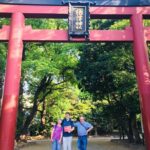
The final listed stop is Sakurada-mon Gate, with about 20 minutes for guided sightseeing and photographs. This is one of the most memorable parts of the route because it brings together the gate, moat, stonework, and the broader political story of the palace area.
Gates were not decorative afterthoughts. They controlled who entered, how people approached the castle, and how the ruling center presented itself. Sakurada-mon gives you a direct look at that old system of movement and protection.
The surrounding moat adds scale. It is easier to understand the castle’s defensive design when you see the water barrier beside the gate and walls. Your guide can point out how these features worked together, turning the approach into a controlled passage rather than an open road.
This stop also provides a strong closing image. You finish with a clear link between the samurai government of Edo and the modern capital around you. Tokyo’s present-day streets and offices are close by, yet the gate preserves a visible piece of an earlier political order.
The final 20 minutes are useful for photographs, but they are also a chance to ask questions. Bell has been especially considerate about making sure the whole group feels included. That matters on a walking tour, where some people may want more historical detail while others need a little extra time to follow the route.
How the guides shape the experience
The quality of a short history walk depends heavily on the guide. Ninety minutes does not leave room for a scattered lecture, so clear organization and good communication make a real difference.
Tony’s style is a strong fit for anyone who needs clear, loud speech. He has explained Edo Castle while walking through the ancient gates and remained happy to answer questions. That combination of volume, friendliness, and historical detail is practical, not merely pleasant.
Jim brings a broad grasp of Japanese history and connects the past with the present. His relaxed humor can make a complicated subject easier to follow, especially if you are unfamiliar with the Tokugawa period or the shift to imperial government.
Bell’s approach focuses on inclusion. She keeps an eye on the whole group and works to ensure nobody is left out of the explanations. Since the group size is not specified, guide attention can matter even more than usual.
Your assigned guide may differ by departure. Still, the available guide information points to a tour built around spoken explanation rather than a silent walk from one landmark to the next. If you want only photographs, you can visit the grounds independently. If you want the site to make sense, the guide is the main reason to book.
Timing, access, and practical value
The stated duration is 90 minutes, with the broader description allowing about 1.5 to 2 hours. Treat it as a short half-day building block rather than a full-day activity. It can fit well before or after another central Tokyo plan, provided you leave enough space for the meeting point and the walking route.
The tour is wheelchair accessible, which makes the experience available to a wider range of visitors. The provided details do not describe every surface or any assistance arrangements, so contact the provider if you need specific access information. Still, the stated accessibility is an important advantage.
The price is $22 per person. For that amount, you receive a guided historical walk, admission to the Imperial Palace East Garden, and explanations about the imperial family and Edo Castle. That is good value if you care about context and do not want to study the site alone.
The value is less clear if you prefer a slow, unstructured visit. You may feel hurried during the garden section, especially if you want time for close photography. On the other hand, the compact length keeps the cost and time commitment low.
Free cancellation up to 24 hours before the activity and reserve-now, pay-later booking also help if your Tokyo schedule is still changing. These details are useful in a city where weather, train plans, and museum reservations can shift your day.
Who should book this Imperial Palace walk
I would recommend this tour to first-time Tokyo visitors who want a clear introduction to the city’s political past. It also suits anyone interested in the samurai era, Japanese government, imperial tradition, or historic gardens.
Families and mixed-interest groups may like the balance. One person can focus on the castle ruins, another on the garden, and everyone gets the benefit of a central location and a manageable duration. The route also works well for visitors who want an outdoor activity rather than another indoor museum.
History fans should book if they value interpretation over access to original rooms. The surviving features are impressive, but their meaning is not always obvious without help. A guide gives you the story that the stones alone cannot provide.
You may want to skip it if you want an extended palace visit, private access, or a slow photography session. This is a structured English walking tour, not an open-ended exploration of every corner of the grounds.
Should you book it?
Book this tour if you want a concise, guided introduction to Edo Castle and the Imperial Palace grounds for $22. The strongest reasons are the well-placed route, the mix of castle ruins and Ninomaru Garden, and guides who explain Japanese history clearly and include the full group.
Go independently if you already know the Tokugawa period well or prefer to set your own pace. For most visitors, though, the tour adds enough context to make the gates, moats, and stone foundations far more meaningful than they would be on a casual walk.
FAQ
How long does the Imperial Palace historical tour last?
The stated tour duration is approximately 90 minutes. The wider activity details allow about 1.5 to 2 hours, so you should leave some extra time in your schedule.
What language is the tour offered in?
The live tour guide speaks English.
Where does the tour meet?
The meeting point is in front of the Starbucks at Kokyo Gaien Wadakura Fountain Park, located close to the Imperial Palace East Garden. Full meeting details are provided after booking.
What places are included on the route?
The route includes Tokyo Imperial Palace, the Imperial Palace East Gardens, Ninomaru Garden, Edo Castle remains, and Sakurada-mon Gate.
Is admission to the Imperial Palace East Garden included?
Yes. Admission to the Imperial Palace East Garden is included with the historical walking tour.
Is the tour wheelchair accessible?
Yes, the activity is listed as wheelchair accessible.
Can I cancel for a full refund?
Yes. You can cancel up to 24 hours in advance for a full refund. You can also reserve the activity and pay later.
More Historical Tours in Tokyo
More Imperial Palace & Shogun Tours in Tokyo



More tours in Tokyo we've reviewed












Imperial Palace & Shogun Tours, compared.
 ★ 4.9Tokyo: Imperial Palace Japanese History Walking TourFrom $32
 ★ 4.9Tokyo: Imperial Palace and Shogun Walking TourFrom $162 hours
 ★ 5.0Imperial Palace East Garden and Edo Castle Walking Tour in TokyoFrom $25
 ★ 4.8Tokyo: Imperial Palace East Gardens Walking TourFrom $192h 30m
 ★ 4.5Tokyo: Imperial Palace, Sensō-ji Temple, & Tokyo Tower TourFrom $404 hours
 ★ 5.0Tokyo Castle, Imperial Palace, Shogun & Garden Walking TourFrom $31