Reviewed · DESSERT TOURS
Tokyo: Hama-rikyu Gardens tour with Japanese Tea & Sweets
Hama-rikyu Gardens gives you a quiet look at old Tokyo, with Edo-period garden design explained as you walk. The best part comes at the garden tea room, where matcha and Japanese sweets turn a sightseeing walk into a small cultural experience.
In This Article
- Key points to know before booking
- Why Hama-rikyu works well for a Tokyo history break
- Starting at Otemon Bridge
- Reading the Karesansui dry garden
- Following the Kaiyushiki circular garden
- Matcha and Japanese sweets in the tea room
- Optional stop: Advertising Museum Tokyo
- Optional stop: Hayao Miyazaki’s giant clock
- Optional stop: Hibiya Shrine
- What the two-and-a-half-hour timing really means
- Is $85.84 a fair price?
- Who should book this garden and tea experience?
- Booking, cancellation, and practical details
- Should you book it?
- FAQ
- Where does the tour start?
- Where does the tour end?
- How long does the experience last?
- Is admission to Hama-rikyu Gardens included?
- Are matcha and Japanese sweets included?
- What optional stops are available?
- How many people can join the tour?
- Can I cancel for a full refund?
I like the tiny group size, capped at four people, because it should leave room for questions and a more personal pace. I also like the clear mix of scenery and context: you see the dry garden, circular garden, plants, and trees, while your guide explains why the garden was arranged that way.
The main consideration is price. At $85.84 per person, this is not a cheap garden stroll, especially if you only want to look around for an hour. Its value depends on how much you want the guide’s explanations and the included tea and sweets.
Key points to know before booking
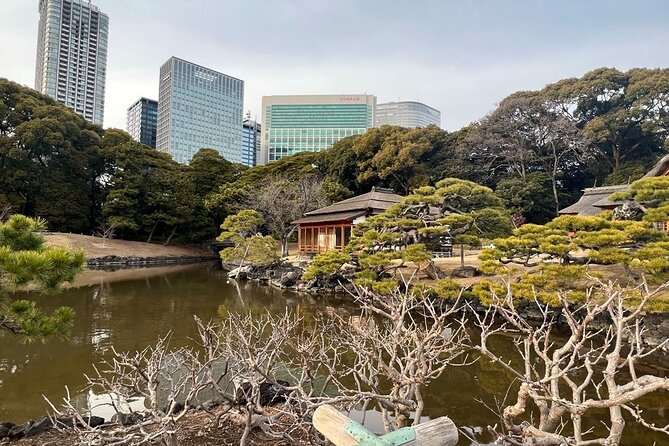
- Edo-period setting: Hama-rikyu is one of Tokyo’s largest daimyo gardens, created during the samurai era.
- Matcha and sweets included: The tea-room stop is part of the tour price, not an extra purchase.
- Very small group: A maximum of four participants allows for a quieter, more direct tour.
- Flexible length: Expect about 1 hour 30 minutes to 2 hours 30 minutes, depending on the optional stops.
- Optional nearby sights: You may add the Advertising Museum Tokyo, Miyazaki’s giant clock, and Hibiya Shrine.
- Convenient finish: The tour ends at Shiodome Station, served by the Yurikamome and Toei Oedo lines.
Why Hama-rikyu works well for a Tokyo history break
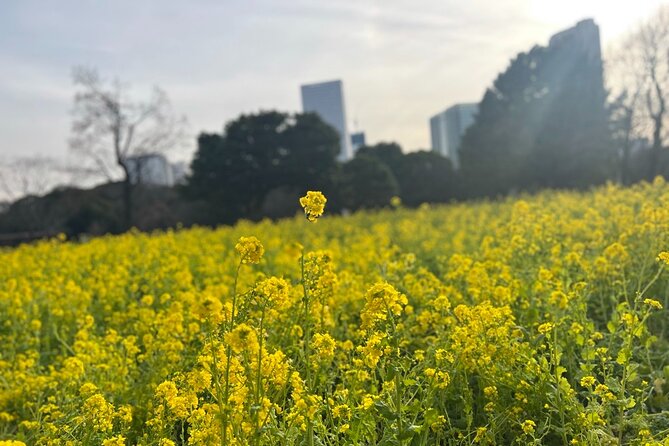
Tokyo can feel like a city of towers, trains, shopping streets, and constant motion. Hama-rikyu Gardens offers a different pace. Here, the main attraction is not a single building or object. It is the way paths, water, trees, open spaces, and carefully arranged garden features work together.
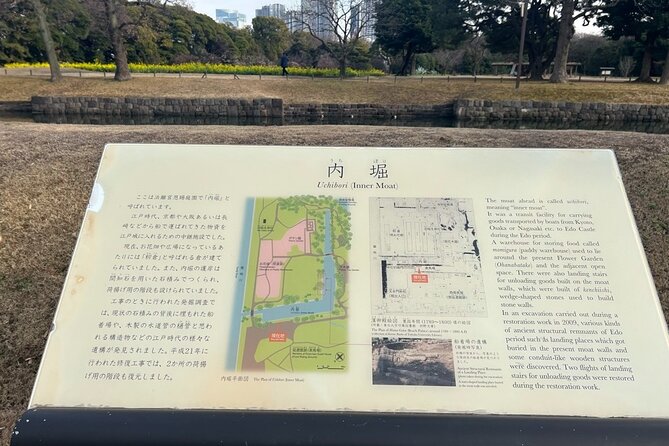
The garden dates from the Edo period, from 1603 to 1868, when samurai established large gardens within their estates. Hama-rikyu is described as the largest of Tokyo’s daimyo gardens, so you get more than a small urban park. The scale gives the guide room to explain how these gardens were used and designed.
I find this kind of guided visit more useful than simply walking through a garden with a camera. Without context, a dry garden may look like gravel and stones, and a circular garden may seem like a pleasant path with trees. With an explanation, you can begin to notice the planning behind each view.
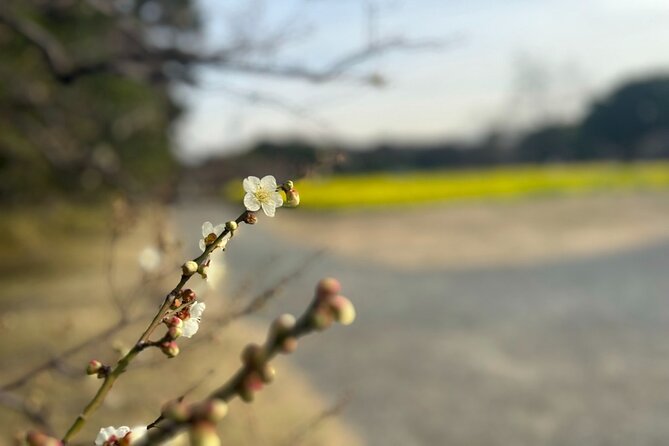
The garden also changes with the seasons. The plants and trees provide a reason to return at a different time of year, though the tour description does not promise a particular seasonal display. You should think of the scenery as changing rather than fixed.
A few more Tokyo tours and experiences worth a look


Starting at Otemon Bridge
The meeting point is Otemon Bridge, at the supplied address in Chuo City. You should allow time to find the bridge and be ready at the stated meeting point, since this is a walking tour rather than a hop-on, hop-off activity.
The tour uses a mobile ticket, and confirmation is provided when you book. It is near public transportation, which helps if you are fitting it between other Tokyo plans. Still, the address should be checked carefully on your map before the day, especially because Tokyo addresses can look similar and the meeting point is given with a map code as well as a street address.
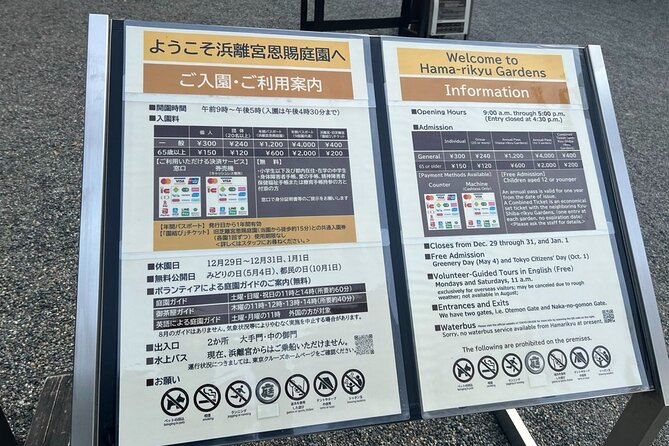
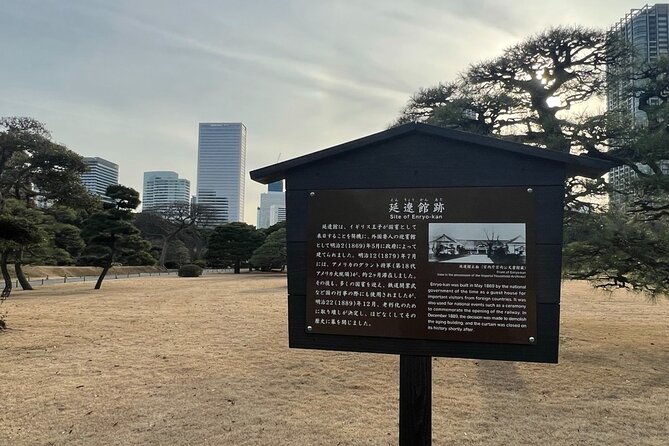
From Otemon Bridge, you enter Hama-rikyu Gardens for the main part of the experience. Admission to the garden is included. The garden visit is scheduled for about 1 hour 30 minutes, which gives the guide enough time to cover the principal features without turning the outing into an all-day commitment.
Wear comfortable walking shoes. That advice matters here. The experience involves moving around a sizable garden, and the point is to follow the paths, stop for explanations, and take in several views rather than remain in one place.
Reading the Karesansui dry garden
One of the garden’s main features is the Karesansui, or dry garden. This style uses elements such as stones and gravel to suggest natural scenes without relying on a pond or stream as the central feature.
The value of seeing it with a guide is that you can ask how the arrangement fits into the wider garden. The guide explains the history of Hama-rikyu and the thinking behind its design, so you are not left to guess what you are looking at.
I would pay attention to the contrast between this restrained area and the garden’s planted sections. The dry garden asks you to look at shape, spacing, and composition. The trees and plants bring seasonal change. Together, they show that Japanese garden design is not one single look.
Photography is welcome, and the garden provides plenty of details to notice. Still, try not to rush from one picture to the next. The guide’s explanation is a large part of what separates this tour from simply buying admission and walking on your own.
Following the Kaiyushiki circular garden
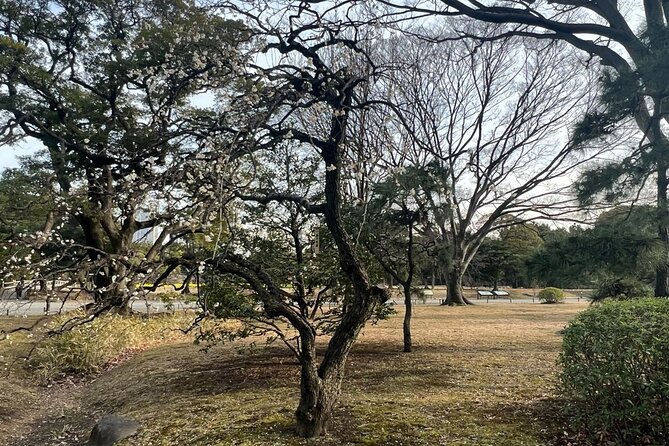
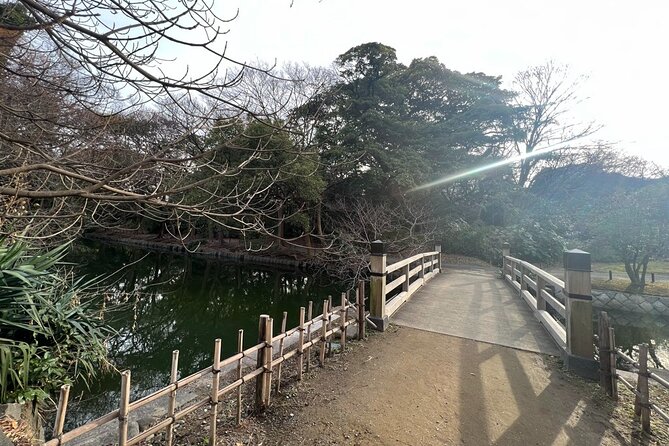
The second major feature is the Kaiyushiki garden, a circular garden designed to reveal different views as you move along its route. The idea is simple: the garden is experienced in motion, with the scenery changing as the path turns.
This makes the walking pace important. You are not just heading toward a final attraction. Each section can frame the garden differently, and your guide can point out how the layout controls what you see.
The tour’s strongest appeal is here. You get the pleasure of a traditional garden, but also a basic lesson in how the garden was planned. That context can make even a quiet path feel purposeful.
The supplied information does not give a precise route or list every feature the guide will cover. Expect the emphasis to remain on the garden’s history, design, plants, trees, and major garden styles. If you want a highly specialized architectural or botanical tour, you should ask about the guide’s focus before booking. For a general introduction to Japanese garden culture, the format is more approachable.
Matcha and Japanese sweets in the tea room
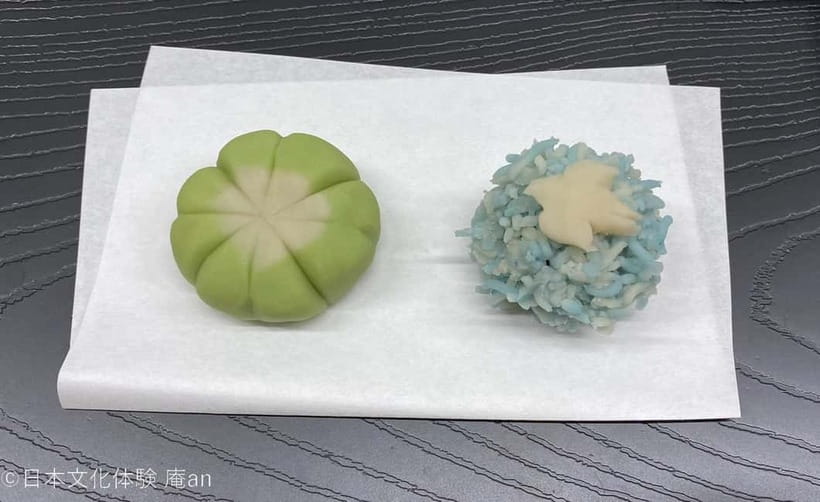
The tea-room stop is the part that gives this experience its distinct character. Matcha green tea and Japanese sweets are included in the $85.84 fee, so you do not need to budget separately for those items.
You should expect a cultural tasting rather than a full meal. Matcha has a strong, distinctive flavor, and Japanese sweets are traditionally meant to complement the tea. The setting inside the garden adds meaning to the pause. Instead of grabbing a drink at a café after sightseeing, you stop within the place you have just been learning about.
This is also a useful break in the middle of a walking tour. The garden portion can last 90 minutes, and the total activity may reach 2 hours 30 minutes if you add the optional stops. A seated tea experience gives the outing a natural change of pace.
One current review specifically praises the relaxed walk, the tea, and the sweets, and names the guide Nori as helpful. That matches the kind of experience this tour seems designed to provide: calm, personal, and focused on explanation rather than speed.
The listing does not specify tea-room etiquette, dietary substitutions, or a choice of sweets. If you have dietary needs, check with the provider before booking. The confirmed inclusions are matcha and Japanese sweets.





Optional stop: Advertising Museum Tokyo
The Advertising Museum Tokyo is an optional stop lasting about 35 minutes, with admission listed as free. Its exhibits cover changes in Japanese advertising and differences between Japanese and foreign advertising.
This is a good add-on if you want to connect traditional garden culture with modern Japanese visual culture. Advertising gives you a very different way to read the city, through design, messages, and changing ideas about public life.
The drawback is time. A 35-minute museum visit makes the tour longer and may reduce the sense of a simple garden outing. If your priority is the tea and garden, you may prefer to keep the day focused. If you enjoy design, media, or cultural comparisons, this optional stop gives the tour more range.
Because it is marked optional, do not assume it is essential to the main experience. The core tour is Hama-rikyu Gardens, while the museum adds a separate subject nearby.
Optional stop: Hayao Miyazaki’s giant clock
Another optional stop is the Nippon Television Giant Clock, a copper, steampunk-style karakuri clock created by Hayao Miyazaki, the Studio Ghibli animation director. The stop is listed at about 10 minutes and admission is free.
The clock activates when the time is up, with lights, movement, and music. That makes it an easy short stop, especially if you already plan to finish in the Shiodome area.
This is a sharp contrast with Hama-rikyu. The garden asks you to slow down and notice balance and space. The clock is mechanical, theatrical, and tied to modern popular culture. You might enjoy the contrast, but it is not a substitute for more time in the garden.
The timing matters. Since the clock’s moving display happens at the hour, you may need to coordinate the stop with the schedule. The supplied details do not promise a particular performance time, so ask the guide how it fits into your visit.
Optional stop: Hibiya Shrine
Hibiya Shrine is a small optional stop of about 15 minutes. It sits in an office district and has a history of roughly 400 years. The shrine enshrines the god of agriculture and the god said to drive away impurity.
This gives you another view of Tokyo’s past, one placed among modern office buildings rather than inside a large garden. The contrast is useful. Tokyo’s old religious and cultural sites have not all been preserved in isolated historic zones.
At 15 minutes, this is a brief introduction, not a full shrine visit. It suits you if you like adding small historic stops to a walking route. If you prefer a slower garden visit, you can treat it as optional in the fullest sense.
What the two-and-a-half-hour timing really means
The advertised duration ranges from 1 hour 30 minutes to 2 hours 30 minutes. The 1 hour 30 minute garden visit appears to be the core. The optional museum, clock, and shrine explain why the total can stretch longer.
That flexibility is useful, but it means you should not plan a tight connection immediately afterward. The tour ends at Shiodome Station, but the final timing depends on which optional stops are included.
The ending is practical. Shiodome Station connects with the Yurikamome and Toei Oedo lines, giving you a straightforward way to continue around Tokyo. The tour does not return to Otemon Bridge, so plan your next stop from Shiodome rather than assuming a round trip.
A small group of no more than four is another important detail. A group this size can make it easier to hear the guide and ask questions. It may also allow the pace to feel less fixed, though the exact flexibility will depend on the guide and the day’s schedule.
Is $85.84 a fair price?
At $85.84 per person, this experience costs much more than visiting a garden by yourself. The price makes the most sense if you want three things together: guided interpretation, the included matcha and sweets, and a small group.
The tea is not the whole value. If you booked only for a cup of matcha, the tour would be hard to justify. The better comparison is a garden admission experience plus a private-style walking explanation and a tea-room visit.
The maximum group size of four improves the value for people who do not want a large tour. You are paying for a more personal format, not just transportation or entry. The optional museum and other stops are listed with free admission, so they add time and interest rather than a major extra ticket cost.
The price is less appealing if you are comfortable researching Japanese gardens yourself, want only a quick visit, or have a full day of free sightseeing near Shiodome already planned. In that case, you may prefer to visit independently and spend your money elsewhere.
The current rating is 5 from three reviews, a small sample. One detailed comment praises a relaxed garden walk, the tea and sweets, and guide Nori’s helpful manner. That is encouraging, but the limited number of reviews means you should judge the tour mainly by its structure and inclusions.
Who should book this garden and tea experience?
I would recommend it to first-time Tokyo visitors who want a gentle introduction to Japanese garden culture without committing to a long full-day tour. It also suits repeat visitors who have seen the main city sights and want time in a historic garden.
It is a good fit for you if you enjoy:
- Guided explanations of design and history
- Small groups instead of large sightseeing parties
- Matcha and Japanese sweets in a garden setting
- Short optional stops with different themes
- An end point that connects to Tokyo rail lines
You should think twice if you dislike walking, need a fully fixed end time, or want a meal rather than a tea tasting. The duration is approximate, and comfortable walking shoes are recommended.
The tour is also useful for people who want a little structure but not a packed schedule. The garden takes up the main part of the visit, while the optional stops let you shape the outing around your interests.
Booking, cancellation, and practical details
Confirmation arrives at booking, and the experience accepts a mobile ticket. It is near public transportation, and most participants can take part according to the supplied information.
Free cancellation is available if you cancel at least 24 hours before the start time. Cancellations or changes made less than 24 hours in advance are not refunded or accepted. The cut-off uses local Tokyo time.
The activity requires a minimum number of participants. If the provider cancels because that minimum is not met, you will be offered another date or experience, or a full refund.
The experience provider is gotcha. Since the group is limited to four, booking well ahead may be sensible. The average booking time is 49 days before the visit, which suggests that you should not wait until the last moment if your Tokyo dates are fixed.
Should you book it?
Book this tour if you want Hama-rikyu Gardens to be more than a pretty walk. The guide’s explanation of the Karesansui and Kaiyushiki styles, the seasonal plants and trees, and the included matcha and sweets give the visit a clear cultural focus.
The strongest reason to choose it is the small group. You get a quieter format, a guide such as Nori, and a tea-room pause that fits naturally with the setting. The optional museum, giant clock, and shrine can add variety, but the garden is the reason to book.
Skip it if the $85.84 price feels high for a 90-minute garden visit, or if you prefer independent sightseeing. For everyone else, especially those interested in Japanese gardens and a relaxed pace, this is a well-shaped Tokyo experience with enough flexibility to fit neatly into a larger day.
FAQ
Where does the tour start?
The tour starts at Otemon Bridge in Chuo City, Tokyo. The supplied meeting point includes the address and a Google Maps location code.
Where does the tour end?
The tour ends at Shiodome Station. You can continue by the Yurikamome or Toei Oedo line.
How long does the experience last?
The approximate duration is 1 hour 30 minutes to 2 hours 30 minutes. The Hama-rikyu Gardens portion lasts about 1 hour 30 minutes, while optional stops can extend the visit.
Is admission to Hama-rikyu Gardens included?
Yes. Admission to Hama-rikyu Gardens is included in the tour fee.
Are matcha and Japanese sweets included?
Yes. Matcha green tea and Japanese sweets are included in the price.
What optional stops are available?
Optional stops include Advertising Museum Tokyo, the Nippon Television Giant Clock created by Hayao Miyazaki, and Hibiya Shrine.
How many people can join the tour?
The experience has a maximum of four participants.
Can I cancel for a full refund?
Yes, if you cancel at least 24 hours before the experience start time. Cancellations made less than 24 hours before the start time are not refunded.
More Dessert Tours in Tokyo


More tours in Tokyo we've reviewed












Dessert Tours, compared.
 ★ 5.0Matcha Making Class in Tokyo with Authentic Japanese Sweets SetFrom $21
 ★ 4.9Tokyo: Matcha Making Experience with Mochi Sweets in AsakusaFrom $221 hour
 ★ 5.0Make Traditional Nerikiri Sweets & Matcha experience in ShibuyaFrom $60
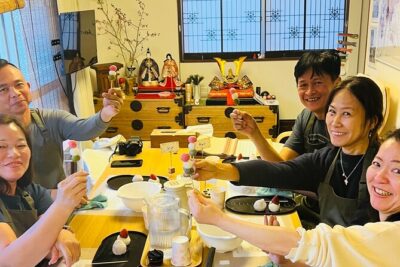 ★ 5.0Private Mochi Sweets Making class near Shibuya areaFrom $79
 ★ 5.0Sweets Making and Kimono Tea Ceremony at Tokyo MaikoyaFrom $112
 ★ 4.7Japanese Traditional Sweets making and Tea CeremonyFrom $181h 35m