Reviewed · CYCLING TOURS
Tokyo downtown bicycle tour Tokyo Backstreets Bike Tour
Tokyo reveals itself differently from a bicycle seat. On this four-hour ride, you move from the cherry-leaf sweets of Asakusa to small shrines, quiet lanes, traditional gardens, sumo country, and old shopping streets near the Skytree. It is a useful way to see far more than you could on foot without spending the day underground on trains.
In This Article
- Key points of the Tokyo Backstreets Bike Tour
- Why a bicycle works so well in eastern Tokyo
- Starting with sakuramochi at Yamamotoya
- Honryuin Matsuchiyama Shoden and Imado Shrine
- Traditional crafts in the Edo Taito center
- Senso-ji by bicycle, not just by train
- Kyu Yasuda Garden and the sumo district
- Along Oyokogawa Water Park toward Tokyo Skytree
- Kyojima Minami Park and everyday Tokyo
- Bikes, safety, and comfort
- What the $65.41 price gets you
- Who should book this ride
- Should you book the Tokyo Backstreets Bike Tour?
- FAQ
- How long does the Tokyo Backstreets Bike Tour last?
- How many people can join the tour?
- Where does the tour start?
- Where does the tour end?
- Are bicycles and helmets provided?
- What height range suits the provided bicycles?
- Can I request a tandem bicycle?
- What is included with the tour?
- Can I cancel for a full refund?
I like the small group size, capped at six, and the easy pace. I also like the personal touch from guide Takeshi, who can adjust the route, answer questions, take photos, and suggest local restaurants. The main consideration is that the route is not a greatest-hits tour of all Tokyo. It focuses on eastern neighborhoods, and summer heat, rain, or a desire for a private group can affect the experience.
Key points of the Tokyo Backstreets Bike Tour
- About 15 kilometers in four hours: You cover a broad slice of eastern Tokyo without rushing from one major attraction to the next.
- A folding-bike route for smaller riders: The provided bikes suit people from 140 to 180 centimeters tall. Tell the operator ahead of time if you are taller.
- Takeshi keeps the ride personal: The guide explains local customs and history, takes photographs, and can adjust the itinerary.
- Traditional cherry cake starts the outing: You sample sakuramochi from Yamamotoya, a shop associated with the sweet’s early history.
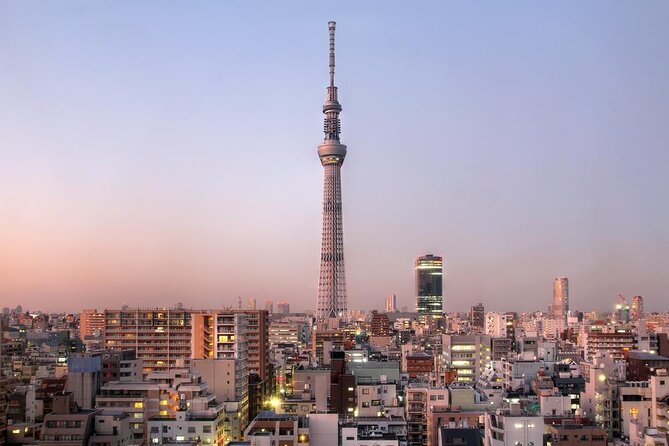
- Quiet streets lead to famous sights: You see Senso-ji, Tokyo Skytree, and Ryogoku, but also parks, shrines, craft displays, and local shopping streets.
- Water and a snack are included: That matters on a four-hour ride, especially during Tokyo’s hot months.
Why a bicycle works so well in eastern Tokyo
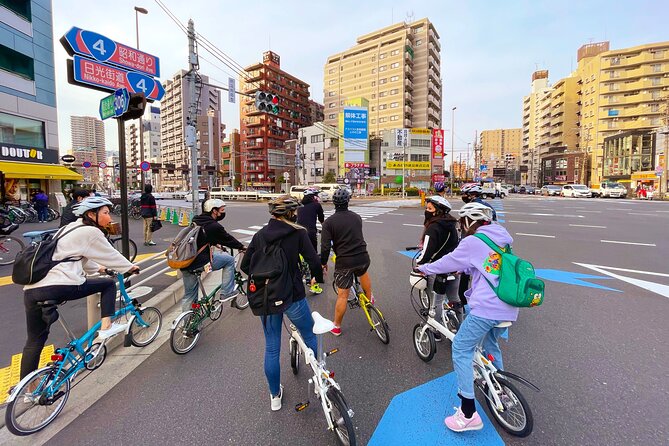
Central Tokyo can feel enormous. A walking tour gives you time to notice details, but your range is limited. A train ride gets you across town quickly, yet it skips the ordinary streets between the famous places. This bicycle tour fills that gap.
The route runs through the eastern side of the city, around Asakusa, Sumida, Ryogoku, and Kyojima. You see apartment streets, small commercial lanes, waterways, temple grounds, and neighborhood shopping areas. These are places you might pass through on a train without understanding how they fit together.
The group limit of six is important. You are not joining a long bicycle procession that must wait for stragglers at every corner. Takeshi can respond to your interests, spend more time at a place that catches your attention, or adjust the route when the group has a particular request.
This is also a practical choice for your first days in Japan. One couple used the ride to help fight jet lag, while another group covered roughly 15 kilometers in four hours. The pace is described as comfortable rather than athletic, but you still need to be happy riding for several hours.
Other cycling tours in Tokyo
Starting with sakuramochi at Yamamotoya
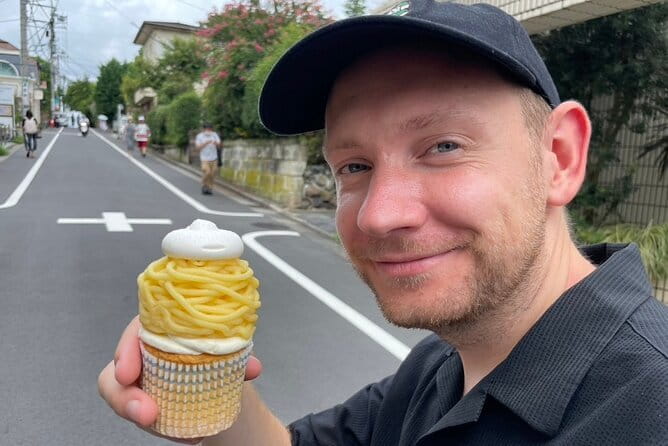
The first stop is Yamamotoya, associated with Chōmeiji sakuramochi. This is not simply a quick sugar break. Sakuramochi is a traditional Japanese sweet made with red bean paste and wrapped in a salt-pickled cherry leaf.
You get about 10 minutes here, with no separate admission charge. The snack gives you an immediate introduction to Japanese food culture, and the cherry leaf adds a salty note to the sweet filling. It is a small stop, but it helps set the tone for a tour built around local details rather than only large monuments.
The included water is useful too. Tokyo’s heat can be tiring on a bike, and starting with a drink and a snack means you do not need to organize refreshments before the ride.
Honryuin Matsuchiyama Shoden and Imado Shrine
At Honryuin Matsuchiyama Shoden, you spend about 20 minutes at a temple founded in 595 and linked with Senso-ji. The temple’s unusual symbols include the Japanese daikon radish and a small pouch. The radish represents a mind caught in ignorance, while the pouch points to benefits associated with the temple.
These details are exactly why a guide helps. You can walk through a temple, notice a strange repeated symbol, and have no idea what it means. Takeshi provides the cultural background that turns decoration into something understandable.
The next stop is Imado Shrine, reached for about 15 minutes. It is known as a power spot for people hoping for love or marriage, and it has strong links with the beckoning cat, or fortune cat. This is one of the tour’s more playful stops, especially if you have seen maneki-neko figures throughout Japan and want to know more about their origins.
Neither stop is a major time-consuming attraction. That is part of the appeal. You get a look at religious places with local meaning, then return to the bikes before the visit becomes a long formal temple tour.
Traditional crafts in the Edo Taito center
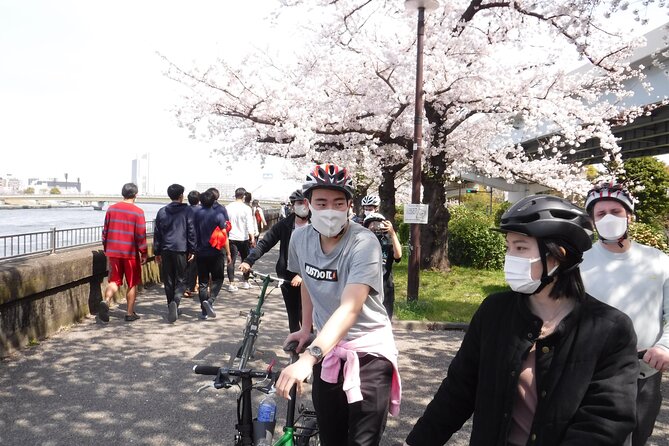
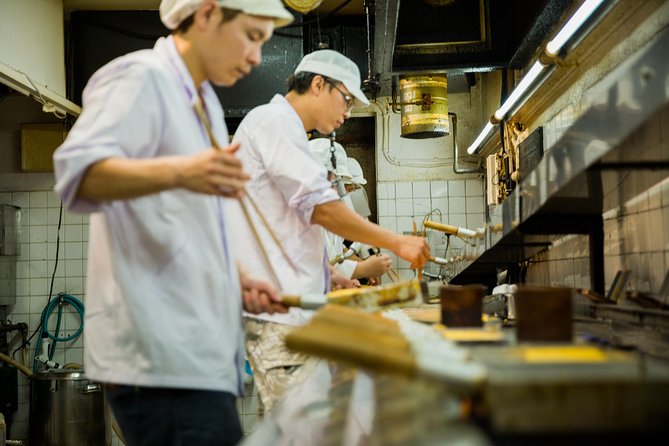
The Edo Taito Traditional Crafts Center gives you about 20 minutes to see Japanese handicrafts and the skill behind them. The visit may also include a candy-making shop or artisan store, depending on the route and the group’s interests.
This stop works well for visitors who want more than photographs. Tokyo is often presented through towers, neon, and department stores, but handwork remains an important part of Japanese daily culture. A short display of tools, objects, or finished pieces can make that point more clearly than a lecture.
Do not expect a long museum visit. Twenty minutes is enough for an introduction, not a full study of every craft. If you are especially interested in making techniques, tell Takeshi at the start so he can shape the route around your interests where possible.
Senso-ji by bicycle, not just by train
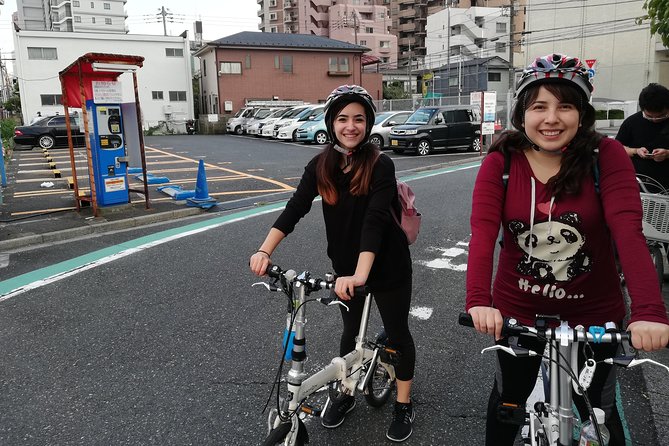
At Senso-ji, the bicycles are left behind and you walk through the temple area for about 20 minutes. The ride takes you in front of Kaminarimon Gate, one of Asakusa’s best-known views, before you explore on foot.
This arrangement is sensible. Senso-ji is a place for walking, and trying to manage bicycles among people would make the visit awkward. You get the fun of arriving by bike, then the freedom to look around without worrying about where to ride.
Senso-ji is one of Tokyo’s major sights, so it is the most familiar part of the route. The difference is the way you reach it. Instead of treating Asakusa as an isolated stop on a standard sightseeing circuit, the tour connects it to nearby shrines, back lanes, gardens, and local streets.
If your main goal is to spend hours inside Senso-ji, this is not the right format. The stop is brief. The value lies in seeing the temple as one part of a wider neighborhood ride.

Kyu Yasuda Garden and the sumo district
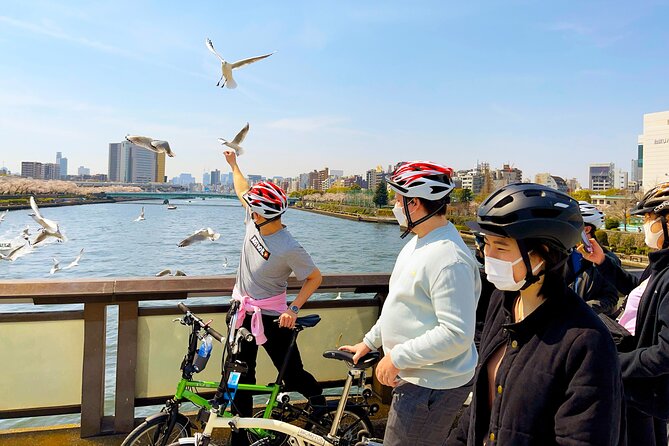
Kyu Yasuda Garden offers 20 minutes of walking through a Japanese garden built in the 17th century. After the movement and traffic of the ride, this is a calmer pause. The garden gives you a chance to slow down and notice the formal design of a traditional Japanese outdoor space.
Next comes Ryogoku Kokugikan, the sumo stadium. The cycling stop lasts about five minutes, mainly allowing time for photographs. You do not receive a full sumo event or a long stadium visit, so keep your expectations in check.
Still, the stop adds useful context. Ryogoku is strongly tied to sumo, and seeing the Kokugikan helps explain why the district feels different from Asakusa. It is a quick visual marker rather than a full attraction.
Along Oyokogawa Water Park toward Tokyo Skytree
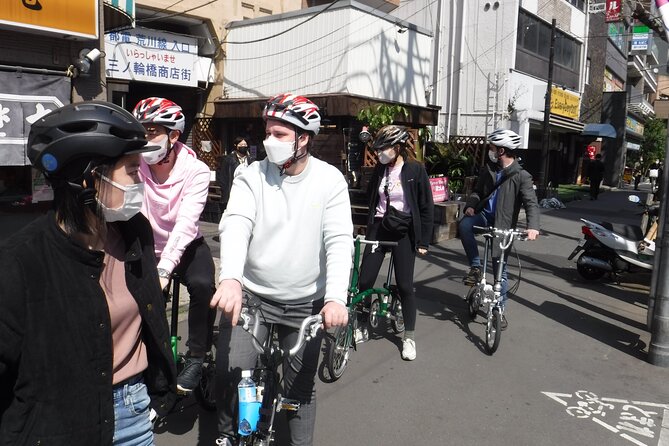
The ride through Oyokogawa Water Park lasts about 30 minutes and leads toward Tokyo Skytree. This is one of the strongest sections for people who want to keep moving. You are not simply checking off buildings. You are using the bicycle to connect parks, waterways, and residential areas.
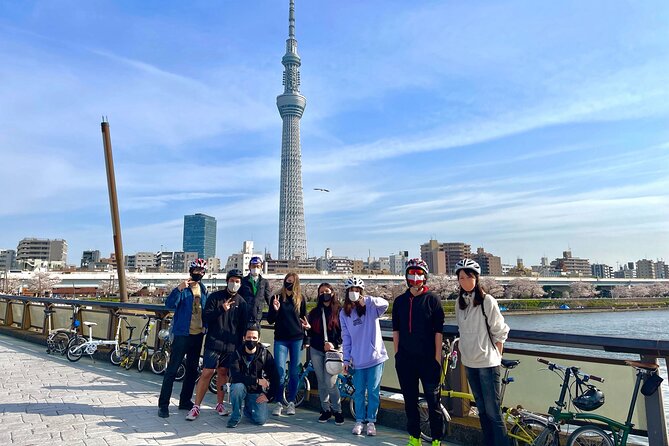
The Skytree stop itself lasts about 10 minutes, with the route passing under the tower. There is no admission to the observation decks included, so this is an outside view and photo stop.
That distinction matters when you compare this tour with a dedicated Skytree visit. You will not spend hours looking over Tokyo from above. Instead, you see the tower as part of the local surroundings, which gives it a different scale and feel.
The ride also lets you cover ground that would take much longer on foot. One account of the tour describes seeing ten times more than on a walking tour, though your exact distance and pace will depend on the group.
Kyojima Minami Park and everyday Tokyo
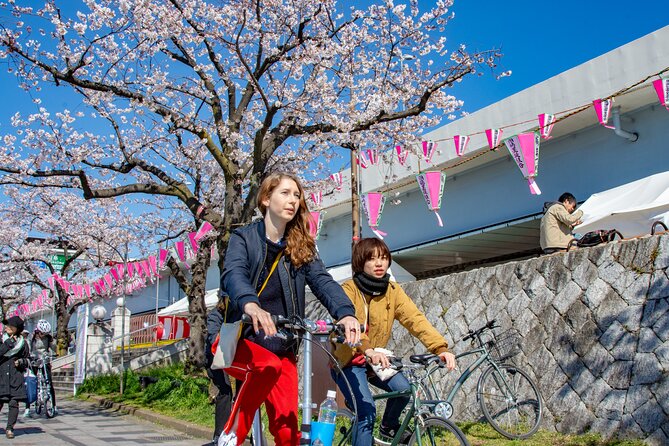
The final major stop is Kyojima Minami Park, with about 30 minutes around old-fashioned shopping malls and neighborhood streets. This is where the tour most clearly moves away from standard sightseeing.
You may see the daily side of Tokyo here: small stores, local routines, and streets that are not designed for international tourism. The phrase backstreets is meaningful in this part of the route. You are not only taking a shortcut between attractions. You are seeing how the city looks when it is simply being used by its residents.
For many people, this will be the most memorable section. Tokyo’s famous districts are impressive, but they can also make the city seem like a collection of visitor zones. Kyojima offers a more grounded view.
The tradeoff is simple. If you want a packed list of famous buildings, some of these streets may feel too ordinary. If you want a sense of local life, they are precisely the reason to book.
Bikes, safety, and comfort
The tour provides folding bicycles and helmets. Helmets are available but not mandatory. The bikes have 14 to 20-inch wheels and are intended for people between 140 and 180 centimeters tall.
If you are over 180 centimeters, contact the operator before booking. Do not wait until the morning of the ride and assume the standard bike will be comfortable. A tandem bike is also possible, but you need to request it at least three days before the tour.
The route is described as easy to follow, with fairly quiet streets and little traffic in many sections. Several riders found the bikes comfortable and felt safe cycling in Tokyo. That said, city riding is still city riding. You should be comfortable starting, stopping, and following a guide through changing streets.
Families can make this work. A nine-year-old previously rode a tandem with a parent, while children aged 12 and 14 used their own bikes. The operator says most people can participate, but the four-hour duration and approximate 15-kilometer distance remain important considerations for anyone unused to cycling.
Weather is another real factor. The activity requires good weather, and rain can shorten or cancel the ride. Summer heat has also affected the feel of the outing, though water is provided and the pace is laid back.
What the $65.41 price gets you
At $65.41 per person, the cost is fair if you value a guide, a bicycle, and access to a broad mix of neighborhoods. You receive the bike, helmet, water, and traditional sweet, with no extra admission charges for the listed stops.
The strongest value is time. In four hours, you visit ten locations and move between them without repeatedly finding train stations, buying tickets, or navigating unfamiliar platforms. You also get explanations that would be difficult to pick up on your own.
The price is less compelling if you only want Senso-ji and the Skytree. Both can be visited independently, and neither receives a long stop on this route. You are paying for the links between places, the guide’s local knowledge, and the chance to see streets beyond the usual circuit.
Group discounts may improve the cost for families or friends. Since the group is capped at six, even a shared tour should feel relatively small. Still, one booking was not a private group, so confirm your expectations if having the guide entirely to yourself matters.
Who should book this ride
I would choose this tour if you have already seen a few major Tokyo sights and want a different angle. It is also a strong first activity for someone who wants a broad orientation to Asakusa and Sumida before exploring them on foot later.
Families can benefit from the flexible route and tandem option. Couples and friends who enjoy light exercise will appreciate the chance to cover distance while stopping often. Older riders may also find it suitable if they are comfortable with the distance, since the pace is described as easy and the streets are often quiet.
I would hesitate if you dislike bicycles, have difficulty riding for four hours, or want a private tour guaranteed from the start. I would also avoid booking in very hot weather unless you are comfortable cycling in the heat.
The meeting point is at Tokyo Backstreets Bike Tour, inside the Synapse shared office in Sumida City at 2-chome 24-14 Higashimukojima, Tokyo 131-0032. The tour returns there, so allow time to find the office before the start. It is near public transportation, but the pickup point may take a little care to locate.
Should you book the Tokyo Backstreets Bike Tour?
Book it if you want Tokyo’s quieter face: a cherry-leaf sweet, small religious sites, traditional crafts, a garden, sumo country, the Skytree from street level, and old shopping lanes. The excellent 4.9 rating from 117 reviews and 99 percent recommendation fit the tour’s clear strengths: friendly guiding, flexible pacing, comfortable bikes, and a personal feel.
Skip it if your ideal Tokyo day means only major sights, long museum visits, or a private group with no other riders. For most active visitors, though, $65.41 buys a useful four-hour slice of the city that walking and trains do not provide as easily.
FAQ
How long does the Tokyo Backstreets Bike Tour last?
The tour lasts approximately four hours.
How many people can join the tour?
The maximum group size is six travelers.
Where does the tour start?
It starts at Tokyo Backstreets Bike Tour in the Synapse shared office, at 2-chome 24-14 Higashimukijima, Sumida City, Tokyo 131-0032.
Where does the tour end?
The activity ends back at the meeting point.
Are bicycles and helmets provided?
Yes. Folding bicycles and helmets are provided. Wearing a helmet is not mandatory.
What height range suits the provided bicycles?
The folding bikes have 14 to 20-inch wheels and suit people between 140 and 180 centimeters tall. Contact the operator in advance if you are over 180 centimeters.
Can I request a tandem bicycle?
Yes. You must request a tandem bike at least three days before the booked tour date.
What is included with the tour?
Water and a snack from a traditional sweet shop are included. The listed stops do not require separate admission tickets.
Can I cancel for a full refund?
Yes, if you cancel at least 24 hours before the experience start time. Poor weather or failure to meet the minimum number of participants may result in a different date or a full refund.
More Cycling Tours in Tokyo
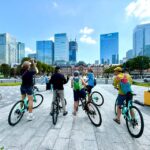

More tours in Tokyo we've reviewed












Cycling Tours, compared.
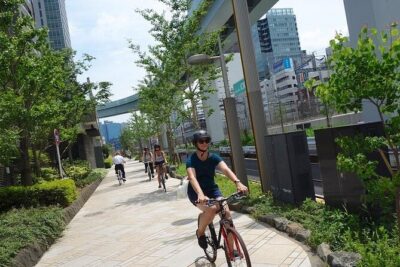 ★ 5.0Tokyo Guided Small-Group Biking TourFrom $106
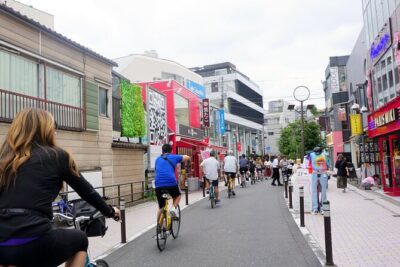 ★ 5.0Tokyo Great Cycling TourFrom $99
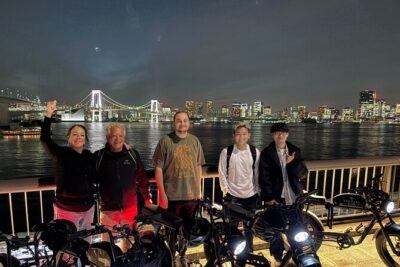 ★ 5.0Tokyo Top Highlights 3h Guided E-bike TourFrom $63
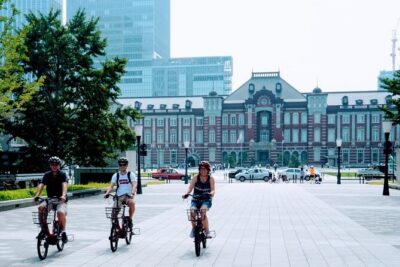 ★ 5.03h Tokyo E-Bike Tour: Hidden Gems, and Local Life with guideFrom $63
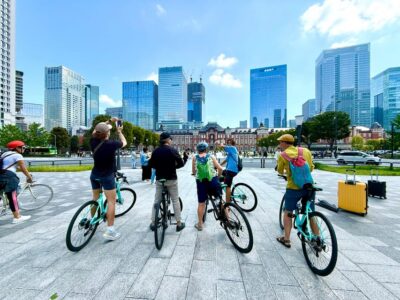 ★ 4.8Tokyo: 3-Hour Bike or E-Bike City Highlights TourFrom $453 hours
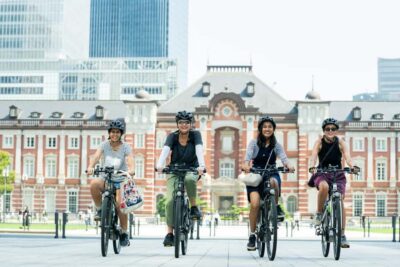 ★ 4.8Tokyo: 3-hour Guided E-Bike Tour of the City’s Hidden GemsFrom $65