Reviewed · WALKING TOURS
Tokyo Architecture and Contemporary Art Walking Tour with a local guide
Tokyo is a city where a luxury fashion store can be a serious work of architecture, and this private tour gives you a useful way to read that city. Over 6 to 8 hours, you move from Ginza’s polished facades to the Tokyo International Forum, Roppongi’s art district, Harajuku’s youth culture, and the quieter streets of Daikanyama.
In This Article
- Key points to know before booking
- Tokyo’s buildings become the main attraction
- Ginza: luxury stores with serious architectural style
- Tokyo International Forum: a short stop with a big structure
- Roppongi: Tokyo’s art triangle
- Omotesando: where fashion becomes architecture
- Takeshita Street: Tokyo’s youthful design language
- Shibuya Crossing: the city in motion
- Daikanyama and Nakameguro: a calmer finish
- What the private format really changes
- Public transport, walking, and the real pace
- Is $424.58 good value for up to nine people?
- Who should book this Tokyo architecture tour?
- Should you book it?
- FAQ
- How long does the Tokyo architecture tour last?
- How many people can join the private tour?
- Which Tokyo neighborhoods are included?
- Is transportation included?
- Are entrance tickets included?
- Is hotel pickup available?
I like the private format, which lets your guide adjust the pace and respond to your interests. I also like the mix of famous places and less frantic neighborhoods, especially the contrast between Shibuya Crossing and Daikanyama’s boutiques and cafes. The main drawback is the amount of subway travel and walking. One full day reached roughly 13,000 to 20,000 steps, and another experience included a lot of time underground between stops.
Key points to know before booking
- Seven sharply different areas: Ginza, the Tokyo International Forum, Roppongi, Omotesando, Takeshita Street, Shibuya, and Daikanyama give you a broad view of Tokyo.
- Private group of up to nine: You avoid the fixed pace and crowd management of a large group.
- Architecture is the main subject: Expect discussion of major modern buildings, fashion stores, galleries, museums, and public spaces.
- Public transport is part of the day: Your guide helps you move around Tokyo, with subway travel forming a significant part of the route.
- A physically active outing: Plan for long walks, stairs, stations, and potentially 13,000 to 20,000 steps.
- Strong guide feedback: Tomoya, Richie, Riley, and Masa are named in the feedback, with particular praise for clear English, planning, flexibility, and architecture knowledge.
Tokyo’s buildings become the main attraction
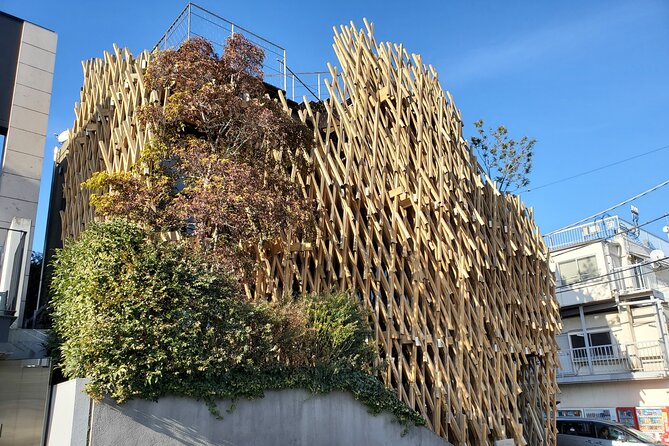
Many first-time visits to Tokyo focus on temples, food, shopping, and neon. This tour takes a different route. You spend the day looking up, comparing materials and shapes, and noticing how architects use narrow sites, glass, steel, concrete, and dramatic angles in a crowded city.
That approach is most useful if you already have some interest in design, but you do not need an architecture degree. A good guide gives you a shortcut to buildings you might otherwise pass without a second glance. The experience is less about entering every museum or paying for a long list of attractions, and more about seeing the city’s streets as an open-air design exhibit.
The route also has a helpful rhythm. Ginza and Omotesando offer polished commercial architecture. Roppongi adds museums and galleries. Harajuku shows a younger and stranger side of Tokyo. Shibuya brings the famous crowd scene, while Daikanyama and Nakameguro slow things down.
You meet outside your hotel or at a central meeting point, then use public transportation to connect the districts. Bottled water is provided, a small but welcome touch on a long walking day.
Other walking tours we've reviewed in Tokyo


Ginza: luxury stores with serious architectural style
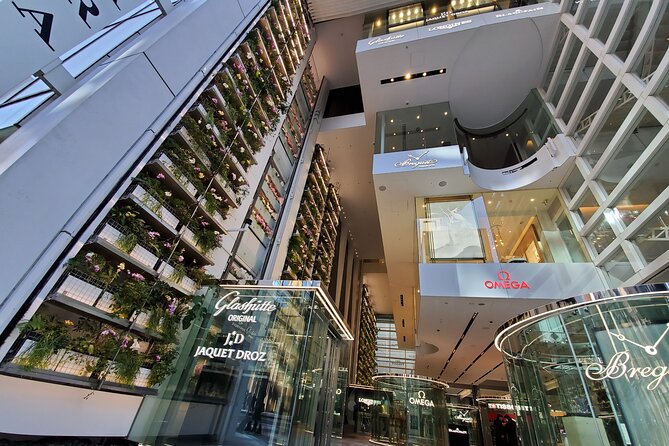
Ginza is the logical opening act. It is Tokyo’s best-known high-end shopping district, but the point here is not simply to browse boutiques. The streets are lined with intimate galleries, Japanese stores, jewelry shops, and buildings designed by major architects.
Your guide can help you see how branding and architecture work together. A flagship store may be designed to attract attention from the street, frame a product in a certain way, or make a narrow urban site feel grand. The area is also useful for seeing how old commercial traditions and new design share the same blocks.
The scheduled stop lasts about an hour, with no admission ticket required for the walk. That does not mean every interior is included, so think of Ginza as an exterior architecture tour with opportunities to look inside selected public or commercial spaces if the route and access allow.
Ginza can feel polished and expensive. If you want old Tokyo streets or ordinary neighborhood life, this is not the strongest part of the day. If you want to understand Tokyo’s relationship with fashion, retail, and design, it is an excellent start.
Tokyo International Forum: a short stop with a big structure
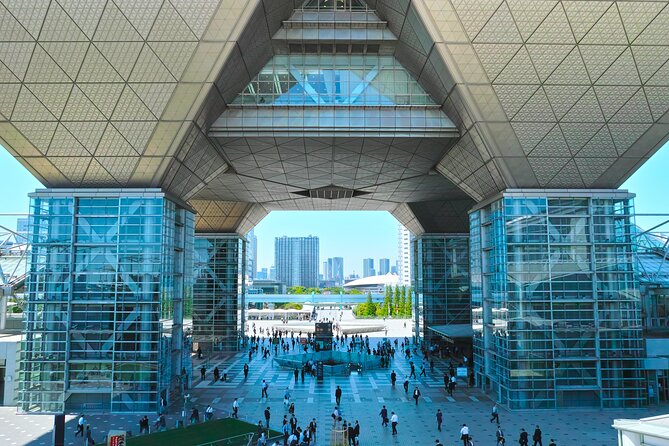
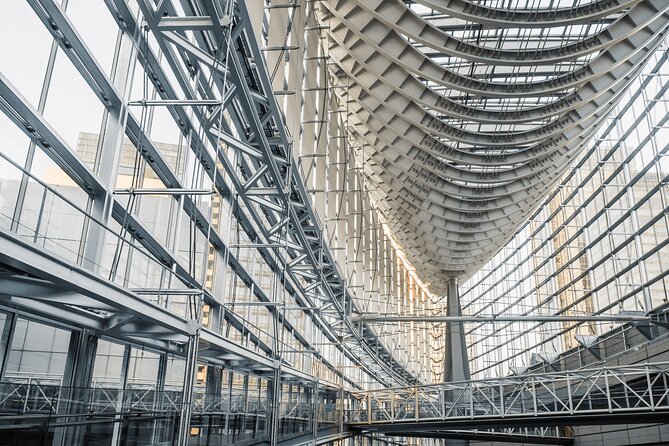
The Tokyo International Forum receives only about 15 minutes, but it may be the most concentrated architecture stop of the day. Designed by Rafael Viñoly, the postmodern complex is known for its huge glass and steel form.
A short visit makes sense here. The building is large, open, and easy to appreciate from the outside and public areas without spending hours. Your guide can point out the structure’s scale, curves, and relationship to the surrounding city.
Because the stop is brief, you should not expect a full architectural lecture or a long interior visit. It works better as a focused pause between Ginza and the western districts. Bring your phone or camera if you like architectural photography, since the building’s geometry gives you plenty to study in a short time.
Roppongi: Tokyo’s art triangle
Roppongi changes the subject from commercial architecture to contemporary art. The district is associated with three major institutions: the National Art Center, the Mori Art Museum, and the Suntory Museum of Art. Together, they form what is often called the Art Triangle Roppongi.
The tour also includes art galleries and points connected to photography and design, including the Fujifilm area. This gives your guide room to explain how Roppongi developed into one of Tokyo’s main art districts.
The scheduled time is about an hour. That is enough to orient you to the area and discuss the buildings, but it is not enough to visit every museum properly. Museum entry is not listed as part of the tour, so ask your guide if you want to add an interior visit or plan a separate return trip.
I like this stop because it gives the tour more substance than a simple building-spotting walk. You are not only looking at facades. You are seeing where contemporary art is shown and how cultural institutions shape a neighborhood.
Omotesando: where fashion becomes architecture
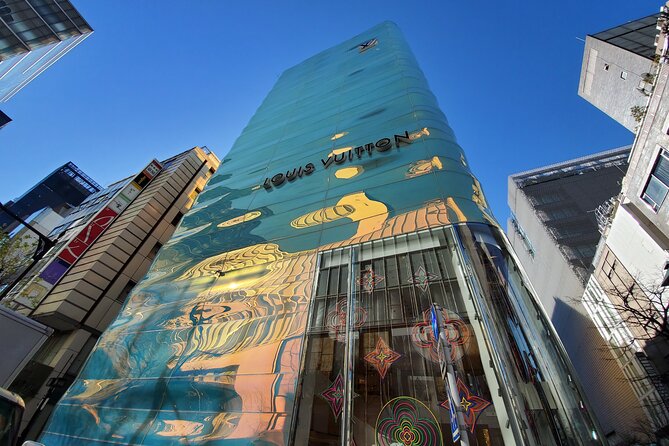
Omotesando is one of the strongest sections for modern commercial design. Its luxury fashion and jewelry stores compete for attention, and their buildings are often as carefully planned as the products inside.
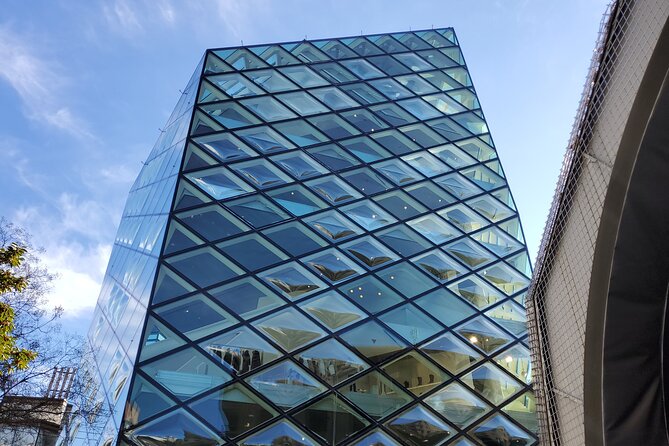
The route begins at the Prada flagship store, created by Swiss architects Herzog and de Meuron. From there, your guide can help you compare the different ways major brands use glass, structure, texture, and unusual shapes to create a public identity.
The scheduled visit lasts about an hour. You can expect a street-level look at important buildings and a discussion of why this avenue attracts such ambitious architecture. It is a good stop for visitors who enjoy design but do not want a formal museum setting.
The tradeoff is that Omotesando is a shopping district. Some people will love the polished storefronts and fashion focus. Others may find the area too commercial. The private format helps here because you can tell your guide if you prefer architecture over shopping, or if a particular store or building interests you.
Other guided tours in Tokyo



Takeshita Street: Tokyo’s youthful design language
Takeshita Street offers a useful change of mood. Harajuku is closely tied to youth culture, unusual clothing, bold styling, and eye-catching storefronts. The architecture here is not presented as polished high design in the same way as Omotesando. Instead, the interest comes from how shops, signs, fashion, and street culture create a constantly changing visual scene.
You have about an hour in the area. That gives you time to see the street, notice the contrast with nearby Omotesando, and discuss how younger Japanese shoppers and designers use clothing and commercial spaces to express identity.
This stop can be crowded and energetic, so it is not the place for a quiet stroll. It also has a different kind of design value. You are seeing popular culture and retail creativity rather than a single celebrated building. I would especially recommend it if you want your architecture tour to include people, fashion, and everyday urban behavior.
Shibuya Crossing: the city in motion
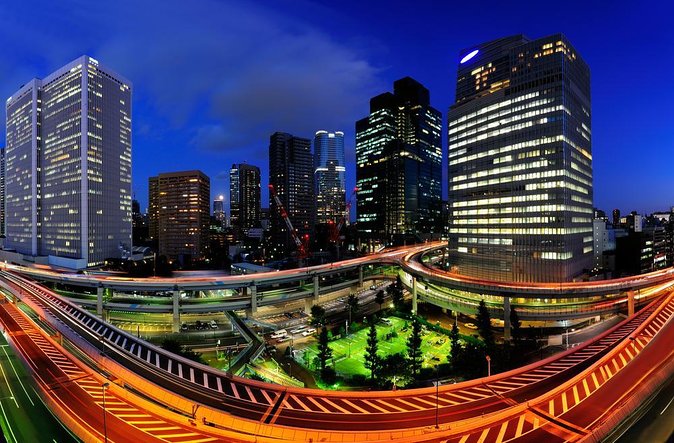
Shibuya Crossing gets about 30 minutes, enough to experience the intersection and take in the surrounding towers and signs. The crossing is famous for the way large waves of pedestrians move through the junction at once.
The stop can feel brief, but that is probably right. Shibuya is a powerful visual moment rather than a place where you need a long lecture. Your guide can help you find a good viewpoint and explain how the district fits into Tokyo’s wider commercial and cultural life.
Do not expect the full experience to happen entirely above ground. Moving between Tokyo’s districts often means long station corridors, platforms, escalators, and underground passages. One account specifically found that a lot of time went into subway travel. That is a fair criticism, but it is also the practical reality of covering this much of Tokyo in one day.
Daikanyama and Nakameguro: a calmer finish
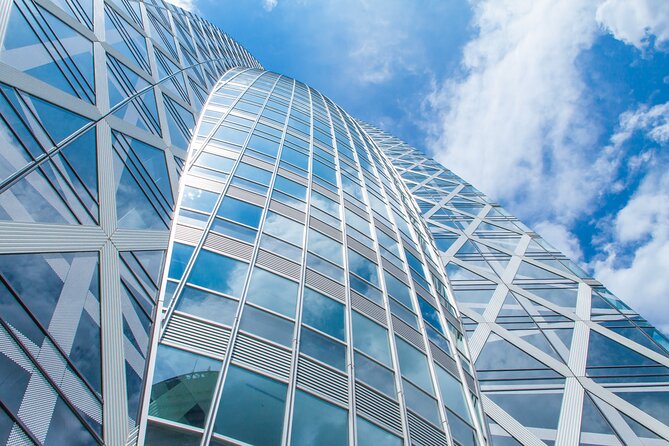
Daikanyama and Nakameguro provide the day’s gentlest ending. These neighborhoods have boutiques, cafes, and a slower feel than Ginza, Harajuku, and Shibuya. The change is valuable because it lets you see a more relaxed side of Tokyo without leaving the architecture and design theme behind.
Tsutaya Books is a notable stop in the area. Its design, book selection, and wider retail setting make it more than a place to buy a paperback. Your guide can show you how this kind of store fits into Tokyo’s modern lifestyle culture.
This section is especially good if you prefer small shops and neighborhood streets to giant intersections. It also gives you a chance to recover from the day’s crowds, though you will still have spent many hours on your feet.
The route ends back at the meeting point. Since the overall schedule is listed as approximately 6 to 8 hours, the actual time can vary with transport, walking speed, photo stops, and the interests of your group.
What the private format really changes
A private tour for up to nine people is not just a smaller version of a standard city tour. It gives you more control over the day. If your group wants to focus on contemporary buildings, your guide can spend less time on shopping. If you want art galleries, photography, or a particular neighborhood, you can raise that during the day.
The guides named in the feedback include Tomoya, Richie, Riley, and Masa. Riley was praised for clear English and for responding to suggestions. Masa was described as friendly and flexible with requests. Tomoya was praised for planning a full day and for explaining Tokyo through architecture. Richie guided a long, hot walking day that also included local train travel, chopstick shopping, and ramen.
Those details show the tour can include small personal touches, but you should not assume lunch, shopping, or a particular guide is guaranteed. The standard description lists bottled water, not a meal. If you want ramen or time to buy souvenirs, tell your guide early.
Public transport, walking, and the real pace
You use Tokyo’s public transportation to reach the districts. IC cards were used during one full-day experience, and subway travel is a major part of the route. A bus or taxi may sometimes be possible, but the normal plan involves moving like a local through the rail system.
That saves time compared with walking across the entire city, but it does not make the tour easy. Station transfers can be tiring, and the day includes long stretches on foot. One full day reached roughly 13,000 to 20,000 steps, so wear comfortable shoes and keep your schedule light afterward.
The tour suits most participants according to the supplied practical information, but the step count is the more useful guide for deciding if it suits you. Bottled water is included, yet you should still dress for the weather and be ready for heat, rain, or crowded stations.
The tour is offered from 8:30 a.m. to 3:00 p.m. in the listed operating periods, although the stated experience length is 6 to 8 hours. Confirm the exact start time and meeting arrangement when booking, especially if you are relying on hotel pickup.
Is $424.58 good value for up to nine people?
The listed price is $424.58 per group, not per person, for up to nine people. For a full private day, that can be good value if you have a family or group of friends. Split among nine people, it is far less than the headline number suggests. For one or two people, the cost is harder to justify unless architecture is a main reason for your Tokyo visit.
The value comes from the guide’s time, route planning, and ability to connect districts that would otherwise require research and several separate train journeys. The stops themselves do not carry an admission charge in the schedule, so you are paying mainly for interpretation and private guidance rather than bundled tickets.
The route covers a lot of ground. You could visit Ginza, Roppongi, Harajuku, Shibuya, and Daikanyama independently, but you would need to decide what to see, work out the transport, and understand why certain buildings matter. If that planning sounds enjoyable, the tour may be unnecessary. If your time is limited and you want an expert-led design route, the price makes more sense.
Free cancellation is available up to 24 hours before the start time. Confirmation is sent within 48 hours, subject to availability. The experience is often booked well ahead, with an average advance booking time of 77 days, so early planning is sensible for a fixed Tokyo schedule.
Who should book this Tokyo architecture tour?
I would choose this experience if you:
- Enjoy modern buildings, fashion design, galleries, or city planning.
- Want a private day rather than a large group excursion.
- Prefer seeing several Tokyo districts in one organized route.
- Like asking questions and shaping the day around your interests.
- Can handle long periods of walking and public transportation.
- Want a guide who can explain why a building matters, not just point at it.
I would think twice if you want a relaxed cafe day, a food-focused tour, or extensive time inside museums. The schedule is broad, and the travel between areas can eat into sightseeing time. You also need to be comfortable with crowds, stations, and a full day on your feet.
Should you book it?
Book this tour if Tokyo’s modern architecture and contemporary art are high on your list, especially if you are traveling with a group of up to nine. The route gives you a smart first look at several districts, and the private setting lets you ask for more design discussion, gallery time, shopping, or neighborhood wandering.
Skip it if you mainly want temples, traditional culture, or a slow food experience. For the right visitor, the best feature is not any single stop. It is the chance to connect Tokyo’s luxury retail streets, art museums, youth culture, giant crossings, and quiet design neighborhoods in one long, guided day.
FAQ
How long does the Tokyo architecture tour last?
The experience lasts approximately 6 to 8 hours. The listed stops have shorter individual time estimates, with additional time needed for walking and public transportation between districts.
How many people can join the private tour?
The price covers one private group of up to nine people. Only your group participates in the activity.
Which Tokyo neighborhoods are included?
The route includes Ginza, Tokyo International Forum, Roppongi, Omotesando, Takeshita Street in Harajuku, Shibuya, and Daikanyama. Nakameguro is also discussed as part of the Daikanyama section.
Is transportation included?
The tour uses Tokyo’s public transportation to move between stops. An IC card was used during one reported experience. The description also notes that a bus or taxi might be possible in some cases, but it does not state that fares are included in the price.
Are entrance tickets included?
The listed stops show free admission for the tour visits. Museum admission or other paid interior visits are not specifically listed as included, so ask your guide if you want to enter a museum or gallery.
Is hotel pickup available?
Pickup is offered, and the guide may meet you outside your hotel or at a convenient central point. The activity ends back at the meeting point, so confirm the exact location and pickup details after booking.
More Guided Tours in Tokyo
More Walking Tours in Tokyo
More tours in Tokyo we've reviewed






Walking Tours, compared.
 ★ 5.0Tokyo Tsukiji Fish Market Food and Culture Walking TourFrom $99
 ★ 4.9Tokyo: Shinjuku Local Bar and Izakaya Guided Walking TourFrom $343 hours
 ★ 5.0Tokyo: Tsukiji Fish Market Food and Walking tourFrom $30
 ★ 4.8Tokyo: Asakusa Walking Tour with Sensoji Temple VisitFrom $222 hours
 ★ 4.9Tokyo: Tsukiji Fish Market Guided Walking TourFrom $222 hours
 ★ 4.7Tokyo Castle & Imperial PalaceーShogun Walking TourFrom $232 hours