Reviewed · TICKETS & PASSES
【15mins-4pax】Tokyo Bay Coastal/Tokyo Skytree and Tokyo Station
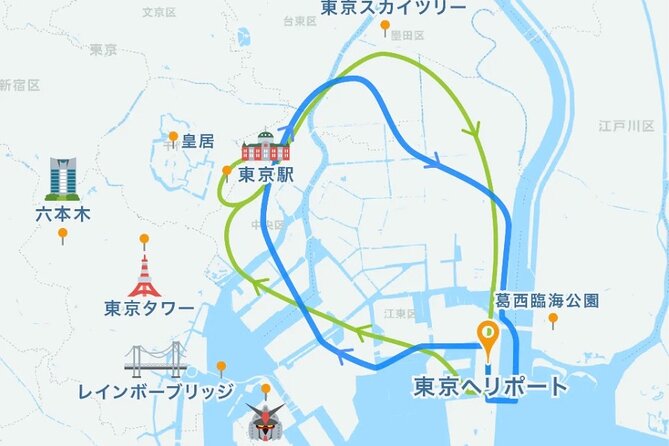
Tokyo looks different from the air. From Tokyo Heliport, you rise above the city for broad views of Tokyo Skytree, Tokyo Station, and Rainbow Bridge, with Tokyo Bay tying the modern city together. It is a quick, high-impact way to see several major sights in one sweep.
In This Article
- Key points
- Tokyo from the air, from Skytree to Tokyo Bay
- Why the private format changes the experience
- Tokyo Skytree, the clearest landmark on the route
- Tokyo Station and the Imperial Palace area
- Rainbow Bridge and the Tokyo Bay shoreline
- Leaving from Tokyo Heliport in Shinkiba
- Weather, weight limits, and other practical checks
- What the price includes in real-world value
- Who should book this Tokyo helicopter flight?
- How to prepare for the best view
- Should you book the Tokyo Bay helicopter tour?
- FAQ
- Where does the helicopter tour depart from?
- Where does the activity end?
- How long does the tour last?
- Which Tokyo sights can I see from the helicopter?
- Is this a private tour?
- How many people can join the booking?
- What happens if bad weather cancels the flight?
I like the private format, since only your group flies together, and I like the mix of old and new: the Imperial Palace area beside Tokyo Station, then the huge Skytree and bayfront structures. The main drawback is weather. This flight needs good conditions, and the published information also gives conflicting group details, so confirm the flight length and passenger limit before paying.
Key points
- Tokyo Skytree from above: The tower becomes a clear landmark for understanding the size and shape of eastern Tokyo.
- Private helicopter setting: Only your group participates, rather than sharing the aircraft with unrelated passengers.
- Central Tokyo in one view: The route includes Tokyo Station, the Imperial Palace area, Tokyo Bay, and Rainbow Bridge.
- Departure from Tokyo Heliport: You need to reach 4-chōme-7-25 Shinkiba in Koto City, not central Tokyo.
- Weather matters: Poor conditions, aircraft problems, or other flight disruptions can lead to a new date or a full refund.
- Check the numbers: The price is $1,065.03 per group, but the details variously mention up to four people and a maximum of three per booking.
Tokyo from the air, from Skytree to Tokyo Bay
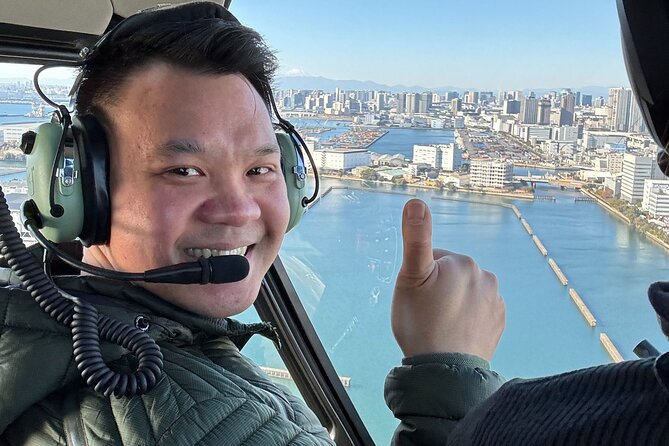
A helicopter flight gives you something a street tour cannot: scale. On the ground, Tokyo can feel like a series of separate districts, each reached by a train ride and a few turns through side streets. From above, the city becomes easier to read. You can connect the tower, palace, station, bridge, and bay in a single view.
This is not a long sightseeing excursion. The published duration is about one hour, while the product title refers to 15 minutes. That difference matters. The full time may include arrival, preparation, boarding, and the flight itself, so I would ask the operator exactly how long the aircraft remains in the air before booking.
The route focuses on central and waterfront Tokyo rather than a broad tour of every district. That focus is useful. You are not paying for a random ride over rooftops. You are paying for a compact look at some of the city’s most recognizable structures.
A few more Tokyo tours and experiences worth a look
Why the private format changes the experience
The flight is listed as a private activity, so your group is the only group participating. That makes the experience easier to share with family or friends. You do not need to coordinate your view or conversation with strangers, and the price is charged per group rather than per individual.
At $1,065.03 for the group, the cost is high. With four people, that works out to about $266 per person. With three people, it is about $355 per person, and with two it rises to roughly $533 per person. The value improves when you fill the available seats.
The passenger information needs careful attention. One part of the details says the price covers up to four people, while another says a maximum of three people per booking. The weight limit is also shown as both 287 pounds and 286 pounds, with 286 pounds, or 130 kilograms, given as the more specific aircraft limit. Treat the lower figure as the safe limit and confirm the permitted party size directly with AIROS Skyview Tokyo Helicopter Tours.
Tokyo Skytree, the clearest landmark on the route
Tokyo Skytree is the star of this flight. From the ground, the tower can seem almost too tall to take in at once. From the air, you get the useful view: the tower in relation to the wide spread of eastern Tokyo.
The experience specifically promises a powerful aerial view of Skytree. That should make this part especially appealing if you have already seen the tower from street level or from its observation decks. Instead of looking out over the city from the tower, you look back at the tower itself.
That change of angle is the point. Skytree becomes a marker that helps you understand where you are. It also gives you a strong subject for photographs, though reflections, aircraft windows, and changing light can affect the results.
A helicopter flight is not the same as a visit to Skytree’s observation decks. You will not go inside the tower or spend time at its viewing levels. Choose this tour for the relationship between the tower and Tokyo around it, not as a replacement for a Skytree admission ticket.
Tokyo Station and the Imperial Palace area
Tokyo Station brings a different character to the route. Its location near the Imperial Palace makes this section a good contrast with Skytree. You see the formal center of the capital beside a major transport hub and the dense city beyond it.
The flight specifically includes an aerial view of Tokyo Station. From above, its importance is easier to grasp than it is during a rushed station transfer. The station is not just a place to catch a train. It is one of the key points around which central Tokyo is organized.
The Imperial Palace is also included in the overview, although the detailed stop information highlights Tokyo Station rather than promising a separate palace viewing stop. Keep your expectations sensible. You may see the palace grounds and surrounding area from the air, but this is not a palace visit, guided explanation, or close look at individual buildings.
I like this contrast because it gives the flight some visual variety. Tokyo is not presented only as tall towers and glass buildings. The palace area adds a calmer, more formal setting to the view.
Rainbow Bridge and the Tokyo Bay shoreline
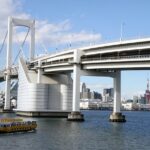
Rainbow Bridge gives the flight its waterfront highlight. From above, the bridge links the city to the bay and helps you see how Tokyo extends beyond its central streets.
The experience promises a view of the bridge from the air. That is more informative than a quick glimpse from a car, because you can see the span, the water around it, and the relationship between the bridge and the bayfront districts.
Tokyo Bay also adds breathing room to the flight. After the dense central city, the open water changes the rhythm of the view. It can make the city’s size feel even more striking, since the built-up areas press toward the shoreline.
Do not expect a long coastal cruise. The tour is designed around several central sights, so Rainbow Bridge is one part of a short route, not a full survey of every bay district. The appeal is the combination: Skytree, station, palace area, bridge, and water in one private flight.
Leaving from Tokyo Heliport in Shinkiba
The meeting point is Tokyo Heliport at 4-chōme-7-25 Shinkiba, Koto City, Tokyo 136-0082. The flight returns to this same meeting point.
That location is important when planning your day. Tokyo Heliport is not at Tokyo Station, Skytree, or a central hotel district. You need to allow time to reach Shinkiba and find the correct departure point. The supplied information says the meeting point is near public transportation, but it does not specify a particular station, train route, or transfer time, so check your own route carefully.
The return to the same place makes the outing easier to fit into a Tokyo itinerary. You are not left at an unfamiliar neighborhood on the opposite side of the city. Still, I would avoid scheduling a tight connection immediately afterward. Helicopter operations can be affected by weather, aircraft issues, or other flight disruptions.
One small service detail is worth noting. The operator helped arrange a taxi at the end for one customer. That does not mean a taxi is included, but it suggests you can ask for assistance with onward transport after landing.
Weather, weight limits, and other practical checks
Good weather is essential. If poor weather prevents the flight, you will be offered another date or a full refund. The same remedy applies if a specific aircraft problem or another disruption to flight operations causes cancellation.
If you plan to fly within five days, check the forecast before committing to the outing. This does not guarantee that the flight will operate, but it helps you understand the risk of a last-minute change.
The cancellation policy allows a full refund if you cancel at least 24 hours before the scheduled start time. Cancellations made less than 24 hours ahead are not refunded, and changes inside that window are not accepted. The cut-off uses Tokyo local time.
The weight limit is 286 pounds, or 130 kilograms, per passenger, based on aircraft comfort and balance. Since another line gives 287 pounds, use the stricter 286-pound figure. You should also provide accurate passenger weights when asked. Aircraft balance is a safety matter, not a minor booking detail.
People who have gone scuba diving within the past 24 hours cannot participate. Service animals are allowed, and most people can take part, though the operator still controls participation based on flight safety and aircraft limits.
What the price includes in real-world value
The price buys a short private flight, not a full-day guided tour. You are paying for the aircraft, the private setting, and the rare chance to see several major Tokyo sights from above.
For a couple, the price is difficult to justify unless the helicopter flight itself is a major priority. For three or four people sharing the cost, the numbers become more reasonable. A birthday, anniversary, family occasion, or once-in-a-lifetime Tokyo visit may make the expense feel worthwhile.
The route also saves time in a particular way. You can see the city’s major visual markers without traveling between them on crowded trains or spending a day moving from one viewpoint to another. That does not replace visiting the sights, but it can help you understand how they fit together.
The tour is less valuable if you want detailed commentary, long stops, or time on the ground. The supplied details do not name a guide or promise a narrated historical tour. Think of it as an aerial sightseeing experience first.
Who should book this Tokyo helicopter flight?
I would consider it for:
- Couples or families who can share the private-group cost
- Repeat visitors who have already seen Tokyo from street level
- First-time visitors who want a fast sense of the city’s layout
- Photographers who want Skytree, Rainbow Bridge, Tokyo Station, and the bay in one outing
- People marking a special occasion
- Anyone who values privacy more than a low-cost group tour
I would look elsewhere if your budget is tight, if you need a guaranteed departure time, or if you want a detailed guide-led explanation of every sight. The weather requirement also makes this a poor choice for an itinerary with no spare day.
Because the tour is booked about 25 days ahead on average, planning early may be sensible. Confirmation arrives within 48 hours, subject to availability. That is useful, but it means your reservation is not fully settled at the instant you submit payment.
How to prepare for the best view
Keep the schedule flexible around the flight. Weather can cancel the activity, so avoid placing an important dinner, airport transfer, or train connection immediately afterward.
Bring a phone or camera, but remember that aerial photography is subject to the conditions inside the aircraft. Glare and reflections may appear, and you will have limited time over each sight. I would take a few deliberate images rather than trying to record everything.
Double-check these points before booking:
- The exact aerial flight time, since the title references 15 minutes and the total duration is listed as about one hour
- The permitted party size, since the information mentions both three and four passengers
- The passenger weight limit, using 286 pounds as the stricter figure
- The route and weather procedure
- Your transport to and from Tokyo Heliport
These questions are especially important because the cost is substantial. A quick confirmation can prevent an unpleasant surprise on the day.
Should you book the Tokyo Bay helicopter tour?
Book it if you want a private, memorable look at Tokyo’s biggest visual landmarks and can divide the cost among three or four people. The mix of Tokyo Skytree, Tokyo Station, the Imperial Palace area, Rainbow Bridge, and Tokyo Bay gives the flight a strong sense of place.
Skip it if you mainly want value, ground-level culture, or a dependable schedule. The experience is short, weather-sensitive, and expensive for a small party. For the right occasion, though, the aerial view offers something ordinary sightseeing cannot: one clean picture of Tokyo’s center, waterfront, and great landmarks.
FAQ
Where does the helicopter tour depart from?
The tour departs from Tokyo Heliport at 4-chōme-7-25 Shinkiba, Koto City, Tokyo 136-0082, Japan.
Where does the activity end?
The flight ends back at Tokyo Heliport, the same place where it begins.
How long does the tour last?
The listed duration is approximately one hour. The product title refers to 15 minutes, so you should confirm the actual time in the air with the operator before booking.
Which Tokyo sights can I see from the helicopter?
The experience includes views of Tokyo Skytree, Tokyo Station, Rainbow Bridge, Tokyo Bay, and the Imperial Palace area.
Is this a private tour?
Yes. Only your group participates in the activity.
How many people can join the booking?
The price is shown for a group of up to four people, but another part of the information states a maximum of three people per booking. Confirm the permitted group size with the operator before making arrangements.
What happens if bad weather cancels the flight?
You will be offered an alternative date or a full refund if poor weather cancels the flight. The same options apply if aircraft problems or other flight-operation disruptions prevent departure.
More Tickets & Passes in Tokyo


More tours in Tokyo we've reviewed












Tickets & Passes, compared.
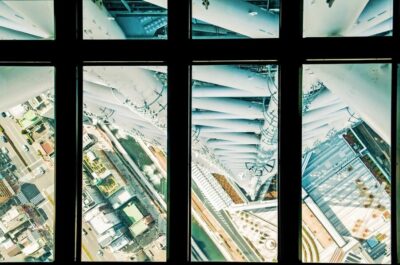 ★ 4.5Tokyo: TOKYO SKYTREE® Admission ticketFrom $131 day
 ★ 4.6Tokyo: teamLab Planets TOKYO Digital Art Museum Entry TicketFrom $251 day
 ★ 3.9Tokyo: Hop-On Hop-Off Sightseeing Bus TicketFrom $301 - 2 days
 ★ 4.6Tokyo Tower: Admission TicketFrom $91 hour - 3 days
 ★ 4.5Tokyo: DisneySea 1-Day PassportFrom $571 day
 ★ 4.6Tokyo Disneyland 1-Day PassportFrom $571 day