Reviewed · SUMO EXPERIENCES
Sumo Training Watching Experience in Tokyo
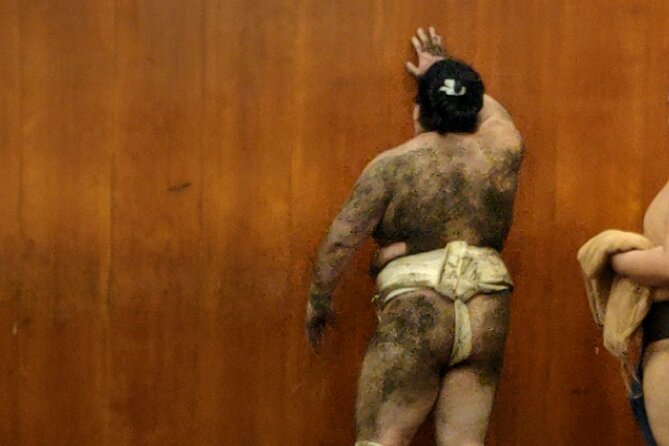
Real sumo training is the heart of this experience. You sit close to active wrestlers as they stretch, build strength, practice basic moves, and face one another in match-style bouts. There are no costumes, staged jokes, or padded theater tricks. This is a working stable, and the mood is quiet and serious.
In This Article
- Key points before you book
- Why watching practice can be better than watching a tournament
- The walk from Ryogoku Station to the stable
- 7:45 arrival: see the full training sequence
- Stretching and strength training
- Basic training
- Match-style training
- Photos after practice
- The rules are part of the experience
- Floor cushions and the question of comfort
- What the small group changes
- Is $84.70 a fair price?
- How this compares with seeing sumo at the Kokugikan
- Best for curious adults and patient older children
- Booking, cancellation, and timing tips
- Should you book the sumo training experience?
- FAQ
- Where does the sumo training experience meet?
- How far is the stable from the meeting point?
- How long does the experience last?
- What happens if I arrive at 7:45?
- What happens if I arrive at 8:20?
- Can I take photos during the training?
- Can I take a photo with a wrestler?
- Can I eat or drink inside the stable?
- Are children allowed to participate?
- Is cancellation free?
I like the small maximum group of eight, which keeps the view close and makes it easier to follow Alisa’s live explanations and diagrams. I also like the chance for photos with wrestlers after training, although that depends on the stable and the schedule.
The main drawback is the sitting. You sit on cushions directly on the floor, often without much chance to move around. If you have bad knees or back trouble, are pregnant, or cannot sit still, this may not be a good fit.
Key points before you book
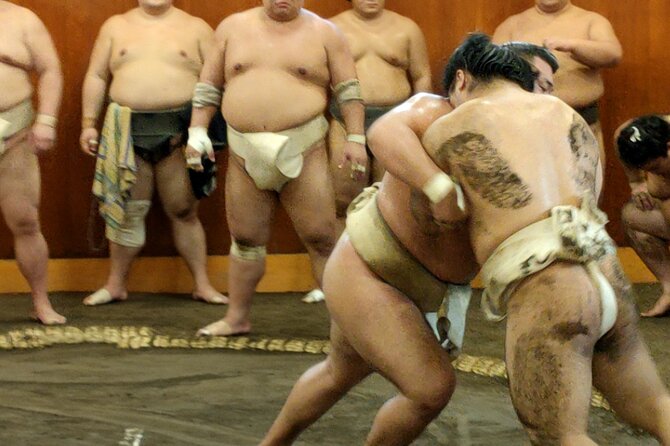
- Real training, not a staged performance: Watch active wrestlers work through strength drills, basic practice, and match-style bouts.
- A quiet, formal setting: You cannot eat or drink inside, and talking during the session is generally not allowed.
- Arrive at 7:45 for the fullest program: Early arrivals can see stretching and strength work before the more active practice begins.
- A walk from the station is part of the plan: Allow about 10 to 15 minutes, even though the operator describes the walk as about seven to ten minutes.
- Small groups make a close view possible: The maximum is eight people, a useful advantage in a compact training space.
- Photos may come afterward: You can take pictures during the session with a silent phone, and a photo with wrestlers may be possible after training.
Why watching practice can be better than watching a tournament
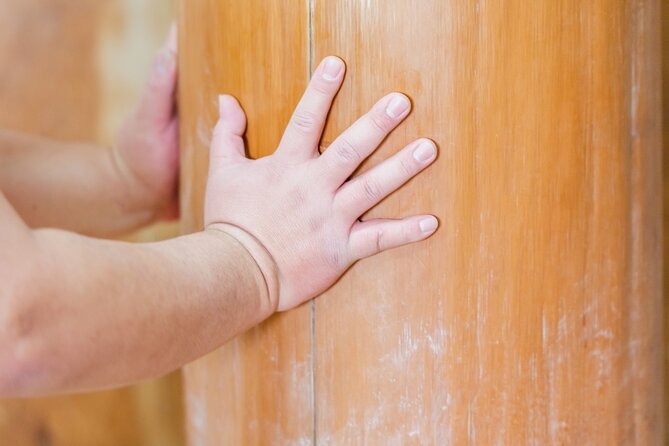
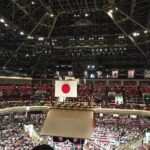
A sumo tournament gives you the full spectacle: packed seats, formal entrances, banners, and bouts between ranked wrestlers. It also places you farther away. At a stable, you see the daily work that makes those short matches possible.
The wrestlers train at close range, so the sound matters. You hear feet strike the floor, bodies collide, and breath tighten during exertion. The session lets you notice the repetition and physical strain behind a bout that may last only a few seconds.
That closeness comes with a different mood. This is not a show built around constant explanation or audience participation. The wrestlers are working, and you are expected to watch quietly. For me, that restraint is part of the value. It gives the experience a sense of respect that a theatrical sumo presentation cannot copy.
Alisa provides live commentary with original documents and diagrams. That support matters because sumo practice can look mysterious if you do not know what each exercise means. Her explanations help you follow the purpose of the drills and understand how the session moves from warm-up work to more direct competition.
A few more Tokyo tours and experiences worth a look

The walk from Ryogoku Station to the stable
You meet near Ryogoku Station at 1-chome-4-29 Yokoami in Sumida City. The meeting point is not the JR station, and the stable is not right beside the Kokugikan, Tokyo’s well-known sumo arena.
Plan on a walk of roughly 10 to 15 minutes from the meeting point. The operator describes it as about seven to ten minutes, but allowing extra time is the sensible choice, especially for a very early start. The route is near public transportation, but you should identify the exact meeting location before the morning of the tour.
The experience leaves on time. There is no waiting for late arrivals, so arrive early enough to find the meeting spot without rushing. A late start can also mean missing the first part of training, not simply joining a tour that has paused.
The early hour is useful here. Training is not an all-day attraction with repeated sessions for visitors. The timing reflects the stable’s working routine, so you need to fit your morning around it.
7:45 arrival: see the full training sequence
The earlier meeting time gives you the best version of the program. From there, the session normally follows four parts.
Stretching and strength training
The opening work prepares the wrestlers for the harder exercises ahead. You see stretching and strength training before the practice becomes more competitive. This is an important part of the experience because it shows that sumo is not just about size or force. The wrestlers build control and endurance through repeated physical work.
This first section is also the most likely part to miss if you arrive at the later meeting time. Visitors arriving at 8:20 generally begin with the second stage, so the session becomes shorter.
Basic training
The next stage focuses on fundamental practice. Alisa’s diagrams and commentary help explain what you are seeing instead of leaving you to guess at each movement.
The value here is context. Sumo uses a small number of recognizable actions, but their timing, balance, and force are not obvious from a quick look. A clear explanation turns a physical drill into something you can watch with purpose.





Match-style training
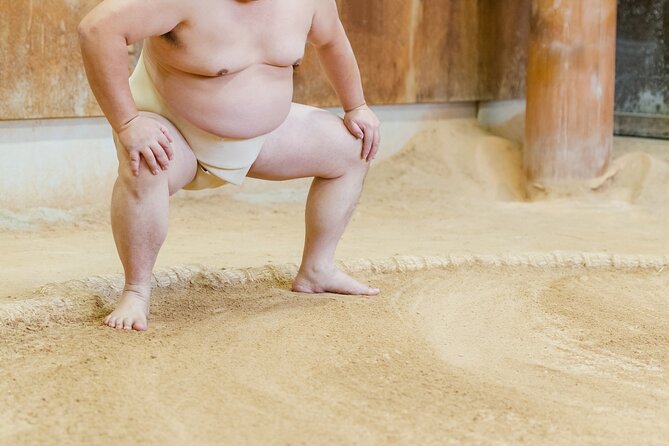
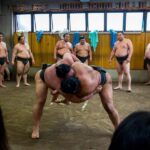
The most dramatic section is the practice that resembles a bout. Wrestlers face one another, and you feel the force from much closer than you would in a large arena.
Keep in mind that this is still training. The result is not the point, and the wrestlers are not performing a fixed program for the audience. The order and length can vary, and the stable’s work comes first.
The tour description allows about 60 to 120 minutes inside the stable. Early arrivals can experience the entire sequence, while those arriving at 8:20 generally receive 30 to 90 minutes and begin with basic training. The total activity lasts about two hours and 20 minutes, including the walk and the time around the stable.
Photos after practice
Photography is allowed, but your phone must be silent. Install a silent camera setting before you arrive, and keep your device ready without interrupting the session.
A photo with wrestlers may be possible after training. Treat it as a courtesy that depends on the day, not as a guaranteed final stop. The training itself is the main event.
The rules are part of the experience
A sumo stable is a serious workplace and a sacred setting within Japanese culture. The rules may feel strict compared with a normal sightseeing activity, but they protect the wrestlers’ concentration and the character of the place.
You cannot eat or drink inside the stable. You should not talk during the tour, and your phone needs to remain on silent. Revealing clothing is not suitable, so dress with the setting in mind.
If you have a cold or another infectious illness on the day, cancel rather than attend. The operator asks people with these symptoms not to participate, and the same basic courtesy applies to anyone visiting a close indoor training space.
Children must be at least six years old. Age alone is not the only issue, since children over eight who cannot sit still may also be refused. This is a poor match for a child expecting a loud, interactive show. It suits young people who can observe quietly for a long period.
If you break the rules, you may be asked to leave the stable temporarily. That is a clear signal that this is not a casual entertainment venue.
Floor cushions and the question of comfort
You sit directly on cushions on the floor in the Japanese style. There are no standard chairs, and the posture can be demanding during a session lasting up to two hours.
I would think carefully about this if you have knee or back problems. The same caution applies during pregnancy. The close view is valuable, but it is not worth turning the experience into a painful morning.
The floor seating also affects how you should dress. Choose comfortable clothing that allows you to sit for an extended time, while still avoiding revealing items. You may not have much freedom to stretch or change position once the practice begins.
What the small group changes
The maximum group size is eight. That is one of the strongest practical features because a large group would work against the close, quiet nature of the stable visit.
A small group makes it easier to see the wrestlers and follow Alisa’s explanations. It also reduces the chance of a crowd of phones or loud conversation getting in the way. The experience remains observational, but it feels more personal than a standard arena visit.
The small size does not mean you can roam around or choose any viewpoint. You still follow the stable’s rules and sit quietly. Think of the group limit as a way to preserve the viewing conditions, not as a promise of private access.
Is $84.70 a fair price?
At $84.70 per person, this is not the cheapest way to spend a morning in Tokyo. You are paying for access to a place that is difficult to visit independently, a guide who explains the training, and a tightly limited group.
The value is strongest if you have already seen, or plan to see, a formal sumo tournament and want to understand what happens away from the ring. It is also strong if you care about Japanese customs and prefer a working cultural setting to a staged demonstration.
The price is harder to justify if you want a flexible, casual attraction. You cannot choose the date freely around every tournament or training schedule, and the operator does not accept date requests. Training camps and competition periods affect when the stable can be visited, so availability is limited.
You should also count the early start, floor seating, and strict silence as part of the price decision. Those are not minor details. They determine the kind of morning you are buying.
How this compares with seeing sumo at the Kokugikan
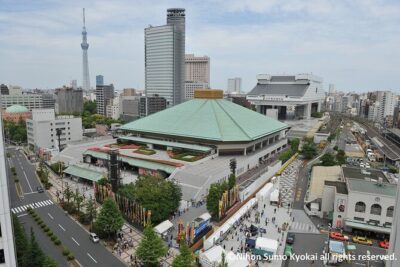
The meeting point is in Ryogoku, but this is not a tournament at the Kokugikan. Do not assume you are walking into the main arena or watching a formal public match.
At the arena, you get the wider event, the official bout structure, and the energy of a large audience. At the stable, you get proximity, working practice, and explanation. The two experiences answer different questions.
Choose the stable visit if you want to feel the physical force up close and learn how the training is organized. Choose a tournament if your priority is the public contest itself. If you have time and a strong interest in sumo, they work well together, but this tour should not be sold as a replacement for tournament tickets.
Best for curious adults and patient older children
I would recommend this to adults who want a serious look at a Japanese national sport, especially those who enjoy learning through observation. Alisa’s visual material helps if you are new to sumo, and the close setting gives you details that are easy to miss from arena seats.
It can also suit older children who understand the need for silence and stillness. The age rule begins at six, but the operator’s warning about children who cannot sit still is more useful than the number. A child who expects to move, snack, or ask questions throughout the session will struggle here.
I would skip it if you need chair seating, frequent breaks, flexible arrival time, or a talkative guide-led activity. I would also skip it if you want guaranteed wrestler photos. The possible photo is a pleasant extra, not the reason to book.
Booking, cancellation, and timing tips
Confirmation is sent within 48 hours of booking, subject to availability. Since the experience is often booked well in advance, with an average lead time of 77 days, it makes sense to arrange it early if your Tokyo dates are fixed.
Free cancellation is available until 24 hours before the start time. Canceling later, or requesting changes inside that window, does not qualify for a refund.
Use the mobile ticket and check the meeting address carefully. Give yourself enough time to locate the non-JR meeting point, then allow for the walk to the stable. The simplest plan is to arrive before the stated meeting time rather than trying to arrive at the last second.
Should you book the sumo training experience?
Book it if you want real training at close range, can sit quietly on the floor, and value access that is difficult to arrange on your own. The small group, Alisa’s diagrams, and possible post-training photo add useful context without turning the practice into a show.
Think twice if your knees or back make floor seating difficult, if you are bringing a restless child, or if your schedule cannot handle an early, fixed start. For the right visitor, $84.70 buys a rare look at the work behind sumo. For someone seeking easy entertainment, it may feel formal and restrictive.
FAQ
Where does the sumo training experience meet?
The meeting point is near Ryogoku Station at 1-chome-4-29 Yokoami, Sumida City, Tokyo 130-0015, Japan.
How far is the stable from the meeting point?
The walk takes about seven to ten minutes according to the operator. You should allow 10 to 15 minutes, since the stable is not directly beside the meeting point or the Kokugikan.
How long does the experience last?
The full activity takes about two hours and 20 minutes. Training inside the stable lasts about 60 to 120 minutes, depending on your arrival time and the day’s program.
What happens if I arrive at 7:45?
You can generally see the full sequence: stretching and strength training, basic training, match-style training, and photos.
What happens if I arrive at 8:20?
You generally begin with basic training. The stable viewing time is usually about 30 to 90 minutes for this later arrival.
Can I take photos during the training?
Yes. You must keep your phone on silent and use a silent camera setting.
Can I take a photo with a wrestler?
You might be able to take a photo with wrestlers after the training. It is not guaranteed.
Can I eat or drink inside the stable?
No. Eating and drinking are not allowed inside the stable.
Are children allowed to participate?
Children must be at least six years old. Children who cannot sit still may not be allowed, including some children older than eight.
Is cancellation free?
You can receive a full refund if you cancel at least 24 hours before the experience start time. Cancellations or changes made less than 24 hours in advance are not accepted for a refund.
More Sumo Experiences in Tokyo

More tours in Tokyo we've reviewed












Sumo Experiences, compared.
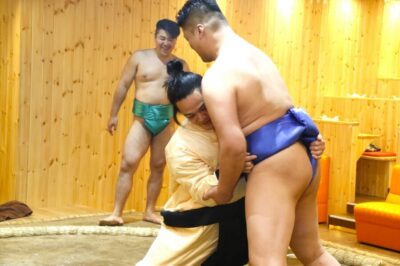 ★ 4.8Tokyo: Sumo Show Experience with Chicken Hot Pot and a PhotoFrom $1032 hours
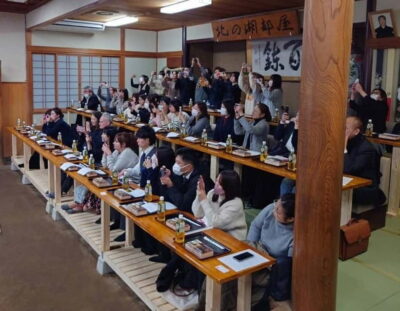 ★ 4.8Tokyo: Sumo Show and Dining ExperienceFrom $7990 minutes - 2 hours
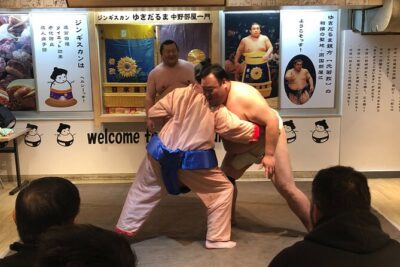 ★ 5.0the SUMO showFrom $89
 ★ 5.0Tokyo Sumo Entertainment Show with Chicken Hot Pot and PhotoFrom $106
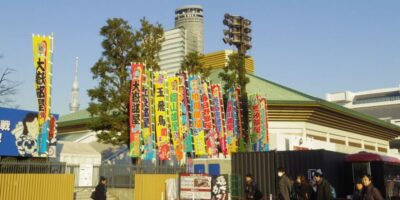 ★ 4.6Tokyo: Sumo Tournament Tour with Chair Seat TicketsFrom $141
 ★ 5.0Tokyo Grand Sumo Tournament Viewing Tour with TicketsFrom $124