Reviewed · SHIBUYA TOURS
Shibuya Tokyo: Onigiri & Tamagoyaki Cooking Class
Onigiri looks simple until you try to make rice hold its shape without turning heavy or sticky. This 90-minute Sorisso class gives you the useful details: how to choose rice, shape triangles and other forms, wrap them in nori, and fill them with traditional or modern ingredients.
In This Article
- Key points to know before booking
- Making a meal from rice, seaweed, and a little technique
- Choosing rice before you touch the nori
- Shaping three onigiri with traditional methods
- Wrapping onigiri in nori without losing the shape
- Comparing traditional and modern fillings
- Rolling tamagoyaki alongside the rice balls
- Eating what you make in a small, friendly setting
- What the $49 price really includes
- Who will get the most from this class
- Practical details for a smooth visit
- Should you book the Sorisso onigiri class?
- FAQ
- Where is the cooking class held?
- How long does the class last?
- How much does the class cost?
- Is transportation included?
- Is the class taught in English?
- How many people can join the class?
- What food will I make?
- Are ingredients and cooking utensils included?
- Are dietary restrictions or gluten-free requests possible?
- Can children join the class?
- Is cancellation allowed?
- Can I reserve without paying immediately?
I like the small-group format, which can mean as few as three people and no more than eight. I also like that you make three rice balls and half a portion of rolled omelet, then receive recipes and a small souvenir so the lesson can continue in your own kitchen.
The main consideration is the narrow focus. You will not tour Shibuya or prepare a full Japanese meal, and transportation to the venue is not included. Guests with severe or life-threatening food allergies should not book this class, while other dietary needs must be shared in advance.
Key points to know before booking
- Three onigiri per person: You make enough rice balls to compare shapes, fillings, and wrapping styles.
- Tamagoyaki is included: The class also covers half a portion of Japanese rolled omelet per person.
- English instruction: The host explains each step in English, with recipes to take home.
- A cozy small kitchen: The class takes place in a small shop with a comfortable kitchen setup and an easy-to-find location.
- Good value at $49: Ingredients, utensils, apron rental, instruction, food, recipes, and a souvenir are included.
- Best for hands-on learners: Children under five cannot participate, and serious food allergies are not suitable for this activity.
Making a meal from rice, seaweed, and a little technique
Onigiri is one of Japan’s most familiar foods. It is portable, practical, and comforting, but it is not merely a ball of cooked rice. The right grain, moisture level, seasoning, pressure, and filling all affect the final result.
That is the useful promise of this class. Instead of simply handing you an onigiri to eat, the instructor shows you why the rice behaves as it does and how to make the same food at home. You get a short lesson in everyday Japanese cooking, not just a photo opportunity.
The experience is held at Sorisso, a small shop with a cozy kitchen setup. The space is compact, but there is enough room to work comfortably. That matters in a cooking class, since cramped counters can turn a pleasant activity into a contest for elbow space.
The English-speaking host guides you through the class. Instruction is designed for complete beginners, so you do not need cooking experience or special equipment. The pace should suit a first attempt, with clear explanations and hands-on practice rather than a demonstration you only watch from the side.
A few more Tokyo tours and experiences worth a look


Choosing rice before you touch the nori
The class begins with one of the least flashy but most important parts of onigiri: choosing the right rice. Rice is the structure of the dish. If it is too dry, it will not hold together. If it is too wet or overworked, the texture can become dense.
You learn how rice selection affects texture and flavor, then work toward the consistency needed for shaping. This is the kind of detail that can save you from repeating a common home-cooking mistake: assuming all rice gives the same result.
The class includes the ingredients and utensils needed for three rice balls per person. That gives you enough practice to notice the difference between your first attempt and your later ones. You can try to improve your pressure, shape, or filling placement rather than stopping after a single sample.
I appreciate that the lesson treats rice as more than a blank base. Onigiri is often praised for its simplicity, but simple food leaves little room to hide poor technique. Learning the rice first gives the rest of the class a solid foundation.
Shaping three onigiri with traditional methods
Once the rice is ready, you practice shaping it. The familiar triangle is part of the lesson, along with other creative designs. Shaping looks easy in the hands of someone who has done it many times, but beginners quickly learn that too much pressure makes a firm, heavy rice ball.
The instructor helps you find the balance. The rice must hold together, yet remain pleasant to eat. You also learn how shape affects the amount of filling you can add and how neatly the finished onigiri can be wrapped.
Three rice balls create a useful progression. The first lets you get used to handling warm rice. The second gives you a chance to correct your grip or adjust the filling. By the third, you can focus on appearance and consistency.
This is also where the class becomes personal. With a maximum of eight participants, the host has a better chance to see what you are doing and offer help. One small class had only three people, which allowed plenty of individual attention. You should not assume every session will be that small, but the eight-person limit keeps the activity from feeling like a large demonstration.
Wrapping onigiri in nori without losing the shape
Nori adds flavor, texture, and a familiar Japanese finish. It also brings a practical challenge: wrap it neatly without crushing the rice or allowing the seaweed to become awkwardly placed.
The class teaches traditional wrapping techniques, so you learn more than simply pressing a sheet around the outside. The way you wrap an onigiri affects how easy it is to hold and eat. It also changes when the nori meets the rice and how much crispness remains.
This hands-on step is especially useful because nori can be less forgiving than it looks. A rough shape may still taste fine, but a careful wrap makes the rice ball easier to carry and more appealing on the plate.
You can expect to work with your own ingredients and utensils rather than watching the host prepare everything. An apron is supplied, which is a small but welcome touch. You can focus on the food without worrying quite so much about your clothing.
Comparing traditional and modern fillings
The filling section gives the class its range. You explore savory options as well as vegetarian choices, with traditional flavors alongside more modern interpretations. The supplied information does not specify the exact filling menu, so anyone with a particular preference should ask ahead of time.
That variety is valuable because it shows why onigiri works for different tastes. A filling can make the rice ball hearty, familiar, fresh, or unexpected, while the rice and nori keep the overall format consistent.
You make three rice balls, so the class is well suited to trying more than one option. You can compare how a filling changes the balance of rice, seasoning, and seaweed. Vegetarian participants may find the range useful, but you should still disclose dietary restrictions before booking rather than relying on the standard ingredients.
Gluten-free options may be available on request. They are not guaranteed, and the class is not suitable for anyone with a severe or life-threatening food allergy. For ordinary allergies or dietary restrictions, contact the provider in advance so the kitchen has a chance to prepare.
Other cooking classes in Tokyo


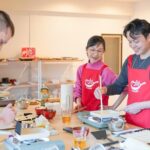

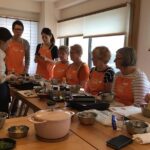
Rolling tamagoyaki alongside the rice balls
Onigiri is the main subject, but tamagoyaki gives the class a second Japanese cooking skill. This rolled omelet is made in layers, with the egg folded as it cooks into a tidy rectangular shape.
You receive ingredients and utensils for half a portion of rolled omelet per person. That is enough to add a second dish to the meal without changing the class into a long, multi-course cooking session.
Tamagoyaki requires attention to timing and movement. The egg must be handled while still soft enough to roll, but firm enough to hold its layers. The technique contrasts nicely with onigiri. Onigiri depends on rice texture and hand pressure, while tamagoyaki depends more on heat, timing, and controlled rolling.
If your main goal is to master Japanese egg dishes, this class may feel brief because tamagoyaki is only a supporting part of the experience. If you want a compact introduction to two everyday foods, the combination makes the $49 price more appealing.
Eating what you make in a small, friendly setting
The best part of a cooking class is usually the meal at the end. Here, you eat the onigiri and tamagoyaki you prepared, which gives the lesson a clear payoff. You can assess the texture, shape, wrapping, and filling while the instructions are still fresh.
The small kitchen encourages a shared meal rather than a formal restaurant experience. One particularly useful detail is that the class can create an easy setting for meeting other participants. Eating together after the work is done adds a social layer without requiring a separate food tour or restaurant booking.
The atmosphere is friendly and encouraging, and the English instruction makes the process accessible. Clear explanations matter more than flashy presentation in a class like this. You want to understand what to repeat at home, not simply produce one attractive plate under supervision.
The session lasts about an hour and a half. That is long enough for preparation, shaping, rolling, and eating, but short enough to fit into a busy day in Tokyo. You will not need to give up half a day of sightseeing for it.
What the $49 price really includes
At $49 per person, this class is priced above a quick snack stop but below many longer food experiences. The value depends on whether you want to learn a repeatable skill, not merely taste Japanese food.
Your fee covers the cooking class, ingredients and utensils for three onigiri and half a portion of tamagoyaki, apron rental, recipes, a small souvenir, and English guidance. You also eat what you prepare. There are no extra ingredient charges listed for the standard activity.
The recipes are important. Without them, a class can be enjoyable but difficult to recreate. With written instructions, you can try the rice, fillings, shaping, and omelet techniques after returning home. The souvenir is a modest addition, but it gives you one more physical reminder of the class.
You still need to arrange your own transport to and from the venue. The location is described as easy to find, but the activity details do not provide a specific station or walking time. Check the meeting instructions carefully and allow enough time to arrive in Shibuya without rushing.
For a food-focused activity, the price is reasonable if you value participation and instruction. It is less compelling if you only want a cheap meal, since you are paying for the teaching, kitchen access, ingredients, and take-home material as much as for the food itself.
Who will get the most from this class
I would recommend this class to first-time visitors who want a direct connection with Japanese food culture. Onigiri is familiar to many people from convenience stores, lunch boxes, and travel snacks, so learning to make it gives an everyday food more meaning.
It also suits foodies who enjoy practical skills. You leave with techniques you can use at home, and the class makes the process less intimidating for beginners.
Families can consider it as well, but children under five are not allowed. Older children may enjoy the shaping and filling stages, though the supplied information does not give a specific minimum age beyond that restriction.
The class works particularly well for solo participants and couples because the small format encourages conversation. It can also suit a small group of friends looking for a relaxed activity that does not depend on advanced cooking ability.
I would be cautious about booking if you want a broad survey of Japanese cuisine. This is a focused lesson on onigiri and tamagoyaki, not sushi, ramen, tempura, or a full regional menu. I would also choose another activity if you have a severe food allergy.
Practical details for a smooth visit
The class is in Shibuya, Tokyo, on Honshu, and transportation is not included. Since the venue is a small shop, check the meeting point and directions before leaving your hotel. The easy-to-find location is helpful, but you should still avoid arriving at the last minute.
The host speaks English, and no previous cooking experience is required. Tell the provider about allergies or dietary restrictions in advance. Gluten-free options may be possible, but they depend on what can be arranged.
The group is limited to eight participants. That is a strong advantage over a large class, especially when you are learning hand techniques. Sessions may begin at different times, so check availability for the date you want.
You can cancel up to 24 hours in advance for a full refund. You can also reserve now and pay later, which helps if your Tokyo schedule is still shifting.
Should you book the Sorisso onigiri class?
Book it if you want a friendly, practical food activity with a manageable time commitment. The strongest reasons are the small group, clear English instruction, three chances to shape onigiri, and the recipes that let you repeat the experience at home.
The class is also a good choice if you have seen onigiri everywhere in Japan and want to understand what goes into making a good one. The added tamagoyaki lesson broadens the experience without making it too long.
Skip it if you are looking for a full Japanese cooking menu, a market tour, or a long cultural lecture. Also skip it if you have a severe food allergy or cannot arrange suitable ingredients in advance.
For $49, Sorisso offers a compact lesson with real participation and a meal at the end. I would book it for a relaxed half-day plan in Shibuya, especially early in your Japan trip, when the recipes and techniques can still be useful during the rest of your stay.
FAQ
Where is the cooking class held?
The class is held at Sorisso in Shibuya, Tokyo, on Honshu, Japan.
How long does the class last?
The experience lasts 90 minutes, or about an hour and a half.
How much does the class cost?
The listed price is $49 per person.
Is transportation included?
No. Transportation to and from the experience venue is not included.
Is the class taught in English?
Yes. An English-speaking host provides the guidance.
How many people can join the class?
The class is limited to eight participants.
What food will I make?
You will make three onigiri rice balls and half a portion of rolled omelet, known as tamagoyaki, per person.
Are ingredients and cooking utensils included?
Yes. Ingredients and utensils for the stated portions are included, along with apron rental.
Are dietary restrictions or gluten-free requests possible?
You should share dietary restrictions or allergies in advance. Gluten-free options may be available upon request, but they are not guaranteed.
Can children join the class?
Children under five years old cannot participate.
Is cancellation allowed?
Yes. You can cancel up to 24 hours in advance for a full refund.
Can I reserve without paying immediately?
Yes. The reserve-now, pay-later option lets you book your place without paying at the time of reservation.
More Cooking Classes in Tokyo
More Cooking Classes in Tokyo
More Shibuya Tours in Tokyo



More tours in Tokyo we've reviewed












Shibuya Tours, compared.
 ★ 5.0Official Street Go-Kart in ShibuyaFrom $76
 ★ 5.0Shibuya Meltdown Nightlife Tour: All-You-Can-Drink Bar HoppingFrom $106
 ★ 4.9Tokyo: Street Kart Experience in ShibuyaFrom $99
 ★ 5.0Shibuya Official Street Go-Kart in Shibuya AnnexFrom $69
 ★ 5.0Tokyo: Shibuya Food Tour (13 dishes and 4 Eateries)From $77
 ★ 5.0Best of Shibuya Food TourFrom $217