Reviewed · TSUKIJI MARKET TOURS
Private Tokyo’s Famed Tsukiji Fish Market Tour
Tsukiji is easiest to enjoy when someone else handles the unwritten rules. This private morning walk takes you through the outer market, points out better food stops, and explains how to behave around shops where working locals matter more than sightseeing. I especially like the small-group format and the included snacks, which let you ask questions and taste as you go. The main guide associated with this experience is Guru-San, also referred to as GuruGuru, a warm local host with a strong interest in Tokyo’s food and culture.
In This Article
- Key points to know before you book
- Why a private Tsukiji walk makes sense
- Starting at Tsukiji Hongwanji Temple
- Two hours among Tsukiji’s food stalls
- Namiyoke Inari Shrine and the market’s protector
- What Guru-San adds to the morning
- Timing, meeting point, and daily planning
- Who will get the most from this tour
- Is $84.54 per person fair?
- Should you book this Tsukiji experience?
- FAQ
- Where does the Tsukiji tour begin?
- Where does the tour end?
- How long does the experience last?
- What are the main stops?
- How much time is spent at Tsukiji Jogai Market?
- Are snacks included?
- Is lunch included?
- Is the experience private?
- Does the tour run every day?
- Can I cancel for a full refund?
I also like that the tour begins and ends at the same Tsukiji meeting point and adds two quiet religious sites to the market visit. You get more than a food crawl: you learn how to approach a shrine, see the large lion at Namiyoke Inari Shrine, and hear why these places matter to the neighborhood. The tradeoff is that lunch is not included, and the market portion lasts about two hours, so you will still need to choose and pay for a proper meal afterward.
Key points to know before you book
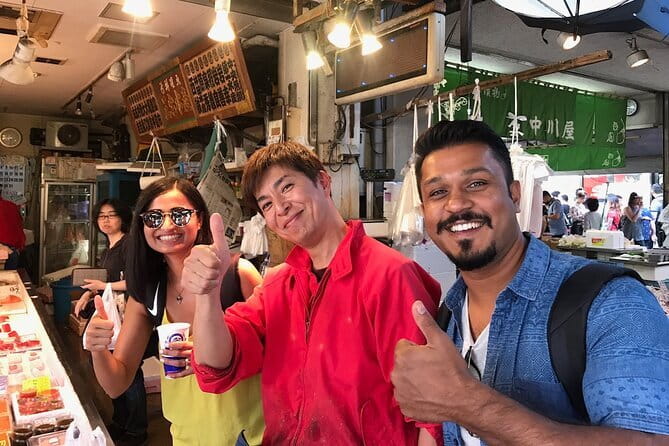
- A private guide keeps the morning personal: Your group receives the guide’s full attention, with room for questions about food, customs, and Tokyo life.
- Tsukiji’s outer market is the main event: Expect about two hours of food stalls, shops, snack tastings, and practical advice.
- Guru-San brings a cultural focus: The tour is designed around food, history, etiquette, and everyday Japanese customs, not just eating.
- Two sacred sites add variety: Tsukiji Hongwanji Temple takes about 20 minutes, followed by a 10-minute stop at Namiyoke Inari Shrine.
- Snacks are included, but lunch is not: Small bites help you sample the market, while a full meal remains your responsibility.
- The morning schedule is fixed: Tours run Monday through Saturday from 8:00 a.m. to noon during the listed operating periods.
Why a private Tsukiji walk makes sense
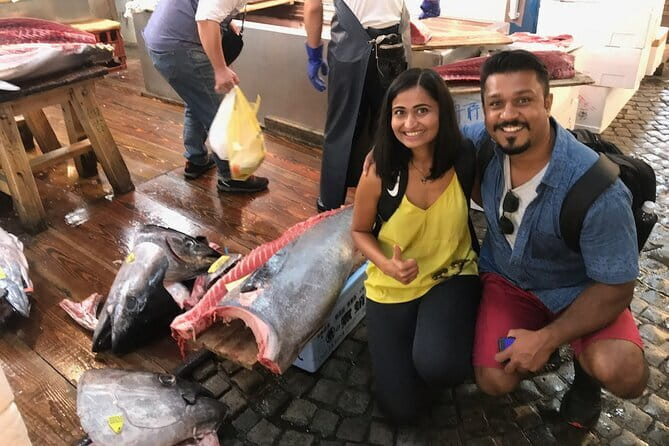
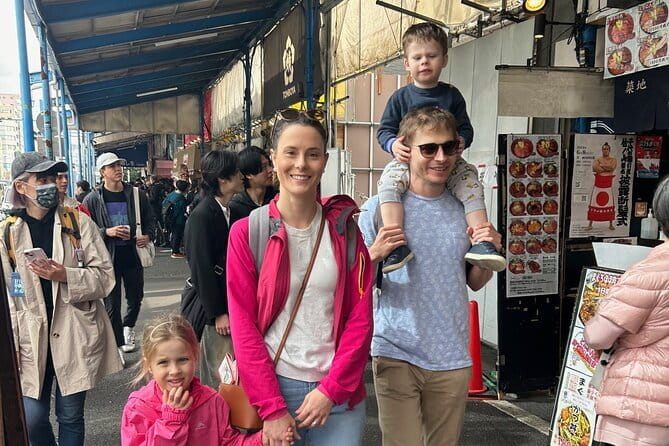
Tsukiji’s famous wholesale market moved to Toyosu, but the outer market around Tsukiji remains a major food stop in central Tokyo. It is a working commercial district, not a tidy museum built for sightseeing. That distinction matters. Shops sell seafood, kitchen tools, sweets, pickles, and other foods, while people are also shopping for home cooking and restaurant supplies.
I like the idea of having a guide here because the market rewards a bit of preparation. A visitor who wanders without context can easily spend the morning following the loudest signs or buying the first snack in sight. A guide can help you understand what you are seeing, where to slow down, and how to avoid getting in the way.
The private format is the strongest reason to choose this tour over a standard group walk. You can ask Guru-San to explain a food, repeat a point, adjust the pace, or suggest what to eat next. That flexibility is useful for first-time visitors, couples, families, and anyone who wants a conversation instead of a speech.
The advertised price is $84.54 per person. That is not a bargain if you only want to walk through the market and buy breakfast on your own. It becomes more reasonable if you value a personal guide, included snacks, cultural explanation, and a visit to the nearby temple and shrine. You are paying for orientation and access to local knowledge, not just for admission. There is no admission charge for either religious site.
A few more Tokyo tours and experiences worth a look


Starting at Tsukiji Hongwanji Temple
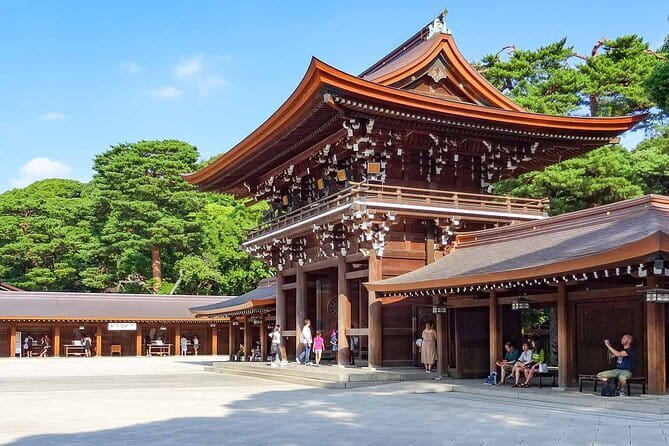
The tour begins at Tsukiji Hongwanji Temple, with about 20 minutes set aside for the visit. This gives you a calm opening before the market’s food stalls take over your attention.
The temple is a useful first stop because it places Tsukiji in a wider cultural setting. You can take photos, learn about its past, and receive guidance from the tour host before heading into the market. The stop can also include time to look for gifts, and the temple has a café if you want to pause there.
I appreciate this choice of starting point. A food-only walk can become a string of purchases with little sense of place. Beginning at the temple helps you see Tsukiji as a neighborhood with religious, commercial, and community life woven together.
The temple visit is brief, so do not expect a long lecture or an extended religious tour. Its value is in setting the scene and giving you a chance to ask basic questions. If you have never visited a Buddhist temple in Japan, this is also a practical moment to learn what to do and how to be respectful before the market crowds and storefronts claim your focus.
Admission is free. Photography is part of the visit, but you should still follow any signs or instructions at the site.
Two hours among Tsukiji’s food stalls
The core of the outing is a two-hour walk through Tsukiji Jogai Market, the outer market. This is where you will spend most of your time looking at food, sampling snacks, and learning how the market works.
The tour is built around explanation rather than a simple list of stops. You learn about Japanese etiquette, food customs, and the meaning behind what is being sold. That can make a difference when you are faced with unfamiliar ingredients or a shop where the normal rhythm is not obvious.
Snacks are included, with Japanese street food and sweets that you might not find easily on your own. The exact selection is not specified, so you should think of the tastings as a series of samples rather than a guaranteed meal. They are meant to keep your energy up and introduce you to foods you may otherwise pass by.
I like this approach because it leaves room for curiosity. If you see an ingredient you do not recognize, you can ask about it. If a food catches your attention, the guide can explain how it fits into Japanese eating habits. The private setting makes these small questions easier than they would be in a large group.
The market may also be where the guide gives advice about tourist traps and better-value choices. That does not mean every purchase will be cheap, and it does not mean you should expect special access to shops. It means you have someone helping you read the difference between a place aimed mainly at passing sightseers and a shop with something more useful or distinctive to offer.
You should be prepared for a food market that serves local commerce first. Walkways can require attention, and some shops may be busy with their regular work. Stay close to the guide, follow directions, and avoid stopping in a narrow passage for photographs. The etiquette lesson is not a side note. It is part of what makes the visit work.
One point to keep clear is the difference between snacks and lunch. The included tastings can form a light breakfast for some people, but lunch is not included. If you want a full meal, allow extra time and money after the guided portion ends.
Namiyoke Inari Shrine and the market’s protector
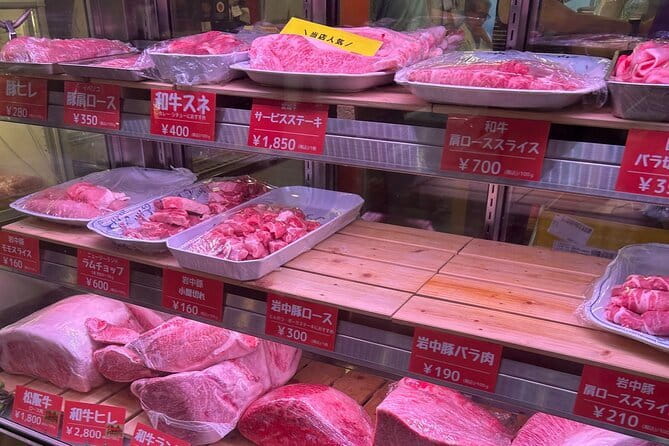
The final listed stop is Namiyoke Inari Shrine, with about 10 minutes for the visit. The shrine has long protected the Tsukiji area, and the guide explains its local role and the correct way to visit.
The most memorable photo opportunity here is the large lion. You can take pictures, learn the shrine’s story, and receive a quick lesson on shrine etiquette. This is a compact stop, but it adds meaning to the market. Food commerce in Japan is not separated from ritual and local belief as sharply as a visitor might assume.
The short timing is both a benefit and a limit. You get a change of pace after two hours among food stalls, but you will not have a long period for quiet reflection or detailed study. If the shrine interests you greatly, make a note of what Guru-San explains and consider returning independently later, if your schedule allows.
The tour ends back at the original meeting point after this stop. That makes the walk easy to plan around, especially if you have another Tokyo activity later in the day.
What Guru-San adds to the morning
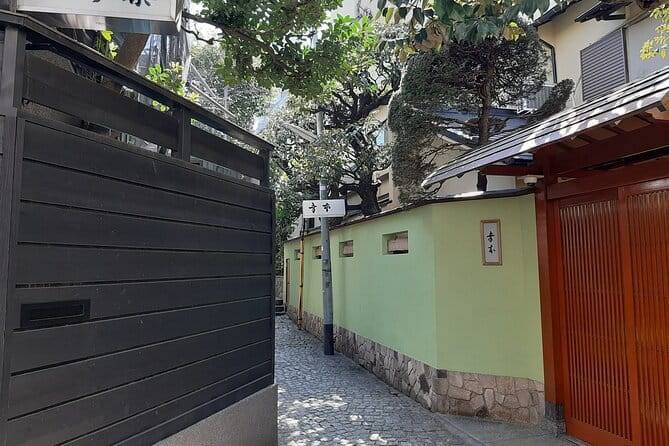
The guide is central to the value here. The supplied guide information identifies the host as Guru-San, also called GuruGuru. The strongest praise attached to the experience focuses on his kindness, attention, cultural explanations, and passion for food.
That description fits the design of the tour. It is not simply a route from one famous stall to another. The guide explains etiquette, market behavior, history, and the reasons behind certain foods. You can expect the conversation to cover Japanese culture as well as what is on the plate.
A private guide can also make the outing feel more like an introduction from a local acquaintance than a standard sightseeing circuit. That is particularly useful if you have visited Tokyo before but want a more focused look at food culture. One piece of feedback describes returning visitors finding this visit especially different because of Guru-San’s explanations.
Do keep your expectations practical. A two to three hour tour cannot explain every corner of Tsukiji or cover all of Japanese cuisine. The guide’s strength is likely to be selective interpretation: helping you notice worthwhile details, understand local manners, and make better choices during the short time you have.
Other private tours in Tokyo




Timing, meeting point, and daily planning
The meeting point is Eni Kaita Mochi Tsukiji Store, at Tsukiji 4-chome, 7-5, Chuo City, Tokyo, near the first floor of the listed building. The activity ends at that same meeting point.
The operating hours provided are Monday through Saturday, 8:00 a.m. to noon, during April 26 through May 18, 2026, and again from August 31 through September 30, 2026. The start time is important because the market is best approached as a morning activity, and the available window ends at midday.
Confirmation arrives at booking, and mobile tickets are supported. The meeting area is near public transportation, though no specific station or train route is given. Check the exact location on your phone before leaving, and allow time to find the store rather than arriving at the last minute.
The tour is listed for most participants and includes access to a nursing room. A restroom is also listed among the inclusions. Since this is a walking market visit, wear comfortable shoes and keep your belongings manageable, even though the supplied information does not specify a luggage policy.
The activity is private, so only your group participates. That is a meaningful advantage if you are traveling with children, have a particular food interest, or prefer not to ask questions in front of strangers. It also makes the price easier to assess for a small group, since the fee is given per person but the attention is reserved for your party.
Who will get the most from this tour
I would point this tour toward first-time visitors who want a gentle introduction to Tsukiji without having to decode every custom alone. It also suits repeat visitors who have already seen Tokyo’s headline sights and now want food, local beliefs, and neighborhood context.
Food-focused travelers should find the snack tastings useful, especially if unfamiliar Japanese sweets or street foods feel hard to choose without guidance. The temple and shrine stops make the experience a better fit for people who want culture alongside eating.
Families may appreciate the private arrangement and the included snacks, since the guide can keep the visit centered on the group. The nursing room is another useful practical feature. Still, the market portion lasts about two hours, so parents should consider their children’s patience and interest in food shopping.
This is less suitable if you want a long, sit-down meal, a wholesale-market auction visit, or a completely self-directed morning. Lunch is not part of the price, and the tour focuses on Tsukiji’s outer market rather than promising access to the former wholesale market.
Is $84.54 per person fair?
The price is fair when you place a value on personal attention and guidance. You receive a private guide, snacks, a two-hour market orientation, and short visits to two free religious sites. For a couple or small group that wants conversation and cultural context, the package can save time and reduce the chance of wasting money on food choices that do not interest you.
It is harder to justify if you are comfortable navigating markets alone or mainly want to eat a full breakfast. In that case, you will pay $84.54 per person and still need to buy lunch or additional food separately.
The booking pattern, with reservations made about seven days ahead on average, suggests you should not leave this until the last minute if the morning matters to your plans. Availability is limited to Monday through Saturday in the listed periods, so check the operating dates before arranging other activities.
Free cancellation is available up to 24 hours before the start time for a full refund. Changes or cancellations inside that 24-hour window are not accepted for a refund, and the cut-off follows Tokyo local time.
Should you book this Tsukiji experience?
Book it if you want Tsukiji explained rather than simply photographed. The private format, included snacks, and Guru-San’s culture-and-food focus give the morning a clear purpose. The temple and shrine stops also keep the outing from becoming one long sequence of purchases.
Skip it if your main goal is a large lunch, a wholesale auction, or the lowest possible cost. You will need to budget separately for lunch, and the market walk is guided rather than free-form.
For most visitors, the best reason to book is the combination of personal guidance and cultural context. Tsukiji is easy to visit but harder to understand on your own. This tour gives you a useful starting point, a few tastes, and enough local background to continue exploring Tokyo with better manners and better instincts.
FAQ
Where does the Tsukiji tour begin?
It begins at Eni Kaita Mochi Tsukiji Store, Japan, 104-0045 Tokyo, Chuo City, Tsukiji, 4-chome 7-5, on the first floor of the listed building.
Where does the tour end?
The activity ends back at the original meeting point.
How long does the experience last?
The tour lasts approximately 2 to 3 hours.
What are the main stops?
The listed stops are Tsukiji Hongwanji Temple, Tsukiji Jogai Market, and Namiyoke Inari Shrine.
How much time is spent at Tsukiji Jogai Market?
About two hours are set aside for exploring the outer market.
Are snacks included?
Yes. Snacks are included, including Japanese street food and sweets.
Is lunch included?
No. Lunch is not included in the tour price.
Is the experience private?
Yes. Only your group participates in the activity.
Does the tour run every day?
No. The listed schedule runs Monday through Saturday, from 8:00 a.m. to noon, during the provided operating periods.
Can I cancel for a full refund?
Yes. You can cancel at least 24 hours before the experience start time for a full refund. Cancellations or changes made less than 24 hours before the start time are not accepted for a refund.
More Shopping Tours in Tokyo


More Private Tours in Tokyo
More Tsukiji Market Tours in Tokyo

More tours in Tokyo we've reviewed





Tsukiji Market Tours, compared.
 ★ 5.0Tokyo Tsukiji Fish Market Food and Culture Walking TourFrom $99
 ★ 5.0Tokyo: Tsukiji Fish Market Food and Walking tourFrom $30
 ★ 4.9Tokyo: Tsukiji Fish Market Guided Walking TourFrom $222 hours
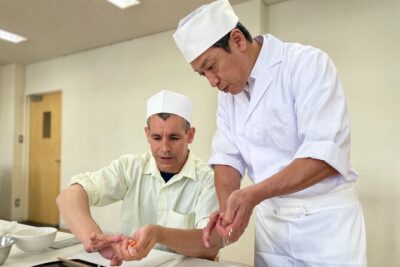 ★ 5.0Tokyo Sushi Making Class in Tsukiji with Professional ChefFrom $49
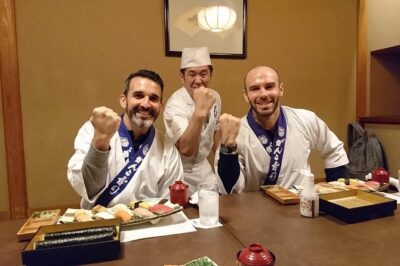 ★ 5.0Tsukiji Fish Market Guided Tour and Sushi Making with Pro ChefFrom $104
★ 4.7Tokyo: Tsukiji Fish Market Food and Culture Walking TourFrom $963 hours