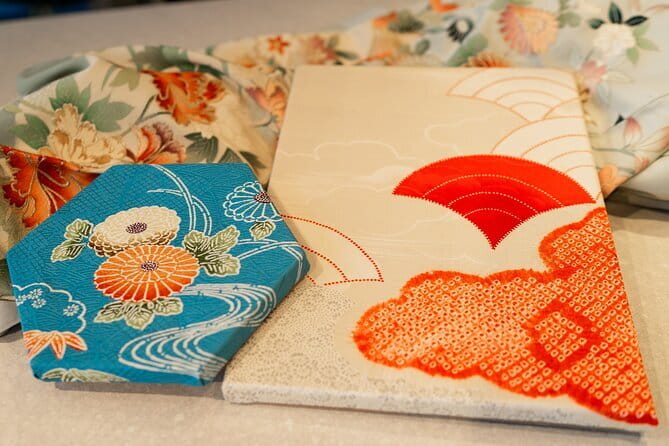
Reviewed · WORKSHOPS
Kimono Art Workshop in Tokyo
A kimono can tell you where it came from before you know a single word of Japanese. In this small Tokyo workshop, you learn how regional fabrics and patterns differ, then turn a piece of vintage kimono cloth into a framed-style art panel. Yuki and her team guide the process in English, so you get both a hands-on craft and a useful cultural lesson.
In This Article
- Key points
- What Happens During the 90-Minute Workshop
- Why the Vintage Fabric Matters
- Learning Kimono Details Before You Craft
- Choosing a Pattern You Will Want to Keep
- Making the Art Panel Without Needing Craft Skills
- A Small Group in Hatchobori
- Is the $58.79 Price Fair?
- Who Will Enjoy This Most
- Timing, Booking, and Cancellation
- Should You Book the Kimono Art Workshop?
- FAQ
- How long does the Kimono Art Workshop last?
- Where does the workshop begin and end?
- What fabrics can I choose from?
- Is instruction provided in English?
- What is included in the price?
- Can I cancel for a full refund?
I like two things here: the fabrics are authentic vintage pieces, and the finished work is a personal souvenir rather than another mass-produced trinket. I also like the calm pace and very small group, capped at six people. The main consideration is its narrow focus. If you want sightseeing, movement, or a long craft session, 90 minutes may feel short.
Key points
- Regional kimono styles: Learn about Bingata from Okinawa, Oshima Tsumugi from Amami, Kaga Yuzen from Kanazawa, and Kyo Yuzen from Kyoto.
- A sustainable souvenir: Repurpose vintage kimono and obi fabric into wall art you can take home.
- Small-group instruction: The workshop allows no more than six participants, with personal help from a kimono expert.
- English support: Yuki and the staff can explain the activity and kimono culture in English.
- Central Tokyo meeting point: Begin and finish at 3-chōme-14-4 Hatchōbori in Chuo City.
- Relaxed, beginner-friendly format: The class uses simple techniques and includes all materials.
What Happens During the 90-Minute Workshop
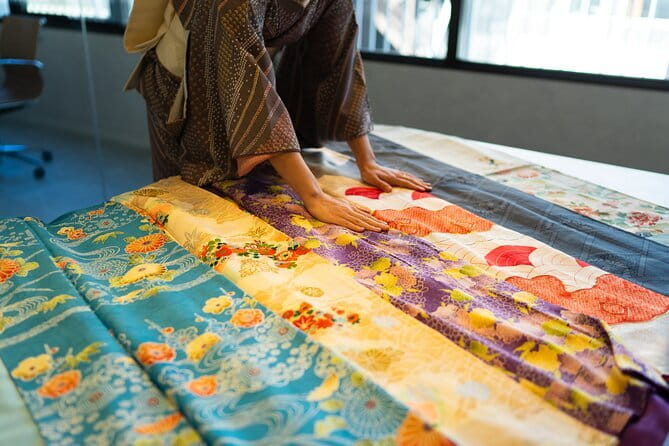
This is a compact activity with a clear three-part shape: a short lesson, fabric selection, and making your art panel. You do not spend the session sewing a full kimono. Instead, you learn how kimono textiles work and use a selected section to create a decorative piece.
The workshop begins with an introduction to kimono culture and traditional styles from across Japan. This matters because a kimono is not just a robe with pretty decoration. Its fabric, dyeing method, weave, color arrangement, and motifs can point to a particular region or tradition.
The instructors explain the background before asking you to make anything. That order is helpful. You can look at the cloth with more care once you understand that an Okinawan Bingata print has a different character from the woven texture of Amami Oshima Tsumugi, or the painted finish associated with Kaga Yuzen and Kyo Yuzen.
The class then shifts from listening to choosing. You select a favorite textile and pattern from the available vintage kimono materials. Some pieces may come from kimono fabric, while others may be from obi material. This is one of the most personal parts of the activity, since the finished panel depends largely on the colors and design you pick.
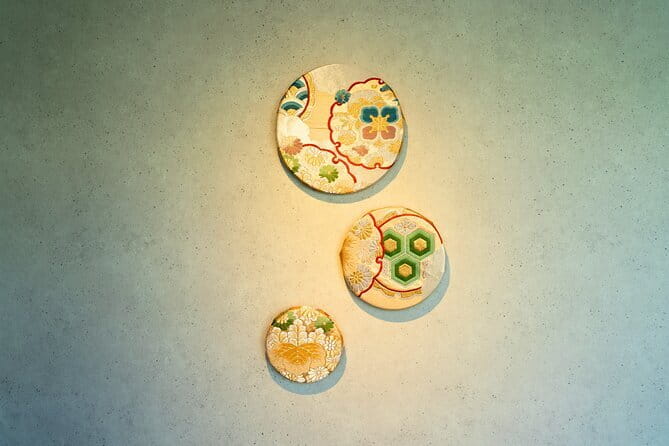
After your choice, the instructor shows you how to turn the fabric into an art panel. The method is intended for beginners, and the instructions are clear and manageable. You still make the decisions about which section to feature, so the result feels like your own design rather than a preassembled souvenir.
At the end, you take the completed artwork with you. The activity returns to the same Hatchobori meeting point, which keeps the logistics simple.
A few more Tokyo tours and experiences worth a look



Why the Vintage Fabric Matters
The best reason to book this workshop is not simply that you get to make something. It is that the material already has a connection to Japanese clothing culture.
The workshop gives older kimono textiles a new purpose instead of treating them as disposable. For you, that means the souvenir has a useful story: you learned about the cloth, chose the pattern, and helped preserve a small section of a garment that might otherwise no longer be worn.
This is also a practical choice for packing. A wall panel is easier to bring home than a full kimono, and you do not need to decide how to wear or care for an expensive traditional garment. You get a piece of Japanese textile art without pretending to be an expert in kimono dress.
The selection includes several regional traditions:
- Bingata from Okinawa: Recognized for its bold, colorful dyeing and distinctive printed designs.
- Oshima Tsumugi from Amami: A refined woven textile with an earthy appearance.
- Kaga Yuzen from Kanazawa: Known for elegant painted decoration.
- Kyo Yuzen from Kyoto: Associated with the polished decorative style of Kyoto.
The descriptions give you a starting point, but the important thing is to look closely and choose what appeals to you. You might prefer an intricate pattern, a quiet woven texture, or a color combination that reminds you of a particular day in Japan.
Learning Kimono Details Before You Craft
The introductory talk gives the workshop more value than a basic do-it-yourself class. You learn about traditional kimono styles and the meaning behind their designs, not just the mechanics of attaching fabric to a panel.
That context is especially useful if you have seen kimono in museums, shops, festivals, or formal ceremonies but never understood the differences. The class connects what you see in the fabric to the wider culture of clothing in Japan and explains how these garments are still worn today.
The teaching style is aimed at beginners. You do not need previous art experience, textile training, or Japanese language ability. The instructions are described as clear, and English support is available from Yuki and the other staff.
Yuki receives particular praise for being friendly and helpful during the activity. Kasumi also assists with the workshop. Since the group can be as small as two people and never exceeds six, you have a better chance of asking questions than you would in a large demonstration class.
I would pay attention during the lecture even if your main goal is the craft. The finished panel will mean more when you know why the fabric is unusual and what makes its pattern or weave special.
Choosing a Pattern You Will Want to Keep
Fabric selection is likely to be the most important decision you make. You are not simply picking a color from a standard craft box. You are choosing a section of vintage textile with its own pattern, texture, and regional connection.
Give yourself time to compare the options. Hold the pieces at different angles and consider how the design will look when displayed as a single panel. A small section of fabric can appear very different when it becomes the focal point of a finished artwork.
You may find that the most dramatic pattern is not the best choice. A quieter design can work well as wall art, especially if you plan to display it at home. On the other hand, a strong print may make a better gift for someone who enjoys Japanese culture or modern craft.
The staff help you through this choice, so you are not left guessing. Their role is especially useful if you want to know which textile tradition a piece represents or what kind of design you are holding.
Because the materials are vintage, the exact selection may vary. The activity promises a variety of kimono fabrics and patterns, but it does not promise one specific design for every session. Go in ready to choose from what is available rather than expecting a particular color or motif.
Making the Art Panel Without Needing Craft Skills
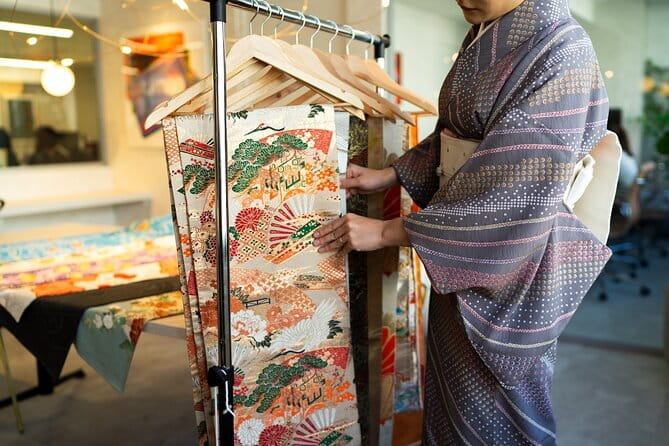
The hands-on part uses simple techniques, making it suitable for people who want a creative activity without a steep learning curve. The instructors demonstrate what to do, then help as you work.
This is not presented as a formal art course, and that is part of its appeal. You do not need to produce a perfect museum piece. The goal is to create an attractive keepsake while learning how the textile can be displayed outside its original garment.
The process has a satisfying balance. You have enough guidance to avoid feeling lost, but you still make choices about the fabric and the look of the panel. Several class descriptions point to the work being intuitive and rewarding, with clear instructions and comfortable seating.
I would recommend treating the activity as a cultural craft rather than a test of artistic skill. Enjoy the physical feel of the fabric and the pattern in front of you. If the finished work has small imperfections, that is part of its handmade character.
All materials are included, so you do not need to bring a craft kit. Food and drinks are not included, but the session lasts about an hour and a half, making it easy to fit around a meal elsewhere in Tokyo.






A Small Group in Hatchobori
The workshop starts and ends at 3-chōme-14-4 Hatchōbori, Chuo City, Tokyo 104-0032. It is near public transportation, but you should still allow enough time to find the exact address. The meeting point is in Hatchobori, not at a major sightseeing landmark, so checking your route before leaving is sensible.
The maximum group size is six. That limit changes the feel of the activity. You are less likely to be crowded around a shared table, and the instructor can give direct help when you are arranging your fabric.
A small group also suits people who prefer a quiet break after several full days of temples, shopping, and city streets. One of the strongest themes in the feedback is that the workshop provides a relaxing change of pace. The setting gives you time to sit down, listen, and make something with your hands.
There is a tradeoff. A tiny class can feel personal, but it may not have the lively energy of a large group activity. If you enjoy meeting many new people, this will feel more like a focused lesson than a social event.
The workshop ends where it begins, with no hotel pickup or drop-off. You arrange your own transport, which keeps the price lower but requires a little planning.
Is the $58.79 Price Fair?
At $58.79 per person, this is not the cheapest souvenir activity in Tokyo. You are paying for more than the fabric itself: the kimono lesson, expert instruction, all craft materials, and a finished artwork to take home.
The value is strongest if you want a meaningful object and a short cultural experience in one package. Buying a decorative textile alone would not give you the explanation of regional styles or the satisfaction of making the panel yourself.
It is also good value for someone with limited time. The 90-minute duration fits neatly into a Tokyo day, and the activity does not require a full morning or afternoon. You can pair it with other plans in central Tokyo, provided you allow time to reach Hatchobori.
The value is weaker if you mainly want to buy a ready-made kimono item or if you are looking for a longer, more advanced art class. You should also remember that the price does not include meals, drinks, or transport to the meeting point.
I see the fee as reasonable for a small-group workshop with a cultural lesson and a take-home piece. The personal value will depend on how much you care about Japanese textiles and handmade souvenirs.
Who Will Enjoy This Most
I would recommend this activity to you if you want a quieter Tokyo experience with real cultural content. It suits first-time visitors who know little about kimono, as well as people already interested in Japanese design, clothing, textiles, or sustainable crafts.
It works well for:
- Couples who want a shared souvenir-making activity
- Solo visitors who prefer a calm, guided class
- Families with participants who can take part in a simple craft
- Art and design fans
- People who want an English-supported cultural lesson
- Anyone seeking a small item that is easy to pack home
The workshop is also a good option after several demanding sightseeing days. You sit comfortably, listen to the instructors, and work at a gentle pace. The class is educational without feeling like a formal lecture.
You may want to skip it if you dislike choosing from fabric samples, have no interest in textile traditions, or want a physically active experience. The activity centers on looking, listening, selecting, and making.
Most people can participate, and service animals are allowed. The available information does not provide details about wheelchair access or the exact dimensions of the finished panel, so contact the provider if either point matters to you.
Timing, Booking, and Cancellation
The experience lasts about 1 hour and 30 minutes. It is often booked around 47 days ahead, so reserve early if you need a particular date during a busy Tokyo visit.
Your mobile ticket makes entry straightforward. Confirmation is provided when you book. Since the class begins at a fixed meeting point and does not include hotel transportation, build your travel time into the plan.
Free cancellation is available until 24 hours before the local start time for a full refund. Cancellations or changes made less than 24 hours before the start are not accepted for a refund.
Should You Book the Kimono Art Workshop?
Book it if you want to understand Japanese textiles while making a souvenir with your own hands. The combination of regional kimono instruction, vintage fabric, English-speaking help from Yuki and her team, and a six-person maximum gives the activity a personal feel.
I especially like that you leave with an object tied to a real craft tradition rather than a generic Tokyo gift. The main limit is the short format and modest scope. You will not become a kimono specialist in 90 minutes, and you should not expect an elaborate art course.
For a calm cultural break at a fair price, I would book it. Choose this workshop on a day when you want to slow down, pay attention to detail, and bring home something that carries a little of Japan’s textile story.
FAQ
How long does the Kimono Art Workshop last?
The workshop lasts approximately 1 hour and 30 minutes.
Where does the workshop begin and end?
It begins and ends at 3-chōme-14-4 Hatchōbori, Chuo City, Tokyo 104-0032, Japan.
What fabrics can I choose from?
The workshop offers a selection that may include Bingata from Okinawa, Oshima Tsumugi from Amami, Kaga Yuzen from Kanazawa, and Kyo Yuzen from Kyoto.
Is instruction provided in English?
English-speaking staff, including Yuki, provide instruction and explain kimono culture during the activity.
What is included in the price?
The price includes workshop participation, instruction by a kimono expert, and all materials needed to make the art panel. Food, drinks, hotel pickup, and hotel drop-off are not included.
Can I cancel for a full refund?
Yes. You can cancel at least 24 hours before the experience start time for a full refund. Cancellations or changes made less than 24 hours before the start are not accepted for a refund.
More Workshops & Classes in Tokyo


More tours in Tokyo we've reviewed









Workshops, compared.
 ★ 5.0Sushi Making Tokyo Roll and Authentic Japanese Sushi ClassFrom $59
 ★ 4.9Tokyo: Roll and Authentic Sushi Making Class in AsakusaFrom $581h 40m
 ★ 4.9Tokyo: Sushi Making Class in a Happi Coat near a Famous SpotFrom $421h 30m
 ★ 4.8Chopstick Making Workshop in GinzaFrom $251 hour
 ★ 5.0Tokyo Sushi Making Class in Tsukiji with Professional ChefFrom $49
 ★ 5.0Ramen & Gyoza Cooking Class in Tokyo with Local Supermarket VisitFrom $122