Reviewed · MT FUJI DAY TRIPS
Mt. Fuji Tours with Kawaguchi Lake Ropeway View English Speaking
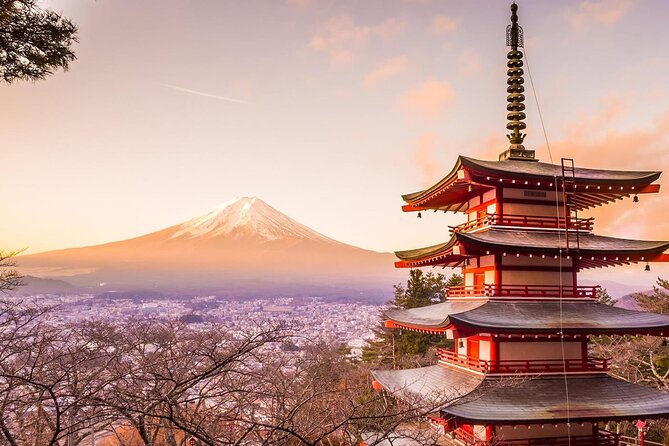
The main appeal is simple: this tour gives you several chances to see Mount Fuji without asking you to solve the train, bus, and local transfer puzzle from Tokyo. The ropeway above Lake Kawaguchi supplies the headline view, while Oishi Park, the lakeshore, and Oshino Hakkai give you different angles and a fuller day in Fuji country.
In This Article
- Key points at a glance
- Why this Mount Fuji day trip works from Tokyo
- Starting the morning in central Tokyo
- Riding the Kachikachi ropeway above Lake Kawaguchi
- Taking in Lake Kawaguchi at 830 meters
- The matcha experience at Lake Kawaguchi Konohana Museum
- Oishi Park and its seasonal color
- Walking among the eight springs at Oshino Hakkai
- How weather changes the entire experience
- Why the guide can make or break the day
- Traffic, timing, and the reality of a 10-hour schedule
- Is the $81.41 price good value?
- Who should book this Mount Fuji tour?
- FAQ
- How long does the Mount Fuji tour last?
- What places does the tour visit?
- Is the ropeway ticket included?
- What happens if the ropeway is closed?
- Can I see Mount Fuji in any weather?
- Is hotel pickup available?
- Is food included?
- Can I cancel for a refund?
I like the mix of famous scenery and smaller cultural stops. I also like the English-speaking guides, especially guides such as Sawaki, Erina, Louis, and Vivienne, who have been praised for clear explanations, friendly help, and good communication by WhatsApp or phone. The main concern is weather and traffic: clouds can hide Fuji completely, and weekend congestion can leave you rushing through the stops.
Key points at a glance
- Multiple Fuji viewpoints: See the mountain from the ropeway, Lake Kawaguchi, Oishi Park, and the Oshino area when visibility allows.
- A practical Tokyo day trip: Transport, fuel, tolls, and the driver service are covered, saving you hours of planning.
- The Kachikachi ropeway is the star: The included ride climbs to a high observation point over Lake Kawaguchi.
- Oshino Hakkai adds a traditional village feel: Its eight clear spring ponds are fed by snowmelt from Mount Fuji.
- English support varies by guide but is a central feature: Strong guides have included Sawaki, Erina, Louis, Wanting Feng, and Vivienne.
- Choose your date carefully: Clear weather matters more than almost anything else, and weekends or Japanese public holidays can be slow.
Why this Mount Fuji day trip works from Tokyo
Mount Fuji is close enough to Tokyo to tempt you into a do-it-yourself outing, yet far enough away to make the details tiring. You need to connect several transport services, watch the weather, and decide which lakeside sights are worth your time. This tour removes much of that work with a vehicle, a fixed route, and a guide.
The day lasts about 10 hours, including driving time. That is a long outing, but it is realistic for a place where road traffic can quickly consume an afternoon. At $81.41 per person, the value is strongest if you want convenience and several stops rather than a single Fuji photo from a train window.
You are paying for the vehicle service, fuel, tolls, highway charges, and driver service. Food, drinks, accommodation, and personal purchases are not included, so budget separately for meals and snacks.
The standard group can include up to 45 people. A small-group option offers door-to-door transfer from hotels in some Tokyo districts between roughly 7:00 and 8:30, with a more comfortable vehicle and fewer people. That option is worth considering if you dislike crowded meeting points, though you need to give the operator your hotel or bed-and-breakfast address so they can check if it is covered.
A few more Tokyo tours and experiences worth a look
Starting the morning in central Tokyo
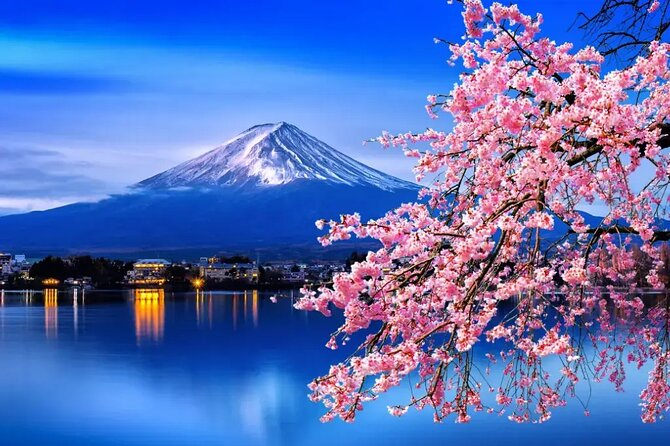
You can choose between two central Tokyo pickup points. The exact meeting area can feel crowded because several tours may gather at the same place, sometimes with multiple buses and yellow flags. Arrive early, but do not rely on spotting a guide instantly.
The operator sends a reminder email the night before. It should include the vehicle registration number, guide contact details, and pickup time. Keep that message open on your phone, since the license plate is more useful than trying to identify one bus among several.
This is also where good guide communication makes a real difference. Vivienne has been praised for sending updates when she was delayed at an earlier pickup, while Sawaki helped one passenger communicate with a confused taxi driver and reach the meeting point. Those are small details, but they matter when you are navigating Tokyo without Japanese.
Do not arrive late. If you miss the departure because of personal delays, the amount paid is not refunded. Carry your passport and valuables with you throughout the day, and avoid bringing large bags. One piece of luggage per person is allowed if you register it when booking, with an extra charge if you arrive with more than one or fail to note it in advance.
Riding the Kachikachi ropeway above Lake Kawaguchi
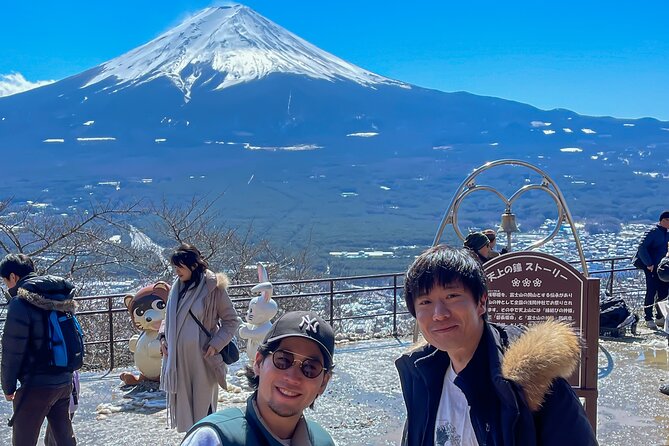
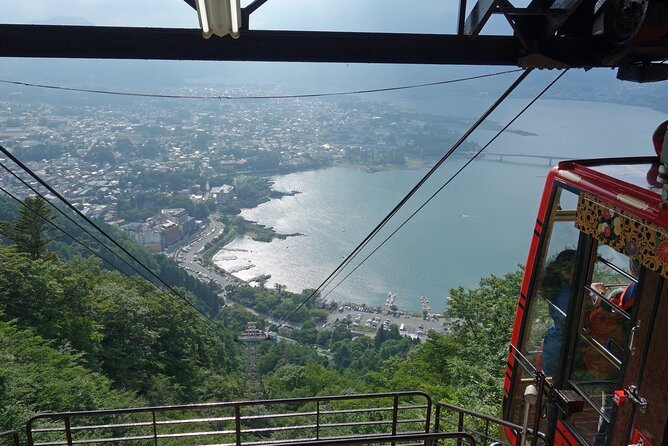
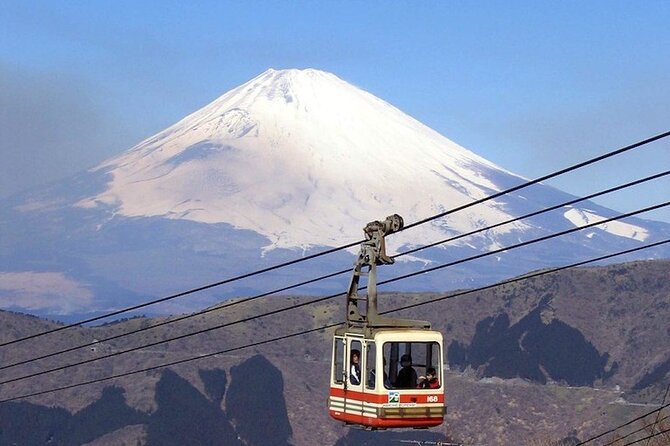
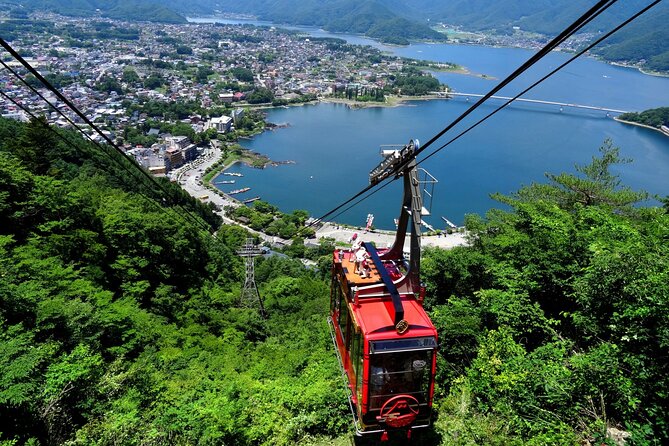
The Lake Kawaguchi Panoramic Ropeway, also called the Kachikachi Mountain Cable Car, is the most visually rewarding part of the day. The gondola climbs from the lake area to an observation point at higher elevation, opening views over Lake Kawaguchi and the surrounding Fuji region.
You have about 90 minutes allocated for the ropeway and the lake area. That sounds generous on a quiet day, but queues can eat into it. The ride itself is included, so you do not need to buy a separate ticket, but the cable car can stop operating in strong winds, lightning, or other poor conditions.
If the ropeway cannot run, the planned alternative is a ride on the Sengoku Warrior Boat at Lake Kawaguchi, or a ticket refund. This is important: if the ropeway is the only reason you want to book, check the operating situation before you commit. From December 10 through December 20, the gondola is scheduled for repairs and the Sengoku Boat replaces it. Do not book those dates expecting the ropeway.
Operating hours are listed as 9:00 a.m. to 4:00 p.m. on weekdays, with the last descent at 4:20 p.m. On Saturdays, Sundays, and holidays, the hours extend to 5:00 p.m., with the last descent at 5:20 p.m. Weather and queues still control how much time you actually get at the top.
Taking in Lake Kawaguchi at 830 meters
Lake Kawaguchi sits at about 830 meters and covers roughly 5.7 square kilometers. The lake itself is more than a backdrop for the ropeway. It gives you a calm foreground for Fuji photographs, and the view changes as clouds move across the mountain.
The 90-minute lakeside portion is a useful counterpoint to the high lookout. You can expect a chance to walk, take pictures, and appreciate the relationship between the lake and mountain rather than simply stopping for a quick roadside photograph.
Still, this is not a leisurely lakeside holiday. Five stops, traffic, queues, and a fixed vehicle schedule all compete for the same 10-hour day. If you like slow walks, long café stops, or detailed museum visits, you may find the schedule tight.
Clear weather can make the whole route feel carefully designed. You may see Fuji from several angles, with the mountain appearing behind the lake, park flowers, and village streets. On a cloudy day, the same route becomes less dramatic, though the lake, gardens, and springs still give you something to do.
The matcha experience at Lake Kawaguchi Konohana Museum
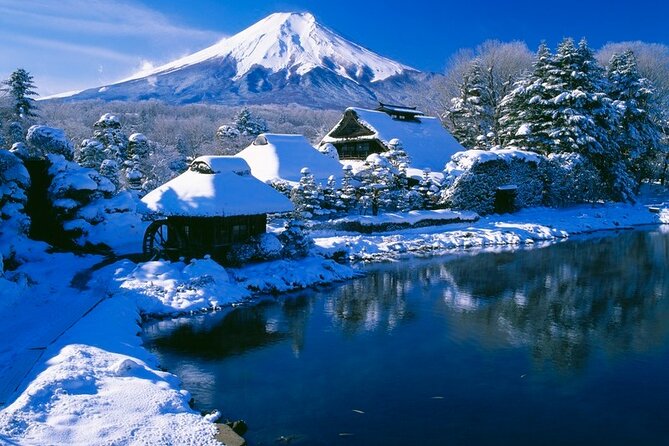
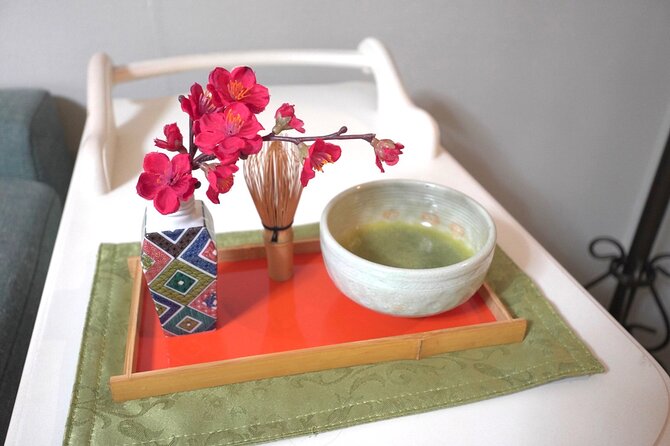
The stop at Lake Kawaguchi Konohana Museum includes about an hour for a matcha experience. This adds a cultural pause to a day otherwise built around viewpoints and transport.
Keep your expectations measured. The tea portion may be brief, particularly if traffic has delayed the group. Some accounts describe only a few minutes for the tea itself, followed by time to browse a shop. That does not make the stop worthless, but it means you should treat it as a short introduction rather than a lengthy tea ceremony.
The shopping area may feel expensive compared with shops in Tokyo or other parts of Japan. You are not required to buy anything, and the practical approach is to enjoy the matcha, look around, and save most souvenir shopping for urban shops where you have more choice and time.
This stop works best for you if you appreciate a small cultural element in a scenic day trip. If your priority is maximizing time with Mount Fuji, you may wish the schedule gave more minutes to the open-air viewpoints instead.


Oishi Park and its seasonal color
Oishi Park is a brief, roughly 30-minute stop on the shore of Lake Kawaguchi. Its draw is the garden setting and the view across the lake toward Fuji. In summer, lavender can cover the park in purple, adding seasonal color to the photographs.
Thirty minutes is enough to walk a short stretch, take pictures, and buy an ice cream or snack if time allows. It is not enough for an unhurried garden visit, especially when the group must return to the vehicle.
The park is also highly dependent on weather. On a clear day, the flowers and mountain combine into one of the tour’s best compositions. If Fuji is hidden, the garden still has appeal, but the stop becomes much less distinctive.
One practical point: keep track of the vehicle and departure time. Some stops have paths, shops, and side lanes that make it easy to lose your bearings. Sawaki has been praised for helping people find their way back, even using a phone video call and meeting them partway, but you should not count on needing that rescue.
Walking among the eight springs at Oshino Hakkai
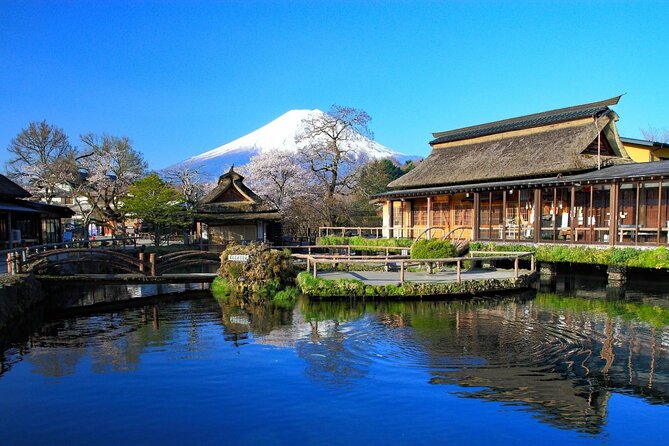
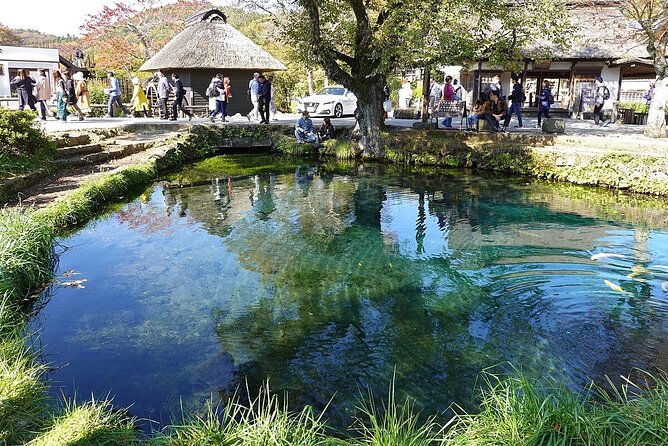
Oshino Hakkai is the most grounded and traditional stop on the route. The name refers to eight clear ponds formed by snowmelt from Mount Fuji filtering through the earth. The springs are the reason the village has such clear water and a strong connection to Fuji.
You have about an hour here. That gives you time to walk among the ponds, see the traditional-style setting, and browse food or souvenir stalls. Compared with the ropeway, Oshino Hakkai feels less like a single grand viewpoint and more like a place to wander.
This is one stop I would protect from unnecessary rushing. Several lower-rated experiences felt the schedule gave too much attention to shops and not enough time in the village. If traffic has already taken time from the route, the stop may feel compressed.
Come prepared for crowds and uneven pacing. Stay aware of the meeting instructions, since the group cannot wait indefinitely. The village is a particularly good part of the day for you if you want something beyond scenic overlooks and commercial photo stops.
How weather changes the entire experience
Mount Fuji visibility is never guaranteed. Rain, low cloud, haze, or even a thin cloud bank can hide the summit and upper slopes. A cloudy day may still provide a pleasant visit to the lake, gardens, matcha stop, and springs, but the central reward of the tour can disappear.
Some people have enjoyed the day despite seeing little or no Fuji, especially when the guide kept the group comfortable and did not rush every stop. Others felt disappointed because the remaining stops seemed like shops and secondary attractions without the mountain.
Check the visibility forecast before booking if you have flexibility. You can cancel for a full refund up to 24 hours before the start time, based on local time. If the operator cancels because of poor weather or because the minimum number of people is not reached, you are offered another date or experience, or a full refund.
The forecast is not a promise, but it helps you make a sensible choice. If Fuji is your once-in-a-lifetime priority, choose the clearest available date and avoid locking yourself into a day with a poor visibility outlook.
Why the guide can make or break the day
The route is fixed, but the human element varies. Guides praised for this experience include Sawaki, Erina, Louis, Wanting Feng, Vivienne, Young, Joe, and Brewski. Strong guides have been described as fluent in English, organized, funny, and willing to answer questions without filling every quiet moment with commentary.
Sawaki, in particular, has been praised for speaking English, Japanese, and Mandarin, using quizzes and small matcha chocolate rewards to keep the bus ride lively. Erina has been singled out for clear communication and calm organization. Louis has brought personal stories about his life in Japan, while Wanting Feng used WhatsApp effectively to keep the group informed.
The guide usually provides information in several languages, including English, Japanese, and Chinese. On a crowded bus, the speaker system matters. One poor experience involved a loud, crackly speaker and long commentary that became tiring, so do not assume every guide or vehicle will feel equally polished.
The guide also controls the rhythm of the day. A good one lets you explore while making departure times clear. That balance is especially useful at Oshino Hakkai and Oishi Park, where it is easy to wander farther than intended.
Traffic, timing, and the reality of a 10-hour schedule
Road traffic to Fuji can be severe on weekends and Japanese public holidays, sometimes called Red Days because they are marked in red on calendars. Queues at the ropeway and crowded scenic areas add more delays.
When the bus loses time, the stops may be shortened. You might still reach every planned location, but you will have less time to walk, eat, shop, and take photographs. One positive report described a well-organized day that reached every stop and even fitted in an extra matcha experience. Another described a schedule that felt rushed after heavy traffic.
This is not the right tour for a relaxed pace on a busy holiday. If you can choose, travel on a weekday outside a public holiday. If your dates are fixed, accept that the 10-hour day may include more time sitting in the vehicle than you expect.
Eat breakfast before pickup. Food is not included, and lunch may come late, around 1:30 p.m. on some schedules. Bring water and a snack, but remember to register luggage and strollers in advance if needed. A foldable stroller is allowed when declared at booking.
Is the $81.41 price good value?
At $81.41, this is a reasonable price for a full-day trip from Tokyo if you value included transport and do not want to arrange the route yourself. Fuel, tolls, highway fees, the driver, and the ropeway ticket are covered.
The price is less compelling if you mainly want one perfect Fuji photograph and are willing to arrange your own transport around a clear weather forecast. A private or smaller tour would offer more personal space, but the price and terms may differ, and no separate private-tour details are provided here.
Remember the extra costs. You pay for meals, drinks, shopping, and other personal expenses. Some organized stops can have higher prices, so I would buy only what genuinely interests you.
The small-group upgrade may be worth the extra cost if you want hotel pickup from a covered Tokyo district and a more comfortable vehicle. The regular group is better for keeping the base price down, provided you can manage a busy pickup point and a larger bus.
Who should book this Mount Fuji tour?
I would recommend it to you if you are staying in Tokyo, want to see several Fuji-area sights in one day, and prefer a guide to handle the driving and route. It suits first-time visitors who want a broad introduction rather than a deep visit to one location.
It also works well for families and mixed groups, since most people can participate and the day combines viewpoints, a lake, gardens, tea, and a village. The fixed schedule makes it easier to cover a lot without debating what to skip.
I would hesitate if you dislike buses, crowds, commercial stops, or fixed departure times. I would also avoid it if your only goal is a long, quiet walk at Oshino Hakkai or a slow afternoon beside Lake Kawaguchi.
Book it when the weather outlook is favorable, use the night-before vehicle information, eat breakfast, and avoid weekends or Japanese public holidays when possible. If those conditions line up, the ropeway, lake, park, and springs form a satisfying Fuji day for a fair price.
FAQ
How long does the Mount Fuji tour last?
The tour lasts approximately 10 hours, including travel time between Tokyo and the Mount Fuji area.
What places does the tour visit?
The route includes the Lake Kawaguchi Panoramic Ropeway, Lake Kawaguchiko, Lake Kawaguchi Konohana Museum for a matcha experience, Oishi Park, and Oshino Hakkai.
Is the ropeway ticket included?
Yes. The Kachikachi Mountain Cable Car fee is included in the tour price.
What happens if the ropeway is closed?
If strong winds, lightning, or another issue stops the cable car, the itinerary may change to a Sengoku Warrior Boat ride at Lake Kawaguchi, or the ropeway ticket fee may be refunded. From December 10 through December 20, the Sengoku Boat replaces the ropeway during scheduled repairs.
Can I see Mount Fuji in any weather?
No. Rain, clouds, and poor visibility can hide Mount Fuji. Check the visibility forecast before booking if your schedule allows, and remember that the tour may still operate when the mountain cannot be seen.
Is hotel pickup available?
An upgraded small-group package offers door-to-door transfer from hotels in some Tokyo districts, usually between 7:00 and 8:30. You must provide your hotel or bed-and-breakfast address so the operator can confirm coverage.
Is food included?
No. Food and drinks are not included. Breakfast before departure is recommended because lunch may not take place until around 1:30 p.m.
Can I cancel for a refund?
You can cancel up to 24 hours before the experience starts for a full refund. Cancellations or changes made less than 24 hours before the start time are not refunded or accepted.
More Mt Fuji Day Trips in Tokyo
More tours in Tokyo we've reviewed












Mt Fuji Day Trips, compared.
 ★ 5.0Mt Fuji and Hakone 1-Day Bus Tour Return by Bullet TrainFrom $163
 ★ 4.0Mt Fuji & Hakone Cruise, Drum Show Bullet Train 1 Day from TokyoFrom $149
 ★ 4.4Tokyo Mt Fuji 5th St & Hakone Cruise Bus Tour w/Bullet TrainFrom $15410 hours
 ★ 4.5From Tokyo: Mount Fuji Full-Day Sightseeing TripFrom $6810 hours
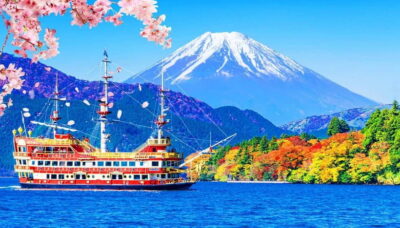 ★ 4.7Tokyo: Mt. Fuji Tour, Hakone Ropeway, Owakudani, Lake AshiFrom $5410 hours
 ★ 4.4Tokyo:Mt.Fuji,Kawaguchiko Oishi Park,Arakurayama Sengen ParkFrom $5410 hours