Reviewed · SHIBUYA TOURS
Japanese Speaking Experience Meet the locals Friend Cafe Shibuya
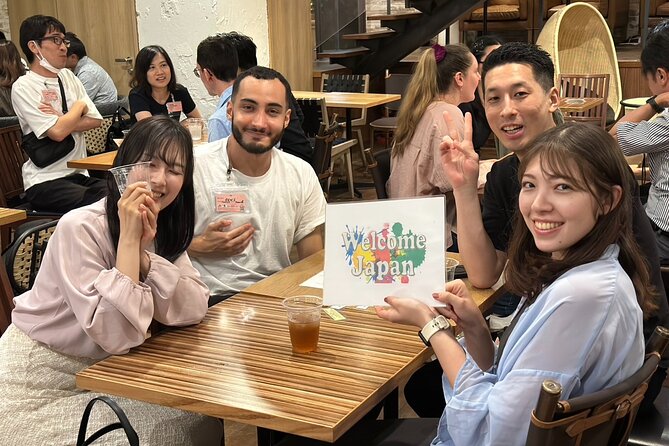
Shibuya’s Friend Cafe turns language practice into a social evening: you sit with small mixed groups, switch between English and Japanese, and change seats every 15 minutes. It is less classroom drill and more a guided way to meet people.
In This Article
- Key points to know before you go
- How the Shibuya language exchange works
- Arriving at Friend Cafe Shibuya
- Why the timed conversation rounds matter
- Topic cards keep beginners talking
- The pub setting has benefits and limits
- The role of the hosts
- What the $29 price really buys you
- Who will enjoy this most
- Practical details that affect your decision
- Should you book Friend Cafe Shibuya?
- FAQ
- Where does the Japanese speaking experience take place?
- What time does the activity run?
- Is the activity suitable for Japanese beginners?
- How are the conversation groups organized?
- How often do participants change seats?
- How are the English and Japanese sessions divided?
- Are drinks included in the ticket?
- Is there an age requirement?
- Can I cancel for a refund?
I like the beginner-friendly format and the useful seat changes, which keep you from getting stuck in one conversation. I also like that the evening can work as a complete two-hour activity or as an easy first stop before a night out in Shibuya.
The main catch is that the $29 price excludes drinks and food, and the pub setting can be noisy. You must be at least 18, and the event runs only on Monday evenings.
Key points to know before you go
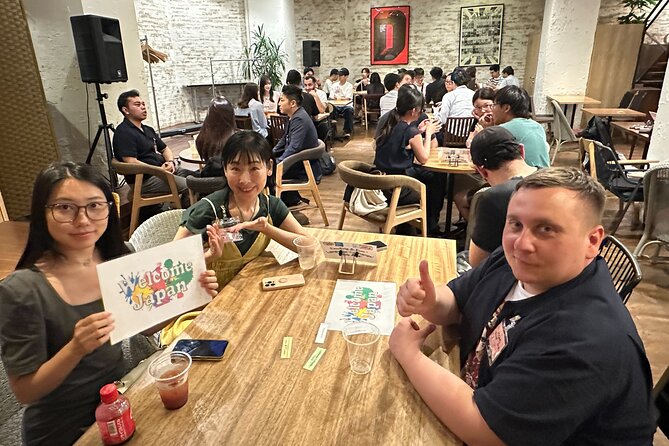
- Six short conversation rounds: Alternate between 15 minutes of English and 15 minutes of Japanese.
- Small mixed groups: Staff place three or four people together, usually combining Japanese and international participants.
- Topic cards are provided: You can use prompts when conversation slows or nerves take over.
- Seats change several times: You get chances to speak with more than one group during the evening.
- B1F location in Shibuya: Meet at Shibuya Bowling Cafe Shibuya EST, near public transportation.
- Bring extra money for a drink: Fees and taxes are included, but food and beverages are not.
How the Shibuya language exchange works
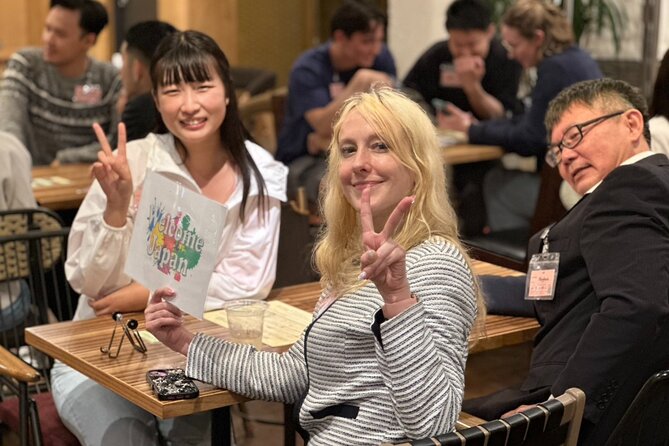
This is a social language exchange, not a formal Japanese lesson. You will not sit facing a teacher for two hours or work through a fixed textbook. Instead, the staff organize short conversations between Japanese speakers and people from other countries who want to practice.
That makes the evening useful for two very different purposes. If you are learning Japanese, you get a low-pressure chance to try simple phrases with real people. If your Japanese is limited, you can still take part, since beginners are welcome and the English portions give you a natural way to help Japanese participants.
The event lasts about two hours, from 7:30 to 9:30 p.m. on Monday. It is held in a pub, so the mood is social rather than academic. You should expect conversation, drinks, changing seats, and a fair amount of movement between groups.
The maximum group size is 20 people. That is small enough for the staff to divide the room into useful groups, while still giving you a reasonable chance of meeting several different people. Your immediate group normally has three or four participants, with Japanese and international attendees mixed together.
A few more Tokyo tours and experiences worth a look


Arriving at Friend Cafe Shibuya
The meeting point is Shibuya Bowling Cafe Shibuya EST at 1-chome-14-14 Shibuya. The cafe is on the B1F, so look for the building and then go downstairs rather than waiting for a street-level cafe entrance.
Reception begins at the starting time, with a 10-minute check-in period. Have your mobile ticket ready. After checking in, you need to buy at least one drink at the bar before joining the activity. That purchase is separate from the ticket price, and food is also your own expense.
This drink requirement is worth planning for. The $29 ticket covers the event fees and taxes, but it is not an all-inclusive night out. You should budget for the drink on top of the booking price.
The location is near public transportation, which helps on a Monday evening. You finish at the same place, so you can continue into Shibuya afterward without arranging a second pickup point. The format also makes this easy to combine with other plans, provided you leave enough time after the 9:30 p.m. finish.
Why the timed conversation rounds matter
The heart of the night is the alternating language schedule. You begin with 15 minutes of English conversation, then switch to 15 minutes of Japanese. After that comes a five-minute break and seat change, followed by another English and Japanese pair.
The pattern repeats for a third set of English and Japanese conversations. The evening ends with a group photo. In practical terms, you receive three English rounds and three Japanese rounds, with short pauses for changing seats.
I like this structure because it removes one of the hardest parts of meeting strangers: deciding what to say next. You are not expected to carry one conversation for two hours. Every 15 minutes brings a clear change, and the topic cards give you a starting point.
The short rounds also spread your time around. If you and one person have little in common, you are not stuck together all evening. If you find a good conversation, you can continue it during a later round or exchange contact details afterward, though no contact exchange is promised as part of the activity.
The five-minute breaks have a practical purpose. Staff use them to move people into new groups, giving you the chance to speak with more than two or three different people during the evening. The changes may interrupt a particularly good chat, but they are central to the value of the event.
Topic cards keep beginners talking
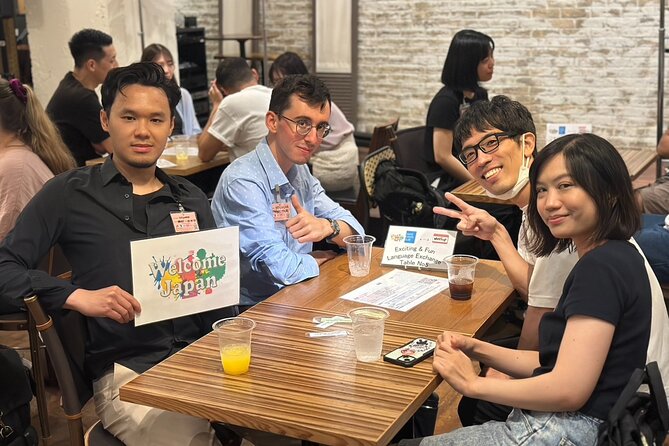
Conversation cards are available to help each group get started. This small detail matters, especially if you are shy, traveling alone, or worried that your Japanese will run out after introductions.
You can use the cards when the room goes quiet or when you need a fresh subject. They also help make the exchange fairer. People with stronger language skills have a prompt to respond to, while beginners have a clear way into the conversation.
You do not need to speak Japanese well to attend. The format is built for people at different levels, and the English rounds mean you can participate even when your Japanese is basic. You may still find some moments challenging, particularly during the Japanese portions, but you are not expected to deliver a speech.
A useful approach is to treat the Japanese rounds as practice time rather than a test. Use short sentences, ask simple questions, and let the topic card do some of the work. You can also listen closely and pick up expressions from the Japanese participants.
The exchange works in both directions. Japanese attendees can practice English with you, while you practice Japanese with them. That shared purpose tends to make the conversation less intimidating than approaching strangers in a bar without any structure.
The pub setting has benefits and limits
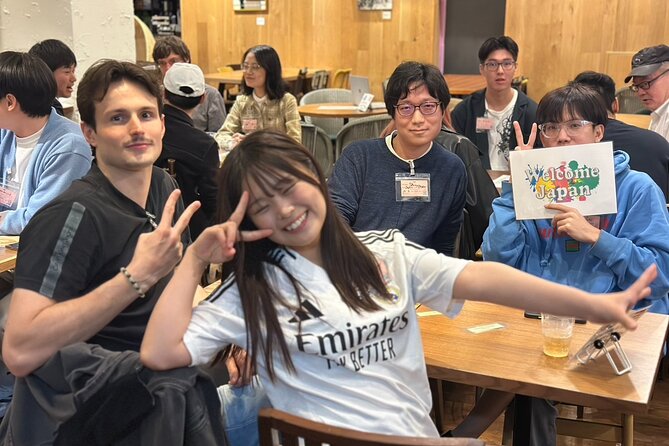
Holding the event in a pub gives the evening an easy social feel. You can buy a drink, sit down, and begin talking without the formality of a classroom. That suits people who want to meet others in Tokyo rather than spend another night studying alone.
The setting also has a clear drawback: sound. One person specifically found the bowling area a little loud. Because the venue is connected with a bowling cafe, you might notice background noise during conversations. If hearing every word is important to you, choose a seat close to your group and speak up when needed.
This is not a quiet tea ceremony or a polished language school. The surroundings are casual, and the atmosphere may vary with the group in the room. Some people will be naturally talkative; others may need the topic cards and host prompts to get going.
That mix is part of the point. You are meeting people in a real social setting, with ordinary distractions and different speaking levels. Just keep your expectations realistic: this is guided practice and conversation, not guaranteed one-to-one instruction.





The role of the hosts
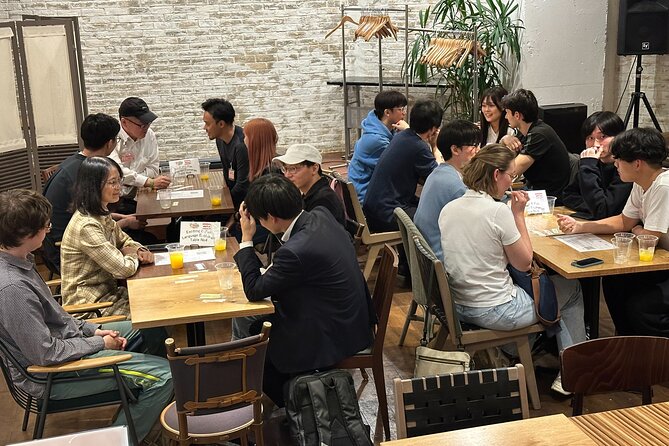
Staff handle the basic structure, including reception, group assignments, topic cards, timed language changes, and seat movement. Their job is especially important because a language exchange can become uneven if one person talks too much or a group stays together for the whole evening.
Rikiya has been noted for organizing the meetup and helping people feel more comfortable talking. That kind of hands-on organization matters here. You are not simply given a table and left to manage the evening yourself.
The published details do not promise a particular host at every session, so you should not book expecting one named person to lead every event. Still, the format depends on active staff coordination, and the event includes a closing group photo before you leave.
The 20-person maximum is another useful safeguard. It does not guarantee a perfect mix of Japanese and international participants on a particular Monday, but it limits the size enough for the staff to keep the small groups workable.
What the $29 price really buys you
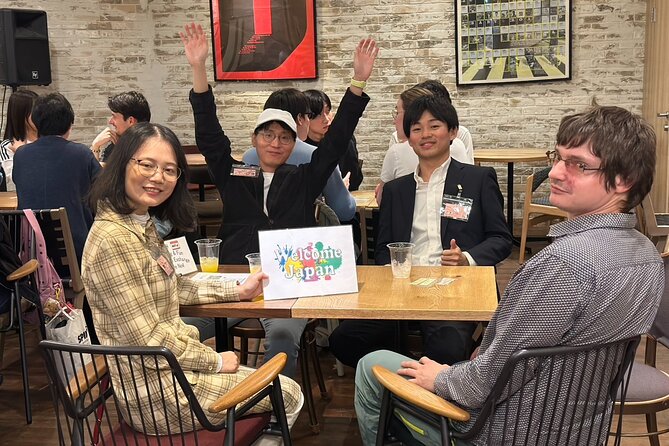
At $29 per person, the main thing you are paying for is structure. You could try to meet Japanese speakers in a bar or cafe without booking an activity, but you would have to find the right setting, introduce yourself, manage the language balance, and hope people want to talk.
Here, the staff arrange the groups and keep the evening moving. You get a fixed two-hour window, topic cards, repeated seat changes, and a planned balance of English and Japanese. Fees and taxes are included.
The price is less attractive if you only want a drink and casual nightlife. Your beverage and any food cost extra, and the event finishes in the same Shibuya area where you could socialize independently. You are paying for the organized introductions and language practice, not a meal, bar crawl, or sightseeing tour.
I see the best value for solo visitors, new Japanese learners, and people who want a social activity with a clear purpose. It is also useful near the beginning of a Tokyo stay, when you want an easy way to meet people before deciding how to spend later evenings.
The strong 4.9 rating from 518 posted scores and a 99 percent recommendation rate are encouraging booking signals. They do not remove the possible noise or guarantee your preferred conversation partners, but they suggest the basic format has worked well for a large number of participants.
Who will enjoy this most
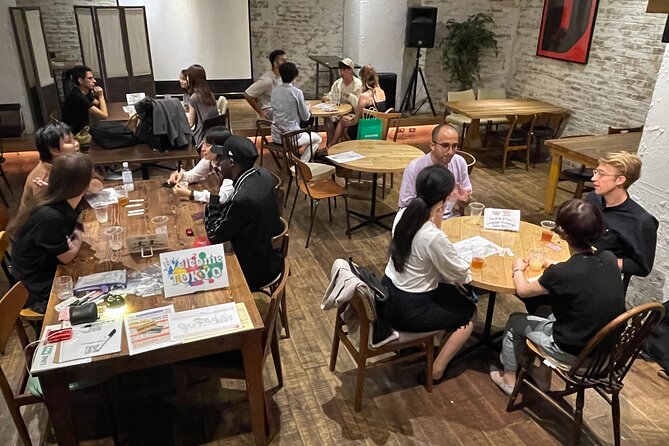
You are a good fit if you want to practice Japanese without committing to a full class. Beginners are explicitly welcome, and the English rounds let you contribute even if you know only a few Japanese phrases.
It also suits people who want to help Japanese locals improve their English. The exchange is designed as a two-way activity, so you are not simply receiving language practice. You are expected to take part in both languages.
Solo visitors may find the organized seating especially useful. You do not have to walk into an unfamiliar bar and make the first approach alone. Staff place you in a small group and give you a topic to discuss.
It is also a good choice if you want a gentle start to a bigger night in Tokyo. The event ends at 9:30 p.m. in Shibuya, leaving you in a convenient area with no need to return to a hotel or separate meeting point.
You may want to skip it if you dislike repeated introductions, pub noise, or timed activities. People who want a private lesson, a sightseeing route, or a food-focused evening will get little from this format.
Practical details that affect your decision
The event is for people 18 and older because it takes place in a pub. You cannot bring a younger participant, even if that person is interested in language practice.
The activity runs on Monday evenings from 7:30 to 9:30 p.m. The stated operating period extends through July 12, 2026. Check the date carefully when booking, since the schedule is not presented as a daily activity.
Most people can participate, and the meeting point is close to public transportation. No special physical demands are described, but the cafe is on B1F, so keep that in mind if stairs or basement access are a concern.
Free cancellation is available if you cancel at least 24 hours before the local start time. A cancellation or change made less than 24 hours ahead is not refundable and will not be accepted.
Should you book Friend Cafe Shibuya?
Book this if you want organized conversation with real people, especially if you are a Japanese beginner, an English speaker hoping to help locals, or a solo visitor looking for an easy social evening.
The $29 cost is fair when you value the staff-led introductions, topic cards, timed language practice, and seat changes. Add the cost of a drink, and remember that the pub may be noisy.
Skip it if you want quiet study, a guided Tokyo tour, or a full night of food and drinks. For the right person, though, this is a practical way to turn two hours in Shibuya into useful language practice and several new introductions.
FAQ
Where does the Japanese speaking experience take place?
It takes place at Shibuya Bowling Cafe Shibuya EST, at 1-chome-14-14 Shibuya, Tokyo 150-0002. The cafe is on the B1F.
What time does the activity run?
The event runs on Monday from 7:30 p.m. to 9:30 p.m. It lasts approximately two hours.
Is the activity suitable for Japanese beginners?
Yes. Beginner Japanese learners are welcome, and you can attend even if you cannot speak much Japanese.
How are the conversation groups organized?
Staff divide participants into small groups of about three or four people, mixing Japanese and international participants.
How often do participants change seats?
Staff change the seating several times during the event so you can speak with more than one group.
How are the English and Japanese sessions divided?
The schedule alternates 15 minutes of English conversation with 15 minutes of Japanese conversation. There are five-minute breaks for changing seats between sets.
Are drinks included in the ticket?
No. Fees and taxes are included, but food and beverages are not. You must buy at least one drink at the bar when you arrive.
Is there an age requirement?
Yes. You must be at least 18 because the activity takes place in a pub.
Can I cancel for a refund?
You can cancel for a full refund up to 24 hours before the experience start time. Cancellations or changes made less than 24 hours before the local start time are not accepted or refunded.
More Shibuya Tours in Tokyo


More tours in Tokyo we've reviewed












Shibuya Tours, compared.
 ★ 5.0Official Street Go-Kart in ShibuyaFrom $76
 ★ 5.0Shibuya Meltdown Nightlife Tour: All-You-Can-Drink Bar HoppingFrom $106
 ★ 4.9Tokyo: Street Kart Experience in ShibuyaFrom $99
 ★ 5.0Shibuya Official Street Go-Kart in Shibuya AnnexFrom $69
 ★ 5.0Tokyo: Shibuya Food Tour (13 dishes and 4 Eateries)From $77
 ★ 5.0Best of Shibuya Food TourFrom $217