Reviewed · SHINJUKU TOURS
Takoyaki cooking experience in Kabukicho, Shinjuku
Takoyaki is best understood by making it yourself. You pour egg-and-water batter into a round griddle, tuck chopped octopus into each piece, and turn the soft mixture until it becomes a golden ball. I like the hands-on cooking and the fact that your meal is ready to eat as soon as you finish it.
In This Article
- Key points at a glance
- What makes takoyaki worth learning in Tokyo
- Finding the restaurant in Kabukicho
- Your one-hour takoyaki lesson
- The texture, toppings, and heat
- Why the small group matters
- Cooking with children aged four and above
- What the $25 price includes
- Who should book this experience
- A practical plan for your visit
- Should you book the Kabukicho takoyaki class?
- FAQ
- How long does the takoyaki cooking experience last?
- How much does the experience cost?
- Where does the activity meet?
- How can I find the restaurant?
- Is the class available in English?
- How many people can join the class?
- Can children take part?
- Are drinks included?
- Can I cancel for a refund?
I also like the small group size, limited to six, and the friendly teaching style reported with instructors including Chihiro, Shuma, Koi, Kai, and Sakiko. The main consideration is heat: fresh takoyaki comes out piping hot, and the class is not suitable for children under four or anyone with gluten intolerance.
Key points at a glance

- Turn batter into a Japanese street-food classic: Learn the basic method for making round takoyaki with octopus, sauce, mayonnaise, bonito flakes, and aonori.
- Small groups keep the class personal: With no more than six participants, you have a better chance to receive hands-on help.
- A useful Shinjuku location: The restaurant is about five minutes from Shinjuku Station, close to TOHO Cinemas and the famous Godzilla area.
- Good for families with older children: Children aged four and above can take part, and staff have helped families cook safely.
- Friendly language support: Instruction is available in English and Japanese, with a translation machine used when needed.
- A one-hour food activity for $25: The price includes the cooking session and meal, but not drinks, extra food, or transportation.
What makes takoyaki worth learning in Tokyo

Takoyaki is a small ball of batter with a piece of octopus in the middle. It began as a popular Osaka food, but you will find it all over Japan, from festival stalls to casual restaurants. The dish is simple, inexpensive, and wonderfully social. A hot plate sits in the middle of the action, and everyone watches the little balls change shape.
This class gives you more than a plate of prepared food. You get to see how the texture develops. At first, the batter is loose and messy. With patient turning, it forms a crisp outside while staying soft and fluffy inside. That transformation is the fun part, especially if you have never used a takoyaki griddle before.
I like this kind of food activity because it connects a familiar dish with a practical skill. You do not need cooking experience, and the basic process is easy to understand. The challenge is making neat round pieces without rushing. A little unevenness is part of the charm, and your first batch does not need to look perfect to taste good.
A few more Tokyo tours and experiences worth a look
Finding the restaurant in Kabukicho
The meeting point is at 1-14-5 Kabukicho, Shinjuku-ku, Tokyo, about a five-minute walk from Shinjuku Station on the JR Yamanote Line. From the station, follow Kabukicho Central Road toward TOHO Cinemas.
Before you reach the end of the road, look for Shinjuku Ale next to Karaoke 747 on the right. The supplied Google Plus code is MPV2+VR Shinjuku City, Tokyo. I would save both the street address and the Plus Code before setting out, since Kabukicho has many signs, side streets, and late-night businesses competing for your attention.
The location is useful if you are already planning an evening in Shinjuku. The class takes only one hour, so you can fit it between sightseeing stops or make it part of a longer visit around Kabukicho. One instructor, Sakiko, was particularly appreciated for the friendly atmosphere, and the restaurant is also very close to the Godzilla photo area near TOHO Cinemas.
That nearby landmark gives you an easy plan after eating. Take your photos first if you want to avoid arriving late, then head to the restaurant with enough time to find the entrance. The class does not include transportation, so you make your own way to the meeting point.
Your one-hour takoyaki lesson

The session begins with an explanation of what takoyaki is and how it is cooked. You then work with flour batter made from water and eggs, pouring it into the round holes of the griddle. Chopped octopus goes into the center before you begin shaping each portion.
The cooking method is the main event. You use your cooking tools to guide the soft batter around the octopus, gradually turning each piece into a ball. I would expect a little trial and error here. The outside may brown at different speeds, and some pieces may look more polished than others. That is normal for a first attempt.
The staff help you through the process, and the small group format should make it easier to ask for help when a piece needs turning or more cooking. The experience is designed for beginners, so you do not need to arrive with any special knowledge of Japanese food.
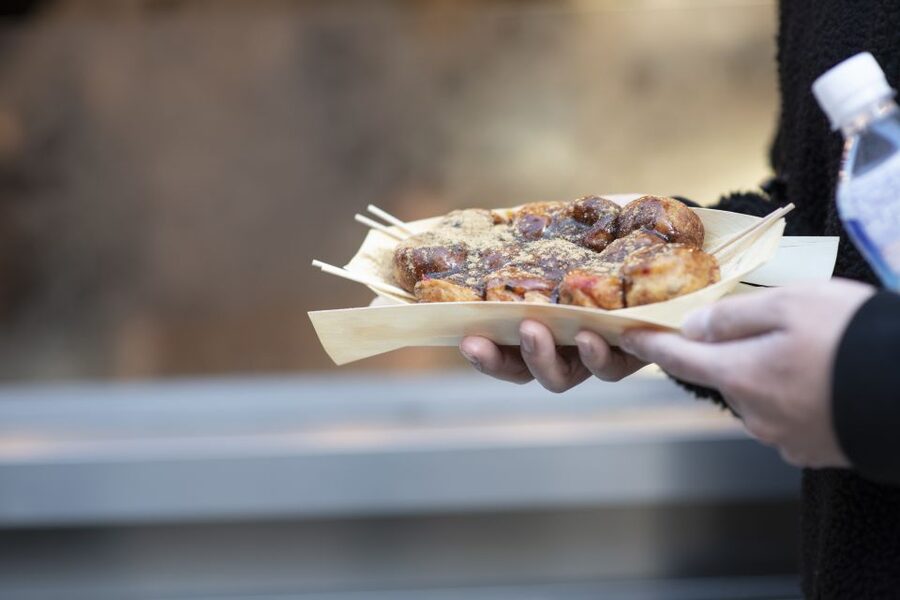
Once the takoyaki is cooked, it is placed on a plate and served hot. The standard toppings include sauce, mayonnaise, dried bonito flakes, and aonori, also known as green laver. These toppings add sweet, savory, salty, and seaweed flavors to the soft center and crisp shell.
The meal is included, and the activity ends once you have finished eating. The full experience lasts about an hour. It is a compact class rather than a long cooking course, which makes it a good choice if your Tokyo schedule is already full.
The texture, toppings, and heat

Takoyaki has two textures that make it memorable. The outside becomes lightly crisp from the hot griddle, while the inside stays soft and fluffy. The octopus provides a firmer bite in the middle, so each piece has more going on than a plain ball of batter.
You should let the takoyaki cool briefly before eating it. The center can remain very hot even after the outside looks ready. This matters most with children, though it is good advice for everyone. A relaxed pace improves the meal and gives you time to add toppings to your liking.
The traditional topping combination is generous. Sauce brings a sweet and savory layer, mayonnaise adds richness, and bonito flakes bring a smoky seafood note. Aonori adds a clean seaweed flavor. Since the finished pieces are easy to eat and pair well with beer, this can work nicely as a light meal before an evening in Shinjuku.
Bottled drinks are not included. Additional food and drinks also cost extra, so the $25 price covers the class and the takoyaki meal itself, not a full restaurant bill. If you want beer or another drink, plan for that separately.
Why the small group matters

The class accepts up to six participants. That limit is important because takoyaki cooking is easier when someone can watch your pan and show you how to turn the pieces. In a large class, you might spend more time waiting for assistance. Here, the format is intended to feel personal.
The staff style is one of the strongest parts of the experience. Chihiro helped one participant make delicious takoyaki, while Shuma was praised for teaching the technique clearly. Koi and Kai combined cooking help with conversation about Japanese culture and practice with simple Japanese phrases.
Sakiko was described as making the lesson feel like cooking with a friend while enjoying a drink. Other feedback points to kind, supportive staff and a relaxed atmosphere. Staff assignments can change, so you should not book expecting one specific person, but these names give you a sense of the teaching approach.
English and Japanese are available. If the staff member helping you is not fluent in English, a translation machine is used. That may make conversation slower, but the cooking itself is visual and practical. You can watch the technique, copy the movements, and ask for help as you go.




Cooking with children aged four and above

This is one of the better short food activities for a family with children, provided they are at least four years old. One family with two children received careful attention from the staff, particularly around avoiding burns. That is useful reassurance, although the griddle is hot and children should still be closely supervised.
The class gives children a clear job. They can help add batter, place toppings, and watch the pieces turn into balls. The actual turning may need adult help, depending on the child. The best approach is to treat the cooking as a shared activity rather than handing the hot griddle over completely.
Very young children are not accepted, and the experience is not suitable for anyone with gluten intolerance. The supplied information does not list allergen substitutions, so you should not assume the batter can be changed. If either point applies to your group, choose another food activity.
What the $25 price includes

At $25 per person, this is a reasonably priced Tokyo activity if you want both instruction and a meal. You are not paying only for a prepared serving of takoyaki. The fee includes access to the cooking experience, staff guidance, and the food you make and eat.
The value is strongest for first-time visitors who want a short cultural activity without committing half a day. You get a taste of Japanese everyday food culture and a meal in one hour. The price is less useful if you already know how to make takoyaki or simply want to eat it quickly, since a regular restaurant visit would require less time.
Remember the extras. Bottled drinks, further food, and transportation to the meeting place are not included. The restaurant is close to Shinjuku Station, so transport should be straightforward if you are already in the area, but it remains your responsibility.
Flexible booking is another practical advantage. You can reserve now and pay later, keeping your money available until closer to the activity. Free cancellation is available up to 24 hours before the scheduled time for a full refund. Check the available starting times before booking, since the experience lasts one hour but the schedule may vary.
Who should book this experience

I would choose this class for you if you want an active food stop in Tokyo rather than another meal where someone else does all the work. It suits first-time takoyaki cooks, couples, solo visitors, small groups of friends, and families with children aged four and above.
It also works well for people who enjoy conversation. The staff have helped participants talk about Japanese culture and practice Japanese, while still keeping the focus on cooking. If you are shy about language, the hands-on format gives you something clear to do even when conversation needs translation support.
The location is especially convenient for a Shinjuku itinerary. You can combine the class with Kabukicho, TOHO Cinemas, and the nearby Godzilla photo spot. Since the lesson is only an hour, it does not take over your day.
I would think twice if you have gluten intolerance, if your child is under four, or if you want a large, elaborate cooking course. The class focuses on one dish and finishes after you eat it. That narrow focus is a strength for a quick introduction, but it is not a substitute for a full Japanese cooking school.
A practical plan for your visit

Allow enough time to reach the restaurant, especially if Kabukicho is new to you. Walk along Kabukicho Central Road toward TOHO Cinemas and use the Shinjuku Ale and Karaoke 747 signs as landmarks. Keep the exact address and Plus Code available on your phone.
Wear something comfortable and arrive ready to pay attention to the hot griddle. You will get more from the class if you watch the staff turn the first pieces before trying to work too quickly. The goal is not perfect restaurant-style balls. It is learning the motion and enjoying the food you make.
If you are visiting with children, explain before arrival that the plate and griddle may be hot. Staff can help, but adult attention remains important. Let the pieces cool before eating, particularly the center.
For a smoother evening, decide in advance if you want to add drinks. They are not included, and neither are extra meals. Afterward, walk toward TOHO Cinemas for the Godzilla photo area, or continue exploring Kabukicho on your own.
Should you book the Kabukicho takoyaki class?
I would book it if you want a friendly, low-cost activity with real participation. The strongest reasons are the one-hour format, the six-person limit, the central Shinjuku location, and the chance to eat hot takoyaki that you shaped yourself.
The staff support is another good reason to go. Names such as Chihiro, Shuma, Koi, Kai, and Sakiko appear in the experience feedback, with repeated praise for patience, clear help, friendly conversation, and an easy atmosphere. Staff may vary, but the pattern is encouraging.
Skip it if gluten is a concern, if you are bringing a child under four, or if your main goal is simply a fast meal. For everyone else, this is a practical way to turn a familiar Japanese snack into a small cooking lesson, with enough time left to enjoy the rest of Shinjuku.
FAQ
How long does the takoyaki cooking experience last?
The experience takes about one hour. It ends after you have cooked and eaten the takoyaki.
How much does the experience cost?
The listed price is $25 per person. The fee includes the takoyaki cooking experience and the meal.
Where does the activity meet?
The meeting point is at 1-14-5 Kabukicho, Shinjuku-ku, Tokyo. It is about five minutes from Shinjuku Station on the JR Yamanote Line, along Kabukicho Central Road toward TOHO Cinemas.
How can I find the restaurant?
Look for Shinjuku Ale next to Karaoke 747 on the right before you reach the end of Kabukicho Central Road. The Google Plus Code is MPV2+VR Shinjuku City, Tokyo.
Is the class available in English?
English and Japanese support is available. If a staff member is not fluent in English, a translation machine is used.
How many people can join the class?
The group is limited to six participants.
Can children take part?
Children under four are not suitable for the activity. Children aged four and above can take part, with close adult supervision around the hot griddle.
Are drinks included?
No. Bottled drinks, extra meals, and additional drinks are not included.
Can I cancel for a refund?
You can cancel up to 24 hours in advance for a full refund. Reserve now and pay later is also available.
More Shinjuku Tours in Tokyo
More tours in Tokyo we've reviewed












Shinjuku Tours, compared.
 ★ 5.0Tokyo: Shinjuku Food Tour (13 Dishes at 4 Local Eateries)From $86
 ★ 5.0Tokyo Bar Hopping Tour in Shinjuku (All-You-Can-Drink + Dinner)From $106
 ★ 4.9Tokyo: Shinjuku Local Bar and Izakaya Guided Walking TourFrom $343 hours
 ★ 4.9Tokyo: Shinjuku Food Tour (13 Dishes and 4 Eateries)From $97
 ★ 5.0Tokyo Night Foodie Tour in Shinjuku – Seasonal Sushi, Wagyu BeefFrom $111
 ★ 5.0Tokyo: Shinjuku Local Bar & Izakaya Crawl TourFrom $39