Reviewed · GUIDED
Get Unique Insights into Tokyo – Private Tour with local Guide
Tokyo can feel like several cities stitched together: quiet shrine paths, cartoon-colored shopping streets, enormous train stations, and neon canyons all within a short ride. This private tour gives you a useful first look, with a guide such as Jero or Franz showing you how the pieces fit and helping you get around with less guesswork.
In This Article
- Key points at a glance
- Why this makes sense near the start of your Tokyo stay
- A calm beginning at Meiji Jingu Shrine
- Takeshita Street and Harajuku’s changing style
- Shibuya Crossing and the city in motion
- Shinjuku after dark and the Kabukicho finish
- The expanded route: Odaiba, Asakusa, and more
- What the private format really adds
- Walking, trains, and the question of pace
- Tea, snacks, photos, and what is not included
- Is $82.90 per person a fair price?
- Who should book this Tokyo introduction?
- Should you book it?
- FAQ
- Where does the tour start?
- Where does the tour finish?
- How long is the private Tokyo tour?
- Is the tour private?
- Are English-speaking guides available?
- What places can the tour visit?
- Is transportation included?
- Are drinks and snacks included?
- Can I cancel for a full refund?
I like the flexible length and route, which let you book a quick orientation or spend up to six hours exploring. I also like the thoughtful extras: tea or coffee, a Japanese snack, and photos taken at the landmarks. The main consideration is pace. The possible stops cover a huge part of Tokyo, so a two-hour tour cannot realistically include everything.
Key points at a glance
- Private and adjustable: Only your party joins, and you choose the start time and preferred duration.
- Strong first-day choice: The route can introduce you to Meiji Shrine, Harajuku, Shibuya, and Shinjuku.
- More than sightseeing: Guides explain shrine manners, local customs, transport, food areas, and everyday Tokyo.
- Useful photo service: Your guide can take solo and group pictures, then send them to you afterward.
- Transit is part of the lesson: Transportation between destinations is included, and the tour may use the train to connect districts.
- Good value for a small party: At $82.90 per person, the price makes most sense when you value private attention and practical help.
Why this makes sense near the start of your Tokyo stay
Tokyo rewards independent exploring, but the first day can be a test. Stations are large, neighborhoods blend into one another, and a map does not always explain why a place matters. A private introduction can give you a mental map before you set off on your own.
The most useful part of this experience is not simply checking famous sights off a list. Your guide can explain how to behave at Meiji Jingu, show you how to use the metro or JR line, suggest places to eat, and point out corners you might otherwise walk past. One especially practical detail is the help with transport. After learning the route with a local guide, Tokyo’s rail system should feel less intimidating.
This also works well if you have only a short stay. The four-hour option has enough time for a meaningful sweep through western Tokyo, provided you are comfortable walking and using public transport. The two-hour choice is better treated as a neighborhood introduction, not a full city tour.
Other guided tours in Tokyo
A calm beginning at Meiji Jingu Shrine
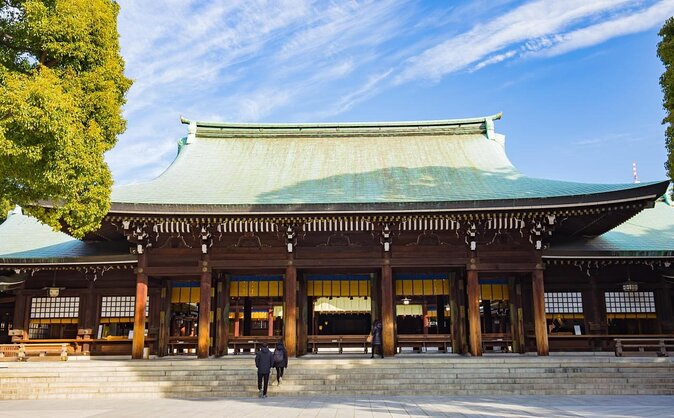
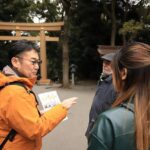
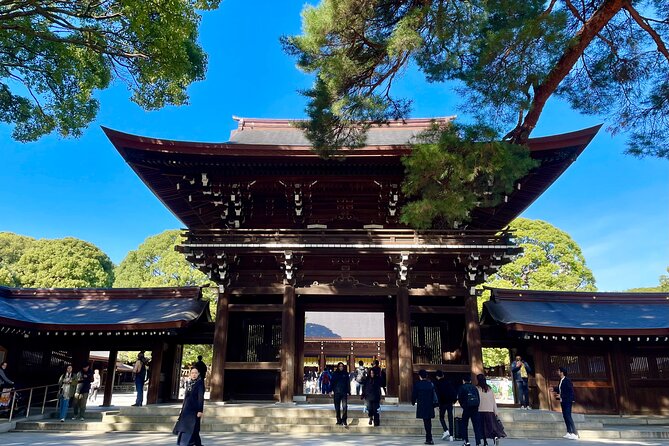
The meeting point is Meiji Jingu Ichino Torii, at 1-chōme-18-20 Jingūmae in Shibuya. Beginning at the large torii gives the tour a clear sense of place. You move from the busy Harajuku area into a wooded shrine approach, where the city noise falls away.
Meiji Jingu is one of Tokyo’s major Shinto shrines, and the guide explains its cultural role along the walk to the main buildings. This is where the tour’s focus on manners becomes valuable. You can learn the proper customs for visiting a shrine rather than simply taking photographs and moving on.
I would give this stop room to breathe. It is the quietest part of the route, and rushing through it would lose much of its appeal. The walk also requires time and energy, so wear shoes that can handle several hours on foot.
Takeshita Street and Harajuku’s changing style
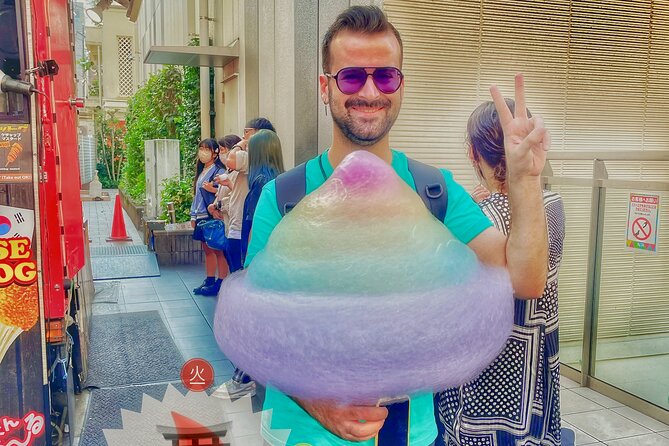
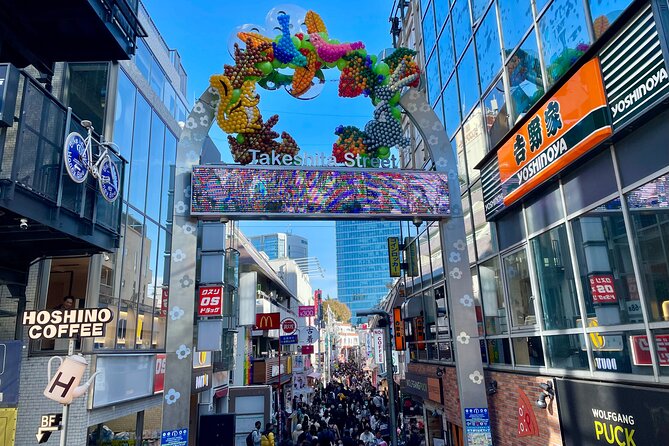
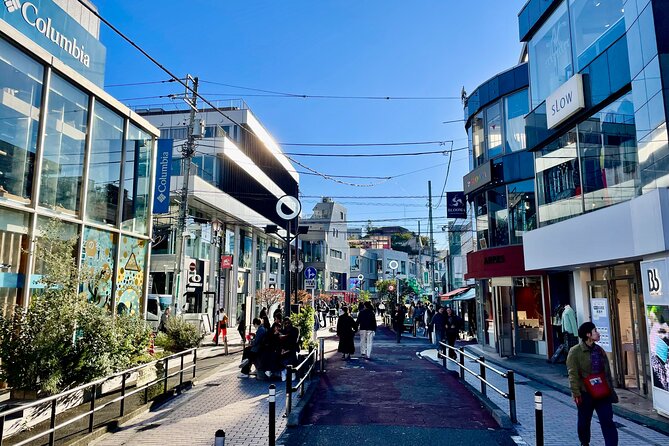
After the shrine, the tour heads toward Takeshita Street. The mood changes quickly. This colorful shopping street is known for youth fashion, novelty shops, and snacks, giving you a sharp contrast with the reserved atmosphere of Meiji Jingu.
Harajuku is more than one crowded street, though. The wider area includes Cat Street, Omotesando, and side roads where the style shifts from playful to polished. The route can be adjusted to your interests, so tell your guide if you care more about fashion, street scenes, shops, or local food recommendations.
The drawback is crowding. Takeshita Street can be hard to enjoy at peak times, especially if you dislike slow-moving foot traffic. A private guide can help you avoid some of the worst congestion or use less obvious entrances and side routes, but this is still a busy part of Tokyo.
Shibuya Crossing and the city in motion
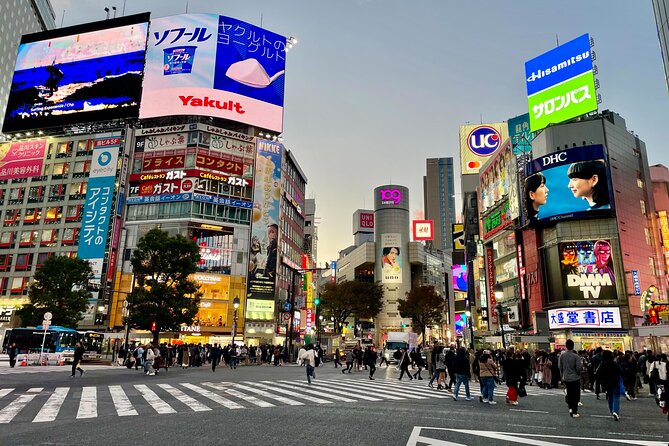
From Harajuku, the tour continues toward Shibuya. The famous crossing is the obvious draw, but the guide adds context by showing you how the district works beyond the intersection. You may also see the Hachiko statue, another familiar Shibuya landmark.
Your guide can take pictures and videos along the way, which is especially useful here. Shibuya Crossing is difficult to photograph well while you are also trying to navigate the crowd. Having someone handle the camera lets you enjoy the spectacle and gives you a record of the visit without asking a stranger to take repeated shots.
This section is a good test of the private format. You can pause for photographs, ask about the neighborhood, or move along if the crowds wear you out. The route is not a fixed group march, so the experience can match your pace more closely.
Shinjuku after dark and the Kabukicho finish
The itinerary uses the train to reach Shinjuku after Shibuya. That transfer is not wasted time. It shows you how Tokyo’s districts connect and gives your guide a chance to explain practical transport details.
Shinjuku brings a different kind of energy, with tall buildings, bright signs, department stores, and entertainment streets. The planned finish near Kabukicho Tower is aimed at Neon Tokyo, the glowing side of the city that many first-time visitors hope to see.
The end point is near the Giant 3D Cat at 3-chōme-23-18 Shinjuku. From there, you are close to Shinjuku Station and have several ways to continue your evening. Ask your guide for help getting back to your hotel or onward destination before saying goodbye.
Kabukicho is not the best fit for every family or every mood. It is an entertainment district, and the neon streets can feel intense. The tour does not present it as the whole of Tokyo, which is a strength. The larger route balances this nighttime scene with the quiet shrine and the everyday shopping districts.
Other private tours in Tokyo


The expanded route: Odaiba, Asakusa, and more
The experience can also include areas well beyond the core Harajuku, Shibuya, and Shinjuku route. Because the duration and stops are flexible, confirm your preferred plan when booking. You should not assume that every location listed can fit into one short session.
In Odaiba, the route may include Aqua City, DECKS Tokyo Beach, the nostalgic Hikara Yokocho, and the Unicorn Gundam statue. This is Tokyo’s futuristic side, with shopping and entertainment spaces set apart from the older central districts. It offers a very different visual mood from Meiji Shrine, though reaching Odaiba can use a large share of a short tour.
Asakusa provides a look at the older roots of Tokyo. During the Edo period, it was the city’s main entertainment district, known for kabuki theaters, geisha houses, and street performers. The modern area has changed, but the sense of festivity remains. Choose Asakusa if you want temples, old Tokyo associations, and a stronger link to the city’s past.
Akihabara, known as Akiba, grew from a postwar market for radio parts into a major center for electronics, games, anime, and pop culture. It is a natural choice if you have a special interest in those subjects. Otherwise, it may be more useful as a shorter stop than as the main focus of your introduction.
Ueno Park offers another change of pace. It was once part of Kaneiji Temple and is now known for its cultural sites, open green space, and seasonal beauty. It works well for a group that wants a break from tall buildings and commercial streets.
The Imperial Palace East Gardens offer remnants of Edo Castle, including stone walls, gates, and moat features. The gardens provide a quieter central-Tokyo stop and a direct link to Japan’s feudal past. As with Odaiba and Asakusa, adding this area means sacrificing time elsewhere.
What the private format really adds
A private tour is most useful when you have a clear purpose. You can ask for a route suited to your age group, interests, walking ability, or limited schedule. The guide can adapt when the weather changes, when jet lag catches up with you, or when one neighborhood interests you more than expected.
That flexibility appears often in the experience’s strongest features. Jero is praised for changing plans around personal interests and pace, while Franz receives similar praise for a warm, attentive approach. You should request a preferred guide if the booking system allows it, but availability is not guaranteed.
The personal service goes beyond conversation. Guides may arrive with warm tea, provide a typical Japanese drink and snack, take solo photographs, and send images afterward. Those details do not replace sightseeing, but they make the tour feel less transactional.
You also get a practical local briefing. Expect help with shrine etiquette, train navigation, restaurant areas, shopping, and ideas for the rest of your stay. I would book this early, since the advice becomes more useful when you still have several days left in Tokyo.
Walking, trains, and the question of pace
This is described as a walking tour, but it is not walking only. Transportation between destinations is included, and the route can use the train between districts. That makes it possible to see more of Tokyo than a single-neighborhood stroll.
Still, you should expect substantial time on your feet. One experience covered more than eight miles, though that was a particularly ambitious day and should not be treated as the standard length. The tour can be adapted, but you need to state your limits clearly at the beginning.
The route is not ideal for someone who wants a slow café day or a bus-based overview. It suits you if you want to move, ask questions, and see how Tokyo changes from one district to the next. For older family members or anyone managing fatigue, choose fewer neighborhoods and build in pauses.
Morning and afternoon start times make the experience easier to fit around flights, jet lag, or other plans. A morning departure gives you a calm start at Meiji Jingu. An afternoon tour can lead naturally into Shinjuku’s illuminated streets, though the exact timing depends on the route and duration you select.
Tea, snacks, photos, and what is not included
The tour includes coffee or tea and a typical Japanese snack. These are small but welcome touches, especially during a walking-heavy outing. The wording also says food and drinks are not included, so read that as no full meal or additional restaurant purchases. You should budget separately for anything beyond the provided drink and snack.
Photos are a real practical benefit. Your guide can take both individual and group pictures at landmarks, and the experience includes sending those memories to you afterward. If photographs matter to you, mention the kinds of shots you want early in the tour.
Do not expect admission tickets, a formal meal, or a sightseeing bus. The value lies in the guide’s time, route planning, local advice, transportation between stops, and private attention.
Is $82.90 per person a fair price?
At $82.90 per person, this is not the cheapest way to walk around Tokyo. You can visit many public places independently for little or no admission cost. The comparison changes if you are arriving without a plan, have only one free day, or want a local to organize the moving parts.
For a couple or family, the private structure can be worthwhile because you are not waiting for a large group or following a fixed pace. You are paying for a smoother introduction and the ability to shape the day. The price is harder to justify if you already know Tokyo well and prefer exploring alone.
The best value comes from booking early in your stay. Use the guide for more than landmark facts. Ask about transport, customs, restaurants, shopping areas, and the neighborhoods you plan to visit next. That turns a four-hour tour into a useful guide for the rest of your trip.
Free cancellation is available up to 24 hours before the start time. Changes or cancellations inside that window are not accepted for a refund, so keep the local cut-off time in mind.
Who should book this Tokyo introduction?
I would recommend it most strongly for first-time visitors, short-stay visitors, families, and people who feel uneasy about Tokyo’s size. It is also useful for repeat visitors who want a personal route through districts they have not explored.
The experience suits you if you enjoy walking, asking questions, and mixing major sights with less obvious streets. It is a good choice for a solo visitor who wants photos without constantly asking strangers, and for couples who want a day shaped around their own interests.
I would think twice if you want a fixed list of every major landmark, a slow pace, or a tour devoted to one subject such as food, architecture, or anime. The flexible route is a strength, but you need to communicate your priorities before the day begins.
Should you book it?
Book this private Tokyo tour if you want to get your bearings quickly and learn how to move through the city with confidence. The combination of Meiji Jingu, Harajuku, Shibuya, and Shinjuku gives you a strong first look at Tokyo’s contrasts, while optional areas such as Asakusa, Akihabara, Ueno, Odaiba, and the Imperial Palace East Gardens let you shape the experience around your interests.
Choose four hours if you want a useful overview without turning the day into an endurance test. Choose two hours for a focused neighborhood visit, or up to six hours if you want to cover more ground and can handle the walking. At $82.90 per person, the tour earns its price through personal attention, transport help, photographs, and advice you can use long after the final neon sign at Shinjuku.
FAQ
Where does the tour start?
The tour starts at Meiji Jingu Ichino Torii, located at 1-chōme-18-20 Jingūmae, Shibuya, Tokyo 150-0001, Japan.
Where does the tour finish?
The tour finishes near Shinjuku Station, close to the Giant 3D Cat at 3-chōme-23-18 Shinjuku, Shinjuku City, Tokyo 160-0022.
How long is the private Tokyo tour?
The duration is approximately two to six hours. You choose your preferred duration during booking.
Is the tour private?
Yes. Only your own group participates in the activity.
Are English-speaking guides available?
Yes. English-speaking guides are available, including guides such as Jero and Franz.
What places can the tour visit?
Possible stops include Meiji Jingu Shrine, Takeshita Street, Harajuku, Cat Street, Omotesando, Shibuya Crossing, Shinjuku, Kabukicho Tower, Odaiba, Asakusa, Akihabara, Ueno Park, and the Imperial Palace East Gardens.
Is transportation included?
Yes. Transportation between tour destinations is included, and the route may use public transportation between districts.
Are drinks and snacks included?
Coffee or tea and a typical Japanese snack are included. Additional food and drinks are not included.
Can I cancel for a full refund?
Yes, if you cancel at least 24 hours before the experience start time. Cancellations or changes made less than 24 hours before the start time are not accepted for a refund.
More Private Tours in Tokyo
More Guided Tours in Tokyo


More tours in Tokyo we've reviewed












Guided, compared.
 ★ 5.0Tokyo 6hr Private Tour with Government-Licensed GuideFrom $155
 ★ 4.9Tokyo: Shinjuku Local Bar and Izakaya Guided Walking TourFrom $343 hours
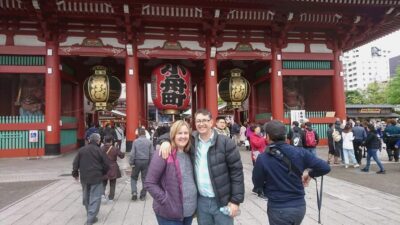 ★ 4.8Tokyo: Private City Highlights Tour with Local GuideFrom $1064 - 8 hours
 ★ 4.9Tokyo: Tsukiji Fish Market Guided Walking TourFrom $222 hours
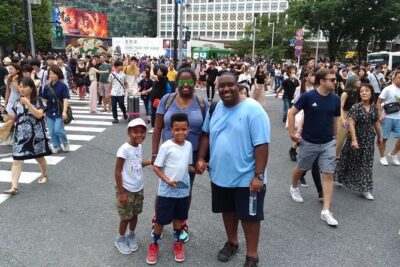 ★ 5.0Tokyo 4hr Private Tour with Government-Licensed GuideFrom $109
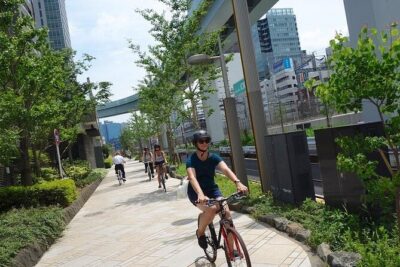 ★ 5.0Tokyo Guided Small-Group Biking TourFrom $106