Reviewed · WORKSHOPS
Tokyo: Private Manga Drawing Class with Professional Artist
Tokyo’s manga lesson goes beyond drawing a big-eyed character and calling it a day. In a small studio session with published artist Yumiko sensei, you work with G-pens, maru-pens, brush pens, ink, and classic screentone sheets, the same basic tools used in professional manga production.
In This Article
- Key points before you book
- A real manga lesson, not just a photo opportunity
- Choosing the right difficulty level
- Getting comfortable with G-pens and maru-pens
- Building a character from basic shapes
- Screentones bring shadows and texture
- Finishing touches and the take-home artwork
- What the 150 minutes feel like
- Is $141 per person a fair price?
- Who should book this studio session?
- Practical details at Shindaita Station
- My verdict: book it if manga is part of your Tokyo plan
- FAQ
- Where does the manga drawing class meet?
- How long does the activity last?
- Is prior drawing experience required?
- What drawing tools will I use?
- Can children participate?
- Is the class taught in English?
- What do I take home?
I like the choice of three difficulty levels, since a child or first-time artist can start with guided inking while a serious fan can build a new character. I also like the personal feedback, take-home practice sheets, and signed portrait. The main drawback is the price: at $141 per person, this is a specialized workshop rather than a casual souvenir activity, so it makes most sense if manga is a real interest.
Key points before you book
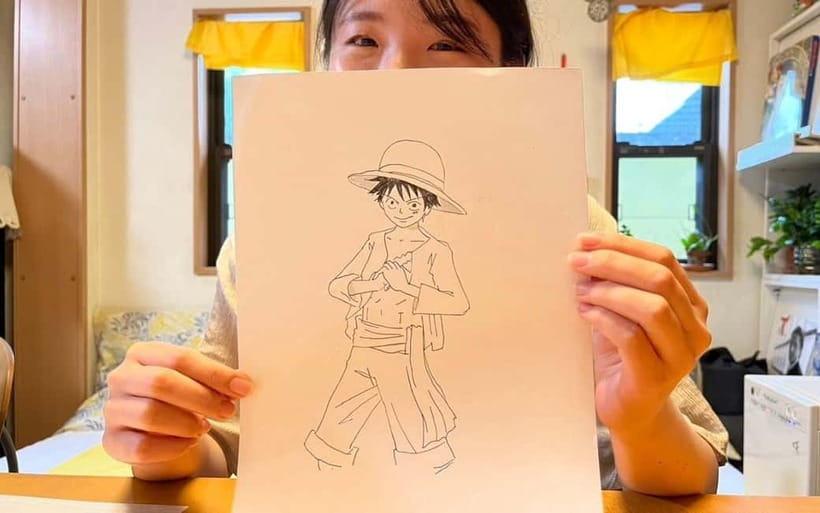
- Work with a published manga artist: Yumiko has created serial manga for Japanese magazines and can answer questions about styles, tools, and publishing.
- Use real manga materials: Try G-pens, maru-pens, brush pens, dip ink, alcohol markers, correction fluid, and halftone sheets.
- Pick your own challenge: Choose inking practice, a character outline, or a full character design, with options for chibi art, action poses, and expression sheets.
- Learn classic screentone work: Cut and apply dot or line sheets with an art knife and burnishing spoon to create shadows, texture, and effects.
- Small class size: Sessions are limited to six people, allowing Yumiko to correct hand angles, posture, line weight, and proportions.
- Leave with more than a drawing: Your original artwork, practice pages, a tool guide, and a portrait drawn and signed by the artist go home with you.
A real manga lesson, not just a photo opportunity
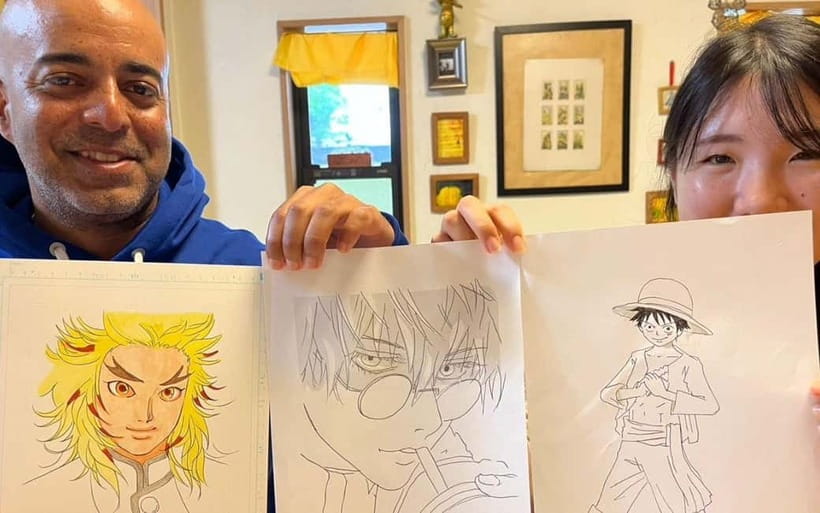
The appeal here is simple: you are not only watching an artist draw. You are sitting down with professional tools and learning how a manga page is built.
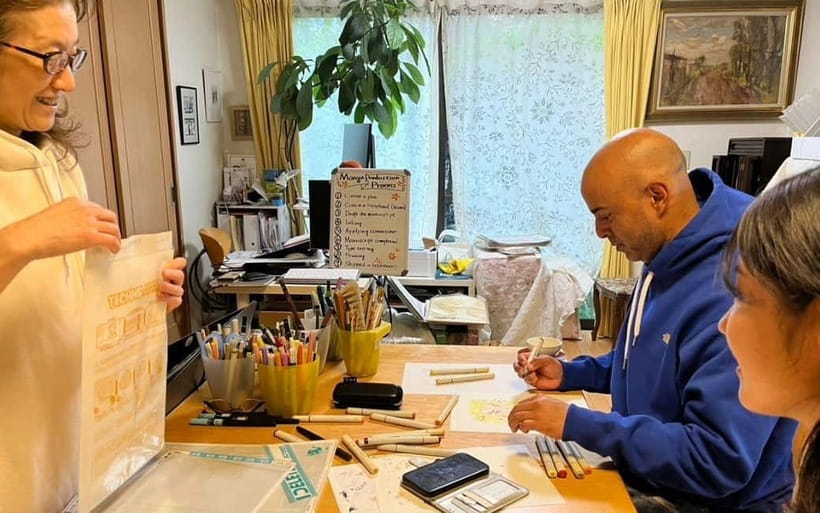
The class takes place in an authentic Tokyo manga studio. Yumiko begins by showing her portfolio and explaining the kinds of manga she works in, including shōnen, shōjo, and seinen. You can name a favorite series or character at the start, which gives her a useful sense of what you want to learn.
That personal touch matters. If you are interested in action heroes, she can steer your practice toward stronger poses and motion lines. If you prefer cute characters, you can request chibi proportions or an expression sheet. This is not a fixed classroom lecture where everyone produces the same page.
The session is taught in English, with Japanese support available. Shingo san has also helped with meeting visitors at Shindaita Station, which is useful if you are unsure about finding the studio. The station has one exit, so the meeting point is straightforward: walk through the ticket gates and meet just outside.
Other private tours in Tokyo


Choosing the right difficulty level
You do not need drawing experience. The three levels let you decide how much structure you want.
The easiest option uses a printed inking sheet. This is a good choice if you mainly want to try the tools without worrying about anatomy or composition. You can concentrate on keeping the pen steady, varying line thickness, and avoiding smudges.
The middle level moves into character outlines. Here, you begin making decisions about proportions, poses, and features while still working from guidelines. It is a sensible choice for beginners who have drawn before but do not yet feel ready to invent a complete character.
The most advanced option is full character design. You work from basic shapes and build a character from scratch. You might focus on the head-to-body ratio, the balance line, clothing, hair, pose, and facial expression. This is the best fit if you already sketch or want a more serious introduction to manga character construction.
I would not feel pressured to select the hardest option. A polished, simpler drawing can teach you more than an ambitious page that leaves you rushing. The artist can adjust the challenge, and children can choose an easier sheet while older students work on a more detailed design.
Getting comfortable with G-pens and maru-pens
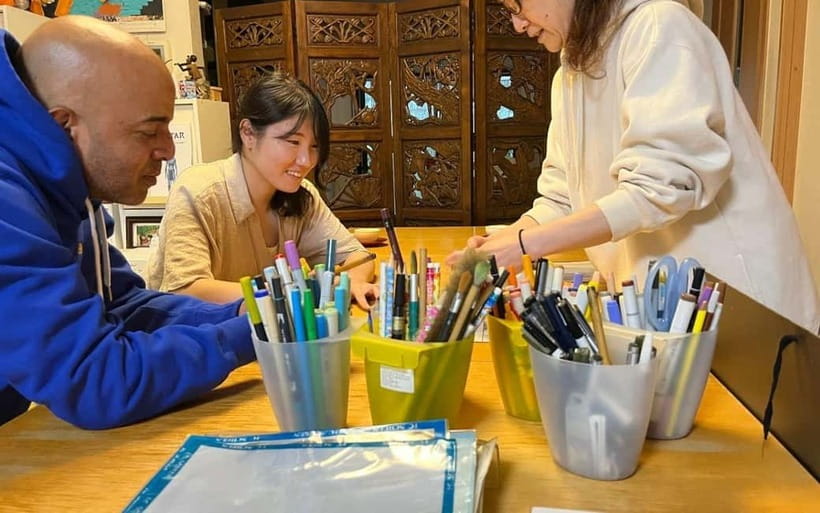
The tools are one of the strongest parts of the experience. Manga pens have distinct personalities, and you get to feel the difference rather than simply hearing a description.
A G-pen is useful for varied line width and expressive outlines. A maru-pen can produce finer marks, making it suitable for detail and delicate lines. Brush pens offer a different kind of control, especially for bold strokes and quick changes in thickness.
You also compare Kent paper with ordinary copy paper. Paper tooth and weight affect how ink behaves, so this small experiment explains why professional artists do not simply use whatever paper is closest to the printer. Ink can catch, spread, or dry differently depending on the surface.
Yumiko also explains where alcohol markers, screentones, and digital tablets fit into a modern manga workflow. That gives you a fuller picture of the medium. Manga today is not limited to pen and paper, but classic tools still teach line control in a very direct way.
Expect a few awkward marks at first. Dip ink can smudge. A pen can catch in the paper. Your hand may tire, especially if you grip too tightly. These are useful lessons, not failures. The artist addresses practical problems such as hand strain, perspective, and keeping a clean page.
Building a character from basic shapes
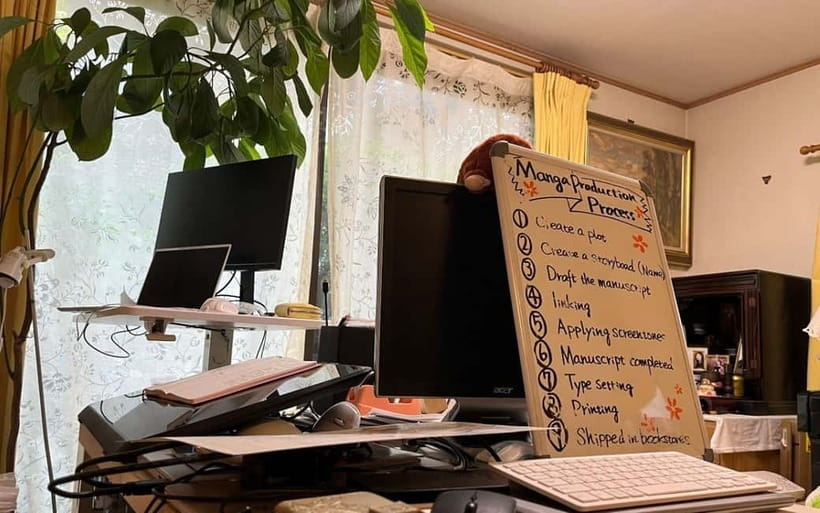
For the character work, Yumiko starts with simple forms rather than asking you to draw every detail at once. You use circles, cylinders, and guide lines to establish anatomy and proportion.
The balance line helps keep a figure from looking as if it might topple over. Head-to-body ratios shape the character’s age and style. A larger head can suggest a younger or chibi figure, while a longer body may suit a more mature character design.
Yumiko moves around the room and corrects posture, hand position, and page angle. If needed, she demonstrates directly on your sheet. That kind of immediate correction is hard to get from a book or online video, where you may repeat the same mistake for weeks.
One particularly useful technique is rotating the paper instead of twisting your wrist to force a curve. It sounds basic, but it can make a big difference when you are trying to draw clean arcs. You also practice where to thicken or taper lines to give hair, clothing, and limbs more weight.
The lesson covers feathering for hair shine and speed lines for motion. These effects help a drawing feel intentional rather than flat. You do not need to master them all in one sitting, but you leave with clear techniques to practice at home.
Screentones bring shadows and texture
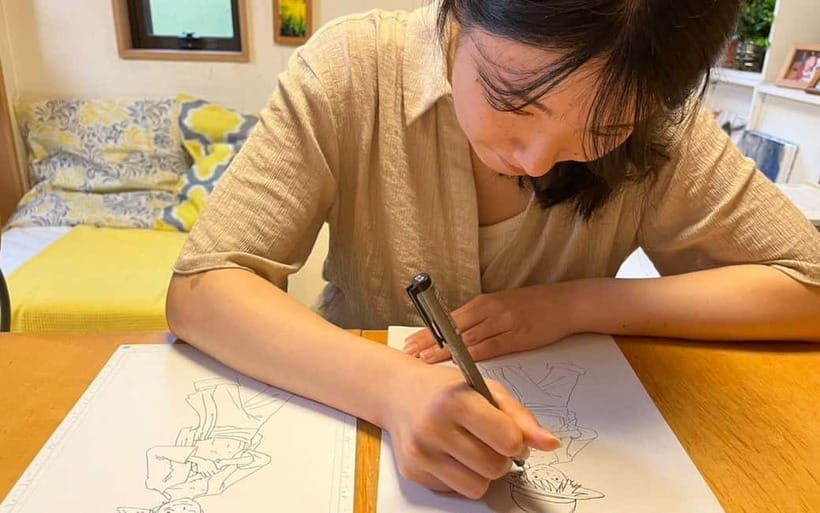
Classic screentone is probably the most unusual part for visitors who know manga mainly from printed books or digital screens. These are sheets covered in dots, lines, sparkles, or other patterns. You cut and apply them to the page to create shading, atmosphere, and visual texture.
You choose tones for areas such as shadows, backgrounds, and highlights. An art knife lets you trim the sheet, while a burnishing spoon helps press the tone down and blend the edges.
This work takes patience. Cut too far and you may remove part of the tone you wanted. Leave an edge loose and it may not sit cleanly. That slight fussiness is part of the lesson’s value, because it shows how much manual work went into manga before digital tools became common.
If screentone interests you most, tell Yumiko early. One participant who had already taken another manga class specifically wanted to learn more about this technique and planned to return for further practice. If you are choosing between the three levels, an option that leaves enough time for tone work may suit you better than spending the whole session on character anatomy.
A few more Tokyo tours and experiences worth a look




Finishing touches and the take-home artwork
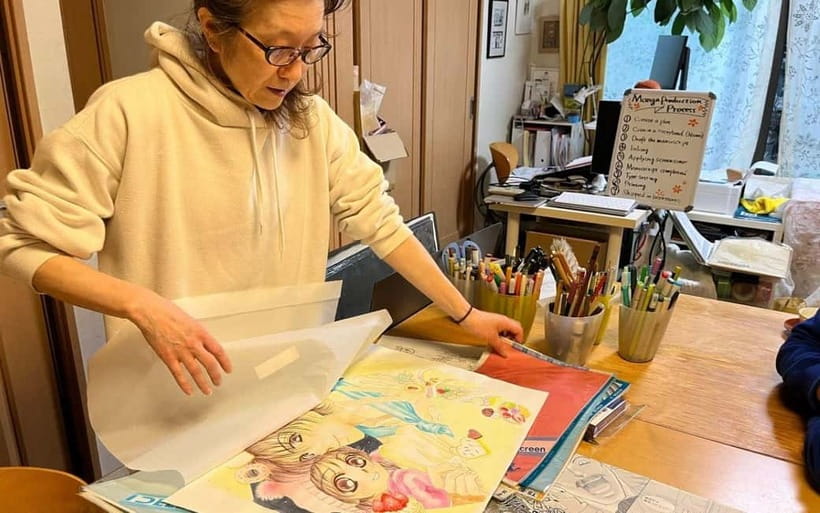
Near the end, you add the details that make a page feel finished. White-ink pens can create highlights, while correction fluid can rescue small mistakes. Yumiko then gives one-on-one feedback, marking areas to improve and signing your finished work.
The take-home pack includes your original artwork and practice sheets, plus a small handbook listing the tools used and places to buy them in Tokyo. That is practical if you want to continue drawing after your holiday. You can also take photos with the artist and your completed piece.
A particularly nice extra is the portrait drawn by Yumiko. One participant managed to draw Tanjiro from scratch and received a similar Tanjiro drawing signed by the artist. If you have a favorite character, mentioning it at the start may help shape the lesson, though the activity does not promise a particular character portrait for every person.
For many visitors, the finished work will not look like a magazine page. That is normal. The real souvenir is the combination of the artwork, new techniques, and a better sense of why professional manga requires so much control and revision.
What the 150 minutes feel like
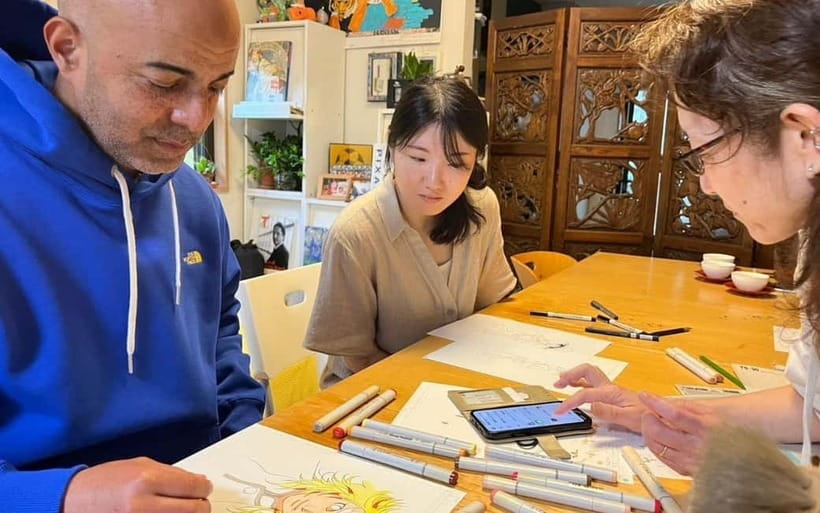
Two and a half hours is enough time to work seriously without turning the class into a full-day art course. You spend the opening portion meeting the artist, viewing her portfolio, and getting familiar with the tools. The central part focuses on guided drawing, character construction, inking, and possibly screentone work. The final stretch is for corrections, feedback, signatures, and photos.
The small maximum of six people is important. A larger class could turn this into a demonstration with limited help at your table. Here, Yumiko can notice a poor grip, an uneven curve, or a proportion problem and address it while you are still working on that section.
The class is private in format, but the information provided gives a maximum group size of six rather than promising a one-person lesson. If you want a completely private appointment, confirm the group arrangement before booking.
Wear comfortable clothes. Ink, markers, and cutting tools are part of the work, so this is not the moment for an outfit that must remain spotless. Bring a camera if you want photographs of the finished piece and the studio experience.
Is $141 per person a fair price?
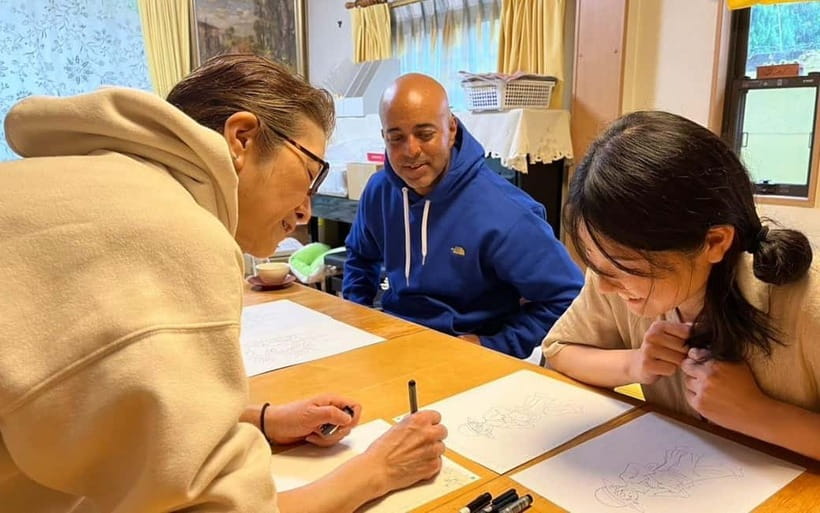
At $141, this costs more than a general craft class. You are paying for a 150-minute session with a professional manga artist, the use of specialized materials, personal corrections, a take-home art pack, and a signed portrait.
I think the price is reasonable for someone who already buys manga, collects illustration books, or wants to understand the craft behind favorite series. It is also a good special activity for an older child or teenager who would rather make something than visit another viewing platform or souvenir shop.
The value is weaker if you are only mildly curious about manga. A casual visitor may find the class too focused on pen handling, line weight, and repeated practice. You should also remember that meals and transportation to the studio are not included.
For someone planning to continue drawing, the tool guidance adds value. One participant left with plans to buy Copic markers and illustration books from Demon Slayer and Naruto before flying home. The lesson can point you toward a practical Tokyo shopping list, not just provide a single afternoon activity.
Who should book this studio session?
I would recommend it most strongly to:
- Manga and anime fans who want to understand the work behind finished pages
- Beginners who want patient, direct instruction
- Children age six and up who can follow drawing guidance
- Teenagers building confidence or looking for a creative Tokyo activity
- Artists curious about traditional manga tools and screentones
- Visitors who want a personal souvenir rather than a mass-produced item
It may not suit very young children. Those under five cannot participate, and even older children should be ready to sit, draw, listen, and handle art tools carefully.
It is also not an ideal choice if you want to tour several Tokyo sights in a tight schedule. The meeting point is easy to reach, but you still need to allow time for the train ride to Shindaita and the 150-minute class itself.
Practical details at Shindaita Station
Shindaita is on the Keio Inokashira Line in Tokyo. The meeting point is just outside the ticket gates, and the station has a single exit. That removes one common Tokyo problem: arriving at a station and wondering which staircase or gate to use.
The instructor speaks English, and Japanese support is available. The activity is wheelchair accessible. Starting times vary, so check availability for the day you want.
You can cancel up to 24 hours before the activity for a full refund. The reserve-now, pay-later option can help if your Tokyo schedule is still changing, though you should still confirm the final terms at booking.
My verdict: book it if manga is part of your Tokyo plan
I would book this class if you want hands-on contact with manga craft, not just a quick themed photo. The small class size, published artist, real tools, screentone practice, and personal critique give it substance.
The strongest reasons to choose it are Yumiko’s patient instruction and the chance to shape the lesson around your interests. You can work on a favorite character, try chibi or action styles, and ask about portfolios, publishing, and entering the manga field.
Skip it if $141 feels high for a drawing souvenir or if your main goal is sightseeing. But if you are already carrying manga books through Tokyo, comparing pens in art shops, or wondering how printed characters get their weight and texture, this is a worthwhile use of an afternoon.
FAQ
Where does the manga drawing class meet?
Meet the guide just outside the ticket gates of Shindaita Station on the Keio Inokashira Line. The station has a single exit.
How long does the activity last?
The class lasts 150 minutes, or two and a half hours.
Is prior drawing experience required?
No. You can join without prior drawing experience and choose from three difficulty levels.
What drawing tools will I use?
You can try G-pens, maru-pens, brush pens, dip ink, alcohol markers, screentone sheets, white-ink pens, and correction fluid. The class also explains how digital tablets fit into manga work.
Can children participate?
Children age six and up can participate. Children under five are not suitable for this activity.
Is the class taught in English?
Yes. The session language is English, and Japanese support is available.
What do I take home?
You take home your original artwork, practice sheets, and a mini handbook describing the tools and where to buy them in Tokyo. The experience also includes a portrait drawn and signed by the manga artist.
More Workshops & Classes in Tokyo
More Private Tours in Tokyo

More tours in Tokyo we've reviewed












Workshops, compared.
 ★ 5.0Sushi Making Tokyo Roll and Authentic Japanese Sushi ClassFrom $59
 ★ 4.9Tokyo: Roll and Authentic Sushi Making Class in AsakusaFrom $581h 40m
 ★ 4.9Tokyo: Sushi Making Class in a Happi Coat near a Famous SpotFrom $421h 30m
 ★ 4.8Chopstick Making Workshop in GinzaFrom $251 hour
 ★ 5.0Tokyo Sushi Making Class in Tsukiji with Professional ChefFrom $49
 ★ 5.0Ramen & Gyoza Cooking Class in Tokyo with Local Supermarket VisitFrom $122