Reviewed · MORNING
Tokyo: Morning Sightseeing Bus Tour
Tokyo does not ease you into the day. This 210-minute coach tour moves from the quiet forest of Meiji Shrine to the Imperial Palace, then into old Asakusa, giving you a fast but useful first look at the city. You also get a traditional shrine visit, Nakamise shopping street, and Uji matcha at the finish.
In This Article
- Key points to know before booking
- Why this morning route works in Tokyo
- Meiji Shrine and the quiet side of Tokyo
- Harajuku, Omotesando, and the National Diet Building from the coach
- The Imperial Palace: a short look at Edo and modern Japan
- Passing Akihabara, Ueno, and Kappa-bashi
- Asakusa, Nakamise Avenue, and Senso-ji
- The Uji matcha stop is more than a quick drink
- The guide and audio system
- Timing, comfort, and the value of $90
- Who should book this Tokyo morning tour?
- Should you book it?
- FAQ
- Where does the Tokyo morning tour start?
- How long does the tour last?
- Where does the tour finish?
- Is hotel pickup included?
- What languages are available?
- Is matcha included?
- What should I bring?
I like the efficient route and the mix of Tokyo icons with small cultural lessons, especially learning how to worship at a Shinto shrine. I also like that the tour ends in Asakusa, where you can stay for lunch and keep exploring. The tradeoff is simple: traffic can eat into your time, and several sights are viewed from the bus rather than explored on foot.
Key points to know before booking
- Meiji Shrine begins the morning in a peaceful forest, far from the noise of central Tokyo.
- The Imperial Palace stop is brief, with a visit to either the East Garden or Niju-bashi Bridge area.
- Asakusa is the main walking stop, with Nakamise Avenue, Kaminari-mon Gate, Senso-ji, and a matcha treat.
- Guides such as Aoi, Angela, and Taka bring plenty of personality, with English commentary supported by audio in six other languages.
- The bus covers a lot of ground, passing Harajuku, Akihabara, Ueno, Kappa-bashi, and the National Diet Building.
- You finish without a return transfer, so plan to spend the rest of your day in Asakusa.
Why this morning route works in Tokyo
At $90 per person, this is not the cheapest way to see Tokyo. But Tokyo is huge, its sights are spread across several districts, and getting between them can take time even when the trains run well. The coach handles the long jumps while your guide explains what you are seeing.
I see the tour as a city orientation rather than a slow cultural walk. You will not have time to study every shrine building, browse every shop, or linger in each garden. You will get a broad picture of Tokyo, with enough time at the major stops to take photos, hear the key background, and decide where you want to return later.
The air-conditioned coach has Wi-Fi, regular ventilation, and antibacterial coating. That matters in a city where a hot, crowded morning can drain your energy before lunch. The bus also gives you views of districts that you might otherwise skip, including Kabukicho, Harajuku, Akihabara, Ueno, and Kappa-bashi.
The morning begins at 8am, with departure information depending on the option you book. The supplied meeting details list the Robert Indiana LOVE sculpture at 4-chome-1-2 Ginza as a starting point, while the tour description also names the LOVE statue in Shinjuku. Confirm your exact meeting point carefully. Tokyo has more than one central district, and arriving at the wrong one is an unpleasant way to start a half-day tour.
A few more Tokyo tours and experiences worth a look

Meiji Shrine and the quiet side of Tokyo
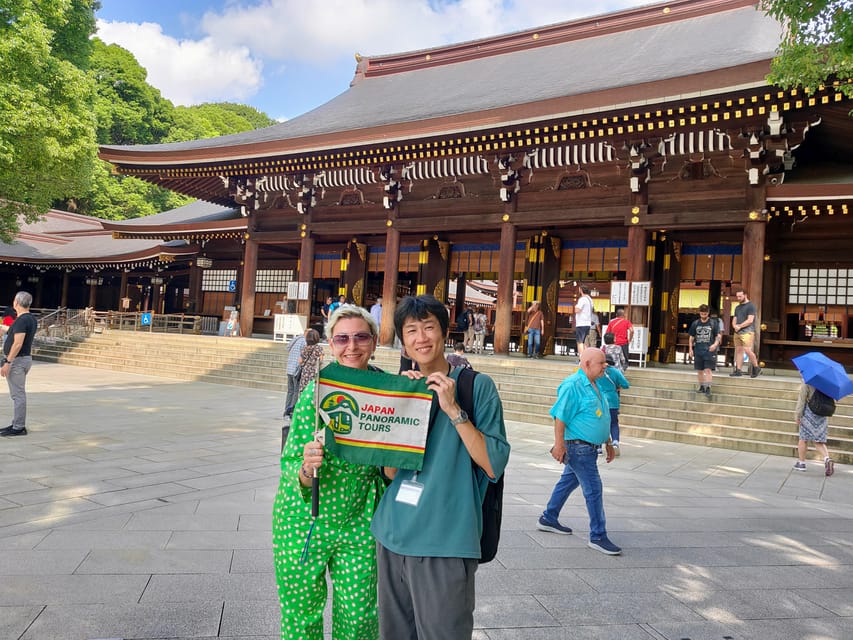
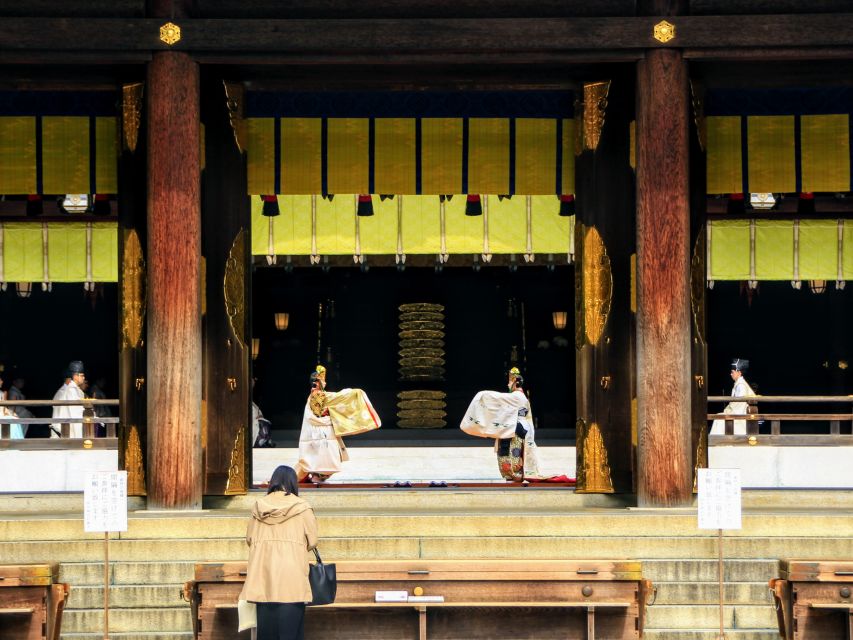
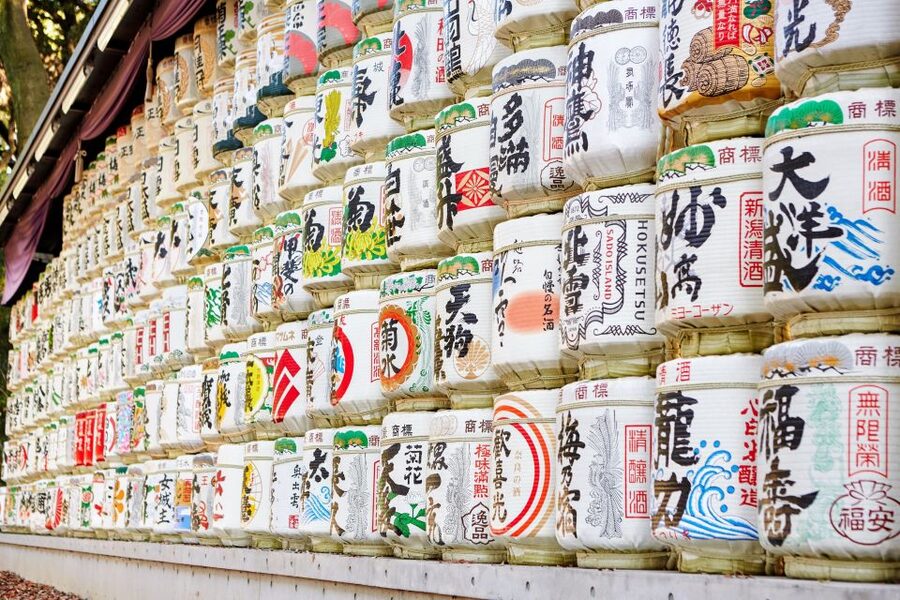
Meiji Jingu is the first major stop, and it sets the right tone. The shrine was built in 1921 for Emperor Meiji and Empress Shoken. Its forested grounds create a sharp contrast with the surrounding city, making it easy to forget that you are still in central Tokyo.
Your guide introduces the basic steps for visiting a Shinto shrine. That usually includes approaching respectfully, cleansing yourself at the water pavilion, and making a proper offering and bow at the shrine. The point is not to turn a sacred place into a performance. A short explanation helps you understand what you are doing and why.
I would wear comfortable shoes here. Even though the tour uses a coach for the longer distances, the shrine and Asakusa sections involve walking. The forest setting also makes this a better place to slow down for a few minutes, breathe, and notice the timber architecture and quiet paths.
You should keep your expectations in check. This is a guided visit, not a long independent exploration of the shrine grounds. Traffic, weather, and operating conditions can change the order or length of stops, so your time here may feel short if you want to see every corner.
Harajuku, Omotesando, and the National Diet Building from the coach
After Meiji Shrine, the route passes Takeshita Avenue, the main shopping street associated with Harajuku and Japanese pop culture. You will also pass Omotesando, a more polished shopping district known for major stores and stylish architecture.
This section works best as a moving introduction. You might see the contrast between youthful Harajuku fashion and Omotesando’s more refined retail streets, but you should not expect to get off and shop. If Takeshita Avenue is high on your personal list, return on another day when you can walk at your own pace.
The coach also passes the National Diet Building, Japan’s parliament. Its symmetrical stone design dates to 1936, and a guide can give you a quick explanation of its place in modern Japanese government. It is a useful reminder that this tour is not only about temples and old streets. Tokyo is also Japan’s political and commercial center.
Bus commentary can vary by guide. A few past comments about the route suggest that some people wanted more explanation while riding between stops. Guides including Aoi, Angela, and Taka are noted for clear English, humor, and a friendly manner, but the multilingual audio guide gives you another way to follow the route.
The Imperial Palace: a short look at Edo and modern Japan
The Imperial Palace stop links today’s imperial family with Tokyo’s earlier identity as Edo. The palace occupies the former site of Edo Castle, the seat of the shogunate that ruled Japan for centuries.
The tour visits either the East Garden, with traditional Japanese garden features, or the Niju-bashi Bridge area in the Outer Garden. The exact choice can depend on the day and operating conditions. Niju-bashi is one of the best-known palace views, while the East Garden gives you more of a garden and castle-site setting.
This is a photo stop, so do not picture a full palace tour. The main palace buildings are not open for casual interior visits on this route. You are coming for the grounds, the setting, and the historical explanation.
I like this stop because it gives the morning some depth. Meiji Shrine shows living religious practice, while the palace area connects Tokyo to political power and the city’s Edo-era past. It also gives you a pause from the dense commercial districts.
Passing Akihabara, Ueno, and Kappa-bashi
Back on the coach, the route cuts through several districts that help define Tokyo’s personality.
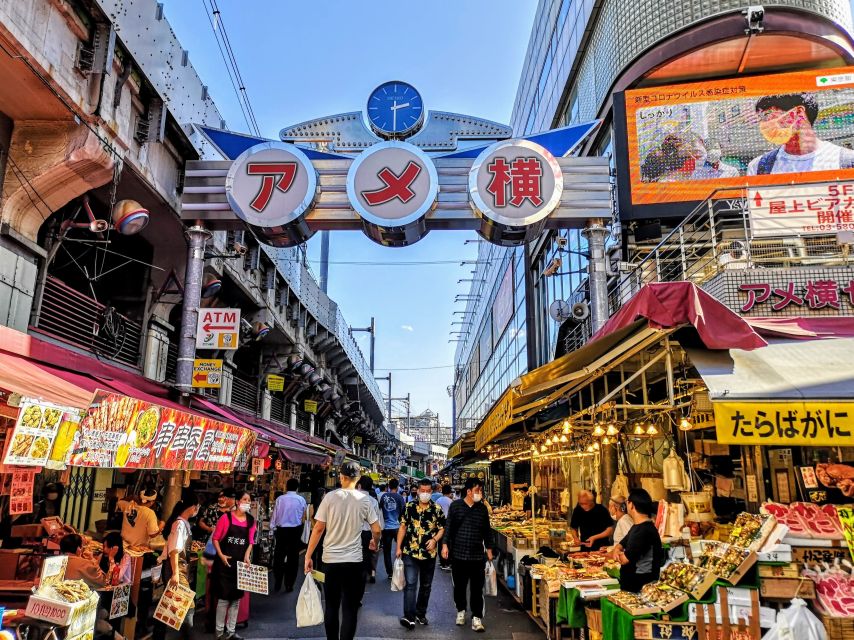
Akihabara is the center of anime, manga, games, electronics, and otaku culture. You may not have enough time to shop there, but seeing the streets from the bus helps place the district on your mental map. If you are traveling with a special interest in anime or electronics, note it as a possible return visit.
Ueno is associated with one of Japan’s oldest parks and a large cluster of museums and cultural sites. Again, the value here is orientation rather than a full visit. Kappa-bashi, meanwhile, is known for restaurant supplies, Japanese dishes, knives, and remarkably realistic plastic food models.
That last detail makes Kappa-bashi a fun passing point. It is also a useful suggestion for later shopping if you want practical Japanese kitchen goods rather than standard souvenirs. The coach cannot give you a proper browse, but your guide can point out why the street is known.
This is where the deluxe coach earns its keep. Walking from Harajuku to the palace, then on to Akihabara, Ueno, and Asakusa, would consume much of your day. You trade independence for coverage.

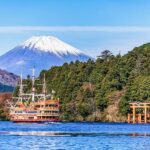
Asakusa, Nakamise Avenue, and Senso-ji
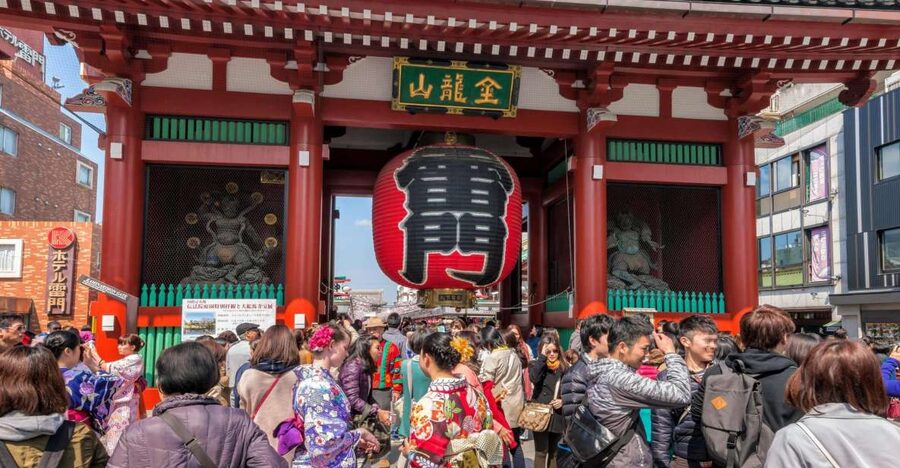
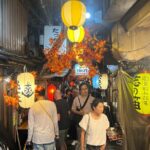
Asakusa is the tour’s main payoff. The neighborhood feels more rooted in old Tokyo than the modern districts earlier in the morning, with traditional shops, temple buildings, and the busy approach to Senso-ji.
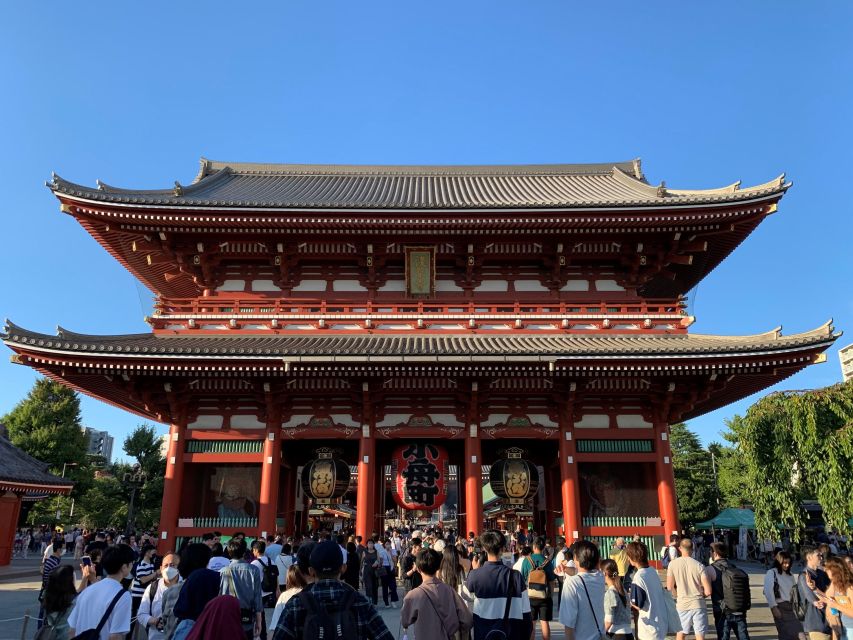
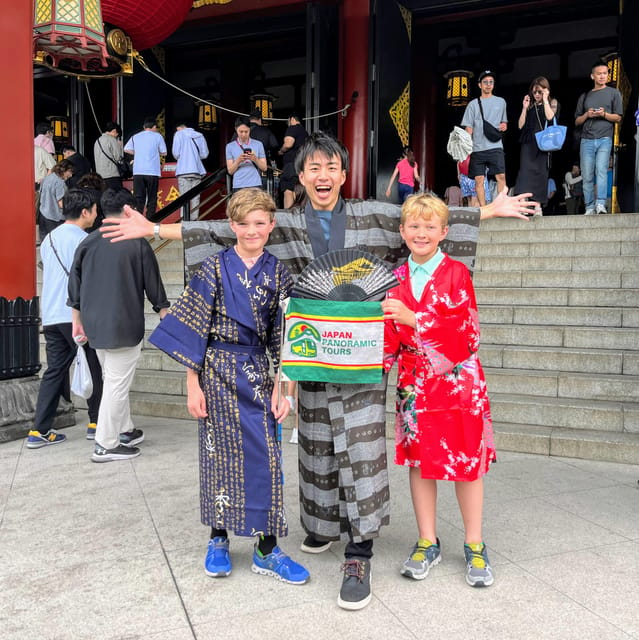
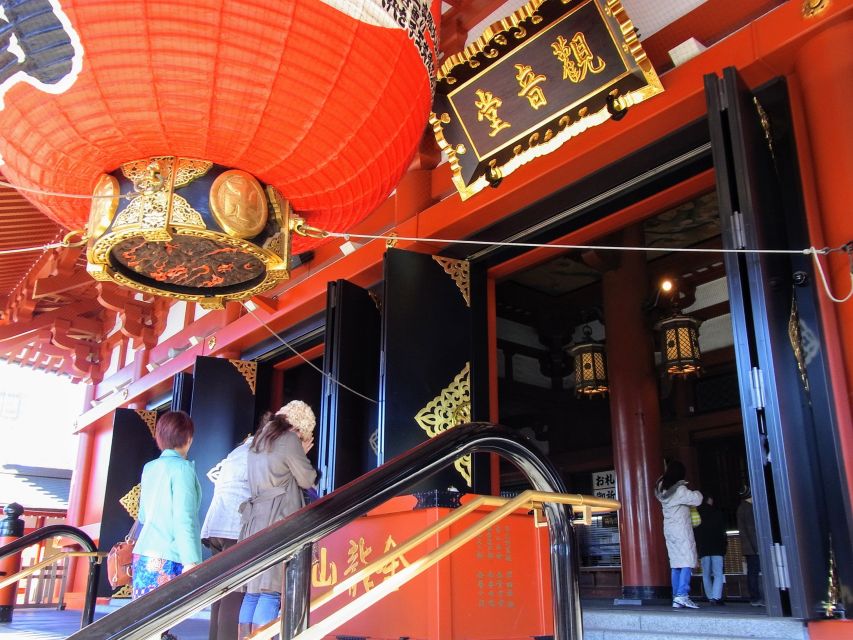
Your first landmark is Kaminari-mon Gate, recognizable by its huge red lantern. It is one of Tokyo’s classic photo locations, but it is more than a backdrop. The gate marks the entrance to the temple approach and leads you toward Nakamise Avenue.
Nakamise is lined with small shops selling snacks, crafts, clothing, and souvenirs. You will have time to browse, but do not try to inspect every storefront if you also want temple photos and matcha. The street can be crowded, and keeping track of the meeting instructions matters even though the tour finishes here.
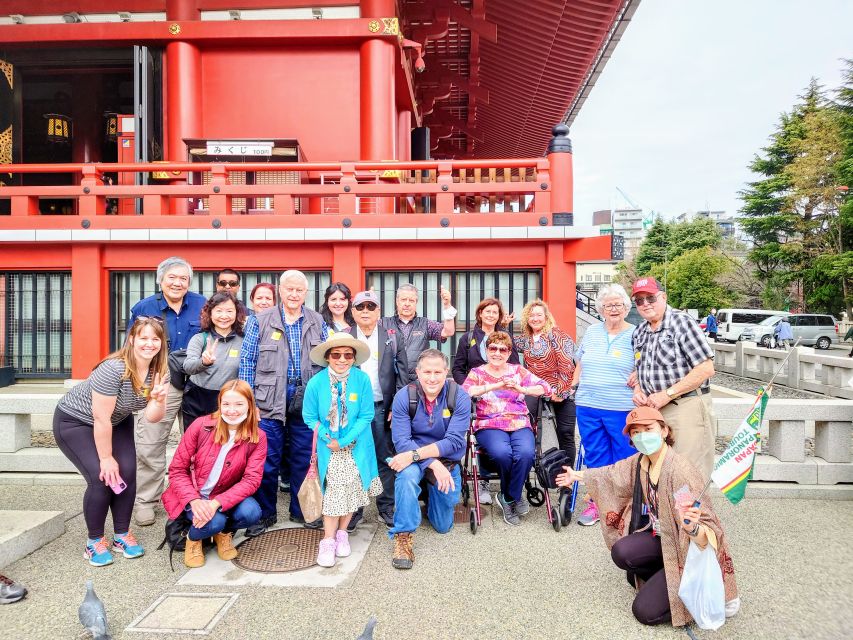
Senso-ji is Tokyo’s oldest temple, and the tour ends near it. This is a useful arrangement because you are not hurried back to a distant hotel or station. Once the formal portion ends, you can remain in Asakusa for lunch, more shopping, temple visits, or a walk along the nearby streets.
The lack of a return transfer is both a benefit and a limitation. It gives you freedom in one of Tokyo’s best areas, but you must arrange your own next step. If you have luggage, take the warning seriously: you are responsible for loading and unloading items from the coach trunk, including strollers and wheelchairs.
The Uji matcha stop is more than a quick drink
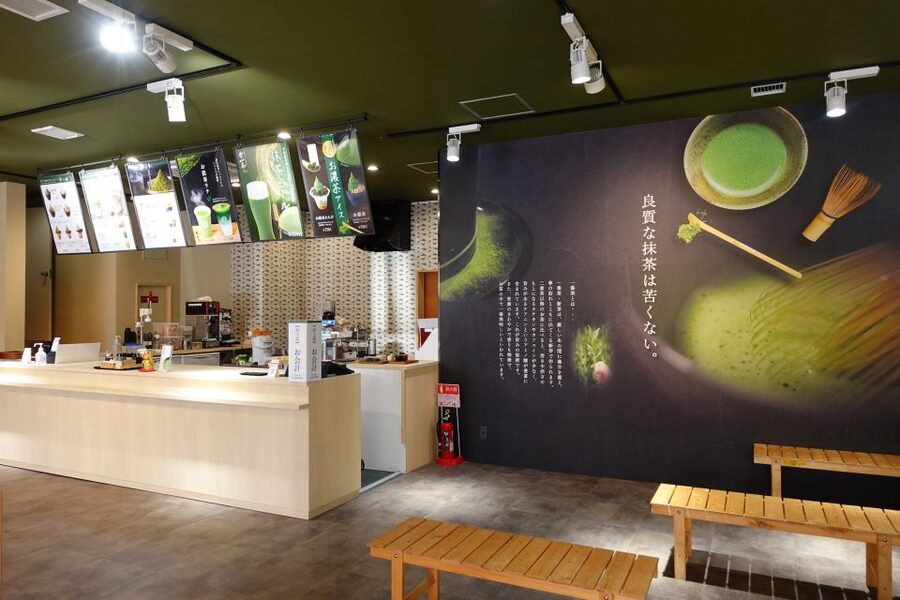
At Asakusa, the tour includes an Uji matcha experience. The matcha uses first-flush tea from Uji in Kyoto and is presented as a less bitter premium matcha. You can choose a matcha drink or matcha gelato, with matcha beer also listed as an option.
This is a small stop, but it gives the morning a hands-on cultural finish. You are not only looking at shrines and temples. You get to taste a product tied to Japanese tea culture and one of the country’s best-known tea-growing areas.
The gelato is a good pick if you are not fond of strong green tea. If you want the traditional flavor, choose the matcha drink. The matcha store is scheduled to close on May 14, when the experience changes to matcha souvenirs, so check the date if this tasting is a major reason for booking.
Do not expect a formal tea ceremony. The information describes a matcha experience, not a long ritual with a tea master. That makes it easy to fit into a morning sightseeing route, but anyone looking for a detailed tea lesson should plan a separate activity.
The guide and audio system
The live tour is conducted in English. Guides such as Aoi, Angela, Taka, and Jack have been praised for clear explanations, humor, warmth, and practical help. Good guiding matters here because much of the route is viewed from the coach, where a sharp explanation can turn an ordinary street into a useful lesson.
The tour also provides audio support in Spanish, French, Italian, German, Portuguese, and Ukrainian. The live guide remains English-speaking, so the headsets are especially useful if you want more information in your own language while riding.
The strongest personal comments about the tour focus on the guides. Aoi is described as especially clear and upbeat, Angela as funny and helpful, and Taka as both an explainer and entertainer. Jack is also noted for being informative and good-humored. The guide you receive will shape the pace and feel of the morning, but the route itself remains the main product.
One older comment wished for more commentary during the bus portions. I would treat that as a useful expectation setter. You may get lively explanations throughout, but some stretches will simply be transport between districts.
Timing, comfort, and the value of $90
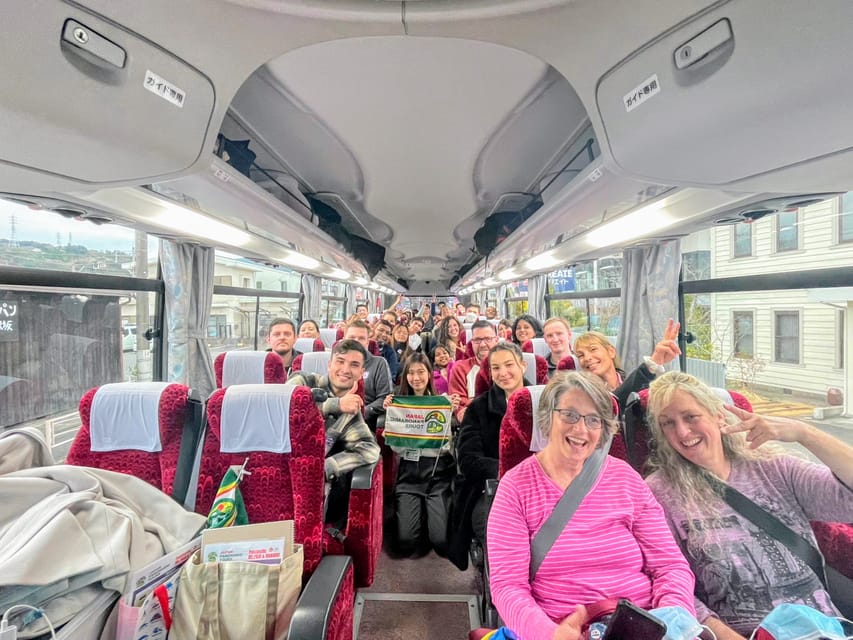
Three and a half hours sounds generous until you look at the map. Tokyo traffic can be heavy, and the tour covers a large part of the city. A past experience with traffic led to rushed sightseeing points, which is the main risk of trying to pack so much into one morning.
The coach makes the plan practical, but the schedule cannot control traffic or weather. The order of stops may change, and a closed site may be replaced with an alternative. You should book this tour for broad coverage, not for long, quiet visits at every location.
At $90, the value depends on your priorities. I think it is fair for a first morning in Tokyo if you want transport, an English-speaking guide, Wi-Fi, air conditioning, and a matcha tasting in one package. It is less attractive if you are comfortable using trains and prefer to spend an hour or two at each place.
Lunch is not included. Since the tour finishes at Senso-ji, that is not a serious problem. Asakusa offers a natural place to eat, and you can choose your own restaurant instead of being sent to a fixed group meal.
Who should book this Tokyo morning tour?
I would recommend it most strongly if you have only a day or two in Tokyo, are visiting for the first time, or want a clear overview before exploring independently. One short comment described the route as ideal for a 24-hour visit, and that judgment makes sense. You see several major districts without spending your limited time studying train maps.
It also suits families and older visitors who prefer not to make repeated train transfers. The air-conditioned coach offers a comfortable base, though you still need to walk at Meiji Shrine and Asakusa.
Independent visitors may find the schedule too tight. If your priority is anime shopping in Akihabara, fashion in Harajuku, palace gardens, or temple photography, spend the morning in one district instead. The tour shows you the possibilities, then leaves you to return on your own.
The best plan is to treat this as a first look. After Senso-ji, stay in Asakusa for lunch and continue exploring. That way, the tour gives you structure in the morning while preserving a free afternoon.
Should you book it?
Book this tour if you want maximum city coverage with minimal transport planning. Meiji Shrine, the Imperial Palace, and Asakusa give you three very different sides of Tokyo, while the coach connects them with a useful look at Harajuku, Akihabara, Ueno, and Kappa-bashi.
Skip it if you want long visits, slow photography, or complete control over your schedule. The $90 price is reasonable for comfort, commentary, and coverage, but the experience works best as an orientation tour. Confirm your pickup point, wear good shoes, and plan to make Asakusa part of your afternoon.
FAQ
Where does the Tokyo morning tour start?
The available starting point depends on the option booked. The meeting information lists the Robert Indiana LOVE sculpture at 4-chome-1-2 Ginza, while the tour description also identifies the LOVE statue in Shinjuku. Confirm your assigned meeting point before departure.
How long does the tour last?
The tour lasts 210 minutes, or three and a half hours.
Where does the tour finish?
The tour finishes at Senso-ji in Asakusa. There is no additional drop-off service, so you arrange your own transport afterward.
Is hotel pickup included?
No. Hotel pickup and hotel drop-off are not included. Pickup from Ginza is included when that option is booked.
What languages are available?
The live guide speaks English. Audio guide support is available in Spanish, French, Italian, German, Portuguese, and Ukrainian.
Is matcha included?
Yes. The tour includes either a matcha drink or matcha gelato. Matcha beer may also be available as an option. On May 14, the matcha store is closed and the experience changes to matcha souvenirs.
What should I bring?
Bring comfortable shoes. You are transported between districts by coach, but you will walk during the visits to Meiji Shrine and Asakusa.
More Morning in Tokyo

More tours in Tokyo we've reviewed
Morning, compared.
 ★ 4.8Tokyo: Sumo Morning Practice Viewing TourFrom $8190 minutes - 2 hours
 ★ 4.4Tokyo: Sumo Morning Training VisitFrom $771 hour
 ★ 4.7Tokyo: Visit Sumo Morning Practice with English GuideFrom $962 hours
 ★ 4.8Tokyo: Sumo Morning Practice Tour at Sumida CityFrom $1162 hours
 ★ 5.0Tokyo Sumo Morning Practice Tour at StableFrom $83
 ★ 4.5Tokyo Ryogoku Sumo Morning Practice + Photo Shoot with WrestlersFrom $98