Reviewed · GINZA TOURS
Tokyo: Learn about Japanese Traditional art KABUKI in Ginza
Kabuki is one of Japan’s great stage traditions, but seeing a full performance takes time. This 90-minute Ginza tour gives you a short introduction through Kabukiza’s exhibits, then adds shopping stops that connect Kabuki with everyday Japanese design.
In This Article
- Key points to know
- A quick look at Kabuki without booking a full performance
- Kabukiza gives the tour its main purpose
- The most important detail: there is no Kabuki show
- Kabukiza souvenirs offer a practical look at theater culture
- Mitsukoshi Ginza connects old Japan with modern shopping
- What $51 buys you in 90 minutes
- The guide can shape the quality of the experience
- Who will enjoy this Ginza experience most
- Timing, meeting point, and planning advice
- How this compares with seeing Kabuki itself
- Should you book the Kabuki and Ginza tour?
- FAQ
- How long does the tour last?
- What language is the tour offered in?
- Does the tour include a Kabuki performance?
- Where do I meet the guide?
- How many people can join the tour?
- What will I see at Kabukiza?
- Can I buy Kabuki souvenirs during the tour?
- Does the tour include shopping costs?
- What is the department store stop?
- Can I cancel for a full refund?
I like the small group limit of nine and the chance to browse goods sold only around Kabukiza. I also like the stop at Mitsukoshi Ginza, a department store with more than 350 years of history. The main thing to watch: this is an introduction, not a show, and the $51 price may feel high if you expect live Kabuki.
Key points to know
- Kabukiza comes first: See the famous theater building and tour Kabuki exhibits with an English-speaking guide.
- No performance is included: You learn about Kabuki, but you do not watch a short show or full production.
- Small groups help: The tour is limited to nine people, allowing more room for questions.
- Kabukiza-area shopping is part of the experience: Look for theater-related goods, Japanese accessories, sweets, and souvenirs not found everywhere.
- Mitsukoshi adds a polished Ginza finish: The historic department store offers traditional crafts and high-quality Japanese goods.
- The guide matters: Nori received warm praise for being friendly, while other feedback suggests the historical explanation can be fairly basic.
A quick look at Kabuki without booking a full performance
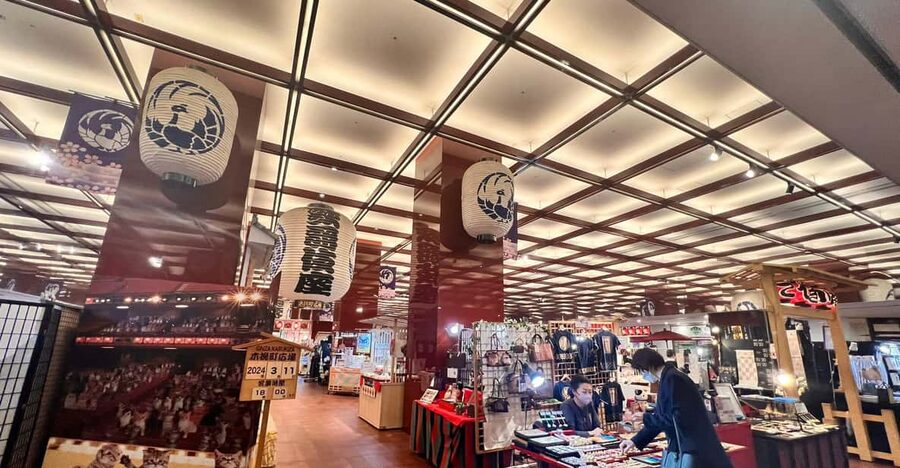
Kabuki can seem hard to approach. The makeup, costumes, music, gestures, and old theatrical customs all carry meaning, but a first-time visitor may not know what to watch for. This tour gives you a manageable starting point inside Ginza, Tokyo’s traditional entertainment district.
You meet in front of NISSAN CROSSING and walk with an English-speaking guide to the Kabukiza area. The plan is simple: see the Kabukiza building, learn from its exhibits, browse local shops, and finish at Mitsukoshi Ginza.
That simple format is the tour’s strength. You can fit it into a packed Tokyo day, especially if you have no room in your schedule for a Kabuki performance. But you need to book it for what it is. This is a cultural introduction and shopping walk, not a theater ticket.
A few more Tokyo tours and experiences worth a look

Kabukiza gives the tour its main purpose
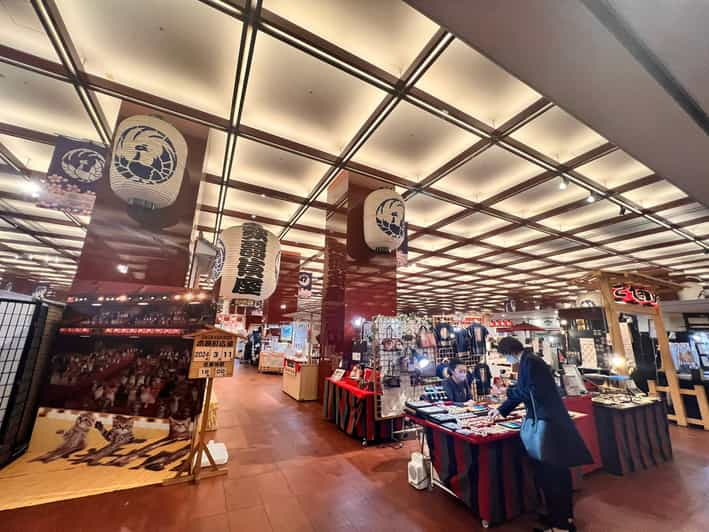
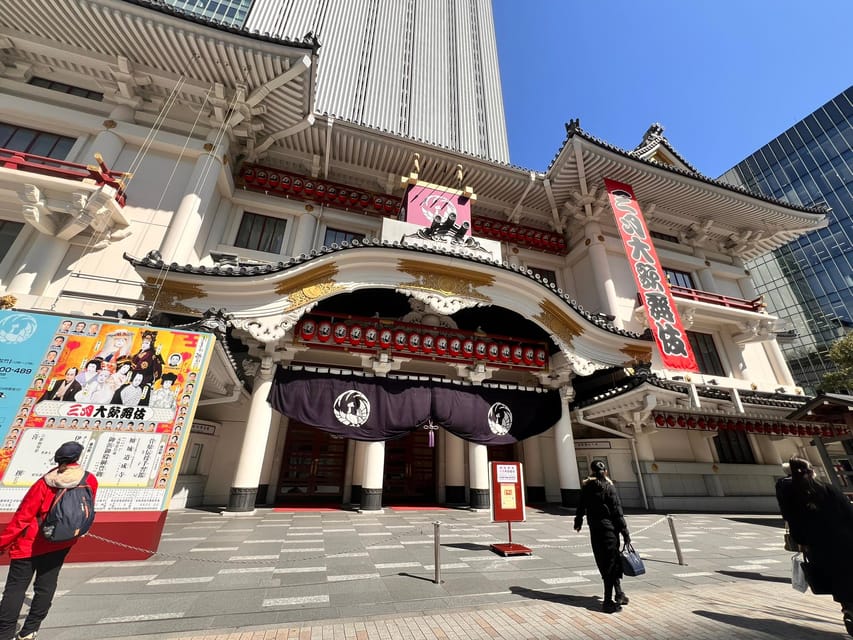
The Kabukiza building is the anchor of the experience. Even if you do not attend a performance, seeing the theater helps place Kabuki in its proper setting. The building is not treated as a random sightseeing stop. It gives your guide a clear way to explain the art form and its place in Japanese culture.
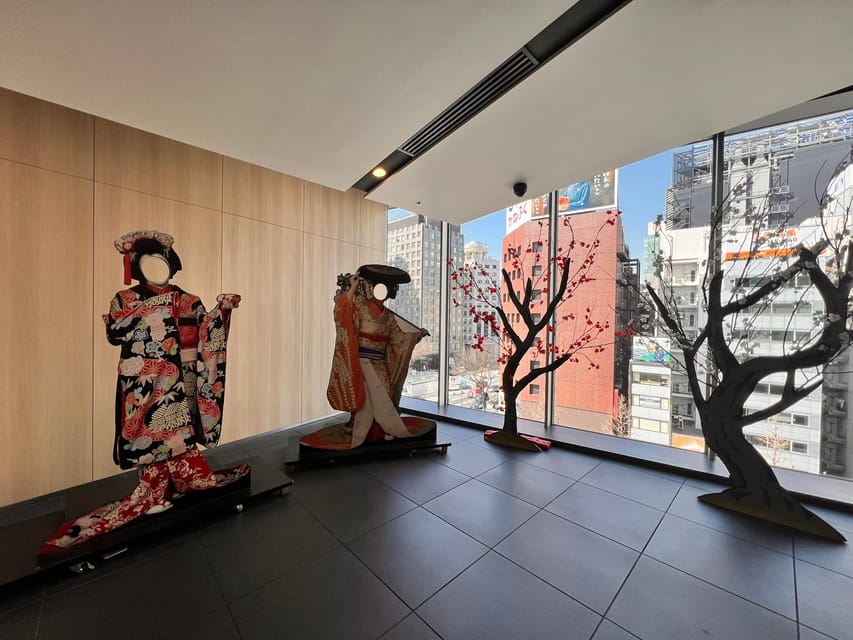
Inside the gallery, you tour Kabuki exhibits with the guide. The exact exhibit details can vary, but the stated focus is on learning about traditional Japanese performing arts. You should expect an overview rather than a long academic lecture.
This distinction matters. One participant found the historical introduction too basic, with some of that possibly connected to language difficulties. Another guide, Nori, was praised for being friendly, while a separate assessment described the guide as very informative. The experience may depend heavily on how much context your guide can provide and how actively you ask questions.
I would prepare a few questions before arriving. Ask about Kabuki makeup, stage movement, costumes, or how a performance differs from modern theater. A small group makes this easier than a large coach tour. With a maximum of nine people, you have a better chance to get a direct answer instead of simply following along at the back.
The most important detail: there is no Kabuki show
The tour does not include Kabuki viewing. That means no full performance and no short demonstration is promised as part of the 90 minutes.
This point deserves attention because the activity name and setting can easily create the wrong expectation. If you want to see actors on stage, hear the music, and watch the dramatic movement of Kabuki in performance, you need a separate theater ticket. This tour is designed for people who want to learn a little about Kabuki without committing the time required for a show.
For some people, that is exactly the right choice. A live Kabuki performance may not fit your schedule, and the traditional style can feel easier to understand after a basic introduction. For others, the lack of a performance will be a serious disappointment, especially at $51 per person.
I would treat the tour as a guided orientation to Kabukiza. It can help you decide if you want to return for a performance later, but it should not replace that experience.
Kabukiza souvenirs offer a practical look at theater culture
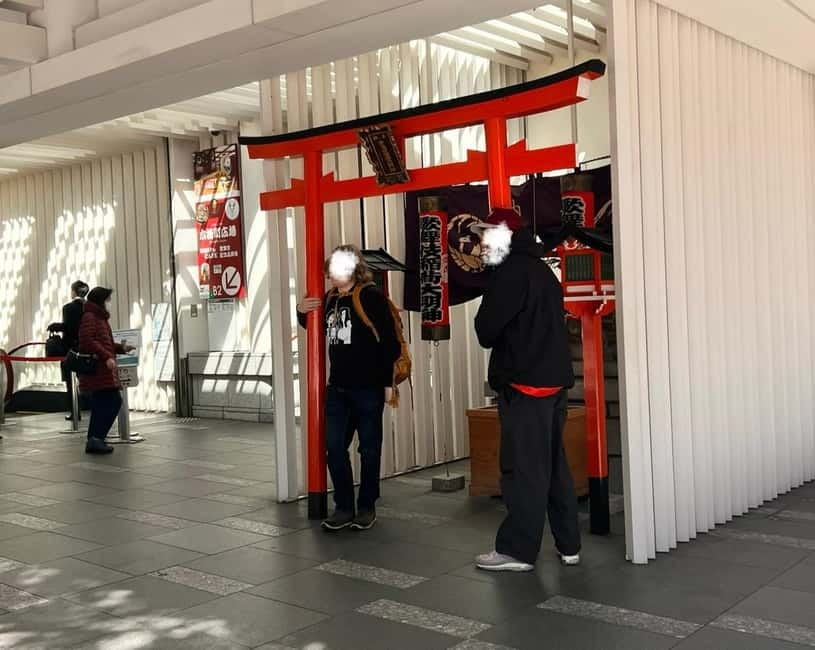
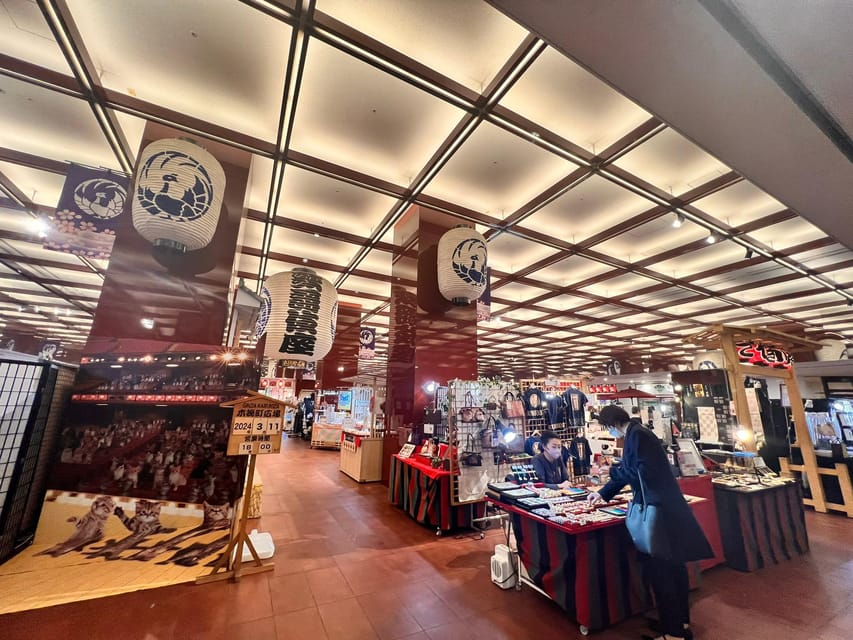
After the exhibits, the tour includes stops at souvenir shops in the Kabukiza area. These stores carry Kabuki goods, Japanese accessories, Japanese sweets, and other items connected with the district.
The best reason to shop here is not simply buying another souvenir. The goods give you a more tangible connection to what you have just learned. Instead of leaving with only a few facts about Kabuki, you can look at theater-related designs and traditional Japanese products in a place linked directly to the art.
The selection also suits different budgets, although the tour fee does not cover purchases. You can browse without buying, or choose something small such as a sweet, accessory, or decorative item. The information specifically notes that some souvenirs are available only at Kabukiza, which gives this part more value than a generic stop at a large gift shop.
Still, keep the shopping portion in perspective. The tour is not a dedicated shopping excursion, and the schedule lasts only 90 minutes. You will have time to look around, but you should not expect a long, leisurely retail session.
Mitsukoshi Ginza connects old Japan with modern shopping
The final major stop is Mitsukoshi Ginza, described as Japan’s oldest department store, with more than 350 years of history. This adds a second side of Ginza to the itinerary.
Kabukiza represents a traditional performing art in a theater setting. Mitsukoshi shows how Japanese craftsmanship and high-end retail continue in a modern city center. You can encounter traditional crafts and other quality goods in a polished department-store environment.
I like this contrast. It keeps the tour from being only about theater displays. You see how traditional design appears in objects you might actually use or take home. If you are looking for Japanese accessories, sweets, or crafts, Mitsukoshi may help you compare more refined options with the smaller Kabukiza-area souvenirs.
The drawback is that department-store shopping may not feel special to everyone. If you prefer street markets, tiny local shops, or hands-on activities, this stop may seem formal. The tour presents Ginza as a place of taste and tradition, not as a rough-edged neighborhood experience.



What $51 buys you in 90 minutes
At $51 per person, this is not a cheap way to fill time in Ginza. The value depends on how much you want an English-speaking guide to organize the visit and explain what you are seeing.
You are paying for a small-group walking experience, a guide, access to the Kabuki exhibits included in the plan, and a focused route through Kabukiza and Mitsukoshi. The group size, limited to nine, is important. A private tour would cost more, while a large group might give you less chance to ask questions.
The price is harder to justify if you mainly want to see the outside of Kabukiza or shop on your own. Ginza is easy to explore independently, and your purchases are extra. You also do not receive a Kabuki performance for the fee.
I see the strongest value for a first-time visitor who wants structure. You meet at a clear point, follow a short route, and get an introduction to a traditional art that can be difficult to understand from the outside. If you are already familiar with Kabuki or plan to attend a performance separately, the tour may offer less new material.
The guide can shape the quality of the experience
The available feedback points in two directions. Nori was singled out as a friendly guide, and another assessment described the guide as very informative. That suggests the personal side of the tour can be a real strength.
At the same time, one person found the Kabuki history explanation too basic and noted that language may have played a part. The tour is offered in English, but an English-language tour can still vary in depth and clarity.
You can improve your experience by taking an active role. Ask questions, tell the guide how much you already know, and be clear that you want cultural background rather than only directions through the shops. With a small group, that kind of conversation should be possible.
I would not book this expecting a specialist lecture on theater history. I would book it expecting a friendly, accessible introduction that may be stronger on orientation and local context than on detailed scholarship.
Who will enjoy this Ginza experience most
This tour fits you well if:
- You have limited time in Tokyo.
- You want a short introduction to Kabuki without sitting through a full performance.
- You prefer a guide to explain exhibits and local customs.
- You enjoy Japanese sweets, accessories, crafts, and theater-related souvenirs.
- You like small groups rather than large organized outings.
- You are already visiting Ginza and want a planned cultural route.
It may not suit you if:
- You specifically want to watch Kabuki.
- You want a long and detailed history of the art form.
- You dislike shopping stops.
- You prefer to explore Ginza entirely on your own.
- You are looking for a hands-on performance or workshop.
Families and first-time visitors may appreciate the short duration. Ninety minutes is long enough to provide a theme but short enough to avoid taking over your day. The format also works for people who want something cultural between major Tokyo sights.
Timing, meeting point, and planning advice
The meeting point is in front of NISSAN CROSSING. Check the exact start time when booking, since departure times depend on availability.
I would arrive early. The tour has a small group limit, and meeting points in Ginza can be busy and visually crowded even when the actual address is clear. Have the meeting-point name ready on your phone and allow time to find the correct side of the street.
The walking route is short enough to fit before lunch, after shopping, or between other Ginza plans. Since the entire activity lasts 90 minutes, avoid scheduling a major attraction immediately afterward unless you leave a buffer.
You can cancel up to 24 hours before the start for a full refund. The reserve-now, pay-later option also helps if your Tokyo plans are still changing. Shopping costs are separate, so set your own souvenir budget.
How this compares with seeing Kabuki itself
A real Kabuki performance gives you the sound, pace, costumes, actors, stagecraft, and atmosphere of the theater. This tour gives you explanation, exhibits, location, and a chance to browse related goods.
I would not compare the two as equal substitutes. They answer different travel needs. The tour is for a short introduction. A performance is for spending more time with the art itself.
The tour can be a good first step if you feel unsure about attending Kabuki. You learn enough to recognize that the art has its own conventions, then you can decide if a longer performance appeals to you. If you already know you want the stage experience, put your money toward a separate ticket and use your free time to visit the Kabukiza shops on your own.
Should you book the Kabuki and Ginza tour?
Book it if you want a compact, guided introduction to Kabuki and like the idea of pairing theater culture with Ginza shopping. The small group and English guide are useful, and the Kabukiza-only souvenirs give the route a local purpose.
Skip it if the phrase Kabuki experience makes you expect live actors. You will not see a performance, and the historical explanation may feel too basic if you want detailed theater scholarship. At $51, the tour makes the most sense for a curious first-time visitor who values guidance, a short schedule, and a clear cultural theme.
FAQ
How long does the tour last?
The tour lasts 90 minutes.
What language is the tour offered in?
The tour is offered in English with a live English-speaking guide.
Does the tour include a Kabuki performance?
No. Kabuki viewing is not included.
Where do I meet the guide?
You meet in front of NISSAN CROSSING.
How many people can join the tour?
The tour is limited to nine participants.
What will I see at Kabukiza?
You will see the Kabukiza building and tour Kabuki exhibits with a guide.
Can I buy Kabuki souvenirs during the tour?
Yes. The route includes souvenir shops in the Kabukiza area, including goods, Japanese accessories, Japanese sweets, and other items.
Does the tour include shopping costs?
No. You pay separately for anything you purchase at the shops.
What is the department store stop?
The tour visits Mitsukoshi Ginza, a department store with more than 350 years of history.
Can I cancel for a full refund?
Yes. You can cancel up to 24 hours in advance for a full refund.
More Ginza Tours in Tokyo


More tours in Tokyo we've reviewed












Ginza Tours, compared.
 ★ 4.8Chopstick Making Workshop in GinzaFrom $251 hour
 ★ 4.5Tokyo: Art Aquarium Museum GINZA Entry TicketFrom $171 day
 ★ 5.0Tokyo: Best Ginza Food Tour at 3 Local EateriesFrom $150
 ★ 4.5Official Japan Go-Kart Through Tokyo Bay / Ginza (IDP Required)From $85
 ★ 5.0Private Ginza Architecture Walking TourFrom $132
 ★ 4.8Tokyo GINZA: KONPARU Japanese Cabaret Show with DrinkFrom $502 hours