Reviewed · KAMAKURA & ENOSHIMA DAY TRIPS
Full Day Kamakura Tour, From/To Tokyo, Yokohama, 2- 12 guests
Kamakura packs major temples, a towering bronze Buddha, a coastal island, and old shrine roads into one busy day. This private tour makes the route far easier by moving you between spread-out sights in a vehicle rather than crowded public transport. I like the practical routing and the chance to adjust the day around your group. The bamboo grove at Hokokuji and the Great Buddha at Kotoku-in give the day two very different early highlights.
In This Article
- Key points at a glance
- Why this nine-hour Kamakura day works
- Hokokuji bamboo grove and matcha tea
- Kotoku-in and the 11.4-meter Great Buddha
- Hase-dera and the Kannon statue
- Tsurugaoka Hachimangu, Kamakura’s central shrine
- Lunch in Kamakura, with room for local flavor
- Enoshima Island for the final change of scene
- What the private vehicle changes
- Price, group size, and extra costs
- Who will get the most from this tour
- Should you book this Kamakura tour?
- FAQ
- How long does the Kamakura tour last?
- Where does the tour operate from?
- How many people can join the private tour?
- Is transportation included?
- Are temple and island admissions included?
- How much should I budget for admissions?
- Is lunch included?
- Can I cancel for a full refund?
- What happens if bad weather cancels the tour?
I also like that the tour includes transportation and guide service, not just a driver waiting outside each stop. You can ask questions as you go, and a private group of up to 12 people avoids the fixed pace of a large coach. The tradeoff is cost: $715.34 per group is strong value for a full group, but expensive for only two people once admissions and lunch are added.
Key points at a glance
- Hokokuji’s compact bamboo grove: Walk among more than 2,000 bamboo stalks and allow time for matcha tea.
- Kamakura’s Great Buddha: See the 11.4-meter bronze Amida Buddha at Kotoku-in.
- Two major religious sites in one day: Compare Hase-dera’s Kannon statue with Tsurugaoka Hachimangu Shrine.
- A private vehicle from Tokyo or Yokohama: Avoid transfers and crowded trains while reaching sites spread across Kamakura.
- Enoshima adds a coastal change of pace: The island brings shrines and other attractions after the temple visits.
- Budget for extras: Listed admissions total ¥2,200 per person, and lunch costs about ¥1,500 to ¥2,000.
Why this nine-hour Kamakura day works
Kamakura is close enough to Tokyo for a day trip, but its sights are not gathered around one station. Hokokuji sits in one part of town, the Great Buddha and Hase-dera are in another, and Enoshima lies farther west. A private vehicle takes care of the awkward parts.
That matters most if you want to see several major places without spending your day studying train routes. You still need to walk at each stop, but the transfers between them are handled. Pickup is offered, and the tour is available for groups of two to 12 people from Tokyo or Yokohama.
The day lasts about nine hours. That is enough time for the listed stops, lunch, and transportation, but not enough for a slow, unhurried visit at every temple. I would think of this as a broad first look at Kamakura rather than a quiet temple retreat.
A few more Tokyo tours and experiences worth a look
Hokokuji bamboo grove and matcha tea
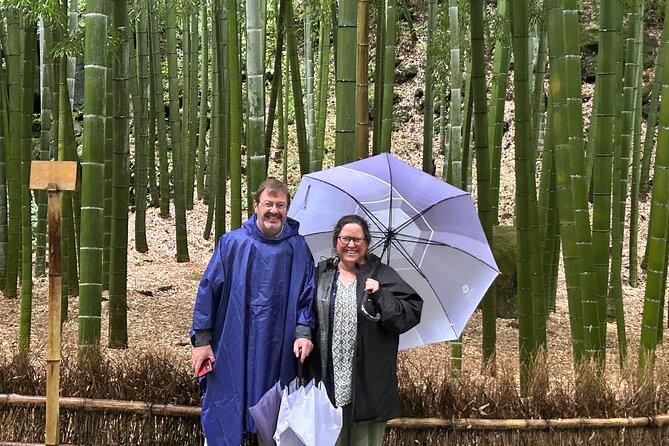
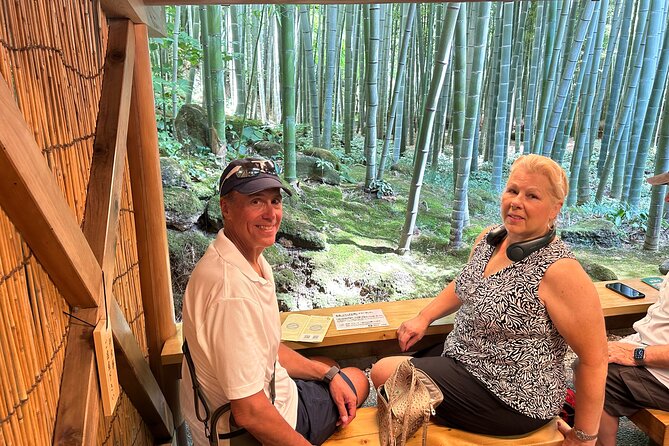
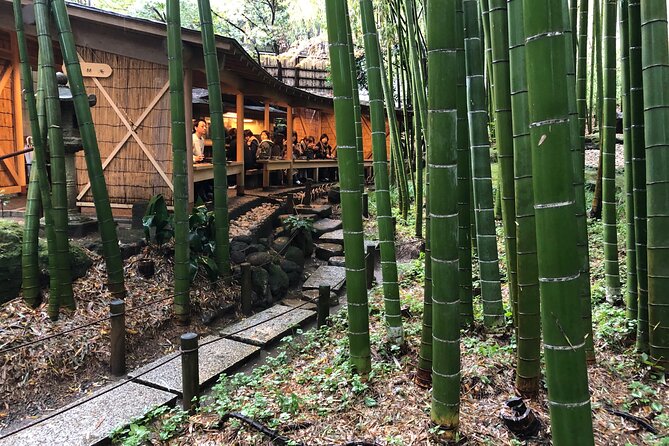
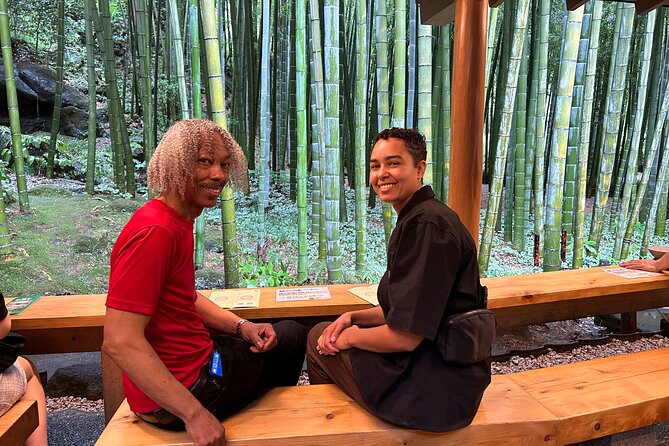
Hokokuji is the most distinctive first stop because the main draw is not a giant building. It is a small bamboo grove behind the temple’s main hall, with more than 2,000 dark green stalks packed along narrow paths.
The grove is not huge, so the one-hour visit should give you time to walk its paths and take in the enclosed setting. The tight trails also mean you should expect a gentle, organized walk rather than a long woodland hike.
A cup of matcha tea in the bamboo setting is one of the day’s memorable extras. It is not included in the tour price, so ask the guide how the tea stop fits into your schedule and confirm any cost before ordering.
Hokokuji also gives you a useful change from Kamakura’s grander sites. You are looking at a small, carefully framed temple experience, not a giant complex. If bamboo is high on your list, this stop deserves your attention. If you prefer large architecture and broad grounds, you may find the visit brief.
Admission to the bamboo temple is listed at ¥1,000 per person. That is a significant share of the day’s extra costs, but the grove is the main reason many people choose this stop.
Kotoku-in and the 11.4-meter Great Buddha
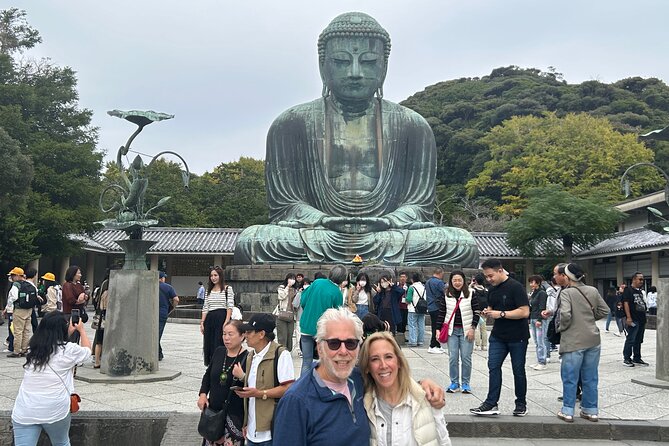
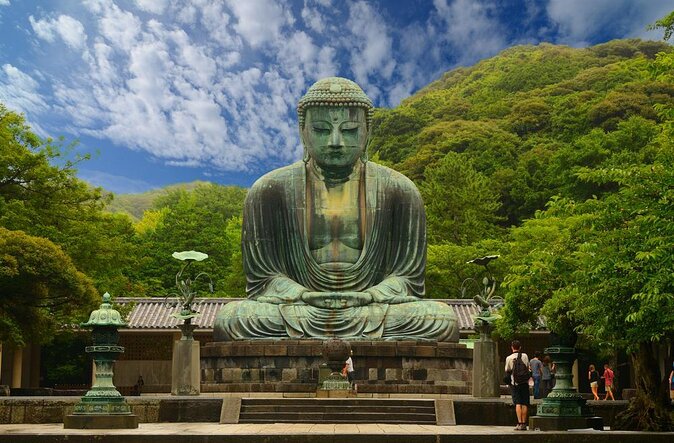
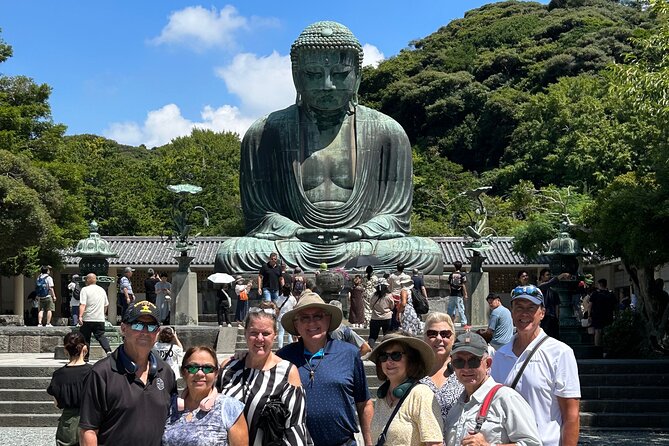
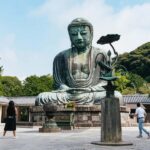
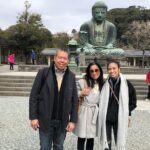
Kotoku-in is home to Kamakura’s Great Buddha, a bronze statue of Amida Buddha measuring 11.4 meters high. It is one of the clearest visual anchors of the day, and the 30-minute stop is built around seeing the statue at close range.
The short visit makes sense if your main goal is the Buddha itself. You can focus quickly, take in the scale, and move on to the next temple. It also means you should not expect a long exploration of the surrounding grounds.
Admission is not included and is listed at ¥300 per person. Compared with the bamboo temple and Hase-dera, this is a small extra charge.
The Great Buddha works well in the middle of a busy sightseeing day because it requires little time to appreciate. You get a powerful sight without giving up an hour that could be used elsewhere. If you want a slow visit with extensive temple study, 30 minutes may feel tight.
Hase-dera and the Kannon statue
Hase-dera brings a different kind of religious art. The temple is associated with an eleven-headed statue of Kannon, the goddess of mercy. The gilded wooden statue is 9.18 meters tall and is described as one of the largest wooden sculptures in Japan.
The planned one-hour stop should give you more breathing room than the Great Buddha visit. Hase-dera is not just a quick photo stop. You have time to consider the statue, the temple setting, and the meaning attached to Kannon.
One useful detail from the day’s feedback is the mention of a temple honoring unborn children and a Healing Buddha. Those details suggest that the guide may add context beyond the headline attractions, though the exact commentary can vary. You can make the most of this by asking about the figures and customs you see instead of simply moving from one building to the next.
Admission is ¥400 per person. Hase-dera is a good match for you if religious sculpture matters as much as famous views. It may be less satisfying if you want every moment devoted to outdoor scenery.
Tsurugaoka Hachimangu, Kamakura’s central shrine
Tsurugaoka Hachimangu is Kamakura’s most important shrine. Its origins reach back to 1063, and Minamoto Yoritomo moved and enlarged it in 1180 after establishing Kamakura as the base of Japan’s first shogunate.
The 45-minute visit gives you a useful historical counterpoint to the Buddhist temples. The shrine connects Kamakura to the military government that shaped the city’s importance, while Hokokuji, Kotoku-in, and Hase-dera show different sides of its religious life.
There is no admission charge listed for Tsurugaoka Hachimangu. That helps keep the day’s added costs under control.
Forty-five minutes is enough for an introduction, but it will not allow a slow look at every feature. I would use the time to stay alert to the approach, main shrine area, and any ceremony or detail the guide points out. Since this is a major public shrine, the pace may feel more open and less enclosed than the temple visits.
A few more Tokyo tours and experiences worth a look

Lunch in Kamakura, with room for local flavor
The schedule allows one hour for lunch in Kamakura, and lunch is not included. The listed estimate is ¥1,500 to ¥2,000 per person.
That hour is valuable. A full day of temple grounds and island walking can become tiring, and a proper break keeps the afternoon from turning into a race. The day’s feedback specifically praises a ramen restaurant, so ramen is one option worth asking the guide about.
Do not treat lunch as an afterthought. With a private tour, you can ask what fits your group’s taste and timing. The exact restaurant is not specified, so the meal is not a guaranteed named stop. Carry enough yen or confirm payment arrangements with your guide, since the tour price does not cover food.
Enoshima Island for the final change of scene
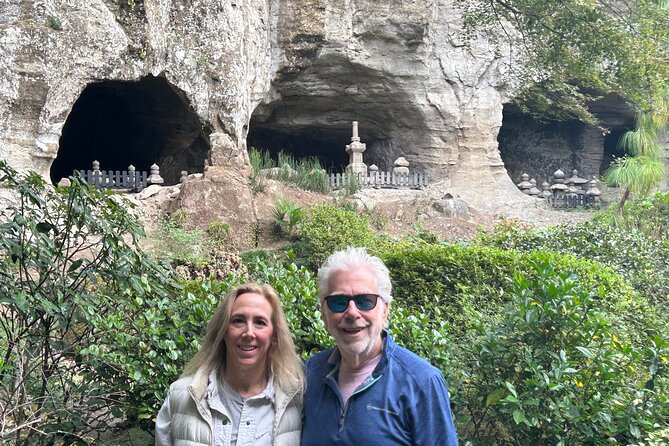
Enoshima sits just off the coast west of Kamakura and is connected to the mainland by a bridge. It is a pleasantly tourist-oriented island with shrines and other attractions, giving the final part of the day a different feel from the inland temple route.
The planned visit lasts about 90 minutes. That is enough to get a taste of the island, but not enough to see every attraction at a relaxed pace. Enoshima can involve walking, and the island’s value here is the shift in scenery and atmosphere rather than an exhaustive tour.
The Enoshima Escar is listed as an optional admission at ¥500 per person. Since the tour does not include admissions, ask whether the Escar fits your route and budget before choosing it. The listed extras total ¥2,200 per person when combining the bamboo temple, Hase-dera, Kotoku-in, and Escar.
Enoshima is a smart final stop if you want your day to end with something beyond temples. If your priority is a deep look at Kamakura’s religious sites, you may prefer to spend more time at the temples and less time on the island. The private format gives your group some room to discuss that preference.
What the private vehicle changes
The strongest practical feature is the private vehicle. Kamakura’s sights are dispersed, and public transport can be crowded. You avoid the need to navigate each connection while carrying bags, managing a large group, or watching the clock at every station.
The vehicle also makes the tour workable for a group of up to 12. A full group can divide the $715.34 price across many people, making the transport and guide service much better value. For two people, the same total becomes a major expense.
The tour is not simply a chauffeur service. Guide service and transportation expenses are included, so you can learn as you move between sites. The exact guide’s name is not provided, and the experience depends on the individual assigned to your group. Still, the private setup lets you ask for explanations and adjust the emphasis of the day.
You should also keep your expectations realistic. Private transport does not remove crowds at the temples or on Enoshima. It only makes getting there easier and gives your group more control over the schedule.
Price, group size, and extra costs
The price is $715.34 per group, with two to 12 people allowed. That pricing model strongly favors families, friends, or another larger party sharing the vehicle.
For a group of 12, the base price works out to about $60 per person before admissions and lunch. For two people, it is about $358 per person before those extras. That is the central value question.
Included costs cover transportation and guide service. Not included are the four listed admissions and lunch. Budget around ¥2,200 per person for the admissions if you visit the bamboo temple, Hase-dera, Kotoku-in, and use the Enoshima Escar, plus ¥1,500 to ¥2,000 for lunch.
The tour is booked, on average, 115 days in advance. I would not wait until the last minute if your Tokyo schedule is fixed, especially because confirmation arrives within 48 hours and remains subject to availability.
Free cancellation is available up to 24 hours before the start time. Changes made inside that window are not accepted, and the experience requires good weather. If poor weather causes cancellation, you are offered another date or a full refund.
Who will get the most from this tour
I would recommend this day for you if you want Kamakura’s biggest sights without planning a complicated route. It suits families, small groups, and anyone who values a private vehicle more than the lowest possible day-trip price.
It also works well for first-time visitors who want a broad introduction. You see bamboo, Buddhist sculpture, a major shrine, lunch in Kamakura, and Enoshima in one outing.
You may want a different plan if your ideal day means spending several hours at one temple, browsing slowly, or using local trains as part of the experience. Nine hours covers a lot, but the schedule is necessarily active.
The tour is also a good fit if members of your group have different interests. One person can focus on architecture, another on Buddhist images, and another on Enoshima. A private guide can respond to those questions more easily than a fixed large-group tour.
Should you book this Kamakura tour?
Book it if you are traveling with several people and want an efficient day from Tokyo or Yokohama. The combination of private transport, guide service, Hokokuji, the Great Buddha, Hase-dera, Tsurugaoka Hachimangu, lunch time, and Enoshima covers the classic Kamakura experience in one practical package.
I would hesitate if you are a couple watching every yen or if you prefer a slow, self-guided day. For a larger group, the price becomes much easier to justify. For a small group, compare it with public transport before booking, then add the ¥2,200 admissions and lunch to your real budget.
FAQ
How long does the Kamakura tour last?
The tour lasts approximately nine hours.
Where does the tour operate from?
Pickup is offered from Tokyo and Yokohama.
How many people can join the private tour?
The tour is for groups of two to 12 people, and only your group participates.
Is transportation included?
Yes. Transportation expenses and guide service expenses are included.
Are temple and island admissions included?
No. Admissions are extra. The listed costs are ¥1,000 for the bamboo temple, ¥400 for Hase-dera, ¥300 for Kotoku-in, and ¥500 for the Enoshima Escar.
How much should I budget for admissions?
The listed admissions total ¥2,200 per person if you pay for all four items.
Is lunch included?
No. Lunch is extra, with an estimated cost of ¥1,500 to ¥2,000 per person.
Can I cancel for a full refund?
Yes, if you cancel at least 24 hours before the experience start time. Cancellations made less than 24 hours in advance are not refunded.
What happens if bad weather cancels the tour?
If poor weather causes cancellation, you are offered a different date or a full refund.
More Full-Day in Tokyo
More Kamakura & Enoshima Day Trips in Tokyo


More tours in Tokyo we've reviewed
Kamakura & Enoshima Day Trips, compared.
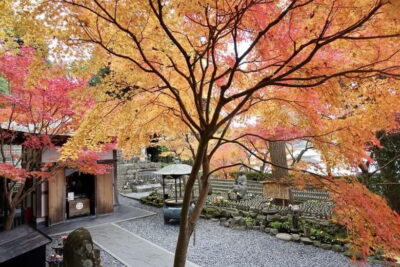 ★ 4.5Tokyo: Kamakura & Enoshima Day Trip including Temple TicketsFrom $589 hours - 570 minutes
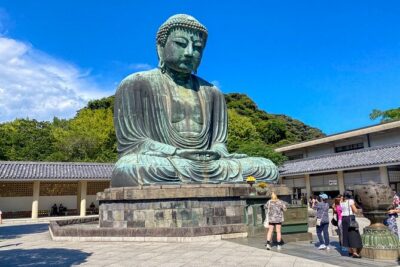 ★ 5.0Mount Fuji, Kamakura, Big Buddha, & Lake Ashi Day TripFrom $109
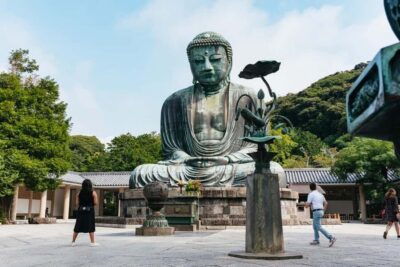 ★ 4.7Tokyo: Mt Fuji, Kamakura, Lake Ashi & Big Buddha Guided TourFrom $50
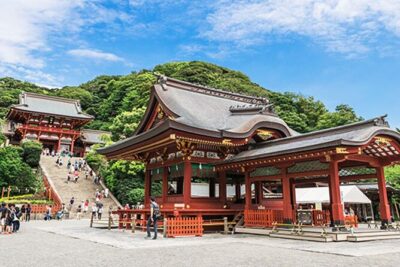 ★ 4.5From Tokyo: Kamakura & Enoshima 1-Day Bus TourFrom $66
 ★ 4.9Tokyo:Sea of Mount Fuji, Hakone Ropeway, Ōwakudani, EnoshimaFrom $5010 hours
 ★ 5.0Kamakura 8 hr Private Walking Tour with Licensed Guide from TokyoFrom $201