Reviewed · SAMURAI & NINJA EXPERIENCES
Samurai Experience Mugai Ryu Iaido in Tokyo
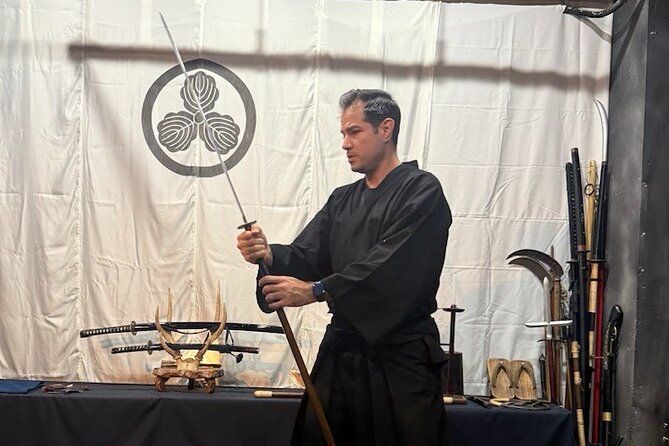
The most unusual part of this Tokyo activity is its direct link to Mugai Ryu Iaido, a 340-year-old sword tradition. You change into samurai hakama, learn how to draw and sheath a mock katana, then watch Master Takeda Hougyoku and his instructors demonstrate formal Iaido patterns.
In This Article
- Key points before you book
- A 60-minute introduction to Mugai Ryu Iaido
- Changing into hakama sets the tone
- Learning what Iaido actually involves
- Trying tameshigiri with a mock sword
- Watching a formal Mugai Ryu kata
- What the small group changes
- Is $151.92 good value for one hour?
- Getting to the Kuramae meeting point
- Who will enjoy this experience most?
- Practical booking advice and cancellation
- Should you book the Mugai Ryu Iaido experience?
- FAQ
- Where does the Samurai Experience Mugai Ryu Iaido activity begin?
- Where does the activity end?
- How long does the experience last?
- Are real katana swords used?
- Is the experience taught in English?
- What clothing is included?
- Is transportation provided from hotels or attractions?
I like the small maximum group of eight, which gives you real time with the teachers, and I like the chance to meet Master Takeda, head of the International Iaido Organization Hougyoku-kai. The main drawback is the short one-hour format: you get a sharp introduction, not a full martial arts course, and the price is high for a brief activity.
Key points before you book

- Master Takeda Hougyoku teaches the tradition: He is described as the heir to ancient Mugai Ryu scrolls and the head of the International Iaido Organization Hougyoku-kai.
- You wear rented samurai hakama: Changing clothes helps mark this as more than a simple demonstration.
- Only imitation katanas are used: You learn the basic handling, drawing, sheathing, grip, and movement without handling a live sword.
- The group is capped at eight people: That matters in a lesson where small corrections and clear instructions make a difference.
- The session ends with formal Iaido kata: You see predetermined attack patterns performed by an experienced practitioner.
- The meeting point is in Kuramae: The activity begins and ends at 4-chome-20-10 Kuramae, Taito City, with no hotel or attraction pickup.
A 60-minute introduction to Mugai Ryu Iaido

This is a compact lesson built around the rhythm of a traditional martial arts practice. It is not a long museum talk with a quick photo at the end. You put on the clothing, handle a sword, follow basic instruction, and see a formal demonstration.
The session lasts about one hour. That makes it easy to fit into a busy Tokyo day, especially if you plan it between visits around Taito City or other parts of eastern Tokyo. It also means the pace is likely to be brisk. You will get an introduction to several parts of Iaido, but you should not expect to master them in one sitting.
The instruction is offered in English, with Master Takeda and an instructor explaining the activity. The small group limit is one of the strongest practical features. With no more than eight people, you should have a better chance of hearing the directions, seeing the movements, and receiving attention than you would in a large cultural performance.
A few more Tokyo tours and experiences worth a look

Changing into hakama sets the tone
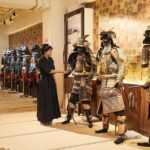
The activity begins with a change into rented hakama, the pleated clothing associated with Japanese martial arts. This is more than a costume detail. It gives the session a clear sense of occasion and helps you understand how formal Iaido practice looks and feels.
The rental is included in the price, so you do not need to arrange special clothing. You should still arrive ready to change and follow the instructors’ directions carefully. The supplied details do not specify changing-room arrangements, so it is sensible to wear comfortable clothes underneath and avoid bringing anything that makes changing awkward.
The clothing also makes the photo opportunity more worthwhile. Photos are permitted during the experience, and the hakama gives the pictures a clear connection to the activity rather than making them look like ordinary Tokyo snapshots.
Learning what Iaido actually involves

Before you handle the sword, Master Takeda and the instructor explain what Iaido is. This matters because Iaido is not presented simply as sword fighting. The lesson focuses on controlled movement, the sequence of drawing and sheathing, proper holding, and set patterns.
You receive an overview of the session and basic safety guidance before trying the movements. The swords used here are imitations of katana, which removes the danger of handling a live blade. That makes the activity suitable for most people who can participate in a normal one-hour lesson, although the supplied information does not give specific accessibility details.
I like this early explanation because it gives context to the later demonstration. Without it, a formal kata could look like a series of quick sword motions. After you learn the basic sequence, you can better notice the timing, posture, and control involved.
The lesson covers several fundamentals:
- How to hold the sword
- How to draw it
- How to sheath it
- Basic movement patterns
- Safe handling of the imitation katana
- The general flow of Iaido practice
These are introductory skills, not a promise that you will perform a complete traditional form perfectly. Expect correction and repetition rather than a long historical lecture.
Trying tameshigiri with a mock sword
The program also includes an opportunity to try tameshigiri. The term refers to the practice of cutting something with a sword, and the session describes this as part of learning how a samurai practiced using the blade.
There is an important point to keep clear: the activity uses imitation katanas for safety. The information provided does not explain exactly what material, if any, you cut during this part, so you should not book it expecting a live-blade cutting demonstration. Treat tameshigiri here as a guided part of the experience, with the instructors explaining how it fits into sword practice.
This is also a good place to listen closely rather than rush for a photo. Iaido depends on sequence and control. The useful takeaway is not simply getting your hands on a sword, but understanding how each movement has a prescribed place.
Watching a formal Mugai Ryu kata
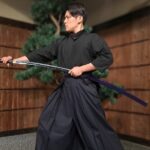
The final demonstration is likely to be the most polished section of the hour. Mugai Ryu Iai is described as a practical martial art, and you watch Iaido kata, which are predetermined patterns of attack.
A kata can look simple from a distance because every movement is controlled and deliberate. The demonstration gives you a chance to see the complete form after you have learned the basic handling yourself. You may notice the contrast between your first careful attempts and the master’s precise, practiced movements.
Master Takeda Hougyoku is presented as the head of the International Iaido Organization Hougyoku-kai and the person entrusted with continuing the Mugai Ryu tradition through ancient scrolls. His presence gives the experience a direct connection to the school being taught, rather than a generic samurai-themed performance.
The supplied information also describes the tradition as carrying a 340-year-old spirit of sword play. That does not mean you will receive a full 340-year history lesson in 60 minutes. It does mean the demonstration is tied to a named lineage with a long tradition, which adds substance to the session.






What the small group changes
A group limit of eight is especially useful for this kind of class. Sword handling requires you to watch carefully and keep enough space around your movements. A smaller group should make the room easier to manage and the instructions easier to follow.
It also gives you a better chance of direct attention from Master Takeda and the instructor. The experience specifically emphasizes that you get plenty of the master’s attention, which is a meaningful benefit when the activity includes clothing, safety instructions, and physical movements.
Small groups can also make the atmosphere feel more personal. You are taking part in a lesson rather than watching from the back of a crowded room. If you are shy about trying an unfamiliar martial art, the English-speaking instruction and limited group size should make the first steps less intimidating.
Still, the experience will not feel private. Eight people is small, but you may share the lesson with other participants at different comfort levels. If you want a one-on-one sword lesson, this is not described as a private booking.
Is $151.92 good value for one hour?

At $151.92 per person, this is an expensive short activity. You are paying for a specialist-led cultural lesson, rented hakama, a Japanese sword rental, English instruction, and access to a master associated with the Mugai Ryu tradition.
The price makes more sense if you value personal instruction and a rare cultural encounter. You are not just watching a staged samurai show. You are changing clothes, learning the basic handling of an imitation katana, trying the listed practice, and seeing formal kata at close range.
The value is weaker if you judge activities mainly by duration. One hour is brief, and the experience does not include transportation, hotel pickup, or transfers from a Tokyo attraction. You need to make your own way to the meeting point and return from there.
I would compare this with the cost of other short, specialist experiences in Tokyo. If you have already visited the major shrines, museums, and observation decks, this offers a different angle on Japanese culture. For a first-time visit with limited time, it can still work, but only if Iaido interests you more than adding another major sightseeing stop.
The fact that it is often booked about nine days ahead is useful planning information. If your schedule is fixed, reserve before you arrive rather than assuming a suitable time will remain open. Confirmation is sent within 48 hours, subject to availability.
Getting to the Kuramae meeting point
The activity begins at 4-chome-20-10 Kuramae, Taito City, Tokyo 111-0051, and ends at the same meeting point. It is near public transportation, but no pickup is provided from hotels or tourist attractions.
You should allow enough time to find the exact address. Tokyo addresses can be confusing because they are not always arranged like a simple street grid, and the experience has a fixed start time. A mobile ticket is provided, so keep the booking information easy to access on your phone.
Kuramae is a practical location for fitting this activity into a day in eastern Tokyo. The important point is to plan the route yourself and treat the meeting point as part of the booking, not as a place where staff will collect you from your hotel.
Who will enjoy this experience most?
I would recommend this for you if you want direct contact with a Japanese martial art and prefer taking part over watching a cultural show. It suits first-time Tokyo visitors who want something beyond the usual temples and shopping streets, as well as repeat visitors looking for a new side of the city.
It is also a good match if you enjoy tradition, disciplined movement, and demonstrations where technique matters more than spectacle. The chance to meet Master Takeda and see Mugai Ryu kata gives the activity more substance than a generic samurai photo session.
Families and mixed-age groups may also find the mock swords reassuring, since only imitation katanas are used. The information says most people can participate, but it does not provide detailed accessibility guidance, so anyone with specific mobility needs should confirm arrangements before booking.
I would think twice if you want a long class, a full museum-style explanation, or extensive time practicing independently. The hour is designed as an introduction. You will get a taste of the tradition, not a complete course in Iaido.
Practical booking advice and cancellation
Free cancellation is available if you cancel at least 24 hours before the start time. Cancellations or changes made less than 24 hours ahead are not accepted for a refund, and the cutoff follows local Tokyo time.
Because the activity includes changing clothes and handling a sword, arrive prepared to listen and follow instructions. The most useful mindset is respectful curiosity. You do not need prior martial arts experience, and the session is designed to teach the basic flow from the beginning.
Bring your phone for the mobile ticket and photos, but keep it out of the way during instruction. The activity includes plenty of photo opportunities, yet the lesson itself deserves your attention. A good picture is a bonus. The formal kata and the chance to handle the sword safely are the main reasons to book.
Should you book the Mugai Ryu Iaido experience?
Book it if you want a small, personal introduction to an old Japanese sword tradition and you are comfortable paying a premium for one focused hour. The strongest reasons are the small group, English-speaking instruction, rented hakama, mock-katana practice, and Master Takeda Hougyoku’s role in teaching the Mugai Ryu style.
Skip it if you need a longer activity, want hotel pickup, or are mainly looking for a low-cost photo opportunity. The price is substantial for 60 minutes, and the session cannot cover every part of Iaido.
For the right person, this is a memorable way to add a more specialized cultural experience to a Tokyo itinerary. You leave with a clearer sense of how Iaido is structured, a chance to dress in hakama and handle a safe training sword, and a close look at formal kata from a 340-year-old tradition.
FAQ
Where does the Samurai Experience Mugai Ryu Iaido activity begin?
It begins at 4-chome-20-10 Kuramae, Taito City, Tokyo 111-0051, Japan.
Where does the activity end?
The activity ends back at the meeting point in Kuramae.
How long does the experience last?
The lesson lasts approximately 60 minutes.
Are real katana swords used?
No. The activity uses imitation katanas for safety.
Is the experience taught in English?
Yes. An English-speaking instructor is included, and Master Takeda and the instructor explain what Iaido is and how the session works.
What clothing is included?
Rental hakama, or samurai clothing, is included.
Is transportation provided from hotels or attractions?
No. Pickup and drop-off at hotels and tourist attractions are not included. You must make your own way to the Kuramae meeting point.
More Samurai & Ninja Experiences in Tokyo


More tours in Tokyo we've reviewed












Samurai & Ninja Experiences, compared.
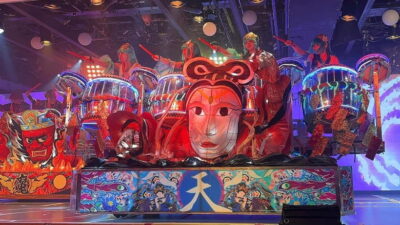 ★ 4.5Tokyo: Samurai Restaurant Show Ticket with 2 DrinksFrom $551h 30m
 ★ 4.6Tokyo: Samurai Ninja Museum Guided tour and ExperienceFrom $27
 ★ 5.0Skip the lines Basic Ticket at SAMURAI NINJA MUSEUM TOKYOFrom $28
 ★ 5.0Tokyo: Authentic Samurai Training at a DojoFrom $211
 ★ 5.0Best Samurai Experience in TokyoFrom $65
 ★ 4.6Tokyo: Legend Samurai Entertainment Night in Kanda ShrineFrom $44