Reviewed · IMPERIAL PALACE & SHOGUN TOURS
Imperial Palace run with fun trivia by an Imperial Palace geek
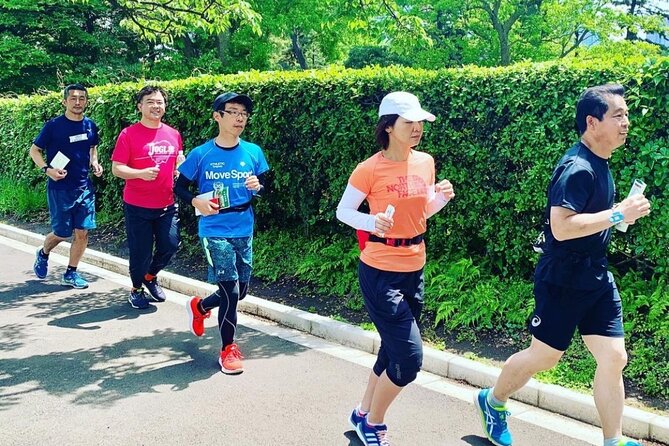
The most unusual way to see Tokyo’s Imperial Palace may be on foot at a gentle running pace. This 2.5-hour morning outing starts at JOGLIS, follows the famous palace running route, and pauses often for stories, photos, and odd little facts about Edo Castle, the Emperor, Tokyo Station, and the Tokyo Marathon.
In This Article
- Key points to know before you book
- Why this Imperial Palace run is different
- Start at JOGLIS, then get ready to move
- Hanzo-mon Gate and Miyake-zaka
- Sakurada-mon, the palace clock, and a power spot
- Nijubashi and the Tokyo Marathon finish area
- Entering the East Gardens through Otemon Gate
- Fujimi-yagura and the remains of Edo Castle’s main tower
- Kita Hanebashi-mon and the return through cherry-tree country
- Pace, language, and group size
- Is $90 a fair price?
- Who should book this morning outing?
- Should you book the Imperial Palace run?
- FAQ
- Where does the Imperial Palace run begin?
- What time does the tour start?
- How long does the experience last?
- Does the tour return to JOGLIS?
- Do I have to run the entire route?
- How many people can join the tour?
- Is the tour available in English?
- Are lockers and showers included?
- Can I rent running equipment?
- What happens if bad weather cancels the tour?
I like the small maximum of eight people, which gives you room to ask questions. I also like the relaxed pace: you are not running nonstop, and you can walk when needed. The main consideration is the $90 price, especially since lockers, showers, clothing, shoes, and towels cost extra.
Key points to know before you book
- Run or walk at your own pace: The tour suits casual runners, not just serious athletes.
- Guide Yuko brings the palace to life: Her enthusiasm for Imperial Palace running and palace trivia is a major part of the experience.
- Start early at 8:30 a.m.: Morning timing helps you avoid some of the day’s crowds and heat.
- See more than the standard palace views: The route includes Sakurada-mon, Nijubashi, the East Gardens, Fujimi-yagura, and the old castle tower base.
- Small-group format: With no more than eight people, the outing feels more personal than a large sightseeing walk.
- Budget extra for JOGLIS facilities: Lockers and showers cost ¥1,500, and running gear is available for an additional fee.
Why this Imperial Palace run is different
Most Imperial Palace sightseeing follows a slow, stop-and-go route. This experience uses the palace’s famous running circuit as its backbone, so you see the area while doing something active. That changes the mood. Instead of moving from one major sight to the next by train or taxi, you trace the moat, gates, slopes, parks, and broad avenues under your own power.
You do not need to be a marathon runner. The route includes regular stops, walking sections, and short explanations. The supplied description specifically presents it for casual runners and exercise enthusiasts, and you can walk if running is not your thing.
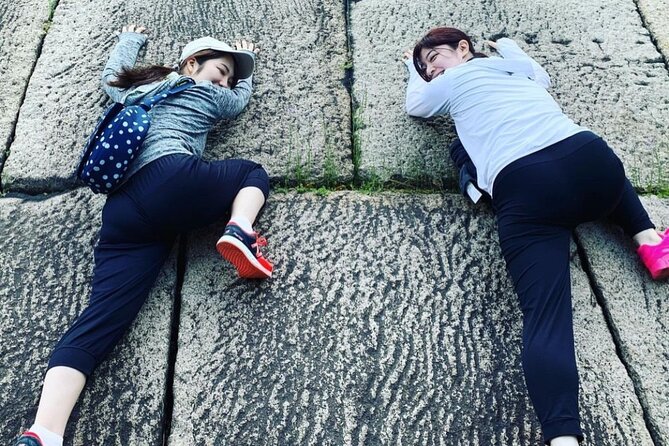
That flexibility matters. A nonstop run would leave little time for history or pictures. Here, the exercise is mixed with sightseeing. You may jog for a while, stop beside a gate, hear a story, then continue at an easier pace.
Guide Yuko is part of the appeal. Her response to a participant describes a strong affection for the palace and suggests that she has plenty of palace details still to share. You can ask questions along the way, rather than simply following a guide holding up a flag.
The tour is conducted in Japanese and simple English. That makes it workable for Japanese and English speakers, though you should not expect a long, technical lecture in polished English. The tone is likely best for people who enjoy learning through short stories and conversation.
A few more Tokyo tours and experiences worth a look

Start at JOGLIS, then get ready to move
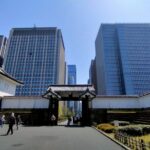
The meeting point is JOGLIS, at FM Center B1F in Kojimachi, Chiyoda City. The start time is 8:30 a.m., and the route returns to the same place at the end.
The opening briefing covers the Imperial Palace, the route, and the rules connected with palace running. This is useful even if you have run around the palace before, because the guide sets the pace and explains how the sightseeing stops fit into the outing.
JOGLIS can also make the morning easier if you need a place to change. Lockers and showers are available for ¥1,500 per person. Running clothes, shoes, and towels can also be rented for a fee. None of those extras are included in the $90 tour price, so add them to your budget if you are arriving without exercise gear.
The tour requires a moderate level of physical fitness. That wording is worth taking seriously. You do not need to be fast, but you should be comfortable being on your feet and moving for much of the morning. The frequent pauses help, yet this is still an active outing.
Hanzo-mon Gate and Miyake-zaka
The running portion begins at Hanzo-mon, one of the Imperial Palace entrances. From here, you can see the National Theatre and the Diet Building while descending Miyake-zaka.
The slope is described as one of Tokyo’s most beautiful. That gives the first section a good mix of city scenery and palace history. You are not only looking at walls and trees. The route connects important civic buildings with the old castle grounds.
The descent may also be one of the easier running sections. Later, after leaving the East Gardens, you face an uphill stretch near Kita Hanebashi-mon. The guide lets you run that part at your own pace, which is welcome if the slope feels demanding.
Sakurada-mon, the palace clock, and a power spot
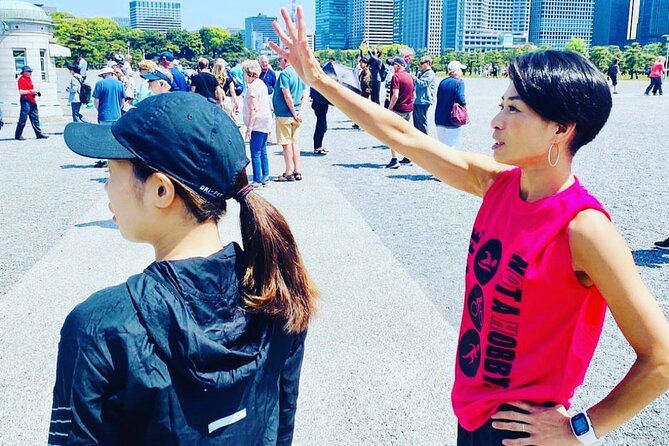
Sakurada-mon is the largest gate on the route. Passing under it gives you one of the clearest reminders that this was once the center of Edo Castle, not simply a pleasant park around the Imperial Palace.
The guide also points out a clock in Sakurada-mon Square and shares its secret. This is exactly the sort of small detail that gives the tour its personality. You may remember an unusual clock story longer than a list of dates.
The route also touches on Mt. Fuji and the idea of the Imperial Palace as a power spot. That part brings in Japanese beliefs and cultural attitudes toward place. You can take it as folklore, spiritual tradition, or simply another way people connect meaning to the palace grounds.
The route includes a separate stop at Sakurada-mon Square, where many runners gather. You get time to pause before continuing, rather than trying to absorb every detail while moving.
Nijubashi and the Tokyo Marathon finish area
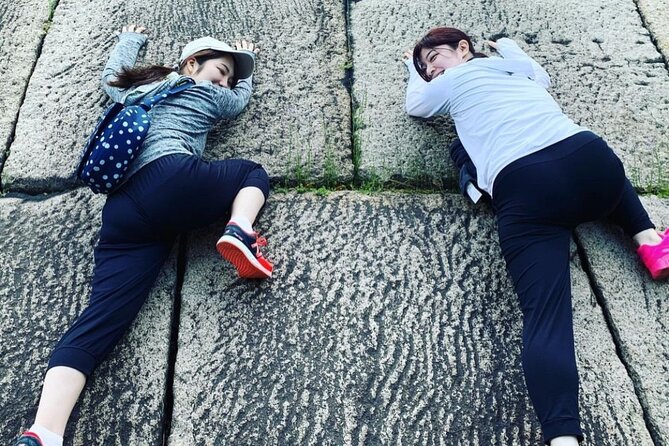
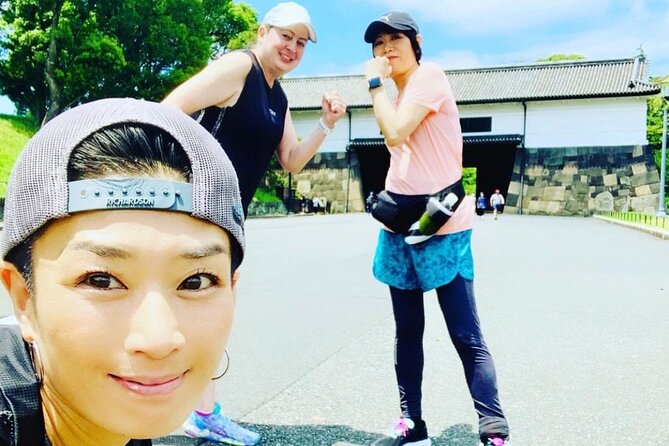
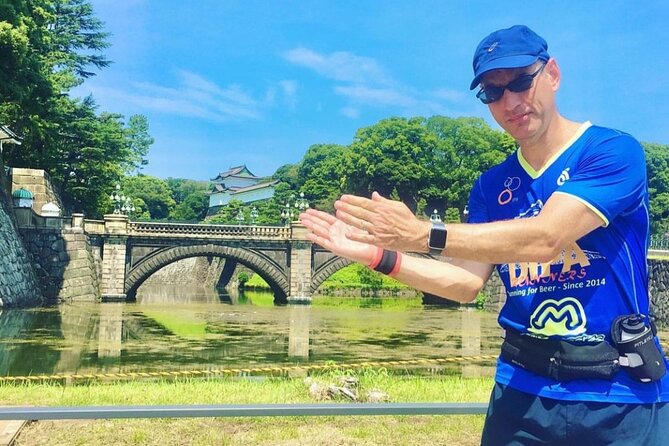
At Nijubashi, also called the Two-tiered Bridge, the tour pauses for a commemorative photo. It is one of the palace’s most familiar views, and the photo stop gives you a clear reason to slow down.
Next comes Gyoko-dori Avenue, associated with the finish area of the Tokyo Marathon. Here the conversation turns to Tokyo Station, the Emperor, and the marathon itself. You also get to pose for photos in the style of a marathon finish line.
This part should appeal to anyone who enjoys the connection between sightseeing and sport. Tokyo’s major civic spaces are not treated as static postcard scenes. They are linked to public ceremonies, famous races, and the daily life of the capital.
The drawback is that the route does not promise a full tour of the Imperial Palace interior. The focus is on the outer running route and the East Gardens, with views and explanations from public areas.

Entering the East Gardens through Otemon Gate

At Otemon Gate, you enter the East Gardens of the Imperial Palace. Before going in, there is a baggage inspection, so keep that in mind if you are carrying a large bag or extra equipment.
Otemon was the main gate of Edo Castle. Inside, you are greeted by a shachihoko, the fish-shaped roof ornament associated with Japanese castles. That detail helps connect the present gardens with the castle that once occupied the site.
The East Gardens add variety to the morning. The outer circuit gives you moats, roads, gates, and broad city views. Inside the gardens, the focus shifts to castle remains, turrets, and quieter paths.
Because access can involve inspection and garden entry rules, you should follow the guide’s directions and keep your belongings manageable. The tour includes entry to this area, but it does not turn into an all-day garden visit.
Fujimi-yagura and the remains of Edo Castle’s main tower
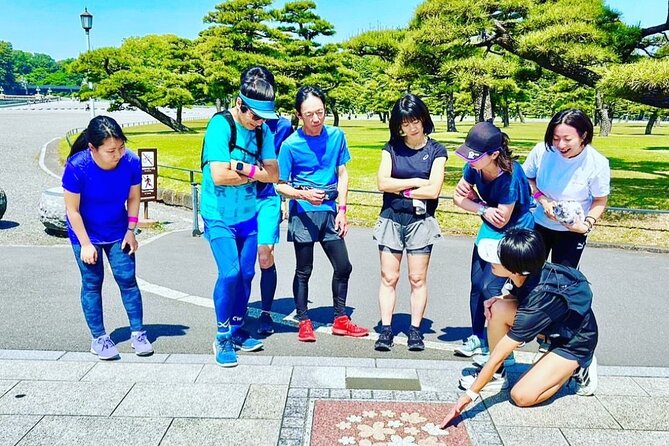
Fujimi-yagura is one of the route’s most attractive structures. The turret served as a substitute for the Edo Castle keep, which means the original main tower is gone, but the defensive architecture still gives you a sense of the old castle complex.
The guide calls it a little castle. That nickname fits a compact structure that carries more visual weight than its size suggests. You can stop, look closely, and hear how the turret relates to the missing keep.
At Tenshudai, you see the stone walls and base of the former main tower. The keep was destroyed by fire and is no longer standing. A reconstructed model helps you picture what once rose above the stone platform.
This is one of the strongest history stops because the absence is the point. You are not looking at a perfect reconstruction. You are seeing surviving masonry, a rebuilt model, and the remains of a castle that changed with Tokyo.
Kita Hanebashi-mon and the return through cherry-tree country
The return route leaves the garden through Kita Hanebashi-mon, once a drawbridge gate of Edo Castle. From there, the uphill section begins.
You can run this part at your own pace. That is a practical feature, not just a polite promise. After a morning of stops and movement, some people will want to jog steadily while others will prefer to walk the slope.
Daikancho-dori follows. The street once had daimyo residences during the Edo period and is also known as a cherry blossom viewing area. The route then reaches Chidorigafuchi Park, another well-known cherry blossom spot.
The guide shares details about cherry trees and the place they hold in Japanese culture. Spring is the obvious season for this subject, but the explanation remains useful outside blossom time. The route shows how modern Tokyo preserves areas tied to Edo-era power, seasonal customs, and public recreation.
Pace, language, and group size
The experience is best understood as a guided run with sightseeing breaks, not a race and not a conventional walking tour. You stop at gates, bridges, clocks, castle remains, and photo points. The supplied feedback describes the outing as a mix of running and walking, with changes in pace that kept it enjoyable.
That pattern makes the tour suitable for a first Imperial Palace run. It also works if you have already run the circuit and want to learn what you passed without noticing.
A group of up to eight is small enough for questions. You can ask about the palace, running, the Tokyo Marathon, or the details at each stop. Since the language is Japanese and simple English, short questions and clear explanations are likely the best fit.
The tour runs for about two and a half hours. That includes the briefing, exercise, sightseeing pauses, photos, the East Gardens, and the return to JOGLIS. You are paying for an organized experience, a guide, and access to an unusual format, not simply for a marked running path.
Is $90 a fair price?
At $90, this is not the cheapest way to see the Imperial Palace. You can walk around many public areas independently without paying a guide fee, and runners can use the palace circuit on their own.
The value comes from the combination. You get a planned route, a small group, guide Yuko’s palace-focused stories, several photo stops, and a chance to see the East Gardens and castle remains without building the morning yourself.
It is a better value for someone who already wants an active experience and would otherwise pay for a running facility, local guidance, or a separate palace visit. It is less compelling if you only want a basic sightseeing walk or if you do not enjoy exercise.
Remember that the guide fee is included, but the JOGLIS locker costs ¥1,500. Clothing, shoes, and towels are extra if you rent them. The mobile ticket is convenient, and confirmation is provided at booking.
Who should book this morning outing?
I would choose this tour if you like combining exercise with local history. It is especially well suited to casual runners, people curious about Tokyo’s marathon culture, and anyone who wants a different way to see the Imperial Palace.
It also suits repeat visitors. The stories about the clock, Mt. Fuji, cherry trees, Tokyo Station, and the castle gates add detail to places you might otherwise pass quickly.
I would think twice if you need a fully strenuous workout, a silent fast run, or a detailed English-language lecture. The frequent stops are the point, so serious runners may find the pace too interrupted. Anyone with limited physical fitness should also consider the two-and-a-half-hour duration and uphill section.
The tour requires good weather. If poor weather cancels it, you can choose another date or receive a full refund. You can cancel for a full refund up to 24 hours before the 8:30 a.m. start time. Cancellations or changes within 24 hours are not refunded or accepted.
Should you book the Imperial Palace run?
Book it if the idea of learning palace trivia while jogging or walking sounds more appealing than a standard guided tour. The small group, flexible pace, and repeated stops create a friendly morning that works for first-time palace runners and people who already know the route.
Skip it if $90 feels high for a public-area visit, or if you want a hard training run with no interruptions. For the right visitor, though, this is a memorable way to connect Tokyo’s exercise culture with the gates, gardens, stone walls, and stories of Edo Castle.
FAQ
Where does the Imperial Palace run begin?
The tour begins at JOGLIS, located at FM Center B1F, 1-7 Kojimachi, Chiyoda City, Tokyo 102-0083.
What time does the tour start?
The start time is 8:30 a.m.
How long does the experience last?
The tour lasts approximately 2 hours and 30 minutes.
Does the tour return to JOGLIS?
Yes. The activity ends back at the JOGLIS meeting point.
Do I have to run the entire route?
No. You can walk if running is not your preference, and the route includes regular stops and walking sections.
How many people can join the tour?
The tour has a maximum of eight travelers.
Is the tour available in English?
Yes. It is conducted in Japanese and simple English.
Are lockers and showers included?
No. JOGLIS lockers and showers cost ¥1,500 per person.
Can I rent running equipment?
Yes. Running clothes, shoes, and towels are available to rent for an additional fee.
What happens if bad weather cancels the tour?
If poor weather causes cancellation, you will be offered a different date or a full refund. You can also cancel at least 24 hours before the start time for a full refund.
More Imperial Palace & Shogun Tours in Tokyo
More tours in Tokyo we've reviewed



Imperial Palace & Shogun Tours, compared.
 ★ 4.9Tokyo: Imperial Palace Japanese History Walking TourFrom $32
 ★ 4.9Tokyo: Imperial Palace and Shogun Walking TourFrom $162 hours
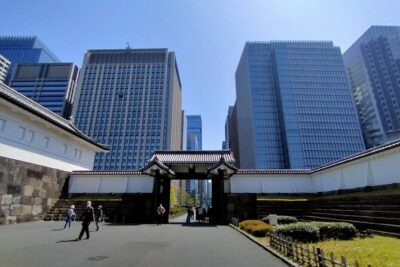 ★ 5.0Imperial Palace East Garden and Edo Castle Walking Tour in TokyoFrom $25
 ★ 4.8Tokyo: Imperial Palace East Gardens Walking TourFrom $192h 30m
 ★ 4.5Tokyo: Imperial Palace, Sensō-ji Temple, & Tokyo Tower TourFrom $404 hours
 ★ 5.0Tokyo Castle, Imperial Palace, Shogun & Garden Walking TourFrom $31