Reviewed · WORKSHOPS
Handmade Japanese Glass Art Sandblasting Workshop in Tokyo
The best part of this Tokyo activity is that you do not simply buy a souvenir. You make one. In about 90 minutes, you decorate a glass with Japanese images such as Mount Fuji, kimono patterns, geisha, and samurai, then use a sandblasting machine to turn the drawing into finished glass art.
In This Article
- Key points for your Tokyo glass workshop
- Why this small Tokyo class feels personal
- Arriving in Asakusabashi
- Choosing a Japanese motif for your glass
- Preparing the glass and learning the technique
- Bringing the design to life with sandblasting
- What the $53.43 price includes
- Who will enjoy this experience most
- Practical planning for a smooth visit
- How this compares with ordinary Tokyo souvenirs
- Should you book the Asakusabashi glass workshop?
- FAQ
- How long does the Japanese glass sandblasting workshop last?
- Where does the workshop begin and end?
- How many people can join the class?
- What designs can I use for the glass?
- Are materials and instruction included in the price?
- Can I cancel the booking for a refund?
I like the tiny group size, limited to four people, and the patient, step-by-step help from workshop owner Aki-san. I also like the relaxed pace. This is a useful break from Tokyo sightseeing, especially if you want something hands-on rather than another view from a tower or another shopping street.
The main thing to consider is the short session. Ninety minutes gives you enough time to make a personal piece, but not enough for a large or highly complex design. You should also plan your route carefully because the class begins and ends in Asakusabashi, not at your hotel.
Key points for your Tokyo glass workshop
- A four-person maximum means you can ask questions and get direct help from Aki-san.
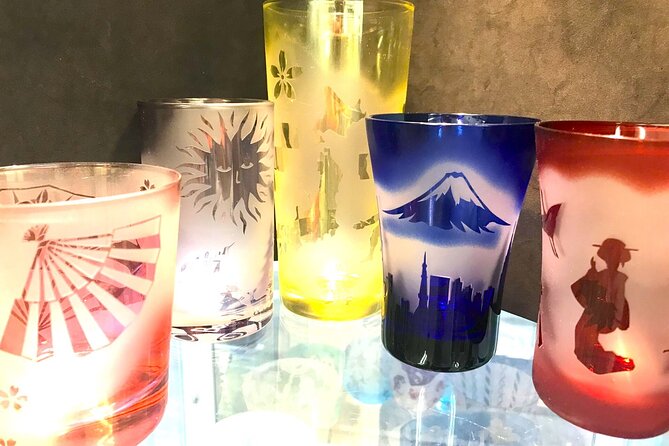
- You choose the design, with Japanese themes including Mount Fuji, geisha, kimono patterns, and samurai.
- The sandblasting machine creates the final effect, turning your prepared design into a lasting pattern on the glass.
- All materials, tools, lesson fees, and consumption tax are included in the $53.43 price.
- The finished drinking glass travels home with you, giving you a useful souvenir rather than a mass-produced trinket.
- The class lasts about 90 minutes and starts and ends at 1-chōme-26-12 Asakusabashi.
Why this small Tokyo class feels personal
Tokyo offers no shortage of things to buy, but shopping rarely gives you a story to bring home. This workshop lets you make the story yourself. You leave with a personalized drinking glass and a clear memory of how it was made.
The class has a maximum of four participants. That matters here. Sandblasting glass involves several steps, and you may need help with your design, tools, or technique. A crowded room would make this less pleasant. With only a few people, you have a better chance to receive direct guidance instead of waiting for an instructor to reach you.
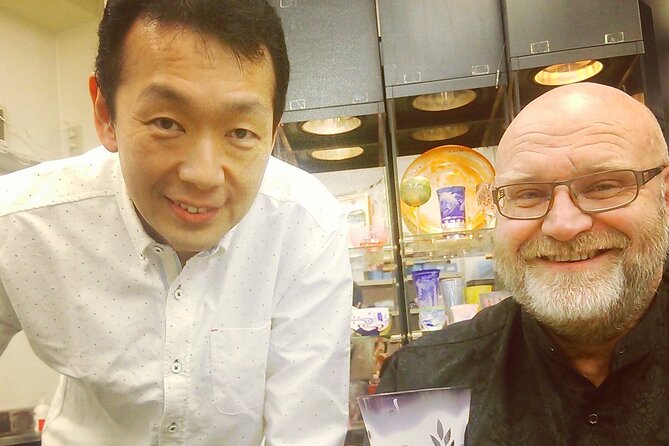
Aki-san, the workshop owner, teaches the process. The available information does not list a formal art background or a set of special credentials, but the class is designed around his own instruction and includes guided practice. One useful detail from the experience is the personal welcome: an easel with a participant’s name was placed outside the workshop. Arriving early led to an earlier start when the space was ready.
That small touch gives you a clue about the mood. This is not a large production with a line of people moving through stations. It is a compact studio experience where the owner can pay attention to the people in front of him.
A few more Tokyo tours and experiences worth a look



Arriving in Asakusabashi
The meeting point is 1-chōme-26-12 Asakusabashi, in Taito City. The workshop is near public transportation, but hotel pickup and drop-off are not included. You will need to reach the studio on your own and return to your own plans afterward.
Asakusabashi is a practical base for this sort of activity because it is part of central Tokyo and well connected by train and subway services. Still, you should allow enough time to find the exact address. A small craft studio can be easy to miss, and arriving a few minutes early gives you time to settle in rather than rush through the first instructions.
The outside easel may help identify the workshop. In at least one case, it displayed the participant’s name. That is not something you should assume will always happen, but it can be a useful clue when you arrive.
The activity ends back at the same meeting point. This makes planning easy. You can pair the class with sightseeing in Asakusa, shopping in nearby districts, or a meal in the area, but you should check the timing of your own plans. The class lasts approximately 90 minutes, and the actual start time matters if you have a train reservation or timed attraction afterward.
Choosing a Japanese motif for your glass
The creative work begins with choosing an image. You are given many pictures and design ideas, including Mount Fuji, geisha, kimono patterns, samurai, and other Japanese motifs.
This is a good approach for first-time artists. You do not need to arrive with a finished drawing or a strong art plan. The provided images give you a starting point, and you can decide how you want to arrange the design on your glass.
A motif also gives the finished piece a stronger connection to Japan. A plain glass made in a workshop can be a nice craft item, but a Mount Fuji scene or kimono-inspired pattern helps it recall the place where you made it. That makes the souvenir more personal than a standard shop purchase.
You should keep the size of the glass in mind. A drinking glass gives you a limited surface, so a simple design may work better than trying to fit every possible symbol onto it. The instructor can help you work through the choices, and the small group makes it easier to ask before you commit to a pattern.
The design stage is also where family members can make different choices. Children may prefer bold figures or simple shapes, while adults may enjoy a more detailed kimono pattern. Since the class is suitable for beginners and art lovers, you do not need the same skill level as everyone else in your group.
Preparing the glass and learning the technique
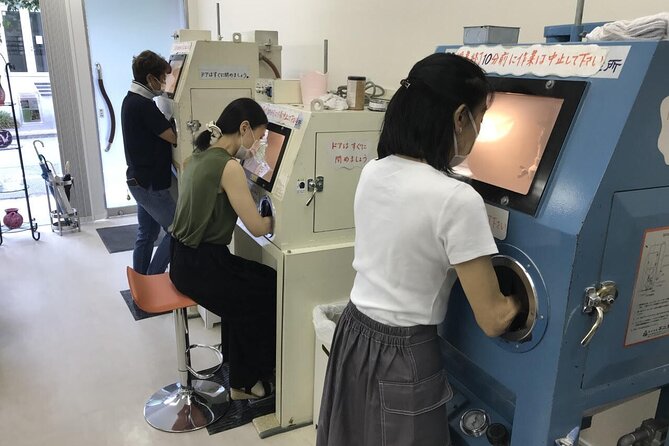
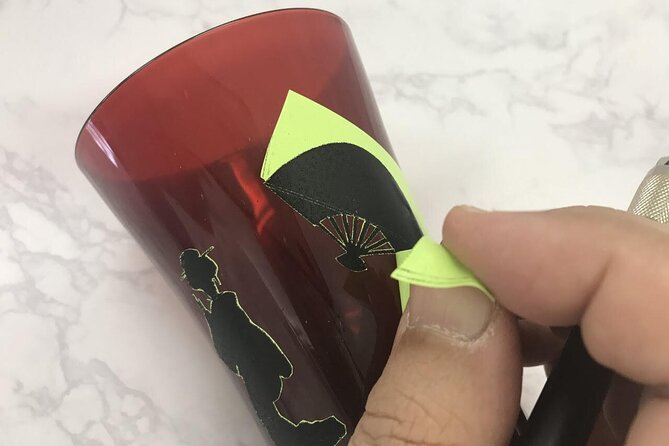
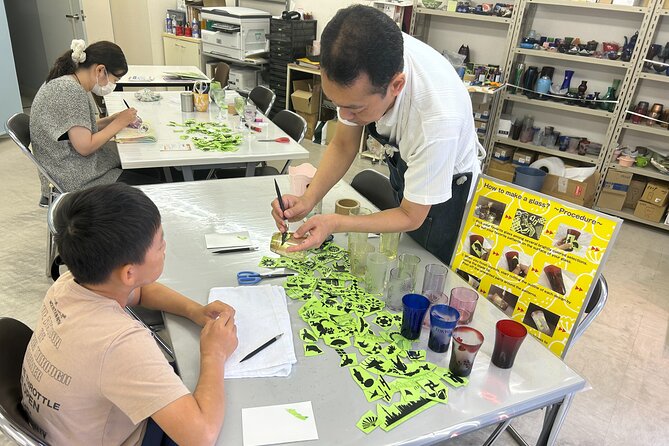
Once you choose your image, the workshop moves into the practical part. Materials and tools are provided, and Aki-san explains the steps needed to prepare the glass for sandblasting.
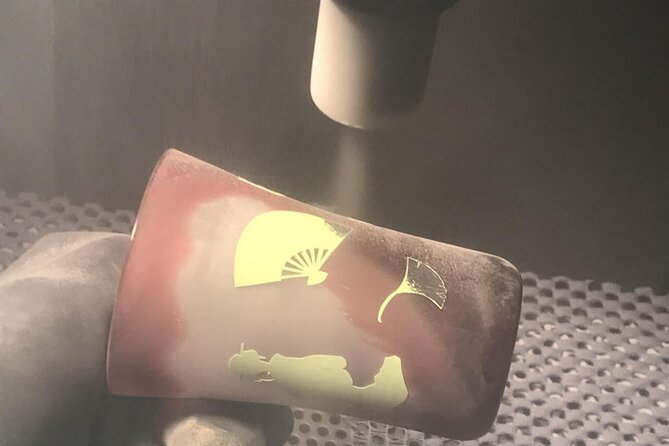
The important thing to understand is that the sandblasting machine does not simply print a picture onto the surface. Your preparation determines where the blasting changes the glass. The design work therefore matters, even though the machine creates the final textured effect.
This is where direct instruction has real value. You may have questions about placing the image, handling the tools, or keeping the pattern clear. Aki-san’s patient teaching style is especially useful if you have never tried glass decoration before.
The process is hands-on, but it is not presented as an advanced technical course. The point is to make a finished item within the 90-minute class. You get enough instruction to take part, without needing to learn every aspect of professional glasswork.
The workshop also provides a calm change of pace. Tokyo sightseeing can involve trains, crowds, long walks, and constant decisions. Here, you sit down and focus on one object. For families, that pause can be just as valuable as the craft itself.
Bringing the design to life with sandblasting
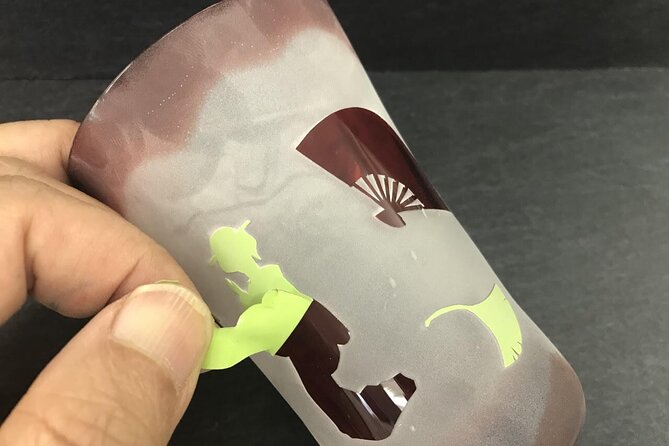
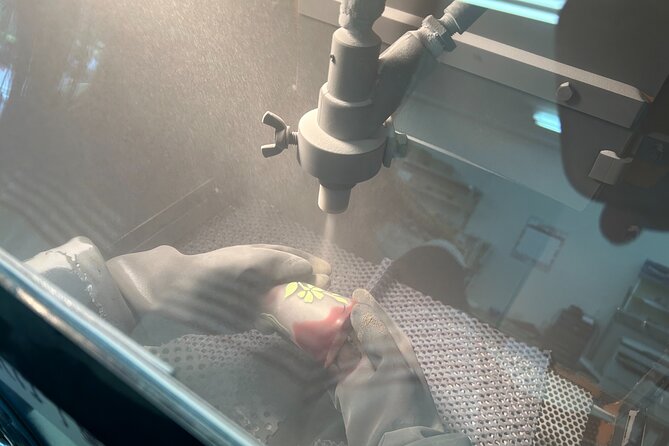
The sandblasting stage is the most distinctive part of the experience. After your design is prepared, the machine creates the pattern on the glass, giving the surface a personalized finish.
You should not expect a full glassblowing session. This is a glass decorating workshop using sandblasting, not a class in shaping hot glass. That distinction matters if you are comparing different craft activities in Tokyo.
The finished piece is described as colorful and personalized, and the workshop is built around making a drinking glass. The exact look will depend on the motif you choose and the way you prepare it. That variation is part of the appeal. Two people can use the same general theme and still go home with different objects.
A first-time participant may need to let go of the idea that the result must be perfect. Small handmade variations are part of the point. You are creating a keepsake, not producing factory-standard glassware. The instructor’s help should make the process less stressful, but you still have a personal role in the final appearance.
For children, the machine stage may be the most exciting part. Adults may appreciate the contrast between the quiet design work and the visible change produced by the equipment. Everyone can see how the earlier decisions affect the final glass.





What the $53.43 price includes
The listed price is $53.43 per person. That includes the material fee, lesson fee, and consumption tax. You do not need to add a separate charge for the basic tools or supplies used in the class.
For a 90-minute private-feeling craft session in Tokyo, I consider the price reasonable if you value the finished item and the instruction. You are paying for more than a glass. The cost covers studio time, materials, guidance, and the chance to make something that is difficult to duplicate elsewhere.
The value is stronger for people who want a souvenir with a personal connection. If you only want the least expensive drinking glass, a shop will be cheaper. If you want an activity that produces an object you helped design, the comparison changes.
Remember that transport, food, and hotel transfers are not included. The studio is near public transportation, but getting there and away from there is your responsibility. That is not a major cost in Tokyo, but it should be part of your day plan.
The small group also affects the value. A four-person maximum gives the experience a more individual feel than a large class. If all four places are filled, you still have a small class, but you should not expect a one-on-one appointment unless you happen to be the only person booked.
Who will enjoy this experience most
This class suits families, couples, solo visitors, and adults who want a creative hour between major sights. It is especially useful for anyone looking for an indoor activity that does not depend on athletic ability or advanced art skills.
Most people can participate, and the class is described as suitable for beginners. You do not need prior experience with glass or sandblasting. The step-by-step format gives you a clear way into the activity.
Families should like the fact that children and adults can work on their own designs. The finished glass gives each person something tangible to take home. That can be more satisfying than a group photo that disappears into a phone gallery.
Solo visitors can benefit from the small class as well. The workshop owner can offer direct help, and the process gives you a structured way to meet the place through making something. One participant had the class alone on a quieter day and received an earlier start after arriving ahead of schedule.
This may not suit you if you want a long, open-ended art course. The session is fixed at about 90 minutes, and the work centers on one glass. It also may not be the right pick if you dislike souvenirs that need careful packing for the journey home.
Practical planning for a smooth visit
Book ahead if your Tokyo schedule is tight. The experience is often reserved well in advance, with an average booking lead time of 88 days. Availability is still subject to confirmation within 48 hours of booking, so do not treat an unconfirmed request as a final appointment.
The booking comes with a mobile ticket, which makes it easy to keep the confirmation on your phone. Check the meeting address before leaving your hotel, and build in time for public transportation and the final walk to the studio.
You can cancel for a full refund up to 24 hours before the start time. Cancellations or changes made within 24 hours are not accepted for a refund, and the cut-off follows local Tokyo time.
Wear something you can comfortably use during a hands-on class. The supplied information does not state a specific dress requirement, but you should expect to handle materials and tools. If you are visiting with children, keep the 90-minute length in mind and explain that the project involves careful steps rather than nonstop action.
Your finished glass is a keepsake, so consider how you will pack it. The information does not specify packaging or shipping arrangements. Ask the workshop directly if you have concerns about carrying the piece on a longer Japan itinerary or taking it on a flight.
How this compares with ordinary Tokyo souvenirs
A bought souvenir is quick. This activity asks for time and attention, but gives you a stronger connection to the result. You choose the image, work through the preparation, and see the machine create the pattern.
That difference is important for families and repeat visitors. If you have already seen major temples, crossed famous neighborhoods, and bought the usual gifts, a craft class offers another way to spend part of the day. It is not a substitute for Tokyo’s major sights, but it adds a personal layer to the trip.
The Japanese motifs also make the item easy to connect with your visit. Mount Fuji, kimono designs, geisha, and samurai are familiar symbols, yet your combination and execution make the glass your own.
I would not choose this class solely for the promise of an impressive art lesson. The strongest reason to book is the mix of personal instruction and a usable souvenir. The class is short, friendly, and focused on a result you can carry home.
Should you book the Asakusabashi glass workshop?
Book it if you want a small, relaxed Tokyo activity where you make something rather than only look at something. The four-person limit, patient instruction from Aki-san, and Japanese-themed glass designs give the class a personal feel.
The $53.43 price is fair when you count the materials, instruction, tax, and finished drinking glass. It is less appealing if you are looking for a bargain purchase or a full-day craft course.
I would place this on a free morning or afternoon, especially during a longer Tokyo stay. Allow time to reach Asakusabashi, keep your schedule flexible after the class, and plan how to protect the glass on your way home. If those details work for you, this is a thoughtful souvenir activity with enough creative work to make the final piece matter.
FAQ
How long does the Japanese glass sandblasting workshop last?
The activity lasts approximately 1 hour and 30 minutes.
Where does the workshop begin and end?
It begins at 1-chōme-26-12 Asakusabashi, Taito City, Tokyo 111-0053, Japan, and ends back at the same meeting point.
How many people can join the class?
The workshop has a maximum of four participants.
What designs can I use for the glass?
You can decorate the glass with Japanese motifs such as Mount Fuji, geisha, kimono patterns, samurai, and other provided design ideas.
Are materials and instruction included in the price?
Yes. The material fee, lesson fee, and consumption tax are included. Hotel pickup and drop-off are not included.
Can I cancel the booking for a refund?
You can cancel up to 24 hours before the experience start time for a full refund. Cancellations or changes made less than 24 hours before the start time are not accepted for a refund.
More Workshops & Classes in Tokyo

More tours in Tokyo we've reviewed





Workshops, compared.
 ★ 5.0Sushi Making Tokyo Roll and Authentic Japanese Sushi ClassFrom $59
 ★ 4.9Tokyo: Roll and Authentic Sushi Making Class in AsakusaFrom $581h 40m
 ★ 4.9Tokyo: Sushi Making Class in a Happi Coat near a Famous SpotFrom $421h 30m
 ★ 4.8Chopstick Making Workshop in GinzaFrom $251 hour
 ★ 5.0Tokyo Sushi Making Class in Tsukiji with Professional ChefFrom $49
 ★ 5.0Ramen & Gyoza Cooking Class in Tokyo with Local Supermarket VisitFrom $122