Reviewed · ASAKUSA TOURS
Tokyo Asakusa : Handmade Japanese Paper Workshop
Making Japanese paper by hand is a fine way to slow down in Asakusa. In this one-hour workshop, you learn about Tosa Washi, a Japanese paper with more than 1,000 years of history, then make a postcard-sized sheet of your own.
In This Article
- Key points
- Making Tosa Washi near Kaminarimon
- A short lesson before the wet work
- Creating your postcard-sized sheet
- Plain Paper Plan or Colored Paper Plan
- Why the handmade souvenir matters
- Fitting the workshop into an Asakusa day
- Is $38 a fair price?
- Who will enjoy this paper workshop
- Booking details that can affect your day
- Should you book the Asakusa washi workshop?
- FAQ
- Where is the handmade paper workshop located?
- How long does the workshop last?
- What languages are available?
- How many people can join?
- Is Rakusuishi included in the price?
- What should I wear?
- Is the shop accessible by elevator?
I like the small group, limited to eight people, and the cheerful hands-on teaching. I also like that you wear samue, traditional Japanese work clothes, and leave with something you made instead of another shop-bought souvenir. The main catch is the colored paper option: Rakusuishi costs extra, so check the plan and final price carefully.
Key points
- Make your own postcard-sized washi: You work with water and paper materials under an instructor’s guidance.
- Learn about Tosa Washi: A short video introduces one of Japan’s three major traditional papers.
- Wear samue clothing: Traditional Japanese work clothes are provided for the session.
- Add Rakusuishi color: The colored plan lets you choose from many prepared patterned papers.
- Stay near Asakusa’s classic sights: The shop is close to Kaminarimon and Sensoji Temple.
- Keep the group small: A maximum of eight participants makes personal help easier.
Making Tosa Washi near Kaminarimon
This workshop takes place on the second floor of a shop at 1-32-11 Asakusa, in Tokyo’s Taito district. It is very close to Kaminarimon and Sensoji Temple, so you can fit it neatly into a morning or afternoon around Asakusa’s major sights.
The location matters. Asakusa can feel packed with temples, souvenir shops, food stalls, and photo stops. A paper-making class gives you one quiet, practical hour between sightseeing blocks. You are not just looking at Japanese craft behind glass. You handle the materials and make a small object with your own hands.
Tosa Washi is one of Japan’s three major traditional papers. It has been made for more than 1,000 years and is valued for its durability and warm feel. The workshop does not try to turn you into a professional papermaker in an hour, but it gives you a clear look at why handmade paper still matters.
You begin with a short video about Tosa Washi and the paper-making process. This introduction gives the activity some useful context before you start working. It also helps you understand that the sheet you create is part of a long Japanese craft tradition, not simply a classroom art project.
A few more Tokyo tours and experiences worth a look

A short lesson before the wet work
After the video, you put on a samue. These traditional Japanese work clothes are included in the price, and they add a pleasant sense of occasion without making the activity feel formal.
The actual work involves water, so you should remove your watch and accessories before starting. Wear sleeves that roll up easily. The shop has lockers for valuables, which is useful when you need both hands free and do not want to keep your phone or wallet beside a basin.
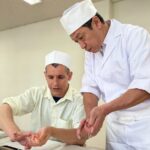
The group limit is eight people. That is a sensible size for an activity where each person needs to see the demonstration and receive help with the paper. A friendly instructor guides you through the process, and the teaching is available in English, Japanese, or Spanish.
Fuji-san is one instructor associated with the experience. If he leads your session, you can expect patient, step-by-step help based on the strong praise given to his teaching. The supplied comments describe him as careful and hands-on, which is exactly what you want when your first attempts at paper making need a little correction.
The tone is lively rather than solemn. Expect laughter and encouragement as people try the technique. That makes this a good pick if you want a creative activity that feels social but still stays small.
Creating your postcard-sized sheet
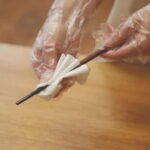
The central task is making your own postcard-sized washi paper. The instructor helps you work through each stage, so you do not need previous craft experience.
The process uses water and paper fibers, which gives the workshop a tactile quality that you miss when buying finished washi in a store. You see the wet material take shape and begin to understand how patience and even handling affect the final result.
The sheet you make is not likely to look exactly like a factory-produced postcard. That is part of the point. Small differences give it a handmade character, and the finished paper becomes a souvenir with a direct connection to your time in Asakusa.
The instructor’s role is important here. Paper making can look simple when demonstrated, but working with wet materials requires a steady touch. The guidance keeps the activity approachable and prevents the session from becoming frustrating for first-time makers.
The workshop lasts one hour, so the pace is brisk. You receive an introduction, change into samue, make the paper, and finish the activity within a compact schedule. I like this length for a busy Tokyo day. You get a real craft experience without giving up half a day of sightseeing.
Plain Paper Plan or Colored Paper Plan
You need to pay attention to the plan you select. The Plain Paper Plan gives you your handmade washi, but it does not include Rakusuishi.
The Colored Paper Plan adds a layer of Rakusuishi to the sheet you make. Rakusuishi is a delicate colored washi created when craftsmen pour water onto paper, form patterns, and then dye the result. You choose your favorite design from dozens of prepared options and place it on top of your own paper.
This choice changes the finished souvenir. Plain paper keeps the focus on your own sheet and the basic process. The colored plan adds pattern and decoration, making the final piece more visually distinctive.
The extra cost is the main point to watch. The base price is listed at $38 per person, but colored Rakusuishi is not included with the plain option. One booking account described paying about €25 for two colored sheets, so you should confirm the exact supplement before you commit to the colored plan.
The description of the colored option is clear once you read the details, but the added charge can be easy to miss when booking quickly. I would not assume the $38 covers every colored-paper choice. If the finished design matters to you, check the wording carefully and ask the staff about the price before the workshop begins.
Why the handmade souvenir matters
Tokyo offers no shortage of souvenirs, from mass-produced charms to packaged sweets. Your washi paper has a different appeal because you take part in making it.
The finished sheet is postcard-sized, so it is easy to pack. You can use it as a card, display it at home, or keep it as a reminder of Asakusa. It is also more personal than a paper item selected from a shelf because you shaped the base sheet yourself.
The Rakusuishi option gives you another layer of choice. Selecting a favorite design from dozens of prepared papers is a small decision, but it lets you take part in the visual finish rather than simply accepting one standard result.
The paper also connects your souvenir to Tosa Washi’s qualities. Its durability and warm feel help explain why Japanese handmade paper has remained valued for so long. You leave with a small item, but the craft lesson gives that item meaning.
A few more Tokyo tours and experiences worth a look

Fitting the workshop into an Asakusa day
The shop’s location near Kaminarimon and Sensoji Temple makes planning simple. You can visit the workshop before exploring the temple area, pause for the activity after sightseeing, or schedule it as a break from the busy streets.
Allow time to find the second-floor shop. The meeting point is upstairs, and a staff member will guide you once you arrive. There is no elevator, so you need to use stairs to reach the workshop.
Arriving on time is important. If you are more than 10 minutes late, you may not be able to join, so contact the shop in advance if a delay is possible. A one-hour workshop has little spare time, and late arrival can interrupt both the instructor and the small group.
There are no restrooms inside the shop. Use a nearby public restroom before going upstairs. This is a small issue, but it is worth handling before the class, especially if you are fitting the activity between meals and temple visits.
The shop also has no special accessibility details beyond the stairs being required. If stairs are difficult for you, this may not be a practical choice.
Is $38 a fair price?
At $38 per person, the workshop is not the cheapest one-hour activity in Tokyo. You are paying for more than materials, though. The price includes the instructor, samue clothing, the paper-making supplies, and a small-group setting capped at eight people.
The strongest value comes from the personal nature of the session. You are not watching a craft demonstration from a distance. You are making the paper yourself, receiving help as you go, and taking home the result.
The one-hour format also helps justify the cost for visitors with a tight schedule. You can add it to a day in Asakusa without arranging transport to a distant craft center or giving up an entire afternoon.
The colored plan needs separate attention. If you want Rakusuishi, treat it as an added expense rather than part of the basic $38 price. The plain plan is the better value if you mainly want to learn the process and make your own sheet.
For couples, families with older children, and friends, the activity can work well because everyone makes an individual item. For solo visitors, the small group and instructor support help keep the session from feeling awkward. The language choices also make the class accessible to many international visitors.
Who will enjoy this paper workshop
I would recommend this activity to anyone who likes local crafts, hands-on learning, or souvenirs with a personal story. It is especially useful if you have already seen Asakusa’s main temple sights and want an activity that shows another side of Japanese culture.
It suits first-time craft makers because the instructor leads each step. You do not need to arrive with specialist skills. The session is also short enough for people who want a small cultural activity rather than a full-day class.
Families should note the age rule. Children under four cannot participate. Pregnant people and those with heart problems are also listed as unsuitable for the experience.
The wet materials make clothing choices important. Roll up your sleeves, remove watches and jewelry, and use the lockers for valuables. These are simple preparations, but they make the class more comfortable.
This may not suit you if you want a long, quiet artisan course with time for repeated attempts. One hour gives you a taste of the craft, a guided project, and a finished souvenir. It does not provide the depth of a multi-session paper-making apprenticeship.
Booking details that can affect your day
You can cancel up to 24 hours in advance for a full refund. You can also reserve now and pay later, which helps if your Tokyo schedule is still shifting.
Starting times vary, so check availability for the date you want. Since the activity is only one hour, the timing can fit well around Sensoji Temple, Kaminarimon, and other Asakusa plans.
The group size is limited to eight. That limit is worth considering when comparing this with a large demonstration, since individual guidance is central to the experience.
The activity provider is watashino. The staff member at the shop will direct you upstairs, and the instructor will provide the materials and work clothes.
Should you book the Asakusa washi workshop?
Book it if you want a short, hands-on look at Japanese craft and like the idea of carrying home something you made yourself. The location, one-hour schedule, small group, and language options make it easy to add to an Asakusa sightseeing day.
Choose the plain plan if price clarity matters most. Choose the colored plan if the Rakusuishi patterns are the part that catches your eye, but confirm the extra charge first.
I would skip it only if stairs, wet craft work, or a strict budget create problems. For most people who enjoy practical cultural activities, this is a friendly and well-sized workshop with a souvenir that feels more personal than a quick purchase.
FAQ
Where is the handmade paper workshop located?
The shop is on the second floor at 1-32-11 Asakusa, Taito-ku, Tokyo 111-0032. It is close to Kaminarimon and Sensoji Temple.
How long does the workshop last?
The activity lasts one hour. Starting times depend on availability.
What languages are available?
The instructor service is available in English, Japanese, and Spanish.
How many people can join?
The workshop is a small-group activity limited to eight participants.
Is Rakusuishi included in the price?
Rakusuishi is included only with the Colored Paper Plan. It is not included with the Plain Paper Plan, and colored paper carries an additional charge.
What should I wear?
Wear clothing with sleeves that roll up easily. You will work with water, so remove watches and accessories. Traditional samue work clothes are provided.
Is the shop accessible by elevator?
No. You must use stairs to reach the second-floor shop. There are also no restrooms inside, so use a nearby public restroom before the workshop.
More Workshops & Classes in Tokyo
More Asakusa Tours in Tokyo

More tours in Tokyo we've reviewed
Asakusa Tours, compared.
 ★ 4.8Tokyo: Japanese Dance Cabaret Theater Asakusa-Kaguwa TicketFrom $492 hours
 ★ 4.7Tokyo: Meiji Shrine, Asakusa, Skytree Bus Tour and CruiseFrom $12210 hours
 ★ 4.9Tokyo: Roll and Authentic Sushi Making Class in AsakusaFrom $581h 40m
 ★ 4.8Tokyo: Asakusa Walking Tour with Sensoji Temple VisitFrom $222 hours
 ★ 5.0Tokyo Asakusa Rickshaw TourFrom $42
 ★ 4.5Tokyo Panoramic 1 Day: Meiji Shrine, Asakusa, Odaiba and SKYTREE®From $85