Reviewed · SAKE TASTING
Experience a western twist on Japanese sake snacks
Tokyo’s tsukudani is not a flashy dish. It is preserved seafood cooked in a sweet-salty sauce, a practical food with roots in the Edo period. At Shinbashi Tamakiya, founded in 1782, this modest pantry staple gets a smart western twist through pairings with sake, wine, rice, pasta, nuts, and furikake.
In This Article
- Key points to know before booking
- Why tsukudani makes a good Tokyo food lesson
- Inside Shinbashi Tamakiya, founded in 1782
- The secret sauce and three signature samples
- Rice, furikake, and the everyday side of tsukudani
- A western twist with pasta and nuts
- Sake or wine with preserved seafood
- The private format and the 90-minute schedule
- Who will get the most from this tasting
- Practical value at $36.24 per person
- What the high rating tells you
- Should you book Shinbashi Tamakiya?
- FAQ
- Where does the tsukudani tasting take place?
- How long does the experience last?
- Is the activity private?
- What food is included?
- Are drinks included?
- Can I choose a morning or afternoon start?
- Where does the activity end?
- Can I cancel for a refund?
I like two things right away: the tasting is private, so the host can shape the pace for your group, and the $36.24 price includes the tsukudani, snacks, brunch, and alcoholic drinks. The main consideration is that this is a focused 90-minute food lesson, not a broad Tokyo food tour. If preserved seafood does not appeal to you, some samples may be a stretch.
Key points to know before booking
- Taste three signature tsukudani varieties after learning about Shinbashi Tamakiya and its long-running secret sauce.
- Compare old and new serving ideas, from rice and furikake to pasta and nuts.
- Pair the seafood with sake or wine, an unusual way to understand the dish’s salty, sweet, and savory flavors.
- Enjoy a private tasting, with only your own group taking part.
- Choose a morning or afternoon start, with the full visit lasting about 1 hour and 30 minutes.
- Meet at Shinbashi Tamakiya in Shinbashi, and return to the same meeting point when the tasting ends.
Why tsukudani makes a good Tokyo food lesson

Tsukudani began as a way to preserve seafood by cooking it in a strong sauce. The result is concentrated food: salty, sweet, savory, and often meant to be eaten in small amounts with rice. It is not a giant main course, and that matters when you set your expectations.
This tasting gives you a chance to understand the dish as Japanese comfort food rather than treating it as an exotic dare. You can see how a preserved snack fits into a meal, then try it in more modern combinations that make sense to a western palate.
I like this kind of food experience because it explains a local habit through taste. A guide can tell you about Edo-period roots, but the lesson becomes clearer when you eat the tsukudani with rice, sample furikake, and then compare it with pasta or nuts.
The tasting also reaches beyond one fixed recipe. Traditional and modern versions are included, so you can compare familiar preparation with newer serving ideas. That range should help you decide what you actually enjoy, rather than judging tsukudani from a single bite.
If you're still narrowing it down, here are other tours in Tokyo we've reviewed.



Inside Shinbashi Tamakiya, founded in 1782

The setting is Shinbashi Tamakiya, a specialist shop in Tokyo’s Minato City. Its address is 4-chōme25, Shinbashi, inside the Ishida Building on the first floor. The shop’s founding date, 1782, places it firmly in the Edo period, when preserved foods played an important part in everyday eating.
The shop’s age is useful here because tsukudani is tied to tradition. You are not simply tasting a seafood snack made for tourists. You are learning about a food connected to a long-running Japanese shop and its own method of preparation.
The experience begins with an explanation of the shop and the dish. The details provided for the tasting do not name an individual guide, so you should not expect a particular host by name. The format is private, though, which gives your own group the full session rather than placing you at a large shared table.
That private arrangement is one of the experience’s best features. You can ask questions about the sauce, serving suggestions, or the more unusual pairings without worrying about holding up a crowd. It also makes this a practical choice for a couple, family, or small group with different levels of interest in Japanese food.
The secret sauce and three signature samples
After the introduction, you taste the shop’s secret sauce and three signature tsukudani varieties. The supplied details do not identify each seafood or describe the exact seasoning, so you should not book expecting a precise menu of ingredients.
What you can expect is a guided comparison of preserved seafood prepared in the shop’s traditional style. Since tsukudani is strongly seasoned, these are likely to be tasting portions rather than large servings. The point is to notice differences and learn how the food is used.
The sauce is especially important. Tsukudani depends on its cooking liquid for much of its character, and tasting the sauce on its own gives you a clearer idea of why the seafood works with plain rice. It also helps explain the balance between sweetness and salt.
I appreciate that the tasting includes three signature examples instead of one sample followed by a sales pitch. Three portions give you a small but useful range. You can ask yourself which texture and flavor you prefer, and you can compare each one with the other foods served later.
Still, this part may be challenging if you are sensitive to salty foods or seafood flavors. Tsukudani is concentrated by design. Take small bites, and use the rice and other accompaniments to understand how it is normally eaten.
Rice, furikake, and the everyday side of tsukudani
The next part brings tsukudani back to its most natural partner: rice. You taste rice with tsukudani and furikake seasonings, which shows how a small amount of strongly flavored food can add interest to a simple bowl.
This is where the experience becomes most useful for anyone who wants to eat more like a local after the visit. Tsukudani is not just something to sample at a specialty shop. It can be part of a basic meal, especially when you want a powerful flavor with a plain staple.
Furikake adds another layer of seasoning. The experience lets you compare the seafood with rice and with other Japanese toppings, helping you see how different ingredients change the same base. You do not need advanced food knowledge to follow the lesson. The tasting itself does much of the explaining.
The meal is described as including brunch, snacks, and alcoholic beverages. That makes the rice portion more than a quick nibble, though the experience remains a tasting rather than a full restaurant meal. If you have a large appetite, plan your day with that distinction in mind.
A western twist with pasta and nuts

The modern section pairs tsukudani with ingredients such as pasta and nuts. This is the most unusual part of the visit, and it is also the reason the experience is more than a standard shop sampling.
Pasta offers a familiar base for visitors who may not know how to serve tsukudani at home. Nuts bring a different texture and may soften the seafood’s strong profile. These combinations are presented as ways to propose new ways of eating the dish, not as replacements for the traditional rice pairing.
I like the western angle because it gives you a bridge into the food. You can first taste tsukudani in a classic Japanese setting, then try it with ingredients you already understand. That comparison makes the dish less intimidating and may give you ideas for using it after you return home.
The modern pairings are also a reminder that traditional food is not frozen in time. A shop with roots in 1782 can still look for fresh ways to serve its specialty. The session keeps one foot in Japanese food culture and another in contemporary tasting.
Do not expect a large menu of pasta and nut dishes. The information only promises tsukudani with various ingredients such as these. Think of them as small demonstrations of serving ideas rather than a full western meal.

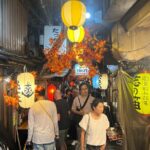




Sake or wine with preserved seafood

Alcoholic drinks are included, with sake or wine used as pairings. This is a strong value point because the drinks are part of the tasting rather than an extra purchase added at the end.
Sake is the natural choice for a visitor who wants to keep the pairing close to Japanese food traditions. Wine gives you a western comparison and fits the experience’s broader aim of matching tsukudani with different styles of eating.
The pairing is not just about having a drink in hand. Strongly seasoned seafood can change the way a beverage tastes, and the session gives you a chance to notice that relationship. A salty bite may make one drink feel softer, while the sauce may bring out a different note in another.
The exact sake and wine selections are not specified. That means you should treat the pairing as part of the guided tasting, not as a promised wine flight or a detailed beverage class. If you do not drink alcohol, the supplied details do not state that a nonalcoholic substitute is available, so ask before booking if that matters to you.
The alcohol inclusion also helps explain the price. At $36.24 per person, you are paying for a private 90-minute food experience, several tsukudani tastings, rice, furikake, modern accompaniments, brunch, and sake or wine. That is a reasonable package for Tokyo, especially when compared with buying a small snack and trying to understand it on your own.
The private format and the 90-minute schedule

The activity lasts about 1 hour and 30 minutes. That is long enough for an introduction, the three signature tastings, the sauce, rice and furikake, modern pairings, and drink matching without turning the visit into a half-day commitment.
I would place this on a morning or afternoon when you want one clear food stop. The choice of start time lets you fit it around sightseeing, though the information does not give exact departure times. Confirmation is sent within 48 hours of booking, subject to availability.
Because only your group participates, the experience can feel more personal than a standard public tasting. You may be able to spend more time on the parts that interest you, such as the shop’s background, the secret sauce, or the modern serving ideas. The host can also avoid wasting time on explanations your group already understands.
The private format has one limitation: if you enjoy meeting strangers on food tours, this will not provide that social mix. You are paying for attention and privacy, not a lively group atmosphere.
The meeting point is also the end point. You start and finish at Shinbashi Tamakiya, which keeps the logistics simple. The shop is near public transportation, and most people can take part. Service animals are allowed.
Who will get the most from this tasting

This experience suits you if you like trying foods with a story and prefer small portions that encourage comparison. It is also a good fit if you have already eaten common Japanese dishes and want something less familiar.
Food-focused couples and small private groups should find the format especially practical. Parents and children may enjoy the modern combinations, though the strong seafood and salty profile may not suit every young palate. Since the activity is private, your group can make its own decision about how adventurous to be.
It also works well for a short Tokyo itinerary. Ninety minutes is manageable between other plans, and the start time can be set for morning or afternoon. You do not need to devote an entire day to reaching a distant food district or touring several restaurants.
I would be more cautious if you want a full meal, a market walk, or a broad lesson in Japanese cuisine. This is about one specialty, one shop, and several ways to serve it. Its narrow focus is its strength, but it also sets a clear limit.
Practical value at $36.24 per person

The price makes sense if you value context and personal attention. You receive more than a packaged sample: the visit covers the shop’s background, the dish’s Edo-period roots, three signature tsukudani, the secret sauce, rice, furikake, modern ingredients, and alcohol pairings.
A cheaper option would be to buy tsukudani from a shop and eat it with rice on your own. That would save money, but you would miss the explanation of how the food is made and the guidance on pairing it with wine, sake, pasta, and nuts.
A more expensive food tour might include several stops, but it would not necessarily offer the same attention to one traditional item. Here, your money goes toward focus rather than variety across Tokyo.
The booking pattern suggests planning ahead. This experience is booked an average of 59 days in advance, so do not leave it until the last part of your trip if the timing matters. Availability is still subject to confirmation within 48 hours.
You can cancel for a full refund up to 24 hours before the start time. Cancellations or changes made less than 24 hours ahead are not accepted for a refund, based on local time. That is a fair policy, but keep your schedule firm once you are inside that final day.
What the high rating tells you
The experience has a 4.9 rating from 32 reviews, with 100 percent recommending it. The most consistent praise centers on the welcome, the food, and the teaching.
One review specifically praised the teacher as wonderful, along with the food, the informative presentation, and the welcoming approach. That is important because tsukudani may be unfamiliar to many visitors. A good host can turn a strong or unusual flavor into a clear lesson instead of leaving you to guess what you are tasting.
The provider also expresses a wish for tsukudani to become better known among international visitors. That gives the tasting a clear purpose: it is not only selling snacks, but also explaining a traditional Japanese food to people who may never encounter it elsewhere.
The rating is excellent, but the sample size is modest. I would read it as a strong signal that the teaching style and hospitality work well, not as proof that every person will love the seafood. Your own taste for preserved foods remains the deciding factor.
Should you book Shinbashi Tamakiya?
Book this tasting if you want a private, compact food lesson built around one traditional Japanese specialty. The combination of Edo-era context, three signature tsukudani, rice and furikake, secret sauce, modern pairings, and sake or wine gives you plenty to taste within 90 minutes.
The $36.24 price is good for a private session with food and drinks included. I especially recommend it to curious eaters who want to understand how a strong preserved seafood snack fits into daily Japanese cooking.
Skip it if you need a large meal, dislike seafood, or want a broad tour of Tokyo’s food scene. For everyone else, this is a thoughtful way to try a small but meaningful part of Japanese food culture, with enough western-style pairings to keep the experience approachable.
FAQ
Where does the tsukudani tasting take place?
It takes place at Shinbashi Tamakiya, located at 4-chōme25, Shinbashi, Minato City, Tokyo, inside the Ishida Building on the first floor.
How long does the experience last?
The tasting lasts approximately 1 hour and 30 minutes.
Is the activity private?
Yes. Only your group participates in the private tasting.
What food is included?
The tasting includes tsukudani samples, the shop’s secret sauce, rice with tsukudani and furikake seasonings, and modern combinations using ingredients such as pasta and nuts. Brunch and snacks are also included.
Are drinks included?
Yes. Alcoholic beverages are included, with wine or sake used for pairings.
Can I choose a morning or afternoon start?
Yes. Morning and afternoon tasting options are available, subject to availability.
Where does the activity end?
The activity ends back at the Shinbashi Tamakiya meeting point.
Can I cancel for a refund?
You can cancel up to 24 hours before the local start time for a full refund. Cancellations or changes made less than 24 hours before the start time are not refunded or accepted.
More tours in Tokyo we've reviewed












Sake Tasting, compared.
 ★ 5.0Ramen and Sushi Cooking Class with Sake Pairing Set in TokyoFrom $79
 ★ 5.0Sake Tasting Masterclass in Shinjuku (8+ Varieties with a Pro)From $72
 ★ 5.0Sake Omakase in Tokyo: Guided Tasting by Certified SommeliersFrom $79
 ★ 5.0Tasting All Types of Sake with SommelierFrom $62
 ★ 5.0Wagyu & Sake Pairing in Shinjuku – Steak, Shabu-Shabu & MoreFrom $148
 ★ 5.0Tokyo Wagyu & Sake Pairing Tasting Experience with Local FlavorsFrom $151